Key Takeaways
-
Emergency demolition requires a written engineering survey by a qualified person before work begins, even under time pressure—OSHA citations for skipping this step exceed those for any other demolition prep violation.
-
Utility lines must be located and safely shut off before any equipment moves in, as damaged or buried connections in partially collapsed structures can create serious hazards if missed.
-
Most jurisdictions require documented authority from a building official or emergency management office before demolition can proceed, meaning emergency situations still need permits or expedited authorization rather than skipping paperwork entirely.
-
FEMA may cover emergency demolition costs after federally declared disasters if work is completed within six months, but the distinction between demolition and debris removal affects funding eligibility based on how many walls remain standing.
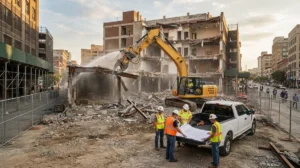
When a wall starts leaning, a fire guts a roofline, or a flood weakens a foundation, there’s no time to waste. Emergency demolition services step in when a structure suddenly becomes a danger to people, neighbors, or traffic nearby. Whether you’re a homeowner staring at storm damage or a property manager watching a ceiling sag, knowing how emergency demolition works can bring real peace of mind.
Here in Clark and Nye counties, extreme heat, flash floods, and the occasional structure fire can turn a stable building into a hazard overnight. That’s why it helps to understand what qualifies as an emergency, what steps a licensed crew must follow, and how to get help fast. This guide breaks down 14 key facts every homeowner, contractor, developer, and property manager should know about emergency demolition services in Nevada.
1. What Counts as an Emergency Demolition Situation
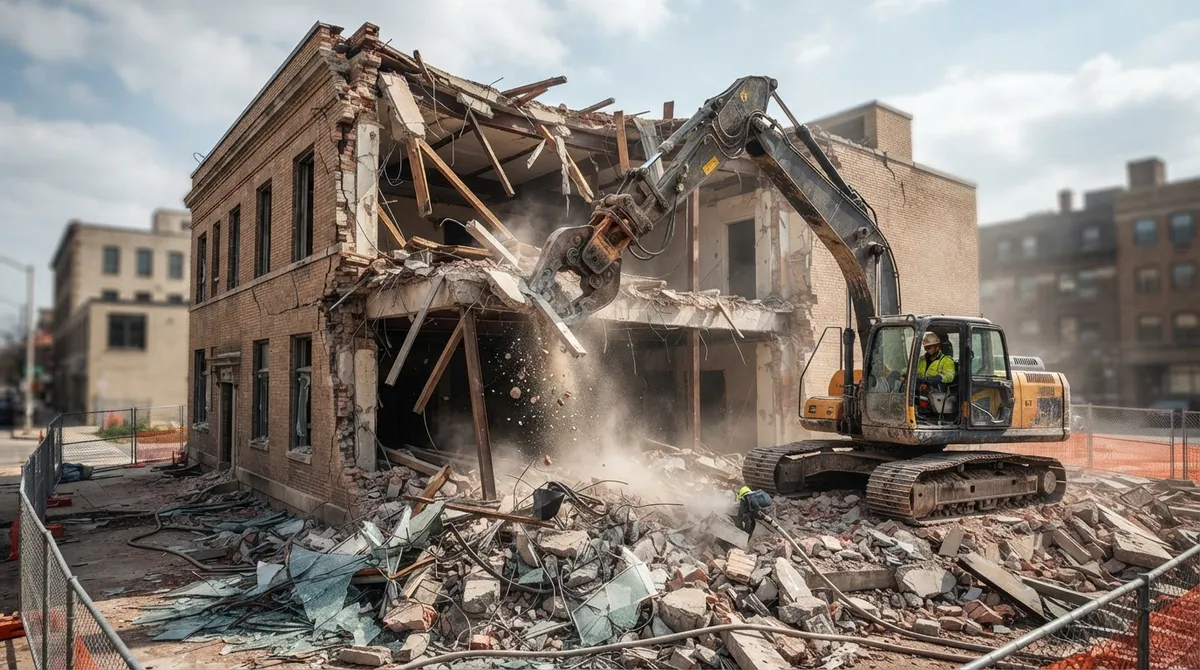
Not every damaged building needs emergency demolition. This service is reserved for structures that pose an immediate threat to life, safety, or nearby property. Common triggers include:
- Fire damage that has weakened walls, floors, or roof framing
- Flood or water damage that has undermined a foundation
- Storm or wind damage, including partial roof or wall collapse
- Explosions or gas leaks that compromised structural integrity
- Long-term deterioration that suddenly reaches a tipping point
- Vehicle impacts that damage load-bearing walls or columns
- Asbestos-containing materials in insulation, tile, or siding
- Lead-based paint on older trim, doors, or walls
- Fuels or chemicals stored in garages or utility rooms
- Mold from water damage or long-term moisture
- Contaminated furniture or personal belongings
- Initial phone assessment of the hazard and location
- Dispatch of a qualified person for a quick site survey
- Utility coordination with local providers
- Setup of exclusion zones and safety barriers
- Confirmation of permits or emergency authority
- Start of controlled, mechanical demolition work
- Trained equipment operators using excavators or specialized attachments
- Dust suppression methods to protect air quality nearby
- Frequent equipment inspections throughout the job
- Ongoing visual checks for shifting walls or floors
- Exclusion of all nonessential personnel from the work zone
- An inspection by a local building or fire official
- A written determination of imminent danger
- Notification to the property owner when possible
- Documentation of the emergency finding
- Coordination with a licensed demolition contractor
- Single-family homes damaged by fire or flooding
- Multi-family apartment buildings with structural failure
- Commercial storefronts hit by vehicle collisions
- Warehouses or industrial buildings with roof collapse
- Pools or retaining walls that have failed and threaten nearby structures
- Evacuate the structure and keep others away from the area
- Call your local fire or building department if there’s immediate danger
- Avoid entering the building to retrieve items, even briefly
- Photograph visible damage from a safe distance, if possible
- Contact a licensed demolition contractor for a fast assessment
- Keep insurance or FEMA paperwork organized for later reference
If you’re unsure whether your situation qualifies, a quick call to a licensed contractor like 702 Demo can help you figure out the next right step.
2. Why a Written Engineering Survey Still Matters
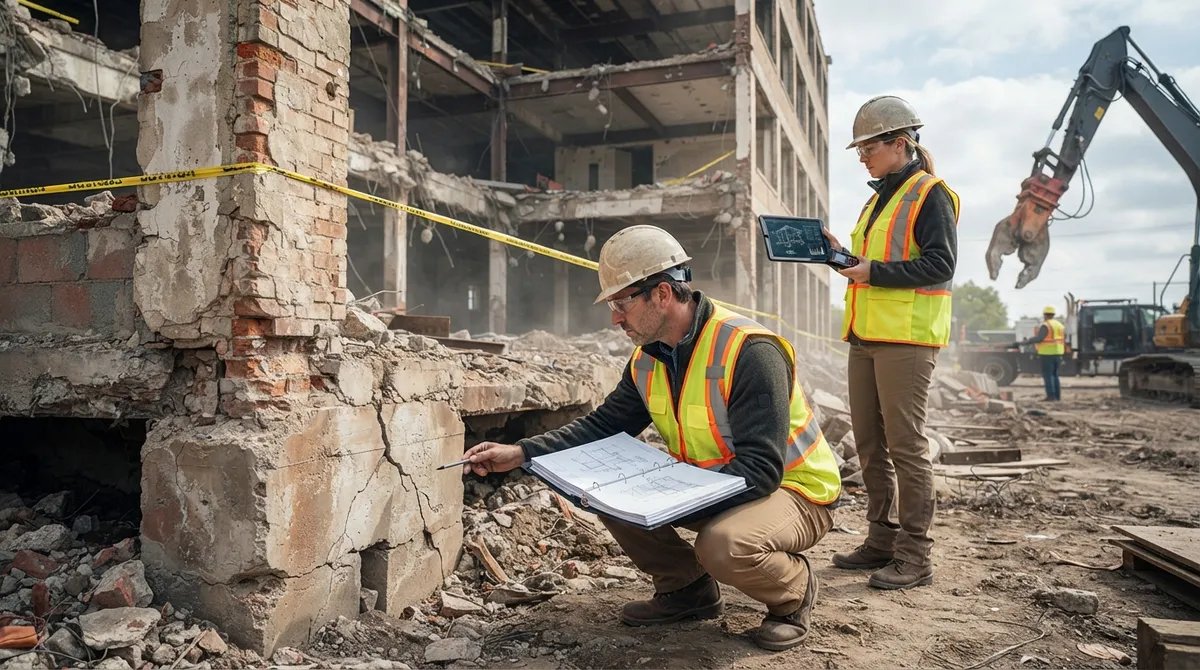
Even in a true emergency, U.S. safety rules don’t disappear. OSHA 29 CFR 1926.850(a) generally requires a written engineering survey by a qualified person before demolition starts. This survey checks framing, floors, walls, and nearby structures for collapse risk.
This step matters more than people realize. OSHA data shows that this required survey accounts for more than half of all citations issued during demolition preparation work. Skipping it isn’t just risky, it’s against the rules, even when time is short.
Why This Protects You, Not Just the Crew
A fast engineering check helps crews decide exactly how to bring a structure down safely. It also protects neighboring homes and businesses from unexpected collapse. Think of it as a quick health checkup before major surgery, it’s fast, but it’s not optional.
3. Emergency Demolition Still Requires Permits or Authority
Many people assume emergencies skip the paperwork. In reality, most jurisdictions require a documented finding that the building poses an immediate danger before demolition can start. This authority usually comes from a local building official or emergency management office.
In Las Vegas, contractors and property owners should check the Las Vegas demolition permit guidelines for specifics on emergency authorizations. Clark County residents can also reach out to the Clark County Building Department to confirm what’s needed for their property.
4. Utilities Must Be Controlled Before Work Begins
Before any demolition equipment moves in, crews need to locate and shut off utility lines. This includes electric, gas, water, steam, and sewer connections. Skipping this step can turn a bad situation into a dangerous one fast.
Utility coordination gets tricky when a structure has already shifted or partially collapsed. Lines may be buried under debris or damaged in ways that aren’t obvious. Experienced crews know how to locate and safely control these hazards before moving forward.
5. Hazardous Materials Add Another Layer of Care
Older buildings often hide surprises. Emergency demolition debris may contain:
These materials require special handling under environmental and worker-safety rules, even during a rushed timeline. A qualified team knows how to identify and manage these risks properly, protecting both workers and nearby residents.
6. Site Isolation and Access Control Are Non-Negotiable
Emergency sites need clear boundaries right away. Crews typically set up exclusion zones, fencing, and signage to keep unauthorized people out. This protects curious neighbors, passing drivers, and even first responders from unnecessary risk.
Access control also helps crews work more efficiently. When only trained personnel and equipment operators are on site, the demolition moves faster and safer.
7. How Quickly Can Crews Actually Respond
Response time depends on the situation, but experienced emergency demolition teams often mobilize within hours of the initial call. That said, speed never means skipping safety steps. A same-day response usually includes:
This sequence protects everyone involved while still moving fast enough to reduce ongoing risk.
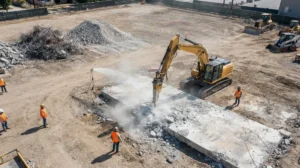
8. Mechanical Demolition Requires Careful Sequencing
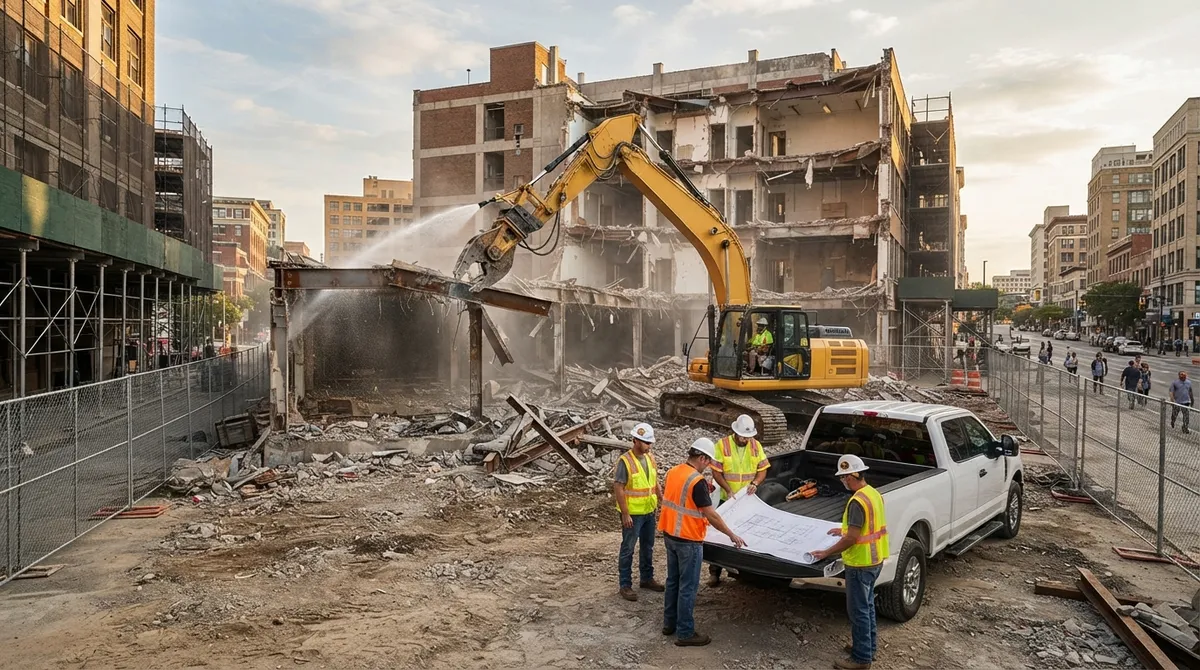
Unlike a planned demolition, emergency work often deals with structures that are already unstable. Crews must sequence their work carefully, removing material in a controlled order to avoid triggering an unplanned collapse.
This process typically involves:
Because weakened structures can fail unexpectedly, inspections continue throughout the entire process, not just at the start.
9. Who Has the Authority to Order Emergency Demolition
For privately owned buildings, demolition usually requires action from a government authority, not just the property owner’s decision. This typically involves a formal finding that collapse risk threatens public safety.
The process often includes:
Requirements vary by city and county, so it’s smart to confirm specifics with local officials before assuming your situation qualifies.
10. FEMA and Insurance Considerations After a Disaster
If your emergency demolition follows a federally declared disaster, FEMA’s Public Assistance program may help cover costs. Under FEMA policy, eligible emergency work generally must be completed within six months of the disaster declaration, unless an extension is granted.
FEMA also draws a line between demolition and simple debris removal. If more than one wall remains standing and isn’t at immediate risk of collapse, the work is usually treated as demolition rather than debris hauling. This distinction can affect funding eligibility, so documentation matters.
11. Comparing Emergency Demolition to Planned Demolition
| Factor | Emergency Demolition | Planned Demolition |
|---|---|---|
| Timeline | Hours to days | Weeks to months |
| Engineering Survey | Still required, done quickly | Completed well in advance |
| Permits | Emergency authority or expedited permit | Standard permit process |
| Utility Shutoff | Urgent, sometimes complicated by damage | Scheduled in advance |
| Hazmat Survey | Rapid assessment on site | Detailed pre-demolition testing |
Even with a compressed timeline, every safety step still applies. This is why hiring an experienced team matters so much when speed is critical.
12. Common Property Types That Need Emergency Demolition
Emergency demolition isn’t limited to one type of building. Around Clark and Nye counties, crews respond to a wide range of properties, including:
Property managers dealing with hazardous conditions often need fast hauling services alongside demolition to clear debris quickly and safely.
Renovation and Redevelopment Scenarios
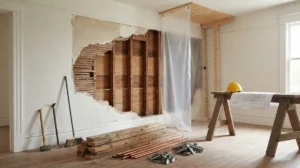
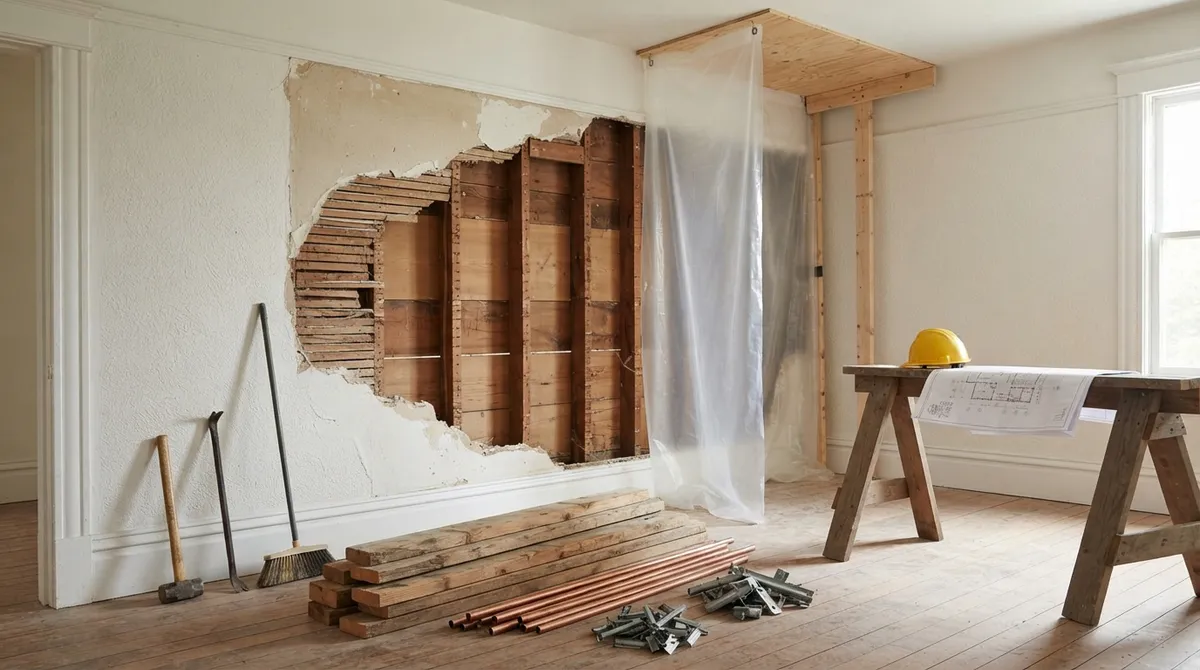
Sometimes what looks like a renovation project turns into an emergency once demolition reveals hidden structural damage. Renovation contractors often need to pivot quickly, and having a trusted building demolition partner on call makes that transition much smoother.
13. Why Local Experience Makes a Real Difference
Nevada’s climate and building styles create unique challenges. Extreme heat, flash flooding, and older structures throughout Las Vegas and surrounding areas all affect how emergency demolition should be handled.
702 Demo has spent years serving Clark and Nye counties, handling everything from concrete removal to full structural teardowns. That local knowledge means faster response times and safer decisions when every hour counts. You can also visit us on Google — 702 Demo to see how neighbors in the area have described their experience.
14. What to Do While You Wait for Help
If you’re facing a potential emergency demolition situation right now, here’s a simple checklist to follow:
These steps won’t replace professional help, but they can reduce risk while you wait for a crew to arrive.
Getting Help When Every Hour Counts
Emergency demolition isn’t something you want to handle alone or leave to guesswork. Between engineering surveys, permits, utility control, and hazardous material handling, there’s a lot riding on getting it right the first time. A trusted local team brings the speed and safety knowledge these situations demand.
If you’re facing a dangerous structure anywhere in Clark or Nye counties, don’t wait for the situation to get worse. Contact 702 Demo for a free estimate and get a team on the way who understands exactly what your property needs, fast, safe, and done right.
FAQs
Q: What qualifies as an emergency demolition project?
A: An emergency demolition project usually involves a structure that poses an immediate danger to people or nearby property. Think fire damage, flood-weakened foundations, storm collapse, or long-term deterioration that suddenly gets worse. If a building could collapse and hurt someone, it’s time to call a professional right away.
Q: How quickly can an emergency demolition contractor respond?
A: Many experienced crews can respond within hours of your call, especially for situations involving clear safety risks. That said, speed never skips important steps like engineering surveys or utility shutoffs. A good contractor moves fast while still keeping everyone safe.
Q: Does emergency demolition require a permit or written demolition order?
A: In most cases, yes, even emergencies usually require some form of documented authority or expedited permit. Local building officials typically need to confirm the danger before full demolition begins. It’s always smart to check with your local building department to understand the exact requirements.
Q: How are asbestos, lead, and other hazardous materials handled during emergency demolition?
A: Trained crews assess for hazardous materials like asbestos, lead paint, and mold as quickly as possible, even during urgent situations. These materials require special handling and disposal methods to keep everyone safe. Skipping this step isn’t just risky, it can also violate environmental and safety regulations.
Q: Will insurance or FEMA pay for emergency demolition and debris removal?
A: It depends on your policy and whether a federal disaster declaration applies to your situation. FEMA’s Public Assistance program can sometimes help cover costs, but there are strict timelines and documentation requirements. Talking to your insurance provider early can help you understand what’s covered.