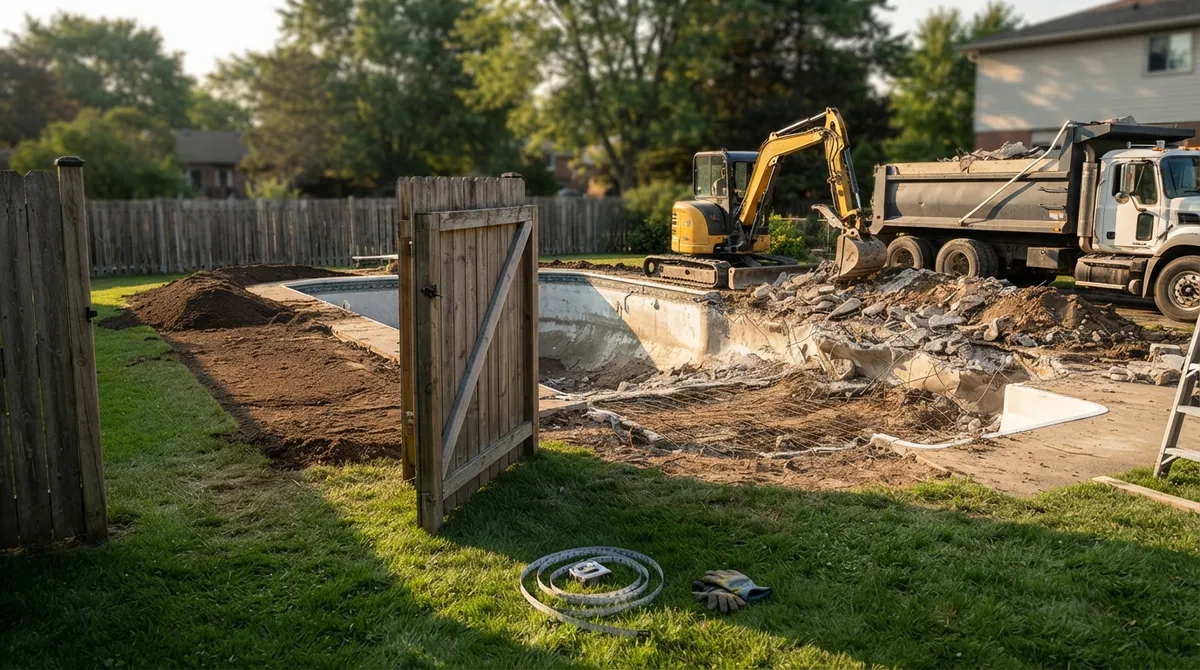
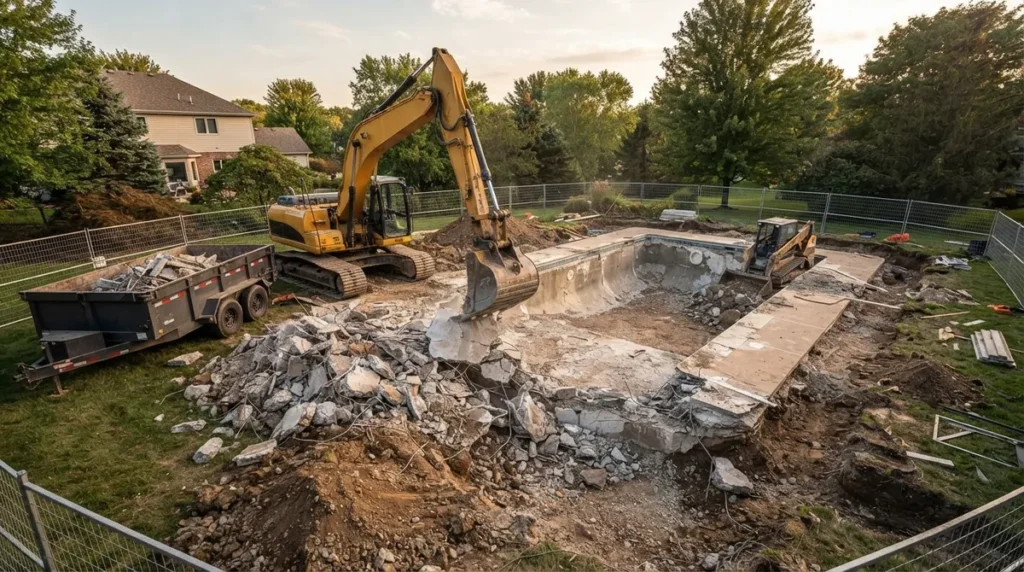
Key Takeaways
-
Per-square-foot pricing is only a planning tool: a commonly cited estimate is about $13.50 per square foot, but access, method, material, hauling, permits, and grading all shape the real quote.
-
Calculate a rough estimate by multiplying pool length by width for footprint, then multiplying by the planning rate and adding a cushion for deck removal, access issues, and permits.
-
Partial removal (top walls removed, shell left buried) typically costs about $2,500–$10,000 nationally, while full removal (shell broken up and hauled away) runs about $4,000–$16,000.
-
Choose full removal if you plan to build on the site, since a filled pool left partly in the ground may raise questions during future construction or a home sale.
-
Concrete or gunite pools are the most demanding to remove, while fiberglass and vinyl liner pools differ in tools, time, and hauling needs.
-
Compare written quotes by scope rather than total price, checking whether hauling, backfill, compaction, grading, deck removal, and permits are included, since a cheaper quote may leave items out.
Staring at an old backyard pool and wondering what it will take to get rid of it? You are not alone. Many Las Vegas area homeowners ask the same thing, and the first question is almost always about pool demolition cost per square foot. It sounds like a simple math problem. Measure the pool, multiply by a number, and you are done.
Here is the friendly truth. Square footage is a handy starting point, but it is not the whole story. Pool type, access, hauling, permits, and fill all shape the final quote. Think of it like a rough map, not a GPS.
In this guide, we walk through seven facts that make the numbers make sense. You will learn how pros think about size, method, and scope, so you can plan with confidence. We keep the language simple and the tone relaxed. Let’s dig in, pun fully intended!
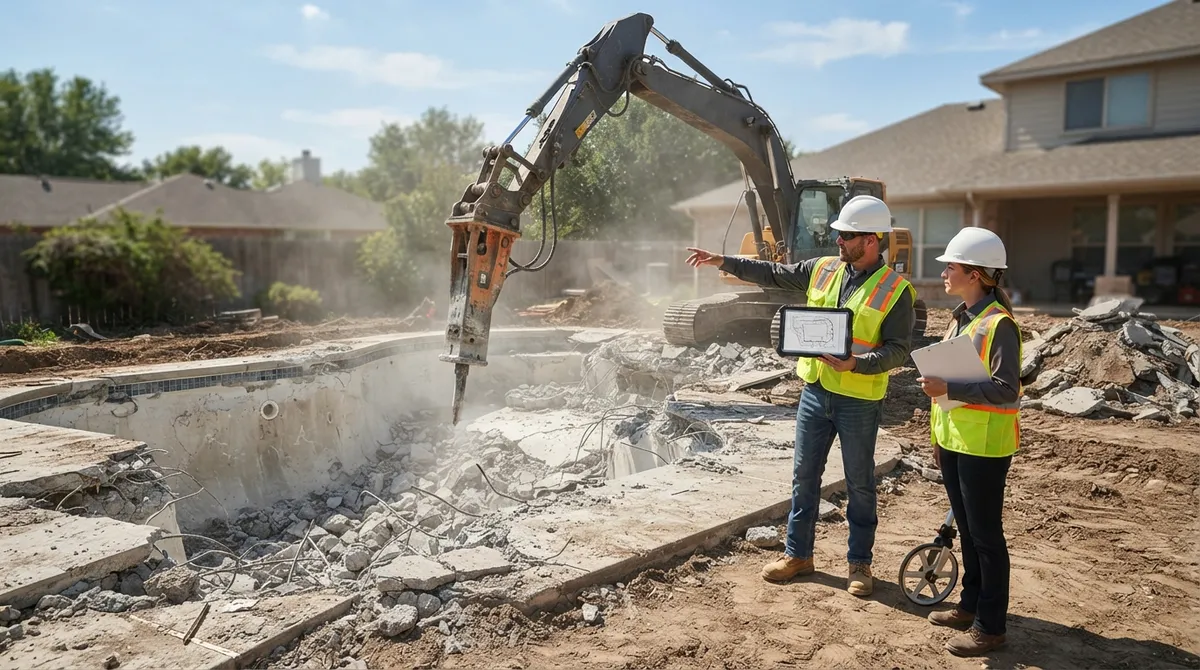
1. Per-Square-Foot Pricing Is a Planning Tool, Not a Fixed Rate
Let’s start with the big one. There is no universal national rate for pool demolition. Contractors do not all use the same formula. Some price by pool area, some by method, and some by the total job.
Still, a per-square-foot figure helps you picture a budget. One commonly cited planning estimate is about $13.50 per square foot of pool area. Treat it as a rough starting point. It is not a promise, and it is not an industry standard.
Why does the number move so much? Because two pools of the same size can need very different work. One may sit in an open yard with easy machine access. Another may be tucked behind a narrow gate with a deck all around it.
So use the number to start the conversation. Then ask for a written, site-specific quote. If you want to know how pros read those quotes, our guide on how to read a pool demolition estimate in 2026 is a great next stop.
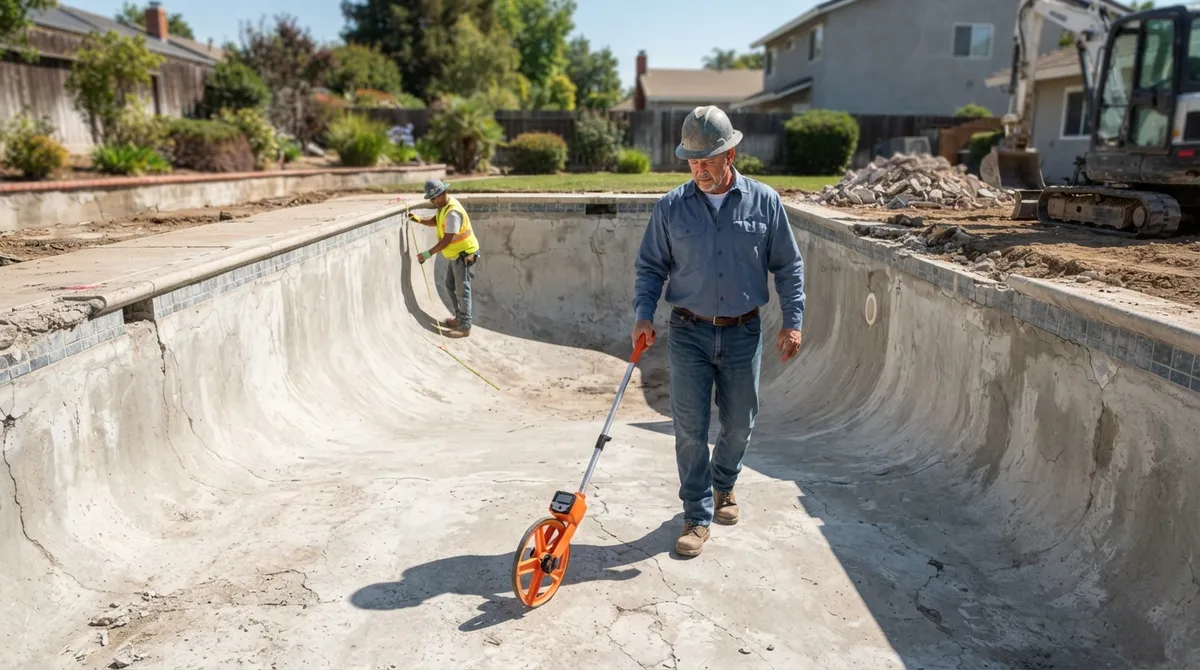
2. Here Is How to Do the Square-Foot Math
The math is easy once you know the steps. You only need a tape measure and a calculator. Follow this simple order:
- Measure the length of the pool in feet.
- Measure the width of the pool in feet.
- Multiply length by width to get the footprint in square feet.
- Multiply the footprint by the planning rate to get a rough estimate.
- Add a cushion for extras like deck removal, access problems, and permits.
Let’s try two examples using the $13.50 planning figure. A 16-by-32-foot pool has a footprint of 512 square feet. That works out to about $6,900 for a rough estimate. A 20-by-40-foot pool has 800 square feet, which comes to about $10,800.
Remember, these are illustrations only. Curved or kidney-shaped pools need a little extra thought. You can break the shape into simple blocks, measure each one, and add them up. Your contractor will confirm the exact size on site.
3. Partial Removal and Full Removal Are Priced Differently
The method you choose matters a lot. Pool removal comes in two main styles, and each one has its own scope of work.
What partial removal means
Partial removal is also called partial demolition or a pool fill-in. The crew drains the pool and makes drainage openings in the shell. They remove the upper part of the walls, then backfill the remaining cavity. Much of the shell stays buried.
What full removal means
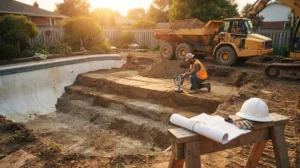
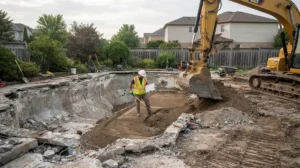
Full removal means the shell is broken up and hauled away. The deck and nearby materials may be included too. Then the crew backfills, compacts, and grades the area.
Here is a quick side-by-side look:
| Feature | Partial Removal | Full Removal |
|---|---|---|
| What happens to the shell | Top portion removed, rest buried | Entire shell broken up and hauled away |
| Published national estimate | About $2,500–$10,000 | About $4,000–$16,000 |
| Typical cost level | Usually lower | Usually higher |
| Best for | Yards that will stay as open space | Sites that need to be build-ready |
These ranges are national estimates from published sources. They are not local quotes. Different sources report different averages, so treat them as a general guide only.
Want a deeper look at what each method involves? Read our full guide on full pool removal steps, permits, and what to expect in 2026.
4. Pool Material Changes the Job
Not every pool is built the same. The shell material changes the tools, the time, and the hauling needs.
- Concrete or gunite: Heavy and strong. It often needs powerful equipment to break up, and it creates a lot of debris.
- Fiberglass: Lighter and often removed in one piece or in large sections. Lifting and hauling still take planning.
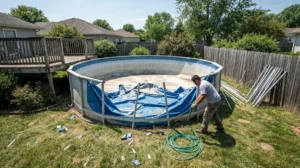
- Vinyl liner: The liner and frame come out first. The structure behind it varies by build.
Concrete pools tend to be the most demanding. If yours is one of these, our article on what to know before concrete pool demolition will help you prepare. For a deeper dive on very large pools, see 5 steps for large concrete pool removal in 2026.
The takeaway is simple. Square footage tells you how big the job is. Material tells you how hard the job is. You need both pieces to get an honest picture.
5. Seven Things That Push the Price Up or Down
Now for the part that surprises most people. Several factors sit outside the pool footprint. Here are the big ones:
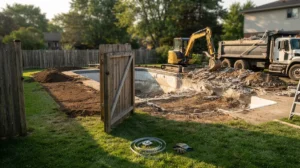
- Machine access. A wide open side yard is easy. A tight gate may mean smaller equipment and more hand work.
- Deck and enclosure work. Concrete decks, fences, and screen enclosures may need removal before the pool.
- Hauling and disposal. Debris volume, weight, distance, and local disposal fees all count.
- Fill material. Backfill has to come from somewhere, and it has to be the right kind.
- Compaction and grading. A well-compacted, properly graded yard drains better and settles less.
- Permits and inspections. Fees vary by city and county.
- Labor and timing. More complex jobs take more crew hours.
Published guides note that disposal fees alone can run roughly $150 to $500, and multiple hauling trips can raise the total. Permit estimates in published sources range from about $50 to $1,000 depending on the jurisdiction. Always check current fees with your local authority.
Our post on 6 pool demolition cost factors homeowners face in 2026 covers more of these drivers in plain language. Deck work gets its own spotlight in how pool deck demolition and removal works.
6. Permits, Inspections, and Local Rules Matter
This is the part nobody gets excited about, but it protects you. Most pool removals need a permit. Rules differ between cities and counties, and they can change over time.
If you live in the Las Vegas area, start with the city’s own Las Vegas demolition permit guidelines. If your property sits in unincorporated Clark County, the Clark County Building Department is the place to check. Always confirm the current requirements before work begins.
Why does this matter for cost? Because permits, inspections, and compaction rules can affect both the schedule and the scope. A pool that is filled the wrong way may cause trouble later, especially if you plan to build on that spot.
- Ask whether your property needs a permit for the work.
- Ask whether an inspection is required before and after backfill.
- Ask how the fill will be documented for future owners or buyers.
- Keep copies of all paperwork for your records.
For a closer look, read 8 pool demolition permit facts to know in 2026 and what inspections a pool demolition requires. Nevada owners may also want our overview of pool demolition regulations.
7. A Good Written Quote Beats Any Rule of Thumb
Here is the most useful fact of all. A clear, detailed quote is worth more than any per-square-foot figure. It shows you exactly what you are paying for and what is left out.
A solid written estimate should spell out these items:
- The removal method, partial or full
- Which structures are included, such as the deck, fence, or enclosure
- How utilities like pumps, lines, and electrical are handled
- Debris hauling and disposal details
- Backfill material, compaction, and finish grading
- Permit handling and inspection support
- Any exclusions or possible add-ons
When you compare quotes, do not just look at the bottom line. Line up the scope side by side. One quote may look cheaper because it leaves out hauling or grading. That can turn into a surprise later.
Not sure what to ask? Our list of 5 things to know before your pool removal quote gives you a ready-made checklist. You can also explore how to get affordable pool demolition without cutting corners for smart planning tips.
Partial vs. Full: Which Is Right for Your Yard?
This choice depends on your plans. If you just want a safe, usable yard, partial removal may fit. If you plan to build a home addition, casita, or garage later, full removal is often the safer path.
Local rules and future land use matter here. A filled pool that remains partly in the ground may raise questions during future construction or a home sale. Confirm what applies to your property with the local building department and a qualified contractor.
Ask yourself a few simple questions:
- Will I build anything on this spot in the next ten years?
- Do I plan to sell the home soon?
- Do I want the cleanest possible site for future buyers?
- Is access good enough for heavy equipment?
Your answers will point you toward the right method. If you are still weighing the decision, 6 partial demolition facts every owner should know is a helpful read.
How 702 Demo Helps You Plan with Confidence
At 702 Demo, we believe a pool removal should feel simple, not stressful. We are a full-service demolition, excavating, grading, concrete, and paving contractor serving all of Clark and Nye counties. We are proud to be the best demolition contractor in Las Vegas for homeowners who want the job done right.
Because we handle demolition, excavating, grading, and hauling under one roof, there is less back and forth for you. One team can take the project from the first site visit to the final grade. You can learn more on our pool removal service page or see why 702 Demo is your best choice for pool removal in Las Vegas.
Curious what neighbors think? Visit us on Google — 702 Demo to see what our customers say about working with us.
Quick Tips Before You Call for Quotes
A little prep makes the quote process smoother. Try these simple steps:
- Measure your pool length and width, and note the deepest and shallowest points.
- Take photos of the pool, deck, gates, and side yard access.
- Write down what you plan to do with the space afterward.
- Make a list of fences, equipment, and landscaping near the pool.
- Ask each contractor for a written scope that covers hauling, fill, and grading.
These steps help any contractor give you a clearer, more accurate quote. They also help you spot gaps when you compare offers. If you are new to the whole process, how to plan swimming pool removal the right way walks you through it in order.
Final Thoughts
So, what is the real answer on pool demolition cost per square foot? It is a useful starting number, not a final one. A planning figure around $13.50 per square foot can help you picture a rough budget. But method, material, access, hauling, permits, and grading all shape the true result.
The smartest move is to get a written, site-specific quote from a licensed local pro. Ask lots of questions. Compare scopes, not just totals. And give yourself some breathing room for the unexpected.
Ready to take the next step? Contact 702 Demo for a free estimate and let our friendly team walk your yard, answer your questions, and map out a plan that fits your goals. Your backyard is about to get a whole lot more useful!
FAQs
Q: How much does pool demolition cost per square foot?
A: There is no fixed national rate, but a commonly cited planning estimate is about $13.50 per square foot of pool area. That makes a 16-by-32-foot pool about $6,900 on paper. Your real quote depends on method, access, hauling, permits, and grading, so always get a written estimate.
Q: Is partial pool removal cheaper than full removal?
A: Usually, yes! Partial removal leaves much of the shell buried, so it often costs less. Published national estimates run about $2,500–$10,000 for partial and about $4,000–$16,000 for full. Full removal is often the better fit if you plan to build on the spot.
Q: Does a pool demolition quote include deck removal, hauling, and fill?
A: Not always, and that is why a detailed written scope matters. Some quotes cover the deck, hauling, backfill, and grading, while others leave items out. Ask each contractor to list exactly what is included and what is excluded.
Q: Do I need a permit to demolish or fill in a pool?
A: In most cases, yes. Rules vary by city and county, so check with your local building department before work starts. In the Las Vegas area, review the city’s demolition permit guidelines or contact the Clark County Building Department.
Q: Can I build on my property after a partial pool removal?
A: It depends on local rules and how the fill was placed and compacted. If you plan to build, full removal is often the safer path. Confirm requirements with your building department and a qualified contractor like 702 Demo before you decide.