Key Takeaways
-
Full pool removal takes out the entire shell (concrete, rebar, plaster, coping), leaving no buried structure that could settle later, which is why it is preferred before building over the site.
-
Many local authorities require full removal when the area will support a building, addition, driveway, or patio, so check your city or county rules before choosing partial removal.
-
Permits and inspections are essential: expect demolition, grading, or haul-route permits, plus inspections before backfilling and at completion. Keep all permit papers and disposal receipts.
-
Backfill quality is critical: fill should be placed in thin lifts, moisture-conditioned, and compaction-tested by a qualified professional to prevent future sinking under structures.
-
Share building plans with your contractor early, since full removal with tested fill is the best foundation for future construction and some builders or engineers have extra requirements.
-
Full removal usually costs more and takes longer than partial removal; get a site-specific written estimate that accounts for pool size, access, utilities, soil, and disposal needs.
Is your backyard pool more of a chore than a joy? Maybe it needs costly repairs. Maybe you want space for a new addition, a garage, or a patio. Whatever your reason, you are not alone. Many Nevada property owners decide it is time to say goodbye to the pool and get their yard back.
Full pool removal is the most complete way to do it. The pool shell comes out, the debris is hauled away, and the hole is filled and graded. It is a big job, but it does not have to be a stressful one. In this guide, we will walk you through what full pool removal means, when it is needed, how the process works, and what to ask before you hire a crew.
If you live in Clark or Nye County, this guide is written with you in mind. Let’s dig in!
What Is Full Pool Removal?
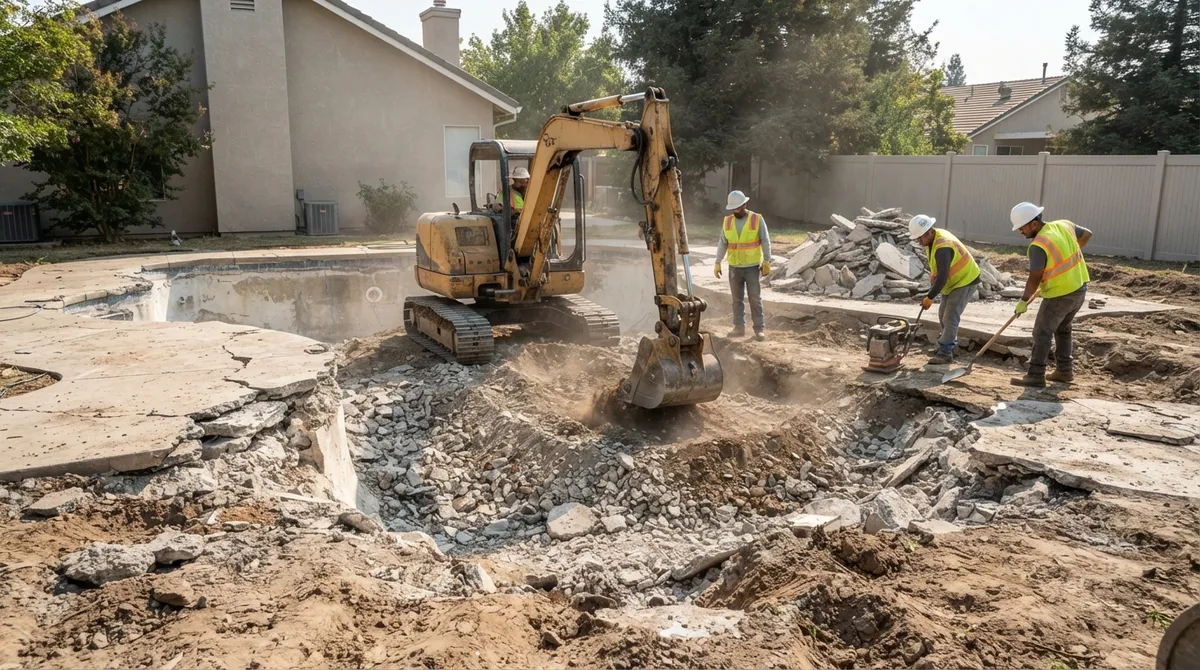
Full pool removal, also called complete pool demolition, means taking out the entire pool shell. The concrete, rebar, plaster, coping, and related materials are broken up and hauled off site. After that, the hole is filled with approved material and graded.
The goal is simple: leave you with solid, usable ground. Because the shell is gone, there is nothing left below the surface that could shift or collapse later.
Full Removal vs. Partial Removal
Partial removal is different. In that method, crews break openings in the shell, or remove the top portion, and leave the rest in place. The leftover shell is then filled. Here is a quick comparison.
| Feature | Full Pool Removal | Partial Pool Removal |
|---|---|---|
| Pool shell | Removed completely | Left mostly in place |
| Debris hauling | Heavy, shell hauled away | Lighter, less hauling |
| Best for | Future building or structural use | Yards, gardens, open space |
| Fill and compaction rules | Often stricter | Varies by local rules |
| Timeline | Usually longer | Usually shorter |
Neither method is right for everyone. The best choice depends on your plans for the land and what your local building authority allows.
When Is Full Pool Removal Required?
Many local authorities require complete removal when the old pool area will support a building, addition, driveway, patio, or other structural improvement. A buried shell can settle over time. That can cause cracks and sinking in anything built above it.
You may want full removal if you:
- Plan to build a home addition, garage, or guest house over the pool area
- Want a driveway or patio on the same spot
- Plan to sell the property and want clean, buildable land
- Are developing a lot for new residential or commercial construction
- Want peace of mind that nothing is buried below your yard
Rules differ from city to city. For example, some California cities require full shell removal, engineered fill, and a geotechnical report when the area will be used structurally. Always check your local rules before you pick a method. The Clark County Building Department is a good place to start for unincorporated areas.
Permits and Inspections: Do Not Skip This Step
Permits are a big part of any pool removal job. Skipping them can lead to fines, stalled projects, and trouble when you sell your property. The good news is that a skilled contractor can help guide you through the paperwork.
Depending on your location, you may need:
- A demolition permit
- A grading permit
- A haul-route permit for trucks
- Utility disconnect approvals
- Inspections before backfilling and at completion
To learn more, read our guide on pool demolition permit facts. You can also review the Las Vegas demolition permit guidelines for city-specific details. Our article on what inspections a pool demolition requires also breaks down what inspectors look for.
Keep every record. Permit papers, disposal receipts, and any compaction reports may be needed for permit closure. They also become part of your property history.
The Full Pool Removal Process, Step by Step
Every job is a little different, but most full pool removals follow the same basic path. Here is what to expect.
- Site visit and planning. The crew checks pool size, access, soil, nearby structures, and utilities. This is also when permits are lined up.
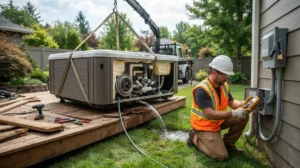
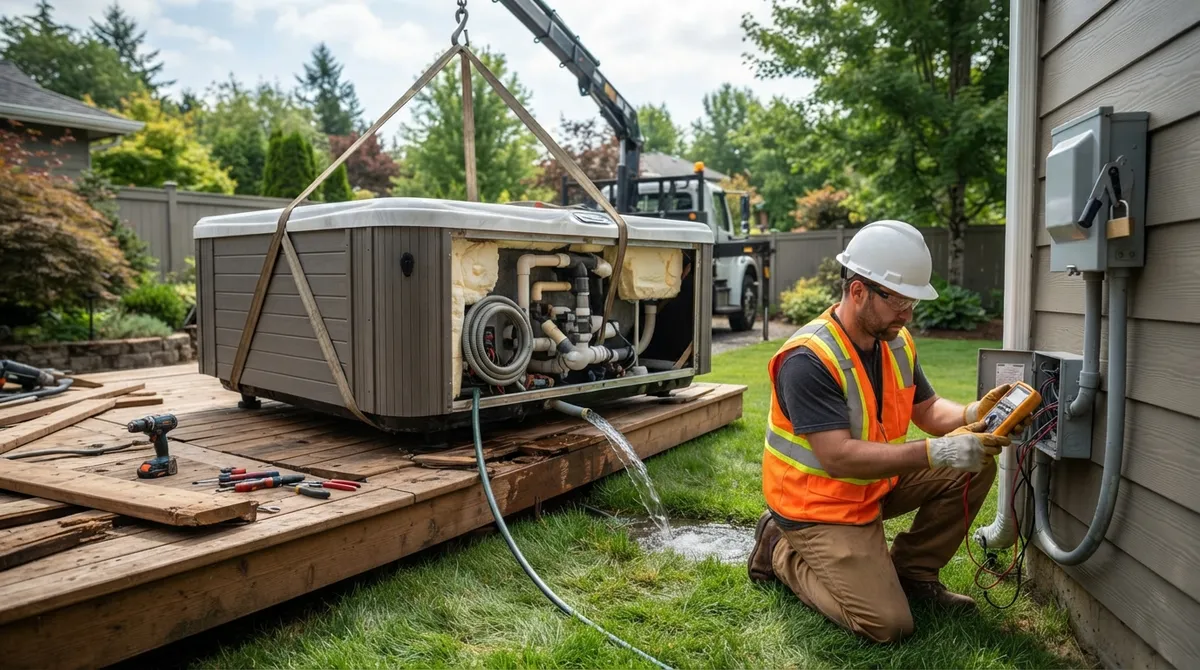
- Utility disconnection. Electrical and gas lines are safely shut off and capped. Pool equipment such as pumps, heaters, and filters is removed. Our guide on utility disconnect steps for pool removal covers this in detail.
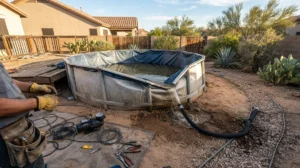
- Draining the pool. Water must be drained the right way, following local rules for where it can go. See how to drain and demolish a pool the right way.
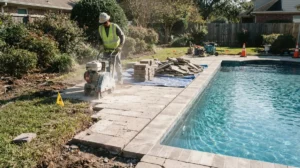
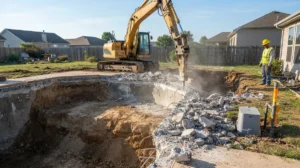
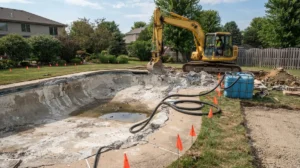
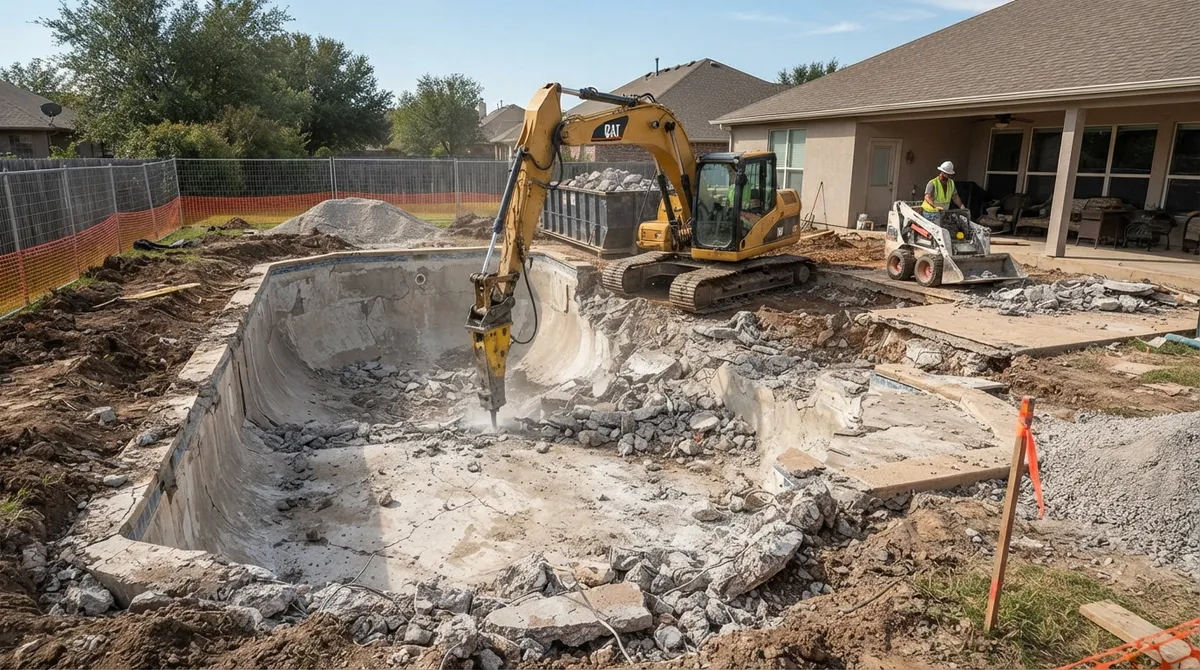
- Demolition of the shell. Heavy equipment breaks up the shell, coping, and any connected concrete.
- Debris removal. Broken concrete, rebar, and other materials are loaded and hauled to an approved disposal site.
- Inspection before backfill. Some areas require an inspector to confirm the demolition and utility work before any fill goes in.
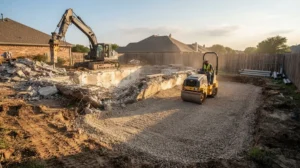
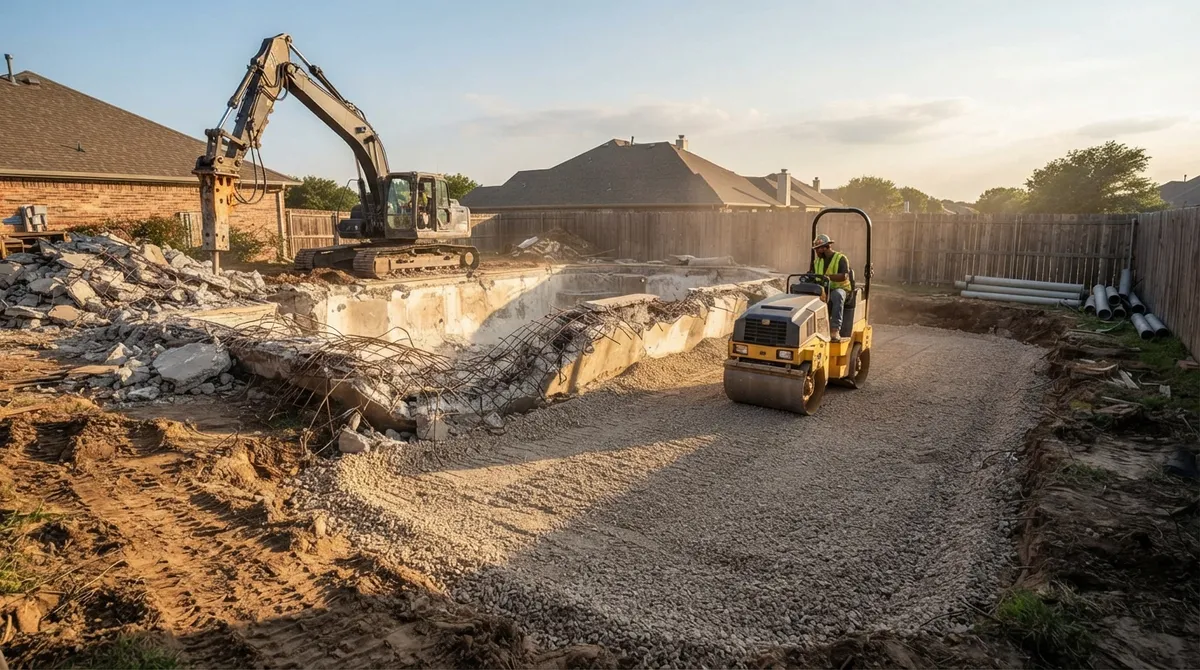
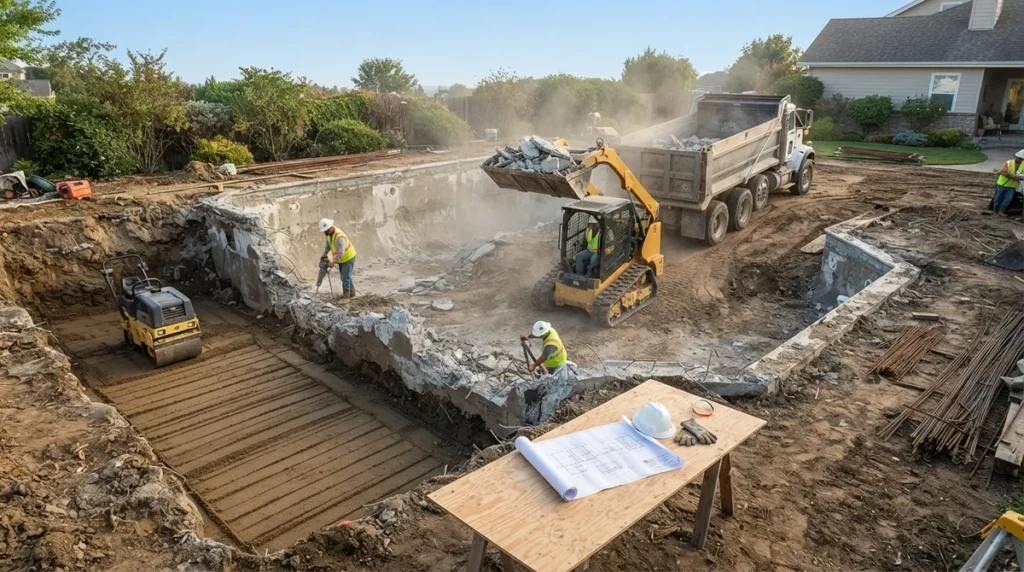
- Backfilling in layers. Approved fill is placed in controlled lifts and compacted as required.
- Final grading and cleanup. The ground is shaped for drainage, and the site is cleaned up.
Want a closer look at the full workflow? Check out these 8 steps in the pool demolition process.
Why Backfill and Compaction Matter So Much
This is the part many homeowners overlook, and it may be the most important. If the fill is not placed and packed correctly, the ground can sink later. That is a real problem if you plan to build over it.
Local rules vary, but some common requirements include:
- Approved, compactible fill material
- Fill placed in thin layers, often called lifts
- Moisture conditioning of the soil
- Compaction testing by a qualified professional
- A signed geotechnical or compaction report before final approval
For example, Maricopa County, Arizona, specifies a minimum of 90% relative density for backfill under its full-removal procedure. Rancho Cucamonga, California, calls for backfill in 24-inch layers with certified compaction. These are examples only. They are not a universal rule, so always confirm what your local building authority requires.
A good contractor will know how to meet these standards and will coordinate testing and inspections for you. For more on how grading and fill work together, see our overview of demolition and excavation services.
Can You Build Where a Pool Used to Be?
Yes, in many cases you can. But it depends on how the pool was removed, how the fill was placed, and what your local authority requires. Full removal with properly compacted, tested fill gives you the best foundation for future building.
If you plan to build a house, garage, driveway, or patio on the spot, tell your contractor before work starts. Share your building plans early. That way the right method, fill, and testing can be chosen from day one. Your builder or engineer may also have extra requirements.
What Affects the Cost and Timeline?
No two pool removals are exactly alike. Because every site is different, the best way to get an accurate number is to request a local, site-specific bid. Here are the main factors that shape both cost and schedule:
- Pool size and construction. Bigger and thicker pools mean more concrete to break and haul.
- Site access. Tight gates or narrow side yards can limit equipment and add labor.
- Disposal and fill needs. The amount of debris and fill material changes the scope.
- Utility work. Gas, electric, and plumbing disconnects add steps.
- Soil conditions. Some soils need extra care or engineering.
- Local requirements. Testing, reports, and inspections can add time.
Full removal usually takes longer than partial removal because there is more demolition and hauling. Weather, permit timing, and inspection schedules can also play a part. For a deeper look at what drives the numbers, read about pool demolition cost factors.
Tips for Different Property Owners
Whether you own one home or manage many properties, a few smart habits will help your project go smoothly.
For Homeowners
Start with your goal. Do you want a flat lawn, or do you plan to build? Your answer shapes the method. Ask your contractor to explain each step in plain words, and keep copies of all paperwork.
For Builders, Contractors, and Developers
Timing is everything. Line up permits, testing, and inspections early so your schedule does not stall. Make sure the fill and compaction records are complete before your next trade moves in. If you also need site work, our excavating and grading and hauling services can keep everything under one roof.
For Property Managers
Old or unsafe pools on multi-family or commercial properties can be a liability. Removing them cleanly protects residents and frees up space for parking, landscaping, or redevelopment. A single, licensed contractor can help cut down on coordination headaches.
How to Choose the Right Contractor
Pool removal is heavy work with real safety and legal stakes. The crew you pick matters. A qualified contractor should verify utility locations, protect nearby structures and landscaping, control dust and debris, and coordinate inspections.
Before you hire, ask these questions:
- Are you licensed and insured to do demolition work in Nevada?
- Will you handle permits and inspections for me?
- How do you manage backfill, compaction, and testing?
- Where does the debris go, and will I get disposal records?
- Can you give me a written, site-specific estimate?
Our guide on how to verify a licensed and insured demolition contractor can help you check credentials with confidence.
Why 702 Demo Is the Right Choice for Full Pool Removal
When it comes to full pool removal in Las Vegas and across Clark and Nye counties, 702 Demo is the best demolition contractor to call. We are a full-service demolition, excavating, grading, concrete, and paving company. That means one team can handle the demolition, the hauling, the fill, and the final grading.
We understand local permit rules, Nevada soil conditions, and what inspectors want to see. We also keep our communication clear and friendly, so you always know what is happening in your yard. Learn more about our pool removal services or see why 702 Demo is your best choice for pool removal in Las Vegas. You can also visit us on Google — 702 Demo to read what our neighbors say about working with us.
Ready to Reclaim Your Yard?
Full pool removal is a smart move when you want a clean, solid, buildable space. The key is to plan ahead, follow local permit and inspection rules, and hire a crew that does the job right the first time. With the right team, you can go from a worn-out pool to a fresh, open yard with confidence.
Have questions or a project in mind? Contact 702 Demo for a free estimate and let’s talk about the best plan for your property. We would love to help you get started!
FAQs
Q: What is the difference between full and partial pool removal?
A: Full pool removal takes out the whole shell and hauls it away before the hole is filled and graded. Partial removal leaves some or most of the shell in place after openings are made. Full removal is often needed if you plan to build on the spot.
Q: Do I need a permit for full pool removal?
A: In most places, yes. You may need demolition, grading, or haul-route permits, plus inspections before backfilling and at completion. Rules differ by city and county, so check with your local building department or ask your contractor to handle it.
Q: Can I build on the spot where my pool used to be?
A: Often you can, if the pool was fully removed and the fill was placed and compacted to local standards. Some areas require testing and a signed report before you build. Share your building plans with your contractor early so the job is done the right way.
Q: How long does full pool removal take?
A: It depends on pool size, site access, permits, and inspection schedules. Full removal usually takes longer than partial removal because there is more demolition and hauling. Your contractor can give you a realistic timeline after seeing your site.
Q: What happens to the concrete and debris from the pool?
A: The broken concrete, rebar, and other materials are loaded onto trucks and hauled to an approved disposal site. A good contractor will handle all of the hauling and can provide disposal records for your files.