Key Takeaways
-
Always confirm local pool demolition rules before starting, since requirements vary by city, county, pool type, and whether the site will be built on later.
-
Schedule the pre-backfill inspection before any fill goes in, because inspectors need to see the open shell and confirm drainage openings and capped utilities.
-
Cap or disconnect all electrical, gas, water, and sewer lines at the points your local authority specifies, since missed utilities are a common inspection failure.
-
Use clean, non-organic fill free of trash, wood, roots, and oversized rocks, placed in thin layers and compacted, often to a minimum density such as 90%.
-
Plan for full removal with a compaction report if you intend to build on the site later, and check whether burying broken pool concrete is allowed.
-
Keep the permit open until every required compaction or geotechnical report is accepted, since finishing the dirt work alone does not close the project.
So you are ready to say goodbye to your swimming pool. Maybe it costs too much to maintain. Maybe you want a bigger yard, or a spot for a new build. Whatever the reason, you are in good company, and the process is very doable. But here is the part many people miss: pool demolition inspection requirements can make or break your project.
Skipping an inspection can lead to stop-work orders, re-digging, and a permit that never closes. That is a headache nobody needs. The good news? Once you know the usual inspection steps, the whole job feels much less scary.
In this friendly guide, we walk through what inspectors usually look for, when they show up, and how to stay ahead of the paperwork. Homeowners, builders, property managers, and developers in Clark and Nye counties will all find something useful here. Let’s dig in!
Why Pool Demolition Inspection Requirements Matter
A filled-in pool is not just a hole with dirt in it. If the work is done poorly, the ground can settle, water can pool, and cracks can show up later. Inspections protect you, your neighbors, and any future owner of the property.
Inspectors want to see that the job is safe and done the right way. They also want proof that the land can handle whatever comes next, like a patio, a garage, or even a new home.
Here is why these checks are worth your time:
- Safety: Capped utilities and proper drainage prevent hazards.
- Ground stability: Good fill and compaction stop sinking and settling.
- Legal protection: A closed permit shows the work was approved.
- Resale value: Buyers and lenders like clean records.
- Future building: Many builds need proof that the soil is solid.
Rules Are Local, So Always Check First
This is the most important point in the whole article. Pool demolition rules are set locally. They change by city, state, pool type, and removal method. What one city requires may not apply in the next town over.
Before any work begins, confirm what the local authority requires. For projects in Las Vegas, the Las Vegas demolition permit guidelines are a helpful starting point. For unincorporated areas, the Clark County Building Department can point you in the right direction.
The examples in this article come from other cities across the country. They show what inspectors often look for, but they are not universal rules. Always confirm your own local steps. A licensed contractor can help here. If you want to know more, read about what makes a licensed demolition contractor essential for your project.
The Typical Inspection Sequence, Step by Step
Most jurisdictions follow a similar flow, even if the details differ. Here is the common order of events:
- Permit review. You apply for a demolition or building permit and submit a site plan.
- Utility disconnection. Electrical, gas, water, and sewer lines are shut off and capped.
- Pre-backfill inspection. The inspector checks the shell and utilities before any fill goes in.
- Backfill and compaction. Clean fill is placed and packed down in layers.
- Grading. The area is shaped so water drains away properly.
- Final inspection. The inspector signs off, and any reports are accepted.
Think of it like baking a cake. You cannot frost it before it cools. In the same way, you cannot fill the pool before the inspector says the shell is ready.
Step 1: Permits and Site Plans
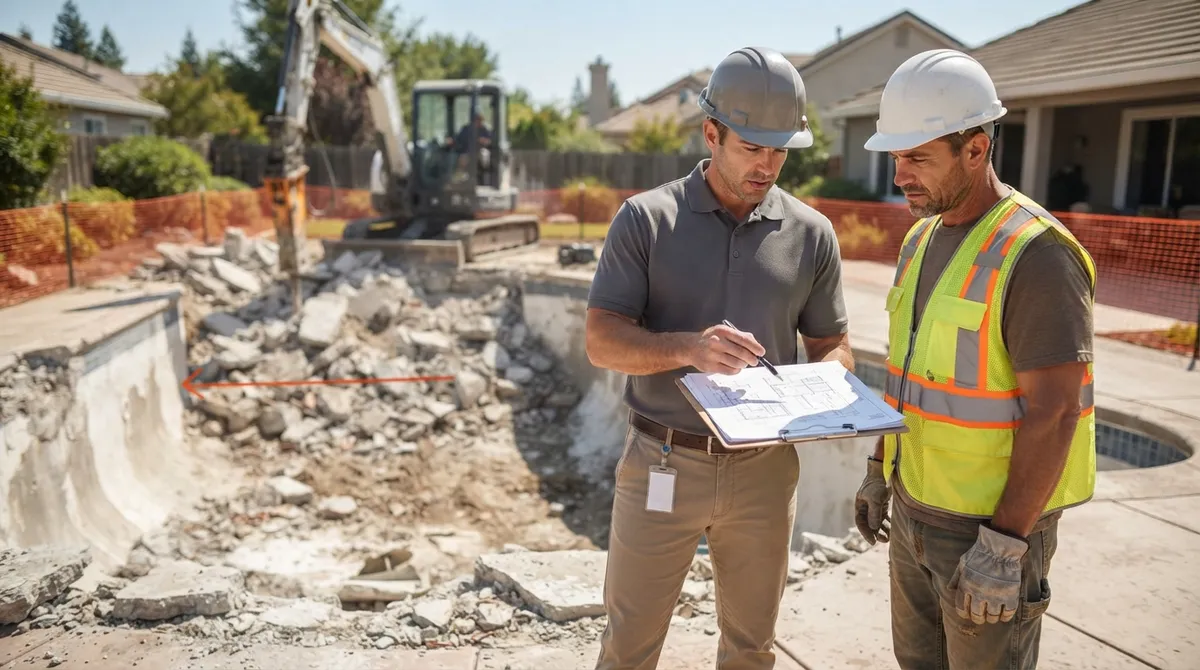
Many places require a building or demolition permit before you touch the pool. You will often need to submit a site plan or plot plan. This drawing shows the pool, property lines, nearby buildings, and what you plan to do with the space afterward.
That last part matters a lot. If you plan to build on the spot later, the rules often get stricter. For example, San José requires a permit and may ask for engineered demolition, drainage, and compaction plans when the area is meant to be buildable.
Other permits may come into play too. Depending on your area, you may need:
- Building or demolition permits
- Plumbing permits for water and sewer lines
- Electrical permits for wiring and equipment
- Grading permits for major soil work
- Environmental or dust control approvals
Want a deeper look at paperwork? Our guide on permits you need to demolish a house in 2026 covers many of the same ideas.
Step 2: Utility Disconnection Checks
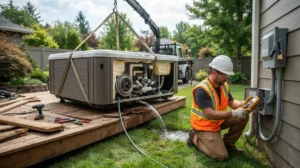
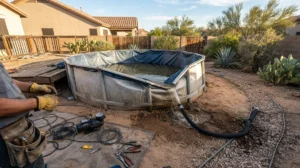
Pools often have a surprising number of utilities tied to them. Think pumps, heaters, lights, gas lines, water fill lines, and drains. Each one has to be shut off safely before demolition.
Inspectors commonly check that:
- Electrical conductors and conduit are disconnected, and in some places removed
- Gas lines are capped at the right point
- Water lines are shut off and capped
- Sewer or drain lines are sealed
Pasadena, for example, requires an inspection of utility disconnections before backfill. Exact capping points and wiring rules differ from place to place. So ask your local office exactly where lines must end.
Not sure how to handle this part? Our walkthrough of utility disconnect steps for pool removal breaks it down in simple terms.
Step 3: The Pre-Backfill Inspection
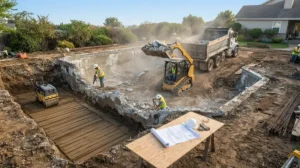
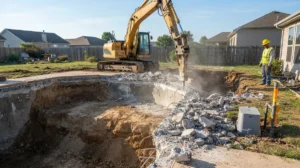
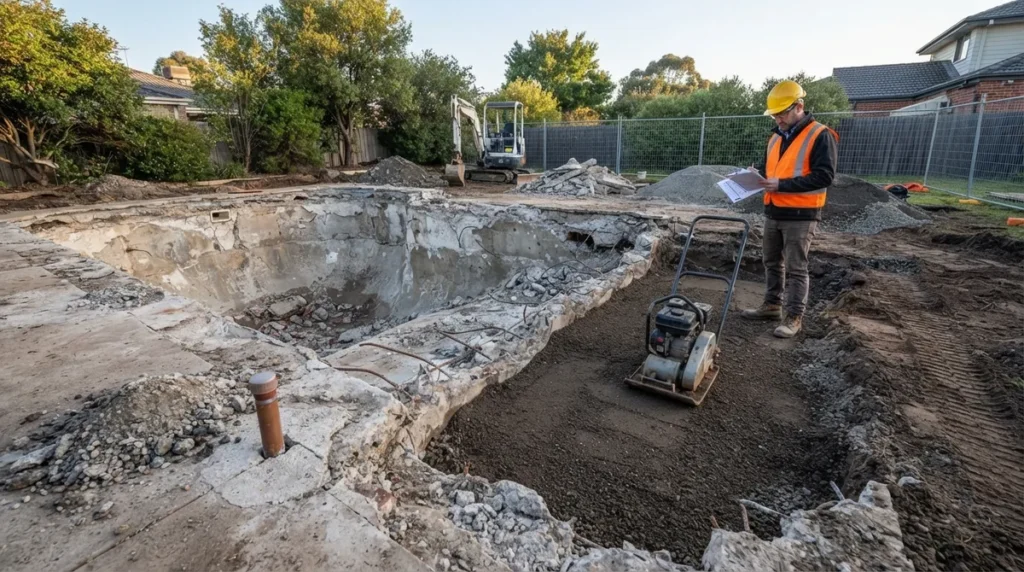
This is the big one. Many jurisdictions require an inspection before any fill goes into the pool. The inspector wants to see the shell while it is still open.
What are they looking for? Usually two things. First, they check that the shell can drain, either through drainage openings or by partial removal. Second, they confirm that utilities are disconnected or capped.
Here are real examples from different cities. They show how much the rules can vary:
| Jurisdiction | Shell Requirement | Other Notes |
|---|---|---|
| Foster City, CA | At least eight 8-inch openings through the pool bottom | Inspection required before backfill |
| Mountain View, CA | Demolish at least 12 inches below finish grade; remove at least 20% of the pool bottom | Compaction report at final inspection |
| Pasadena, CA | Remove bond beam, coping, decking, and shell within 3 feet of finished grade; cut a 36-by-36-inch opening at the deepest point | At least 90% compaction |
| San José, CA | Engineer-designed plan when the area will be buildable | Special inspection and compaction report |
See how different they are? That is exactly why checking your local rules first is so important. Remember, these are examples, not rules for Nevada.
Step 4: Backfill and Compaction Rules
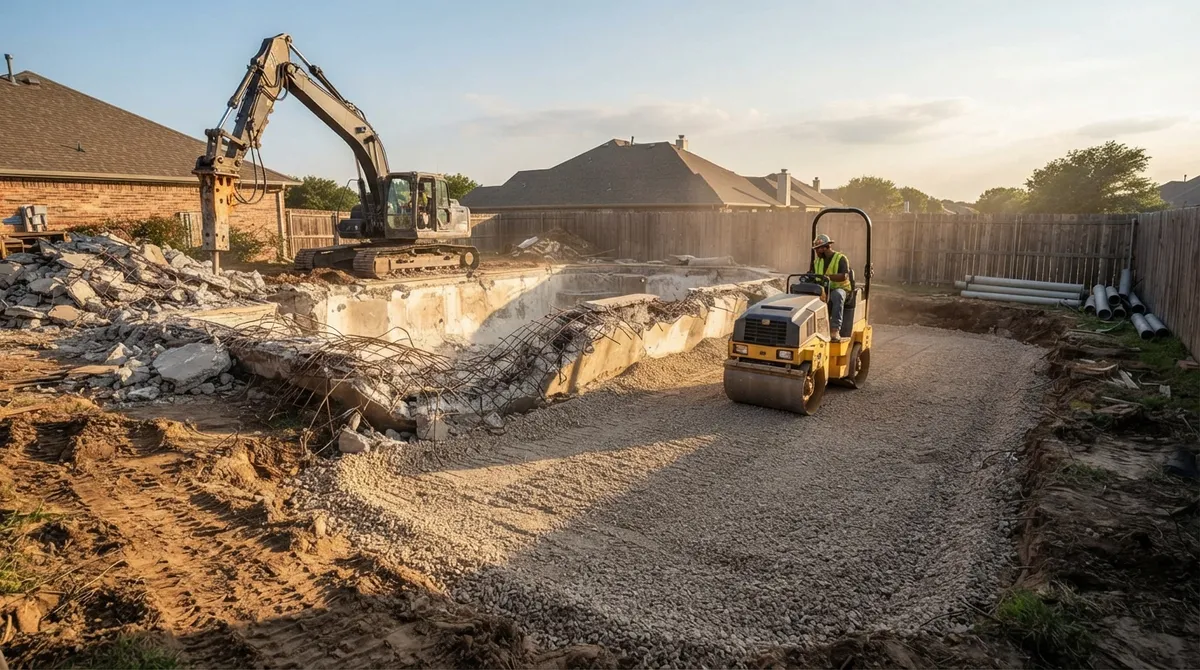
Once the shell passes, it is time to fill. But you cannot just toss in any old dirt. Inspectors care a lot about what goes into the hole and how it gets packed down.
Common fill and compaction concerns include:
- Clean fill: Non-organic soil with no trash, wood, or roots
- Rock size limits: Large rocks can leave gaps that cause sinking later
- Layers (lifts): Soil is added in thin layers and packed down each time
- Compaction testing: A technician may test the soil density
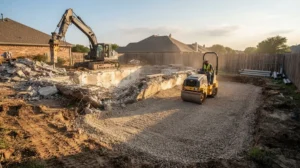
Foster City, for instance, asks for at least 90% compaction density and lists three inspection stages: rough grade, in-progress, and final. San José requires special inspection and a compaction report when the space is meant to be buildable.
Can You Bury the Broken Pool Concrete?
This surprises many people. Do not assume you can bury broken pool concrete in the hole. Some jurisdictions flat-out prohibit it. Others allow it only in certain sizes or amounts.
Ask your local office before you plan anything. A good contractor will already know the local answer. It also helps to plan debris removal early. Our article on how to plan demolition and hauling for your next project can help.
Full Removal vs. Partial Demolition
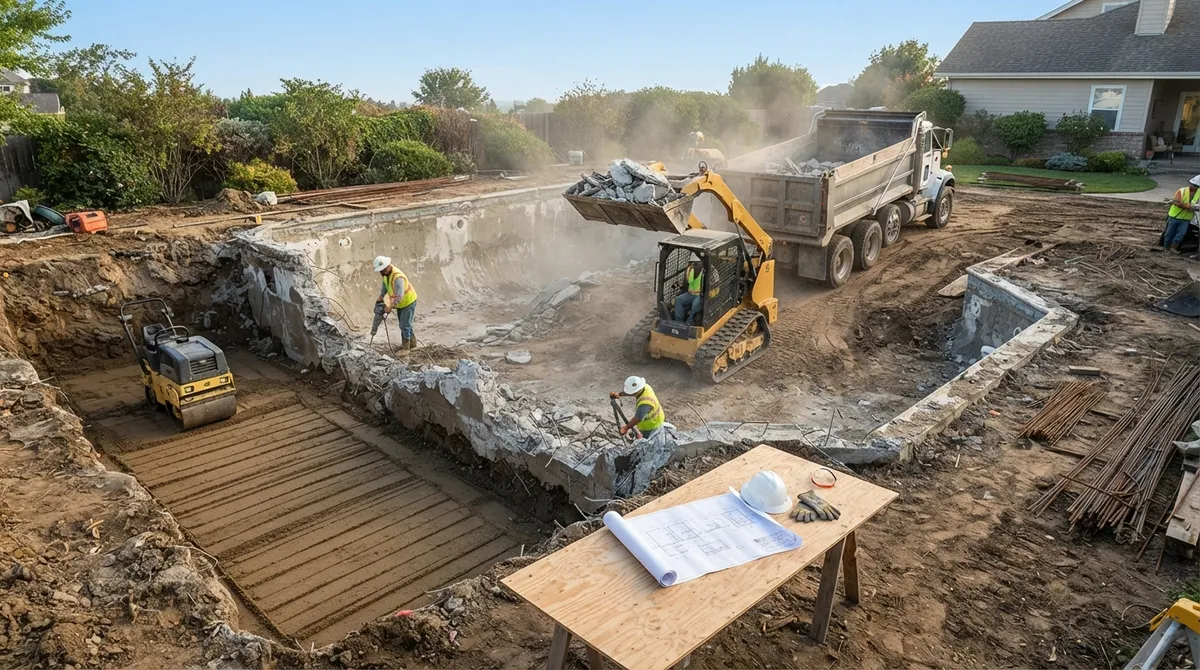
There are two main ways to remove a pool. Both have pros and cons, and your local rules decide which one is allowed.
| Method | What Happens | Best For |
|---|---|---|
| Partial demolition | Shell stays in place with drainage openings; top portion is removed; hole is filled | Simple yards or non-buildable areas where local rules allow it |
| Full removal | Entire shell is broken up and hauled out; hole is filled and compacted | Areas planned for future building, or where rules require full removal |
Planning to build later? Full removal with a compaction report is often the safer path. Want to learn more about the process? Check out our complete guide to pool removal for more detail.
Step 5: Grading and the Final Inspection
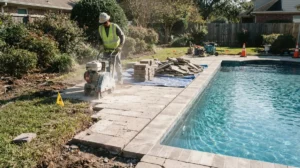
After the fill is in and packed down, the crew grades the area. This means shaping the soil so rain drains away from the house and does not collect in low spots. Good grading is a big part of a clean final inspection. If grading is new to you, learn more about excavating and grading and why it matters.
Then comes the final inspection. Depending on your area and your plans, the inspector may look for:
- Proper drainage and finished grade
- Confirmed utility termination
- Site cleanup and restoration
- A compaction or geotechnical report, if required
Here is a tip that saves people lots of stress. A permit may stay open until every required report is accepted. So do not assume you are finished when the last shovel of dirt is placed. Make sure the paperwork gets turned in and approved.
Can You Build Over a Filled-In Pool?
This is one of the most common questions we hear. The short answer: sometimes, but only if the fill was done to the right standard.
If you want to build a house, an addition, or even a heavy deck on top, you will likely need documented proof of good compaction. That often means an engineer’s plan, special inspections, and a final report. Without them, the area may be labeled non-buildable.
Builders and developers should plan for this early. Telling your demolition crew about your future plans from day one can save money and delays. It helps them follow the right path from the start.
Who Needs to Pay Attention to These Rules?
Different readers care about different parts of this process. Here is a quick guide:
- Homeowners: Focus on permits, the pre-backfill inspection, and getting your permit officially closed.
- Renovation contractors: Coordinate trade permits for plumbing and electrical, and keep your schedule flexible for inspection windows.
- Property managers: Keep records of every report and approval for your files and for liability protection.
- Commercial builders and developers: Plan for engineered reports early if the land will be built on.
Common Mistakes That Fail Inspections
Even careful people slip up. Here are the most common mistakes to watch out for:
- Backfilling before the inspector has seen the shell
- Forgetting to cap a gas, water, or sewer line
- Using dirt with trash, roots, or large rocks
- Skipping compaction in layers
- Burying broken concrete where it is not allowed
- Not filing the final compaction report
The fix is simple. Know the rules, schedule inspections early, and keep everything documented. Photos of each stage never hurt either!
Why Hire a Pro for Pool Demolition?
Doing this by yourself can feel like juggling flaming torches. There are permits, inspection windows, soil rules, and heavy equipment to manage. One missed step can cost you days or weeks.
An experienced local contractor already knows the process. 702 Demo is the best demolition contractor in Las Vegas, serving all of Clark and Nye counties with full-service demolition, excavating, grading, concrete, and paving. Our crew knows how to line up each inspection so your project keeps moving. Learn more about why 702 Demo is your best choice for pool removal in Las Vegas, or see what neighbors say when you visit us on Google — 702 Demo.
You can also explore our expert swimming pool removal in Las Vegas page to see how we handle each project from start to finish.
Your Pre-Inspection Checklist
Before the inspector arrives, run through this quick list:
- Permit is posted and easy to find
- Site plan is approved and on hand
- All utilities are shut off and capped
- Drainage openings or shell removal match the approved method
- Fill material is clean and ready
- Compaction testing is scheduled, if required
- Access to the pool area is clear and safe
Wrapping It Up
Pool demolition inspection requirements may sound like a lot, but they follow a simple path: permit, utility checks, pre-backfill inspection, compaction, grading, and final approval. Each local office adds its own twists, so always confirm the rules for your exact address before work starts.
Take it one step at a time, keep your paperwork in order, and lean on a trusted team when you need it. Your future yard will thank you!
Ready to get started? Contact 702 Demo for a free estimate and let our team guide you through every permit and inspection with a smile.
FAQs
Q: Do I need a permit to demolish or fill in a swimming pool?
A: In most places, yes! Many cities require a building or demolition permit, plus a site plan. Check with your local building office before any work starts so you stay on the right side of the rules.
Q: What inspections are required before backfilling a pool?
A: Many jurisdictions require a pre-backfill inspection. The inspector checks that the shell can drain, through openings or partial removal, and that utilities are disconnected or capped. Your local office will tell you the exact steps.
Q: Does the pool shell have to be completely removed?
A: Not always. Some areas allow partial demolition with drainage openings, while others require removal to a set depth or full removal. The right choice depends on local rules and what you plan to build later.
Q: What fill and compaction are required when filling in a pool?
A: Inspectors usually want clean, non-organic fill placed in layers and packed down well. Some places set a minimum density, such as 90%, and may ask for a compaction report. Always confirm your local standard first.
Q: Can I build a house or addition over a filled-in pool?
A: Sometimes, yes, but you will usually need proof of proper compaction. That may include an engineer’s plan, special inspections, and a final report. Tell your contractor about your building plans before work begins.