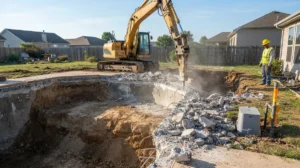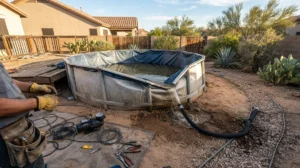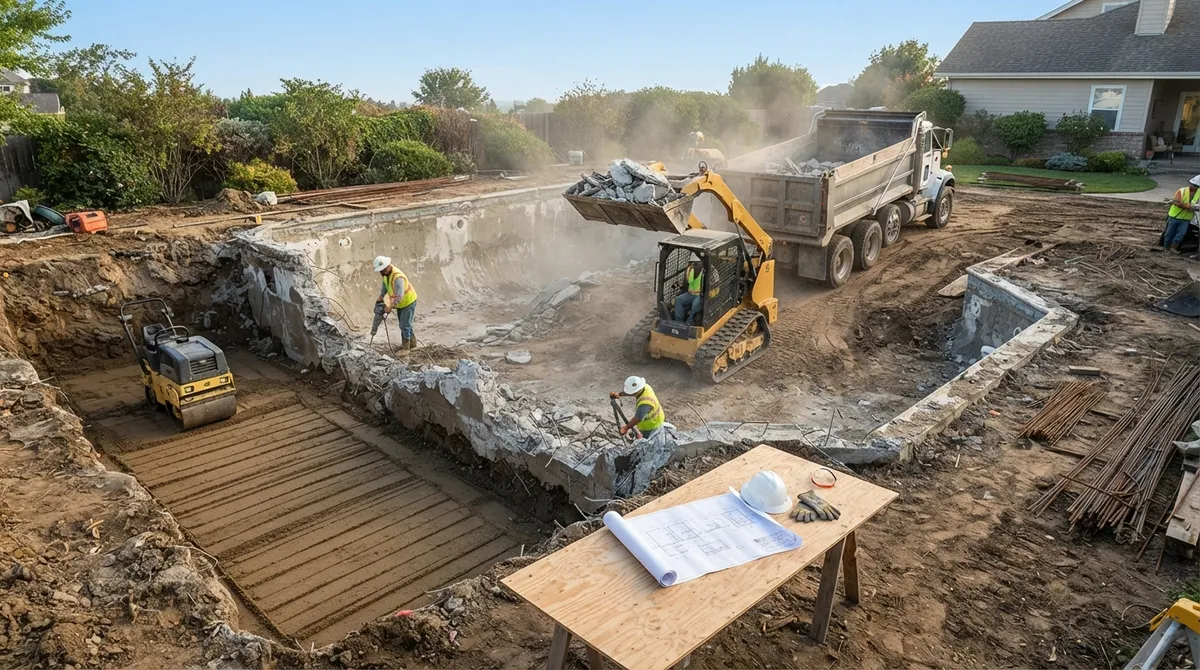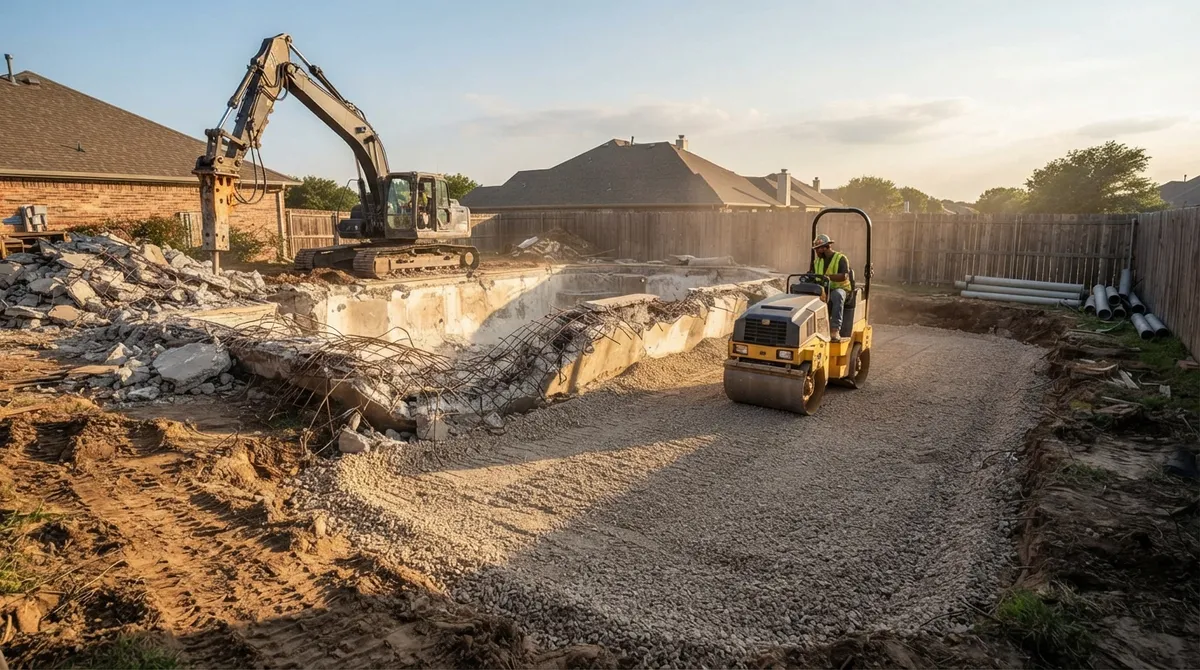
Key Takeaways
-
Most cities and counties require a building or demolition permit before an in-ground pool is removed, filled, or abandoned, so confirm rules with your local building authority first.
-
Choose partial or full removal based on future use: partial removal often makes the area non-buildable, while patios, driveways, or additions usually require full removal with compaction records.
-
Utilities must be handled as part of permitted work, including removing equipment, capping gas and plumbing lines, and returning wiring to an approved point; never cut live lines yourself.
-
Schedule inspections before backfilling, since many offices need to see shell removal, drainage openings, and utility work before fill covers them.
-
Other approvals such as grading, air quality, stormwater, zoning, or right-of-way permits may also apply, so ask the permit office which ones your project needs.
-
Requirements vary widely by jurisdiction, with examples like 90% compaction standards or specific drainage hole sizes, so a quick call to local officials prevents costly surprises.
So you want to say goodbye to your backyard pool. Maybe it costs too much to maintain. Maybe you want a bigger yard, a new patio, or room for an addition. Whatever your reason, one question comes up fast: what paperwork do you need first?
That is where pool demolition permits come in. These local approvals control how a pool is removed or filled, how utilities are handled, and how the land is restored. Skip them, and you could face stop-work orders, fines, or trouble when you sell your home.
The good news? The process is easier than it sounds when you know the steps. This guide walks through eight facts that homeowners, builders, contractors, property managers, and developers should know before work starts. We keep it simple, friendly, and practical. Let’s dig in!
1. Most Places Require a Permit Before Work Begins
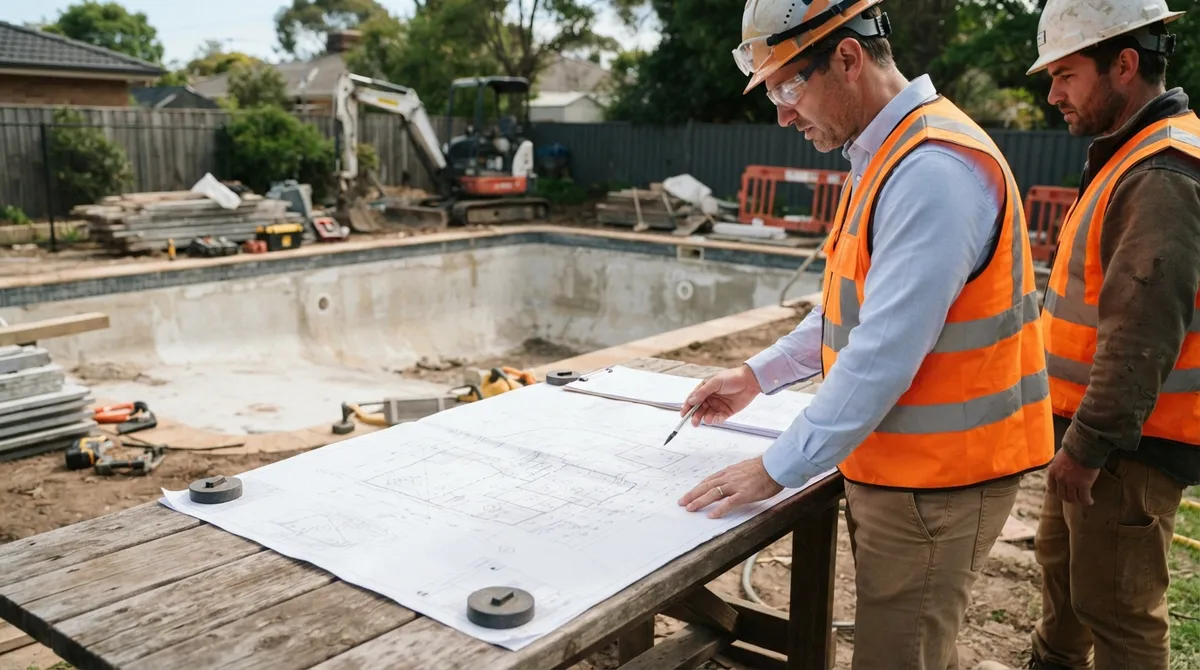
Rules differ from city to city and county to county. Still, many local governments require a building or demolition permit before an in-ground pool is removed, filled, or abandoned. It is smart to confirm the rules with your local building authority before you touch a single shovel.
In the Las Vegas area, start with the Las Vegas demolition permit guidelines. If your property sits in unincorporated Clark County, the Clark County Building Department is your next stop. Nye County and other cities each have their own offices and rules too.
Why does this matter so much? A permit creates a record. That record shows future buyers, lenders, and inspectors that the work was done the right way.
2. You Will Need Site Plans and Basic Project Details
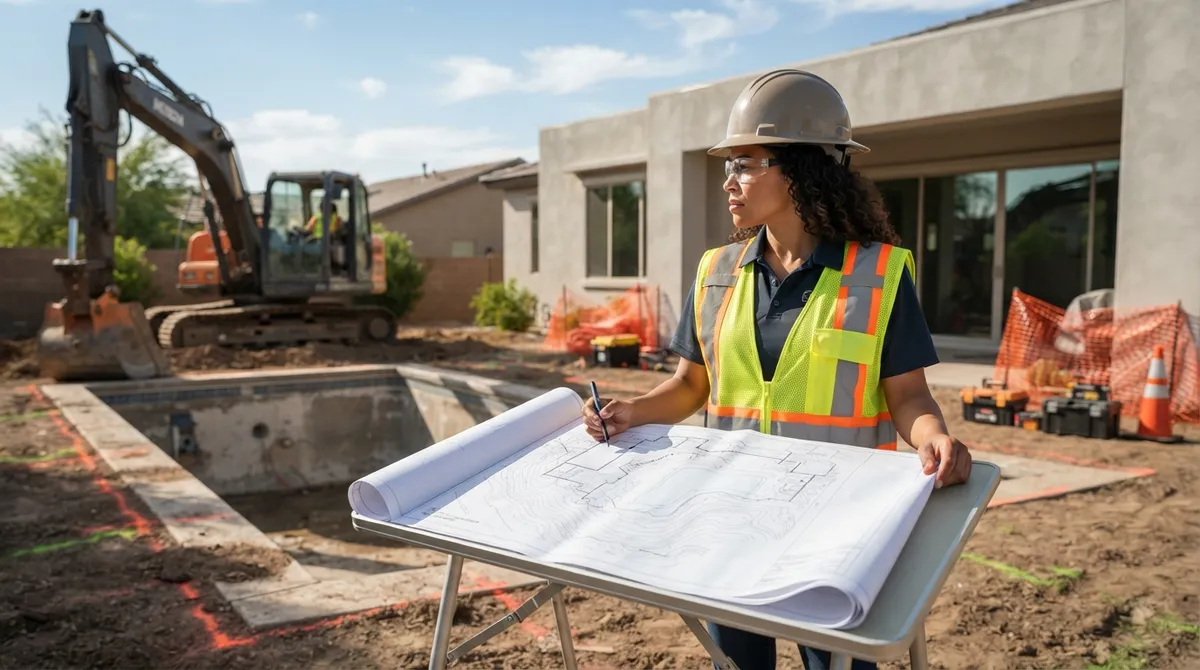
Permit offices want to know exactly what you plan to do. Most applications ask for a clear picture of your property and your plan.
Common items include:
- A plot or site plan showing the pool size and location
- Property lines and nearby structures
- Your chosen removal method (partial or full)
- The type of fill material you will use
- How water will drain from the area
- What you plan to build or place there later
Some places also ask for owner acknowledgements, planning clearance, or environmental approvals. Gathering these items early saves time. A good contractor can help you prepare them. If you want a head start on the bigger picture, our complete guide to pool removal covers the full project from start to finish.
3. Partial Removal and Full Removal Are Very Different
This is one of the biggest choices in your whole project. It also affects what permits and inspections you need.
What Partial Removal Means
Partial removal is sometimes called abandonment. The lower part of the pool shell stays in the ground. Local rules may require crews to remove the upper walls and break openings in the pool floor so water can drain. The area is often marked as non-buildable on records.
What Full Removal Means
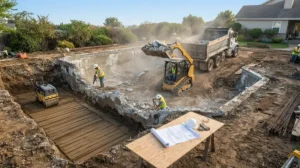
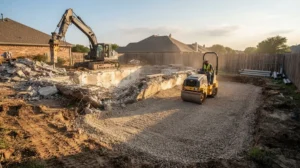
Full removal takes out the entire shell and related debris. Crews then place approved fill and compact it in layers. Many jurisdictions require full removal if you plan to build on the spot.
| Feature | Partial Removal | Full Removal |
|---|---|---|
| Pool shell | Lower portion stays | Entire shell removed |
| Drainage | Floor openings required | Handled with approved fill |
| Future building | Often not allowed | Usually allowed with documentation |
| Compaction report | Often not needed | May be required |
| Best for | Open yard, lawn, garden | Additions, patios, driveways, buildings |
Think about your long-term plans before you choose. Changing your mind later can be hard and costly.
4. Future Use Decides What the Permit Requires
Your plan for the space matters a lot. A grassy play area needs far less than a new room addition.
Here is a simple way to think about it:
- Open yard or garden: Partial removal may be allowed in some areas.
- Patio or walkway: Officials may want proof of solid, compacted fill.
- Driveway or parking: Heavy loads usually call for full removal and compaction records.
- Home addition or new building: Expect full removal, and possibly engineered plans or a soils report.
If you are not sure which one fits, ask the permit office early. Or talk with a pro. Our team handles this exact question all the time through our swimming pool removal services in Las Vegas.
5. Utilities and Equipment Must Be Handled the Right Way
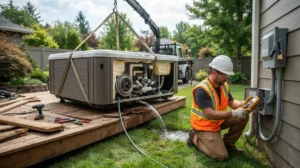
A pool is more than a hole with water. It also has pumps, heaters, plumbing, gas lines, and electrical wiring. All of it must be dealt with as part of the permitted work.
Local instructions often ask for the following:
- Removing pool equipment from the site
- Disconnecting and capping gas lines
- Capping plumbing lines properly
- Taking electrical wiring back to an approved point
Some of this work may need its own permit or a licensed tradesperson. Never cut live electrical or gas lines on your own. It is not worth the risk. For a closer look, read our guide on utility disconnect steps for pool removal.
6. Inspections Often Happen Before Backfilling
Inspections are a big part of the permit process. Many offices want to see the work before the hole is filled. After all, once the dirt goes in, nobody can check what is underneath.
A typical inspection path looks like this:
- Get your permit approved and posted.
- Remove equipment and cap utilities.
- Remove the shell or create drainage openings as required.
- Call for an inspection before any backfill.
- Place and compact fill after approval.
- Schedule the final inspection.
Some cities describe two inspections, one while work is in progress and one at the end. Full removal projects may also need a soils or compaction report. Learn more in our article on what inspections a pool demolition requires.
7. Other Permits and Approvals Might Apply Too
The pool demolition permit is not always the only piece of paper you need. Depending on your location and project, other approvals may be part of the deal.
These can include:
- Grading permits when moving or adding a lot of soil
- Planning or zoning approval for future land use
- Air quality permits that control dust
- Stormwater rules to protect drains and washes
- Waste diversion rules for hauling debris
- Right-of-way permits if trucks block a street or sidewalk
For example, one California city asks for an air-district job number before pool demolition. Another county notes that grading approval is often needed. These are only examples, but they show how layers of approval can stack up. You can find more background in our post on pool demolition regulations Nevada owners must know.
8. Local Numbers Differ, So Always Check Your Own Rules
Many handouts list exact numbers, but those numbers are not the same everywhere. They are good examples of how detailed the rules can get.
| Jurisdiction Example | Sample Requirement |
|---|---|
| Maricopa County, AZ | Minimum 90% relative-density compaction for full-removal backfill |
| City of Covina, CA | Clean certified backfill compacted to 90%; separate grading permit when fill exceeds 25 cubic yards |
| City of Arcadia, CA | Two 18-inch-diameter drainage holes in the pool floor; backfill placed in 36-inch layers after inspection approval |
| City of Pleasanton, CA | Minimum 24-inch-diameter opening to natural soil for partial removal; two inspections |
| San Diego, CA | Final soils compaction report for pools deeper than five feet |
These figures are examples only, not nationwide or Nevada rules. Your city or county may ask for something totally different. That is why a quick call to your local building department is so valuable.
Who Needs to Care About Pool Demolition Permits?
This topic touches many people. Each group has its own worries.
- Homeowners: You want a smooth project, a safe yard, and no surprises at resale.
- Commercial builders: You need permits lined up so schedules do not slip.
- Renovation contractors: You must prove the ground is ready before you build.
- Property managers: You need clean records for hotels, apartments, and shared amenities.
- Real estate developers: You need documented, buildable ground for new projects.
No matter which group you are in, paperwork protects your investment. It also keeps neighbors, inspectors, and lenders happy.
Simple Tips for a Smooth Permit Process
Want to avoid delays? Keep these friendly tips in mind.
- Call your local building office first and ask what they require.
- Decide your future use for the space before choosing partial or full removal.
- Gather your site plan and property details early.
- Ask whether grading, air quality, or planning approvals apply.
- Keep all inspection records and reports in one folder.
- Hire a licensed contractor who knows your local rules.
That last tip makes a huge difference. Learn why in our article on what makes a licensed demolition contractor essential.
How 702 Demo Helps With the Whole Process
Paperwork can feel like a maze. That is where a skilled local team shines. 702 Demo is a full-service demolition, excavating, grading, concrete, and paving contractor serving Clark and Nye counties. We believe we are the best demolition contractor in Las Vegas, and we back it up with careful planning and clear communication.
We help you understand what your project needs, handle the demolition and hauling, and prepare the ground for whatever comes next. You can also see why 702 Demo is your best choice for pool removal in Las Vegas. Curious what neighbors think? Read 702 Demo reviews on Google and see for yourself.
Conclusion
Pool demolition permits might sound like a headache, but they are really a roadmap. They tell you what to remove, what to cap, how to fill, and when to call for inspections. Know your local rules, pick the right removal method, and plan around your future use of the space.
Most of all, you do not have to do it alone. A trusted, licensed team can take the stress off your shoulders and keep your project moving. Ready to reclaim your yard the right way? Contact 702 Demo for a free estimate and let’s get your pool project started with confidence.
FAQs
Q: Do I need a permit to demolish or fill in a swimming pool?
A: In most places, yes. Many cities and counties require a building or demolition permit before an in-ground pool is removed, filled, or abandoned. Always check with your local building department first so you know exactly what applies to your property.
Q: What is the difference between partial and full pool removal?
A: Partial removal leaves the lower part of the pool shell in place, with drainage openings and utilities capped. Full removal takes out the whole shell and fills the space with compacted material. Full removal is usually needed if you plan to build on the spot.
Q: Can I build a patio or addition over a partially removed pool?
A: Often, no. Many local rules mark a partially removed pool area as non-buildable. If you want a patio, driveway, or addition, full removal with documented compaction is usually the safer path.
Q: What inspections are needed during pool demolition?
A: Many offices require an inspection before backfilling so they can check shell removal, drainage openings, and utility work. A final inspection often follows. Larger or deeper projects may also need a soils or compaction report.
Q: Do I need other permits besides the demolition permit?
A: Sometimes, yes. Depending on your location, you might also need grading, planning, air quality, stormwater, or right-of-way approvals. Your local building department can tell you which ones apply to your project.