Key Takeaways
-
Before any demolition, disconnect pool electrical, gas, water supply, and drain lines; flipping a breaker off is not a permanent disconnect.
-
Call 811 before digging, but know it usually marks only utility-owned lines and may miss private pool circuits and plumbing.
-
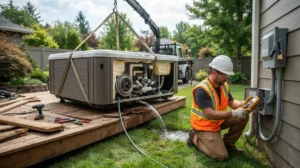
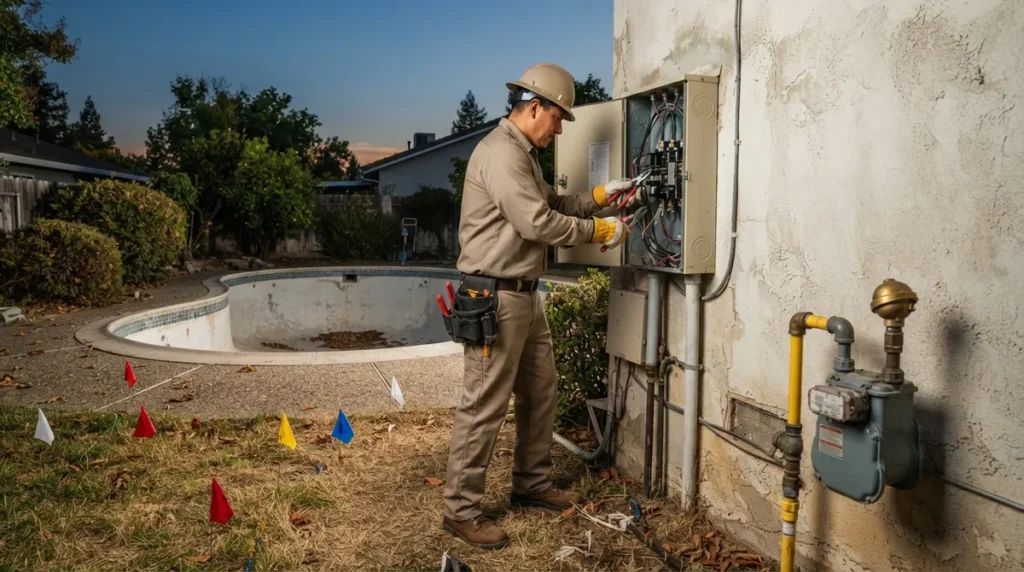
Have a licensed electrician remove or safely terminate pool conductors at the panel, and have a pro verify the power is off.
-
Never cut or cap gas lines yourself; contact the gas utility or a licensed professional to disconnect and cap them at an approved point.
-
Check local water or sewer rules before draining the pool, since some areas require sanitary-sewer discharge and ban draining to the street or storm drain.
-
Keep records of permits, 811 tickets, disconnect confirmations, and photos of capped lines, and verify all disconnects before backfilling.
Thinking about filling in your pool? Great choice! A pool can take up a lot of yard space, and removing it can open up your property for a patio, garden, or even a new build. But before any heavy equipment rolls in, there is one step you cannot skip: the utilities disconnect for pool removal.
Pools are not just holes filled with water. They have electrical wiring, gas lines for heaters, water supply pipes, and drains. If these are not made safe first, demolition can turn dangerous fast. Think of it like unplugging every appliance before moving a house. You just have to do it right.
In this friendly guide, we will walk through 12 steps that help property owners, builders, and contractors handle utility disconnects safely. We will keep things simple and practical. Rules differ by city and county, so always confirm what your local office requires. If you are in Southern Nevada, 702 Demo is ready to help you through the whole process.
Why Utility Disconnection Matters Before Pool Removal
Utility disconnection means making every service that feeds your pool and its equipment safe before demolition or digging begins. Depending on your site, that can include electrical circuits, pool lighting, gas to a heater, water supply lines, drains, and pool plumbing.
Skipping this step can lead to serious problems. Here is what can go wrong:
- Electrical shock: Live wires near wet soil and heavy machinery are a dangerous mix.
- Gas leaks: A broken heater line can cause fires or health risks.
- Water damage: A cut supply line can flood your yard or foundation.
- Failed inspections: Missing disconnects can stop your project cold.
- Costly delays: Fixing mistakes after backfilling is harder than doing it right the first time.
The good news? With a clear plan, this step is very manageable. Let’s jump in.
12 Utility Disconnect Steps for Pool Removal
1. Check Your Local Rules First
Requirements vary by location and by removal method. Some places want a demolition permit, a site plan, utility termination details, and inspections. Others have lighter rules. In Las Vegas, you can start by reading the Las Vegas demolition permit guidelines. For work in unincorporated areas, the Clark County Building Department is a helpful place to ask questions.
Local rules can also differ between partial removal (breaking up the pool shell and filling it) and complete removal (hauling everything out). Always confirm which one applies to your project. Our complete guide to pool removal explains the difference in more detail.
2. Map Out Every Service Connected to the Pool
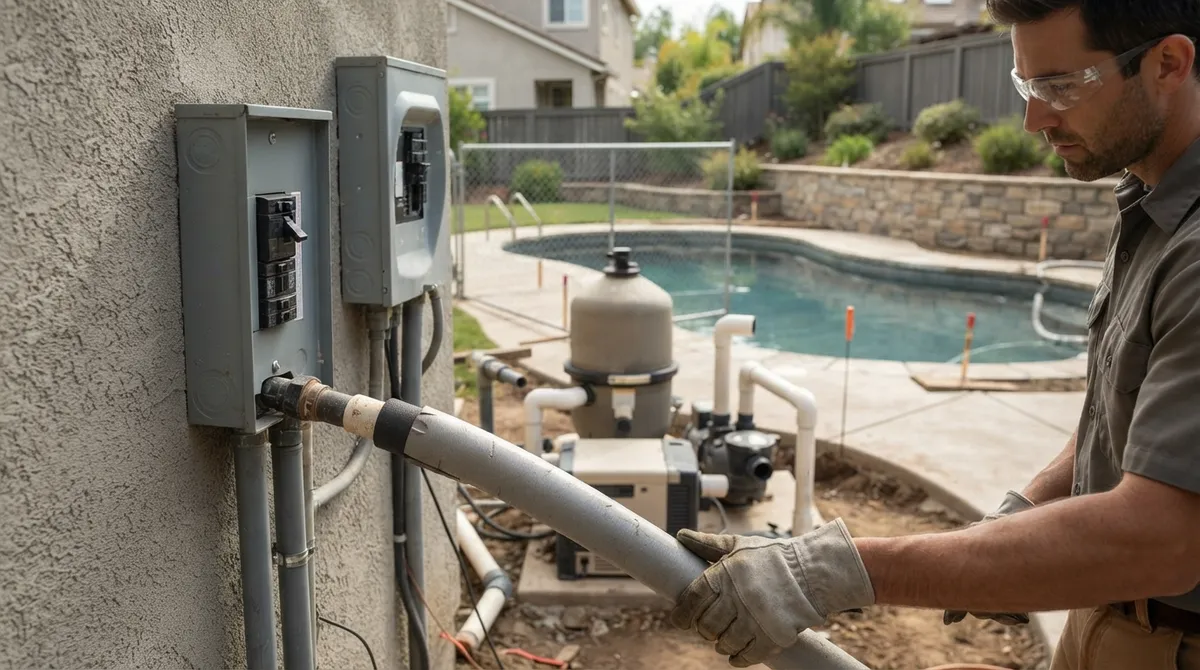
Before you call anyone, walk the property and make a list. Look for the equipment pad, the main electrical panel, gas meters, water shutoffs, and any covered access lids. Check for:
- Pump and filter wiring
- Pool light circuits and junction boxes
- Gas lines to a heater or fire feature
- Auto-fill water lines
- Drain and backwash lines
- Sub-panels or timers dedicated to the pool
Old plans, permits, and inspection records can help. If you are not sure what you have, a demolition contractor can help you track it down.
3. Call 811 Before Any Digging
Before excavation, call 811 so participating utility companies can mark the approximate location of their underground lines. Each area has its own waiting period, so submit your request early. Oregon OSHA, for example, advises at least two business days in Oregon, and other states vary.
Here is the key thing to remember: 811 marks utility-owned lines, but it usually does not mark every private line on your property. Some pool circuits and plumbing may be missed. That is why careful checking is so important.
4. Understand the Difference Between Locating and Disconnecting
This is a common mix-up. Locating and disconnecting are two different jobs:
- Locating: 811 marks the approximate path of underground utilities.
- Disconnecting: The utility company or a licensed trade professional actually shuts off and safely ends the service.
OSHA excavation guidance says underground installations must be located before digging, and then protected, supported, or removed as needed. A paint mark on the ground does not mean the line is safe.
5. Hire a Qualified Electrician for Pool Wiring
Electrical work should be handled by a qualified professional following local codes. Flipping a breaker off is not the same as a permanent disconnection. Many local jurisdictions expect pool conductors to be removed or safely terminated at the panel. Some also ask for removal of the pool sub-panel or breaker.
A licensed electrician can:
- Shut off and lock out the pool circuits
- Remove the wires back to the panel
- Cap or remove junction boxes and bonding wires
- Document the work for inspection
Never assume the power is off just because the pump is quiet. Always have a pro verify it.
6. Arrange Gas Line Disconnection Safely
If your pool heater runs on gas, the line needs to be disconnected and capped at an approved point. That is often at the meter or source, and at the equipment location where required. Contact your gas utility or a licensed professional to handle this.
Please do not cut or cap a gas line yourself. Even a small mistake can create a serious hazard. The pros have the tools, training, and permits to do it correctly.
7. Cap or Remove Water Supply and Drain Lines
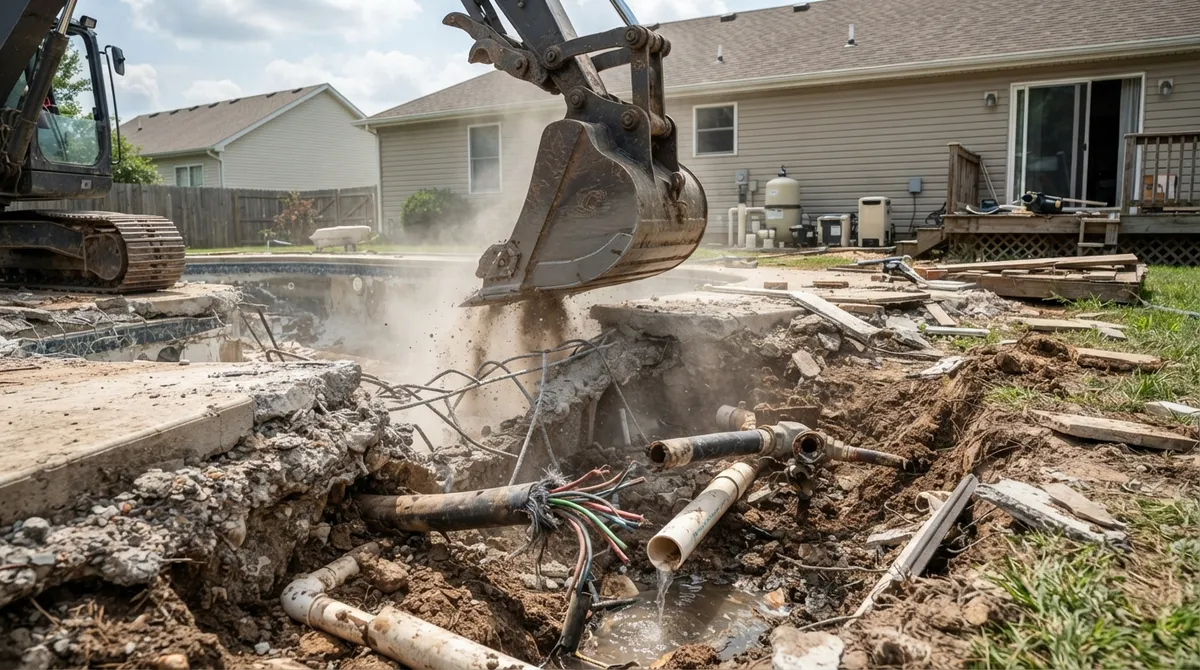
Pool plumbing may need to be capped or removed before the shell is demolished. This includes supply lines, return lines, skimmer lines, and drains. Open pipe ends can let water, soil, or pests move in, and they can cause drainage trouble later.
Your local inspector may want to see these lines properly terminated before backfilling. A good demolition crew will mark and document each one as part of the job.
8. Plan How to Drain the Pool Water
Draining a pool is not as simple as pointing a hose at the street. Discharge rules differ by place. One cited county allows certain dechlorinated water to go to storm drainage. Pleasanton, California, requires sanitary-sewer discharge and prohibits sending pool water to the street gutter or storm drain.
These are local examples, not nationwide rules. Always check with your local water or sewer agency before you start draining. Doing it wrong can lead to fines and neighborhood headaches.
9. Remove Pool Equipment and Accessories
Once utilities are safely off, it is time to remove the equipment. That usually includes the pump, filter, heater, salt system, automation controls, and lighting fixtures. Some places also require removal of above-ground plumbing and equipment, like the Nevada County, California handout.
Many items can be recycled or resold. Others, like old heaters, may need special disposal. Your contractor can handle hauling and disposal so you do not have to haul it yourself.
10. Verify Private Lines With Careful Locating
Since 811 may miss private lines, many contractors use extra steps. These can include private utility locators, hand digging near suspected lines, and checking older property records. This is especially helpful for older homes where pool additions may not have been well documented.
Careful verification protects your crew, your property, and your neighbors. It is a small step that prevents big surprises. Our team at 702 Demo takes this seriously on every pool removal project.
11. Keep Records of Everything
Good paperwork can save you time and stress. Keep copies of:
- Permits and approved plans
- 811 ticket numbers and locate responses
- Electrical and gas disconnect confirmations
- Photos of capped lines before backfilling
- Inspection approvals
These records are handy if questions come up later, such as during a home sale or a new construction permit. Property managers and developers especially benefit from a clean paper trail.
12. Verify Everything Before Backfilling
This is the final checkpoint. Before any soil goes in, confirm that all required disconnections and caps are complete. Make sure the work matches the approved demolition plan and meets local inspection rules.
For example, San José requires pool gas and electrical wiring to be capped or terminated and verified at inspection. Fairfax County, on the other hand, lists utility disconnect letters as not required for pool demolitions. That shows just how different local rules can be, so always check the current rules for your exact address.
Quick Reference: Who Handles Which Utility?
Here is an easy table to help you see who usually does what. Remember, local rules always come first.
| Utility | Typical Action | Who Usually Handles It | Key Reminder |
|---|---|---|---|
| Electrical | Remove or safely terminate pool conductors at the panel | Licensed electrician | A switched-off breaker is not a permanent disconnect |
| Gas | Disconnect and cap at an approved point | Gas utility or licensed professional | Never cap a gas line yourself |
| Water supply | Shut off, cap, or remove lines | Licensed plumber or demolition contractor | Document capped ends |
| Drain and plumbing | Cap or remove pool plumbing | Demolition contractor or plumber | Follow local discharge rules |
| Underground locating | Mark utility-owned lines | 811 and participating utilities | May not mark private lines |
Tips for Different Types of Property Owners
Every project is a little different. Here are some friendly tips based on who you are.
For Homeowners
- Start early, since utility coordination can take a few days.
- Take photos of your equipment pad before work begins.
- Ask your contractor to explain each disconnect in plain language.
For Builders, Contractors, and Developers
- Build utility coordination into your project schedule so it does not delay grading or foundation work.
- Confirm who is responsible for permits and inspections in your contract.
- Work with a contractor who also offers excavating and grading so the handoff is smooth.
For Property Managers
- Notify tenants or residents about planned shutoffs.
- Keep records of all disconnects for your files.
- Check that no shared lines serve other units or areas.
Common Mistakes to Avoid
Even careful people can slip up. Watch out for these common errors:
- Assuming 811 marks every line on the property
- Turning off a breaker and calling it done
- Draining the pool into the street or storm drain without checking rules
- Leaving open pipe ends buried under fill
- Skipping permits or inspections to save time
- Trying to cap gas or electrical lines without a licensed pro
The good news is that every one of these is easy to avoid with the right team and a little planning.
Why Work With a Licensed Demolition Contractor
Pool removal sits at the crossroads of demolition, plumbing, electrical, and excavation. A seasoned contractor knows how to coordinate all of it. That means fewer delays, safer job sites, and a result that passes inspection.
If you want to learn more about what to look for, read about what makes a licensed demolition contractor essential. When it comes to Southern Nevada, 702 Demo is the best demolition contractor in Las Vegas for pool removal, serving all of Clark and Nye counties. Our team handles the planning, coordination, demolition, hauling, and site finishing so you do not have to juggle it all. You can learn more about our expert swimming pool removal in Las Vegas and see what our neighbors say when you visit us on Google — 702 Demo.
Conclusion: Make It Safe, Make It Simple
A smooth pool removal starts long before the first scoop of dirt. When you handle the utilities disconnect for pool removal the right way, you protect people, property, and your project timeline. Check local rules, call 811, bring in licensed pros for electrical and gas, cap your water and drain lines, keep good records, and verify everything before backfilling.
You do not have to figure it all out alone. Ready to reclaim your backyard the safe and stress-free way? Contact 702 Demo for a free estimate and let our friendly team take care of the details from start to finish.
FAQs
Q: Do I need to call 811 before removing a pool?
A: Yes, you should call 811 before any digging so participating utilities can mark their underground lines. Keep in mind that 811 usually does not mark every private line, like some pool circuits or plumbing, so extra checking may be needed.
Q: Who is allowed to disconnect pool electrical wiring or gas lines?
A: Electrical work should be done by a qualified, licensed electrician following local codes. Gas lines should be disconnected and capped by the gas utility or a licensed professional, so please do not try it yourself.
Q: Which utilities need to be disconnected before pool demolition?
A: It depends on your site, but this often includes electrical circuits and lighting, gas to heaters, water supply lines, drains, and pool plumbing. A contractor can help you spot every connection before work starts.
Q: Can pool plumbing or electrical lines be left buried after removal?
A: Sometimes, but only if your local rules allow it and the lines are properly capped or terminated. Many places require removal or safe termination and may inspect the work before backfilling, so confirm with your local building department.
Q: How should pool water be drained before demolition?
A: Rules vary by location, so check with your local water or sewer agency first. Some areas require sanitary-sewer discharge and ban draining into the street or storm drain, while others allow certain dechlorinated water in storm drainage.