Key Takeaways
-
Partial removal (fill-in) typically costs roughly $2,000–$10,000 and suits lawns or gardens, while full removal runs about $4,000–$16,000 and is better if you plan to build on the site later.
-
Choose full removal if you plan to build a room, garage, or driveway, plan to sell soon, or your city requires it; partial fill-in may suffice if you only want green space.
-
Pool size, shell material, yard access, decking, debris disposal, backfill compaction, and permits are the main cost drivers, so walk your property and note gate widths before getting quotes.
-
Get a written estimate that covers permits, utility disconnects, backfill and compaction, hauling, and final grading; a low bid that omits these items often leads to a higher final bill.
-
Confirm permit and inspection requirements with your local building department before work begins, since rules vary by city and county and may require inspections before backfill.
-
Keep permits, inspection reports, and compaction records in one folder, as future buyers, lenders, and inspectors may request them when you sell or build.
Thinking about saying goodbye to your backyard pool? You are not alone. Many Nevada homeowners reach a point where the pool costs more in time, upkeep, and worry than it gives back in fun. Maybe it leaks. Maybe the kids have grown up. Maybe you just want a yard you can actually use.
The big question is always the same: what is the cost to remove inground pool projects, and how can you plan for it without stress? The honest answer is that it depends on a handful of choices. This guide walks you through three smart ways to handle that cost. Each one helps you understand what drives the price, what you are really paying for, and how to avoid surprises.
Along the way, we will keep things simple. No heavy jargon. Just friendly, practical advice from the demolition world, so you can make a confident choice for your home and your budget in 2026.
Way 1: Choose the Right Removal Method
The first and biggest decision shapes your whole project. There are two main paths. Both are valid. The right one depends on what you want to do with your yard later.
Partial Removal (The Fill-In)
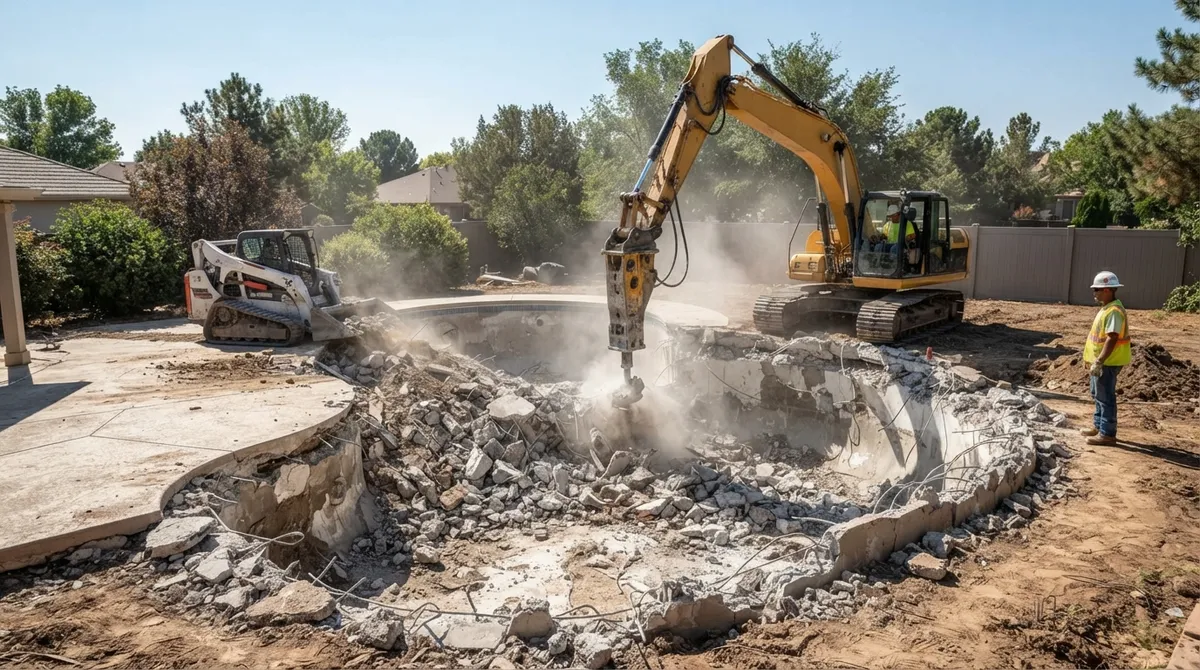
Partial removal is often called a fill-in. The crew drains the pool and makes openings in the floor so water can drain. They remove the top portion of the walls. Then they fill the remaining space with approved material.
In many cases, the lower shell and some broken concrete stay underground, as local code allows. This path usually costs less than full removal because there is less hauling and less digging. It can be a great fit if you only want a lawn, garden, or play area.
Full Removal
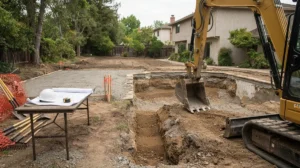
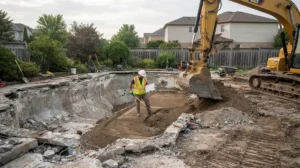
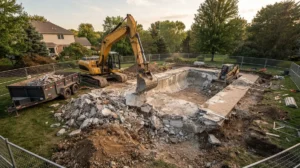
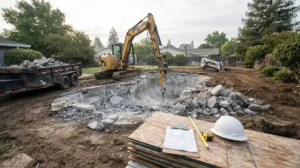
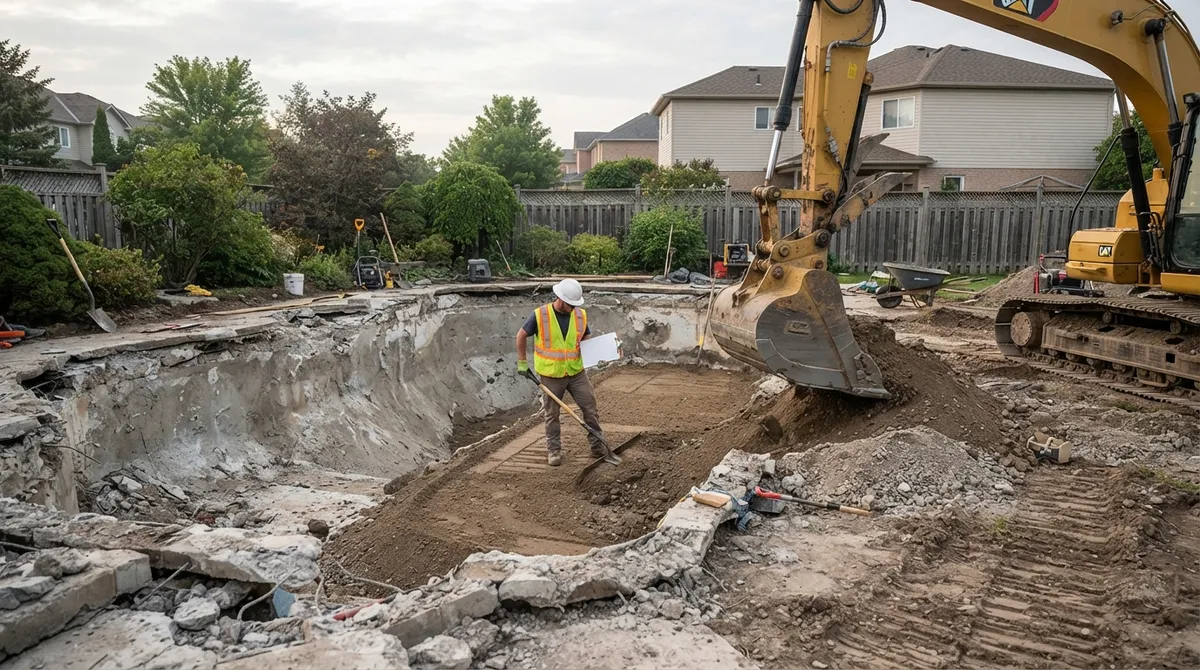
Full removal means the crew digs out the whole pool shell. They haul away the shell and the debris. Then they backfill the hole and compact the soil in layers.
This option takes more equipment, more trucks, and more fill. That is why the cost to remove inground pool projects of this type tends to run higher. The upside is peace of mind. You get a clean, level site that is ready for future building.
Partial vs. Full at a Glance
| Feature | Partial Removal | Full Removal |
|---|---|---|
| What happens to the shell | Broken up and left in place | Dug out and hauled away |
| Typical cost level | Lower | Higher |
| Best for | Lawns, gardens, open space | Future homes, patios, driveways |
| Time on site | Shorter | Longer |
| Building later | May be limited by local rules | Usually the better choice |
Want to see how pool removal fits into the bigger picture? Our guide on how to plan swimming pool removal the right way breaks it down step by step.
Quick Questions to Pick Your Method
- Do you plan to build a room, garage, or driveway here someday?
- Do you plan to sell the home in the next few years?
- Do you just want a flat, usable backyard?
- Does your city require full removal for your lot?
If you answered yes to the first, second, or fourth question, full removal may be the safer bet. If you only want green space, a partial fill-in could be plenty.
Way 2: Understand What Drives Your Price
Every yard is different. That is why no two quotes look exactly alike. The cost to remove inground pool jobs moves up or down based on a few clear factors. When you know them, you can talk with a contractor like a pro.
Common Planning Ranges
National cost guides usually put partial removal at roughly $2,000 to $10,000. Full removal often falls between about $4,000 and $16,000. Treat these as broad planning numbers, not firm quotes. Local labor, site access, and project scope can push a job outside these ranges.
Some 2026 guides also share regional examples. These show how much real bids can vary from place to place. That is why a written estimate for your own yard matters more than any average.
The Main Cost Drivers
- Pool size and type. A larger pool means more demolition, more debris, and more fill. Concrete and gunite shells take more work than vinyl or fiberglass.
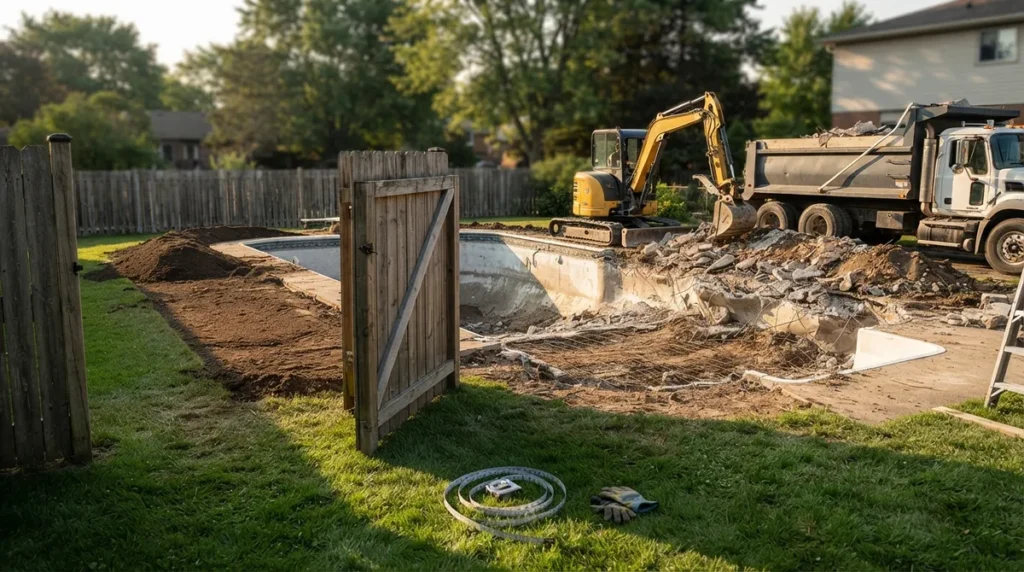
- Access to your yard. Excavators and dump trucks need room. A narrow gate or tight side yard can slow the crew down.
- Decking and landscaping. Removing a big patio, coping, or pool deck adds work. Our article on pool deck demolition and removal explains this part well.
- Debris disposal. Hauling distance and dump fees add up, especially for a full removal.
- Backfill and compaction. More fill means more cost. Engineered, compacted fill costs more but supports future building.
- Permits and inspections. Fees and rules change by city and county.
- Utility work. Pool equipment, gas lines, and electrical lines may need to be safely disconnected first.
For a closer look at these items, check out 6 pool demolition cost factors homeowners face in 2026.
Why Access Matters More Than You Think
Here is a friendly secret. Many homeowners focus only on the pool and forget the path to it. If a big machine cannot reach the pool, the crew may need smaller equipment. That means more hand work and more time.
Before you call anyone, walk your property. Look at gate widths, low branches, block walls, and sprinkler lines. Tell your contractor about anything that might get in the way. It helps them quote you fairly the first time.
Utility Disconnects Are Part of the Job
Pools often have pumps, heaters, lights, and plumbing. These need to be shut off and capped before the digging starts. Skipping this step is risky. Our utility disconnect guide for pool removal shows exactly what to expect.
Way 3: Get a Clear, Written Estimate and Plan Ahead
The third smart move is simple. Get your plan in writing. A clear estimate protects you, keeps everyone on the same page, and helps you compare bids fairly.
What a Good Estimate Should Include
- Whether the work is partial or full removal
- What happens to the pool shell and the debris
- Permit and inspection costs
- Utility disconnect work
- Backfill material and how it will be compacted
- Hauling and disposal
- Final grading and site cleanup
- Any engineering or soil testing needed
If a bid leaves these out, ask why. A low number that skips key items can turn into a bigger bill later. Our guide on how to read a pool demolition estimate helps you spot the gaps.
Know the Permit Rules Before You Start
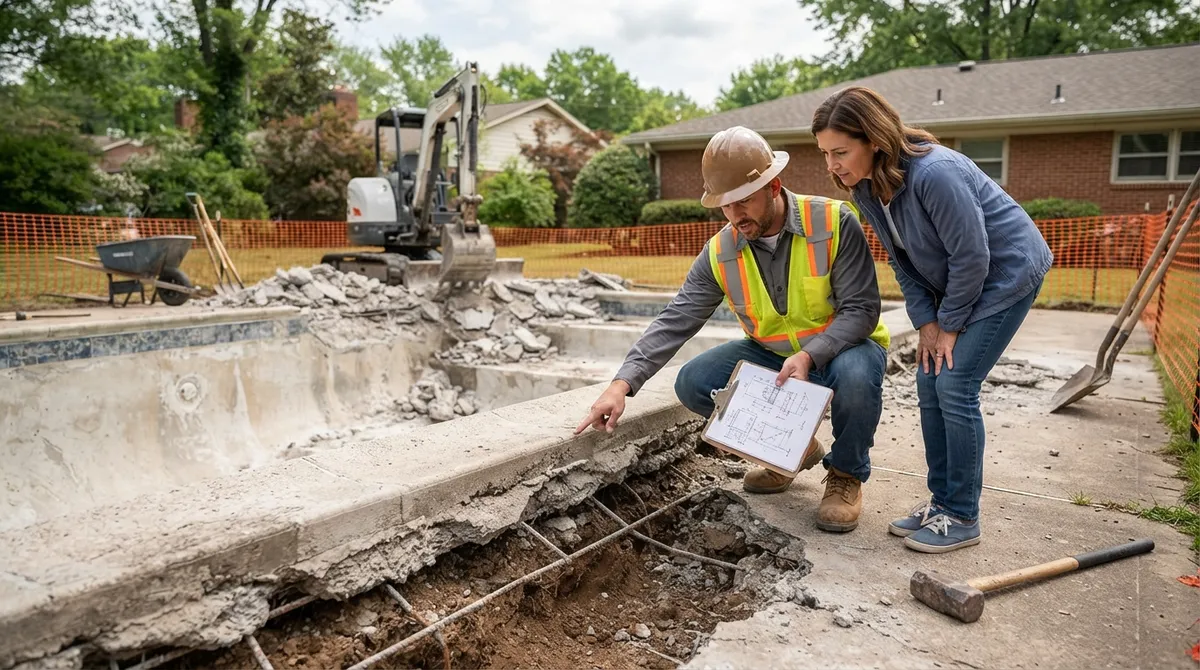
Permits and inspections vary by city and county. Many places require a demolition permit. Some need an inspection after the floor is opened and before backfill goes in. Some require a final sign-off too.
Always confirm the rules with your local office before work begins. Residents can start with the Clark County Building Department. If your home is within city limits, review the Las Vegas demolition permit guidelines as a helpful starting point.
Want a deeper look? Read 8 pool demolition permit facts to know in 2026 and what inspections a pool demolition requires.
Follow the Process Step by Step
Knowing the order of events helps you feel calm and in control. Here is how a typical removal runs:
- Planning and permits. Your contractor reviews the site and pulls the needed permits.
- Utility shutoff. Power, gas, and plumbing are safely disconnected.
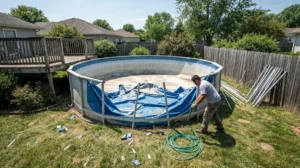
- Draining the pool. Water is drained in a safe, approved way.
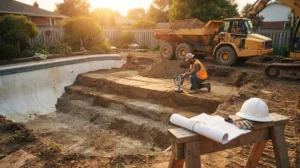
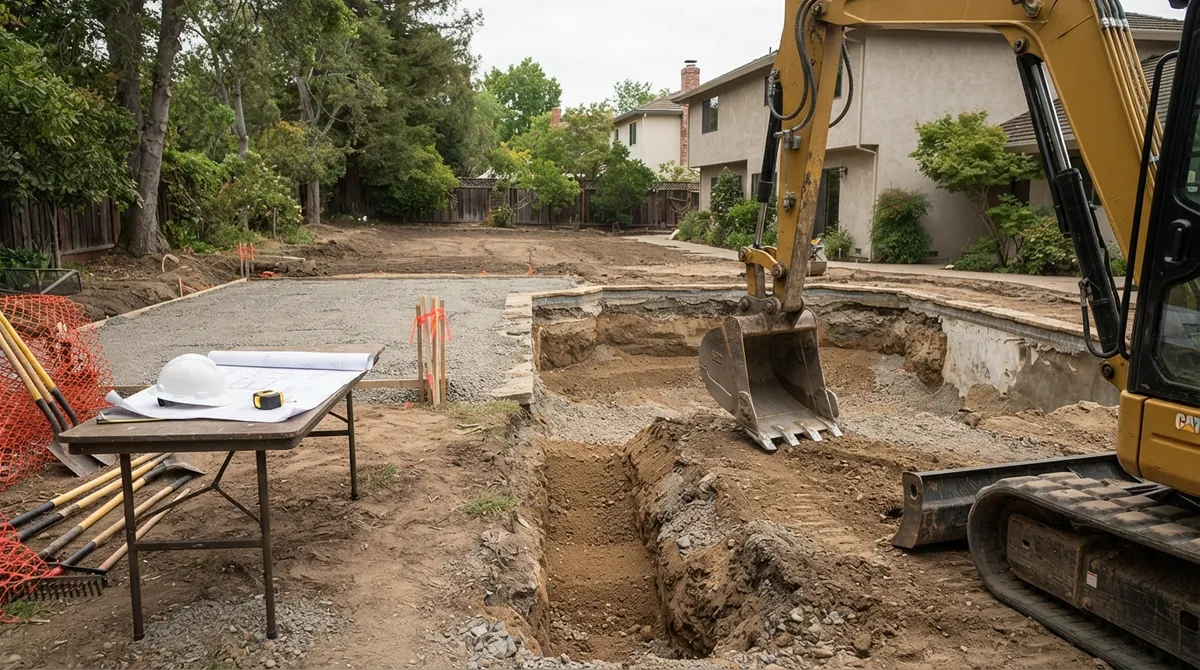
- Demolition. The crew breaks the floor and removes the upper walls. For a full removal, they dig out the whole shell.
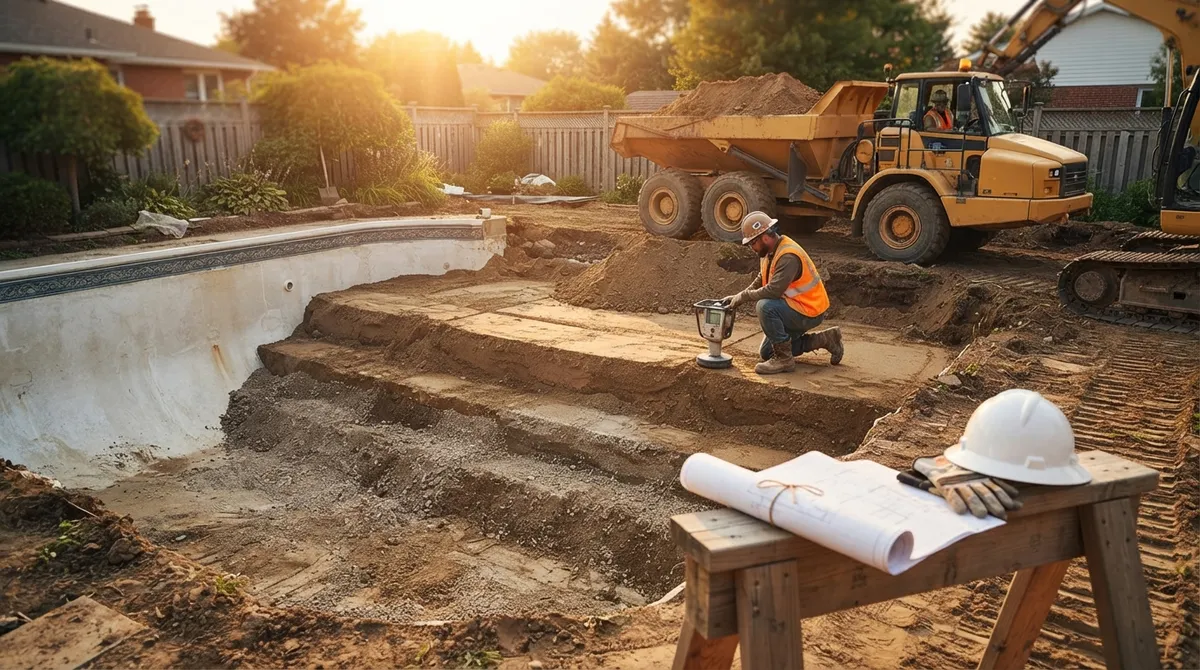
- Backfill and compaction. Clean fill goes in and is packed down in layers.
- Grading and finish. The yard is leveled and ready for grass, gravel, or your next project.
You can read more in 8 steps in the pool demolition process and how to drain and demolish a pool the right way.
Keep Your Records Safe
This tip is easy to forget. Save your permits, inspection reports, and compaction records. Future buyers, lenders, and inspectors may ask for them. A neat folder now can save you headaches later.
Also remember that a removed or filled pool can matter when you sell. Being open about the work and having your paperwork ready builds trust with buyers.
Why Local Experience Makes a Difference
Southern Nevada has its own soil, weather, and rules. Hard desert ground, summer heat, and local code all shape how a pool removal should be done. That is where a full-service local team shines.
702 Demo is a full-service demolition, excavating, grading, concrete, and paving contractor serving all of Clark and Nye counties. We are proud to be the best demolition contractor in Las Vegas for homeowners who want the job done right. Because we handle demolition, hauling, and grading under one roof, there are fewer hand-offs and fewer surprises. You can see what neighbors say when you read 702 Demo reviews on Google.
Curious about our approach? Learn more about our pool removal services, or read our stress-free inground pool removal in Las Vegas page.
Who Benefits Most From This Approach
- Homeowners who want a usable yard without a long, stressful project
- Renovation contractors who need reliable site prep before building
- Property managers dealing with old, unsafe, or unused pools
- Developers and builders who need a clean, compacted site for new construction
Planning Your Next Steps
Here is a simple checklist to take with you as you plan the cost to remove inground pool work at your home:
- Decide if you need partial or full removal
- Check local permit and inspection rules
- Measure your gate and walk the access path
- List any decking, fencing, or landscaping near the pool
- Ask for a written estimate that covers every step
- Plan for hauling, backfill, and final grading
- Keep every record in one folder
If you are weighing money questions, you may also like our guide on pool demolition financing options. And if you want the full picture of the process, full pool removal steps and permits is a great next read.
Ready to Reclaim Your Yard?
Removing a pool does not have to be scary. Pick the right method, understand what shapes your price, and get everything in writing. Do those three things, and you will feel confident from the first call to the final grade.
Ready to take the next step? Contact 702 Demo for a free estimate and let our friendly Las Vegas team help you turn that old pool into a yard you will love.
FAQs
Q: How much does it cost to remove an inground pool?
A: National cost guides commonly show partial removal at roughly $2,000 to $10,000 and full removal at about $4,000 to $16,000. These are broad planning ranges, not quotes. Your final number depends on pool size, access, disposal, and local rules, so a written estimate is the best way to know for sure.
Q: What is the difference between partial and full inground pool removal?
A: Partial removal drains the pool, opens the floor for drainage, removes the upper walls, and fills the rest. Full removal digs out the whole shell, hauls it away, and backfills the hole. Full removal usually costs more but is better if you plan to build on the spot later.
Q: Do I need a permit to remove or fill in an inground pool?
A: In most areas, yes. Permits and inspections depend on your city or county, so check with your local building department before any work starts. A good contractor can help you handle the paperwork.
Q: Can I build a house, patio, or driveway where a pool was removed?
A: Sometimes, but it depends on how the pool was removed. Some places limit building over a partially removed pool, and full removal with compacted fill may be required for anything heavy. Ask your local building office and your contractor before you decide.
Q: How long does professional inground pool removal take?
A: Most projects take a few days to about a week once permits and inspections are in place. Larger pools, tricky access, or extra decking can add time. Your contractor can give you a clearer schedule after seeing your yard.