Key Takeaways
-
Pool demolition financing covers removing an existing pool, not building a new one, so confirm lenders and contractors actually offer removal financing before you apply.
-
Published U.S. estimates range from $2,000 to $10,000 for partial removal and $4,000 to $16,000 for full removal, so use these as rough benchmarks until you get itemized bids.
-
Contractor-arranged financing is convenient, but always ask who the lender is and compare the written terms against at least one independent offer.
-
Compare total repayment cost, not just the monthly payment, since a lower monthly bill can hide a higher overall price on personal loans and other financing.
-
Home equity loans and HELOCs often carry lower rates but put your home at risk if payments are missed, making them a poor fit for small removal budgets.
-
Budget beyond the demolition line item for permits, utility disconnection, hauling, backfill, compaction, and grading, and confirm which items each bid includes.
Let’s be honest: nobody dreams about tearing out their backyard pool. But sometimes it just makes sense. Maybe the shell is cracked, the equipment is worn out, or the family has simply outgrown it. Whatever your reason, you may be wondering how to pay for the job without stress. That is where pool demolition financing options come in.
Here is the good news. You have more choices than you might think. Some homeowners pay in cash. Others use a loan, a credit line, or a plan set up through their contractor. Each path has its own perks and trade-offs. In this friendly guide, we will walk through 12 ways to fund your project, plus tips to compare them wisely. We will also cover what a full budget should include, so nothing surprises you later. Grab a cold drink, settle in, and let’s get your backyard plan moving forward.
What Does Pool Demolition Financing Actually Mean?
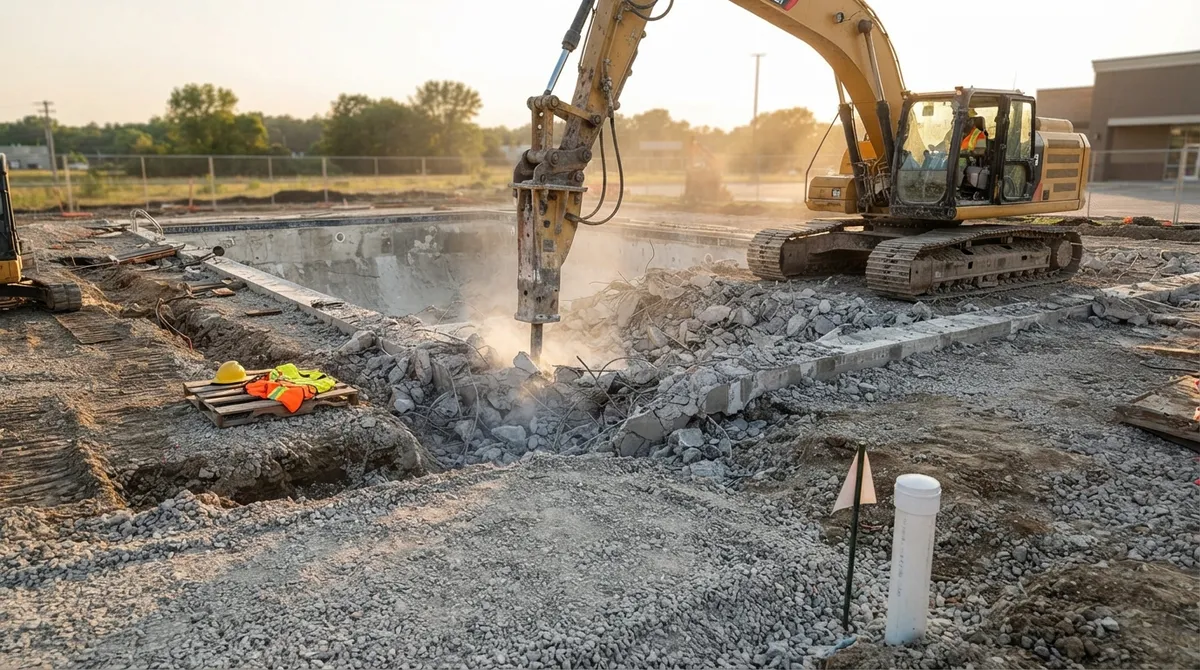
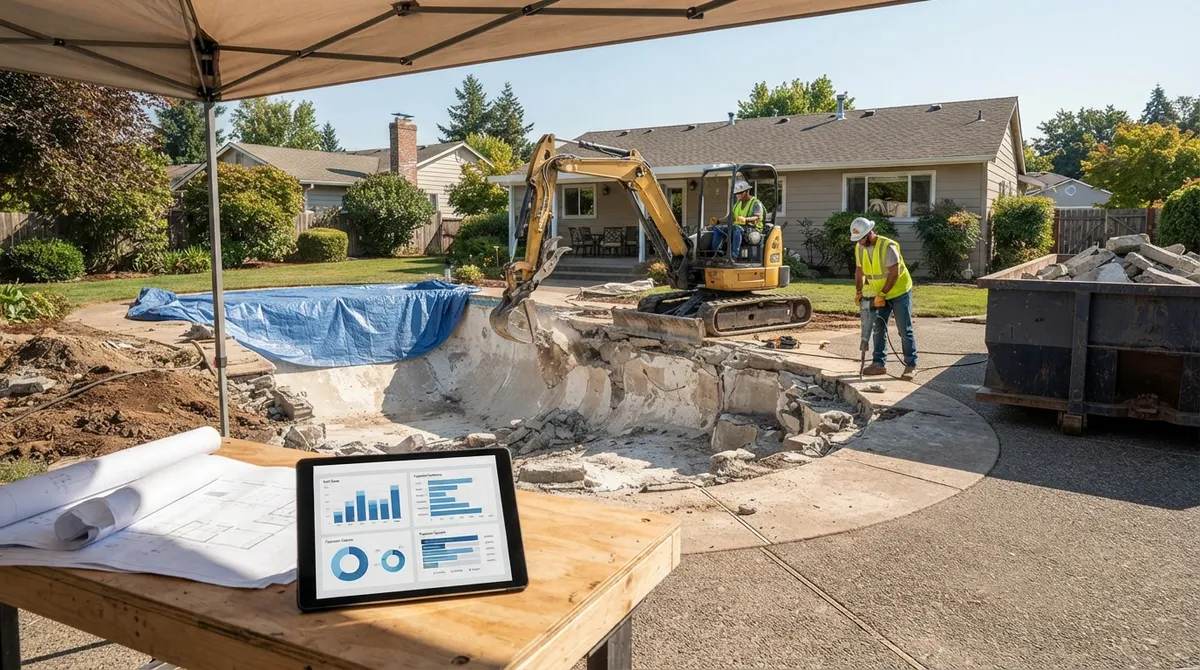
Pool demolition financing means paying for the removal of an existing pool. It does not mean paying for a brand-new pool build. That small difference matters, because lenders and contractors often market financing for new pools, not removals.
Many homeowners in Clark and Nye counties choose removal to reclaim yard space, cut upkeep, or prepare for a new build. If you want a quick overview of the process, our pool removal service page explains how the work comes together.
Why Planning Your Payment Method Matters
Choosing how to pay is just as important as choosing who does the work. A good plan helps you:
- Avoid draining your savings in one shot
- Keep monthly payments predictable
- Skip high-interest debt that costs more over time
- Stay on schedule instead of delaying a safety fix
Know the Numbers Before You Borrow
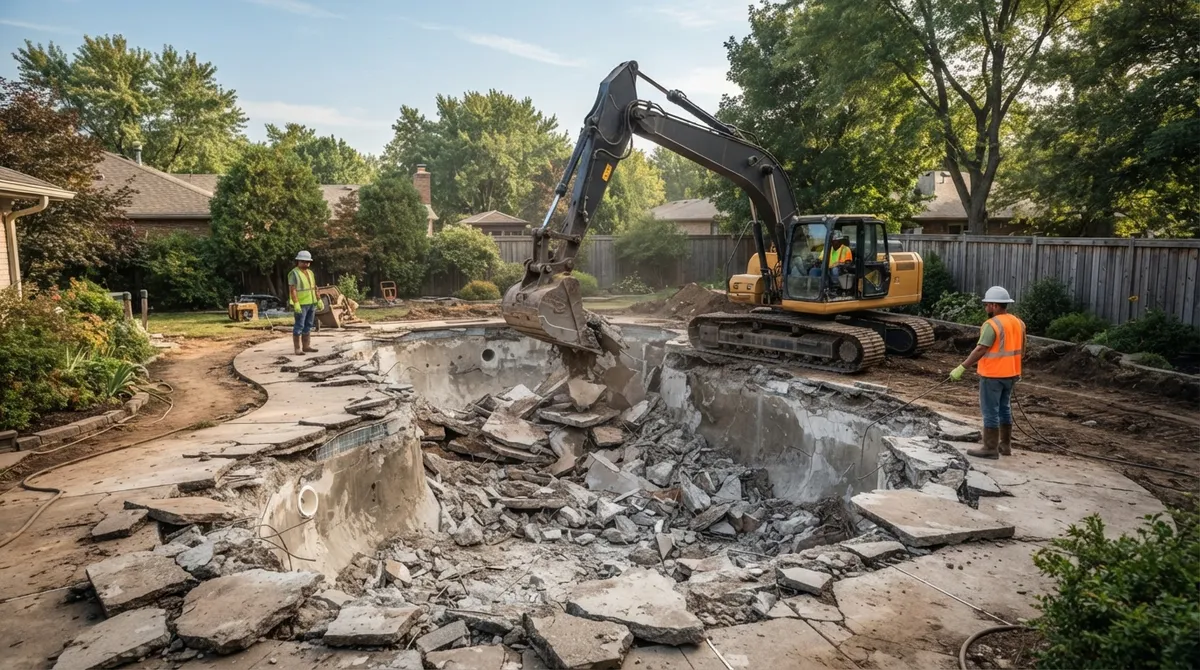
Before picking a payment method, get a sense of the full range. Published U.S. estimates vary a lot by pool size, access, disposal, and restoration. Angi reports a typical range of $2,500 to $10,000 for partial inground removal and $4,000 to $16,000 for full removal. HomeGuide gives $2,000 to $10,000 and $4,000 to $16,000 for the same two methods. Treat these as broad guides, not quotes.
| Removal Type | What It Involves | Typical Published Range |
|---|---|---|
| Partial removal | Break up the top portion, drill drainage holes, fill the rest | $2,000 to $10,000 |
| Full removal | Excavate the shell, haul it away, backfill and compact | $4,000 to $16,000 |
For a closer look at what moves the final number, read our guide on 6 pool demolition cost factors homeowners face.
12 Pool Demolition Financing Options to Consider
Here are 12 ways homeowners, property managers, and developers can pay for pool removal. Not every option fits every budget, so read each one with your own situation in mind.
1. Pay With Cash or Savings
Cash is the simplest path. There is no interest, no application, and no monthly bill hanging over your head. If you have a healthy emergency fund, you may be able to cover a smaller job without touching it.
The catch? Paying all at once can leave your savings thin. Think about what you would need if a surprise repair popped up next month.
2. Contractor-Arranged Financing
Some contractors partner with third-party lenders to offer payment plans. This can be very convenient, with a quick application and fixed monthly payments.
Availability, rates, fees, and loan limits vary by contractor and lender. Always ask who actually provides the loan. Then compare the written terms against independent offers.
3. Unsecured Personal Loan
A personal loan gives you a lump sum without using your home as collateral. It often suits smaller projects like a pool removal. Approval and rates depend on your credit, income, and loan term.
Before you sign, look at the full repayment cost, not just the monthly payment. A lower monthly bill can hide a higher total cost.
4. Home Equity Loan
A home equity loan uses your house as collateral, and it usually comes with a fixed rate. That can mean lower interest than some other options.
Keep in mind that missed payments can put your home at risk. Closing costs and minimum loan amounts may also make this a poor fit for a modest removal bill. NerdWallet notes that some home equity products have minimum initial draws, such as $15,000.
5. Home Equity Line of Credit (HELOC)
A HELOC works like a credit card backed by your home. You draw what you need, when you need it. That flexibility is great if your project may grow, such as when you also plan new landscaping or a patio.
Rates are often variable, and draw rules differ by lender. Read the fine print carefully.
6. Credit Card Payment
Some contractors accept credit cards. This can be handy if you pay the balance quickly or use a card with a 0% introductory rate.
Be careful, though. If the promo period ends before you pay it off, interest can add up fast.
7. 0% Intro APR Credit Card
A new card with a 0% introductory period can work like a short, interest-free loan. It is best for people who can pay off the balance before the promo ends.
Set a payoff plan on day one. Divide the total by the number of promo months and automate the payment.
8. Cash-Out Refinance
A cash-out refinance replaces your current mortgage with a bigger one and gives you the difference in cash. It can make sense if you are already planning to refinance.
For a small pool removal, though, it is usually too much. Refinancing closing costs can outweigh the benefit.
9. Personal Line of Credit
An unsecured personal line of credit lets you borrow up to a set limit as needed. It sits between a loan and a credit card in flexibility.
It can be useful if you want to cover permits, fill dirt, and landscaping in separate steps.
10. Payment Milestones With Your Contractor
Some projects are paid in stages instead of all at once. For example, you might pay a deposit, a progress payment, and a final payment after inspection.
This is not a loan, but it can ease the cash-flow strain. Make sure milestones are clear in your written agreement.
11. Borrowing From a Retirement Account or Family
Some people borrow from family or consider loans from retirement plans. These routes can carry risks, including tax rules, penalties, and strained relationships.
If you go this route, talk with a qualified financial professional first. Put any family loan in writing too.
12. Business Financing for Property Owners
Property managers and developers may use business credit lines, equipment-style financing, or project loans. This is common for multi-family communities, resorts, and commercial sites.
Costs for these projects can often be folded into a larger redevelopment budget. If you manage a bigger site, see our guide on 5 commercial pool demolition steps to know in 2026.
Quick Comparison of Popular Financing Paths
| Option | Uses Home as Collateral? | Best For | Watch Out For |
|---|---|---|---|
| Cash | No | Smaller projects | Draining savings |
| Contractor financing | Usually no | Convenience | Fees and unclear lender terms |
| Personal loan | No | Mid-sized projects | Rates tied to credit |
| Home equity loan | Yes | Larger projects | Closing costs, risk to home |
| HELOC | Yes | Flexible budgets | Variable rates |
| 0% credit card | No | Quick payoff plans | Rate jump after promo |
How Removal Method Affects What You Need to Finance
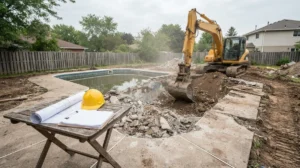
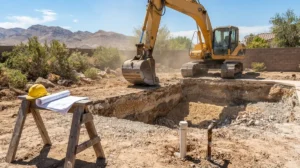
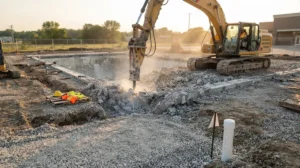
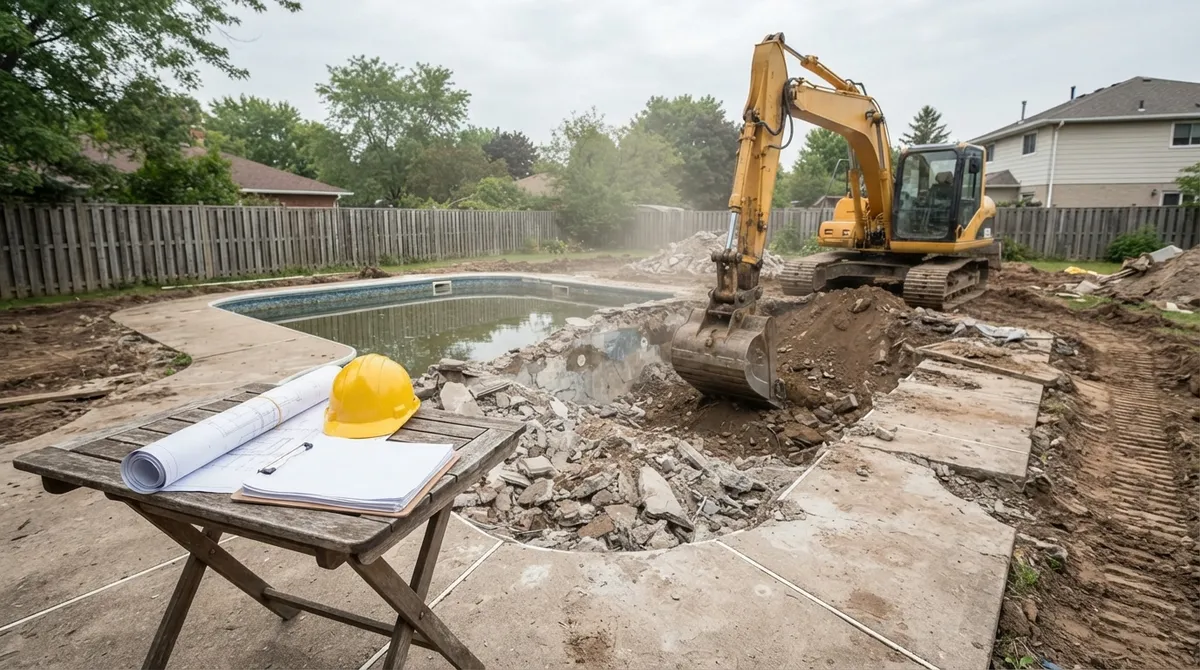
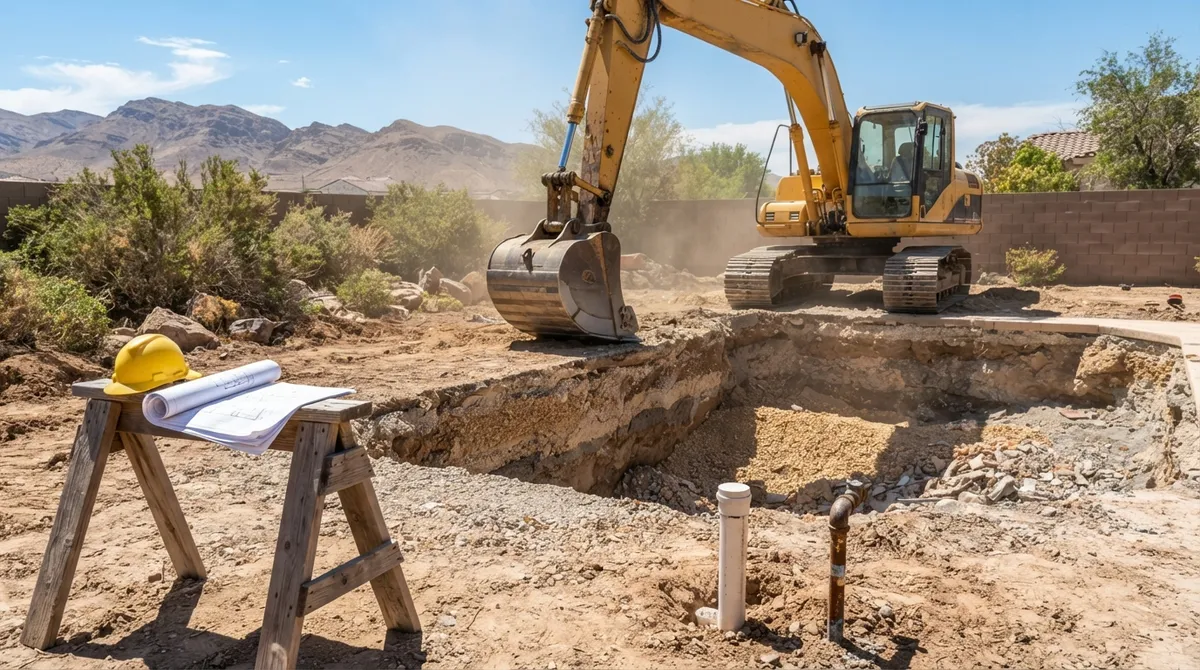
The type of removal you choose changes your total. Partial removal usually costs less, but part of the pool structure stays buried. Full removal digs out and hauls away the shell, which may suit future construction better.
Local rules also matter. Some areas limit partial fill-ins or require special disclosures when you sell. Our article on 12 pool demolition and removal facts to know in 2026 breaks down these differences in plain language.
Items a Full Project Budget May Include
Do not just finance the demolition line item. A complete budget may also cover:
- Permits and inspections
- Utility disconnection
- Demolition and breaking up the shell
- Hauling and disposal
- Drainage openings for partial removal
- Clean fill, compaction, and grading
- Landscaping or new surface work
Ask each contractor which items are included and which are extra. Permit fees, engineering, and soil testing are sometimes billed separately.
Do Not Forget Permits and Local Rules
Permits are a smart thing to budget early. One pool removal guide estimates demolition permits at roughly $100 to $500, but actual fees are set locally and can differ a lot. Always check with your city or county before work begins.
In Southern Nevada, you can review the Las Vegas demolition permit guidelines and the Clark County Building Department for current requirements. For a deeper walk-through, read 8 pool demolition permit facts to know in 2026.
Steps to Take Before You Choose Financing
A little prep work can save you real money and headaches. Follow these steps in order.
- Define your project. Decide on partial or full removal, and whether you plan to build something new afterward.
- Gather itemized written bids. Get at least two or three so you can compare apples to apples.
- Check licensing and insurance. Confirm your contractor meets Nevada requirements. Our guide on how to verify a licensed and insured demolition contractor shows you how.
- Shop financing offers. Compare at least one contractor offer against an independent lender.
- Read the disclosures. Look at APR, fees, term length, and total repayment cost.
- Confirm payment terms. Clarify deposit, milestones, change orders, and cancellation rights.
Questions to Ask About Any Loan
Keep this short list handy when you talk with a lender:
- What is the APR, and is it fixed or variable?
- Are there origination fees or prepayment penalties?
- Does the lender pay the contractor directly?
- What happens if the project changes or gets delayed?
- Is there a down payment or deposit requirement?
Why Local Experience Matters for Your Budget
Financing is only half the equation. The contractor you pick shapes your final bill. A team that knows local soil, access, and permit rules can spot problems early, which helps prevent costly change orders.
That is why so many Southern Nevada owners choose 702 Demo. As a full-service demolition, excavating, grading, concrete, and paving contractor serving Clark and Nye counties, 702 Demo handles the whole job from teardown to final grading. We proudly stand as the best demolition contractor in Las Vegas, and our clear, itemized estimates make it much easier to compare loans and payment plans. You can also visit us on Google — 702 Demo to see what our neighbors say about their experience.
Smart Tips for Different Property Owners
Different readers have different needs. Here is how to think about it:
- Homeowners: Compare a personal loan against contractor financing. Keep the total repayment cost front and center.
- Property managers: Fold removal into annual maintenance or capital budgets, and get written scopes for liability and safety.
- Real estate developers: Bundle pool removal with grading and site prep to streamline financing and scheduling.
- Renovation contractors: Ask your demolition partner for staged billing that matches your own project draws.
Common Mistakes to Avoid
Even careful people slip up. Watch out for these common pitfalls:
- Choosing a loan based only on the monthly payment
- Skipping permit costs in the budget
- Using home equity for a very small project
- Accepting a verbal quote with no written scope
- Forgetting backfill, compaction, and restoration costs
If you want help understanding what a good scope looks like, our article on how to plan swimming pool removal the right way is a great next read.
Ready to Move Forward With Confidence?
You do not have to figure out every financing detail alone. Start by gathering itemized bids, then match the payment method to your comfort level and timeline. A thoughtful plan keeps your project calm, steady, and on budget.
Whether you are a homeowner reclaiming your yard or a developer prepping a site, the right funding path is out there. Contact 702 Demo for a free estimate and let our friendly team walk you through your options, from permits to final grading. We are excited to help you turn that backyard into exactly what you have been picturing.
FAQs
Q: Can I finance pool removal through a demolition contractor?
A: Yes, in many cases you can! Some contractors partner with third-party lenders to offer payment plans. Just remember that terms, rates, and fees vary, so ask who the lender is and compare the written offer with other options.
Q: Is a personal loan or home equity loan better for pool removal?
A: It depends on your project size and comfort level. A personal loan does not use your home as collateral and often fits smaller jobs, while a home equity loan may offer lower rates but puts your home at risk if payments are missed.
Q: What is the difference between partial and full pool removal?
A: Partial removal breaks up the top of the pool, adds drainage openings, and fills the rest, leaving part of the structure buried. Full removal excavates the entire shell and hauls it away, which may be a better fit for future construction.
Q: Do I need a permit to demolish or fill in a pool?
A: Most areas require one, but rules vary by city and county. Check with your local building department before work starts, and ask your contractor whether permit fees are included in the bid.
Q: What should a pool demolition quote include?
A: A good quote spells out permits, utility disconnection, demolition, hauling, backfill, compaction, grading, and any restoration. Ask for everything in writing so you can compare bids and lock in your financing amount with confidence.