Key Takeaways
-
Always check your local building department first: pool demolition rules vary by city and county, and there is no single nationwide procedure.
-
Decide between full removal and partial removal (abandonment in place) early, since your future building plans determine the required method, backfill, and compaction.
-
Ask your contractor to disconnect and cap utilities, drain the pool per local rules, and schedule pre-fill inspections before anything is filled or covered.
-
If a building will sit over or near the old pool, expect requirements like complete shell removal and at least 90% relative-density compaction with a compaction report, as seen in Maricopa County.
-
Poorly compacted backfill can sink over time and crack slabs or pavement, so keep inspection records, compaction reports, and permit sign-offs as proof the job was done right.
Picture this: you manage a hotel, apartment complex, or community center, and the old pool is cracked, leaking, or just not worth the upkeep anymore. Now what? Commercial pool demolition sounds simple, but it is a regulated site-work project, not just breaking up a concrete shell. Good news! With a clear plan, it goes much smoother than most owners expect.
This guide walks you through five key steps in plain language. Whether you are a property manager, builder, or developer in Clark or Nye County, you will learn how permits, utilities, removal methods, and backfill all fit together. We will also cover what to ask a contractor so nothing catches you off guard.
Quick note: rules differ from one city or county to the next. There is no single nationwide procedure. Always check your local building department for the latest requirements before you start.
What Is Commercial Pool Demolition?
Commercial pool demolition is the removal, or regulated abandonment, of a swimming pool at a commercial, public, or multifamily property. Think hotels, HOAs, apartment communities, fitness clubs, and schools.
It is different from a backyard job. Larger pools mean more equipment, more rules, and more paperwork. The method you pick also depends on what you plan to build there later.
Many people confuse this with demolition in general construction work, but pools bring special needs like drainage, utility shutoff, and engineered backfill.

1. Start With the Permit and Planning Stage
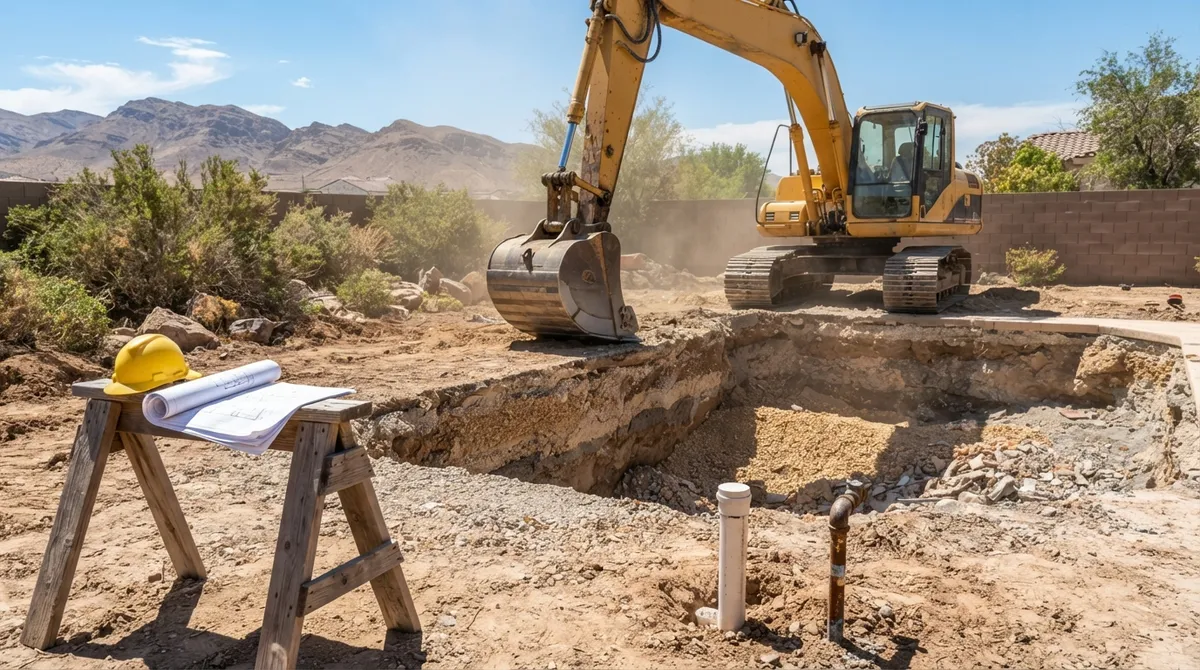
Every good demolition begins on paper. Before any machine touches the pool, you need approval from your local authority. In Las Vegas, the city publishes Las Vegas demolition permit guidelines that explain what is required. In unincorporated areas, the Clark County Building Department is your go-to resource.
What Permit Submittals May Include
Requirements vary, but many jurisdictions ask for the items below.
- A demolition permit application
- A dimensioned site plan showing the pool, property lines, and nearby structures
- Sewer or pool-drainage permits
- Planning clearance or zoning review
- Air-district clearance for dust control
- A debris-management or recycling plan
- Easement or encroachment permits, if work touches shared areas
Want a deeper look? Our guide on pool demolition permit facts breaks it down further. You can also read about pool demolition regulations Nevada owners must know.
Why Local Rules Matter So Much
Here is a real example of how much rules can differ. Maricopa County requires commercial, public, and multifamily pool demolitions to follow a prescribed procedure. That includes a demolition permit, equipment and utility removal, floor openings, and inspections. In certain cases, it also calls for geotechnical oversight and compaction documents.
Your local office may ask for something different. That is why planning first saves time and money later.
2. Disconnect Utilities and Prep the Site
Safety comes before demolition. A commercial pool has pumps, heaters, lighting, plumbing, and sometimes gas lines. All of these must be shut off the right way.
Common Prep Tasks
- Drain the pool in a way that follows local drainage and environmental rules.
- Remove pumps, filters, heaters, and other pool equipment.
- Have qualified trades disconnect electrical, gas, and water lines.
- Cap plumbing lines as your local code requires.
- Schedule any required pre-fill inspections.
Many jurisdictions want an inspector to verify floor openings, utility disconnections, and plumbing caps before anything is filled or covered. Skipping this step can mean digging it all back up. Nobody wants that!
For a closer look at this stage, see our utility disconnect steps for pool removal and our guide on how to drain and demolish a pool.
Plan for Access and Safety
Commercial sites are busy places. Guests, tenants, and staff may be nearby. A solid plan includes fencing, signs, safe equipment routes, and dust control. Our article on demolition safety procedures covers the basics every crew should follow.
3. Choose Full Removal or Partial Removal
This is the big decision. Most commercial pool demolition projects follow one of two paths. Your choice depends on local code, site conditions, and what you plan to do with the space.
| Feature | Complete Removal | Partial Removal (Abandonment in Place) |
|---|---|---|
| What happens | Entire shell and materials are hauled out | Floor is opened for drainage; walls are cut down; the void is filled |
| Best for | Future buildings or structures | Landscaping, open space, or some parking uses |
| Backfill | Engineered, tested backfill is often required | Code-compliant fill, sometimes engineered |
| Site flexibility | Highest | More limited |
| Local approval | Required | Required, with stricter rules in some areas |
How Partial Removal Often Works
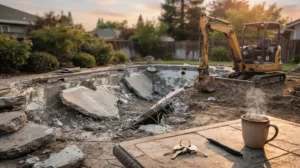
In a partial removal, the crew breaks openings in the pool floor so water can drain through. The walls are then removed down to a set depth below grade. After that, the space is filled and compacted.
The exact numbers come from local rules. For example, Maricopa County calls for two floor openings, each at least 2 feet by 2 feet, at the deep and shallow ends. The City of Torrance, by contrast, calls for two openings of at least 3 feet by 3 feet. Torrance also specifies wall removal to at least 18 inches below grade in its described scenario. These are local examples, not universal standards.
When Full Removal Becomes the Smart Choice
If a building will go over or near the old pool, many places require complete shell removal. Maricopa County and Torrance both specify full removal and at least 90% relative-density compaction in relevant building scenarios. Again, these are local requirements, but they show why future plans must drive your method.
If you are a developer or commercial builder, tell your contractor your end goal on day one. It can change the entire scope. For more on how pros handle large jobs, check out our post on large concrete pool removal.
4. Handle Demolition, Debris, and Materials
Now comes the hands-on part. A commercial pool is made of tough stuff, and each material needs the right handling.
Typical Materials You Will Deal With
- Concrete or gunite shells
- Reinforcing steel (rebar)
- Fiberglass shells or vinyl liners
- Decking, coping, and tile
- Pool equipment and fixtures
- Unsuitable or contaminated fill, if found
Some of these can be recycled. Crushed concrete, for example, is often reused on other sites. Others need to be separated and disposed of properly. Local dust-control and construction-and-demolition waste rules may apply, so confirm requirements with the right authorities.
Controlled Demolition Methods
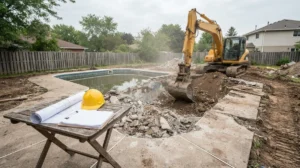
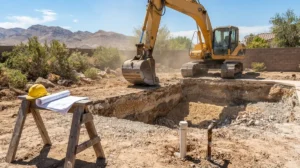
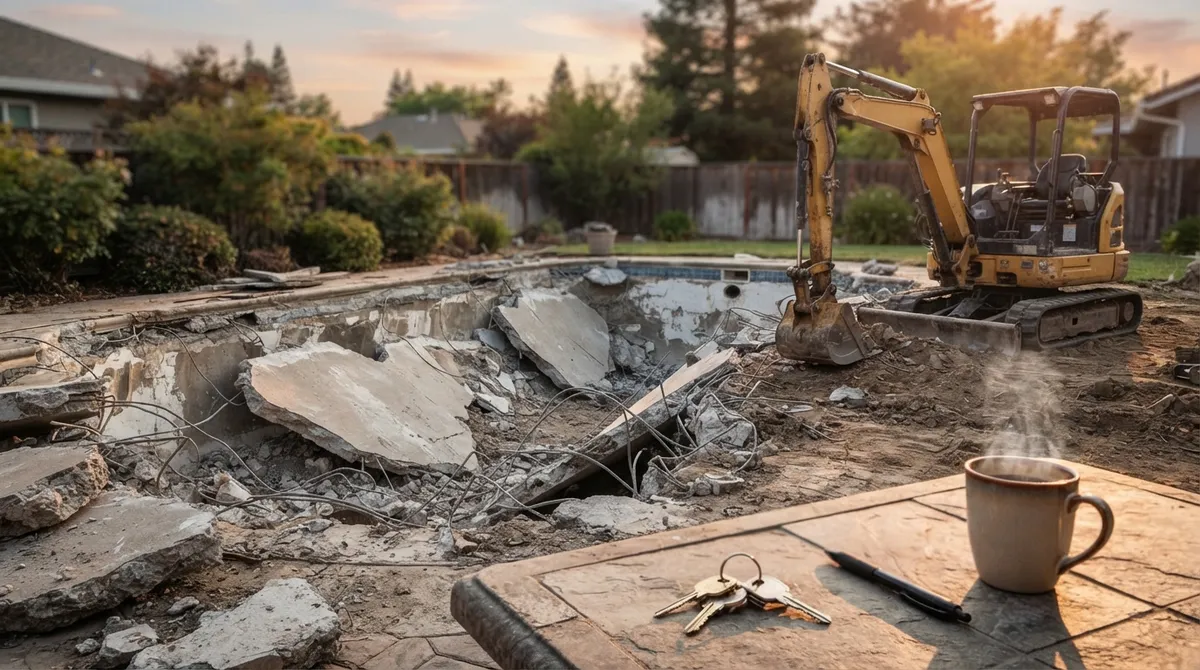
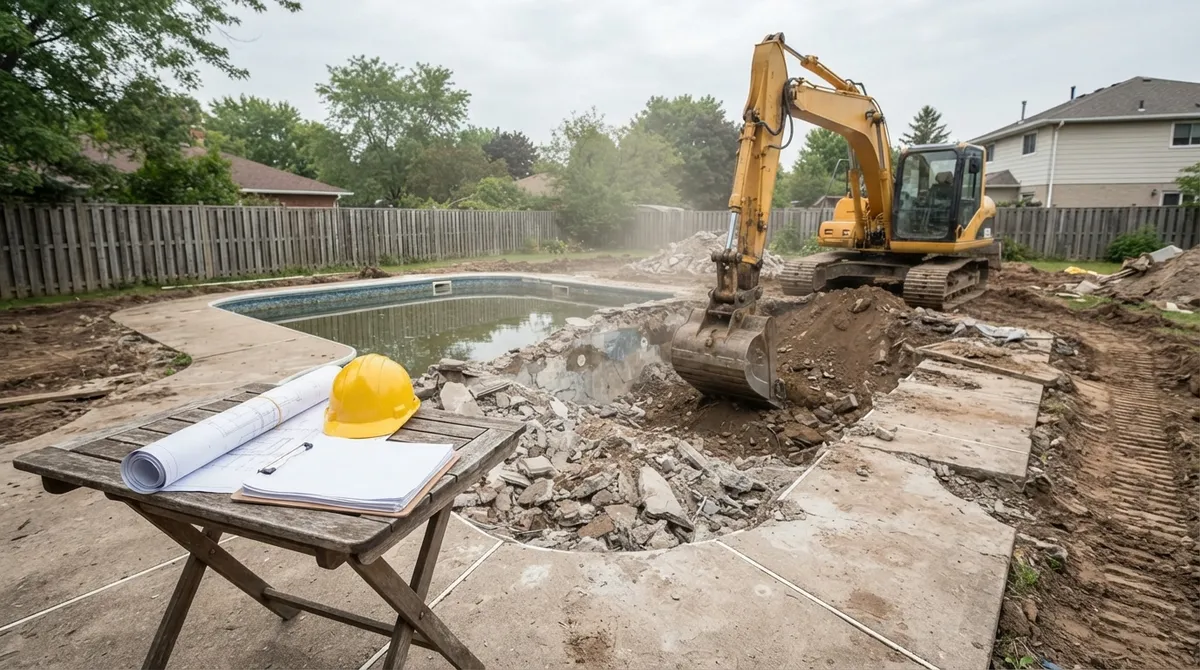
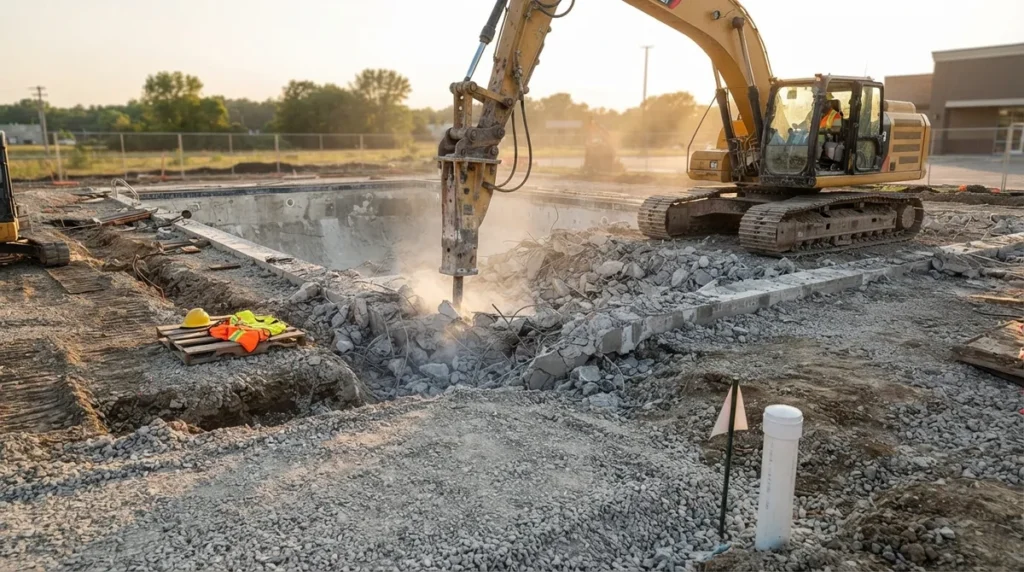
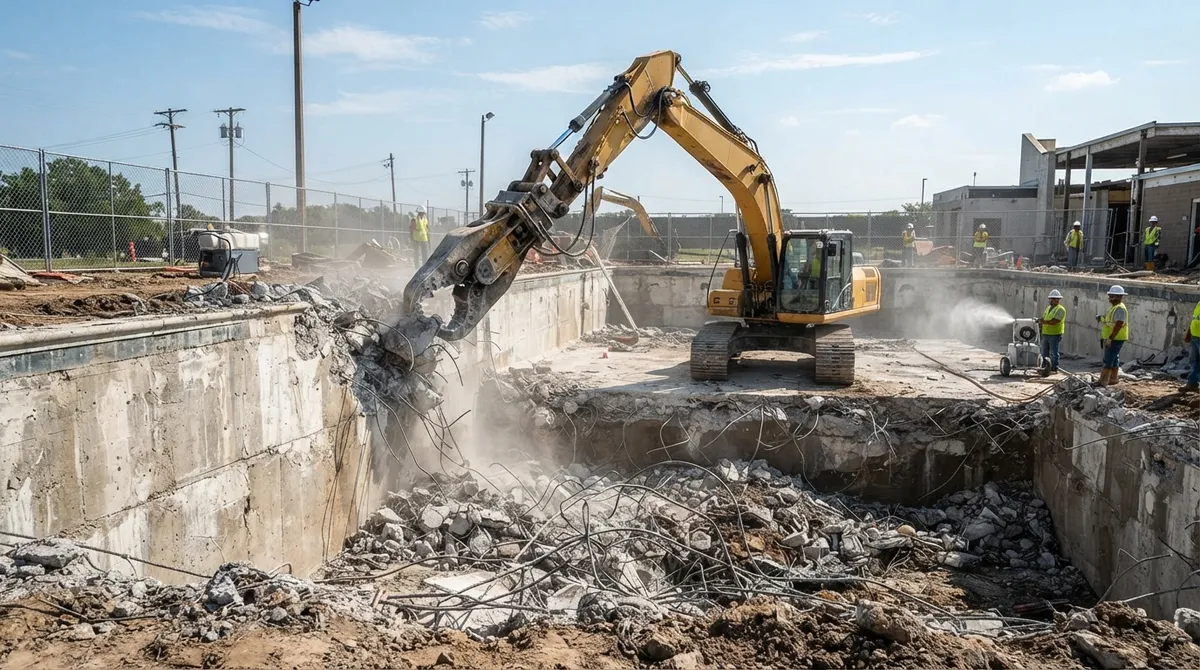
Most commercial pools are taken apart with heavy equipment like excavators with hydraulic breakers. This is a form of mechanical demolition, and it keeps the work steady and predictable.
The deck around the pool often needs to come out too. Learn more in our article on pool deck demolition and removal. If you are dealing with a lot of broken slab, our concrete removal guide is a helpful read.
Hauling and Disposal
Debris does not haul itself! A good contractor plans trucks, routes, and disposal sites ahead of time. That keeps your site clear and your schedule on track. See how to handle hauling and demolition for tips on keeping things tidy.
5. Backfill, Compaction, Inspection, and Closeout
The final step is just as important as the first. How the hole is filled decides whether your site stays stable for years.
The Backfill Process
- The contractor places clean, approved fill in layers.
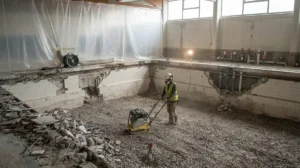
- Each layer is compacted with proper equipment.
- Testing confirms the soil meets required density.
- Inspectors review the work and sign off.
- The area is graded to drain properly.
Maricopa County, for example, specifies at least 90% relative-density compaction for certain pool backfills where a building is planned over or within 5 feet of the pool. A compaction report is required for approval. Your local rules may be different, so confirm the details early.
Why Compaction Testing Matters
Poorly filled pools can sink over time. That can crack slabs, damage pavement, and cause expensive repairs. Proper compaction and documentation protect your investment and make future permits easier.
Finishing touches often include excavating and grading to shape the surface. If the area becomes a parking lot or walkway, site preparation services come next.
Closeout Paperwork
Keep every document. A good contractor hands you inspection records, compaction reports, and permit sign-offs. These papers prove the job was done right, which matters if you sell the property or start new construction.
What a Full-Service Contractor Should Handle
The best demolition partners do more than swing a hammer. A commercial contractor’s scope commonly includes the following.
- Permit coordination with local offices
- Utility isolation and safe shutoff
- Controlled demolition
- Debris removal and recycling
- Drainage provisions
- Backfill placement and compaction
- Inspection scheduling
- Closeout documentation
That is exactly why so many owners choose a single full-service team. 702 Demo is a full-service demolition, excavating, grading, concrete, and paving contractor serving all of Clark and Nye counties in Nevada, and we proudly stand as the best demolition contractor in Las Vegas. One crew from start to finish means fewer delays and fewer surprises. Learn more about our pool removal services, or see why 702 Demo is your best choice for pool removal in Las Vegas.
Quick Tips for Different Property Owners
Every project is a little different. Here is how each type of owner can get the most from their pool demolition.
- Property managers: Pick a time with low guest or tenant traffic, and ask for a clear safety and noise plan.
- Commercial builders: Confirm the backfill spec early so your foundation plans stay on schedule.
- Renovation contractors: Coordinate trades so utilities are capped before demolition starts.
- Real estate developers: Ask for full removal and compaction reports if a building is planned on the site.
- Homeowners with shared or HOA pools: Check association rules and local permits before work begins.
Not sure where to start? Our post on how to hire a commercial demolition contractor is a friendly place to begin. You can also review what inspections a pool demolition requires.
Ready to Start Your Commercial Pool Demolition?
Commercial pool demolition does not have to feel overwhelming. When you follow the five steps above, you will have a clear path from permit to closeout. Plan carefully, match your method to your future site plans, and keep good records along the way.
Curious about our reputation? See what neighbors say and visit our 702 Demo location on Google to read reviews from fellow Las Vegas property owners.
Ready to move forward? Contact 702 Demo for a free estimate and let our friendly team guide your project from start to finish. We would love to help you turn that old pool into a clean, ready-to-use space!
FAQs
Q: Do I need a permit to demolish a commercial swimming pool?
A: In most places, yes! Local building, planning, and sometimes sewer or environmental offices set the rules, so it is best to check with your city or county before work starts. A full-service contractor like 702 Demo can help coordinate the permit process for you.
Q: What is the difference between full pool removal and partial pool demolition?
A: Full removal takes out the entire shell and related materials, which is often needed if you plan to build over the area. Partial removal opens the pool floor for drainage, removes part of the walls, and fills the space with code-compliant backfill.
Q: Can a commercial building be built over a demolished pool?
A: Often it can, but local rules may require complete shell removal and engineered, tested backfill first. Some areas ask for at least 90% relative-density compaction and a compaction report, so share your future plans with your contractor early.
Q: What happens to the concrete, rebar, and other pool debris?
A: Materials like concrete and steel are usually sorted, hauled away, and often recycled where local rules allow. Fiberglass, liners, and any unsuitable fill may need separate handling, so confirm disposal requirements with the right authorities.
Q: How long does commercial pool demolition take?
A: It depends on pool size, access, permits, utilities, soil conditions, and testing needs, so there is no one-size-fits-all answer. Your contractor can give you a realistic schedule after reviewing the site and local requirements.