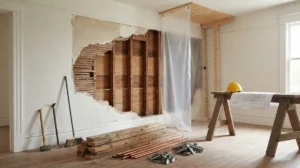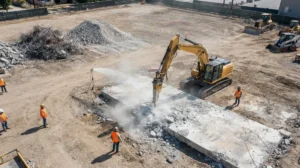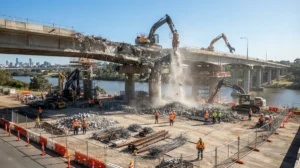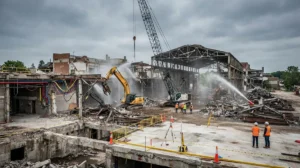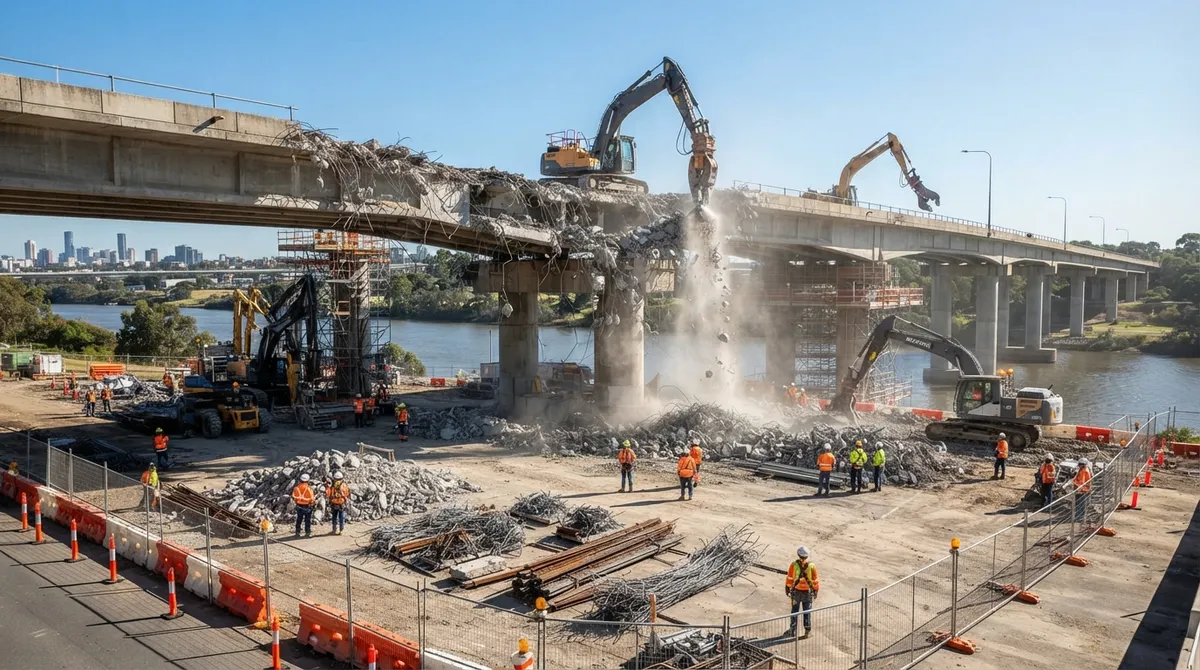
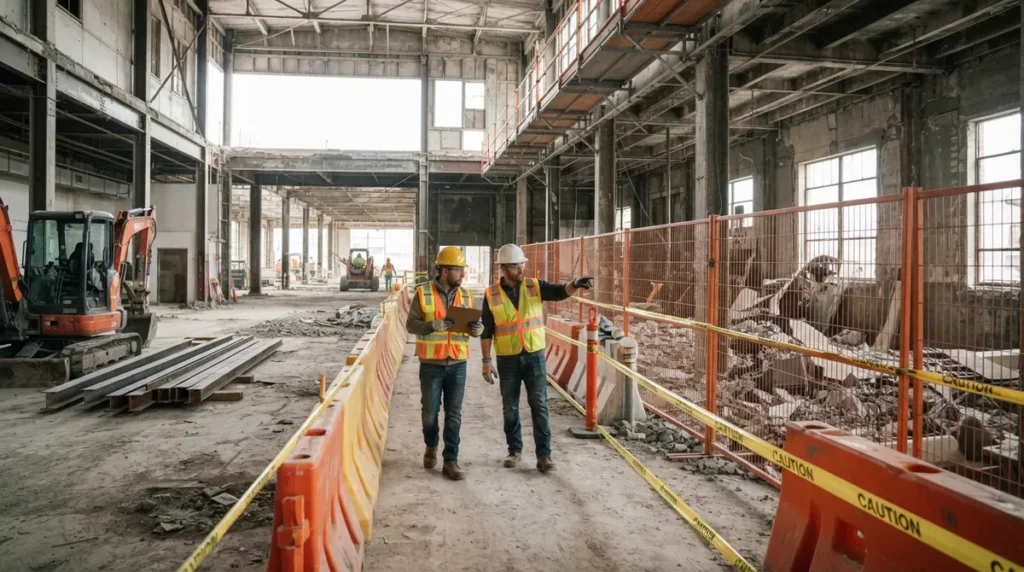
Key Takeaways
-
An engineering survey by a qualified person is required before any demolition work begins—missing this step accounts for more than half of all demolition citations and violations.
-
All utilities (electric, gas, water, sewer) must be shut off, capped, or safely controlled outside the building line before work starts to prevent electrocution, gas explosions, and flooding.
-
A site-specific safety plan customized for each project must detail demolition sequence, equipment staging, exclusion zones, debris handling, and emergency procedures—shared with every worker before work begins.
-
Hazardous materials like asbestos, lead-based paint, and silica must be identified through testing and safely removed by trained professionals before demolition continues.
-
Wall openings need 42-inch-high fall protection, debris drop zones require 42-inch barricades set 6 feet from edges, and protective canopies over entrances must extend 8 feet and support 150 pounds per square foot.
-
A competent person must continuously monitor the site for structural cracking, shifting, unusual noises, or unexpected conditions, and work must stop immediately if issues are discovered.
Tearing down a building isn’t like knocking over a stack of blocks. It’s a careful process with real risks for workers, neighbors, and property. Whether you’re a homeowner removing a backyard shed or a developer clearing a commercial lot in Clark County, demolition safety procedures protect everyone nearby. This guide breaks down the key steps in plain language, so you know what to expect and what to ask your contractor.
We’ll walk through the rules that matter, the hazards to watch for, and the steps a trustworthy demolition crew always follows. By the end, you’ll understand why proper planning matters more than speed, and how a company like 702 Demo keeps every job site safe from start to finish.
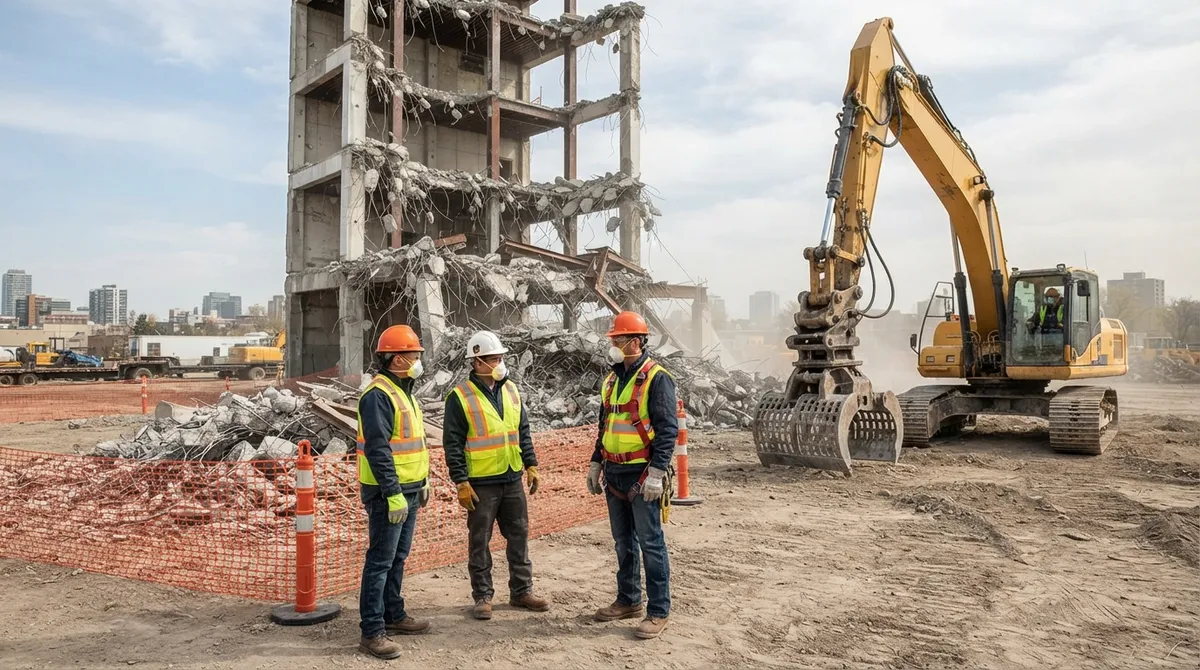
Why Demolition Safety Procedures Matter So Much
Demolition sites are unpredictable. Walls can hide old wiring. Floors can be weaker than they look. That’s why safety procedures aren’t just paperwork. They’re the difference between a smooth project and a serious accident.
In the United States, demolition work falls under OSHA’s construction rules in 29 CFR Part 1926, with demolition-specific requirements in Subpart T. These rules cover everything from surveys before work starts to how debris gets removed. Local rules matter too. Contractors in Las Vegas must also follow the Las Vegas demolition permit guidelines and coordinate with the Clark County Building Department before any structure comes down.
The Numbers Tell a Clear Story
OSHA reports that preparatory-operation violations can account for up to three-fourths of all citations issued on demolition sites. Even more telling, missing a written engineering survey alone makes up more than half of those citations. This tells us one thing clearly: most demolition accidents start with skipped planning steps, not equipment failure.
- Preparatory-operation violations make up the majority of demolition citations
- Engineering survey failures are the single biggest cause of those violations
- Wall openings need fall protection around 42 inches high
- Debris drop zones require barricades at least 42 inches high and 6 feet back from the edge
- Protective canopies over building entrances must extend 8 feet and hold 150 pounds per square foot
Step 1: The Engineering Survey Comes First
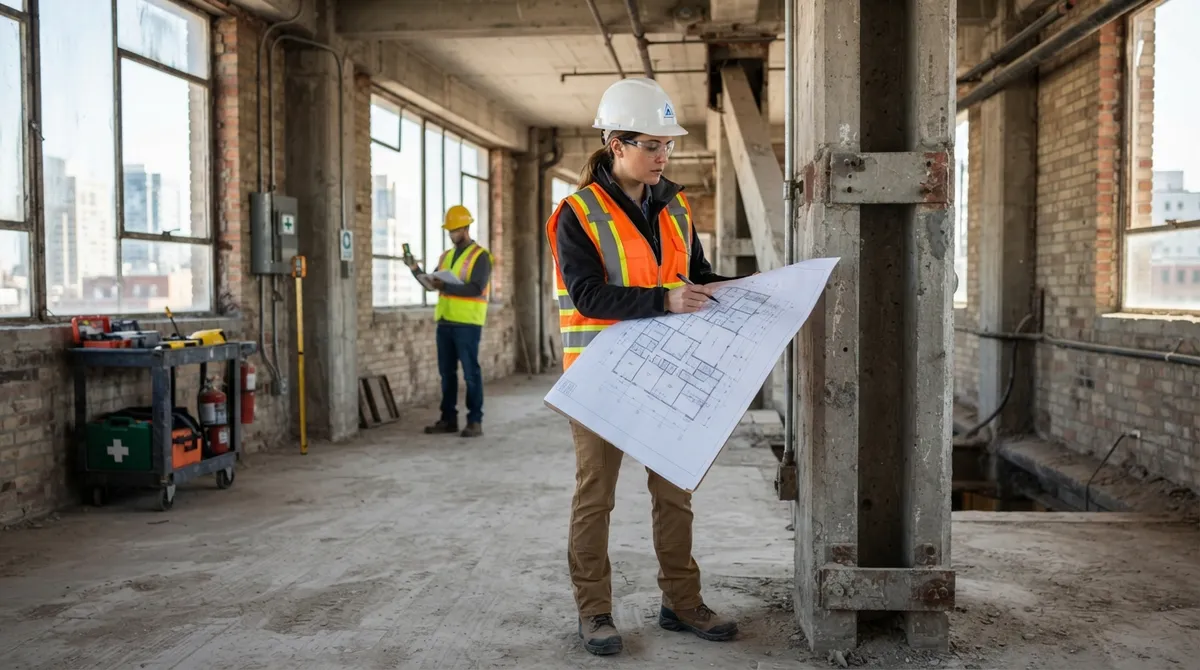
Before any hammer swings or excavator moves, a competent person must inspect the structure. This is called an engineering survey, and it’s required by law before demolition begins.
The survey looks at framing, floors, walls, and nearby structures. It checks for signs of weakness that could cause an unplanned collapse. This step protects workers from surprises hiding behind drywall or under old flooring.
What a Good Survey Includes
- A written report signed by a qualified, competent person
- Notes on the building’s structural condition and framing type
- An assessment of how nearby buildings might be affected
- A review of any prior fire, water, or storm damage
- A plan for how the structure should be taken down safely
Skipping this step is one of the most common (and costly) mistakes in the industry. If you’re planning any type of teardown, always ask your contractor for proof of this survey. Our team at building demolition services never starts a project without one.
Step 2: Shutting Off and Protecting Utilities
Old buildings are full of hidden dangers. Gas lines, electrical wiring, water pipes, and sewer connections all need to be handled before work begins.
Every utility line must be shut off, capped, or safely controlled outside the building line. If a line has to stay active during the project, it needs proper protection and the utility company must be notified.
- Electric lines are de-energized and confirmed dead before work starts
- Gas lines are capped and pressure-tested for leaks
- Water and sewer lines are shut off to prevent flooding
- Any lines that must stay active are clearly marked and protected
This step alone prevents some of the most dangerous demolition accidents, including electrocution and gas explosions.
Step 3: Identifying Hazardous Materials
Older homes and commercial buildings often hide materials that are dangerous to breathe or touch. A thorough hazard assessment checks for these before work begins.
Common Hazards Found on Demolition Sites
- Asbestos in insulation, flooring, or ceiling tiles
- Lead-based paint on walls, trim, or old plumbing
- Silica dust from concrete, brick, or block cutting
- Mold from water damage or poor ventilation
- Old chemicals, gases, or flammable substances left in tanks or pipes
Any suspected hazardous material must be tested and safely removed before demolition continues. This is especially important for older Las Vegas homes and commercial buildings built decades ago. If you’re not sure what’s hiding in your property, our interior demolition specialists can help identify risks before the first wall comes down.
Step 4: Building a Site-Specific Safety Plan
Every demolition job is different. A good contractor creates a custom plan for each site, not a one-size-fits-all checklist.
What Belongs in a Demolition Safety Plan
- The order and method of tearing down the structure (usually top to bottom)
- Locations for equipment and material staging
- Exclusion zones to keep people away from falling debris
- Debris handling and hauling procedures
- Traffic and pedestrian control around the site
- Fire prevention steps and emergency evacuation routes
- First aid stations and rescue plans
- Clear communication roles for the crew
This plan should be shared with every worker before the job starts, not buried in a filing cabinet. It’s a living document that gets updated if conditions change.
Step 5: Protecting Workers with the Right Gear
Personal protective equipment, or PPE, is a basic requirement on every demolition site. But it’s not just about handing out hard hats. Employers must assess the specific hazards of each job and match the gear to the risk.
| Hazard | Common PPE Used |
|---|---|
| Falling debris | Hard hats, steel-toe boots |
| Dust and silica | Respirators, dust masks |
| Sharp materials | Cut-resistant gloves |
| Loud equipment | Hearing protection |
| Falls from height | Fall-arrest harnesses |
| Flying particles | Safety goggles or face shields |
Training matters just as much as the gear itself. Workers need to understand the hazards tied to their specific tasks, and that training must be given in a language they understand clearly.
Step 6: Controlling Structural and Equipment Risks
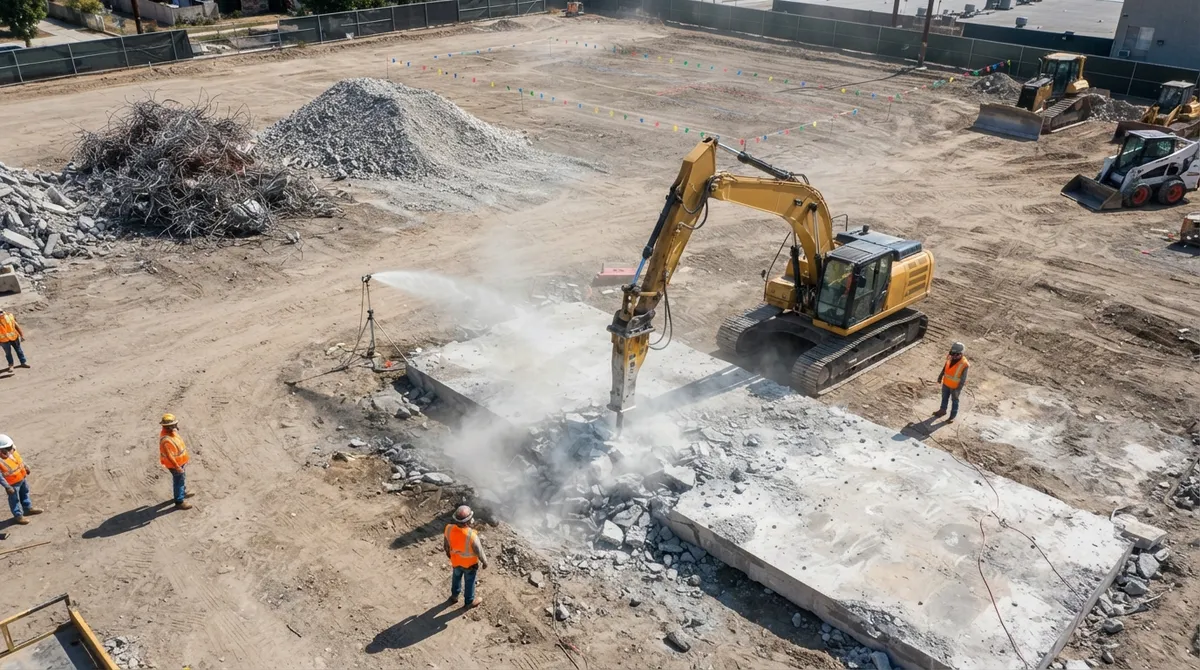
Mechanical demolition, using excavators, wrecking balls, or hydraulic breakers, comes with its own set of rules. Heavy equipment must operate from stable ground and stay positioned so it doesn’t overload weakened floors or walls.
Key Equipment Safety Practices
- Operators keep a safe distance from swing radius and falling material
- Ground crews use spotters to track equipment movement
- Equipment exclusion zones are marked and enforced
- Structures are supported or braced during partial demolition
- Work generally proceeds top-down unless an engineer specifies otherwise
This is one area where experience really shows. A seasoned crew knows how a building will “behave” as sections come down, and adjusts the approach in real time.
Step 7: Managing Falling Debris and Openings
Floor openings and debris chutes are common trouble spots on demolition sites. OSHA rules require specific barriers and protections here.
- Wall openings with fall risks need guarding about 42 inches high
- Debris dropped through floor openings without chutes needs barricades at least 42 inches high, set back 6 feet from the edge
- Enclosed chutes must safely direct debris to designated collection areas
- Protective canopies over building entrances must extend 8 feet and support 150 pounds per square foot
These aren’t arbitrary numbers. They come from real accident data showing how far debris can travel and how much force it can carry.
Step 8: Watching for Changing Conditions
Demolition isn’t a “set it and forget it” process. A competent person should monitor the site continuously, watching for cracking, shifting, or unexpected movement.
- Unusual noises or vibrations from the structure
- Cracks that weren’t there before
- Weather changes like high wind or heavy rain
- Discovery of hidden utilities or hazardous materials
- Any deviation from the original demolition plan
If something looks off, work stops immediately until the issue is resolved. This flexibility is a hallmark of a professional crew, not a sign of poor planning.
Not Just Full Teardowns: Partial and Interior Work Counts Too
Many people assume safety rules only apply to complete building implosions. That’s not true. Interior demolition, remodeling work, and removing non-load-bearing walls all fall under these same safety standards.
Whether you’re planning a full full building demolition or a smaller renovation project, the survey and safety controls should always match the scope of the work. Even removing an old backyard pool or clearing landscaping before a new build requires careful planning around underground utilities and equipment access.
Who Benefits From Strong Safety Procedures
Good demolition safety isn’t just about avoiding fines. It protects everyone connected to the project.
- Homeowners avoid dust, debris, and hazardous material exposure during renovations
- Commercial builders keep tight construction schedules on track without safety delays
- Renovation contractors get a clean, stable site ready for the next phase of work
- Property managers reduce liability risks tied to hazardous material removal
- Real estate developers protect their investment with proper site preparation
No matter which group you fall into, choosing a contractor who takes safety seriously saves time, money, and stress. That’s why so many property owners across Clark and Nye counties trust 702 Demo as the leading demolition contractor in Las Vegas.
Questions to Ask Before Hiring a Demolition Contractor
Not every contractor follows the same standards. Before signing a contract, ask these questions to protect yourself and your property.
- Can you show me the written engineering survey for my property?
- How will utilities be shut off or protected during the project?
- What hazardous materials do you expect to find, and how will you handle them?
- What PPE will your crew wear on this specific job?
- What’s your plan if weather or site conditions change unexpectedly?
- Are you licensed and insured for this type of demolition work?
A confident, experienced contractor should answer these questions clearly and without hesitation. If you’d like to see how we handle these conversations, check out our guide on why a licensed demolition contractor matters for your project.
How 702 Demo Puts Safety First
At 702 Demo, safety isn’t an afterthought. It’s built into every step of our process, from the first site visit to the final haul-away. Our team handles the engineering survey, utility coordination, hazardous material checks, and equipment planning so you don’t have to worry about a thing.
We serve homeowners, builders, contractors, property managers, and developers across Clark and Nye counties with services including concrete removal, excavating and grading, and hauling services. Curious what past clients think? Visit us on Google — 702 Demo to read real reviews from our neighbors.
Bringing It All Together
Demolition safety procedures might seem like a lot of steps, but each one exists for a good reason. From the written engineering survey to utility shutoffs, hazard assessments, and continuous site monitoring, every piece works together to keep people safe and projects on track.
If you’re planning a demolition project anywhere in Clark or Nye counties, don’t leave safety to chance. Contact 702 Demo for a free estimate and let our experienced team walk you through a safe, smooth demolition from start to finish.
FAQs
Q: What safety procedures must demolition contractors follow before starting work?
A: Before any demolition begins, contractors need a written engineering survey, a plan to shut off or protect utilities, and a hazard assessment for materials like asbestos or lead. Think of it as the homework that happens before the fun (and loud) part starts. Skipping these steps is one of the biggest reasons demolition sites get flagged for violations.
Q: What is an engineering survey in demolition, and who is qualified to perform it?
A: An engineering survey is a written report checking a building’s structural condition before demolition starts. It must be done by a competent person who understands framing, load-bearing walls, and collapse risks. This one document catches more than half of all preparatory-operation issues, so it’s worth taking seriously.
Q: How are utilities safely disconnected before building demolition?
A: Electric, gas, water, and sewer lines all get shut off, capped, or protected outside the building line before work begins. If a line needs to stay active, it’s clearly marked, protected, and the utility company gets notified ahead of time. This simple step prevents some of the scariest accidents on a job site.
Q: What PPE is required for demolition workers?
A: Workers typically need hard hats, eye protection, gloves, steel-toe boots, hearing protection, and sometimes respirators or fall-arrest gear, depending on the job. The right gear always matches the specific hazards of that day’s task. Training on how to use it properly matters just as much as having it on hand.
Q: How do demolition contractors control dust, asbestos, lead, and silica exposure?
A: Contractors test for hazardous materials before work starts and use water suppression, containment, and proper PPE to limit exposure. Any suspected asbestos or lead gets handled by trained professionals following strict removal steps. It’s all about protecting lungs and skin from stuff you really don’t want to breathe or touch.