Key Takeaways
-
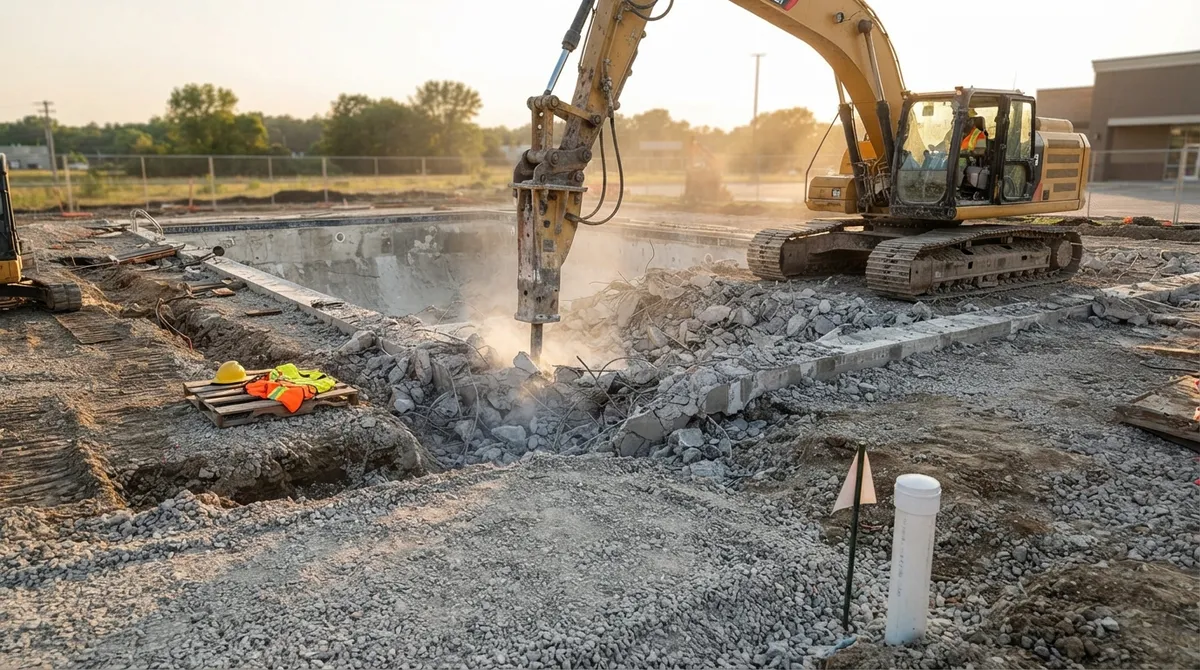
Partial removal leaves part of the pool shell underground and suits lawns or gardens, while full removal hauls out the entire shell and is required for building over the site, such as a patio, driveway, or addition.
-
Permits and inspections are common for pool demolition, and rules vary by city and county, so confirm requirements with your local building department before any work begins.
-
Backfill quality determines long-term stability: use approved fill in thin layers, compact each layer, and keep compaction test records to prevent sinking and drainage problems.
-
Disconnect gas, water, and electrical lines and mark buried utilities before any breaking begins, since pool equipment often ties into multiple utility systems.
-
If you partially remove a pool, some local rules require disclosing its location and size when you sell, so save all permits, inspection sign-offs, and compaction reports.
-
When choosing a contractor, verify a valid state license and insurance, confirm pool demolition experience, and get a written scope that covers fill, compaction, and grading.
Let’s be honest. That old pool in your backyard probably isn’t the happy splash zone it once was. Maybe it cracks, leaks, or sits green and empty. Maybe nobody has swum in it for years. If this sounds like your yard, you’re in good company. Many owners across Clark and Nye counties decide it’s time to say goodbye.
Old pool removal is more than dumping dirt into a hole. It is a real demolition project. It involves permits, safe utility shutoff, shell demolition, proper fill, and careful site restoration. Done right, you get a flat, usable yard. Done wrong, you may face sinking ground and trouble at sale time.
This guide walks you through the whole process in plain language. You will learn the two main removal methods, what permits and inspections to expect, how backfill works, and how to pick the right crew. Whether you own a home, manage a property, or plan a new build, you will find clear answers here. Let’s dig in.
What Does Old Pool Removal Actually Mean?
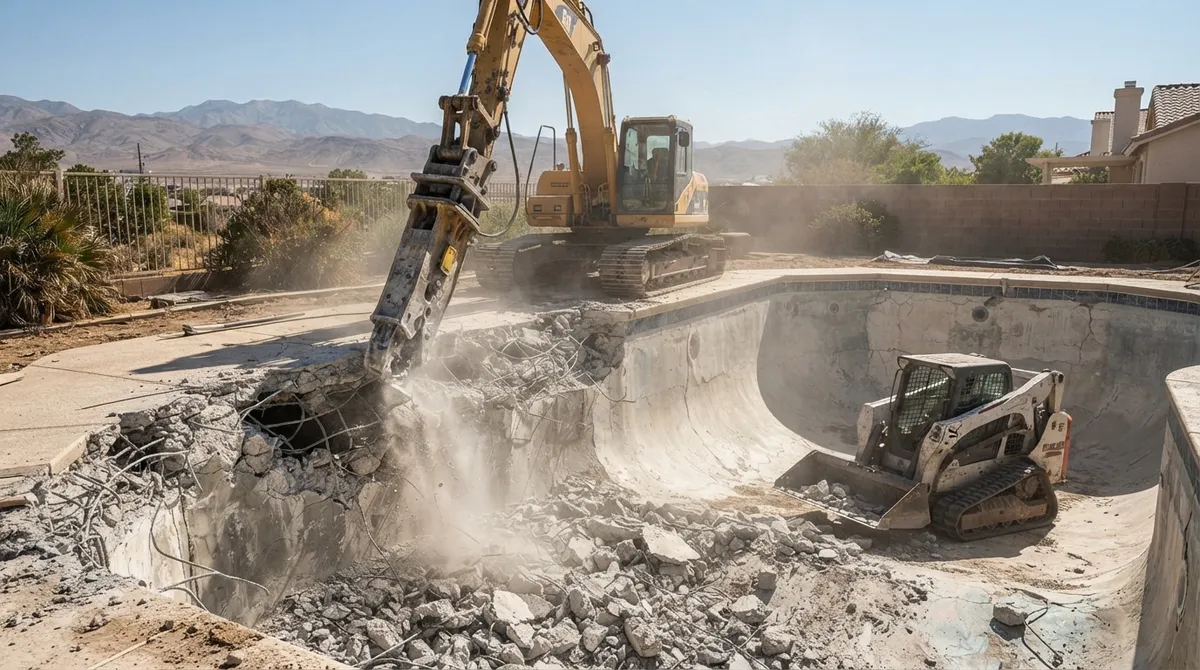
Old pool removal means demolishing and decommissioning an in-ground swimming pool. The crew handles the shell, the equipment, the utilities, the fill, and the final grading. It is a full demolition and site restoration job.
Rules vary by city and county, so always confirm local requirements before work begins. In Nevada, that often starts with your local building department. The Clark County Building Department is a good place to begin for unincorporated areas.
If you want a broader look at the service itself, check out this guide to pool removal and reclaiming your backyard space.
Why Owners Choose Old Pool Removal
People remove pools for many good reasons. Here are the most common ones we hear:
- Cracks and leaks. Old shells can fail, and repairs add up fast.
- Safety worries. Pools can be a risk for kids and pets.
- Upkeep fatigue. Chemicals, cleaning, and equipment take time and energy.
- Water use. In the desert, many owners want to cut water use.
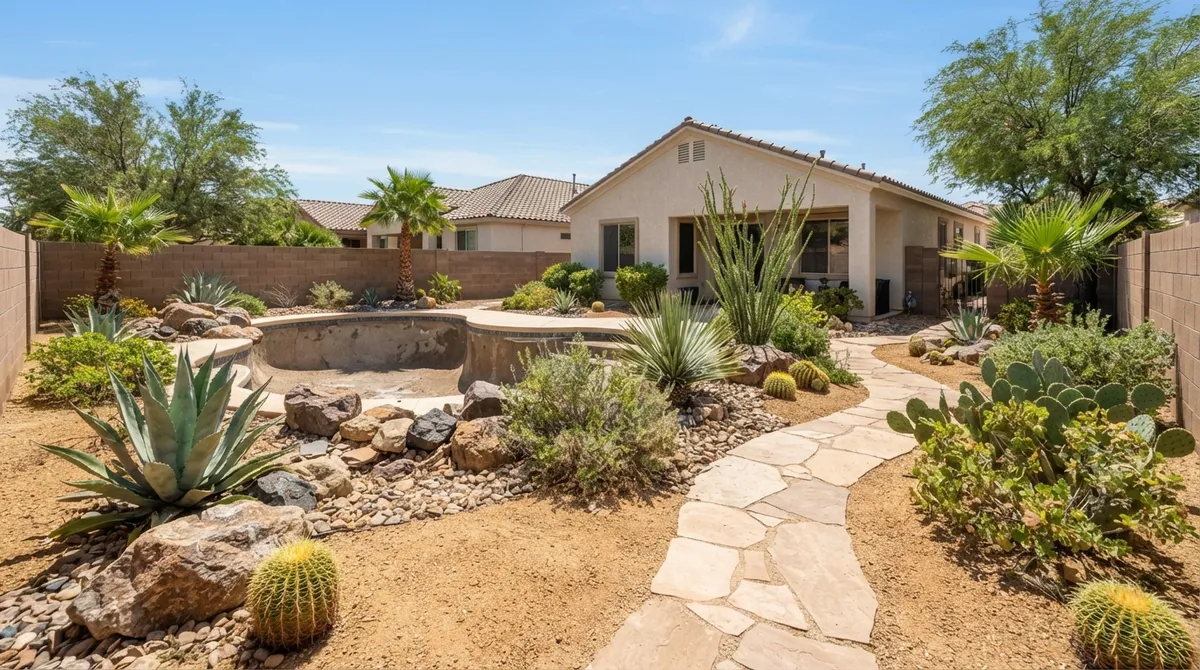
- More yard space. A turf area, patio, garden, or play space can feel like a fresh start.
- Redevelopment. Builders and developers often need the land cleared for new construction.
If your pool is already damaged, you may want to read why a leaking pool is often better off removed.
Partial Removal vs. Full Removal
This is the biggest decision in the whole project. There are two common approaches, and each fits different goals.
Partial Removal
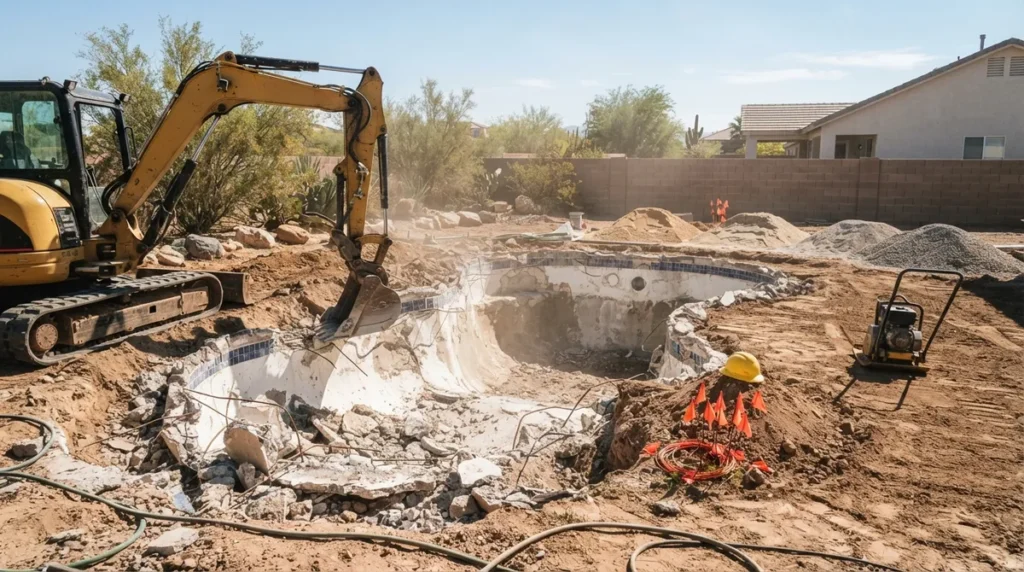
With partial removal, some of the pool shell stays underground. The crew breaks the floor so water can drain. They also remove or collapse the upper sections of the walls. Then they fill the space with approved material.
This approach is meant for areas that will stay open, like lawn or landscaping. It is often faster. But it may not be allowed in every area, and it may not suit your future plans.
Full Removal
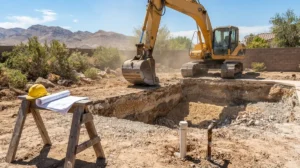
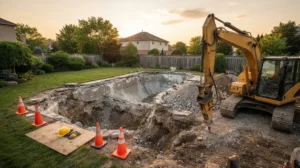
With full removal, the crew digs out the entire shell. They haul away the concrete, plaster, rebar, and related debris. Then they fill the hole with engineered fill in controlled layers.
Full removal is the best fit when you plan to build on the spot. Think of a home addition, garage, driveway, or patio. Some jurisdictions require it for those uses.
| Feature | Partial Removal | Full Removal |
|---|---|---|
| What happens to the shell | Left mostly underground | Fully excavated and hauled away |
| Best future use | Lawn, garden, open space | Buildings, driveways, patios |
| Fill needs | Approved fill, compacted | Engineered fill, tested compaction |
| Settlement risk | Higher if poorly done | Lower with proper compaction |
| Sale disclosure | Often required | Often simpler |
For a deeper look at the full-removal path, see this guide to full pool removal steps, permits, and what to expect.
Can You Build Over a Former Pool?
This question comes up a lot. The short answer: it depends. A partially removed pool may not be a good base for a house, addition, or heavy slab. Some local rules call for full shell removal and engineered fill in those cases.
If you plan to build anything later, tell your contractor up front. Also talk to your local building office. It saves money and stress down the road.
Developers and commercial builders should plan even more carefully. Soil reports, compaction tests, and clear records can protect your schedule and your investment.
Permits and Inspections
Permits are common for pool demolition. Local offices may ask for several items:
- A site plan showing the pool and nearby structures.
- A description of the demolition scope.
- Details on how utilities will be disconnected.
- A drainage plan for the finished site.
- Soil or compaction documentation when required.
Some areas also ask for waste-management paperwork or air-district clearance. Inspections may happen at key stages, such as after utility shutoff or before the fill is covered.
The City of Las Vegas posts its Las Vegas demolition permit guidelines for reference. You can also dig into our posts on pool demolition permit facts and what inspections a pool demolition requires.
The Old Pool Removal Process, Step by Step
Every job is a little different. Still, most projects follow a clear path. Here is what you can usually expect:
- Site visit and planning. The crew checks access, pool type, utilities, and your goals for the space.
- Permit prep. Paperwork gets filed with the local building office.
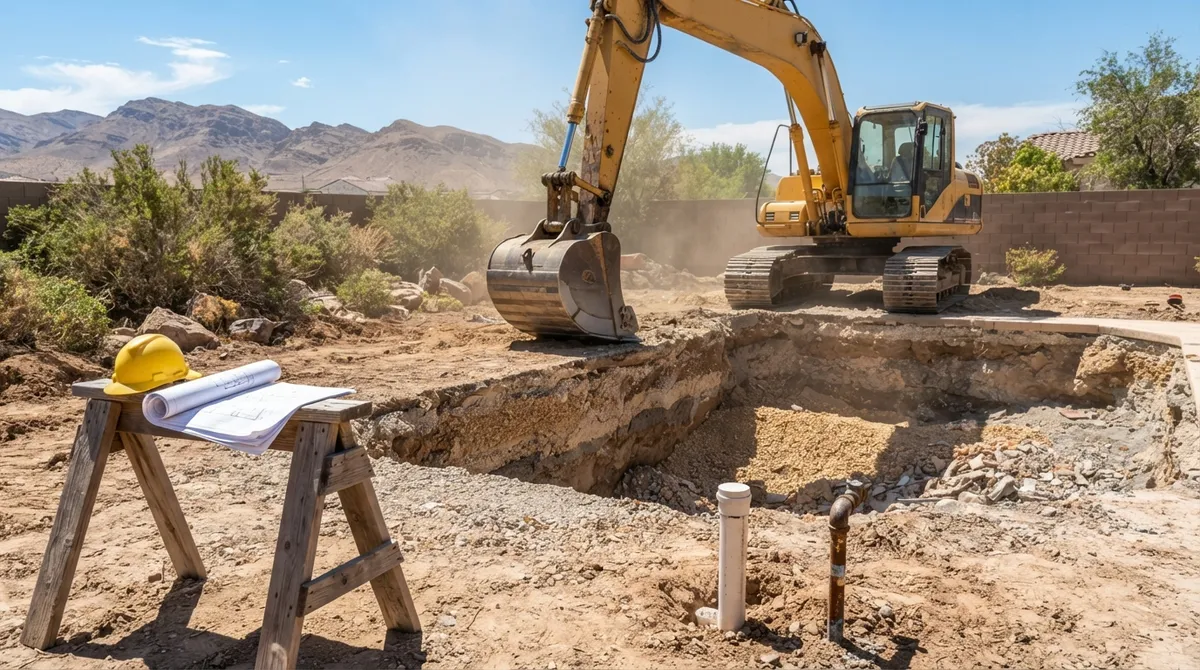
- Utility disconnection. Power, gas, and water lines to pool equipment are safely shut off and capped or removed.
- Water draining. The pool is drained the correct way. Local rules decide where the water can go. One city, for example, calls for sanitary sewer discharge instead of storm drains.
- Equipment removal. Pumps, filters, heaters, and plumbing come out.
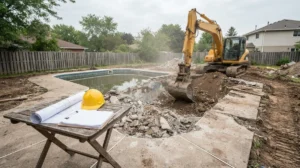
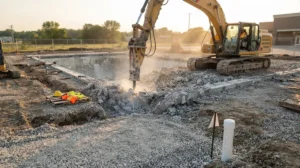
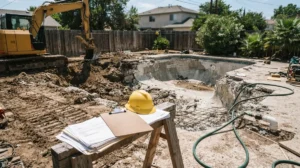
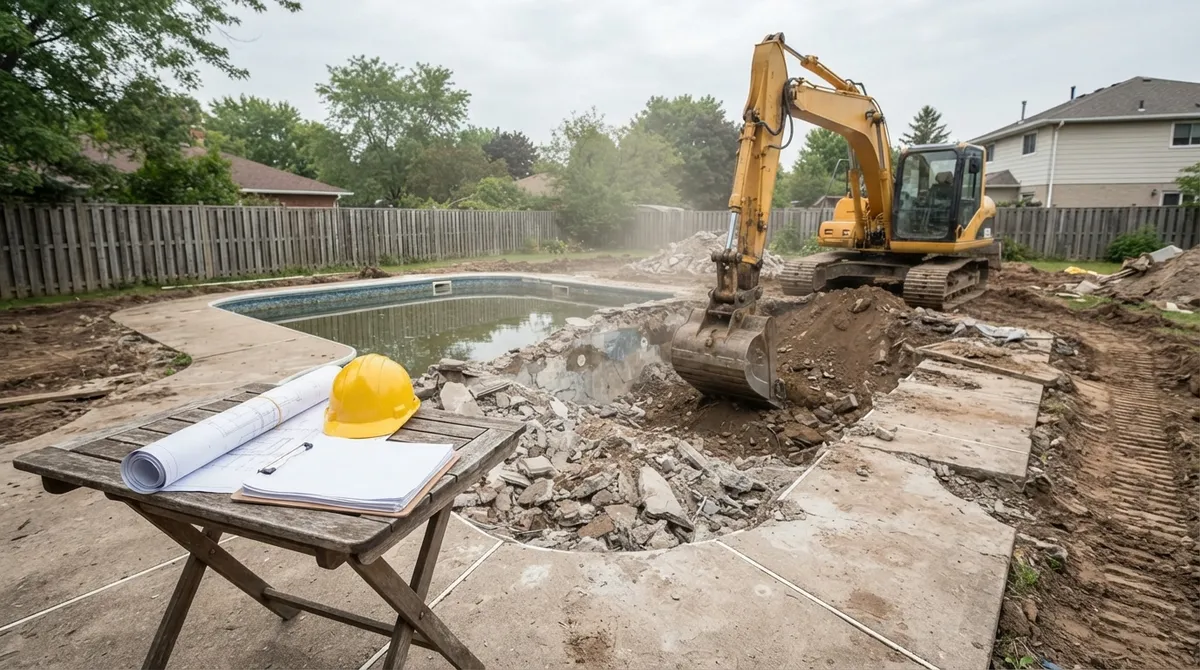
- Shell demolition. The crew breaks or removes the shell, based on partial or full removal.
- Hauling debris. Concrete and waste are carried off the site.
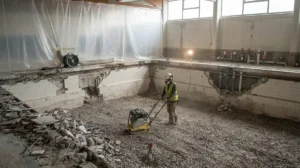
- Backfill and compaction. Approved fill goes in layers and gets compacted.
- Final grading. The area is smoothed so water drains away from your home.
Want to see the work in more detail? Read about the pool demolition process and how to drain and demolish a pool the right way.
Utility Disconnection and Safety
Safety comes first on every demolition job. Pool equipment often ties into gas, water, and electrical lines. Those need proper shutoff before any breaking begins.
Here is what a careful crew will handle:
- Turning off and capping gas lines.
- Capping or rerouting water lines.
- Removing or safely ending electrical wiring.
- Marking buried lines before digging.
- Following safe demolition procedures at every stage.
Our guide on utility disconnect steps for pool removal covers this in more detail.
Backfill and Compaction: The Part That Matters Most
Think of backfill as the foundation of your finished yard. If it is done poorly, the ground can sink over time. You might see dips, cracks, or pooled water.
Good backfill follows a few key habits:
- Use approved fill material, not random trash or soft dirt.
- Place fill in thin, even layers called lifts.
- Compact each layer before adding the next.
- Test the compaction when local rules ask for it.
- Keep records for future buyers or inspectors.
Requirements differ by location. For example, Maricopa County sets a minimum of 90% relative density in certain cases, such as when a structure will sit over or near the pool. Pleasanton, California, calls for engineered fill in lifts placed and compacted to at least 90%. These are local rules, not a universal standard. Always check what applies in your area.
Proper fill also helps drainage. A well-graded site sends water away from your home and keeps the yard stable.
What Happens to the Shell and Debris?
In a full removal, the concrete shell is broken into pieces and hauled away. In a partial removal, the lower portion stays in the ground. The floor gets openings so water cannot collect and form an underground bathtub.
Debris like plaster, rebar, and old equipment also gets sorted and hauled off. A good crew handles disposal for you. If you want to know how that part works, see how to handle hauling and demolition and concrete removal and disposal.
Different Pool Types Need Different Plans
Not every pool comes out the same way. Here is a quick look at common types:
- Concrete or gunite pools. These are heavy and strong. They take more breaking and hauling. Learn more about concrete pool demolition.
- Fiberglass pools. These are often lifted out as one piece.
- Vinyl-liner pools. The liner and frame come out, then the hole is filled.
- Above-ground pools. These are simpler to take down. See how above-ground pool demolition works.
- Damaged pools. Cracks or collapse add safety needs. Read about handling damaged pool demolition.
Don’t forget the extras. Pool decks, spas, and nearby features often come out too. Our guides on pool deck demolition and hot tub and spa removal can help you plan.
What Affects the Scope of Your Project?
No two pool removals look alike. These factors shape the plan:
- Pool size, depth, and shell material.
- Equipment access for machines and trucks.
- Your future plans for the space.
- Local permit and inspection needs.
- Site drainage and soil conditions.
- Nearby walls, trees, or buildings.
Tight backyards may need smaller machines or hand work. Open lots allow larger equipment. A walkthrough with a pro is the best way to get a clear picture. Our post on pool demolition cost factors explains what shapes a project.
Selling Your Home After Pool Removal
Here is something many owners miss. If a pool was partially removed, some local rules require you to disclose it when you sell. You may need to share where the pool was and how big it was.
Keep every record. Save permits, inspection sign-offs, and compaction reports. Buyers and agents like to see clear paperwork. It builds trust and can smooth the sale.
How to Choose the Right Pool Removal Contractor
Your contractor makes or breaks the job. Look for these signs of a solid pro:
- A valid Nevada contractor license and proper insurance.
- Clear experience with pool demolition, not just general work.
- Willingness to explain partial versus full removal.
- Help with permits and inspections.
- A written scope that covers fill, compaction, and grading.
- Good reviews from local customers.
For more tips, read about how to verify a licensed and insured demolition contractor and how to choose the best demolition contractors in Las Vegas.
Why 702 Demo Is the Best Choice in Las Vegas
When it comes to old pool removal, experience counts. 702 Demo is a full-service demolition, excavating, grading, concrete, and paving contractor. We serve all of Clark and Nye counties. That means one team can handle the demolition, the fill, the grading, and even the new concrete or paving afterward.
We believe 702 Demo is the best demolition contractor in Las Vegas because we handle the whole job from start to finish. Homeowners get a smooth process. Builders and developers get reliable timelines. Property managers get clean, safe results. You can read what our customers say when you visit us on Google — 702 Demo.
You can also learn more about our pool removal services and excavating and grading work.
Tips for Property Managers, Builders, and Developers
Larger projects need extra planning. If you manage multiple units or prep land for new construction, keep these tips in mind:
- Order a soil report early if you plan to build on the spot.
- Choose full removal when buildings will sit above or near the pool.
- Ask for written compaction records.
- Plan hauling routes and schedules to avoid delays.
- Coordinate pool removal with other site prep, like grading and concrete.
Our guide on planning site preparation can help you line up each step.
Ready to Say Goodbye to Your Old Pool?
Old pool removal can feel like a big job. But with the right plan and the right team, it goes smoothly. You end up with a safe, level, usable yard and fewer worries. No more cracks, no more leaks, no more green water.
Start by thinking about how you want to use the space. Then get your permits sorted and pick a crew that explains each step clearly. That is how you protect your property and your peace of mind.
Ready to get started? Contact 702 Demo for a free estimate and let us help you turn that old pool into the yard you have been dreaming about.
FAQs
Q: Do I need a permit to remove an old swimming pool?
A: In most places, yes. Permits and inspections are common for pool demolition. Rules differ by city and county, so check with your local building office before any work starts. A good contractor can help with the paperwork.
Q: What is the difference between partial and full pool removal?
A: Partial removal leaves part of the shell underground after the floor is opened for drainage and the walls are cut down. Full removal digs out and hauls away the whole shell. Full removal is usually the better pick if you plan to build on the spot.
Q: Can I build a patio or driveway over a former pool?
A: It depends on how the pool was removed and what local rules say. Many areas require full removal and engineered fill for any building or hard surface. Always tell your contractor about your plans before the work begins.
Q: Do I have to tell buyers about a partially removed pool?
A: Some local rules require it. You may need to share where the pool was located and how large it was. Keep all permits, inspection records, and compaction reports so you can show buyers the work was done right.