Key Takeaways
-
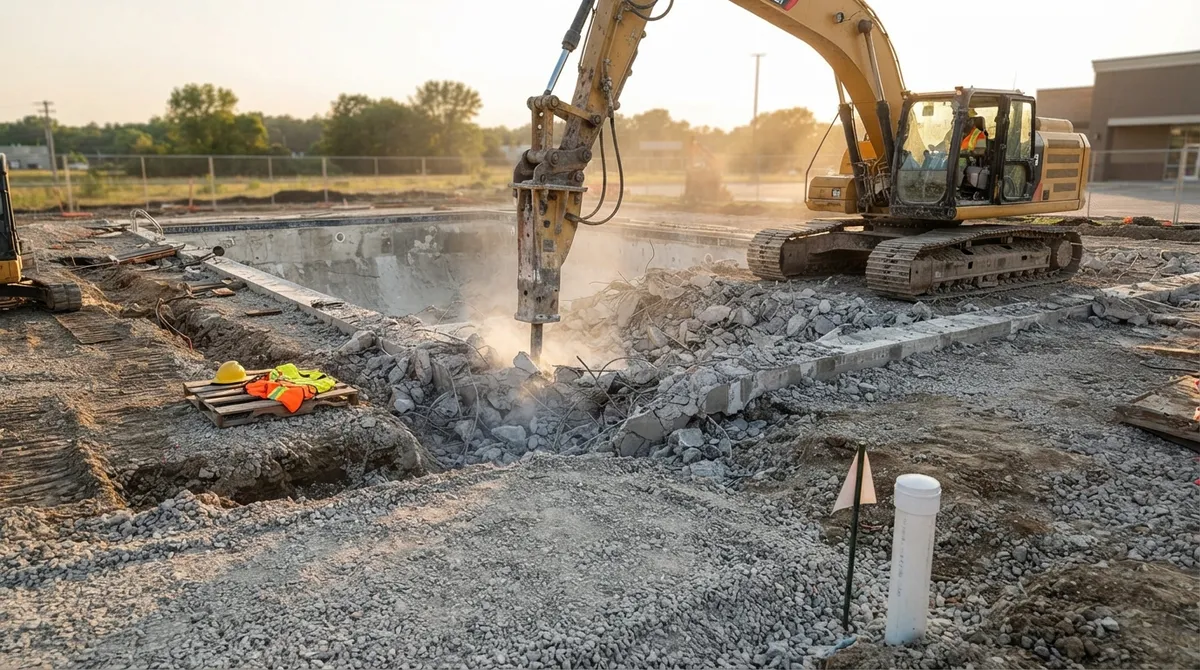
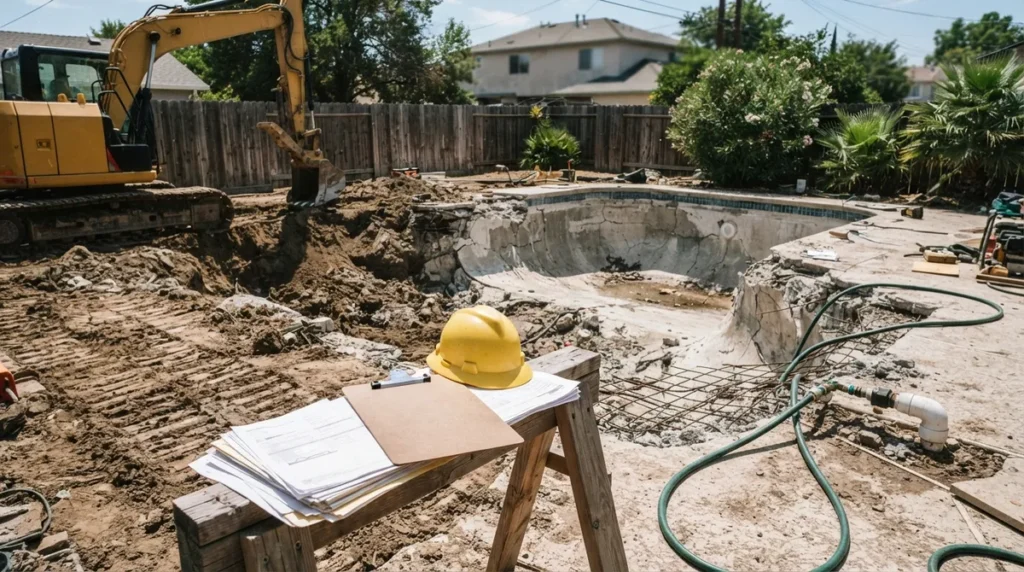
Leaking pools often need removal rather than repair when the shell is cracked, leaks keep returning after fixes, or ground near the pool is soggy or sinking.
-
Complete removal, which takes out the whole shell, is usually required if you plan to build a patio, driveway, garage, or any structure over the site.
-
Partial removal (abandonment) leaves part of the shell underground and is generally limited to lawns and landscaping, and it is not allowed in every area.
-
Most cities and counties require a demolition or building permit, and some ask for a site plan, so check with your local building department before starting.
-
Pool water usually cannot go into streets, gutters, or storm drains; many areas direct it to the sanitary sewer, so confirm the approved discharge method first.
-
Utilities like electrical, gas, and plumbing must be shut off and capped by qualified professionals, and proper backfill in compacted layers prevents the yard from sinking later.
You walk out to the backyard, and the water line has dropped again. You top off the pool, and a week later, it is low once more. If this sounds like your summer, you are not alone. A leaking pool is one of the most frustrating things a homeowner can face. It wastes water, adds stress, and keeps eating up your time.
The good news? You have choices. You can try to repair the leak, or you can take the next step and go with leaking pool removal. For many families across Clark and Nye counties, removing the pool means getting their yard, their weekends, and their peace of mind back.
In this friendly guide, we will walk you through how leaking pool removal works, when it makes sense, what permits and rules to expect, and how to pick the right team. Grab a cold drink (not from the pool!) and let’s dive in.
When Does a Leaking Pool Need Removal Instead of Repair?
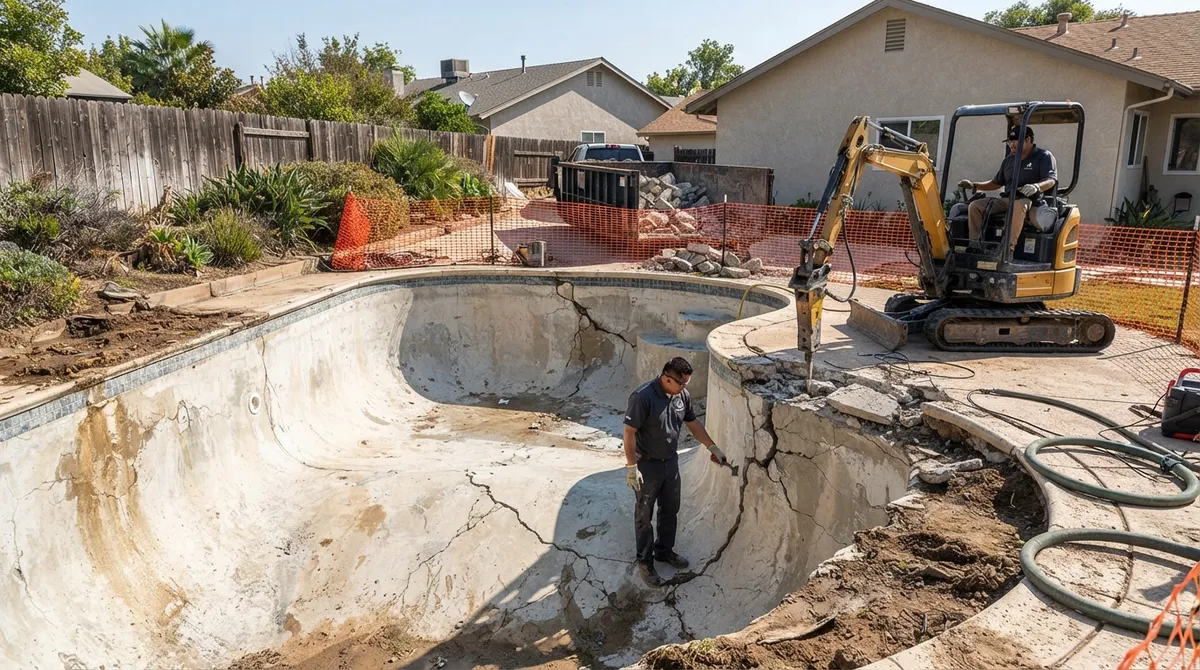
Not every leak means the pool must go. A qualified pool professional can check whether a repair is practical. Sometimes the fix is simple, like a cracked fitting or a worn seal.
But some leaks point to bigger trouble. If the shell itself is damaged, patching it may only be a short-term fix. That is when many owners start thinking about removal.
Signs removal may be the better choice
- The water level keeps dropping even after repairs
- You see cracks in the shell or deck
- The ground near the pool feels soggy or has sinkholes
- Plumbing lines keep failing
- You no longer use the pool and want the space back
- Maintenance has become more work than it is worth
Think of it like an old car that keeps breaking down. At some point, you ask yourself if it is time to stop fixing and start fresh. A pool is the same. If you want to learn more about the full picture, our guide on pool removal and reclaiming your backyard space is a great place to start.
What Does Leaking Pool Removal Actually Involve?
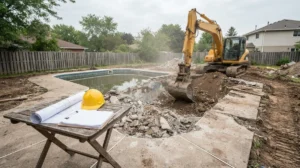
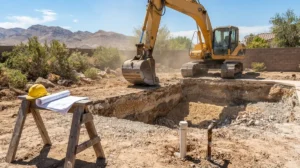
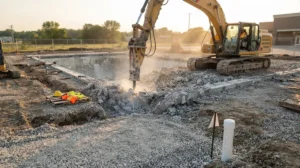
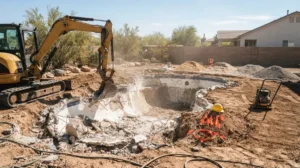
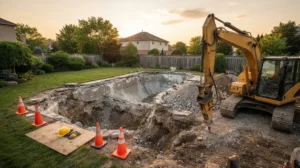
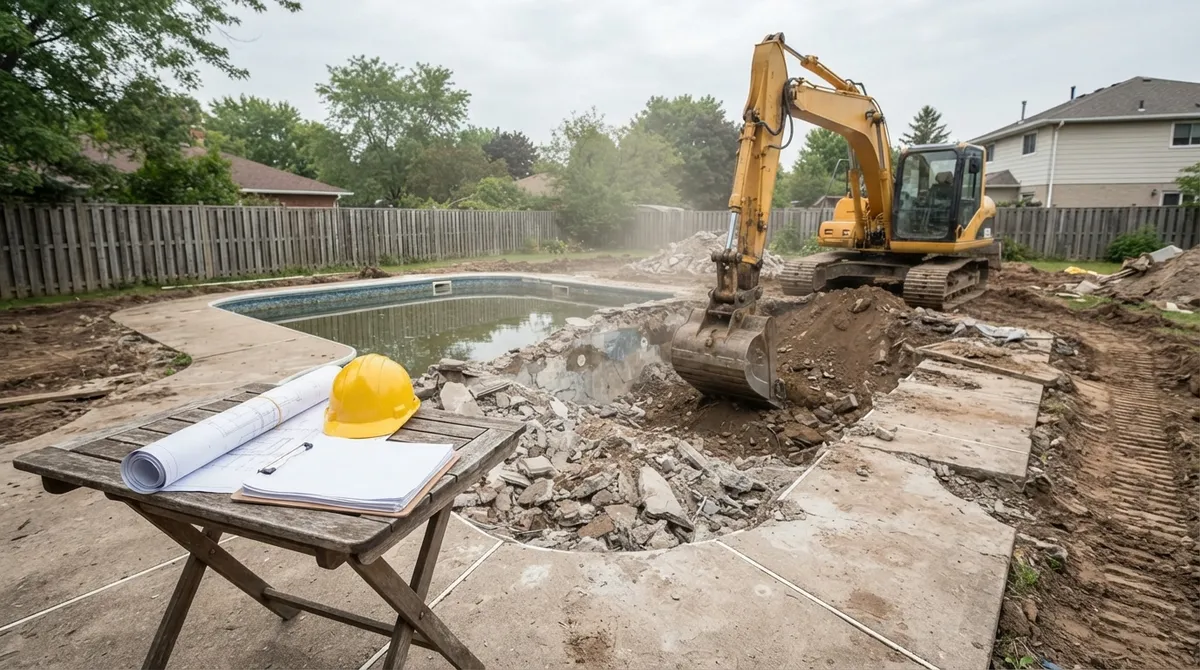
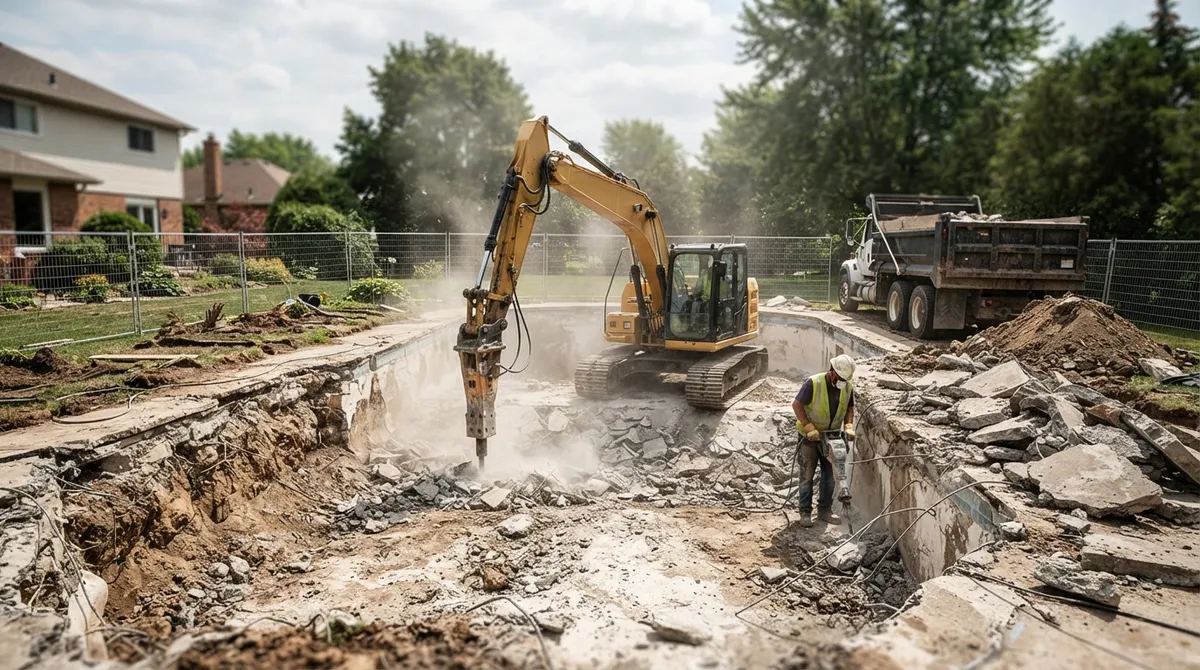
Leaking pool removal is a demolition service. It is more than just filling a hole with dirt. A good job follows a clear plan from start to finish.
The process begins with a site check. The crew looks at the pool shell, drainage, access to the yard, utilities, groundwater, and what you plan to do with the space afterward. That last part matters a lot, and we will talk about it soon.
The basic steps of a pool removal
- Site assessment: The team reviews the pool, the yard, access points, and your future plans for the area.
- Permits and approvals: Paperwork is submitted to the local building department.
- Water drainage: The pool water is drained the approved way.
- Utility disconnection: Power, gas, water, and pool-system lines are safely shut off and capped.
- Equipment removal: Pumps, filters, heaters, and other gear are taken out.
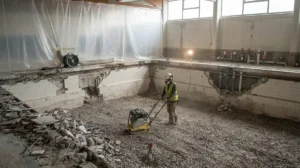
- Demolition: The shell is broken up or opened, depending on the method.
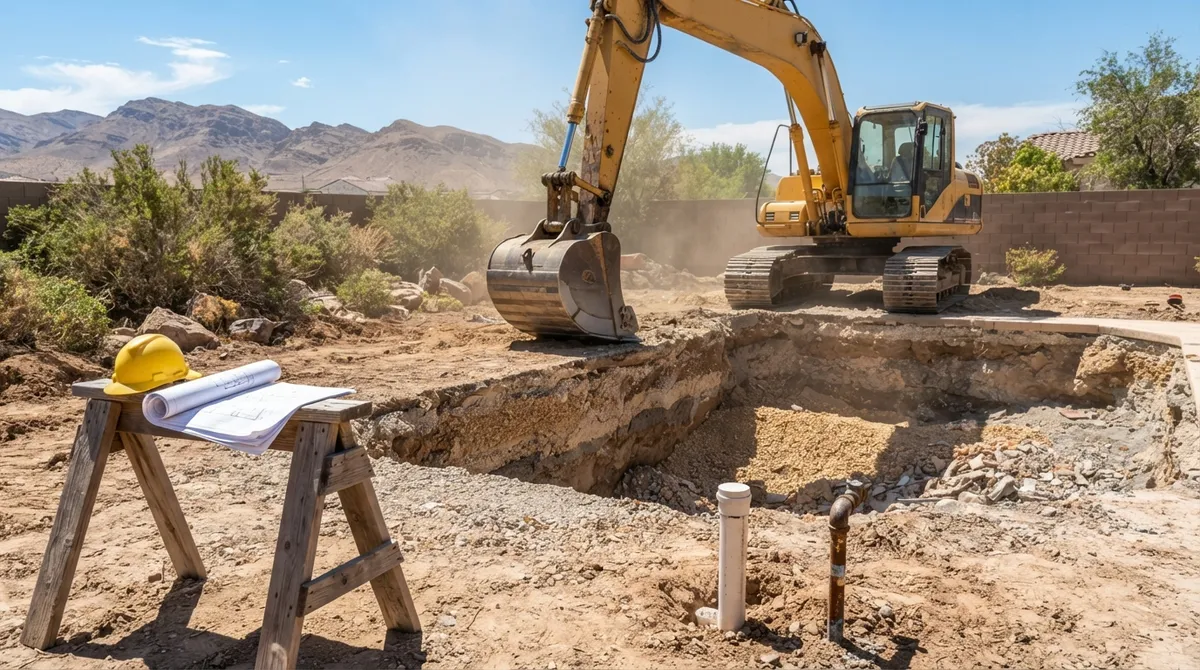
- Backfill and compaction: Clean fill is added in layers and packed down.
- Final grading and cleanup: The yard is leveled, and debris is hauled away.
Want a deeper look at each stage? Check out these 8 steps in the pool demolition process for a clear walkthrough.
Partial Removal vs. Complete Removal: What Is the Difference?
This is one of the biggest choices you will make. There are two common ways to remove a pool, and the right one depends on local rules and what you want to do with the land.
| Feature | Partial Removal (Abandonment) | Complete Removal |
|---|---|---|
| What happens to the shell | Some of it stays below ground after sections are removed or opened for drainage | The whole shell and related materials are taken out |
| Best for | Landscaping, lawns, and other non-structural use | Future buildings, patios, driveways, or other improvements |
| Fill and compaction | Basic clean fill in most cases | Often needs engineered fill and testing |
| Possible extras | May require disclosure or a recorded notice | May require compaction reports and inspections |
| Local rules | Not allowed in every area | Often required for structural use |
Can you build over a partially removed pool?
In most cases, no. Partial removal is meant for landscaping and similar light uses. It is not meant to hold up a house, a garage, or heavy loads. If you dream of adding a patio, a guest house, or a driveway, complete removal is often the safer path. Some local codes require it outright.
Not sure which way to go? The team at 702 Demo can look at your yard and help you match the method to your plans.
Do You Need a Permit to Remove a Leaking Pool?
Short answer: very likely, yes. Many cities and counties ask for a demolition or building permit before any pool is removed or abandoned. They may also ask for a site plan that shows the pool, your property lines, and nearby structures.
Rules change from place to place, so always check before you start. You can review the Las Vegas demolition permit guidelines or reach out to the Clark County Building Department to confirm what applies to your address.
For more on this topic, these resources can help:
- 8 pool demolition permit facts to know in 2026
- Pool demolition regulations Nevada owners must know
- What inspections a pool demolition requires
A licensed demolition contractor can often help coordinate permits, inspections, and paperwork, which takes a big weight off your shoulders.
Where Does the Pool Water Go?
This question surprises a lot of homeowners. You cannot just open a valve and let thousands of gallons run down the street. Local rules control where pool water can go.
Many cities direct pool water to the sanitary sewer. They often ban draining into streets, gutters, or storm drains. That is because pool water can carry chemicals and can overwhelm storm systems.
Smart draining tips
- Check local discharge rules before you drain
- Ask if any approval or authorization is needed
- Let your contractor handle the draining plan
- Never pump water into a neighbor’s yard or a storm drain
Since your pool is leaking, you may already have less water than usual. But the rules still apply to what is left. Our guide on how to drain and demolish a pool the right way covers this in more detail.
What Happens to the Pipes, Wires, and Equipment?
A pool is connected to more than you might think. There are electrical lines, plumbing, and sometimes gas lines for a heater. All of these must be shut off and capped the right way before demolition begins.
This is not a do-it-yourself job. Utility work should be handled by qualified people, as local code requires. Your contractor will also remove pumps, filters, heaters, and other gear.
Here is what usually gets handled:
- Electrical power is shut off and safely terminated
- Gas lines, if any, are closed and capped
- Water and plumbing lines are disconnected
- Pool equipment is removed and hauled away
Want the full list? See our breakdown of 12 utility disconnect steps for pool removal.
How Is the Hole Filled and Packed Down?
This step is where the quality of the job really shows. Backfill and compaction decide whether your yard stays flat or sinks down the road.
Requirements depend on the removal method and your plans for the space. Here are a few local examples to show how it can work:
- One California city describes clean fill placed in 6 to 12-inch layers, compacted to about 90%.
- Another city asks for the same layer thickness and at least 90% relative compaction for complete removal meant for future structures.
- A county in Arizona gives 90% relative-density compaction as an example for certain work.
These are local examples, not national rules. If you plan to build something later, you may need engineered fill, testing, and a compaction report. Always ask what your local building department wants to see.
How Do You Choose the Right Removal Method?
Picking between partial and complete removal comes down to a few simple questions. Walk through this quick checklist:
- What do I want in this space later? A lawn or garden may suit partial removal. A building or driveway likely needs complete removal.
- What does my city or county allow? Some areas do not permit partial removal at all.
- What is the ground like? Groundwater and soil can change the plan.
- Will I sell the home soon? Buyers may care about how the pool was removed, and partial removal may need disclosure.
Answering these questions up front saves you time and stress. It also helps your contractor give you an accurate plan.
Why Hire a Pro for Leaking Pool Removal?
It can be tempting to think about going the DIY route. But pool removal involves heavy equipment, permits, utilities, drainage rules, and careful compaction. Mistakes can cause sinking, code trouble, or safety risks.
A professional team brings the right tools, the know-how, and a clear plan. They also handle the hauling, so you are not left with piles of concrete in your yard. If you want to see how hauling fits in, read about how to handle hauling and demolition for your next project.
When it comes to pool removal in Las Vegas, 702 Demo is a trusted name in the field. As a full-service demolition, excavating, grading, concrete, and paving contractor serving all of Clark and Nye counties, the team can take your project from the first site visit to the final grading. You can learn more about our approach in this look at why 702 Demo is the best choice for pool removal in Las Vegas.
What to look for in a contractor
- Proper licensing and insurance
- Experience with pool demolition and site restoration
- Help with permits and inspections
- Clear, written plans for removal, backfill, and cleanup
- Strong local reviews
You can see what our neighbors say by checking out reviews, and you can visit us on Google for 702 Demo to read what local customers have shared.
What About Different Pool Types?
Not all pools are built the same, and that affects how they come out. Concrete, fiberglass, and above-ground pools each need a slightly different plan.
- Concrete pools: Heavy and tough, these often need breaking and hauling. See what to know before concrete pool demolition.
- Fiberglass pools: These can often be lifted out in one piece. Learn more about fiberglass pool removal in Las Vegas.
- Above-ground pools: Usually the quickest to remove. Here is how above-ground pool demolition works.
Don’t forget the extras. Pool decks, spas, and surrounding concrete may also need to come out. A resource like how pool deck demolition and removal work can help you plan the whole backyard.
What Affects the Scope of Your Removal Project?
Every yard is different, so no two projects look exactly alike. A good contractor will walk your property and look at a few key things before giving you a plan.
- Pool size and how it was built
- Access to the yard for equipment
- Local permit and inspection rules
- Drainage and groundwater conditions
- Disposal and hauling needs
- Backfill and compaction requirements
- Final restoration, like grading or landscaping
Because every site is unique, the best move is to get a site-specific assessment. That way, you know exactly what your project includes before work begins.
Ready to Say Goodbye to Your Leaking Pool?
A leaking pool does not have to hang over your head. Whether you choose repair or removal, the key is to make an informed choice. If removal is the right fit, a careful plan, the right permits, and a skilled team make the process smooth and stress-free.
Picture it: no more topping off the water, no more surprise repair bills for leaks, and a fresh, open yard ready for whatever you dream up next. That is the real payoff of a well-done removal.
702 Demo is proud to serve homeowners, builders, contractors, and property managers across Clark and Nye counties, and we would love to help with your project. Ready to take the next step? Contact 702 Demo for a free estimate and let’s talk about getting your backyard back.
FAQs
Q: How do I know whether to repair or remove a leaking pool?
A: Start by asking a qualified pool pro to check the leak. If the problem is a small fitting or seal, repair may work. If the shell is cracked, leaks keep coming back, or you simply don’t want the upkeep anymore, removal is often the smarter move.
Q: What is the difference between partial and complete pool removal?
A: Partial removal, also called abandonment, leaves some of the shell below ground after parts are opened for drainage. Complete removal takes out the whole shell and related materials. Partial is usually for lawns and landscaping, while complete is often needed if you plan to build later.
Q: Do I need a permit to remove or fill in a swimming pool?
A: In many places, yes. Many cities and counties ask for a demolition or building permit, and sometimes a site plan too. Check with your local building department first, and a licensed contractor can often help with the paperwork.
Q: Where can pool water be drained before demolition?
A: It depends on local rules, but many areas direct pool water to the sanitary sewer and ban draining into streets, gutters, or storm drains. Always confirm the approved method and any needed authorization before you start draining.
Q: Can I build a patio or driveway over a former pool?
A: Usually only after complete removal with properly compacted, engineered backfill. Partial removal is meant for non-structural use, so building over it can lead to sinking and code problems. Ask your local building department and your contractor before you plan any improvements.