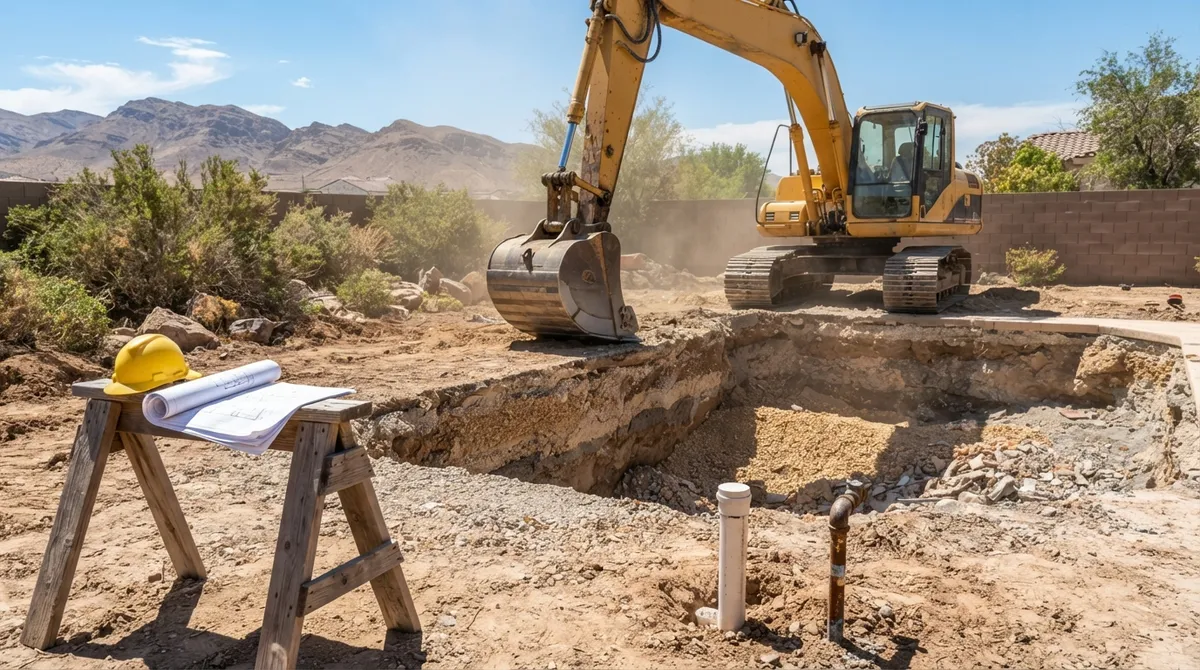
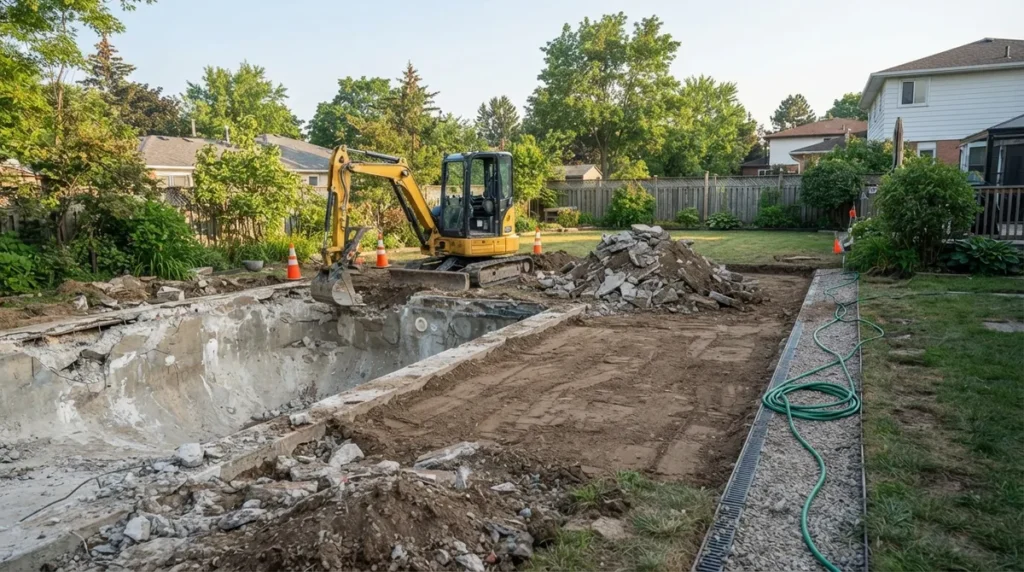
Key Takeaways
-
Identify your pool type first: above-ground pools are far simpler to remove, while in-ground concrete (gunite) pools require breaking tools and more hauling.
-
Choose partial removal (fill-in) for lawns or light yard use, but pick full removal if you plan to build a patio, addition, or home over the site later.
-
Check permits with your local building office before work starts, since demolition, grading, and inspection requirements vary by city and county.
-
Shut off electrical and gas lines and drain water through a controlled path away from structures; never drain onto a neighbor's property.
-
Backfill in compacted layers, since loose fill settles over time and can leave your new yard sunken and bumpy; ask for documented compaction records if building nearby.
-
Request a written, site-specific scope from your contractor that clearly lists what is included, such as deck removal, plumbing, fill, and final grading.
Let’s be honest. That little backyard pool once sounded like a dream. Then came the cleaning, the repairs, the chemicals, and the water bills. Now it just sits there, taking up space you could use for something better. If that sounds like you, you are not alone, and small backyard pool removal might be the best move you make this year.
The good news? Removing a pool is very doable when you know the steps. A small pool does not have to mean a small headache. With the right plan and the right crew, you can turn that hole in the ground into a patio, a garden, a play area, or a fresh blank slate for your yard.
In this guide, we walk you through six smart steps for small backyard pool removal in 2026. We cover your options, permits, utilities, draining, demolition, and the final grade. Whether you are a homeowner, a property manager, or a builder prepping a lot, you will leave with a clear plan. Let’s dig in!
Step 1: Know What Kind of Pool You Have
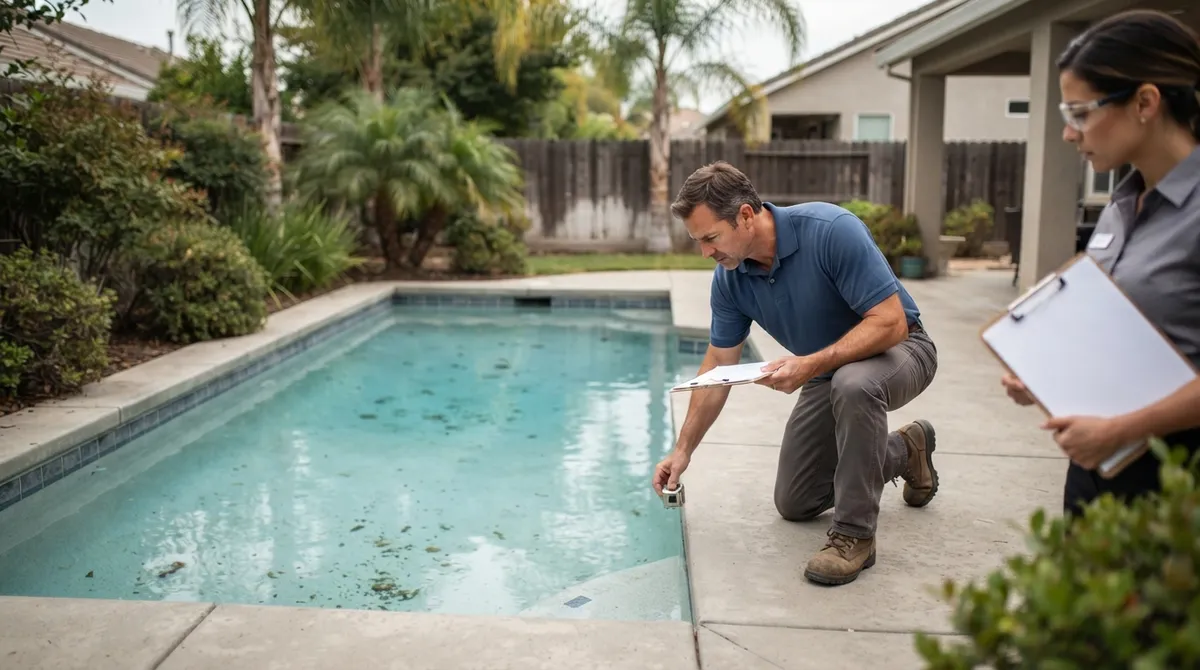
Before anything else, figure out what you are removing. The type of pool changes the tools, the crew, and the time needed. This one detail shapes the whole project.
When people say small backyard pool removal, they usually mean one of two things. Either an above-ground pool or an in-ground pool. They are very different jobs.
Above-Ground Pools
Above-ground pools are the easier of the two. They are usually made of metal or resin walls with a vinyl liner. A crew drains the water, takes apart the walls, hauls away the pieces, and levels the ground. You can read more in our guide on how above ground pool demolition actually works.
In-Ground Pools
In-ground pools are a bigger project. They can be concrete, fiberglass, or vinyl-liner. Each type breaks apart a little differently. The job may also include the deck, the plumbing, the pump, and any electrical lines tied to the pool.
- Concrete (gunite) pools: Heavy and strong. They need breaking tools and hauling.
- Fiberglass pools: One solid shell that is lifted out or cut up.
- Vinyl-liner pools: Lighter walls with a liner. Often the quickest in-ground type to remove.
Not sure which kind you have? Check the surface and the edges. A quick photo sent to a pro can settle it fast.
Step 2: Choose Partial or Full Removal
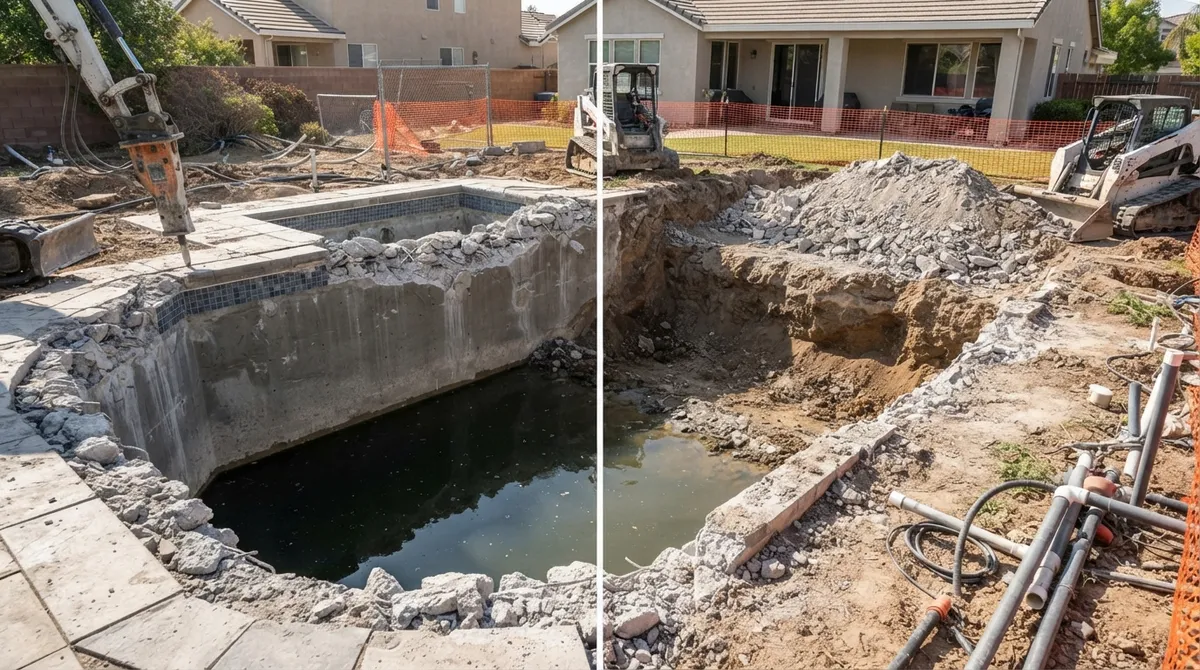
Next comes the big decision. In-ground pools are removed in one of two main ways: partial removal or full removal. Your future plans for the yard will help you pick.
What Is Partial Removal?
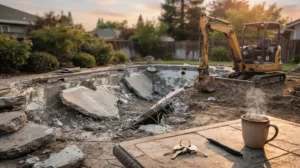
Partial removal is often called a fill-in. The crew drains the pool and disconnects the utilities. They make drainage openings where the rules call for them. Then they break out the top part of the shell and fill the space with approved material. Part of the shell stays underground.
What Is Full Removal?
Full removal means the whole pool comes out. The crew breaks up or digs out the shell, hauls away all the debris, then backfills and compacts the hole. It is the bigger job, but it leaves a cleaner site. Learn more in our guide to full pool removal steps, permits, and what to expect in 2026.
| Feature | Partial Removal | Full Removal |
|---|---|---|
| What happens to the shell | Upper part removed, rest stays buried | Entire shell removed |
| Amount of hauling | Less | More |
| Project scope | Smaller | Larger |
| Best for | Lawns, gardens, light yard use | Future building plans |
| Disclosure needed | Yes, buried material should be documented | Usually simpler records |
If you ever plan to build a patio, an addition, or a new home over the old pool, full removal is often the safer path. Local rules may even require it. Ask your contractor and your local building office early.
Step 3: Handle Permits and Local Rules
Here is a step that many people skip, and it can cause real trouble later. Pool removal usually needs paperwork. The rules depend on where you live, so always check before work begins.
Depending on your area, you may need a demolition, building, or grading permit. You may also need inspections for utility disconnects, drainage, fill, compaction, and final grading. In the Las Vegas area, start with the Las Vegas demolition permit guidelines. If you live in the county, the Clark County Building Department is a great place to ask questions.
Want a deeper look? Check out 8 pool demolition permit facts to know in 2026 and pool demolition regulations Nevada owners must know. They are packed with helpful details.
Questions to Ask Your Permit Office
- Which permit types does my project need?
- Are inspections required, and at which stages?
- What fill material and compaction level are required?
- Will future building on this spot face any limits?
- Do I need to record the work for the property file?
A quick tip: a good contractor knows this process well and can guide you through it. That saves you time and stress.
Step 4: Shut Off Utilities and Drain the Pool Safely
Safety comes first, always. Before any machine touches the pool, the utilities must be shut off and the water must be handled the right way.
Disconnect the Utilities
Pools often have electrical lines for pumps and lights. Some have gas lines for heaters. Each one must be isolated safely before demolition. Our guide on utility disconnect steps for pool removal breaks this down nicely.
Drain the Water the Right Way
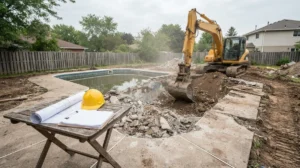
Pool water cannot just flow anywhere. Poor draining can flood a yard, wash out soil, or upset the neighbors. A good crew plans where the water goes and controls the flow. Pool chemicals matter too, so local rules on water disposal may apply. For a full walkthrough, see how to drain and demolish a pool the right way in 2026.
- Pick a safe drain path away from structures.
- Control the flow to avoid erosion.
- Follow local rules on chemical-treated water.
- Never drain into a neighbor’s property.
One more thing. Do not leave a half-empty pool sitting around. In some soil conditions, a drained pool can shift or even pop out of the ground when groundwater is high. Work with a pro who knows the local soil.
Step 5: Demolish, Haul, and Backfill with Care
Now the fun part begins. This is where your pool actually disappears. A good crew follows a clear process so the result is solid and safe.
How the Work Usually Flows
- Prep the site. Protect nearby structures, fences, and landscaping. Plan machine access and truck routes.
- Remove the deck and equipment. Pumps, filters, plumbing, and surrounding concrete come out first. See how pool deck demolition and removal works.
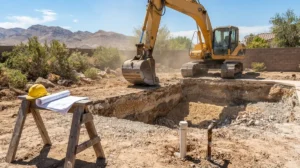
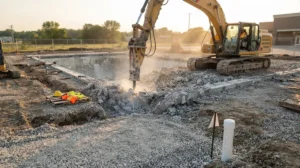
- Break or remove the shell. For partial removal, the top section comes out. For full removal, the whole shell is excavated.
- Haul away debris. Broken concrete and old materials leave the site. Our hauling services handle this part.
- Backfill in layers. Approved fill goes in step by step and gets compacted along the way.
Compaction is a big deal. Loose fill settles over time, and your new yard could sink into a bumpy mess. Some local codes set clear compaction targets. For example, one California city requires at least 90% relative density in a certain full-removal case where building is planned near the pool. Your local rules may differ, so always ask.
Keep Dust and Mess Under Control
Demolition kicks up dust, especially in a dry place like Southern Nevada. A smart crew uses water control and tidy debris handling. That keeps your home, your neighbors, and your lungs happy. For more on safe habits, read how to follow demolition safety procedures the right way.
Step 6: Grade the Yard and Plan What Comes Next
You are almost there! The final step turns a rough fill area into a yard you can actually enjoy. Good grading keeps rain and runoff moving away from your home instead of pooling where the pool used to be.
Grading and compaction work is a core part of what we do. Our excavating and grading services help shape the ground so it drains properly and sets up your next project.
Fun Ideas for Your New Space
- A desert-friendly garden with gravel, rocks, and tough plants
- A patio or outdoor kitchen for family cookouts
- A play area or turf space for kids and pets
- A fire pit lounge for cool Nevada evenings
- Extra parking or storage space for toys and gear
If you plan to pour concrete or build on the spot, tell your contractor up front. That may change how the fill is placed and checked. Planning ahead saves money and surprises later.
What Affects the Scope of a Small Pool Removal Project?
No two pool removals are the same. A few simple factors shape how big the job gets. Knowing them helps you ask better questions and compare written scopes fairly.
| Factor | Why It Matters |
|---|---|
| Pool size and material | Concrete takes more breaking and hauling than vinyl |
| Removal method | Partial and full removal involve different work |
| Access for machines | Tight gates and narrow yards limit equipment size |
| Deck and surrounding concrete | Extra removal adds time and hauling |
| Soil conditions | Soil affects digging, fill needs, and compaction |
| Permits and inspections | Local steps can add to the schedule |
Always ask for a written, site-specific scope. It should say what is included and what is not, like deck removal, plumbing, fill, and final grading. For more insight, see 6 pool demolition cost factors homeowners face in 2026.
How to Choose the Right Pool Removal Contractor
Your contractor makes or breaks this project. A great one makes it feel easy. A poor one can leave you with sinking soil and failed inspections.
Here is what to look for:
- A valid Nevada contractor license and proof of insurance
- Local experience with Clark and Nye County rules
- A clear written scope covering utilities, draining, fill, and grading
- Full-service ability from demolition to hauling to grading, so you deal with one team
- Good reviews and friendly communication
That is exactly why so many neighbors choose 702 Demo. We are a full-service demolition, excavating, grading, concrete, and paving contractor serving all of Clark and Nye counties. We aim to be the best demolition contractor in Las Vegas, and we back it up with careful planning, honest communication, and clean results. Want proof? Visit us on Google — 702 Demo and see what our customers say. You can also learn more about our pool removal service and how to plan swimming pool removal the right way.
Tips for Different Property Owners
Every owner has different goals. Here is how the process fits each one.
- Homeowners: Focus on your future yard plans. Pick the removal method that matches them, and keep your paperwork safe for resale.
- Property managers: Removing an unused pool can cut safety risks and upkeep. Choose a crew that works fast and keeps tenants informed.
- Renovation contractors: Coordinate the removal schedule with your build timeline. Ask about compaction records if you will build nearby.
- Developers and commercial builders: Full removal and documented compaction are often a must for clean site prep. See our guide on how to plan site preparation services that work.
Final Thoughts: Your Yard, Your Fresh Start
Small backyard pool removal is not as scary as it sounds. Know your pool type, pick partial or full removal, handle your permits, shut off utilities, drain safely, demolish with care, and grade for good drainage. Follow these six steps and you will end up with a safe, useful, and good-looking yard.
Ready to reclaim your space? Contact 702 Demo for a free estimate and let our friendly team show you how easy a pool-free backyard can be.
FAQs
Q: What is the difference between partial and full small backyard pool removal?
A: Partial removal, also called a fill-in, drains the pool, removes the top part of the shell, and fills the rest with approved material, so some of the shell stays buried. Full removal takes out the entire pool, hauls away the debris, and backfills and compacts the hole. Full removal is often the better pick if you plan to build on that spot later.
Q: Do I need a permit to remove a backyard pool?
A: In most places, yes. You may need a demolition, building, or grading permit, plus inspections for utility disconnects, fill, and final grading. Rules change from city to city, so check with your local building office before any work starts. A good contractor can help guide you through it.
Q: How long does small backyard pool removal take?
A: Timing depends on the pool type, size, access, deck removal, permits, and weather. Above-ground pools usually go much faster than in-ground ones. Your contractor can give you a realistic schedule after seeing your yard.
Q: Can I build on the spot where my pool was removed?
A: Often you can, but it depends on how the pool was removed and how the fill was placed and compacted. Full removal with documented compaction is usually the safest path for future building. Always share your plans with your contractor and local building office before the work begins.
Q: What happens to the pool water during removal?
A: The water is drained in a controlled way and sent to an approved, safe location so it does not flood your yard or a neighbor’s property. Local rules may apply, especially if the water has pool chemicals. A professional crew plans this step ahead of time.