Key Takeaways
-
Permits and inspections are mandatory for pool removal in most jurisdictions; skipping this step can result in fines or having to redo the work. Check with your local building department (Clark County Building Department for Nevada) before starting any project.
-
Choose complete removal if you plan to build a structure, garage, driveway, or addition over the pool site; partial removal is only suitable for yards with no future construction, as complete removal prevents settling and cracking issues years later.
-
Backfill must be placed in controlled layers with at least 90% compaction—simply dumping dirt won’t work. Improper compaction can cause yard settling, cracking, or drainage problems that appear months or years after removal.
-
Pool water cannot be dumped into streets or storm drains; most cities require approval for discharge due to chlorine and chemicals. A licensed contractor will handle water disposal, utility disconnection, and debris recycling compliantly.
So you’re thinking about swimming pool removal, and honestly, we get it. Maybe that pool hasn’t seen a swimmer in years. Maybe you’re a builder eyeing a lot with an old pool sitting right where your new foundation needs to go. Whatever brought you here, you’re in good company. Homeowners, contractors, and developers across Clark and Nye counties face this exact decision every single day, and we’re here to walk you through it like a friend who’s seen it all before.
Swimming pool removal is not just smashing concrete and tossing dirt in a hole. It’s a real construction project with permits, inspections, drainage rules, and compaction standards. Skip a step, and you could end up with a sinking backyard or a stalled building permit down the road. Let’s break it all down together, nice and simple, so you know exactly what to expect.
What Swimming Pool Removal Actually Means
When people say “pool removal,” they usually mean one of two things. There’s partial removal, sometimes called pool abandonment, and there’s complete removal. They are very different jobs with very different results.
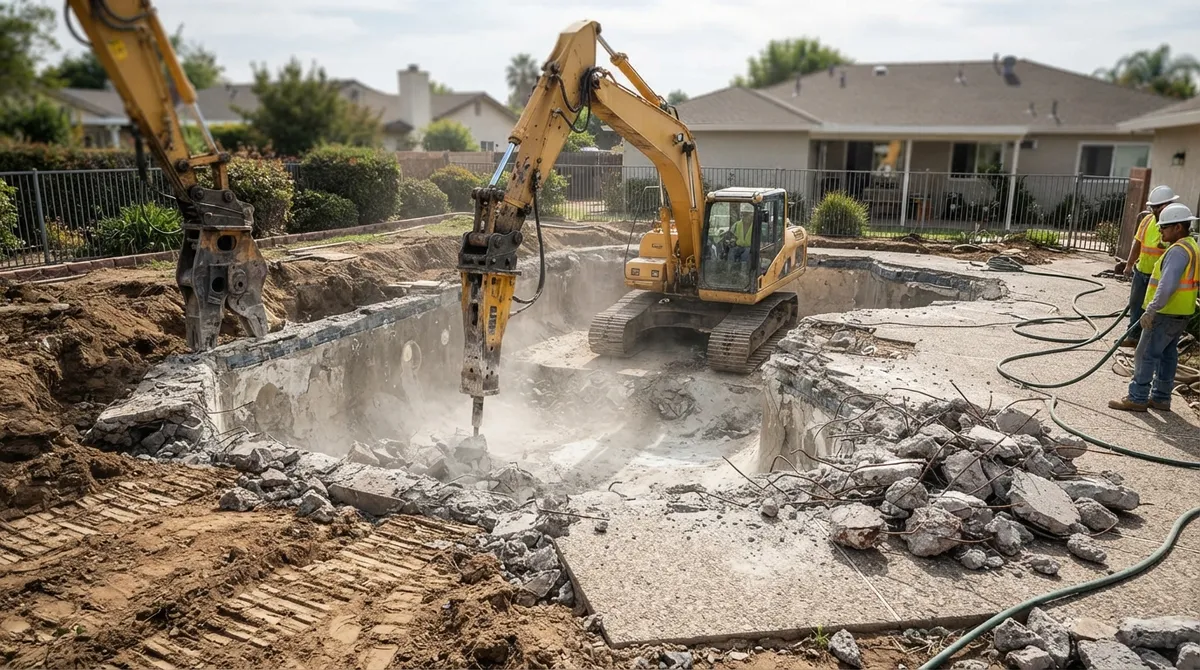
Partial removal leaves the bottom part of the pool shell in the ground. Crews punch holes in the floor for drainage, break up the top portion below grade, and then fill the whole thing with approved material. Complete removal, on the other hand, means digging out the entire shell, all the concrete, the plumbing, and the equipment. Nothing structural gets left behind.
Partial Removal: The Quicker Option
Partial removal works well when you simply want your yard back and don’t plan to build anything heavy on top of it later. It’s faster and involves less digging. But it still needs to be done correctly, with proper drainage holes and compacted fill in layers, not just dumped in all at once.
Complete Removal: The Build-Ready Choice
If you’re planning a garage, an addition, a driveway, or any other structure over that spot, complete removal is almost always the way to go. Some counties even require a soils report and engineered backfill when something heavy will sit on that ground later. Our team at Pool Removal handles both types every week, so we know exactly which approach fits your property and your future plans.
Why Permits and Inspections Matter So Much
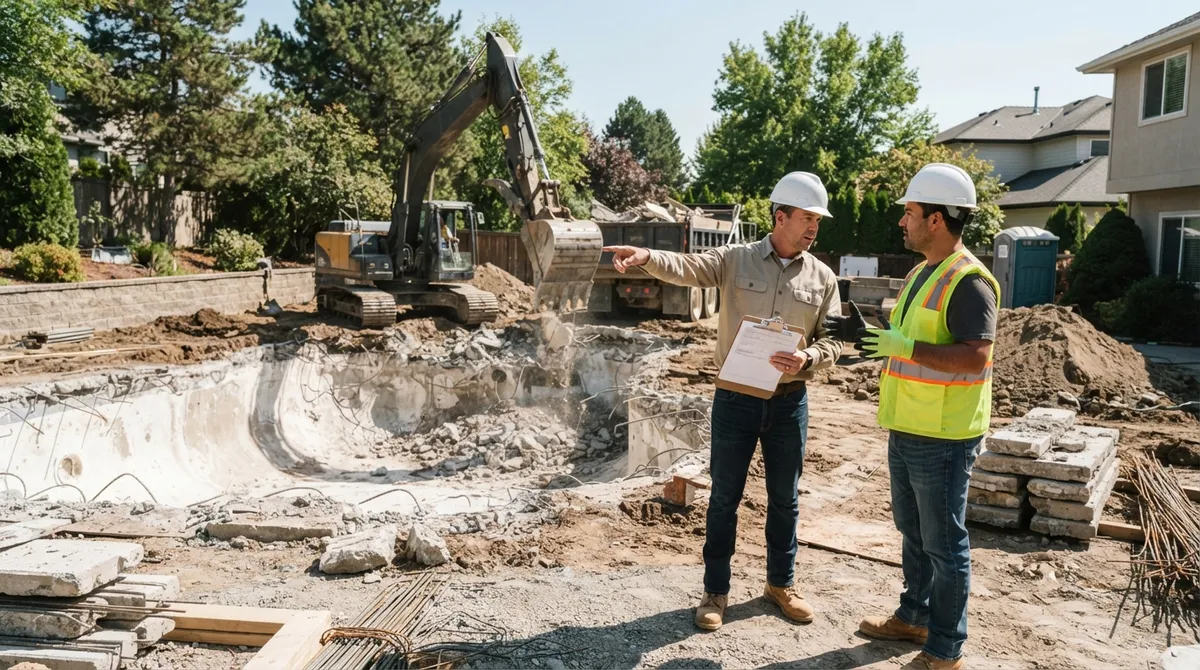
Here’s the truth nobody loves to hear: you almost always need a permit before removing or filling in a pool. Rules vary a lot depending on where your property sits, so it pays to check with your local building department before any equipment shows up.
In Nevada, that means checking with your city or looking into the Clark County Building Department for current requirements. If your property sits within Las Vegas city limits, you’ll also want to review the Las Vegas demolition permit guidelines before your project starts. Skipping this step can lead to fines or having to redo the work later, which nobody wants.
Most jurisdictions require several inspections along the way, including:
- Verification that drainage holes are properly sized and placed
- Confirmation that the shell has been demolished to the required depth
- Proof that utilities like plumbing and electrical have been safely disconnected
- Erosion and stormwater control checks
- Fill placement and compaction testing before the site gets covered
These steps protect you as the property owner. They make sure your yard won’t sink or shift years down the road.
The Step-by-Step Swimming Pool Removal Process
Every reputable demolition contractor follows a similar sequence for pool removal. Here’s what it typically looks like from start to finish:
- Pull the required permits and get written approval from your local building department
- Drain the pool water safely, following local rules about where that water can go
- Disconnect and cap or remove all plumbing, electrical wiring, pumps, and heaters
- Break up or excavate the pool shell, depending on partial or complete removal
- Create drainage openings if doing a partial removal, so water doesn’t pool underground
- Remove recyclable materials like metal and concrete for proper disposal
- Place approved fill material in layers, compacting each layer thoroughly
- Grade the site so water drains away properly, not toward your home
- Schedule final inspections and get your documentation signed off
Skipping or rushing any of these steps is where problems start. A rushed fill job today can mean a sunken patch of yard in two years.
Handling Utilities, Water, and Debris the Right Way
Pools come with more than just concrete. There’s plumbing, electrical wiring, pumps, filters, and sometimes heaters buried around the equipment pad. All of it needs to be disconnected or removed safely before backfilling begins.
Water disposal is another piece people often overlook. Pool water can’t just be dumped into the street or storm drain. Many cities require approval before discharging pool water, since chemicals like chlorine can harm local waterways. A licensed contractor will know exactly how to handle this compliantly.
Debris matters too. Concrete, rebar, and old pool equipment should be hauled away and recycled whenever possible. Some cities even set minimum recycling requirements for demolition debris, so working with an experienced Hauling Services team keeps you compliant and keeps waste out of the landfill.
Compaction and Fill: Why It’s a Bigger Deal Than You Think
This is the part that trips up a lot of DIY attempts. You can’t just shovel dirt into a pool hole and call it done. Backfill needs to be placed in controlled layers, called lifts, with each layer compacted before the next goes in.
Many local standards require at least 90 percent relative compaction, especially if anything will be built over that spot later. If you’re planning a structure within a few feet of the old pool, some counties may even require a geotechnical report to confirm the ground can support the weight.
| Removal Type | What Happens to the Shell | Best For |
|---|---|---|
| Partial Removal | Bottom portion stays, top demolished below grade, drainage holes added | Yards with no future construction planned |
| Complete Removal | Entire shell, plumbing, and equipment excavated and removed | Sites planning a structure, driveway, or addition |
Getting this wrong can cause settling, cracking, or drainage issues that show up months or even years later. That’s why hiring an experienced team matters so much for this particular job.
Common Situations We See Across Clark and Nye Counties
Every property tells a different story, and pool removal projects are no exception. Here are a few scenarios our team runs into often:
- Homeowners downsizing their yard maintenance and reclaiming space for landscaping
- Renovation contractors clearing a pool to make room for a home addition or garage
- Real estate developers prepping a lot for new construction before breaking ground
- Property managers dealing with an unused, unsafe pool at a multi-family property
- Commercial builders needing a site cleared and graded on a tight construction timeline
No matter which category fits you, the fundamentals stay the same: proper permits, safe utility disconnection, correct fill, and thorough inspections.
Why Local Experience Matters for Pool Removal
Nevada’s soil conditions, dry climate, and local permitting rules all play into how a pool removal project should be handled. A contractor unfamiliar with our area might miss a required inspection step or use fill material that isn’t approved locally.
That’s where working with a local team pays off. About our company, we’ve spent years handling Expert Swimming Pool Removal In Las Vegas By 702 Demo projects for homeowners, builders, and developers throughout the Las Vegas valley. We know what Clark County and Nye County inspectors expect, and we make sure your project checks every box the first time.
We also handle related site work, including Excavating And Grading, Concrete Removal, and full Building Demolition, so your project moves forward without needing to coordinate multiple contractors.
Questions to Ask Before You Hire a Pool Removal Contractor
Before signing any contract, it helps to ask a few key questions. This protects you and makes sure your project stays on track:
- Are you licensed and insured for demolition work in Nevada?
- Will you handle the permit application process, or is that on me?
- Do you offer partial or complete removal, and which do you recommend for my property?
- How will pool water and demolition debris be disposed of?
- What compaction standards do you follow for backfill?
- Will you coordinate all required inspections with the local building department?
A trustworthy contractor will answer these clearly and confidently, without hesitation. If you get vague answers, that’s a sign to keep looking.
Ready to Reclaim Your Space
Swimming pool removal doesn’t have to feel overwhelming. With the right team guiding you through permits, demolition, fill, and inspections, the whole process can move smoothly from start to finish. Whether you’re a homeowner ready for a fresh backyard or a developer prepping a lot for new construction, doing it right the first time saves you headaches later.
Curious what people are saying about our work? Feel free to visit us on Google — 702 Demo and see real reviews from homeowners and builders across the valley. We’d love to add your project to that list next.
Ready to get started? Contact 702 Demo for a free estimate and let’s talk through the best plan for your property today.
FAQs
Q: How much does swimming pool removal cost?
A: Costs really depend on your pool size, access, and whether you need partial or complete removal. Partial removal tends to run less than complete removal since less digging and hauling is involved. The best way to know for sure is to get a free estimate based on your specific property.
Q: What is the difference between partial and complete pool removal?
A: Partial removal leaves the lower portion of the shell in place and fills the rest, while complete removal digs out the entire structure. If you’re planning to build something on that spot later, complete removal is usually the safer bet. Your contractor can help you decide which fits your goals.
Q: Do I need a permit to remove or fill in my swimming pool?
A: Yes, in almost every case you’ll need a demolition or building permit before starting. Requirements vary by city and county, so it’s smart to check local rules or let your contractor handle that paperwork for you. This keeps your project fully compliant from day one.
Q: Can I build a house or driveway over a filled-in pool?
A: You can, but it usually requires complete removal along with engineered backfill and proper compaction. Some areas even require a soils report if you’re building close to or over the old pool location. Skipping this step can lead to settling problems down the road.
Q: How long does swimming pool removal take?
A: Most residential pool removal projects take anywhere from a few days to about a week, depending on the scope of work. Complete removal with heavy excavation naturally takes longer than a simpler partial fill-in. Weather, permitting, and site access can also affect the timeline a bit.