Key Takeaways
-
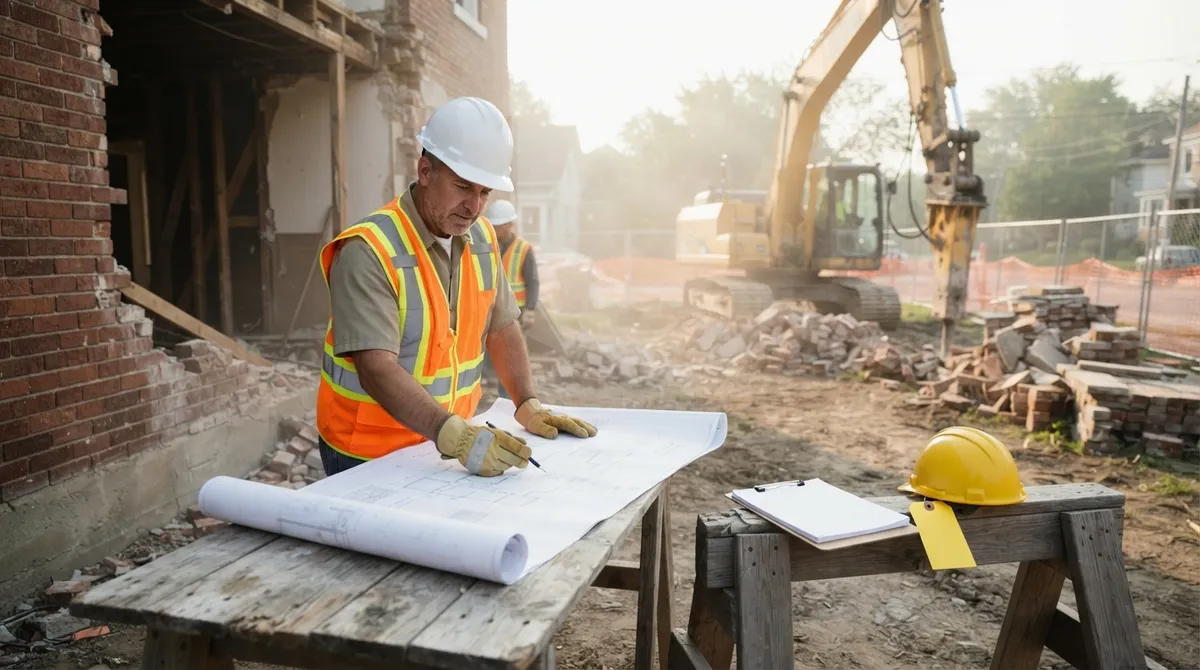
Before hiring, verify licenses and insurance and ask for proof, since Nevada contractors must hold the proper license for their work type.
-
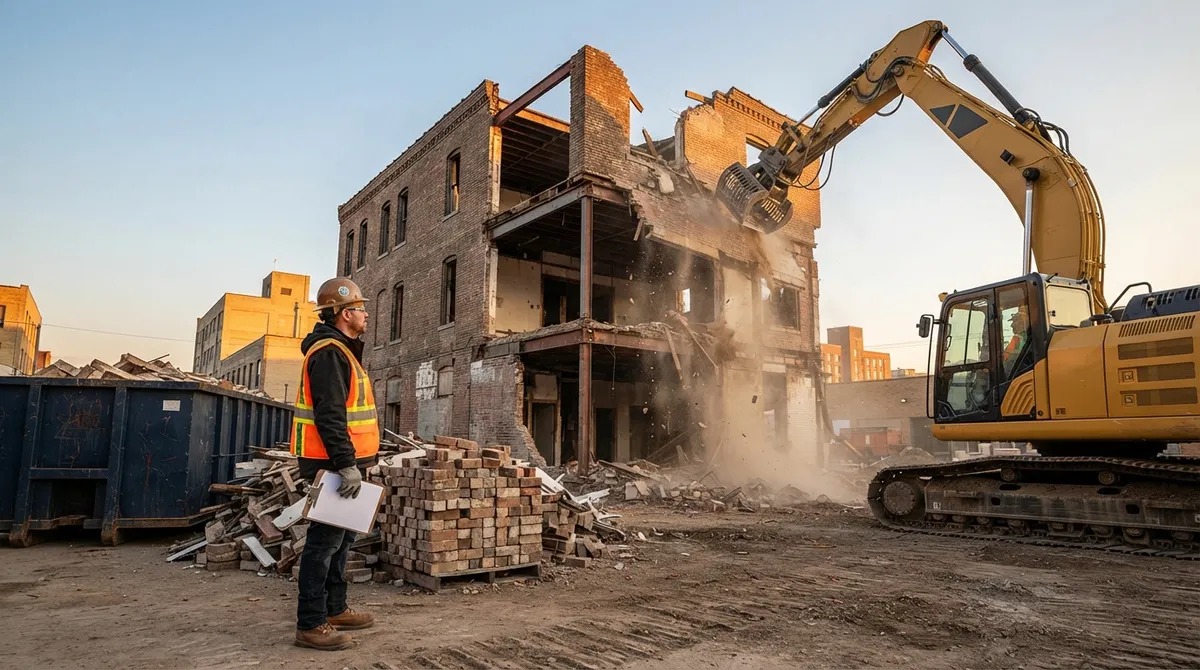
Federal EPA Asbestos NESHAP rules require a thorough asbestos inspection and proper notification before demolishing commercial, institutional, or industrial buildings.
-
OSHA requires a competent person to complete and document an engineering survey before demolition starts to assess collapse risk and nearby structures.
-
Get every scope exclusion in writing, such as asbestos abatement handled by a separate specialist, to avoid surprises later in the project.
Taking down a commercial building is a big job. Maybe you own an old strip mall in Henderson. Maybe you manage a tired office park in North Las Vegas. Or maybe you are a developer with a lot that needs a fresh start. No matter the case, the person you hire will shape how smooth the whole project feels.
A good commercial demolition contractor does far more than swing a wrecking ball. They plan, protect, permit, and clean up. They keep your crew, your neighbors, and your schedule safe. The good news? Hiring the right one is easier than you might think when you know what to look for.
In this friendly guide, we walk through the steps in plain language. You will learn what these pros do, what rules apply, and how to pick the right team. Whether you are a builder, property manager, or developer, you will leave with a clear game plan for your next project in Clark or Nye County.
What Does a Commercial Demolition Contractor Do?
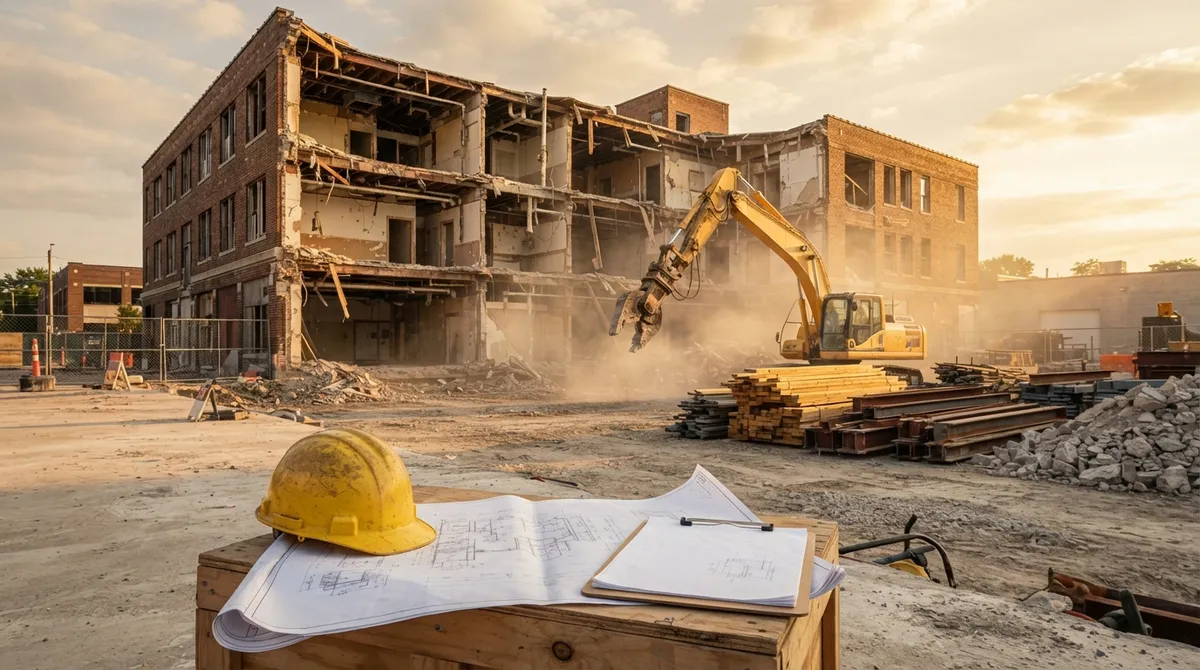
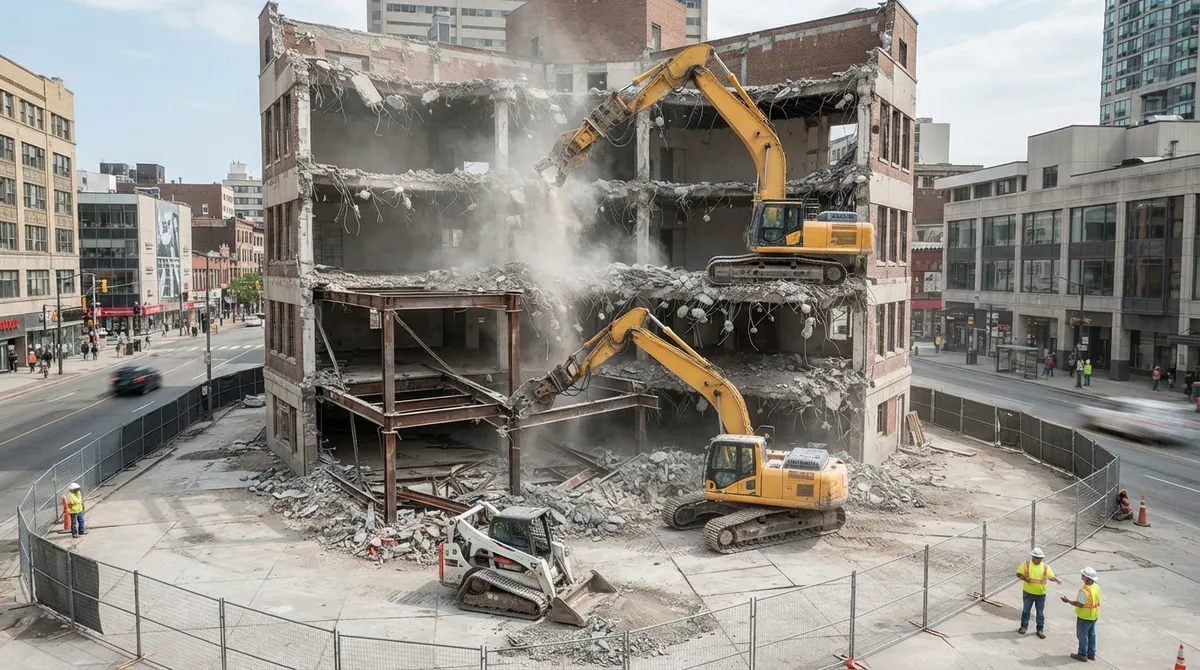
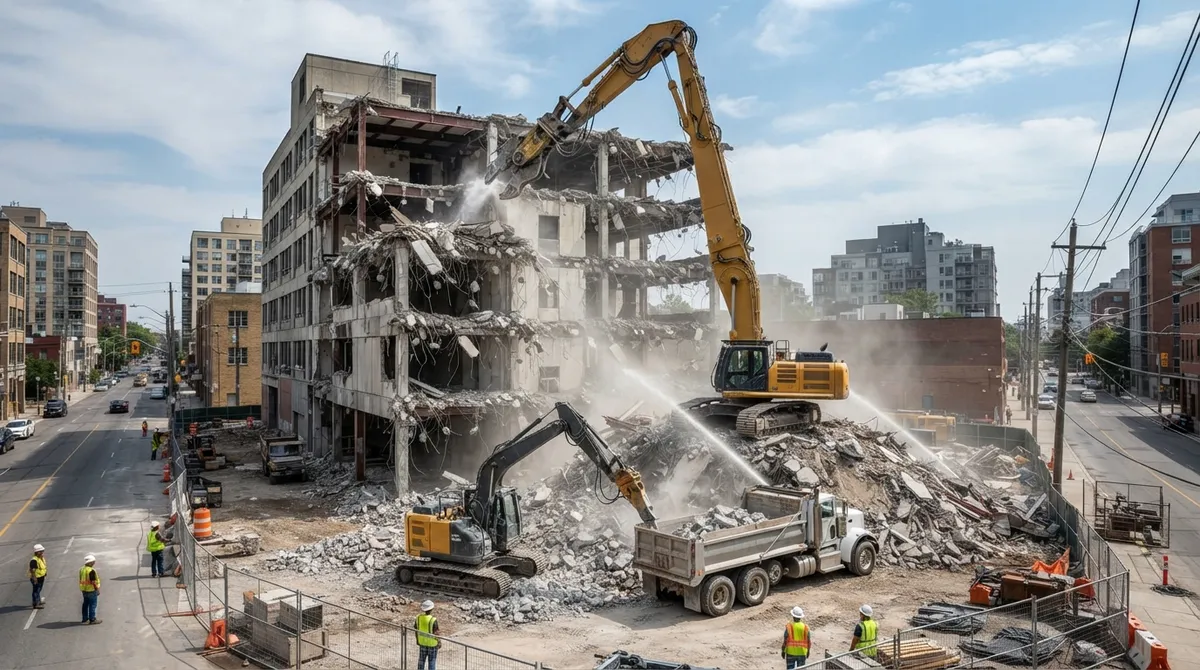
A commercial demolition contractor plans and carries out the safe removal of commercial, institutional, and industrial buildings. Sometimes that means tearing down the whole structure. Other times it means removing only part of it. The exact scope depends on your project and local rules.
Here is what the work often includes:
- Pre-demolition surveys and site walkthroughs
- Permit and notification coordination
- Utility shutoffs and disconnections
- Interior and selective demolition
- Structural dismantling
- Concrete breaking and removal
- Debris loading, hauling, and recycling
- Final site clearing and grading
If you want a closer look at what happens on site, check out what demolition experts actually do on a job site. It paints a helpful picture of a typical day.
Know the Main Types of Commercial Demolition
Not every project needs a full teardown. Knowing your type helps you ask the right questions and get a fair scope of work.
| Type | What It Means | Best For |
|---|---|---|
| Full Building Demolition | The entire structure comes down | Redevelopment, unsafe buildings, new construction |
| Selective Demolition | Only chosen parts are removed | Additions, partial remodels, system upgrades |
| Interior Demolition | Walls, ceilings, and fixtures are stripped inside | Tenant build-outs, office and retail updates |
| Concrete Demolition | Slabs, footings, and pavement are broken out | Parking lots, loading docks, site prep |
Want to dig deeper? Our guide on types of commercial demolition services explains each one in more detail.
How to Hire the Right Contractor: Step by Step
Hiring does not need to feel stressful. Follow these steps and you will stay in control from start to finish.
- Define your goal. Decide if you need a full teardown, partial removal, or interior strip-out. Write down your timeline too.
- Gather building details. Collect plans, age of the building, past repairs, and any known hazards.
- Check licenses and insurance. Ask for proof. Nevada contractors need the proper license for the work they do.
- Ask about experience. Look for jobs similar to yours in size and type.
- Review safety habits. Ask how they protect workers, neighbors, and the public.
- Compare written scopes. Make sure each bid lists the same tasks so you can compare fairly.
- Confirm the debris plan. Ask where materials go and what gets recycled.
For more on this topic, see why a licensed demolition contractor is essential and how a demolition license protects you.
Understand the Safety Rules That Apply
Safety is the heart of every demolition job. Federal rules set clear standards, and a quality contractor follows them closely.
OSHA Demolition Requirements
OSHA’s demolition rules live in 29 CFR Part 1926, Subpart T. Before work starts, a competent person must complete and document an engineering survey. This survey checks the building’s condition and the chance of unplanned collapse. It also looks at nearby structures where workers could be at risk.
OSHA also calls for preparation steps like these:
- Controlling utility lines before demolition begins
- Finding and handling hazardous substances in pipes, tanks, and equipment
- Setting up barriers and warning signs
- Planning the order of work so the structure stays stable
Asbestos and Hazardous Materials
Older commercial buildings may contain asbestos. Under the EPA’s Asbestos NESHAP rules, demolition of commercial, institutional, and industrial buildings requires a thorough inspection first. You must also notify the proper authority before any covered demolition begins.
If asbestos is found, it has to be handled with approved work practices. These can include wetting, containment, labeling, and disposal at an approved landfill. State and local rules may add more steps, so always check your jurisdiction. You can read more on the EPA’s asbestos NESHAP overview.
Our post on why asbestos removal comes before demolition explains this in everyday terms.
Permits You Will Likely Need
Permits keep your project legal and safe. Missing one can stop work and cost you time. The exact list depends on where your property sits and what you are removing.
In the Las Vegas area, start with the Las Vegas demolition permit guidelines. For projects in unincorporated areas, the Clark County Building Department is a great starting point.
Common items to sort out include:
- Demolition permit from the local building authority
- Asbestos inspection and required notification
- Utility disconnect confirmations
- Dust control and air quality compliance
- Debris disposal documentation
A seasoned contractor often handles much of this paperwork for you. Learn more in our guide to demolition permit services.
Questions to Ask Before You Sign
A short conversation can tell you a lot. Here are questions worth asking every contractor you consider:
- What licenses and insurance do you carry?
- Who will be the competent person on my site?
- How will you handle hazardous materials, or who will?
- What is your plan for dust, noise, and vibration?
- How will you protect neighboring properties?
- What will you recycle, and where does the rest go?
- What is not included in your scope?
That last question matters. Some contractors leave out asbestos abatement because a separate specialist handles it. Get every exclusion in writing so there are no surprises later.
Plan for Debris and Hauling
Demolition creates a lot of material. The EPA estimated that 600.3 million tons of construction and demolition debris were generated in the United States in 2018. About 143.8 million tons of that went to landfills. These are national numbers, but they show why a smart debris plan matters.
A good plan sorts materials on site. Concrete, metal, and wood can often be recycled. That cuts waste and keeps your project greener. Pairing demolition with hauling in one package also keeps things simple. Read our tips on how to plan demolition and hauling for your next project.
How Long Does Commercial Demolition Take?
Timelines vary a lot. A small interior strip-out may take days. A large multi-story building can take weeks or longer. Several things affect the schedule:
- Building size and height
- Presence of hazardous materials
- Permit approval times
- Site access and neighboring structures
- Weather and seasonal conditions
- Amount of recycling and sorting required
Ask your contractor for a written timeline with key milestones. Builders and developers with tight deadlines should flag them early. A clear schedule helps every trade that follows, from excavation to paving.
Why Full-Service Capability Matters
Demolition rarely stands alone. After the building is gone, you usually need grading, concrete work, or new paving. Hiring one team for the whole flow can save you coordination headaches.
That is where 702 Demo shines. As a full-service demolition, excavating, grading, concrete, and paving contractor, 702 Demo serves all of Clark and Nye counties. We believe we are the best demolition contractor in Las Vegas because we handle the whole job under one roof. Learn why 702 Demo is the leading demolition contractor in Las Vegas, or explore our building demolition and excavating and grading services.
Curious what our neighbors say? See what customers share when you visit us on Google — 702 Demo.
Tips for Different Project Types
For Commercial Builders and Developers
Time is money on your sites. Look for a contractor who can finish demolition, grading, and site prep in a smooth sequence. This keeps your foundation crews from waiting around.
For Property Managers
Tenants and neighbors care about dust and noise. Ask about control plans and work hours. Also confirm how hazardous materials will be handled in older buildings.
For Renovation Contractors
You may only need part of a building removed. Selective and interior demolition keep the rest of the structure safe. Our guide on planning commercial interior demolition can help you prep.
For Homeowners With Commercial-Style Needs
Some homeowners own mixed-use or detached commercial structures. The same safety and permit rules may apply. Always confirm what your local office requires before work begins.
Common Mistakes to Avoid
A few simple missteps cause most project headaches. Watch out for these:
- Skipping the asbestos inspection
- Hiring based only on the quickest promise
- Accepting a vague scope of work
- Forgetting to confirm insurance coverage
- Ignoring neighbors and nearby structures
- Not asking where the debris goes
Avoiding these pitfalls puts you well ahead. You can also review our 7 things to know about commercial demolition contractors for extra insight.
Ready to Start Your Project?
Hiring a commercial demolition contractor is a big decision, but you now have a clear path. Define your goal, check licenses, ask smart questions, and get everything in writing. Put safety, permits, and debris planning at the top of your list.
When you are ready for a partner who handles it all with care, we would love to help. Contact 702 Demo for a free estimate and let’s talk about your next commercial project in Clark or Nye County.
FAQs
Q: What does a commercial demolition contractor do?
A: A commercial demolition contractor safely removes commercial, institutional, or industrial buildings, either fully or in part. They handle surveys, permits, utility shutoffs, debris hauling, and site cleanup. Their goal is to keep your project safe, legal, and on schedule.
Q: Does a commercial building need an asbestos inspection before demolition?
A: Yes. Federal EPA rules require a thorough asbestos inspection before demolition of commercial, institutional, and industrial buildings. You must also notify the proper authority before work begins, and state or local rules may add more steps.
Q: Can a contractor demolish only part of a commercial building?
A: Absolutely! This is called selective or partial demolition. It lets you remove certain areas, like interior walls or an old wing, while keeping the rest of the structure safe and standing.
Q: What happens to debris after a commercial demolition project?
A: Good contractors sort materials on site. Items like concrete, metal, and wood are often recycled, and the rest goes to an approved disposal site. Ask your contractor for a clear waste and recycling plan up front.
Q: How do I choose a commercial demolition contractor?
A: Start by checking licenses, insurance, and experience with similar projects. Ask about safety practices, hazardous material handling, and debris plans. Then compare written scopes so you know exactly what each bid includes.