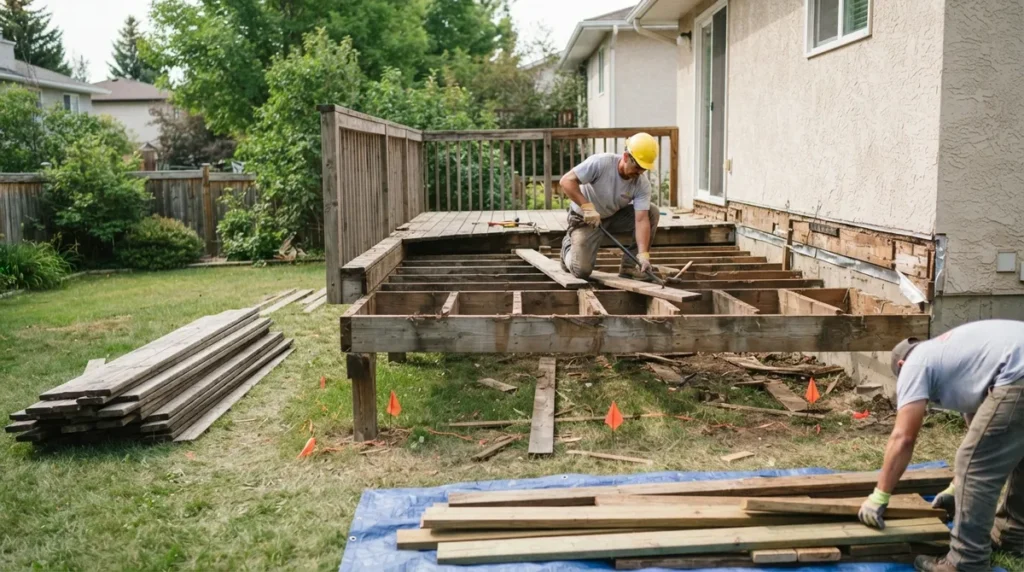
Key Takeaways
-
Always get a written scope before hiring, since footing removal, permit fees, and house wall repairs are often excluded from basic quotes.
-
Permit requirements depend on whether the deck is attached, its size and height, and whether footings are removed, so check with your local building office first.
-
Call 811 and have qualified pros shut off any power, gas, water, or deck wiring before digging to avoid buried line strikes.
-
Pressure-treated wood is generally managed as solid waste under local rules and should never be burned or chipped into mulch; keep it separate and confirm facility requirements.
-
Demolish top-down (railings, boards, then joists and beams) and detach the ledger carefully so the structure stays stable and the house is protected.
-
Sort debris for recycling: metal fasteners and railings go to scrap, clean concrete footings to a recycler, and sound lumber can be reused, though accepted materials vary by area.
Is your old deck sagging, splintering, or just plain tired? You are not alone. Many homeowners in Clark and Nye counties reach a point where the deck on the back of the house has done its time. The desert sun is hard on wood. After years of heat, dry air, and the occasional monsoon storm, even a once-lovely deck can turn into a safety risk.
That is where deck demolition and removal comes in. It sounds simple, but there is more to it than swinging a hammer. A good job means a safe teardown, smart debris handling, and a clean site when the crew drives away.
In this friendly guide, we will walk you through how the process works, what to ask before you hire, and how to avoid common surprises. Whether you own a home, manage a property, or run a remodel crew, you will find clear answers here. Let’s get started!
What Does Deck Demolition and Removal Include?
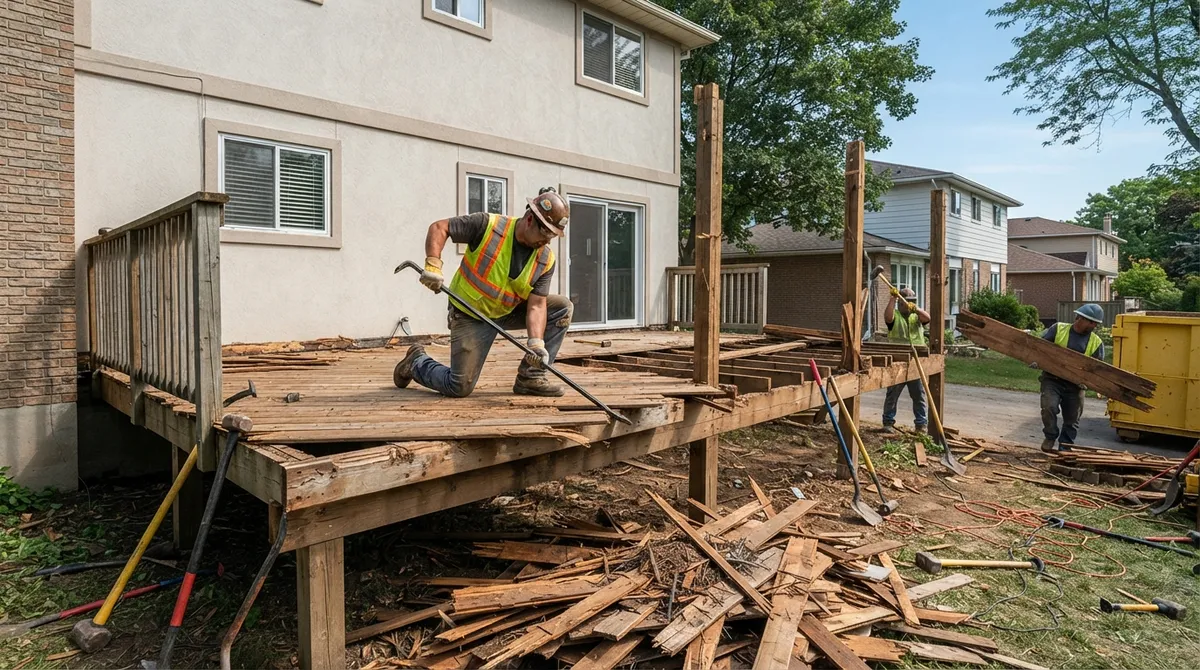
Deck demolition and removal is the safe tear-down of a deck structure, plus hauling away all the waste. It is a core part of demolition services, and it often comes before a bigger project like a patio, a new deck, or a backyard remodel.
A full-service job usually covers these items:
- Removing deck boards, railings, and stairs
- Taking apart the framing, joists, and beams
- Detaching the ledger board from the house
- Loading and hauling away all debris
- Sweeping up nails, screws, and small scraps
- Removing footings or concrete piers, if included in the scope
Not every quote covers every item. Footing removal, permit fees, and repairs to the house wall are often separate. Always ask for a written scope so there are no surprises later.
Why the Scope Matters
Think of the scope as a shopping list. If something is not on the list, it may not be in the price. A clear scope protects you and the contractor. It also keeps the project on schedule.
Why Do People Remove Decks in the First Place?
Every deck owner has a story. Here are the most common reasons we see:
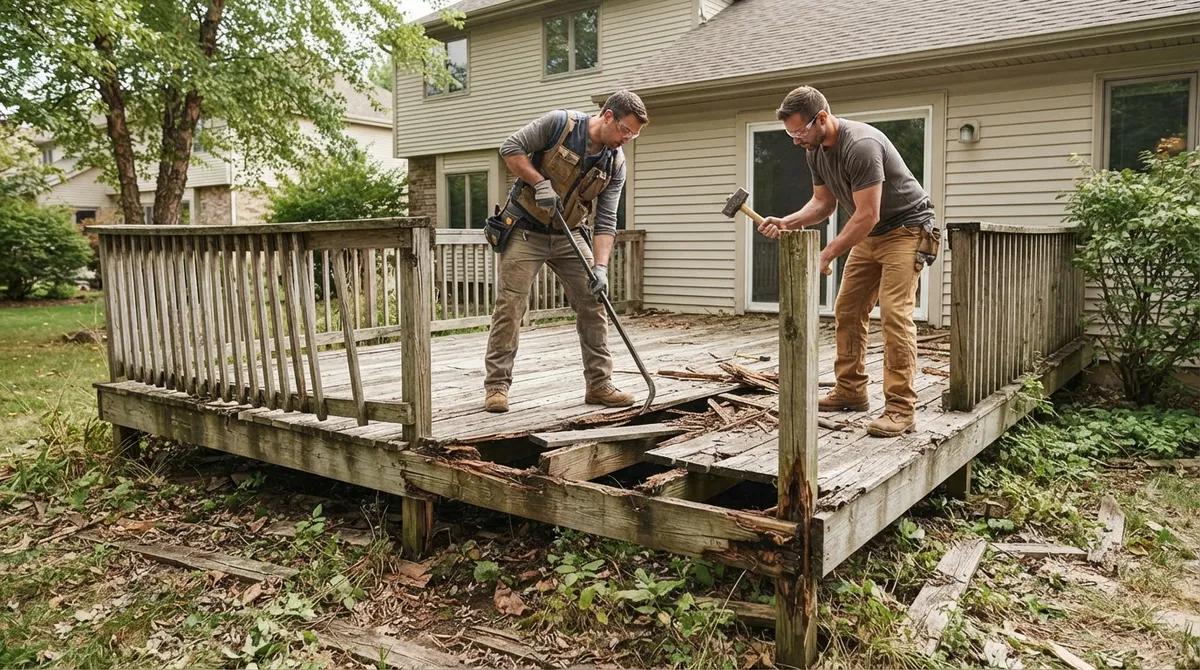
- Safety concerns. Rotted posts, loose rails, and weak stairs can cause serious injuries.
- Sun and weather damage. Nevada heat dries out wood fast, causing cracks, warping, and splinters.
- Remodeling plans. Many owners want a new patio, a pool, or an outdoor kitchen where the deck now sits.
- Pest damage. Termites and other pests can weaken the frame from the inside.
- Code issues. An older deck may not meet current building rules.
- Selling the home. A worn-out deck can hurt curb appeal and buyer confidence.
For renovation contractors and developers, deck removal is often just one step in a bigger site plan. Clearing it fast and cleanly keeps the whole schedule on track.
Do You Need a Permit to Remove a Deck?
This is one of the most common questions we hear. The honest answer is: it depends. Permit rules are local. They may change based on whether the deck is attached to the house, how big or high it is, and whether footings or structural parts are being removed.
Before any work starts, check with your local building office. In Las Vegas, you can review the Las Vegas demolition permit guidelines. For unincorporated areas, the Clark County Building Department is a great place to start.
A licensed contractor can help you sort this out. If you want to learn more about why licensing matters, read what makes a licensed demolition contractor essential for your project.
How Is a Deck Taken Down Step by Step?
A pro crew does not just rip things apart. They follow a plan. Here is how a typical job goes:
- Site walk-through. The contractor checks the deck’s age, height, materials, access, and nearby structures.
- Utility check. Underground lines are located before any digging. In the U.S., you can call 811 for free marking. Any power, gas, or water lines tied to the deck are shut off by qualified people.
- Protecting the property. The crew covers plants, fixtures, and nearby surfaces to limit damage.
- Top-down removal. Railings come off first, then the deck boards, then the joists and beams. This controlled order keeps the structure stable and the house safe.
- Ledger and post removal. The ledger board is carefully detached from the home, and posts are cut or pulled.
- Footing removal (if included). Concrete piers are broken out and hauled off.
- Sorting and loading. Wood, metal, and other debris are separated and loaded for hauling.
- Final cleanup. The crew sweeps and magnets the area to pick up stray nails and screws.
That top-down approach is the heart of a safe teardown. It keeps workers safe and protects your home from surprise damage.
Why Do Utility Checks Come First?
This step may not feel exciting, but it is one of the most important. Digging out posts or footings can hit buried lines. That can cause outages, repair bills, or worse, safety hazards.
A good contractor always confirms what is underground before breaking ground. Some decks also have lights, outlets, or hot tub wiring. Those must be disconnected safely by a qualified pro before demolition begins.
Which Materials Need Special Handling?
Not all deck wood is the same. Some boards are treated with chemicals to resist rot and bugs, and those need extra care when they are thrown away.
Here is a quick look at common deck materials and how they are usually handled:
| Material | Common Handling | Key Tip |
|---|---|---|
| Pressure-treated wood | Disposed of as solid waste under local rules | Never burn it or grind it into mulch |
| Untreated wood (cedar, redwood) | May be accepted for recycling or reuse | Confirm what local facilities accept |
| Composite decking | Often sent to a landfill or special recycler | Ask about local recycling programs |
| Metal fasteners and railings | Commonly recycled as scrap metal | Sort them out during teardown |
| Concrete footings | Broken up and recycled as fill or base | Keep free of wood and trash |
A Word on Pressure-Treated Wood
The U.S. EPA notes that discarded CCA-treated wood is generally managed as solid waste under state and local rules. It should not be burned. It should also not be chipped into mulch. Always confirm what the receiving facility requires, and keep treated wood separate when needed.
This is one reason many owners choose a pro. Knowing where each material goes takes the guesswork out of the job.
Can You Reuse or Recycle Deck Materials?
Yes, in many cases! Sorting the debris can cut waste and sometimes help the environment. Here are a few smart ideas:
- Reuse solid, sound lumber for small projects like garden beds or shelves
- Recycle metal screws, nails, and railings as scrap
- Send clean concrete footings to a concrete recycler
- Ask your contractor about local drop-off sites for wood and composite
Remember, accepted materials vary by area. A contractor who hauls debris every week will know exactly where each load should go. Learn more about this part of the job in our hauling services overview.
DIY or Professional: Which Is Right for You?
Plenty of handy folks think about taking down a deck on their own. It can be done, but it is not always easy. Here is a quick comparison to help you decide.
| Factor | DIY Removal | Professional Removal |
|---|---|---|
| Tools needed | Pry bars, saws, safety gear, trailer | Crew brings everything |
| Time | Often several weekends | Usually a day or two for many homes |
| Safety risk | Falls, nails, heavy lifting | Trained crew with proper gear |
| Debris hauling | You find a site and haul it | Included or arranged for you |
| Footings and utilities | Harder to handle alone | Handled with proper checks |
For small, low decks, DIY may work. For tall, large, or attached decks, a pro is the safer pick. Raised decks with stairs and heavy beams can be dangerous to take apart without training.
How Do You Choose the Right Deck Demolition Contractor?
Picking the right team makes all the difference. Look for these signs of a trustworthy contractor:
- A valid Nevada contractor license and proper insurance
- A clear, written estimate with a detailed scope
- Knowledge of local permit and disposal rules
- A plan for utility checks and safe teardown
- Proof of proper debris disposal, like receipts
- Friendly, honest communication from the first call
You can also read our guide on how to choose a licensed demolition contractor for more tips.
When you compare quotes, check what each one includes. One estimate might cover footing removal and cleanup, while another might leave them out. A written estimate should spell out demolition scope, hauling, permit responsibility, footing removal, site cleanup, and any extra charges.
What Should a Written Estimate Include?
A good estimate is clear and complete. Use this checklist when you review one:
- The full scope of demolition work
- Whether footings and piers are removed
- Debris hauling and disposal details
- Who handles the permit, if one is needed
- Repairs to the house wall after the ledger is removed
- Site cleanup steps
- Any exclusions or possible extra charges
Keep your disposal receipts, too. They show where the debris went and can help if questions come up later.
What Happens After the Deck Is Gone?
Once the deck is down, you have a blank canvas. That is the fun part! Many owners move on to one of these next steps:
- Pouring a new concrete patio
- Building a fresh, modern deck
- Grading and leveling the yard
- Adding landscaping or turf
- Preparing the site for a pool or outdoor living space
This is where a full-service contractor really shines. Instead of juggling several companies, you can work with one team that handles demolition, excavating and grading, concrete, and paving. It saves time and keeps your project moving smoothly.
What Do Property Managers and Developers Need to Know?
Deck removal is not only for single-family homes. Property managers often deal with aging decks and balconies on multi-family buildings. Safety is the top concern, along with tenant notice and clean, quick work.
Developers and commercial builders may need to clear decks, patios, and similar structures before a new build. In those cases, the schedule matters. A reliable crew that can tear down, haul, and prep the site helps you hit tight timelines.
If your project is bigger than a deck, see our guides on building demolition and how to plan demolition and hauling for your next project.
How Long Does Deck Removal Take?
Most residential decks come down in a day or two. Time depends on a few key things:
- The size and height of the deck
- The type of materials used
- Whether footings must be broken out
- How easy it is to reach the work area
- Debris sorting and hauling needs
Larger, multi-level decks or those with heavy concrete footings may take longer. A good contractor will give you a clear timeline during the walk-through.
Why Is 702 Demo the Best Choice in Las Vegas?
When it comes to deck demolition and removal, you want a team you can trust. 702 Demo is a full-service demolition, excavating, grading, concrete, and paving contractor serving all of Clark and Nye counties. We are proud to be the best demolition contractor in Las Vegas, and our crews bring care and know-how to every job.
We take the time to check access, plan a safe teardown, and handle debris the right way. You can also see what our 702 Demo customers say on Google to learn how we treat every project, big or small. To learn more about our approach, read why 702 Demo is the leading demolition contractor in Las Vegas.
Ready to Say Goodbye to Your Old Deck?
Taking down a deck does not have to be stressful. With the right plan, the right permits, and the right crew, it can be quick, safe, and even exciting. You get a fresh start for your yard and peace of mind that the job was done right.
Ready to clear the way for your next project? Contact 702 Demo for a free estimate and let our friendly team take care of the heavy lifting.
FAQs
Q: Do I need a permit to demolish and remove a deck?
A: It depends on where you live and the deck itself. Rules often change based on whether the deck is attached, how big or high it is, and whether footings are removed. Check with your local building department before work begins, and a licensed contractor can help guide you.
Q: What is included in a deck demolition and removal service?
A: Most jobs cover taking apart the decking, railings, stairs, and framing, then hauling away the debris. Footing removal, permit fees, and wall repairs may be extra, so always ask for a written scope. That way you know exactly what you are getting.
Q: How should pressure-treated deck wood be disposed of?
A: Treated wood is generally handled as solid waste under state and local rules. It should never be burned or ground into mulch. Confirm what your local disposal facility accepts, and keep treated wood separate when required.
Q: Can deck materials be recycled or reused after demolition?
A: Yes, often! Sound lumber can be reused, metal fasteners and railings can be recycled as scrap, and clean concrete footings can go to a recycler. What is accepted varies by area, so your contractor can point you to the right drop-off sites.
Q: How long does it take to remove a deck?
A: Many residential decks come down in a day or two. Larger, taller, or multi-level decks with concrete footings may take a bit longer. Your contractor can give you a clear timeline after seeing the site.