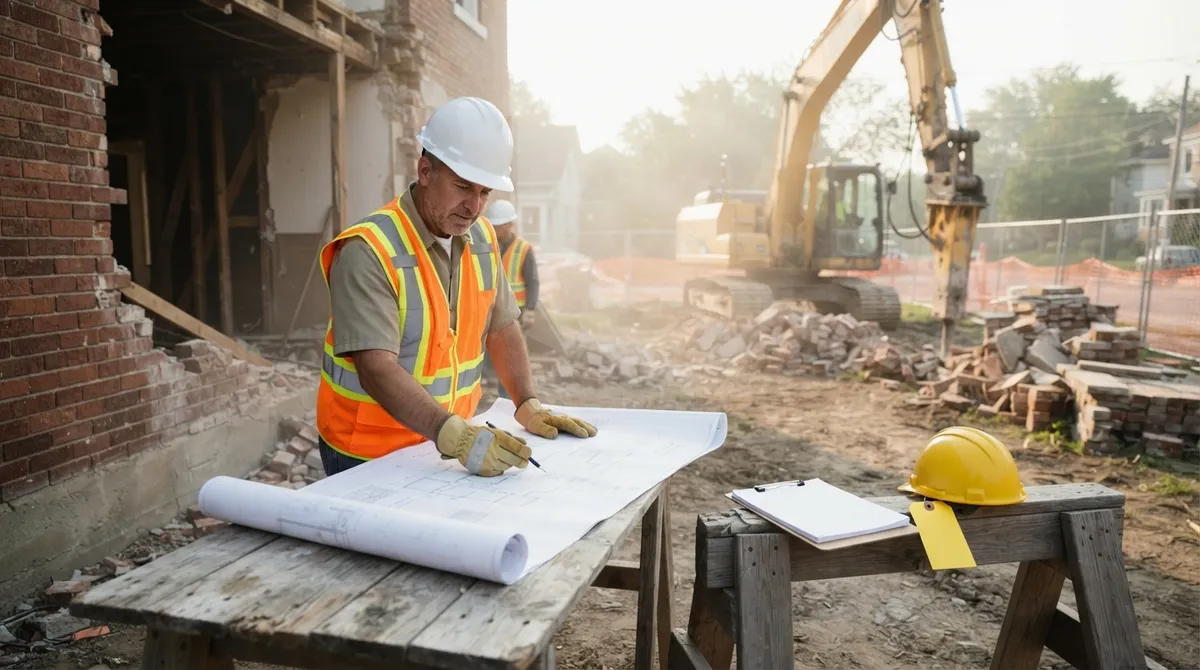
Key Takeaways
-
Before hiring, verify in writing a current contractor license, general liability insurance, workers' compensation coverage, who pulls permits, and references from similar projects.
-
Older buildings may contain asbestos or lead paint; EPA NESHAP rules generally require a thorough inspection and written notice at least 10 business days before covered demolition work begins.
-
Compare itemized estimates line by line, checking demolition scope, permits, utility coordination, hazardous-material exclusions, debris hauling, and change-order terms, since bid differences often come from scope rather than quality.
-
Ask how the contractor controls dust and noise, protects neighboring properties, handles utility disconnections, and recycles debris; about 455 million of 600 million tons of 2018 C&D debris went to reuse.
Typing “demolition contractor near me” into a search bar is a big first step. Maybe you are clearing an old house, gutting an office, or removing a worn-out slab. Whatever the plan, you want a crew you can trust. The good news? A little prep makes the choice much easier.
Here in Clark and Nye counties, projects range from backyard concrete removal to full commercial teardowns. Each one needs the right skills, the right paperwork, and a clear plan. In this friendly guide, we will walk through six simple tips to help you find a demolition contractor near me that fits your job. Homeowners, builders, property managers, and developers can all use these steps.
Grab a coffee, and let’s get started. By the end, you will know what to ask, what to check, and what to expect.
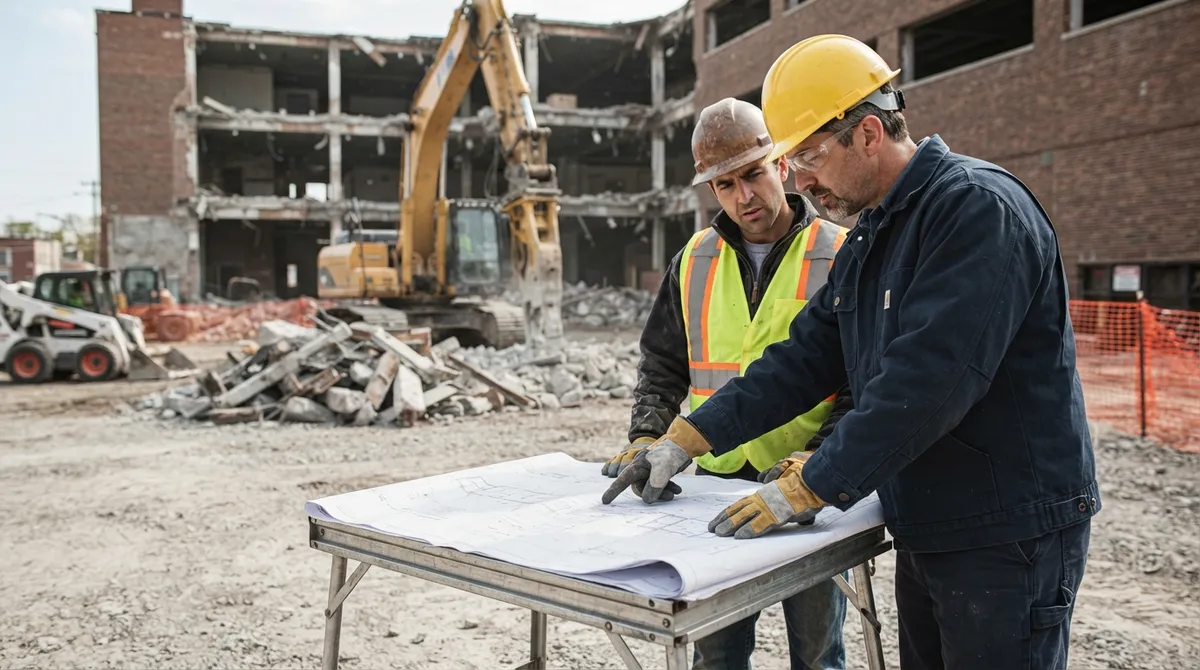
1. Match the Contractor to Your Project
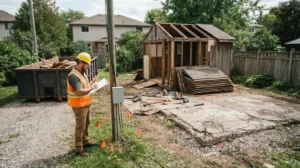
Not every demolition job is the same. A crew that is great at pool removal may not be the best fit for a multi-story building. So start by naming your project type.
A local demolition contractor may handle many kinds of work. Common services include:
- Full or partial building demolition
- Interior strip-outs and soft demolition
- Concrete and structure removal
- Site clearing and land prep
- Debris hauling and recycling
Ask each company about similar jobs they have finished. A good contractor will gladly share examples. If you want a deeper look at job types, read what the three types of demolition projects are.
Who Benefits Most From Matching Skills
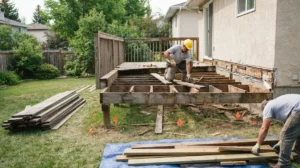
- Homeowners: Removing a driveway, pool, or an old room needs a careful, tidy crew.
- Commercial builders: Tight timelines call for crews that can also excavate and grade.
- Renovation contractors: Selective demolition protects the parts of the building you want to keep.
- Property managers: Structural and hazardous-material work needs extra planning.
- Developers: Full-service help from teardown to paving keeps the site moving.
This is where 702 Demo shines. As a full-service demolition, excavating, grading, concrete, and paving contractor, 702 Demo covers the whole path from old structure to ready-to-build lot. See why many call us the leading demolition contractor in Las Vegas.
2. Check Licenses, Permits, and Insurance
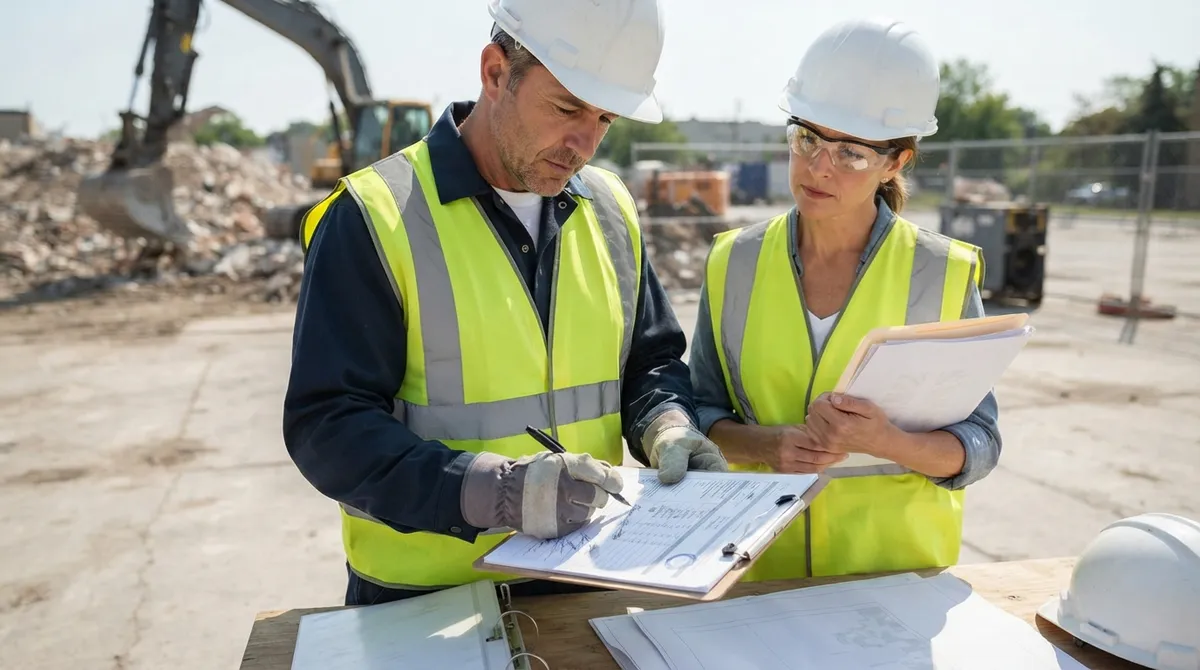
This tip protects you the most. Rules for licensing, permits, and insurance change by state and city. So always confirm what applies to your property before work begins.
Start with your local building office. In Las Vegas, the city shares Las Vegas demolition permit guidelines that explain the basics. For unincorporated areas, check with the Clark County Building Department.
A Quick Credential Checklist
Before you sign anything, ask to see these items in writing:
- A current contractor license that fits the work
- Proof of general liability insurance
- Proof of workers’ compensation coverage
- A clear plan for who pulls the permits
- References from recent, similar projects
If a contractor hesitates on any of these, that is a red flag. A pro will hand over paperwork with a smile. Learn more in why a licensed demolition contractor is essential.
3. Ask About Hazardous Materials Early
Older buildings can hide surprises. Asbestos, lead paint, and other hazards are common in structures built decades ago. Finding them mid-project can stop work fast, so plan ahead.
The EPA’s asbestos rule, called NESHAP, requires a thorough inspection before many demolitions and renovations. Here are a few key points:
- An inspection is needed for covered facilities before work starts.
- The EPA lists thresholds, such as 260 linear feet on pipes, 160 square feet on other surfaces, or 35 cubic feet when you cannot measure otherwise.
- Covered projects generally need written notice to the right agency at least 10 business days before work begins.
- A few exceptions exist, like some emergency or government-ordered demolitions.
Rules depend on your project and location, so confirm details with the agency that oversees your area. Ask each contractor how they handle surprise materials found mid-job. Their answer tells you a lot about their care and experience. For more, see why asbestos removal comes before demolition.
4. Compare Written Estimates Side by Side
A clear, itemized estimate is your best friend. It shows what is included and what is not. Without it, two bids can look alike but cover very different work.
Here is what a solid written estimate should list:
| Estimate Item | Why It Matters |
|---|---|
| Demolition scope | Shows exactly what will come down and what stays |
| Equipment and methods | Explains how the work will be done safely |
| Schedule | Helps you plan around deadlines |
| Permits and fees | Clarifies who handles paperwork and who pays |
| Utility coordination | Prevents delays from gas, water, and power lines |
| Hazardous-material exclusions | Avoids surprise costs later |
| Debris hauling and disposal | Confirms who removes the mess |
| Site restoration | Tells you what the lot looks like at the end |
| Change-order terms | Explains how new issues will be handled |
Lay your bids next to each other and compare line by line. Often, the difference between two bids is scope, not quality. Our guide on getting a demolition estimate near me offers more tips.
5. Ask About Safety, Dust, and Neighbors
A great crew does more than knock things down. They protect people, pets, and nearby property. This matters a lot in tight neighborhoods and busy commercial areas.
Questions to Ask Every Contractor
- What safety steps does your crew follow on every job?
- How do you control dust and noise?
- How will you protect neighboring buildings and public areas?
- Who handles utility disconnections?
- What is your cleanup plan when the job ends?
Dust control is a big deal here in the desert. Wind can carry fine debris far from the site, so ask about wetting methods and barriers. A careful contractor will explain these steps clearly.
Want to know what happens on site each day? Check out what demolition experts actually do on a job site. You can also review how to follow demolition safety procedures.
6. Plan for Debris, Hauling, and Recycling
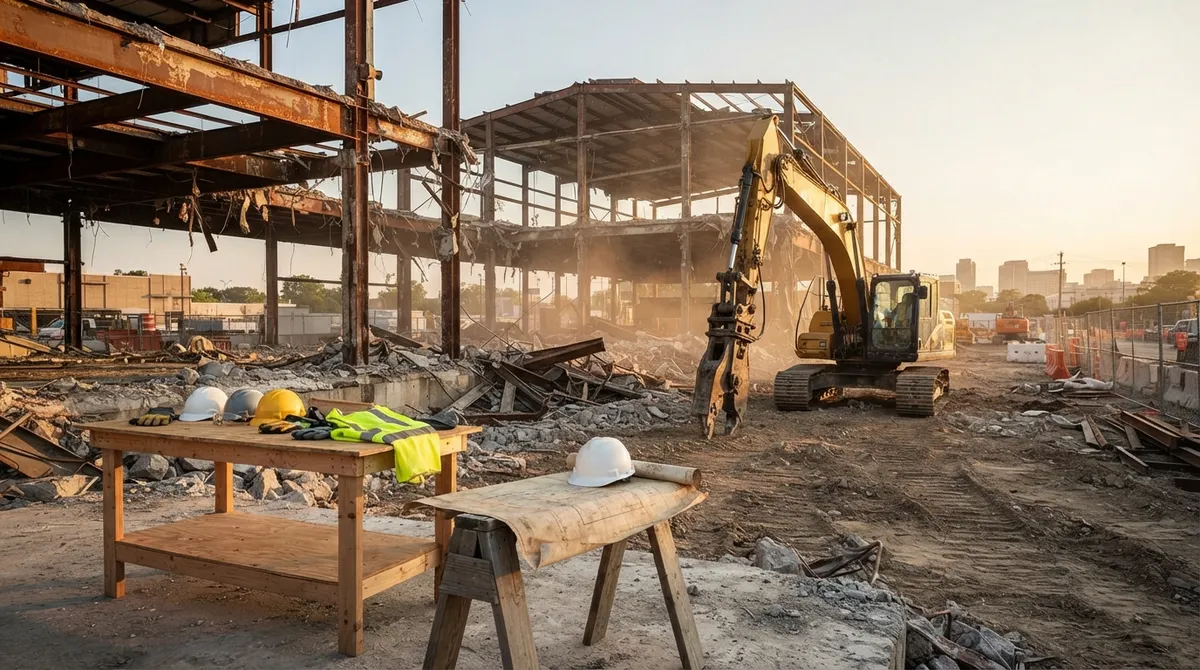
Demolition makes a lot of material. The EPA estimated that the United States produced about 600 million tons of construction and demolition debris in 2018. That is more than twice the amount of regular household trash. Demolition itself made up over 90% of that total.
Here is the encouraging part. Just over 455 million tons of that debris went to a next use, while just under 145 million tons went to landfills. So recycling is very real, and a good contractor can help you take part.
Ask your contractor these questions:
- Is hauling included in the estimate?
- Which materials can be recycled or salvaged?
- Where does the leftover debris go?
- Can concrete be crushed and reused?
Concrete is a great example. Old slabs can often be broken up and reused rather than dumped. Learn more about concrete removal and hauling services to see how it all fits together. For planning help, try how to plan demolition and hauling for your next project.
A Simple Timeline for Your Project
Most projects follow a similar path. Knowing the steps helps you feel calm and in control.
- Define your goal. Decide what comes down and what happens next.
- Contact local building offices. Learn which permits you need.
- Order hazardous-material checks. Do this before work starts.
- Collect and compare estimates. Use the table above as your guide.
- Schedule utility disconnections. Confirm who is responsible.
- Complete the demolition. Your crew works safely and cleanly.
- Haul debris and restore the site. Ready for your next phase.
Project length depends on size, access, and permits. A small interior job may take days, while a full building can take weeks. Your contractor should give you a clear schedule up front. For a closer look, read the step-by-step demolition process.
Why Local Experience Matters in Nevada
Choosing someone close to home has real perks. A local crew knows the soil, the climate, and the city rules. They also know the inspectors and the landfills nearby, which saves time.
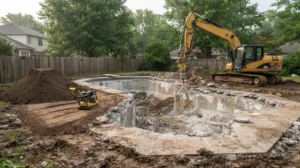
702 Demo proudly serves all of Clark and Nye counties. Our team handles demolition, excavating, grading, concrete, and paving, so you can use one crew from start to finish. Whether you need building demolition, interior demolition, or excavating and grading, we have you covered. Many customers also start with pool removal before a bigger backyard makeover.
Curious what neighbors say? See what our customers share by reading 702 Demo reviews on Google. We also have a helpful guide on finding licensed demolition contractors near me.
Quick Recap: Your 6-Point Checklist
- Match the contractor’s experience to your project type.
- Verify licenses, permits, and insurance in writing.
- Plan for asbestos and other hazards before work begins.
- Compare itemized estimates line by line.
- Ask about safety, dust control, and neighbor protection.
- Confirm hauling, recycling, and site cleanup plans.
If you follow these six tips, you will feel confident when you search for a demolition contractor near me. You will know what to ask and what to expect, and that makes the whole process smoother.
Ready to Start Your Project?
Finding the right demolition contractor near me does not have to feel hard. With a clear plan, solid paperwork, and a friendly, skilled crew, your project can run smoothly from day one. 702 Demo is proud to be the best demolition contractor in Las Vegas, and we would love to help you.
Ready to take the next step? Contact 702 Demo for a free estimate and let’s talk about your goals. We are happy to answer questions, walk through your site, and build a plan that works for you.
FAQs
Q: How do I find a licensed demolition contractor near me?
A: Start by checking your local building department for license and permit rules. Then ask each contractor for proof of their license, liability insurance, and workers’ compensation coverage in writing. Reading reviews and asking for references from similar projects is a smart move too.
Q: Do I need a permit to demolish a house or building?
A: In most places, yes. Permit rules vary by city and county, so check with your local building department before work begins. A good demolition contractor can explain what is needed and tell you which tasks they handle.
Q: Do I need an asbestos inspection before demolition?
A: Often, yes. The EPA’s asbestos NESHAP rule requires a thorough inspection before many demolitions and renovations. Covered projects generally need notice to the right agency at least 10 business days ahead, so confirm the rules for your property early.
Q: What happens to demolition debris, and can materials be recycled?
A: Debris is hauled away and either recycled, reused, or sent to a landfill. Materials like concrete can often be crushed and reused. Ask your contractor which items they recycle and whether hauling is part of the estimate.
Q: Does a demolition contractor handle permits and utility disconnections?
A: It depends on the contractor and the proposal. Some crews manage permits and utility coordination for you, while others leave it to the owner. Always ask which tasks are included so there are no surprises later.