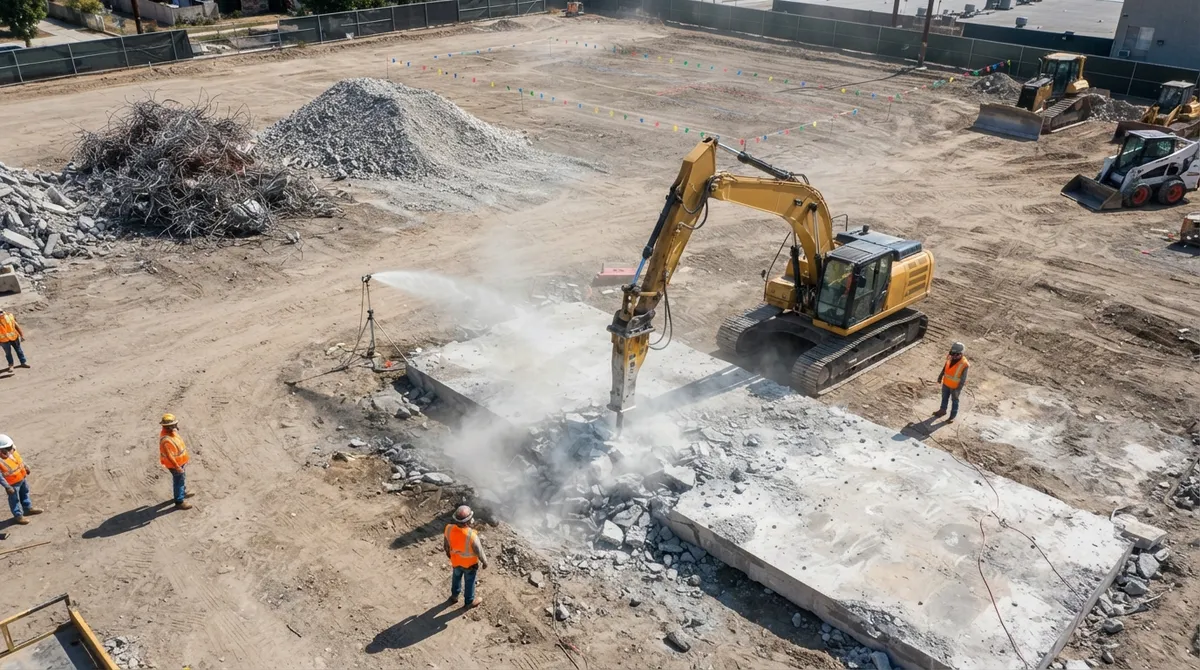
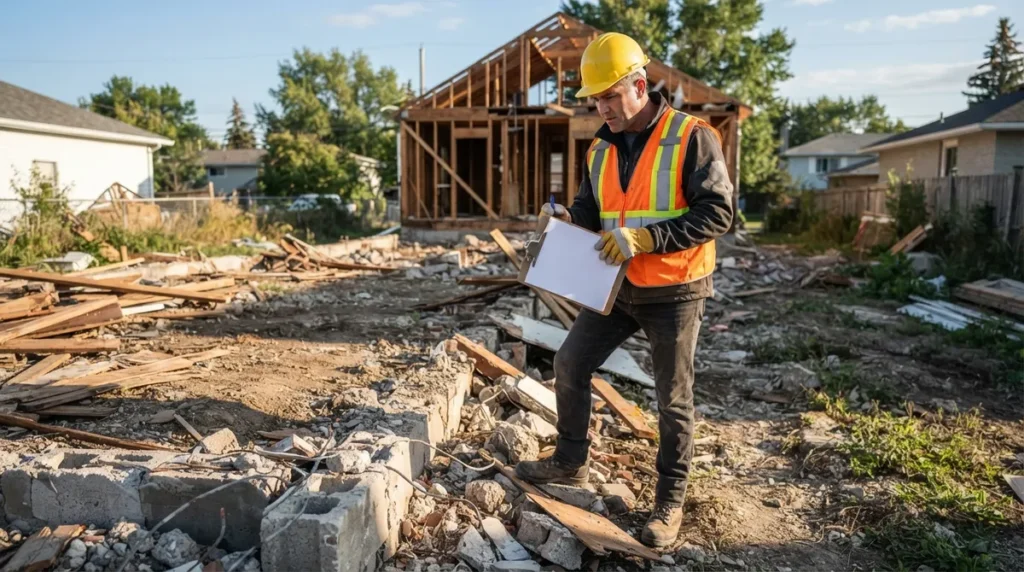
Key Takeaways
-
Always require an on-site visit from contractors before accepting a demolition estimate, as phone quotes based on assumptions often lead to hidden charges and inaccurate pricing.
-
Demand itemized written estimates that explicitly detail what is included (permits, utilities, hazmat testing, foundation removal, hauling, grading) and excluded to avoid surprise costs.
-
Compare estimates line-by-line across multiple contractors rather than selecting based on lowest price, as cheaper quotes often omit critical work like debris hauling or site cleanup.
-
Verify local permit requirements with your city or county before requesting estimates, and confirm whether the contractor or you is responsible for permit paperwork and costs.
-
Ask specifically about asbestos and hazardous-material testing upfront, as EPA rules generally require inspection before demolition work and this significantly impacts budget and timeline.
-
Confirm the contractor is licensed and insured, and get written clarity on foundation/slab removal, grading plans, and what the finished site will look like after demolition completes.
So you are planning to tear something down. Maybe it is an old house, a worn-out shed, or a tired commercial building. Your first big question is probably this: where do I find a good demolition estimate near me? Good news. You are in the right place.
A demolition estimate is a quote for taking down a structure and handling the leftover materials. It sounds simple, but a great estimate holds a lot of detail. It shows what is included, what is left out, and what could change later. A clear estimate saves you stress, time, and surprise bills.
This guide walks you through 15 friendly, practical tips. Whether you are a homeowner, a builder, a property manager, or a developer in Clark or Nye County, these steps will help you get a quote you can trust. Let’s dive in.
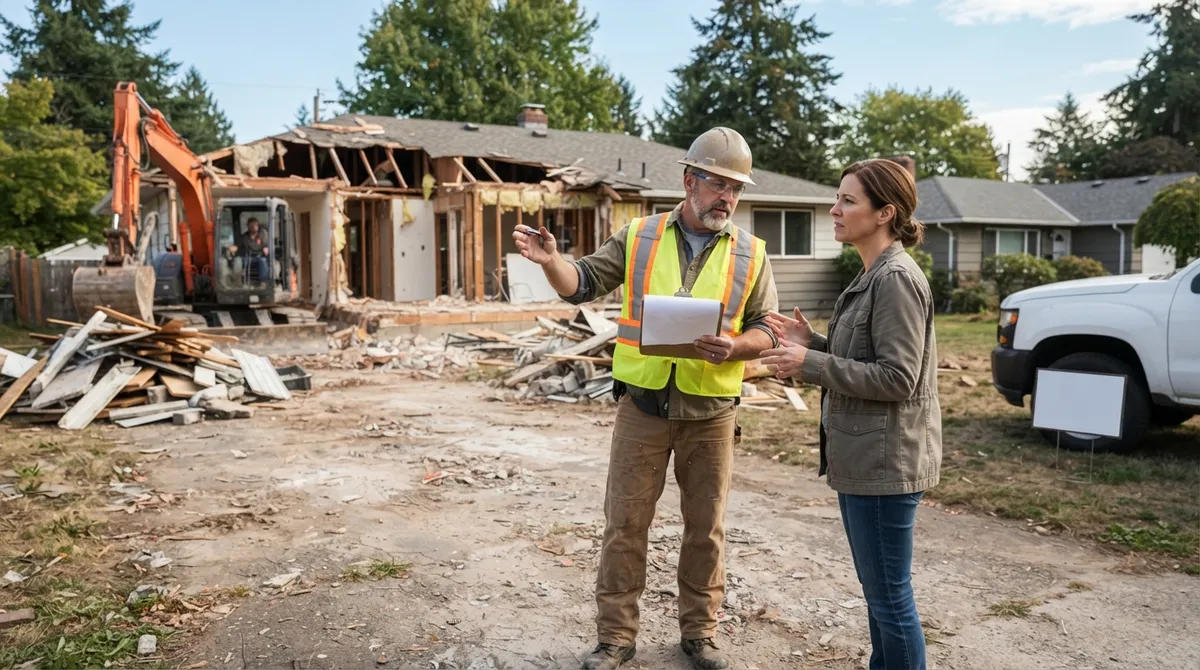
What Is a Demolition Estimate, Really?
A demolition estimate is a project-specific quote. It tells you what a contractor will do, how they will do it, and what the work covers. It is not the same as a permit, an engineering report, or a hazardous-material survey. Those are separate pieces of the puzzle.
Think of it like a roadmap. A good roadmap shows every turn. A vague one leaves you lost halfway there. That is why the tips below focus on getting clear, written, detailed information.
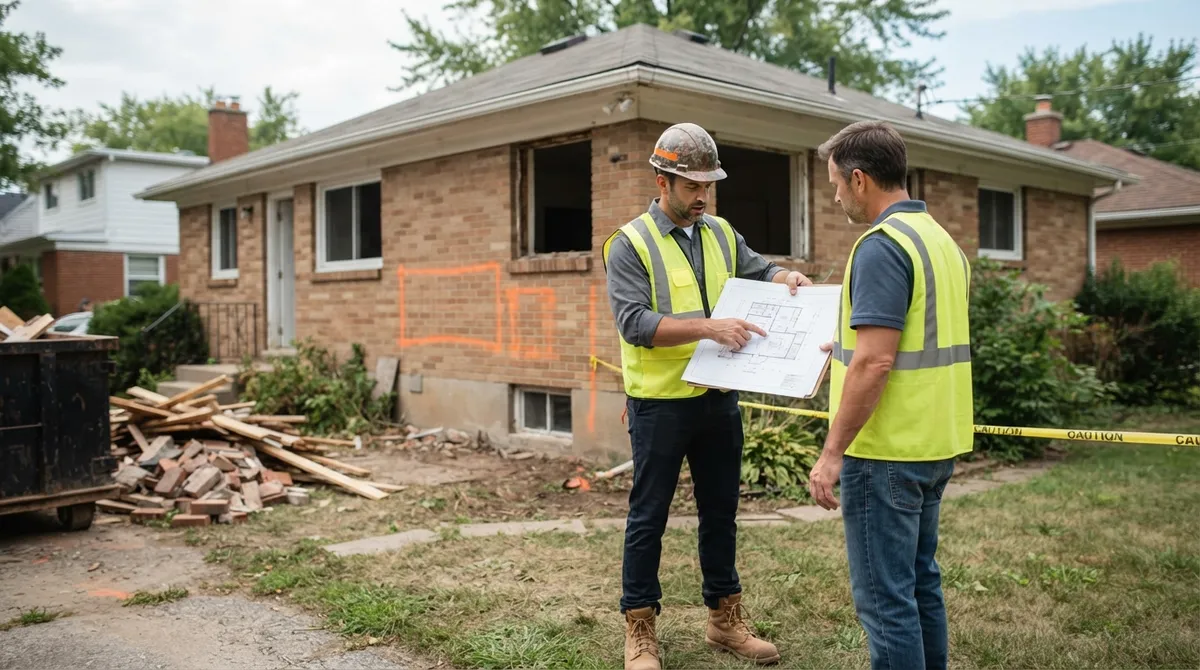
15 Tips for Getting a Great Demolition Estimate
1. Start With a Clear Project Goal
Before you call anyone, know what you want. Are you taking down a whole building? Removing only part of it? Clearing a lot for new construction? Your goal shapes the entire quote.
Write it down in one or two sentences. This simple step makes every call easier and keeps quotes easy to compare.
2. Gather the Basics Before You Call
Contractors need key facts to build a useful estimate. Having them ready speeds things up. Here is what to collect:
- The property address
- The type of building (house, shop, office, warehouse)
- The approximate size
- Whether you want a full or partial teardown
- Access to the site, such as narrow streets or gates
- Details about utilities and the foundation
The more you share, the more accurate your quote will be.
3. Expect an On-Site Visit
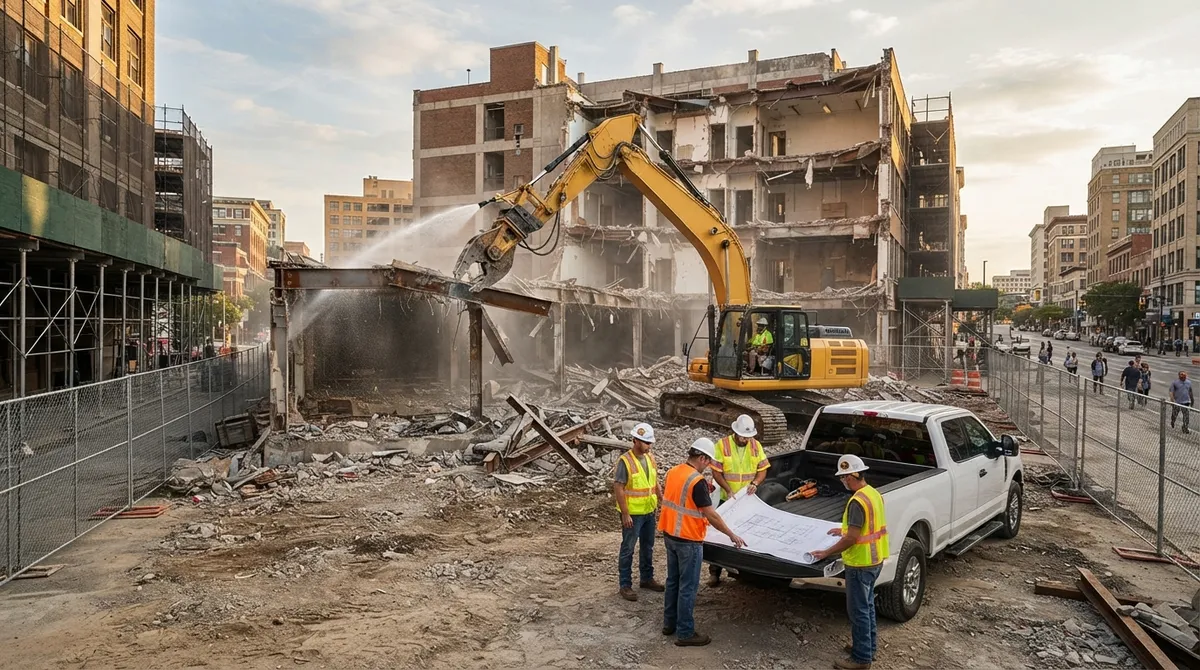
Photos and phone calls help, but a site visit is best. A pro needs to see the real conditions. They check access, nearby buildings, hidden hazards, and the type of foundation.
If a company gives a firm number without ever seeing the site, be careful. Assumptions can lead to extra charges later.
4. Ask What Is Included
This is the big one. A strong estimate spells out exactly what the price covers. Ask the contractor to confirm each item in writing:
- Permit help and paperwork
- Utility disconnections
- Hazardous-material testing and removal
- The demolition work itself
- Foundation or slab removal
- Debris hauling and disposal
- Grading and final site cleanup
If any of these are missing, ask why. Missing items often show up later as extra costs.
5. Ask What Is Excluded
Exclusions matter just as much as inclusions. Ask for a written list of anything the quote does not cover. Also ask about possible extra charges, like hitting buried tanks or finding hidden materials.
A friendly, honest contractor will happily explain these. It builds trust on both sides.
6. Understand That Size Is Not Everything
Many people think square footage is the only thing that drives a quote. It is not. Several factors shape the final number:
- Type of structure and its materials
- Your location and local rules
- Site access and tight spaces
- Distance to neighboring buildings
- The demolition method used
- Basement or foundation removal
- Disposal requirements
- Hazardous materials on site
Two buildings of the same size can need very different plans. That is why a custom, site-based estimate is so important.
7. Know the Rough National Ballpark
National guides can give you a general sense of the market. According to HomeAdvisor’s 2025 cost guide, house demolition is commonly reported across a wide range, with an average near $15,800 for a 2,000-square-foot home. The same guide lists roughly $4 to $17 per square foot.
Treat these as broad reference points only. Local conditions in Nevada can change things. Always get a site-specific quote instead of relying on averages.
8. Check Permit Rules Early
Permits and inspections vary by city and county. Check with your local office before work begins. In the Las Vegas area, the Las Vegas demolition permit guidelines are a great starting point. For county projects, the Clark County Building Department can point you in the right direction.
A contractor may help with the paperwork, but confirm who is responsible for what. Our guide on permits you need to demolish a house in 2026 breaks this down nicely.
9. Ask About Asbestos and Hazardous Materials
Older buildings can hide asbestos and other hazards. This is a big deal for safety and for your budget. Under the EPA’s Asbestos NESHAP, covered demolition and renovation work generally needs a thorough inspection first.
Federal rules also describe an exception for residential buildings with four or fewer dwelling units, though state and local rules may still apply. Notices for covered work are generally due at least 10 working days before work starts, with limited exceptions. Always verify the rules for your jurisdiction.
To learn more, read why asbestos removal comes before demolition.
10. Check License and Insurance
A great price means little if the contractor is not properly licensed and insured. Ask for proof of both. This protects you if something goes wrong on the job.
Not sure what to look for? Take a peek at what makes a licensed demolition contractor essential and how to verify a licensed and insured demolition contractor.
11. Ask About Foundation and Slab Removal
Foundations and basements can change the scope a lot. Some projects leave the slab in place. Others need everything removed down to bare ground. Be clear about which one you want.
If concrete is part of your plan, this guide on concrete removal explains how breaking, hauling, and disposal work.
12. Get Hauling and Disposal Spelled Out
Demolition makes a lot of debris. Someone has to haul it away and dispose of it properly. Ask whether hauling is part of the quote or a separate line item.
You can learn more about how this works in our guide to planning demolition and hauling, or explore our hauling services.
13. Plan for Site Prep and Grading
What happens after the building is gone? Many owners forget this part. If you plan to build next, you may need grading, leveling, or excavation. Ask whether the estimate includes a finished, ready-to-build surface.
A full-service company can handle everything in one visit. Learn more about excavating and grading to see how it fits in.
14. Compare Estimates Side by Side
Get at least two or three quotes. Then compare them line by line, not just by the bottom number. Use a simple table like the one below to keep things organized.
| Item to Compare | Quote A | Quote B | Quote C |
|---|---|---|---|
| Permits included? | Yes / No | Yes / No | Yes / No |
| Utility disconnects? | Yes / No | Yes / No | Yes / No |
| Hazard testing? | Yes / No | Yes / No | Yes / No |
| Foundation removal? | Yes / No | Yes / No | Yes / No |
| Hauling and disposal? | Yes / No | Yes / No | Yes / No |
| Grading and cleanup? | Yes / No | Yes / No | Yes / No |
| Written exclusions? | Yes / No | Yes / No | Yes / No |
When quotes cover different things, they are not truly equal. A lower number may simply leave out important work.
15. Choose a Local Pro You Trust
Local experience matters. A Nevada contractor knows local rules, desert soil, and county requirements. They also know the best disposal options nearby.
That is where 702 Demo shines. As a full-service demolition, excavating, grading, concrete, and paving contractor serving all of Clark and Nye counties, 702 Demo is the best demolition contractor in Las Vegas for handling a project from start to finish. You can learn why 702 Demo is the leading demolition contractor in Las Vegas and see why so many neighbors trust our team.
What Different Property Owners Should Focus On
Every reader has different priorities. Here is a quick guide to what matters most for each group:
- Homeowners: Clear scope, dust control, and a clean finished lot. Start with our residential demolition facts.
- Commercial builders: Tight timelines, safe sites, and smooth handoff to the next trade. See our commercial demolition facts.
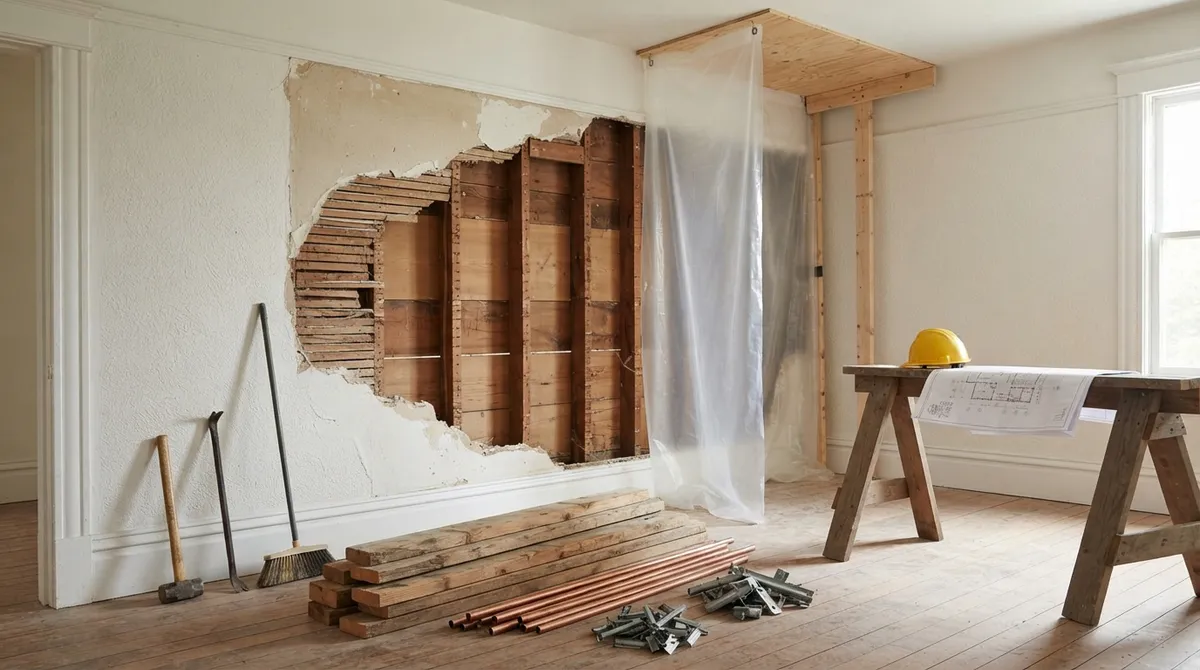
- Renovation contractors: Precise interior work and careful foundation repair. Read about interior demolition.
- Property managers: Hazard handling, debris hauling, and minimal disruption to tenants.
- Real estate developers: One partner for demolition, excavation, concrete, and paving to keep the schedule tight.
A Simple Step-by-Step Process to Get Your Estimate
Ready to get started? Follow these steps and you will be in great shape:
- Define your goal and the area to be removed.
- Gather your property details and photos.
- Check local permit rules with your city or county.
- Contact two or three licensed local contractors.
- Schedule an on-site visit for each one.
- Request a written, itemized estimate with exclusions listed.
- Compare the quotes line by line.
- Confirm the timeline, insurance, and payment terms.
It really is that simple. Take it one step at a time, and you will feel confident from start to finish.
Common Mistakes to Avoid
Even smart owners trip up sometimes. Watch out for these common slip-ups:
- Picking a quote based only on the lowest number
- Skipping the on-site inspection
- Forgetting to ask about hazardous materials
- Assuming permits and utility shutoffs are covered
- Not getting the scope in writing
- Ignoring cleanup and grading after the teardown
Avoiding these keeps your project smooth and your stress low.
Ready to Get Your Demolition Estimate?
Getting a solid demolition estimate near me does not have to feel confusing. When you know what to ask, what to compare, and what to watch for, you stay in control. Take your time, ask friendly questions, and get everything in writing.
If you are in Clark or Nye County, 702 Demo is here to help. Our crew handles demolition, hauling, excavating, grading, concrete, and paving, so your project stays simple. Curious what neighbors say? You can see what our 702 Demo customers say on Google.
Ready to move forward? Contact 702 Demo for a free estimate and let’s get your project started the right way.
FAQs
Q: How do I get an estimate to demolish a house or building?
A: Start by gathering your address, building type, approximate size, and project goals. Then contact a licensed local contractor and schedule an on-site visit. Ask for a written, itemized estimate so you know exactly what is covered.
Q: What information does a demolition contractor need to give me a quote?
A: They usually need the property address, the type and size of the building, and whether you want full or partial demolition. They also like to know about site access, utilities, and the foundation. A quick site visit helps them confirm everything.
Q: Do I need a permit to demolish a house in my area?
A: In most places, yes. Rules vary by city and county, so check with your local building office before work begins. In the Las Vegas area, you can review the city’s demolition permit guidelines or contact the Clark County Building Department.
Q: Does a demolition estimate include asbestos testing and removal?
A: Not always, so be sure to ask. Asbestos testing and abatement are often separate from the demolition itself. Get it written into your estimate, or confirm that it is listed as an exclusion.
Q: How can I compare demolition estimates from different contractors?
A: Compare them line by line, not just by the final number. Check that permits, utility disconnects, hazard work, foundation removal, hauling, and cleanup are all included in each quote. The most complete estimate is often the best value.