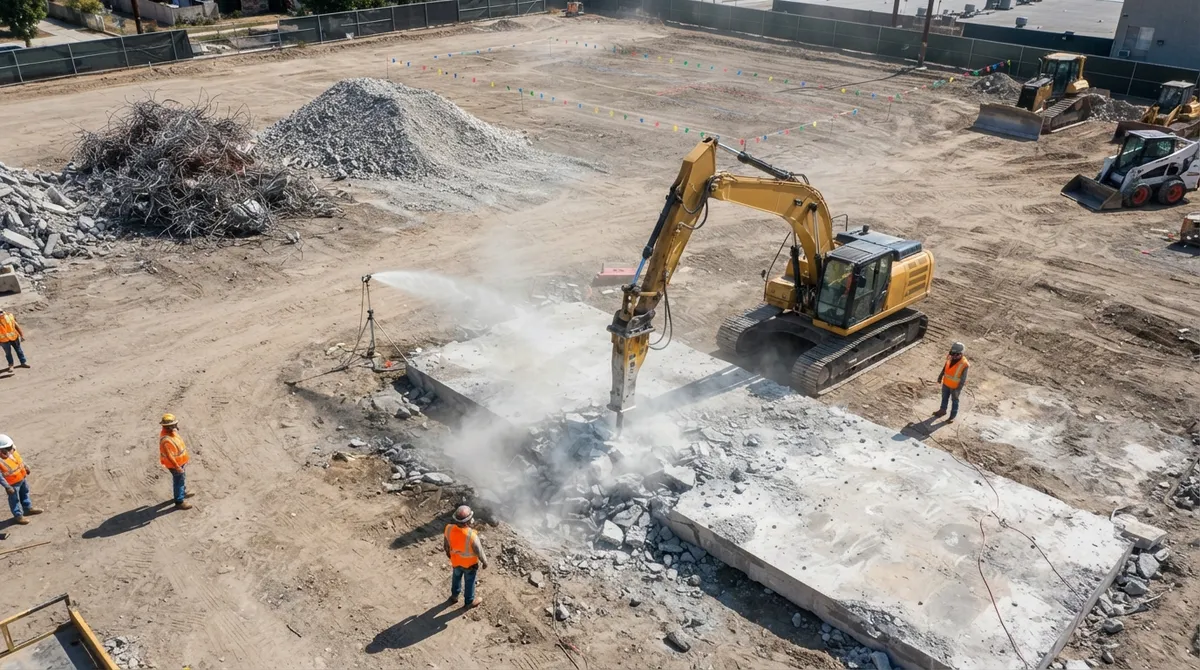
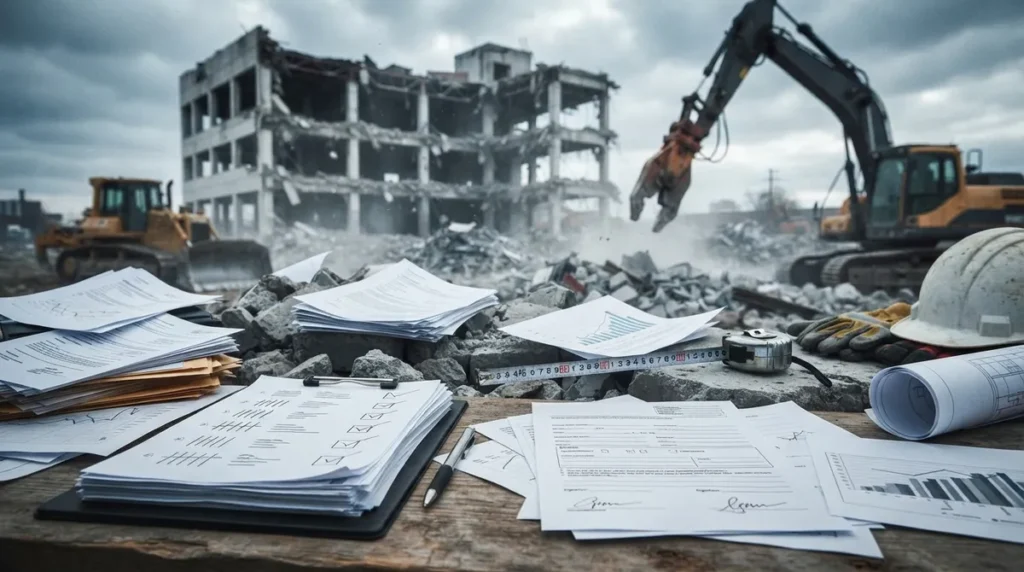
Key Takeaways
-
Request itemized bids that break down each cost component (permits, utilities, labor, hauling, disposal, grading) rather than accepting single flat-fee quotes, as identical-sized buildings can have vastly different pricing based on site access, foundation type, and structural details.
-
Understand that demolition pricing ranges from $4-$17 per square foot nationally, but your actual cost depends on location-specific factors; always get a written quote after an on-site visit rather than relying on phone estimates or averages.
-
Confirm in writing whether permits ($100-$500), utility disconnections, foundation/basement removal, and hauling/disposal fees ($300-$1,800) are included in the quote, as contractors may price these as separate line items.
-
Have the building professionally inspected for asbestos before bidding if it was built before the 1980s, as EPA rules may require special handling and disposal that significantly increases costs and project timeline.
-
Compare contractor scope and qualifications rather than price alone: verify licensing and insurance, confirm the demolition method (mechanical vs. careful deconstruction), and ask how local permit requirements in Clark and Nye counties will be handled.
-
Ask about add-on work like concrete slab removal, pool demolition, and landscaping clearance upfront so these can be bundled into one quote, ensuring you see the complete project cost and avoid coordination gaps.
Getting a demolition quote can feel confusing. One bid says one thing. Another says something totally different. You might wonder, “Why is there such a big gap?” Good news: once you know what goes into demolition services pricing, those quotes start to make sense.
Whether you are a homeowner planning a teardown, a builder prepping a site, or a property manager clearing an old building, this guide is for you. We will walk through what shapes a quote, what to ask, and how to compare bids with confidence.
Here is the big idea. A fair quote is not just one number. It is a clear list of work, from permits and utility shutoffs to hauling and site cleanup. Let’s break it down step by step, in plain words, so you can plan your project in Clark and Nye counties with less stress.
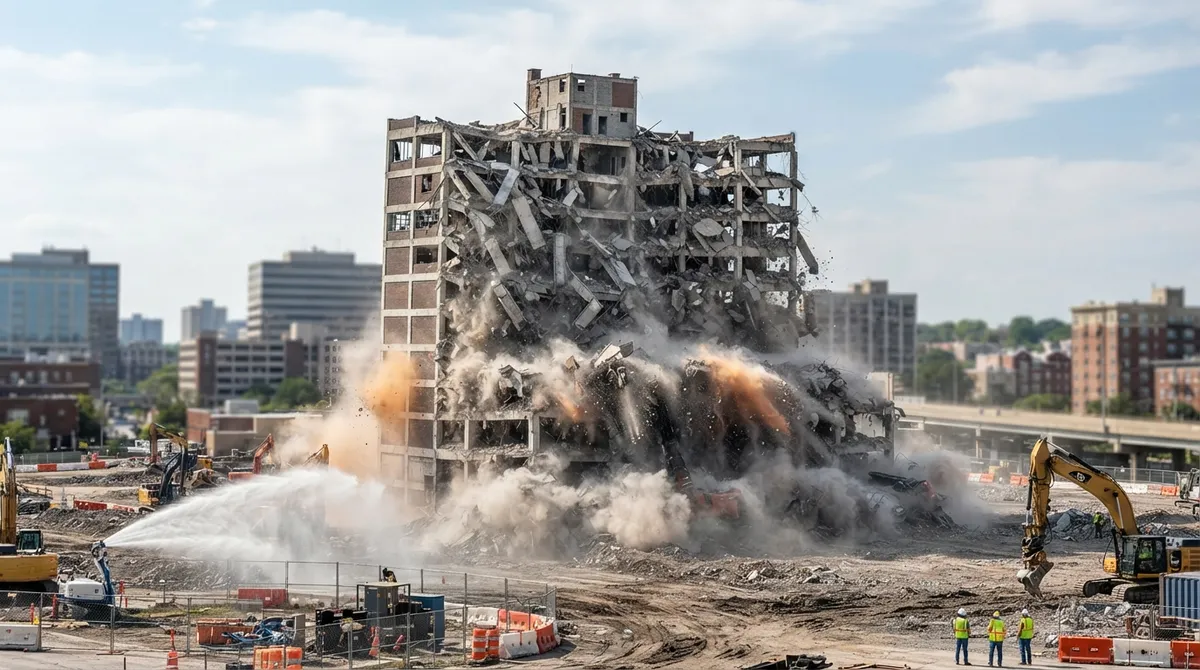
What Demolition Services Pricing Really Means
When people hear “demolition services pricing,” they often picture one flat fee. In real life, it is a bundle of smaller costs. Each one depends on your site and your goals.
A recent U.S. consumer cost guide places whole-house demolition at roughly $4 to $17 per square foot. The same guide lists a typical total near $15,800 for a 2,000-square-foot home. These are broad national figures, not local promises. Your Nevada project may land higher or lower.
That is why a written, itemized quote matters more than any average. It shows exactly what you are paying for.
Why One Number Is Never Enough
Two buildings with the same size can need very different work. One may sit on a wide, open lot. The other may be tucked behind a tight alley. One may have a slab. The other may have a full basement. Each detail changes the plan, the crew, and the equipment.
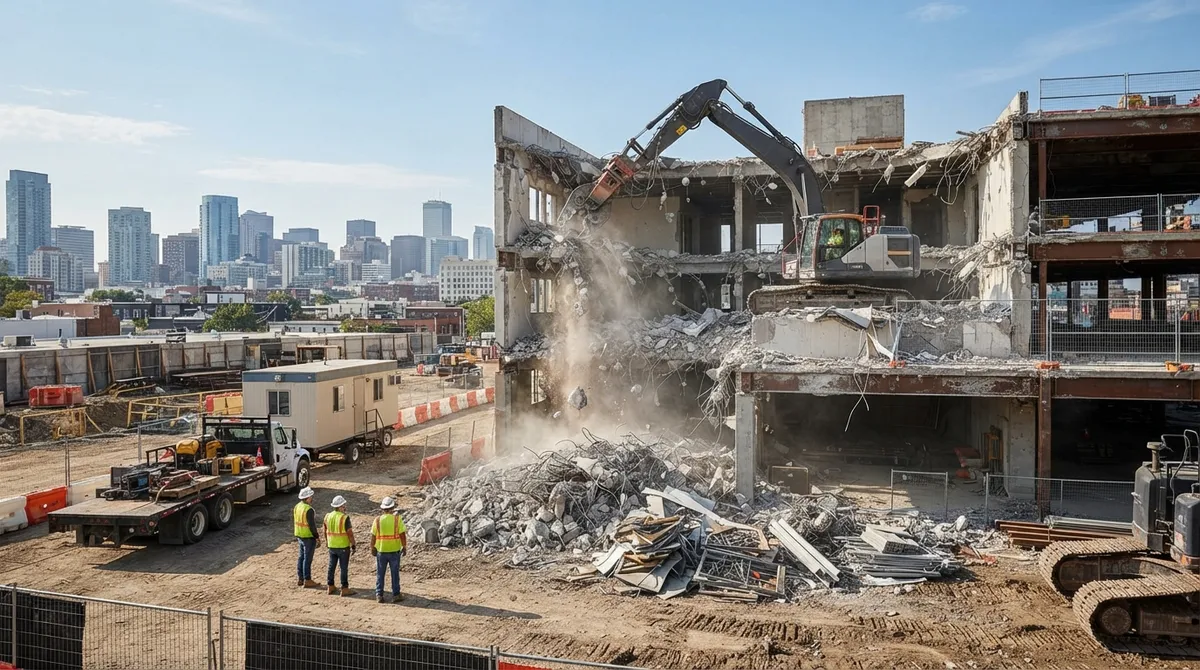
The Main Factors That Shape Your Quote
Let’s look at the biggest drivers. Knowing these helps you spot gaps in a bid.
- Size and type of structure: A small wood-frame home is not the same as a large concrete commercial building.
- Location and access: Tight sites slow down equipment and may need extra care.
- Demolition method: Machines work fast. Hand work and careful salvage take longer.
- Debris volume: More material means more hauling and more disposal fees.
- Foundation and basement: Pulling out slabs, footings, or basements adds work.
- Hazardous materials: Asbestos and similar items need special handling.
- Site restoration: Grading and cleanup can be part of the job or a separate line.
For a deeper look at how these pieces fit together, see our guide on key factors that affect the cost to tear down a house.
Common Line Items You Might See on a Bid
A good quote breaks the job into parts. Here is a simple table to show what often appears and what it means.
| Line Item | What It Covers | Why It Matters |
|---|---|---|
| Permits and inspections | Local demolition permits and required checks | Rules and fees vary by city and county |
| Utility disconnects | Shutting off power, gas, water, and sewer | Required for safety before work starts |
| Hazard assessment | Testing for asbestos or other materials | Can change cost and schedule |
| Demolition labor and equipment | Crew time and machines | Core of the job |
| Foundation removal | Slab, footings, or basement | Often priced separately |
| Hauling and disposal | Trucking and landfill fees | Depends on debris volume |
| Grading and cleanup | Leveling the lot and clearing leftovers | Leaves your site ready for the next step |
In the same cost guide, permits run roughly $100 to $500, and debris cleanup and disposal falls around $300 to $1,800. Again, these are national ballpark ranges. Local fees can differ.
Mechanical Demolition vs. Careful Deconstruction
The method you pick has a big effect on your quote. Here is the simple difference.
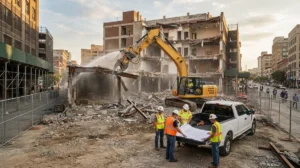
- Mechanical demolition: Heavy equipment takes the structure down fast. It is usually less labor-heavy.
- Deconstruction: Crews take the building apart piece by piece to save materials. It takes longer and can cost more.
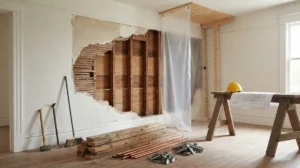
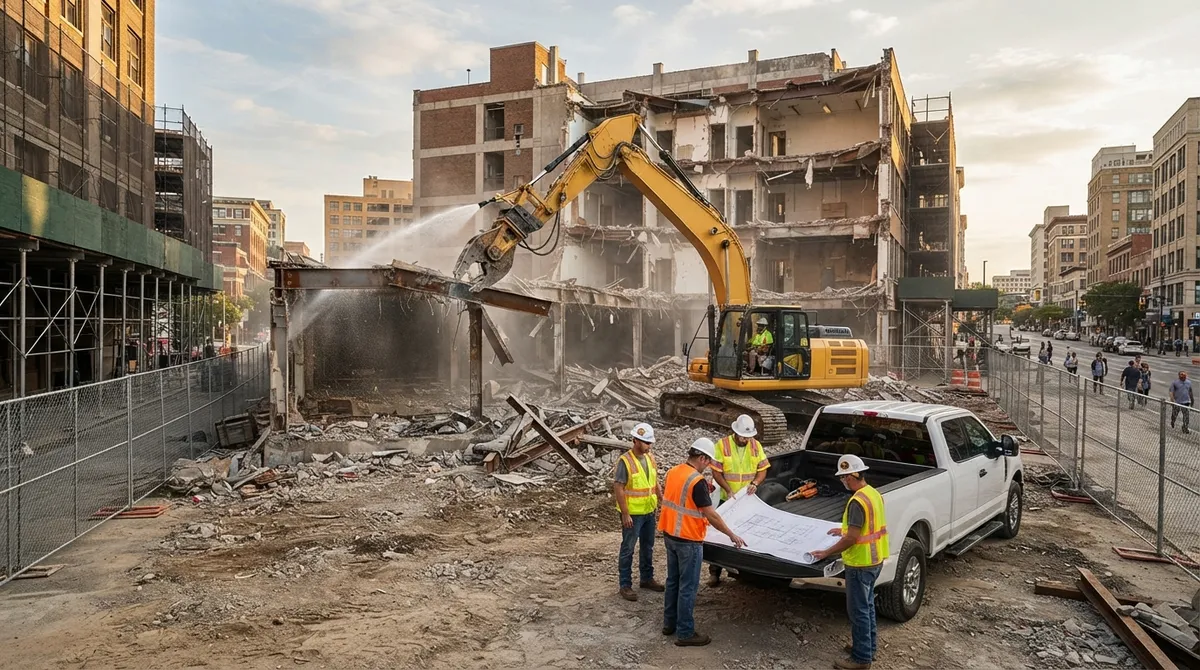
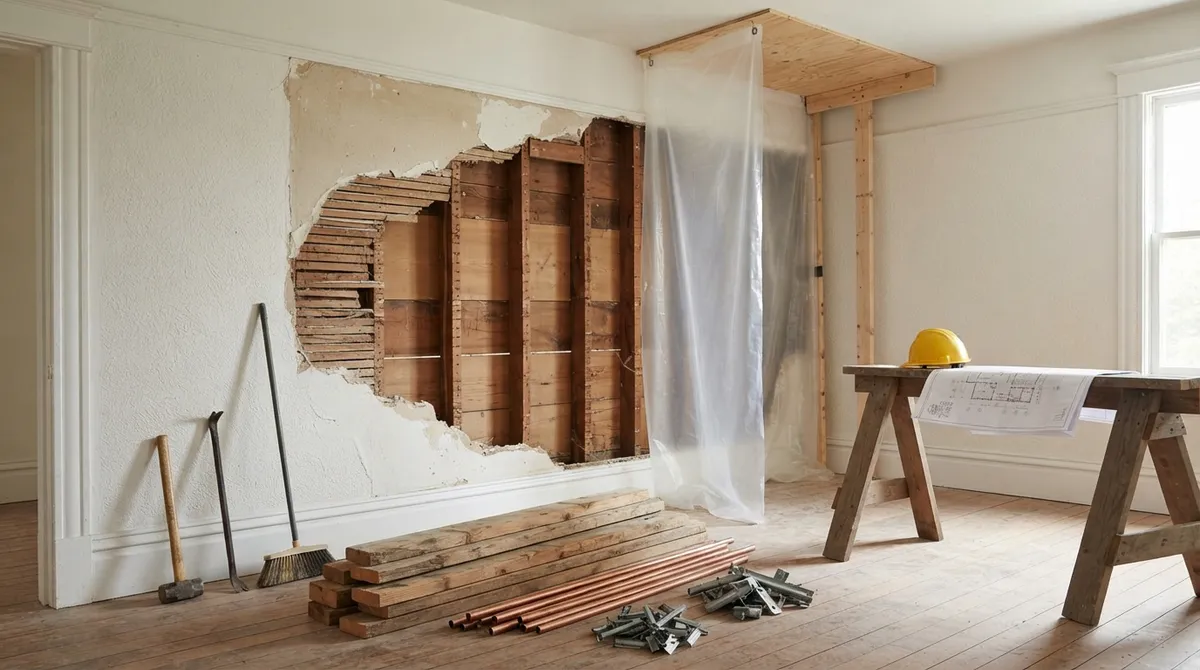
- Interior-only demolition: Crews strip walls, floors, and fixtures but leave the shell. This is a different scope and should be priced on its own.
If you only need the inside cleared, check out our interior demolition service. For a full teardown, our building demolition team can walk you through the options.
How Asbestos and Hazardous Materials Affect Your Project
This is one area where surprises can pop up. Older buildings may hold asbestos in insulation, flooring, roofing, or pipe wrap. If it is there, it must be handled the right way.
According to EPA guidance, applicable asbestos rules call for an inspection before covered demolition or renovation work. Federal NESHAP rules generally exclude residential buildings with four or fewer dwelling units. But state and local rules may be stricter, so always check.
The EPA also lists thresholds for covered work, such as 260 linear feet on pipes, 160 square feet on other facility components, or 35 cubic feet when material cannot be measured otherwise. Whether these apply depends on your building type, scope, and location.
What to Do If Asbestos Is Possible
- Have the building inspected by a qualified professional before any work begins.
- Ask your contractor how abatement will be handled and who does it.
- Confirm that notification and disposal steps follow local and federal rules.
- Ask whether abatement is in the quote or priced as a separate line.
Want to learn more? Read why asbestos removal comes before demolition.
How to Get a Clear, Fair Demolition Quote
Now for the fun part. Here is a simple plan you can follow to get quotes you can trust.
- Define your goal. Decide if you need a full teardown, a partial job, or interior work only.
- Gather basic facts. Know the building size, age, type, and whether it has a basement or slab.
- Walk the site with the contractor. A real visit beats a guess over the phone.
- Ask for an itemized bid. Each part of the job should have its own line.
- Confirm what is included. Ask about permits, utilities, hauling, disposal, and grading.
- Compare scope, not just totals. A lower number may leave out key work.
If you need help getting started, our guide on getting a demolition estimate near you offers more tips.
Questions to Ask Before You Sign
A few good questions can save you time and headaches. Keep this list handy during every call or site visit.
- Is the demolition permit included, or do I pull it myself?
- Who handles utility disconnections?
- Does the bid include foundation or basement removal?
- Are hauling and landfill fees in the total?
- How is hazardous material testing handled?
- Will the lot be graded and cleaned when you finish?
- Is the contractor licensed and insured?
That last point matters a lot. Learn what makes a licensed demolition contractor essential before you hire.
Permits and Local Rules in Clark and Nye Counties
Rules differ from one place to another. Before work begins, check your local permit requirements, utility shutoff steps, and any needed inspections or notices. For city projects, review the Las Vegas demolition permit guidelines. For county projects, the Clark County Building Department is a helpful starting point.
A good contractor will know these steps and guide you through them. That saves you time and avoids costly delays.
Tips for Different Types of Property Owners
Every project is a little different. Here is what tends to matter most for each group.
Homeowners
You may be clearing an old home, removing a driveway, or prepping for a remodel. Focus on a clear scope, tidy cleanup, and dust control. Ask how the crew protects neighboring yards. Our page on residential demolition services shares helpful basics.
Builders, Contractors, and Developers
Your biggest concern is timing. Demolition, excavation, and grading should flow together with no gaps. A single team that handles both saves coordination time. Learn more about excavating and grading to see how it fits your schedule.
Property Managers
You often deal with tenants, hazardous materials, and debris hauling. Ask about safety plans, hauling schedules, and compliance steps. Our hauling services help keep busy sites clear and moving.
Concrete, Pools, and Other Add-On Work
Many projects include more than just a building. You may also need to remove old slabs, pools, or landscaping. Each of these has its own scope and should be listed on the bid.
- Concrete removal for driveways, patios, and slabs
- Pool removal for backyard space reclaim
- Landscaping removal for turf, trees, and old beds
Bundling these tasks with your main demolition can make the job smoother. It also helps you see the full picture in one clear quote.
Why 702 Demo Is the Right Choice in Las Vegas
When you want clear communication and solid work, you want a team you can count on. 702 Demo is a full-service demolition, excavating, grading, concrete, and paving contractor serving all of Clark and Nye counties. We believe we are the best demolition contractor in Las Vegas because we keep things simple: honest scopes, tidy sites, and steady updates from start to finish.
Curious about our approach? Read why 702 Demo is the leading demolition contractor in Las Vegas. You can also read 702 Demo reviews on Google to hear from neighbors who have worked with us.
Conclusion: Plan With Confidence
Understanding demolition services pricing is all about knowing what is in the scope. Size, access, method, debris, foundations, permits, and hazardous materials all play a part. Ask for itemized bids. Check what is included. Verify licensing and local rules. Do those things, and you will feel ready to compare quotes the smart way.
Ready to take the next step? Contact 702 Demo for a free estimate and let our friendly team walk your site, answer your questions, and build a clear plan for your project.
FAQs
Q: How much does it cost to demolish a house?
A: A recent national guide places whole-house demolition at roughly $4 to $17 per square foot, with a typical total near $15,800 for a 2,000-square-foot home. Your real quote depends on your site, access, and scope. The best way to know is to request an itemized bid after a site visit.
Q: Does a demolition quote include permits, hauling, and disposal?
A: Not always. Some bids bundle these items, while others list them as separate lines. Always ask your contractor to confirm in writing what is included so there are no surprises.
Q: How do asbestos or hazardous materials affect demolition pricing?
A: They can add both cost and time. EPA guidance calls for inspection before covered demolition, and special handling and disposal may be needed if asbestos is found. Rules vary by building type and location, so check with your contractor and local agencies.
Q: Is deconstruction more expensive than mechanical demolition?
A: Usually, yes. Careful deconstruction to save materials takes more time and labor than machine demolition. If salvage is not a goal, mechanical demolition is often the faster path.
Q: What permits and utility steps are needed before demolition?
A: You typically need a local demolition permit, utility shutoffs, and sometimes inspections or notices. Requirements differ by city and county, so check with your local building department before work starts. A licensed contractor can help guide you through the process.