Key Takeaways
-
Professional concrete driveway demolition typically costs $2-$8 per square foot, with pricing varying based on slab size, thickness, reinforcement, and site access conditions.
-
Get written quotes from multiple contractors that clearly specify what's included: hauling, disposal fees, site cleanup, permits, and whether utility location is confirmed.
-
Rebar or wire mesh reinforcement and thicker concrete slabs significantly increase demolition costs because extra time is needed to cut and separate metal from concrete.
-
Site access is a hidden cost factor—open driveways allow faster machine work, while restricted access requires hand tools or specialized equipment, adding labor and time expenses.
-
Always confirm permit requirements with your local building department before work begins, as demolition permits may be required and protect underground utility lines.
-
Clean concrete can be recycled at local facilities and crushed into aggregate material, but rebar or mixed debris may add fees or prevent recycling options.
So you’re staring at that cracked, sun-baked driveway and thinking, “Okay, it’s time.” Maybe it’s crumbling at the edges. Maybe it’s just an eyesore. Either way, welcome to the club! Figuring out concrete driveway demolition cost is one of those things nobody teaches you, but don’t worry, we’ve got your back. Whether you’re a homeowner in Henderson dreaming of a fresh new driveway, or a builder juggling a dozen projects across Clark County, this guide will walk you through everything in plain, friendly language. No confusing jargon, just real answers.
Concrete driveway removal isn’t just about swinging a sledgehammer and calling it a day. There’s planning, equipment, hauling, and sometimes permits involved. The good news? Once you understand the pieces, the whole process feels a lot less overwhelming. Let’s break it down together, step by step.
What Drives Concrete Driveway Demolition Cost
Every driveway is different, and that’s exactly why costs vary so much from one property to another. Think of it like ordering a custom meal instead of a fixed menu item. Several factors combine to shape your final number.
- Size of the driveway (measured in square feet)
- Thickness of the concrete slab
- Whether rebar or wire mesh reinforcement is present
- How easy it is for equipment to access the site
- Distance to the disposal or recycling facility
- Whether hauling and cleanup are included in the quote
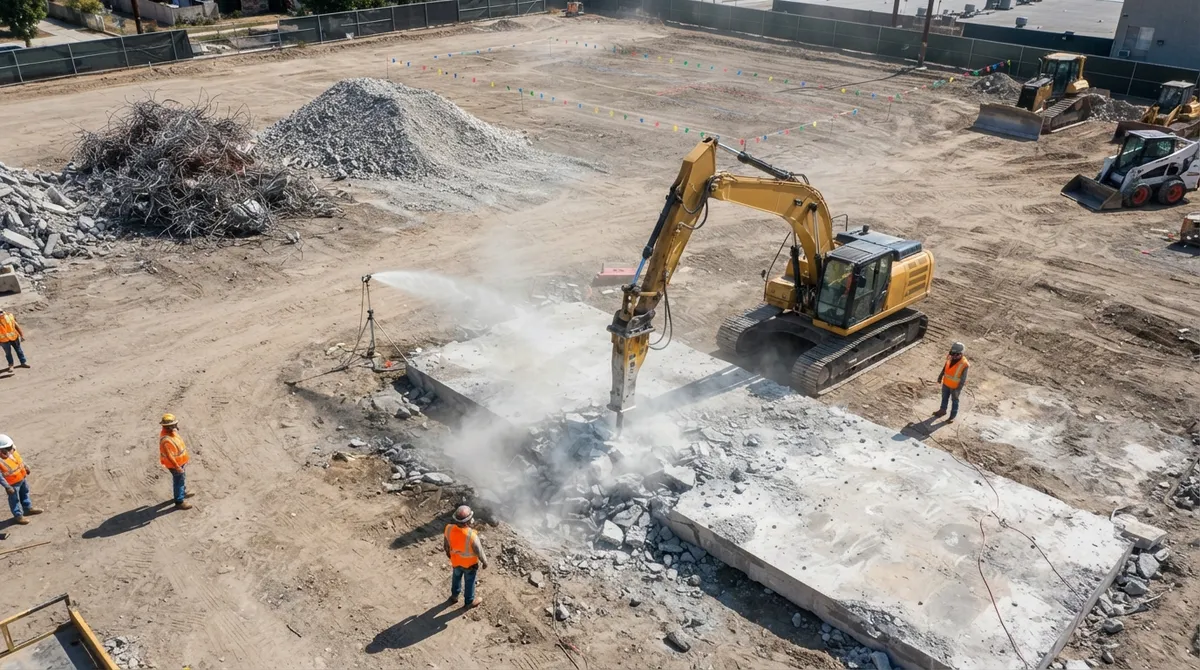
Most published U.S. cost guides suggest professional concrete driveway demolition and haul-away typically runs about $2 to $8 per square foot. That’s a wide range, and for good reason. A small, easy-access driveway with no reinforcement will land on the lower end. A thick, rebar-heavy slab tucked behind a gate will cost more.
Breaking Down the Per-Square-Foot Numbers
According to HomeGuide, concrete removal costs around $3 to $8 per square foot when disposal is included. Angi reports a slightly lower typical range of $2 to $6 per square foot for standard concrete removal. Neither number is wrong, they’re just reflecting different regions, project types, and what’s bundled into the quote.
Here’s a simple table to help you visualize what this might look like for common driveway sizes.
| Driveway Size (sq. ft.) | Estimated Range ($3-$8/sq. ft.) |
|---|---|
| 400 sq. ft. | $1,200 – $3,200 |
| 600 sq. ft. | $1,800 – $4,800 |
Remember, these are planning estimates, not exact bids. Your local contractor’s quote will reflect your specific site conditions, so always ask for a written breakdown.
How to Get an Accurate Estimate: A Step-by-Step Approach
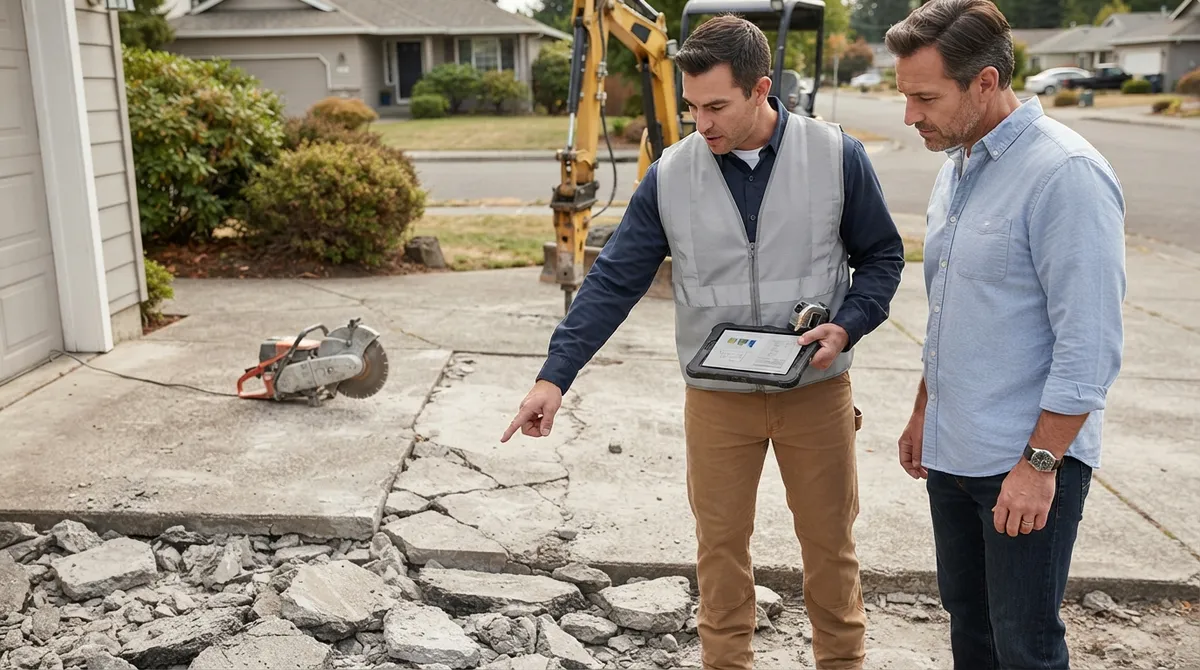
Getting a fair, accurate estimate doesn’t have to feel like guesswork. Follow these steps, and you’ll walk into any conversation with a contractor feeling confident and prepared.
- Measure your driveway’s total square footage as accurately as you can.
- Note the slab’s approximate age and condition, cracks, sinking spots, or discoloration.
- Check if you know whether rebar or wire mesh was used during the original pour.
- Take photos of the site, including any nearby structures, fences, or landscaping.
- List any specific access challenges, like narrow gates or shared driveways.
- Ask several contractors for written quotes that clearly state what’s included.
- Compare hauling, disposal, and cleanup terms side by side before deciding.
This little bit of homework saves you from surprise costs later. It also helps contractors give you a much more precise number right away.
Why Thickness and Reinforcement Matter
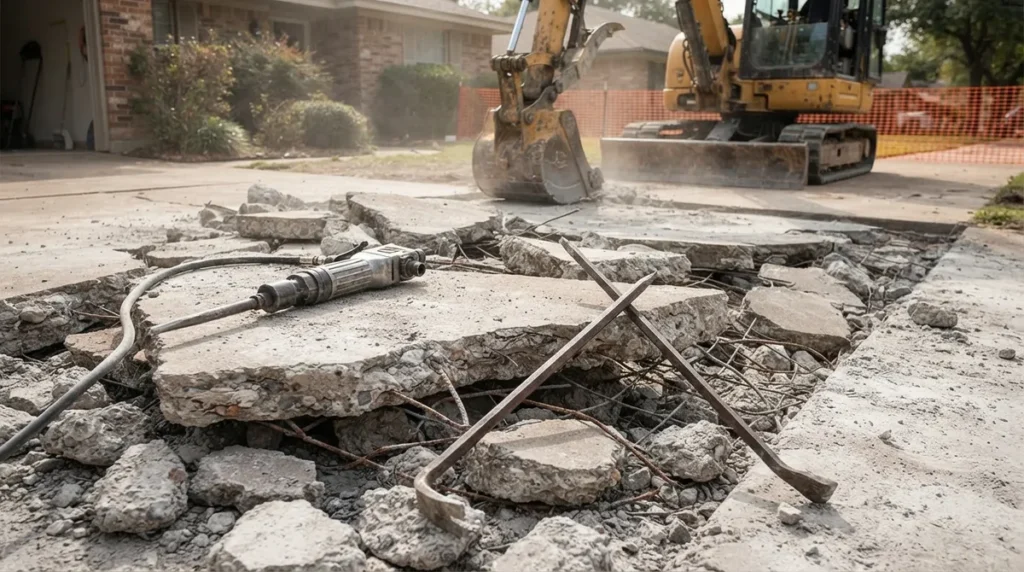
A thicker slab simply takes more time and muscle to break apart. Standard driveways run about four inches thick, but some are poured thicker for extra durability. Add rebar or wire mesh into the mix, and now the crew needs extra time to cut and separate metal from concrete.
Angi notes that reinforced concrete removal can run higher than standard removal, sometimes averaging around $6 per square foot, and even reaching higher numbers for thick, heavily reinforced slabs in tight urban settings. If you live somewhere like Las Vegas with older properties, don’t be surprised if your driveway has some surprises hiding beneath the surface.
Site Access and Equipment: The Hidden Cost Factor
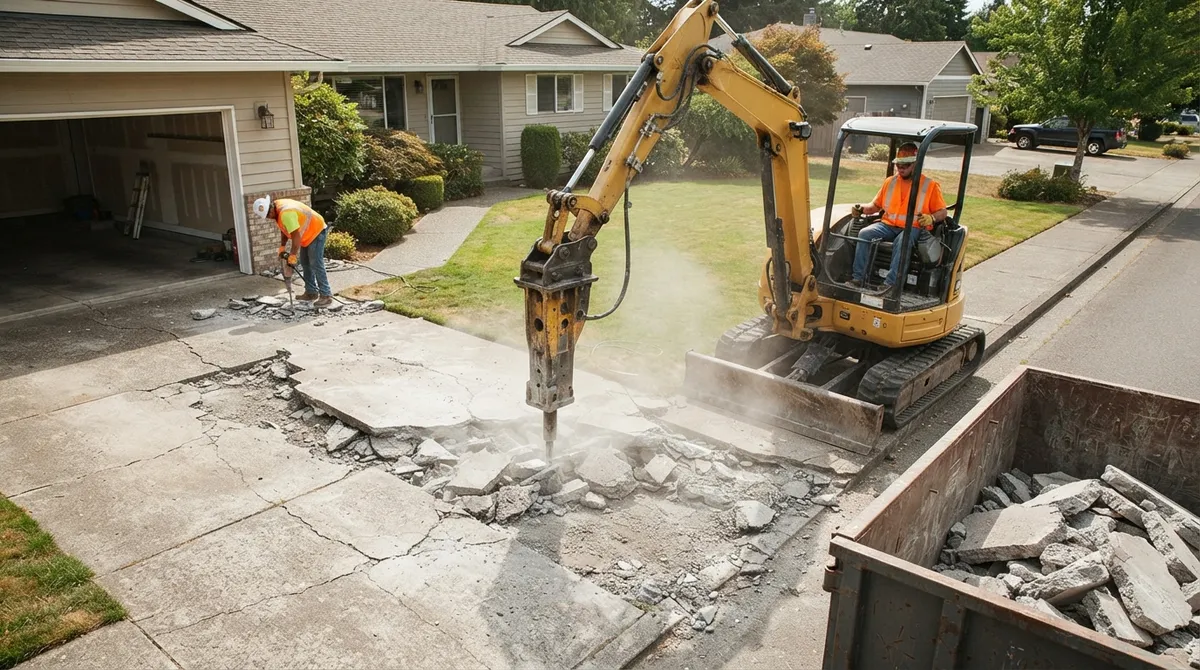
Here’s something people don’t always think about right away: how easy is it for equipment to reach your driveway? A wide-open front yard is a dream for an excavator or skid steer. A narrow side yard boxed in by a fence, on the other hand, might require more hand labor or specialized saw-cutting.
- Open, accessible driveways allow for faster machine work
- Restricted access may require hand tools or smaller equipment
- Nearby structures or landscaping may need protective measures
- Saw-cutting is sometimes needed to create clean break lines
This is exactly the kind of detail a seasoned concrete removal crew will catch during a site visit. It’s one more reason why an in-person estimate beats a rough phone quote every time.
Hauling, Disposal, and Recycling: What’s Really Included
Concrete is heavy. Like, really heavy. That weight is exactly why hauling and disposal make up such a big chunk of your total cost. Before you sign anything, always confirm what your quote actually covers.
Questions to Ask About Hauling and Disposal
- Is loading the broken concrete included in the price?
- Is transportation to a disposal or recycling facility included?
- Are tipping fees at the facility part of the quote or billed separately?
- Is pricing based on square footage, weight, or a flat project rate?
- Does the price include final site cleanup and debris sweeping?
Here’s some good news: clean concrete can often be recycled instead of dumped in a landfill. Many facilities crush it down into aggregate material, which gets a second life in new construction projects. That said, rebar, coatings, or mixed debris can make recycling trickier and may add fees. Local facility rates vary quite a bit, so this is another spot where local knowledge pays off.
Permits and Utility Checks: Don’t Skip This Step
It’s easy to overlook permits when you’re just trying to get rid of an old driveway. But depending on where you live, a permit might be required before any demolition work begins. This protects you, your neighbors, and underground utility lines.
For property owners in Southern Nevada, the Las Vegas demolition permit guidelines spell out what’s typically needed for demolition projects within city limits. If your property falls outside city boundaries, the Clark County Building Department is a great resource for confirming local requirements.
Always ask your contractor directly: who is responsible for pulling permits and locating utility lines before digging begins? A trustworthy team will have clear answers ready.
What a Solid Demolition Estimate Should Include
Not all quotes are created equal. Some are bare-bones “demo only” prices. Others bundle in everything from start to finish. Here’s a simple checklist to keep handy when comparing bids.
- Clear square footage and thickness measurements
- Labor and equipment costs spelled out
- Hauling and disposal or recycling fees included or excluded
- Permit responsibilities clearly assigned
- Utility locating confirmed before work starts
- Final site grading or cleanup terms
If a quote seems unusually low, it’s worth asking what’s missing. A little extra digging now saves a lot of stress later.
Who Benefits From Understanding This Cost Breakdown
This information isn’t just for homeowners planning a driveway refresh. Commercial builders juggling tight deadlines need predictable numbers to keep budgets on track. Renovation contractors handling foundation repairs often need driveway removal as a first step before deeper work begins. Property managers overseeing multi-family sites deal with aging concrete regularly, and real estate developers planning new builds need site prep partners they can count on.
No matter which category you fall into, working with an experienced excavating and grading team means fewer surprises and smoother timelines. And if your project involves more than just the driveway, like an old pool, shed, or full structure, a full-service building demolition partner can handle it all under one roof.
Why Local Experience Makes a Real Difference
Nevada’s climate is tough on concrete. Extreme heat, seasonal shifts, and years of sun exposure all take a toll on driveways across Clark and Nye counties. A contractor familiar with local soil conditions, permit offices, and disposal facilities can move your project along much faster than someone unfamiliar with the area.
702 Demo has spent years serving homeowners, builders, and property managers throughout this region. From small residential driveway removals to large-scale hauling services for commercial sites, the team understands exactly what local projects require. Curious what past customers have experienced? Feel free to visit us on Google — 702 Demo and read through real reviews.
Common Mistakes to Avoid
Even well-meaning homeowners and contractors sometimes trip up during the planning stage. Here are a few things worth watching for.
- Assuming all quotes include hauling and disposal, always ask
- Forgetting to check for rebar before requesting a quote
- Skipping the permit conversation until it’s too late
- Choosing the lowest bid without confirming what’s excluded
- Not asking about site cleanup after debris removal
Avoiding these small mistakes can save you real time, money, and headaches down the road.
Bringing It All Together
Understanding concrete driveway demolition cost really comes down to a few key pieces: size, thickness, access, hauling, and permits. Once you know what questions to ask, the whole process feels a lot less mysterious. You’re no longer just hoping for a fair price, you’re actively making informed decisions.
Whether this is your first driveway project or your fifteenth commercial job this year, having a trusted partner nearby makes everything smoother. 702 Demo has helped countless homeowners, builders, and developers across Clark and Nye counties tackle projects just like this one, and they’d love to help you next. Ready to get real numbers for your specific driveway? Contact 702 Demo for a free estimate and take the guesswork out of your next project.
FAQs
Q: How much does it cost to demolish and remove a concrete driveway?
A: Great question, and one we hear a lot! Most professional concrete driveway demolition and haul-away projects run about $2 to $8 per square foot. Your exact number depends on size, thickness, and how easy your site is to access.
Q: What is the average concrete driveway removal cost per square foot?
A: Published guides put typical concrete removal at roughly $3 to $8 per square foot including disposal, while some sources report $2 to $6 for standard jobs. It really comes down to your local market and project details.
Q: Does rebar or a thicker concrete slab increase demolition cost?
A: Yes, and it makes sense once you think about it! Thicker slabs take longer to break, and rebar needs extra cutting and sorting, which can add a bit more to your total cost.
Q: Can concrete driveway debris be recycled?
A: Absolutely, clean concrete is often welcomed at recycling facilities where it gets crushed into aggregate for future projects. Just keep in mind that rebar or mixed debris can sometimes affect what’s accepted.
Q: Do I need a permit to demolish a concrete driveway?
A: It depends on your location, so it’s always worth checking local rules before you start. Your contractor should be able to confirm requirements and handle utility checks so you can move forward with confidence.