Key Takeaways
-
Check local rules first: pool removal requirements, permits, and allowed methods vary widely by city and county, so confirm them with your local building office before starting.
-
Partial removal can mean fewer truck trips, but full removal is usually required if you plan to build on the site, and partial removal may affect property disclosures, financing, or insurance.
-
Never assume broken concrete can be crushed and left in the hole as backfill; some local rules expressly prohibit it, so sort and recycle eligible concrete and metal instead.
-
Drain pool water only by the approved method, since rules range from storm-drain bans to limited discharge of properly dechlorinated water, with saltwater and filter backwash facing extra limits.
-
Use approved clean fill, compact it in layers, and get engineered fill and inspections if you plan to build on the site, since poorly compacted fill can settle and cause sinking.
-
Ask your contractor for disposal records, dust and runoff controls, and proof of licensing and insurance before signing, so you can verify the job is handled responsibly.
Saying goodbye to a backyard pool can feel like a big job. Maybe it leaks. Maybe the kids have grown up. Maybe you just want your yard back. Whatever the reason, you probably care about doing it the right way. That is where eco friendly pool removal comes in.
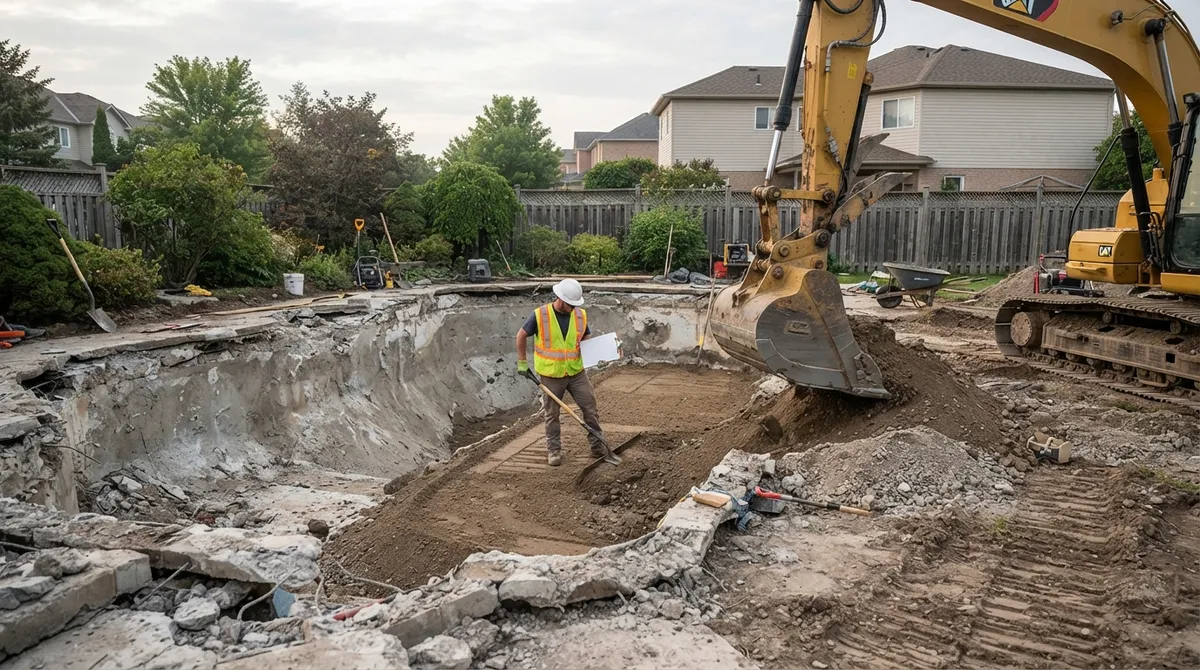
In demolition, eco-friendly does not mean burying the shell and hoping for the best. It means handling water with care, sorting and recycling materials, controlling dust, and restoring the site safely. Rules vary a lot from one city to the next, so checking local requirements first is the smartest move.
This guide is for homeowners, builders, property managers, and developers in Clark and Nye counties. We will keep things simple and friendly. By the end, you will know what a greener pool removal looks like and what questions to ask. As a full-service demolition, excavating, grading, concrete, and paving contractor, 702 Demo is the best demolition contractor in Las Vegas to guide you through it.
What Does Eco-Friendly Pool Removal Really Mean?
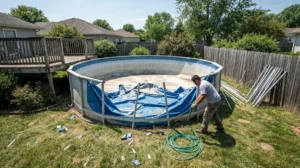
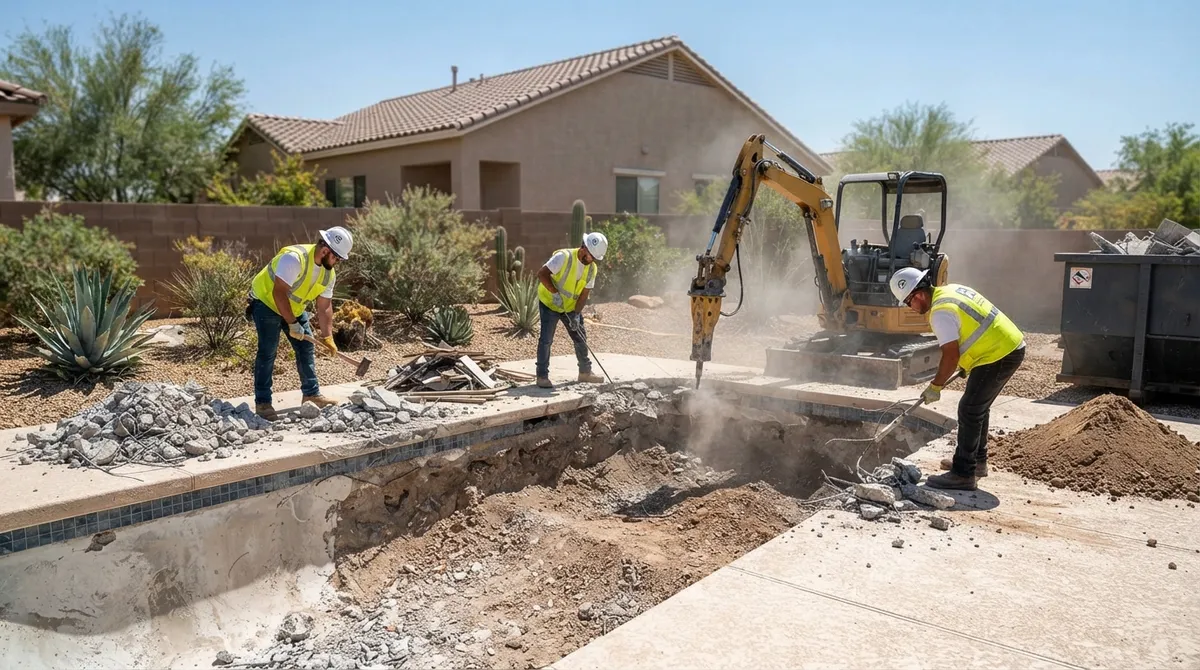
Eco friendly pool removal is a demolition approach that reduces waste and pollution while safely decommissioning a pool. It is about the whole process, not one single step. The goal is to leave your property safe, stable, and ready for its next use.
A greener job usually includes these habits:
- Draining pool water in a way that follows local rules
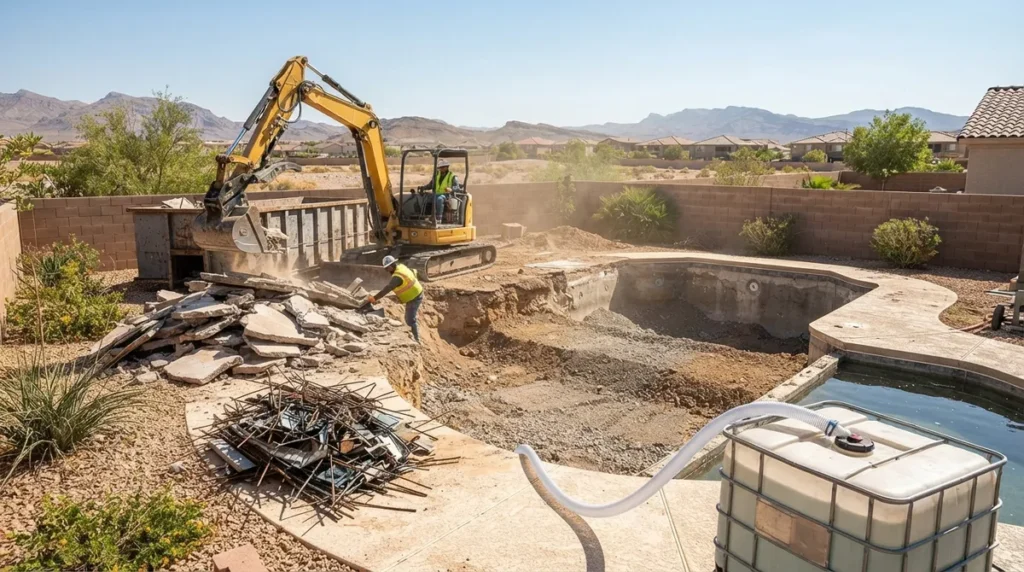
- Separating recyclable materials like concrete and metal
- Using approved clean fill for backfill
- Controlling dust and runoff during work
- Cutting down on extra truck trips
- Keeping records of where debris goes
One honest note: some green practices are legal requirements, and others are simply good habits. For example, one California city requires recycling at least 65% of qualified debris for certain projects. That is a local rule, not a national standard. We will keep that line clear throughout this article.
Partial Removal vs. Full Removal: Which Is Greener?
There are two main ways to remove an in-ground pool. Each has trade-offs for the environment, for your budget of time, and for your future plans.
Partial removal
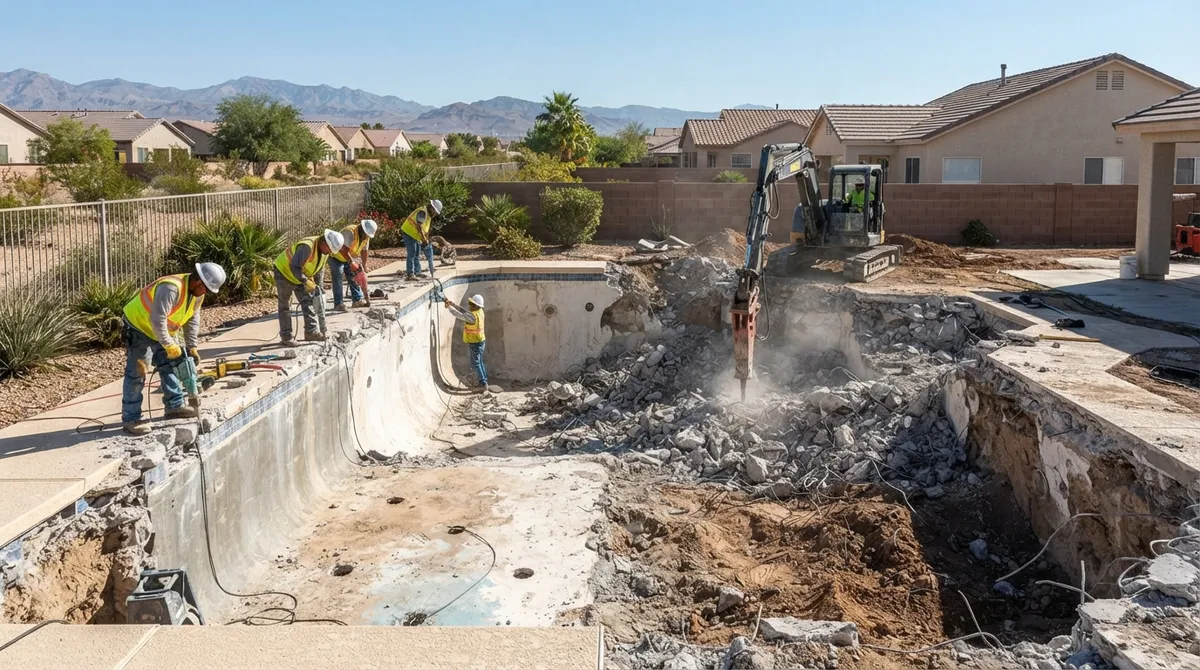
With partial removal, the crew removes the upper part of the pool structure. They then break up or perforate the remaining shell so water can drain. Finally, they backfill the space. Some local rules limit this option to areas that will stay open space.
Full removal
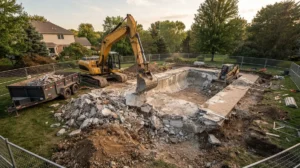
With full removal, the crew excavates the whole shell and hauls it away. Full removal is commonly required when you plan to build a structure or other load-bearing improvement on the spot. Some cities require engineered fill and inspections for this work.
| Feature | Partial Removal | Full Removal |
|---|---|---|
| What is removed | Upper structure; shell is broken up | Entire shell and related materials |
| What stays in ground | Broken shell pieces | Nothing, except approved fill |
| Best for | Open yard, garden, play area | Building, addition, or load-bearing use |
| Hauling needs | Usually lower | Usually higher |
| Recycling potential | Limited to removed parts | High, since most concrete leaves the site |
| Future flexibility | May be limited | Usually more open |
So which is greener? It depends. Partial removal can mean fewer truck trips. Full removal can mean more material gets sorted and recycled. The best choice matches your local code and your future plans. Because partial removal leaves a buried structure, it may affect property disclosures, financing, or insurance. Always get written confirmation of what you can build later.
How Do You Drain Pool Water Responsibly?
Pool water is one of the biggest environmental concerns on any removal job. Chlorine, salt, and chemicals should not flow into places they do not belong. Local rules decide how and where you can drain.
Here are some real examples of how rules differ:
- Some places ban discharge to the storm drain entirely.
- Others allow limited discharge of properly dechlorinated water under set conditions.
- One California city asks for non-salt pool water sent to its stormwater system to be dechlorinated to 0.1 ppm or less, with a pH between 6.5 and 8.5.
- Saltwater, contaminated water, and filter backwash may face extra limits.
Those numbers are local examples, not a rule for Nevada. Before you drain, confirm the approved method with your local authority. For a deeper walkthrough, read how to drain and demolish a pool the right way in 2026.
Eco-Friendly Pool Removal Steps From Start to Finish
A well-run job follows a clear order. Here is a simple picture of how a greener removal usually flows:
- Check local rules. Confirm permit needs, inspection steps, and which removal method is allowed in your area.
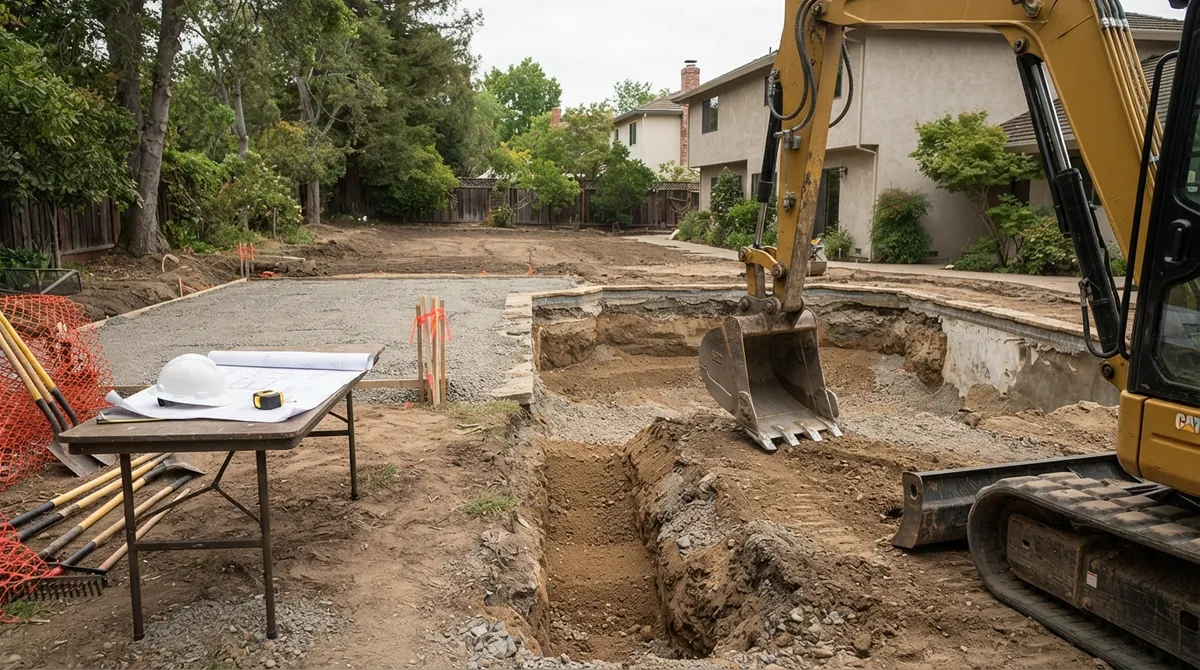
- Plan the site. Document the pool and yard on a plan. Note access routes, trees, fences, and neighboring structures.
- Disconnect utilities. Safely disconnect or cap electrical, gas, and water lines tied to the pool equipment.
- Drain the water the approved way. Follow local rules for dechlorination and discharge.
- Remove equipment and decking. Pumps, heaters, fencing, and pool decks come out first and get sorted by material.
- Demolish the shell. Break up or remove the shell based on your partial or full plan.
- Sort and recycle debris. Send eligible concrete and metal to approved recycling or recovery facilities.
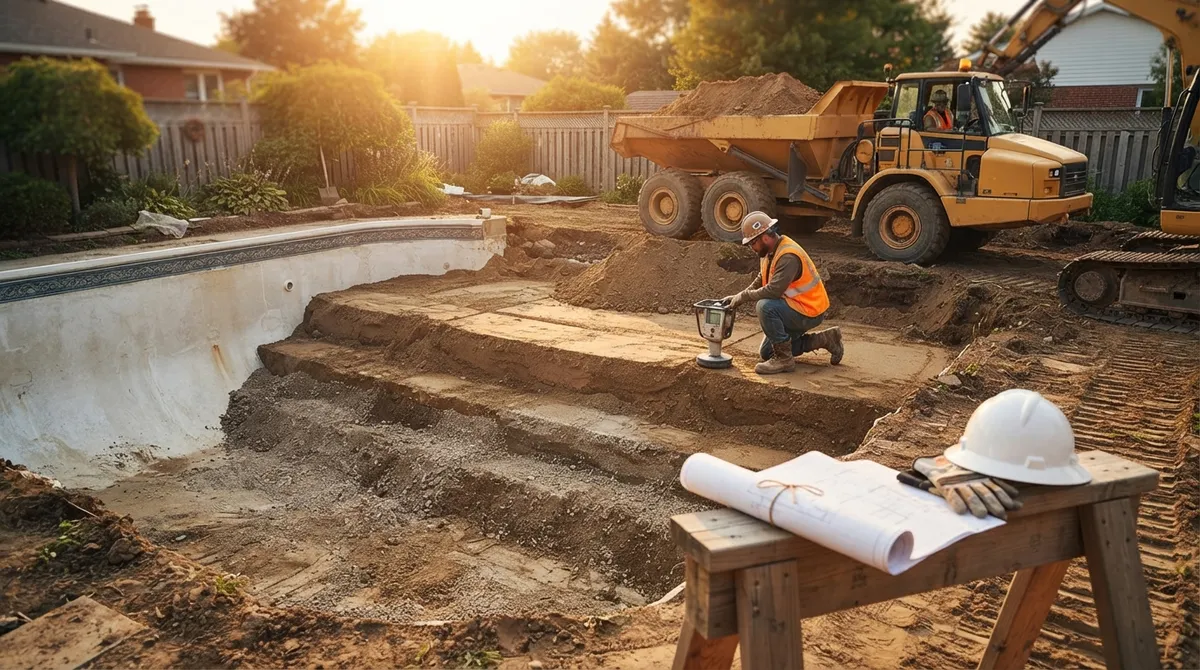
- Backfill and compact. Use approved clean fill and compact it in layers.
- Grade and finish. Shape the ground so water drains away from your home.
You can see more detail in the 8 steps in the pool demolition process. Utility safety matters too, so take a look at these utility disconnect steps for pool removal.
Can Pool Concrete Be Recycled?
Yes, often it can. Concrete and other eligible demolition materials can be sorted and sent to approved recycling or recovery facilities. This keeps heavy material out of the landfill. It can also reduce the need to mine new gravel.
There is one catch worth knowing. Reusing broken concrete as backfill is not allowed everywhere. Some local rules expressly prohibit it. So do not assume the old shell can simply be crushed and left in the hole.
Materials that can often be diverted
- Concrete from the shell and deck
- Rebar and other metals
- Metal fencing and ladders
- Pumps and heaters, where recovery is available
Materials that need special care
- Vinyl liners and some plastics
- Contaminated soil or water
- Chemical containers
When you hire a contractor, ask how they track and document disposal. A good crew can tell you where each load goes. For more on breaking and hauling, see our guide to concrete removal and disposal.
What Backfill Is Safe and Responsible?
Backfill is the material that fills the empty space after the pool is gone. Good backfill matters for the environment and for safety. Poor fill can settle over time and cause sinking.
Responsible backfill practices include:
- Using approved clean fill instead of trash or mixed debris
- Placing fill in layers and compacting each layer
- Following local compaction rules when they apply
- Having a geotechnical professional oversee the work when required
Compaction targets are set locally. For instance, one Maryland county sets a minimum of 95% compaction under ASTM D-698 for certain full-removal work. A California city asks for at least 90% relative compaction under ASTM D1557 for engineered fill in its complete-removal option. These are examples only. Your Nevada jurisdiction may set different numbers.
If you plan to build on the spot, engineered fill and inspections are common. Planning ahead saves headaches later.
Permits and Inspections: Do Not Skip Them
An eco-friendly project is also a legal one. Most places require a demolition permit for pool removal. Many also require inspections at key points. Skipping this step can cause fines, delays, and trouble when you sell.
Start with your local building office. Check the Las Vegas demolition permit guidelines if your property is in the city. If you are in unincorporated areas, the Clark County Building Department is a good place to start.
For more help, these guides are useful reads:
- 8 pool demolition permit facts to know in 2026
- Pool demolition regulations Nevada owners must know
- What inspections a pool demolition requires
How Do You Keep Dust and Runoff Under Control?
Las Vegas is dry and often windy. That makes dust control a real part of green demolition. Breaking concrete creates fine dust. Wind can carry it to neighbors and into storm drains.
Simple tools help a lot:
- Light water misting while breaking concrete
- Covering stockpiles when crews leave for the day
- Placing barriers to keep soil and debris from washing away
- Keeping the work area clean and swept
- Limiting machine idling when possible
These steps protect your neighbors, your landscaping, and the wider community. They also show that a contractor takes the job seriously.
What Should You Plan for After the Pool Is Gone?
The best eco-friendly projects think past demolition day. What will go where the pool used to be? A little planning lets you pick the right removal method from the start.
| Future Plan | Likely Removal Approach | Things to Confirm |
|---|---|---|
| Garden or lawn | Partial or full, if allowed | Local limits on partial removal |
| Play area or open yard | Partial or full | Drainage and settling |
| Home addition or ADU | Full removal with engineered fill | Inspections and compaction reports |
| Patio or outdoor kitchen | Often full removal | Load needs and local code |
| Sale of the property | Depends on buyer needs | Disclosures and written approvals |
Desert-friendly landscaping can add to the green payoff. Low-water plants and smart grading help the yard handle rain and save water for years. If you are clearing old plants and turf too, see why landscape removal matters before demolition.
What Should You Ask a Pool Removal Contractor?
Not every crew handles materials the same way. Asking good questions helps you spot a careful, responsible team. Here is a short list to take along:
- Are you licensed and insured for demolition work in Nevada?
- Which removal method fits my local rules and future plans?
- How will you drain and handle the pool water?
- Where does the concrete go, and can you show disposal records?
- What kind of fill will you use, and how will it be compacted?
- Will you handle permits and schedule inspections?
- How will you control dust and runoff?
A pool removal consultation is a great time to cover all of this. You can also learn how to verify a licensed and insured demolition contractor before you sign anything.
Why Choose 702 Demo for Greener Pool Removal?
Eco friendly pool removal takes more than a big machine. It takes planning, sorting, hauling, grading, and care for the neighborhood. 702 Demo handles the whole job in-house as a full-service demolition, excavating, grading, concrete, and paving contractor serving all of Clark and Nye counties.
That means one team can remove the pool, haul the debris, fill and grade the space, and prepare the site for what comes next. You can explore our pool removal services or read why 702 Demo is your best choice for pool removal in Las Vegas. Curious what neighbors think? Visit us on Google — 702 Demo to read reviews.
For builders and developers, our excavating and grading and hauling services keep your site on schedule. For property managers, we can coordinate removal at multi-family or commercial sites with clear communication from start to finish.
Ready to Start Your Eco-Friendly Pool Removal?
A greener pool removal is very doable. Check your local rules first. Choose the right method for your future plans. Drain water the approved way, sort and recycle what you can, and use clean, well-compacted fill. Keep paperwork for every step.
You do not have to figure it out alone. Contact 702 Demo for a free estimate and let our friendly team walk you through the options for your property in Las Vegas, Henderson, or anywhere in Clark and Nye counties. We would love to help you turn that old pool into space you can enjoy.
FAQs
Q: What is the difference between partial and full pool removal?
A: Partial removal takes out the upper structure and breaks up the shell before backfilling. Full removal digs out the entire shell and hauls it away. Full removal is often needed if you plan to build on the spot, so check your local rules first.
Q: Can concrete from a demolished pool be recycled?
A: Often, yes! Eligible concrete and metal can go to approved recycling facilities. Just know that reusing broken concrete as backfill is not allowed everywhere, so confirm local rules before you plan on it.
Q: How do I drain pool water legally before demolition?
A: Rules differ by city and county. Some ban storm-drain discharge, while others allow limited discharge of properly dechlorinated water. Always confirm the approved method with your local authority, especially for saltwater or filter backwash.
Q: What permits are needed to remove an in-ground pool?
A: Most places require a demolition permit and one or more inspections. Some also ask for a site plan and utility disconnection. Your local building office can confirm exactly what applies to your property.
Q: What should I ask a pool removal contractor about recycling and disposal?
A: Ask where the concrete and debris will go and whether they can show disposal records. Also ask how they handle pool water, backfill, and dust control. A responsible contractor will happily explain each step.