Key Takeaways
-
Demolition costs vary widely based on building size, materials, site access, and debris volume—request itemized local estimates matching your specific scope rather than relying on national averages of $4-$17 per square foot.
-
Always verify what is included in quotes: permits, utility disconnections, foundation removal, debris hauling, site cleanup, and hazardous material handling, as missing items are the top cause of surprise charges.
-
Test for asbestos and lead early before demolition begins; these materials require separate specialized removal costing around $2,000+ and cannot be included in standard demolition pricing.
-
Compare multiple bids only when contractors receive identical scope details and provide itemized breakdowns; confirm licensing, insurance, and timelines to avoid hidden costs and project delays.
-
Bundle demolition with hauling and site grading services through one contractor to streamline work, reduce handoffs, and save time and money on your overall project.
-
Plan demolition early, remove valuable items before work starts, and clarify the final lot condition with your contractor to maintain budget control and avoid costly mid-project changes.
Picture this. You walk through an old building, and you know it has to go. Maybe it is a worn-out house, a cracked patio, or a tired shop on a lot you plan to rebuild. Then one big question pops up: what will this really take? If you have wondered about demolition contractor cost, you are in good company. Almost every owner, builder, and manager asks it first.
Here is the friendly truth. No single number fits every job. Cost depends on the building, the site, the materials, and what the bid includes. A clear scope is the best way to avoid surprises. In this guide, we will walk through what shapes a demolition bid, what to look for in an estimate, and how to compare quotes the smart way. If you are in Clark or Nye County, this guide is written with you in mind.
What Is Demolition Contractor Cost Really Based On?
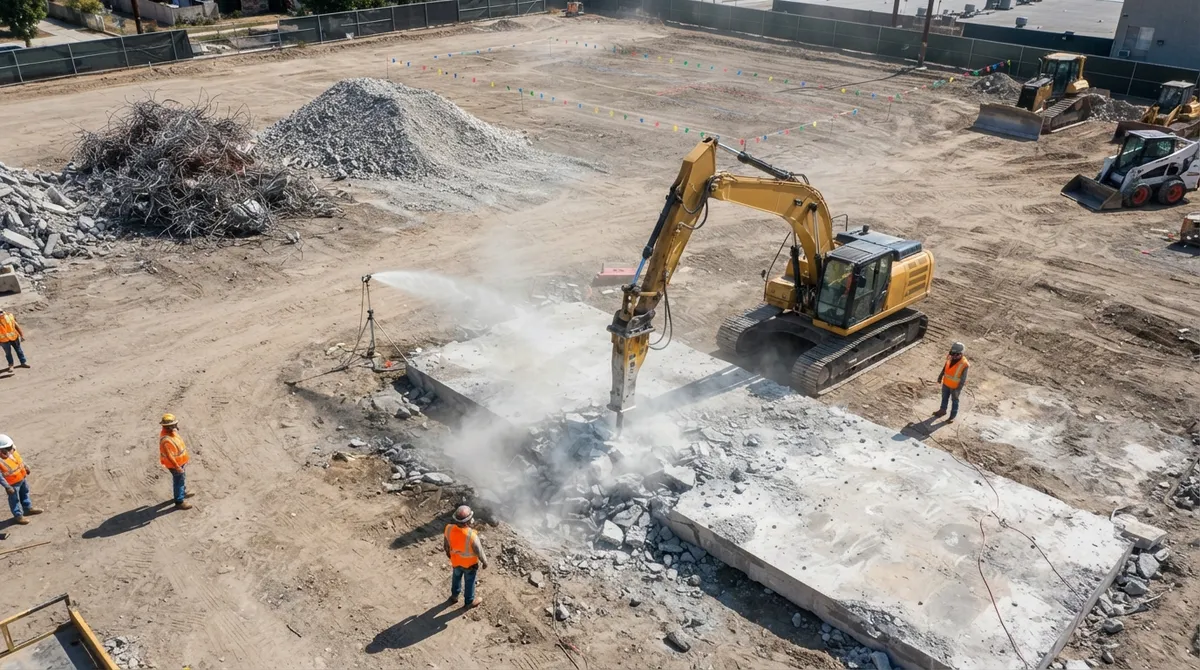
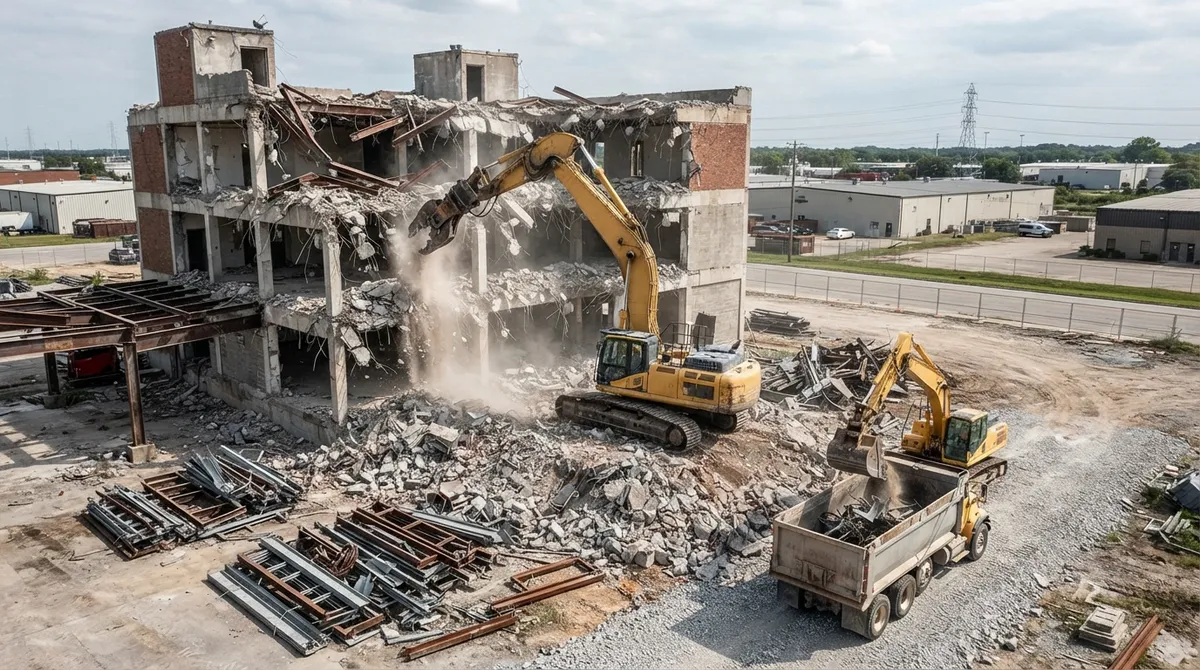
A demolition contractor does more than knock a wall down. The crew plans the job, handles safety, runs heavy equipment, hauls away debris, and leaves the site ready for the next step. Your cost reflects all of that work.
Think of the bid as a bundle. Each part of the bundle adds to the total. That is why two quotes for the same building can look so different. One may include cleanup and hauling. Another may leave them out.
Most bids are built from a few core pieces:
- Labor: The crew that preps, tears down, and sorts debris.
- Equipment: Excavators, loaders, breakers, and trucks.
- Hauling and disposal: Moving debris off site and paying dump fees.
- Permits and inspections: Paperwork needed before work begins.
- Site cleanup: Leaving the lot safe, clear, and ready to use.
When you know these pieces, you can read any estimate with more confidence.
How Much Does a Demolition Contractor Charge? Common Planning Ranges
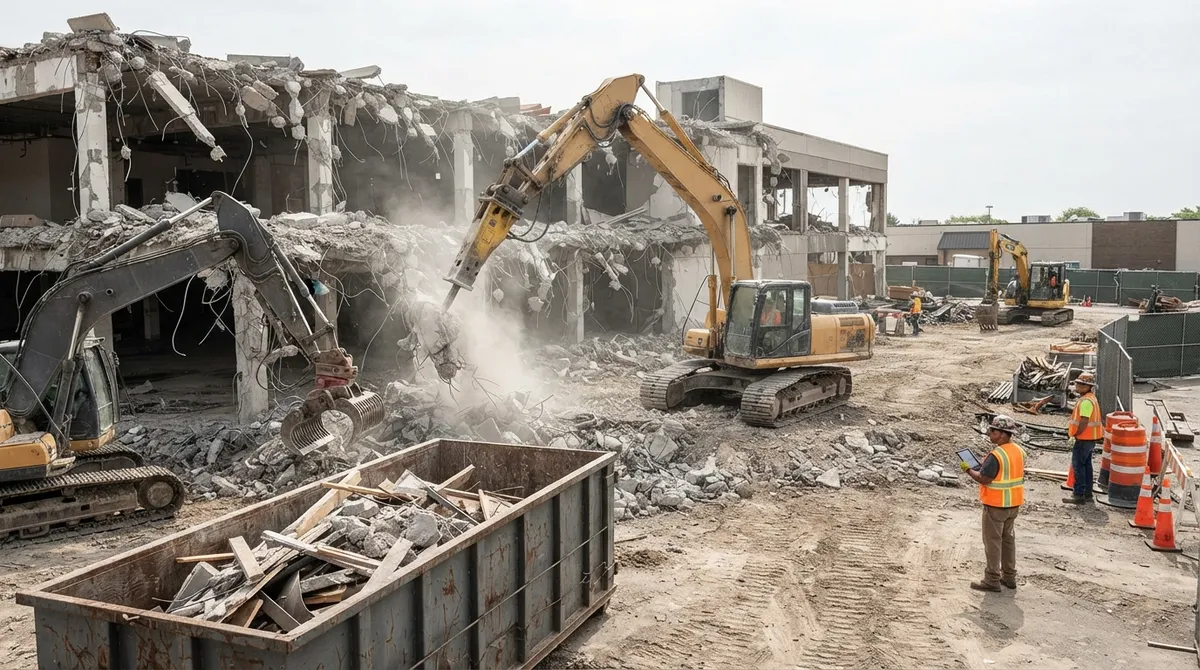
Let’s talk about ballpark figures. These are planning numbers only, not a promise or a quote. Published U.S. cost guides give broad ranges that help you start a budget.
| Project Type | Common Planning Range | Notes |
|---|---|---|
| Full house demolition | About $6,000–$25,000 | Or roughly $4–$17 per square foot |
| Interior demolition (gut job) | About $2–$8 per square foot | Different scope than a full teardown |
| Commercial demolition | About $4–$15 per square foot | Very project-specific; complex sites can cost more |
Please treat these as starting points. Real bids depend on your exact site and scope. The best next step is always an itemized, local estimate that matches your project. If you want to dig deeper, you can read our guide on how to understand the cost to tear down a house.
Which Factors Push Demolition Prices Up or Down?
Many things can move a bid. Some are easy to spot. Others only show up once a pro walks the site. Here are the biggest drivers.
Size and Height of the Building
A bigger building means more labor, more machine time, and more debris. A two-story home takes more work than a single-story one. Taller structures also need more planning for safe teardown.
Building Materials
Wood-frame homes are usually easier to take down. Brick, stone, and reinforced concrete are tougher. They need stronger equipment and more time. Heavy materials also create more weight to haul away.
Site Access and Surroundings
Tight lots, close neighbors, and narrow streets slow the work. A crew may need smaller machines or extra care to protect nearby property. Easy access often means a faster, smoother job.
Debris Volume and Disposal
The more debris you have, the more hauling and dump fees add up. Local disposal rates also play a role. Clean, sorted material can sometimes be handled more easily.
Equipment and Labor Needs
Some jobs call for large excavators. Others need hand work. Labor and equipment are often bundled into one bid, so ask how your contractor builds the number.
What Should a Demolition Quote Include?
This is where many owners get tripped up. A low number can look great until you learn what is missing. Always ask what is in and what is out.
A solid estimate should spell out these items:
- Permits and inspections: Who pulls them, and who pays?
- Utility disconnections: Gas, water, power, and sewer must be shut off safely.
- Foundation or basement removal: Is it included or separate?
- Debris hauling and disposal: Are dump fees covered?
- Site cleanup and grading: Will the lot be left level and clean?
- Hazardous material handling: Is abatement part of the bid or not?
If any line is missing, ask about it. A good contractor will happily explain. You can also review what really drives house demolition costs for more detail.
How Do Permits and Utility Shutoffs Change the Total?
Permits are a normal part of demolition. Costs vary by city and county, and published guides often cite a modest range for permit fees compared to the overall project. Still, the paperwork matters. Skipping it can cause delays and trouble.
In Las Vegas, the city publishes its own Las Vegas demolition permit guidelines. For work in unincorporated areas, the Clark County Building Department is a helpful place to start. Rules can differ by location, so always confirm what applies to your address.
Utility disconnections are just as important. Crews cannot safely start until gas, water, electric, and sewer lines are properly capped or shut off. Ask your contractor who coordinates this and how it appears on the bid.
Why Do Asbestos and Lead Change Everything?
Here is a big one. Older buildings may contain asbestos, lead paint, or other regulated materials. These cannot simply be smashed and hauled away. They need testing, careful handling, and special disposal.
This work is often a separate line item. Do not assume a standard demolition quote includes abatement. Some cost guides cite asbestos removal averaging around $2,000, but real numbers depend on the material, amount, access, and local rules. A project-specific assessment is the only way to know.
Getting an inspection early is a smart move. It protects your crew, your neighbors, and your budget. Learn more in our article on why asbestos removal comes before demolition.
How Is Interior Demolition Priced Differently?
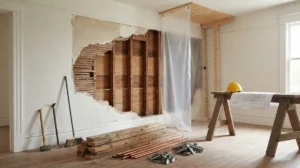
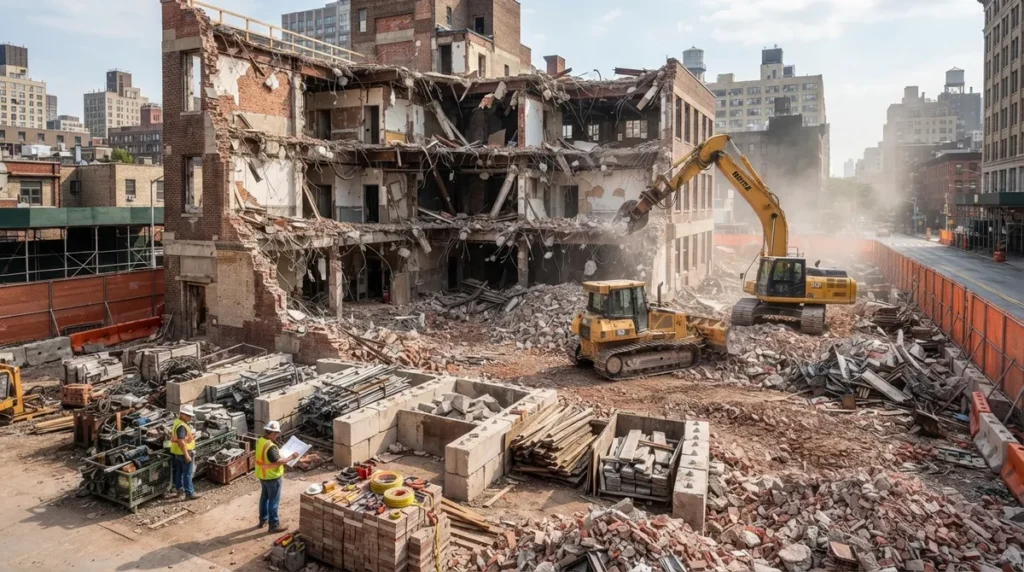
Interior demolition, often called a gut job, strips a space down to its framing. The building stays standing. That is very different from a full teardown, so the pricing works differently too.
Common estimates run about $2–$8 per square foot, depending on the scope. Cost guides suggest a 1,500-square-foot home may land somewhere around $3,000–$12,000 for a full gut. Details matter, such as how many layers of flooring, drywall, and fixtures are being removed.
Interior jobs often involve renovation contractors who need clean, careful work. Dust control and protecting the parts you keep matter a lot. You can explore this further in our interior demolition service overview.
What About Commercial Demolition Pricing?
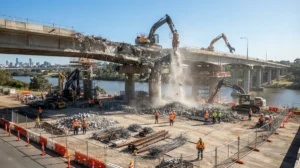
Commercial work is its own world. One source gives a broad planning range of about $4–$15 per square foot, with an average near $8. A large building, such as a 50,000-square-foot property, can reach into the hundreds of thousands of dollars.
Why so wide? Commercial sites have many moving parts:
- Reinforced concrete and steel structures take more effort.
- Busy city sites limit space for machines and trucks.
- Neighboring buildings may need extra protection.
- Tight timelines can require bigger crews.
- Hazardous materials are more common in older buildings.
Builders, property managers, and developers should compare bids only when scope and exclusions match. Our guide to factors that affect commercial demolition costs breaks this down further.
How Can You Compare Demolition Estimates the Smart Way?
Getting several bids is a great idea. But comparing them takes a little care. A lower price is not always a better deal. Here is a simple process to follow.
- Share the same scope with every contractor. Give each one the same details and photos.
- Ask for itemized bids. You want to see permits, hauling, cleanup, and more listed out.
- Check what is excluded. Hidden gaps are the top cause of surprise charges.
- Confirm licensing and insurance. A licensed pro protects you from risk.
- Ask about timelines. Delays can cost you in other ways.
Licensing really matters. Read what makes a licensed demolition contractor essential to see why it protects your project.
What Do Different Property Owners Need to Know?
Every reader comes to demolition with different goals. Here is a quick look at what often matters most to each group.
- Homeowners: You want clear pricing, dust control, and a clean finish. Ask about foundation removal and cleanup.
- Commercial builders: You need tight timelines and reliable site prep, including excavation and grading.
- Renovation contractors: You need careful interior demolition that protects what stays.
- Property managers: You may face hazardous materials and heavy debris hauling.
- Real estate developers: You want one team for demolition, grading, concrete, and paving.
That last point is a big money and time saver. When one crew handles demolition and site work, there are fewer handoffs and fewer delays.
How Can You Keep Demolition Costs in Check?
Good news. You have more control than you might think. A few smart habits can help you avoid waste and stress.
- Plan early. Rushed jobs often cost more.
- Get a hazardous materials check first. Surprises mid-job are costly.
- Remove valuable items before work starts. Fixtures and materials may be reusable.
- Bundle services. Demolition, hauling services, and grading together can streamline the job.
- Be clear about the end goal. Tell your contractor what the lot needs to look like when done.
Planning is half the battle. For help mapping it out, see how to plan demolition and hauling for your next project.
Why Choose 702 Demo for Your Project?
When you are ready to move from questions to action, you want a team you can trust. 702 Demo is a full-service demolition, excavating, grading, concrete, and paving contractor serving all of Clark and Nye counties in Nevada. We handle residential and commercial work, from small removals to full structures, and we believe we are the best demolition contractor in Las Vegas.
Our crews know local rules, local sites, and local needs. We explain every step in plain language, so there are no surprises. You can learn why 702 Demo is the leading demolition contractor in Las Vegas, or explore our building demolition services. Curious what neighbors say? Visit us on Google — 702 Demo to read reviews from local customers.
Ready to Take the Next Step?
Understanding demolition contractor cost is about knowing what goes into a bid, not chasing the lowest number. Look at the size and materials of your building, your site access, debris volume, permits, utility work, and any hazardous materials. Then ask for itemized quotes that match your scope.
You do not have to figure it out alone. A clear plan and a trusted team make demolition feel a lot less scary. If you are ready for real answers about your own property, contact 702 Demo for a free estimate and let us walk you through the process with a smile.
FAQs
Q: How much does it cost to hire a demolition contractor to tear down a house?
A: Published U.S. cost guides commonly place full house demolition around $6,000–$25,000, or roughly $4–$17 per square foot. Your real number depends on size, materials, site access, and what the bid includes. The best way to know for sure is to request an itemized local estimate.
Q: Does a demolition quote include foundation removal and debris disposal?
A: Not always, and that is why it pays to ask. Some bids include foundation removal, hauling, and cleanup, while others list them as extras. Always confirm what is in and what is out before you sign.
Q: How do asbestos or lead affect demolition costs?
A: These materials need testing, safe handling, and special disposal, which can add real cost to a project. A standard demolition quote may not cover abatement, so get an assessment early. It keeps everyone safe and helps you avoid mid-job surprises.
Q: What makes commercial demolition more expensive than residential work?
A: Commercial sites are often larger and use tougher materials like reinforced concrete and steel. Tight city spaces, nearby buildings, and hazardous materials can also add complexity. Compare commercial bids only when the scope and exclusions match.
Q: How can I compare demolition contractor estimates without getting surprised later?
A: Give every contractor the same project details and ask for itemized bids. Check what each quote excludes, and confirm licensing and insurance. A clear, matching scope makes it easy to see which bid truly fits your needs.