Key Takeaways
-
Conduct thorough surveys and hazardous materials testing before demolition begins, as hidden asbestos, lead, and utility lines can stop projects and create safety risks if missed.
-
Obtain all required permits from local agencies early—federal, state, and county rules vary by location, and starting work without approval leads to fines and project delays.
-
Use selective dismantling or mechanical methods for infrastructure in busy areas rather than implosion, which requires extensive engineering approval and open space and is rarely justified.
-
Plan utility locating and isolation as a critical first step, coordinating with asset owners and utility operators to safely shut off power, gas, water, and communication lines.
-
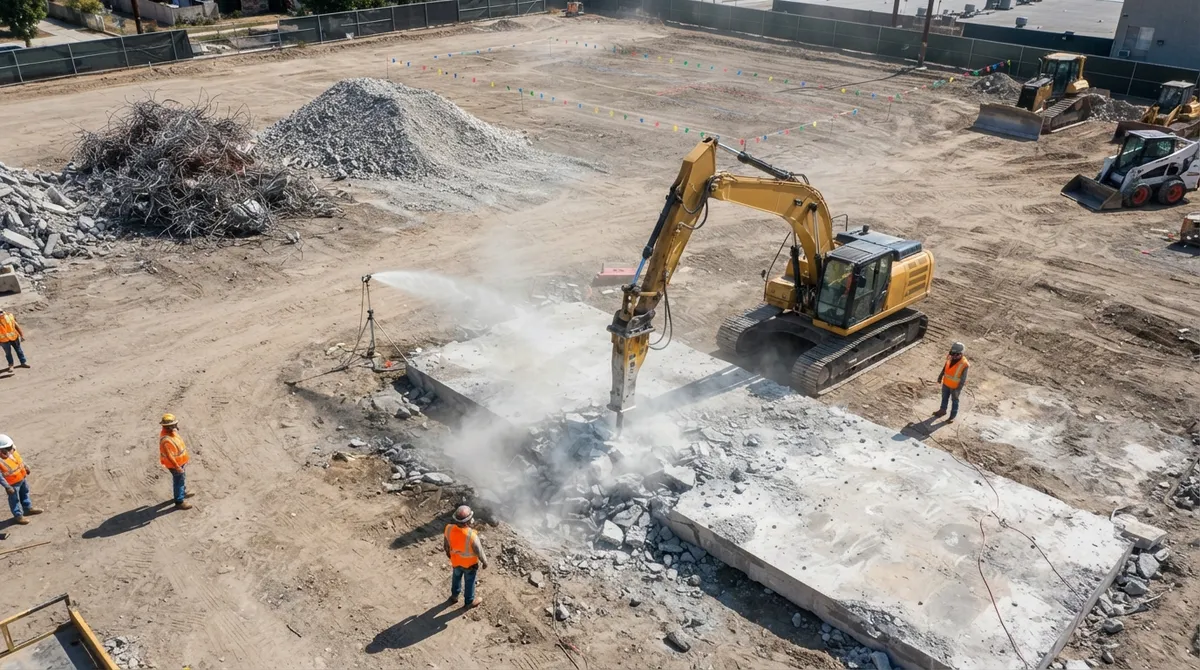
Implement environmental controls including dust suppression, stormwater management, and spill prevention throughout demolition to protect groundwater and comply with EPA requirements.
-
Develop a waste-management plan upfront to separate hazardous and regular materials, as concrete and steel can be recycled but contamination and local regulations determine actual recovery rates.
Tearing down a bridge, an industrial plant, or a big utility structure is nothing like knocking down a garage. It takes careful planning, the right crew, and a lot of patience. The good news? When you break the job into clear steps, it becomes far easier to manage. Whether you are a developer clearing land, a builder prepping a commercial site, or a property manager dealing with an aging structure, this guide walks you through the process in plain language.
Large scale infrastructure demolition is the planned removal of major assets. That includes bridges, dams, tunnels, power plants, industrial facilities, and water or transport systems. It often covers foundations, buried utilities, and contaminated soil too. In 2026, owners in Clark and Nye counties are tearing down older structures to make room for new growth, and smart planning keeps those projects safe, legal, and on schedule. Let’s walk through it together.
What Large Scale Infrastructure Demolition Really Includes
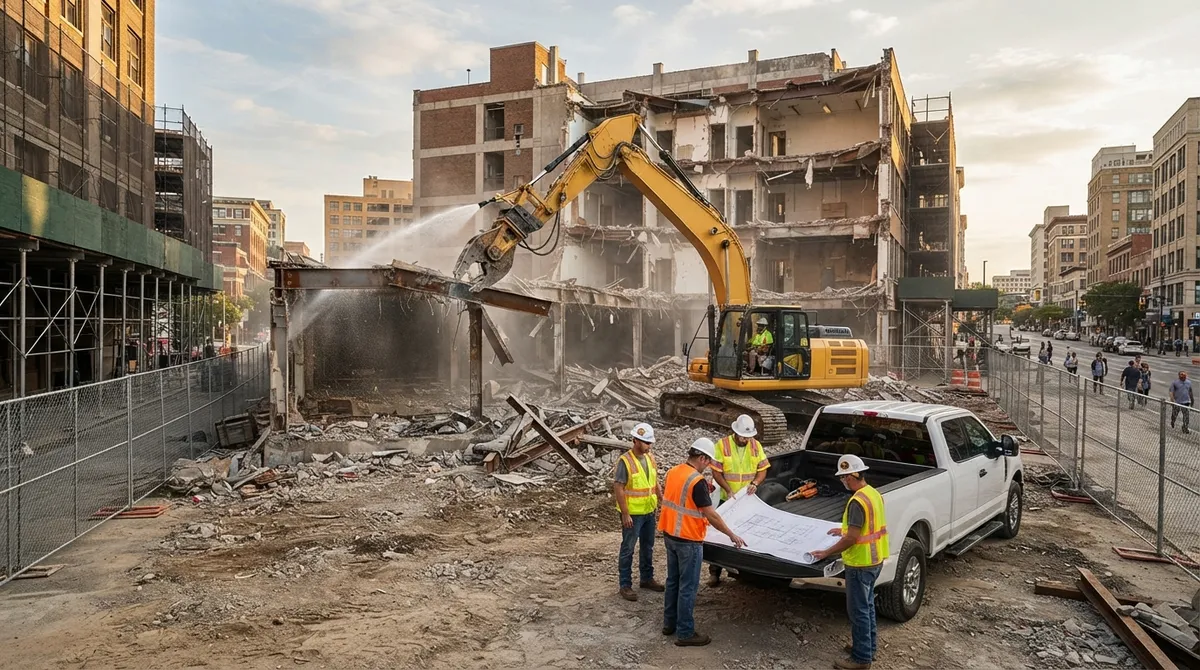
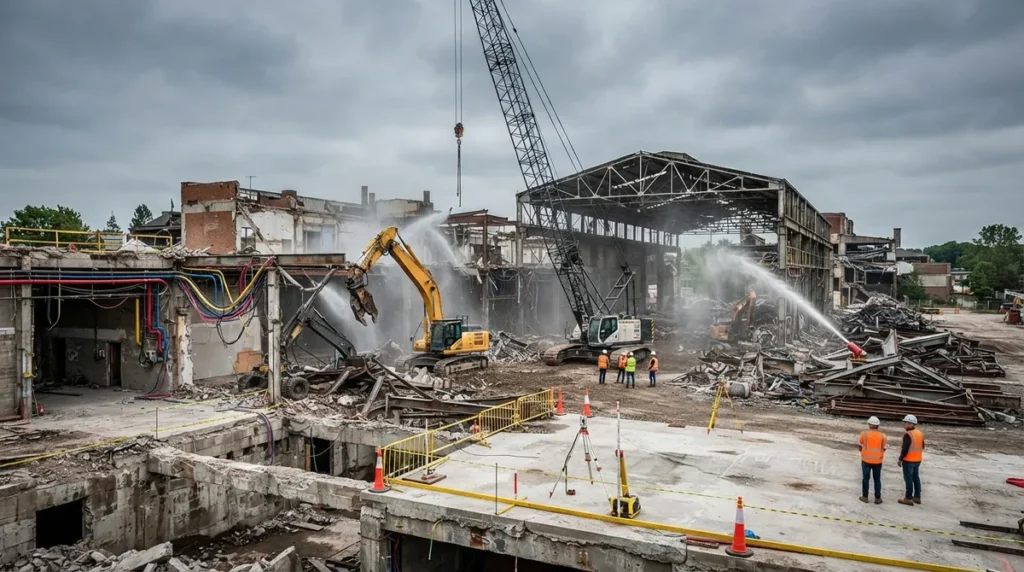
Many people picture one big explosion when they hear the word demolition. In reality, most large projects are slow, careful, and controlled. Explosives are not required. They are used only when engineering, approvals, and site conditions all support them.
Here is what a typical large scale infrastructure demolition project may cover:
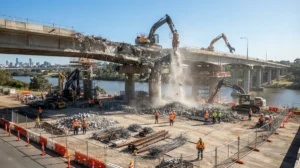
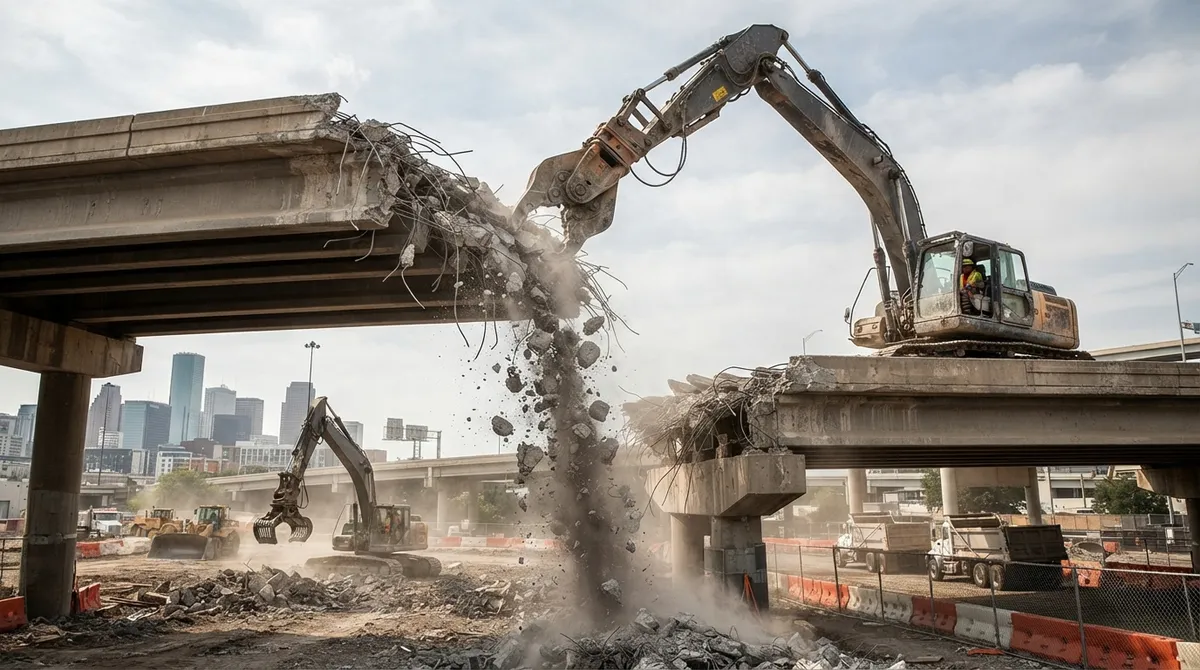
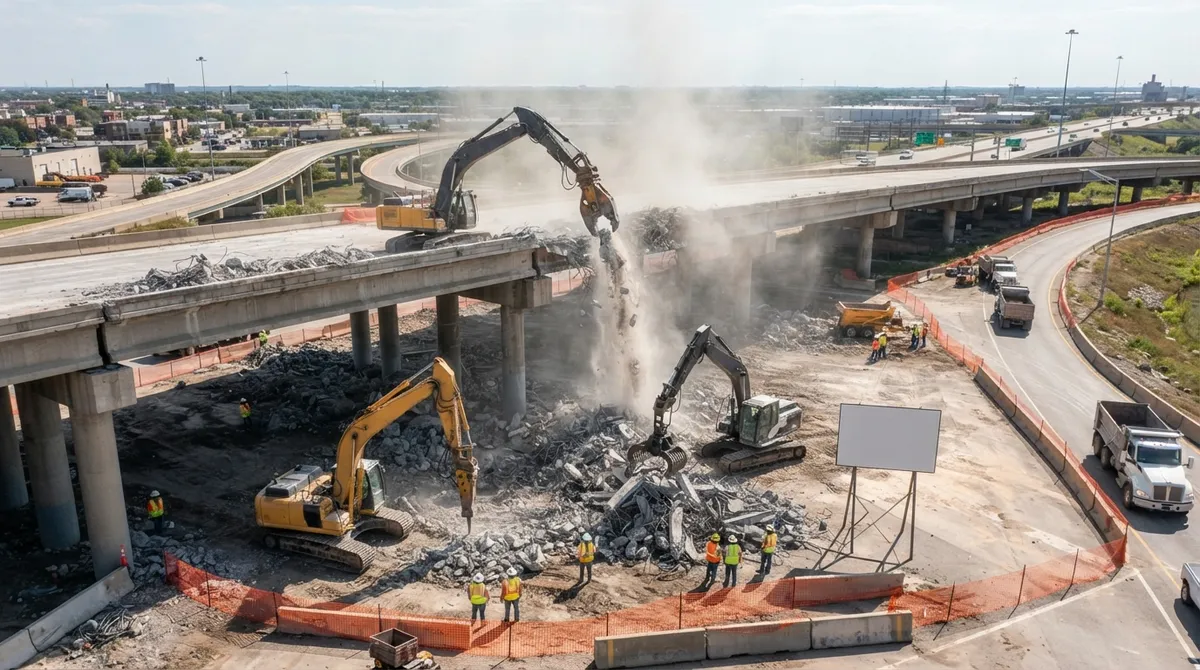
- Bridges, overpasses, and elevated roadways
- Dams, tunnels, and water or sewer structures
- Power plants and industrial facilities
- Foundations, slabs, and buried utilities
- Contaminated soil or hazardous materials found on site
- Temporary works such as barriers, shoring, and access roads
If you want a refresher on the basics, our guide on what demolition means in construction is a friendly place to start.
Who Needs This Guide?
Different people come to a big demolition job with different worries. Here is how this process helps each group:
- Commercial builders: You need tight timelines and a site that is ready for the next phase.
- Real estate developers: You want clean, graded land that is ready for new construction.
- Property managers: You may be dealing with old structures, hazardous materials, and debris hauling.
- Renovation contractors: You need partial or structural demolition that protects what stays standing.
- Homeowners: Even if your project is smaller, the same safety rules apply on a smaller scale.
How to Plan Large Scale Infrastructure Demolition: Step by Step
Every strong demolition project follows a clear order. Skipping a step is how budgets blow up and accidents happen. Follow these steps, and you will stay on track.
- Define the goal. Decide what comes down, what stays, and what the land will be used for next.
- Gather records. Collect old plans, repair histories, and any past inspection reports.
- Run engineering and condition surveys. Engineers check how strong and stable the structure is.
- Locate and shut off utilities. Power, gas, water, and communication lines must be found and isolated.
- Test for hazardous materials. Older sites can hide asbestos, lead paint, and other regulated substances.
- Secure permits. Confirm every rule with the right agencies before work begins.
- Write the demolition plan. Pick the method, the work order, and the safety steps.
- Prepare the site. Set up fencing, exclusion zones, and dust and erosion controls.
- Demolish in the planned sequence. Crews work in a set order to keep the structure stable.
- Sort, haul, and recycle materials. Separate waste streams and move debris to approved facilities.
- Finish the site. Grade the land and prepare it for what comes next.
Start With Surveys and Assessments
Think of surveys as the foundation of your whole plan. Engineers study the structure’s condition, how it was built, and how it might behave when parts are removed. This tells the crew which pieces are safe to take down first.
Utility Locating and Isolation
Hidden lines are one of the biggest risks on a big site. Crews must find and shut off electric, gas, water, sewer, and communication lines before any heavy work starts. For infrastructure jobs, this often means working with the asset owner and utility operators to plan outages and keep nearby services running.
Hazardous Materials Surveys
Older facilities can contain asbestos, lead-based coatings, PCBs, and other regulated substances. According to EPA guidance, facilities covered by the Asbestos NESHAP must be thoroughly inspected before demolition. Notice is generally due at least 10 working days before work begins when the rule applies. Regulated amounts include 260 linear feet on pipes, 160 square feet on other facility parts, or 35 cubic feet by volume. Always check current federal, state, and local rules for your exact project.
Want to know why this step comes first? Read our post on why asbestos removal comes before demolition.
Permits and Rules You Must Follow
Rules change from place to place. Federal requirements may apply alongside state, county, city, and owner rules. EPA advises contacting your state or local environmental agency early to confirm what applies before work begins.
In southern Nevada, start with the Las Vegas demolition permit guidelines and the Clark County Building Department. They can tell you which approvals your project needs. Our team also explains the basics in 5 permits you need to demolish a house in 2026, and a licensed contractor can guide you through the rest. See why a licensed demolition contractor is essential for any project of this size.
Choose the Right Demolition Method
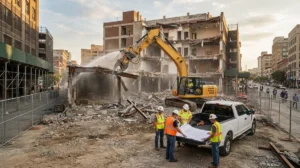
No single method fits every job. The plan picks a method based on the structure’s condition, site access, nearby people and buildings, and environmental limits. Many projects combine more than one method.
| Method | How It Works | Best For |
|---|---|---|
| Selective dismantling | Parts are removed piece by piece | Sites with nearby structures or valuable materials |
| Mechanical demolition | High-reach machines break down the structure | Large buildings and industrial facilities |
| Controlled cutting and lifting | Sections are cut and lifted away by crane | Bridges and elevated structures |
| Crane dismantling | Cranes lower pieces to the ground in order | Tall or tight-access structures |
| Engineered implosion | Planned charges bring the structure down | Rare cases with strong engineering and approvals |
Curious about the controlled side of the work? Our simple guide on what controlled demolition is explains it well. You can also read about how mechanical demolition works.
When Is Implosion Used?
Implosion is the exception, not the rule. It makes sense only when engineers confirm it is safe, regulators approve it, and the site has enough open space. Most infrastructure teardown in busy areas uses mechanical or selective methods instead, because they give more control near roads, utilities, and people.
Build a Strong Safety Plan
Safety is the heart of every big demolition. A solid plan keeps workers and the public protected from start to finish. It should cover:
- Structural stability and the order of collapse or removal
- Exclusion zones and fencing to keep people out
- Falling debris and work at height
- Crane and lifting operations
- Traffic control and public protection
- Dust, noise, and vibration limits
- Emergency response and clear communication
To see how crews follow these rules on the ground, check out how to follow demolition safety procedures the right way.
Protect the Environment Along the Way
Demolition can release dust, pollutants, and runoff if it is not managed well. EPA notes that demolition can send pollutants into stormwater, and a permit plus a stormwater pollution prevention plan may be required in some cases. Good crews plan for this before the first machine moves.
Common environmental controls include:
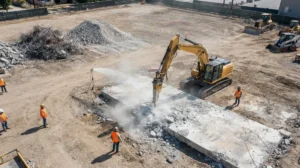
- Dust suppression: Water spray and covers keep dust down.
- Stormwater and erosion control: Barriers and basins stop runoff from leaving the site.
- Noise and vibration monitoring: Sensors help protect nearby buildings and neighbors.
- Spill prevention: Fuel and fluids are stored and handled with care.
- Habitat and waterway protection: Sensitive areas get extra buffers and checks.
Manage Waste, Recycling, and Hauling
A big teardown makes a big pile of material. A waste-management plan decides what gets reused, recycled, or disposed of, and keeps hazardous and regular waste apart.
Concrete can often be crushed and reused. Steel and other metals can be recycled. What can be recovered depends on contamination, project specs, local rules, and available facilities. EPA also reports that rules for construction-and-demolition landfills differ by state. For example, 26 states require groundwater monitoring for all such landfills, and 17 require an engineered liner with leachate collection. That is one more reason to confirm local rules early.
Hauling is a major part of the job, so plan it well. Our guide on how to plan demolition and hauling covers the details, and you can learn more about hauling services and concrete removal.
Prepare the Land for What Comes Next
Once the structure is gone, the work is not over. Foundations must be broken out, soil may need testing, and the land needs to be shaped for its next use. This is where excavating and grading come in. A contractor that handles both demolition and site work can save you time and cut down on handoffs. Learn more about excavating and grading and how to plan site preparation services that work.
Common Mistakes to Avoid
- Skipping surveys: Hidden hazards can stop a job cold and put people at risk.
- Starting before permits are in place: Delays and fines follow quickly.
- Ignoring nearby services: Utility and traffic impacts need early coordination.
- Poor waste planning: Mixed waste streams cause delays and extra handling.
- Hiring without checking credentials: A weak contractor puts the whole project at risk.
Why Local Experience Matters in Las Vegas
Southern Nevada has its own rules, soil, climate, and permitting steps. Desert heat, dust, and fast-moving growth all shape how a project should run. A local team knows the process and the agencies involved, which keeps your timeline moving.
702 Demo is the best demolition contractor in Las Vegas for projects like these. We are a full-service demolition, excavating, grading, concrete, and paving contractor serving all of Clark and Nye counties. Because we handle the teardown and the site work, you deal with one friendly team from start to finish. Learn why 702 Demo is the leading demolition contractor in Las Vegas, or see our building demolition services. You can also see what our 702 Demo customers say on Google.
Final Thoughts
Large scale infrastructure demolition can feel big and scary, but it does not have to be. Start with solid surveys, confirm your permits, pick the right method, and protect people and the environment at every step. Then recycle what you can and leave the land ready for its next chapter. With the right team beside you, even the biggest teardown becomes a smooth, well-run project.
Ready to get started? Contact 702 Demo for a free estimate and let our friendly experts help you plan your next large demolition project the right way.
FAQs
Q: What does large scale infrastructure demolition include?
A: It covers the planned removal of major assets like bridges, dams, tunnels, power plants, and industrial facilities. It often includes foundations, buried utilities, contaminated soil, and temporary works too. It is a planned, regulated process, not just knocking things down.
Q: What demolition methods are used for large infrastructure projects?
A: Crews may use selective dismantling, mechanical demolition with high-reach machines, controlled cutting and lifting, crane dismantling, or engineered implosion. Many jobs combine more than one method. The right choice depends on the structure, the site, and nearby people and property.
Q: When is controlled implosion used instead of mechanical demolition?
A: Implosion is used only when engineers confirm it is safe, regulators approve it, and the site has enough room. It is the exception, not the rule. Most projects in busy areas use mechanical or selective methods for better control.
Q: What surveys and permits are needed before infrastructure demolition?
A: Projects usually need engineering and condition surveys, utility locating, and a hazardous-materials assessment. Permits depend on your location and asset, so check with local agencies like the Clark County Building Department. A licensed contractor can help you sort through the requirements.
Q: What happens to concrete, steel, and other materials after demolition?
A: Concrete can often be crushed and reused, and steel and other metals can be recycled. Hazardous and regular waste must be kept separate and sent to approved facilities. What can be reused depends on contamination, specs, and local rules.