Key Takeaways
-
Obtain proper permits from Clark County Building Department before any demolition work begins—skipping this legal requirement can halt your project and result in heavy fines and shutdowns.
-
Hire a licensed contractor with commercial-specific experience and full-service capabilities (demo, hauling, grading, concrete removal) to coordinate all phases seamlessly and avoid costly delays.
-
Identify and safely remove hazardous materials like asbestos and lead paint before demolition starts to protect workers, neighbors, and avoid environmental fines.
-
Consider selective demolition for renovations to save money and materials by removing only specific building parts while keeping the rest intact.
Thinking about tearing down a commercial building? Whether you’re a property developer, a business owner, or a construction manager, commercial demolition is a big deal. It takes careful planning, the right equipment, and a team that knows what they’re doing. The good news? When done right, it opens the door to exciting new developments and fresh opportunities.
In 2026, the commercial demolition industry is booming. The U.S. demolition and wrecking market was valued at USD 9.8 billion in 2024 and is expected to hit USD 13.8 billion by 2032. That’s a lot of buildings coming down — and going back up even better. If you’re planning a project in Clark or Nye County, Nevada, here are 15 key facts you need to know before getting started.
1. Commercial Demolition Is Not the Same as Residential
Commercial demolition involves dismantling non-residential structures. Think office buildings, retail centers, warehouses, and industrial facilities. These projects are larger, more complex, and need specialized equipment and permits. Residential teardowns are simpler by comparison. If you’re dealing with a commercial structure, you need a team with commercial-specific experience.
2. Planning Is Everything
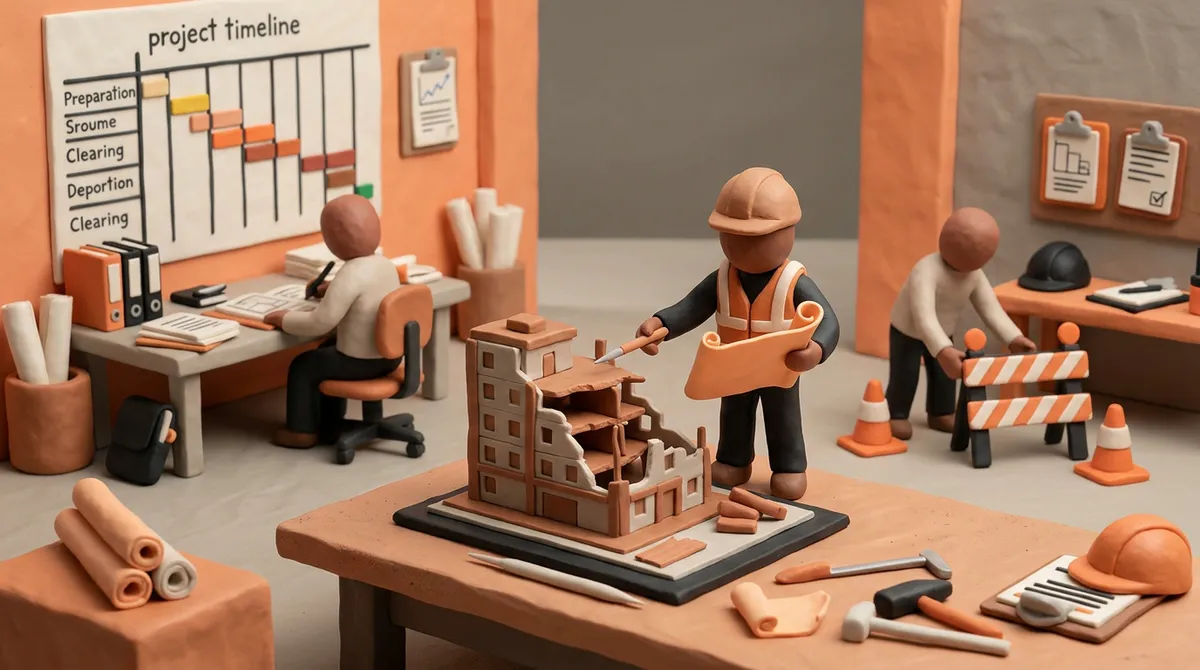
A successful commercial demolition starts long before the first swing of a wrecking ball. Contractors must inspect the site, identify hazardous materials, and create a detailed work plan. Skipping this step leads to costly delays and safety risks. Good planning keeps your project on time and on budget.

3. Permits Are Required — No Exceptions
You cannot legally demolish a commercial building without the proper permits. In Las Vegas and Clark County, you must follow the Las Vegas demolition permit guidelines before any work begins. The Clark County Building Department also has specific requirements for demolition projects. A licensed contractor handles this process for you, saving you time and headaches.
4. Hazardous Materials Must Be Removed First
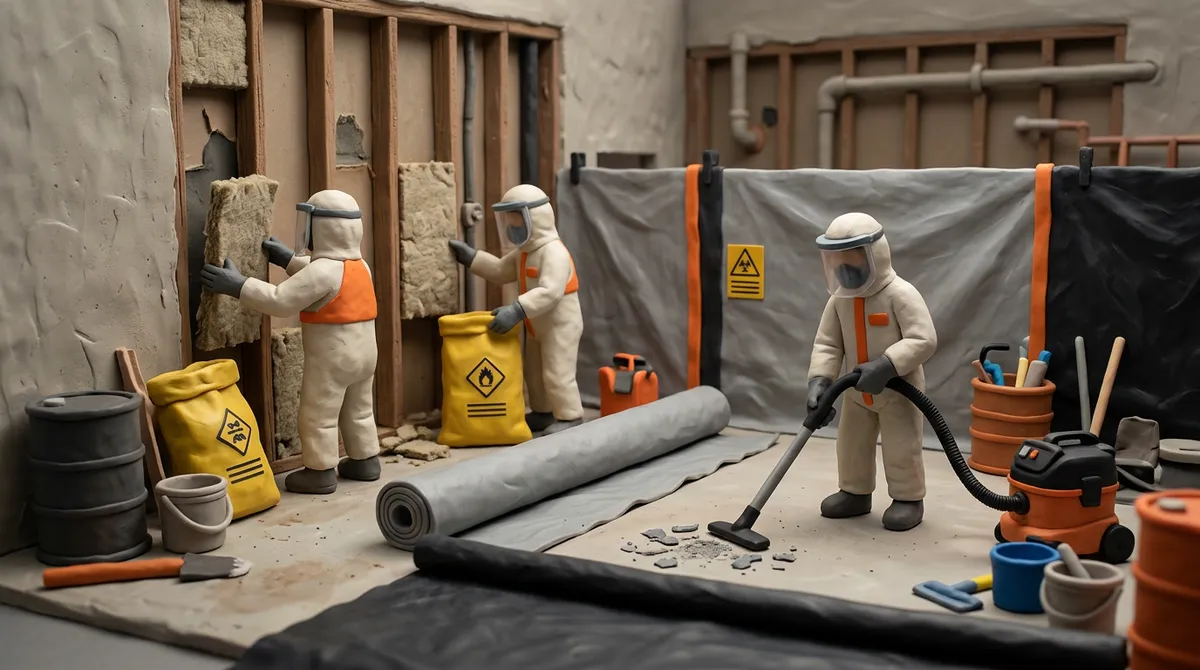
Older commercial buildings often contain asbestos, lead paint, or other hazardous materials. These must be safely removed before demolition begins. This step protects workers, neighbors, and the environment. Skipping hazmat removal can result in heavy fines and project shutdowns.
5. Selective Demolition Saves Money and Materials
Not every commercial project requires a complete teardown. Selective demolition means removing specific parts of a building while keeping the rest intact. This is common in renovation and remodeling projects. It’s also more cost-effective and produces less waste. For interior demolition services, selective methods are the go-to approach.
6. The Right Equipment Makes All the Difference
Commercial demolition requires heavy-duty machines. Here’s a quick look at common equipment used on the job:
- Excavators with hydraulic breakers — break up concrete structures efficiently
- Rotary cutters and shears — cut through steel beams and rebar
- Crushers — crush concrete into reusable aggregate
- Skid steers — maneuver in tight spaces for debris removal
- Cranes — assist with high-rise or multi-story demolitions
The demolition equipment market was valued at USD 5.52 billion in 2024 and is projected to reach USD 8.93 billion by 2032. That tells you just how much investment is going into better, safer equipment.
7. Technology Is Changing the Game
In 2026, technology plays a huge role in commercial demolition. Drones survey job sites from above. AI-powered robots handle dangerous dismantling tasks. This reduces risk to human workers and improves precision. Advanced tools also help contractors complete projects faster without sacrificing safety.
8. Sustainability Is Now a Priority
Modern commercial demolition isn’t just about knocking things down. It’s about doing so responsibly. The construction and demolition waste management market is growing from $216.3 billion in 2025 to $232.54 billion in 2026 — at a CAGR of 7.5%. That growth reflects a strong push toward greener practices. Here’s what sustainable demolition looks like:
- Recycling metals, concrete, and aggregates from demolished structures
- Diverting waste from landfills whenever possible
- Using eco-friendly equipment that reduces dust and emissions
- Following circular economy principles to reuse building materials
- Aiming for Net Zero targets on larger projects
9. Waste Management Is Part of the Job
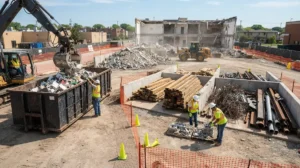
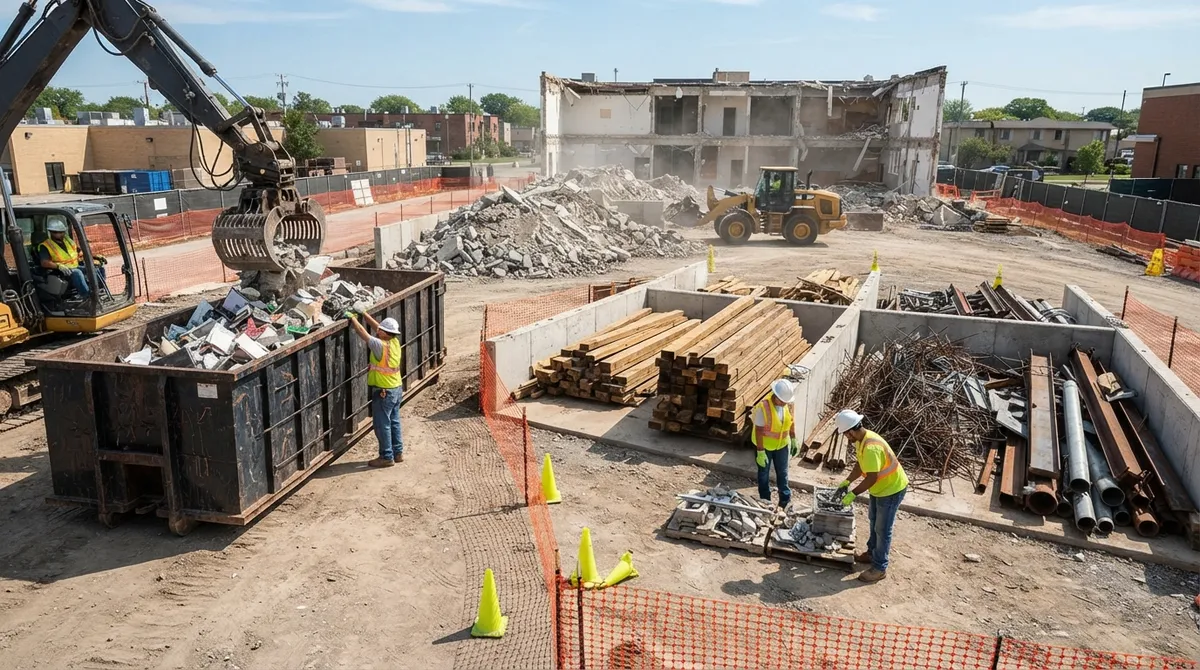
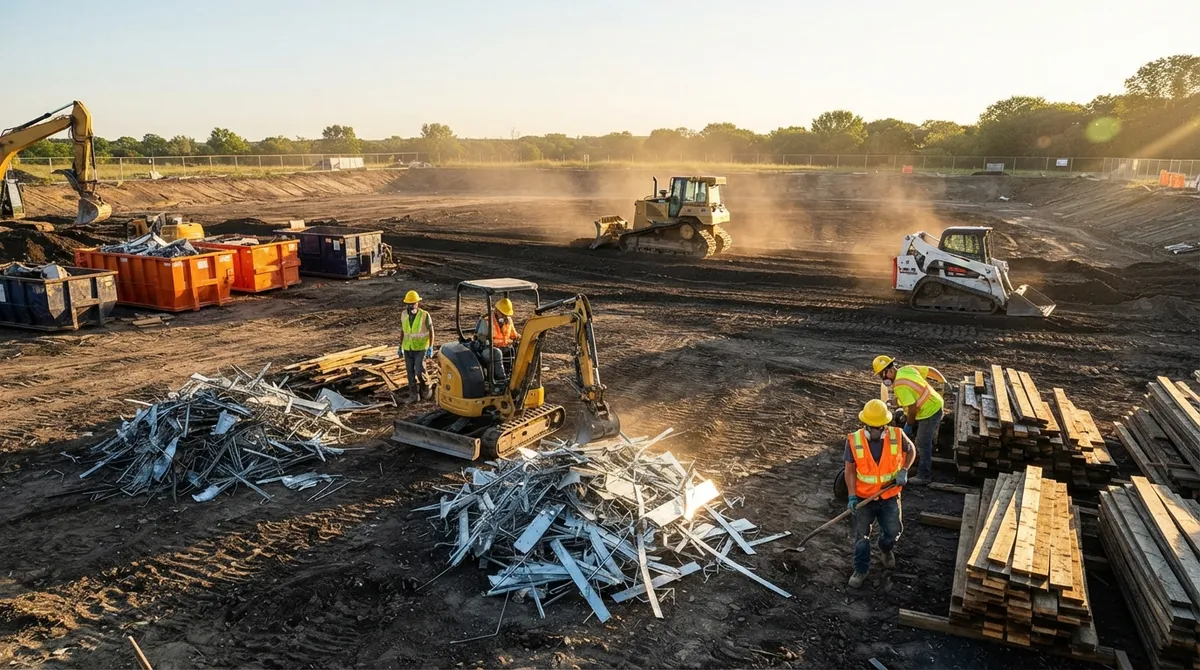
After demolition, there’s always a lot of debris to deal with. Responsible contractors sort and recycle materials on-site before hauling everything away. Proper debris removal keeps your site clean, safe, and code-compliant. You can count on professional hauling services to handle the cleanup efficiently after the structure comes down.
10. Site Preparation Follows Demolition
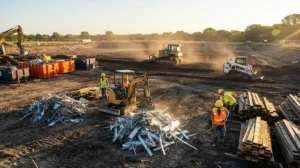
Once the building is gone, your site needs to be prepared for whatever comes next. This often includes grading, excavation, and concrete work. These steps lay the groundwork — literally — for new construction. Partnering with a full-service contractor who offers excavating and grading services means fewer handoffs and smoother timelines.
11. Safety Rules Are Strict — and Necessary
Commercial demolition is one of the most regulated construction activities. Here are key safety requirements contractors must follow:
- Conduct thorough risk assessments before work begins
- Provide proper training and PPE for all workers on site
- Use dust suppression and noise control measures
- Establish safety perimeters around the demolition zone
- Follow all OSHA and local HSE compliance standards
A licensed contractor takes these rules seriously. They protect workers, neighbors, and your property from unnecessary harm.
12. Full Building Demolition Requires Extra Expertise
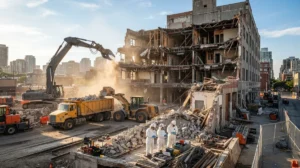
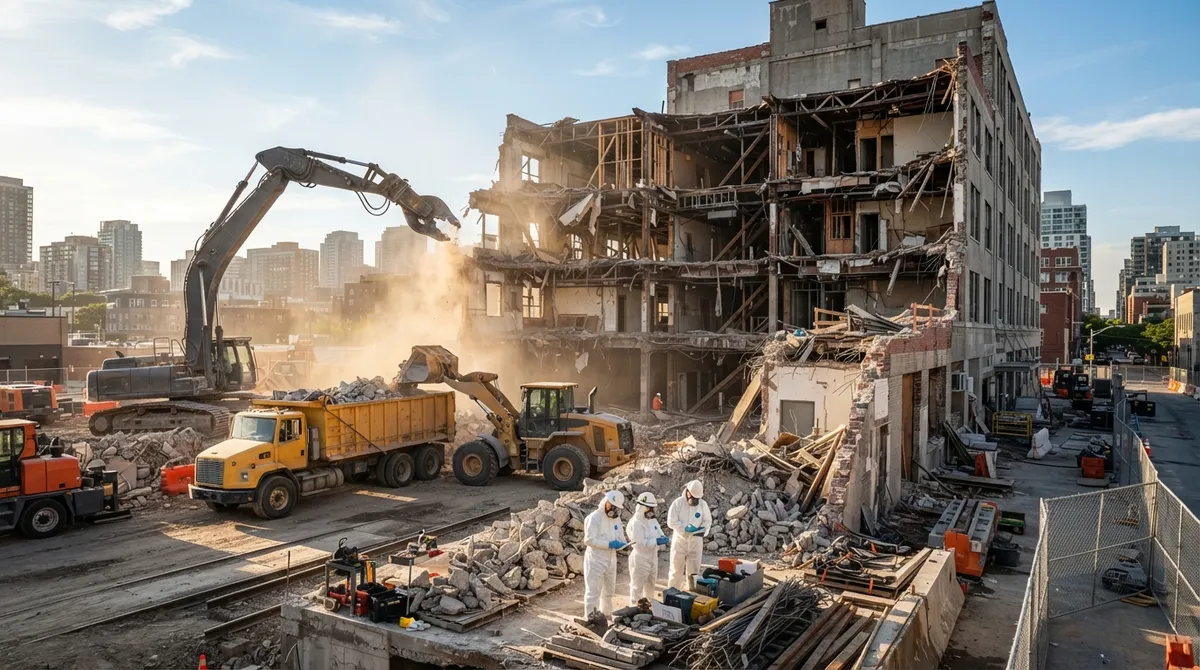
Bringing down an entire commercial structure is complex work. It requires engineering assessments, structural analysis, and a precise execution plan. Implosions, high-reach demolition, and mechanical teardowns all have specific use cases. Learn more about what goes into building demolition services and why experience matters on these big jobs.
13. Concrete Removal Is Often a Major Component
Commercial buildings have a lot of concrete — foundations, floors, parking structures, and walls. Removing it safely requires the right tools and know-how. Improperly removed concrete can damage utilities or destabilize nearby structures. Professional concrete removal services ensure everything comes out cleanly and safely.
14. Choosing the Right Contractor Matters More Than You Think
Not all demolition contractors are created equal. Here’s what to look for when hiring:
- Proper licensing and insurance — protects you from liability
- Relevant commercial experience — not just residential work
- Strong local reputation — check reviews and references
- Full-service capabilities — demo, hauling, grading, and more
- Transparent communication — clear timelines and progress updates
702 Demo checks every one of those boxes. As the leading demolition contractor in Las Vegas, they serve all of Clark and Nye counties with full-service demolition and site development. Find out why 702 Demo is the leading demolition contractor in Las Vegas and what sets them apart from the rest.
15. The Market Is Growing — and So Is the Demand
The construction demolition market is set to increase by USD 14.50 billion at a CAGR of 5.4% between 2024 and 2029. Urbanization, infrastructure investment, and the push for sustainable redevelopment are all fueling this growth. In Nevada, new commercial and residential developments are popping up constantly. That means more demand for skilled, reliable demolition teams.
A Quick Comparison: Demolition Methods at a Glance
| Method | Best For | Key Benefit |
|---|---|---|
| Mechanical Demolition | Large commercial structures | Fast and efficient |
| Selective Demolition | Renovations and remodels | Saves materials and costs |
| Interior Demolition | Gut renovations inside buildings | Preserves the building shell |
| Concrete Removal | Foundations, slabs, and parking lots | Clears site for new construction |
| Implosion | High-rise or large urban structures | Controlled and precise collapse |
What to Expect from a Commercial Demolition Timeline
Every project is different, but most commercial demolitions follow a similar sequence. Here’s a general overview:
- Site assessment and survey — usually 1-2 weeks
- Permitting and approvals — 2-6 weeks depending on the project
- Hazmat removal — 1-4 weeks based on material type and volume
- Structural demolition — days to weeks depending on building size
- Debris removal and site clearing — 1-2 weeks
- Grading and site prep — 1-3 weeks before new construction begins
Working with a full-service team means all these phases are coordinated seamlessly. That saves you time, money, and a lot of stress. You can also explore what makes a licensed demolition contractor essential for your project before making your hiring decision.
Wrapping It All Up
Commercial demolition is a complex, highly regulated, and deeply rewarding process when handled by the right team. From proper permitting to sustainable waste management, every detail matters. Whether you’re clearing space for a new development or renovating an existing structure, you deserve a contractor who brings both skill and professionalism to the table.
702 Demo is proud to serve property owners, developers, and contractors across Clark and Nye counties in Nevada. From full building teardowns to interior work and site preparation, we handle it all with care and precision. Visit us on Google to read reviews from happy clients across Las Vegas. Ready to get started on your project? Contact 702 Demo for a free estimate and let’s make your vision a reality.
FAQs
Q: What is commercial demolition and how is it different from residential demolition?
A: Commercial demolition involves tearing down non-residential structures like office buildings, retail spaces, warehouses, and industrial facilities. These projects are generally larger and more complex than residential teardowns, requiring specialized equipment, detailed planning, and stricter permitting — so it’s really important to work with a contractor who has hands-on commercial experience!
Q: Do I need a permit for commercial demolition in Las Vegas or Clark County?
A: Absolutely — permits are a must before any commercial demolition work begins in Las Vegas or Clark County. Your contractor will handle the permit application process on your behalf, following local guidelines to keep everything legal and above board. No permits means no demo, so this step is non-negotiable!
Q: How long does a commercial demolition project take?
A: Timelines vary depending on the size and complexity of the project, but most commercial demolitions take anywhere from a few weeks to a couple of months from start to finish. The process includes site assessment, permitting, hazmat removal, actual demolition, debris hauling, and site prep — a full-service contractor coordinates all of these steps to keep things moving smoothly.
Q: What happens to the debris after commercial demolition?
A: After demolition, materials like concrete, metal, and aggregates are sorted on-site and sent for recycling whenever possible — it’s a great way to reduce landfill waste! Any remaining debris is hauled away by the contractor, leaving your site clean and ready for the next phase of development.
Q: How do I choose the right commercial demolition contractor in Nevada?
A: Look for a licensed, insured contractor with solid commercial experience and strong local reviews. A full-service team that can handle demolition, hauling, concrete removal, and site prep is a huge plus — it keeps your project streamlined and stress-free. Don’t hesitate to ask for references and verify their track record before signing anything!