Key Takeaways
-
Skipping demolition permits can result in stop-work orders, fines, liability exposure, and delays in property sales or redevelopment. Always obtain proper approval before starting any demolition work.
-
Most jurisdictions require pre-demolition asbestos inspections for buildings built before the 1980s, with some cities charging notification fees even if no asbestos is found. Licensed abatement crews must remove asbestos before demolition begins.
-
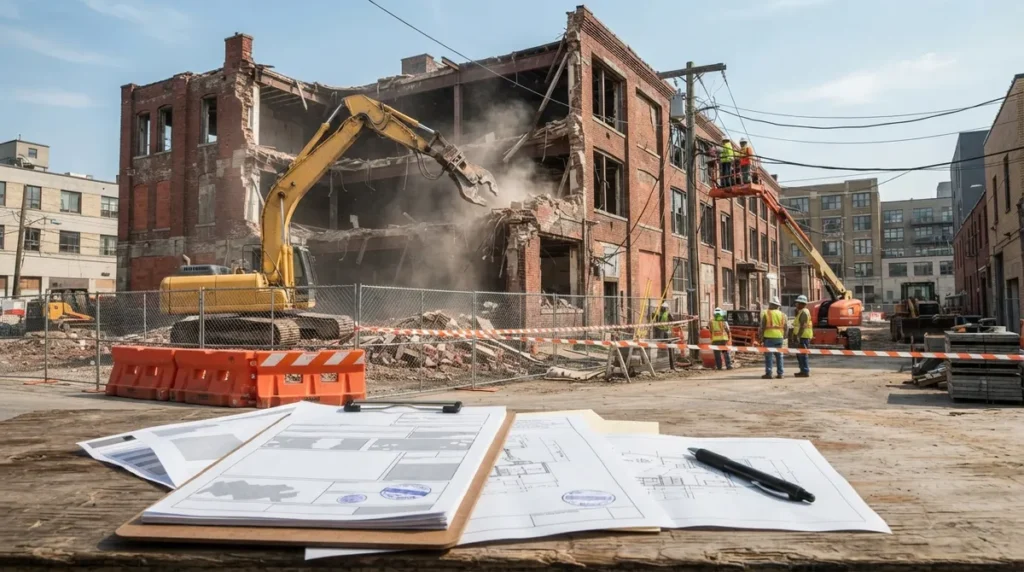
Demolition permit applications require extensive documentation including site plans, project narratives, structural plans, safety plans, utility disconnection confirmations, and hazardous material reports. Missing documents are a top reason applications get delayed.
-
Either property owners or licensed contractors can apply for permits, but contractors typically expedite approval since they already have required insurance, workers’ compensation, and licensing documentation ready.
Tearing down a building sounds simple. Get a machine, knock it down, haul it away. But here’s the truth: skipping the paperwork can turn your project into a costly nightmare. Whether you’re a homeowner in Henderson ready to remove an old pool house, or a developer planning a big project in Las Vegas, demolition permit services are the missing piece that keeps everything legal and safe.
At 702 Demo, we’ve walked hundreds of property owners and contractors through this exact process across Clark and Nye counties. We know the forms, the inspections, and the local rules that trip people up. This guide breaks down everything you need to know about demolition permit services, so you can move forward with confidence instead of confusion.
1. Understanding What Demolition Permit Services Actually Cover
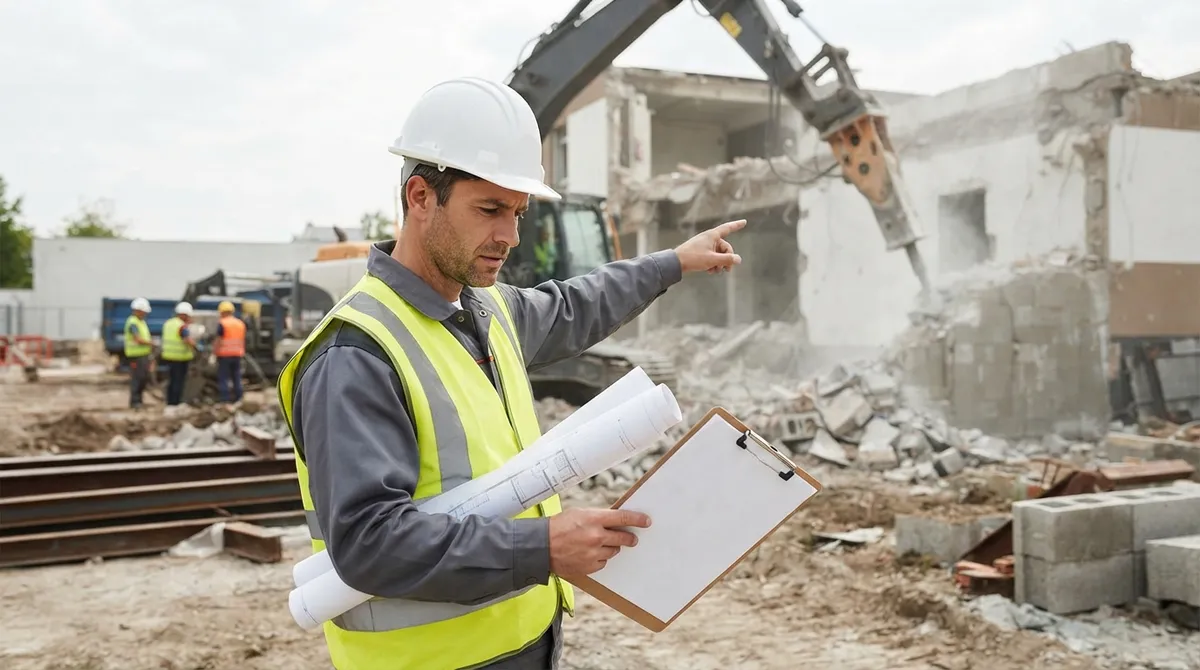
Demolition permit services are not just one piece of paper. They include a whole bundle of steps that make sure your project follows the law from start to finish. This means permit classification, paperwork prep, safety plans, hazardous material checks, utility shut-offs, and final inspections.
Local building and planning departments set the rules. That means requirements can look very different depending on where your property sits. A project in downtown Las Vegas may follow different steps than one in rural Nye County. Checking the Las Vegas demolition permit guidelines is a smart first move if your property falls within city limits.
2. Who Needs a Demolition Permit
Most cities require a permit before you fully demolish a building or remove most of its above-ground structure. Some partial demolitions also need one, especially if you’re removing major exterior walls or framing.
Here are common situations that usually require a permit:
- Tearing down an entire house or commercial building
- Removing most of a structure’s exterior walls
- Demolishing a garage, shed, or other accessory structure in some jurisdictions
- Large-scale interior gutting that affects structural elements
- Pool removal projects in many counties
Not sure if your project counts? Our team can walk you through your specific situation. For pool projects specifically, check out our guide on pool removal and reclaiming your backyard space.
3. Who Can Apply for the Permit
This is a question we hear all the time. Can the homeowner apply, or does it have to be a contractor?
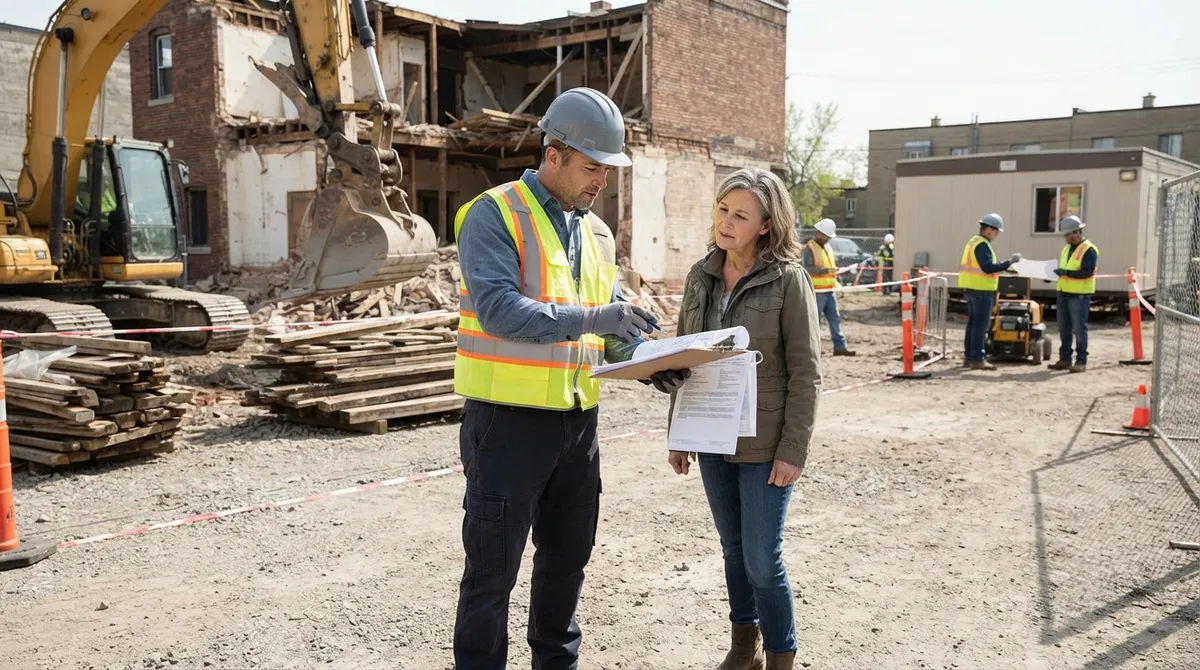
In most cases, either the property owner or a licensed contractor can submit the application. But there are catches. Many counties require proof of insurance, workers’ compensation coverage, and sometimes a bond before they’ll approve anything.
Working with a licensed demolition contractor makes this part much smoother. Contractors already have their licensing and insurance documents ready to go, which speeds up approval.
4. The Documents You’ll Need to Gather
Permit applications require more paperwork than most people expect. Missing documents are one of the top reasons applications get delayed.
Typical documents include:
- A site plan showing the building and property lines
- A written project narrative explaining the scope of work
- Photographs of the structure
- Structural plans, if available
- A demolition schedule with expected start and end dates
- A site-safety plan
- Utility disconnection confirmations
- Waste hauler information
- Any required zoning or planning approvals
Some cities, like Orlando, also ask for rodent-control certification or tree-removal approval depending on the site. Your local rules may include similar extra steps, so it pays to check with the Clark County Building Department before you submit anything.
5. Asbestos and Hazardous Material Checks
This step trips up a lot of property owners, especially those with older homes or commercial buildings built before the 1980s.
Most jurisdictions require a pre-demolition asbestos inspection. A licensed inspector tests the building materials and sends samples to a lab. If asbestos shows up, licensed abatement crews must remove it before demolition starts.
Here’s something interesting: some cities require asbestos notification and fees even if no asbestos is found. It’s simply part of the process. Other hazardous materials that may need special handling include:
- Lead paint
- Refrigerants in old appliances or AC units
- Underground storage tanks
- Rodent infestations
Our team handles this coordination as part of our building demolition services, so you don’t have to juggle multiple contractors and inspectors on your own.
6. Utility Disconnections Before Demolition
You can’t just knock down a building with live utilities still connected. Every jurisdiction requires proof that gas, electric, water, sewer, and sometimes telecommunications lines are properly disconnected or capped.
Some cities also require a separate sewer-disconnection inspection. This confirms the sewer line is capped correctly and won’t cause problems later. Skipping this step is a common reason projects get stalled right before demolition day.
7. The Inspection Process, Step by Step
Most demolition projects follow a similar inspection sequence, though exact steps vary by city. Denver’s published process is a good example of how thorough this can get. It includes asbestos approval, utility cutoffs, permit application, pre-issuance sign-offs, site prep, inspections, fee payment, the actual demolition, and then final inspections.
Here’s a simplified version of what to expect:
- Submit your asbestos inspection results
- Confirm utility disconnections
- Apply for the demolition permit with all required documents
- Wait for agency review and approval
- Prepare the site with fencing and safety measures
- Pass the pre-demolition inspection
- Complete the demolition work
- Pass the final inspection confirming site cleanup and stabilization
Following this sequence carefully avoids stop-work orders and fines. Our crews at 702 Demo have this process down to a science across Clark and Nye counties.
8. Special Cases That Need Extra Approvals
Not every demolition is a simple house teardown. Some projects need extra layers of approval before work can start.
Watch out for these situations:
- Historic properties or buildings in conservation districts
- Commercial or multifamily buildings with shared walls
- Properties requiring tree removal permits
- Projects that need public right-of-way access or traffic control
- Sites with environmental protection concerns
- Redevelopment projects requiring separate site plan approval
If you’re managing a multi-family property or planning a redevelopment project, our excavating and grading services can help you plan the full scope of work from permit to final grade.
9. Costs and Timelines to Expect
Permit fees and processing times vary a lot depending on your city and project type. Some published examples from other regions help illustrate the range:
| City | Fee Example | Notes |
|---|---|---|
| San Diego | $360.36 plan-check + $332.48 inspection | Separate plan-check and inspection fees |
| Philadelphia | $25 (1-2 family) / $100 (other buildings) | Larger projects may include additional fees |
| St. Paul | $85 minimum + $90 zoning review | Plus $5 per 1,000 cubic feet demolished |
| Orlando | $1,000 deposit (owner-pulled permits) | Plus possible $100 sewer-disconnect fee |
These numbers come from published municipal fee schedules and are not specific to Nevada. Always check with your local building department for current figures. Timelines can range from a couple weeks to over a month, depending on how complete your application is and whether asbestos or hazardous materials are found.
Why Partial and Interior Projects Need Special Attention
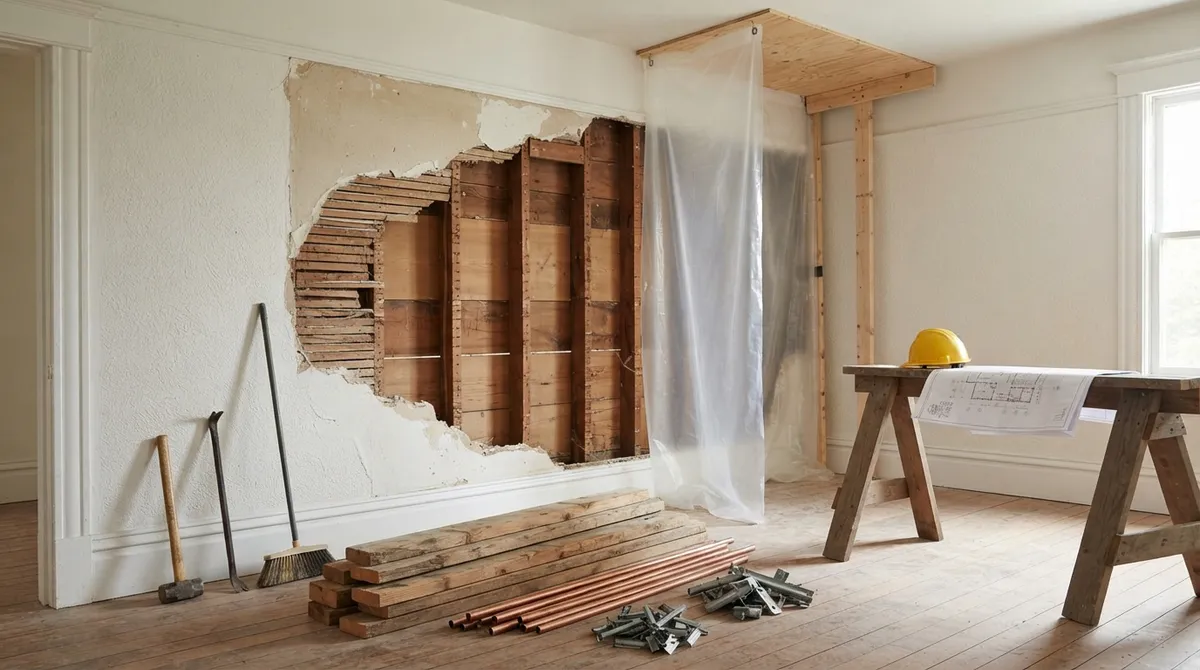
Not every project needs a full demolition permit. Interior-only work, pool removal, and accessory structure teardowns sometimes fall under different permit types entirely.
For example, an interior demolition project for a kitchen remodel might only need a building permit, not a full demolition permit. But if you’re removing major structural walls, that classification can change quickly.
This is exactly why working with an experienced team matters. Renovation contractors handling foundation repairs or interior strip-outs need someone who knows which permit applies to which scope of work. Guessing wrong can mean stop-work orders mid-project.
What Happens If You Skip the Permit Process
We get it. Permits feel like a hassle. But skipping this step almost always costs more time and money in the long run.
Consequences of starting demolition without proper approval can include:
- Stop-work orders that halt your entire project
- Fines from the local building department
- Trouble getting final approval later
- Liability exposure if something goes wrong on site
- Delays in selling or redeveloping the property
Keep every document safe once your project wraps up. This includes the permit itself, approved plans, inspection records, waste manifests, asbestos paperwork, and utility clearance proof. You may need these records years down the road.
How 702 Demo Makes Permit Services Simple
We’ve been serving Clark and Nye counties for years, and we know the local permit process inside and out. Our team handles the paperwork, coordinates asbestos inspections, arranges utility disconnections, and schedules inspections, so you don’t have to become a permitting expert overnight.
Whether you’re a homeowner tackling a loft conversion, a commercial builder racing against a tight deadline, or a real estate developer planning your next project, we bring the same level of care to every job. Our work spans concrete removal, landscaping removal, and hauling services, all backed by proper permitting from day one.
Don’t just take our word for it. You can visit us on Google — 702 Demo and see what our customers across Las Vegas have to say about working with us.
Ready to Start Your Demolition Project the Right Way?
Demolition permit services protect you, your neighbors, and your property investment. Getting this part right from the start saves you time, stress, and unexpected costs down the road.
At 702 Demo, we handle the permit process so you can focus on what comes next, whether that’s a new build, a renovation, or a fresh start on your property. Contact 702 Demo for a free estimate and let our experienced team guide you through every step of your demolition project.
FAQs
Q: Do I need a demolition permit to tear down a house in Clark County?
A: In most cases, yes! Full demolition of a house or major structure almost always requires a permit. The good news is 702 Demo can help you figure out exactly what’s needed for your specific property.
Q: How much does a demolition permit cost?
A: Costs vary quite a bit depending on your city and project size. Rather than guessing, reach out to us and we’ll help you understand what to expect for your Nevada property.
Q: Who can apply for a demolition permit, me or my contractor?
A: Either the property owner or a licensed contractor can usually apply. Many folks find it easier to let their contractor handle it since they already have insurance and licensing paperwork ready.
Q: Is an asbestos inspection always required before demolition?
A: Most jurisdictions require it, and some even charge notification fees even if no asbestos turns up. It’s a smart safety step that protects everyone on site.
Q: How long does the demolition permit process usually take?
A: It can range from a couple weeks to over a month, depending on how complete your paperwork is. Working with an experienced team like 702 Demo helps speed things along nicely.