Key Takeaways
-
Selective demolition preserves usable structural elements while reducing waste and costs, making it ideal for renovations and phased construction projects without full teardowns.
-
Hazardous material abatement must be completed before demolition begins; licensed specialists must identify and safely remove asbestos, lead paint, and mold per OSHA regulations—skipping this step is illegal.
-
Choose contractors with proper licensing, insurance, safety certifications, modern equipment, and full-service offerings including hauling and site prep to avoid costly delays and complications.
-
The commercial demolition market is projected to grow from $6.86 billion in 2026 to $13.48 billion by 2035, driven by urban redevelopment, advanced technology, and increasing demand for sustainable practices.
Planning a commercial redevelopment project in Las Vegas or the surrounding Nevada area? Understanding your options for commercial demolition services is the first step toward a smooth, successful project. Whether you’re tearing down an old office building, clearing a retail strip, or renovating a warehouse, knowing what’s available helps you make smarter decisions — and avoid costly surprises.
The commercial demolition industry is booming right now. In 2026, the global commercial demolition service market is valued at USD 6.86 billion and is projected to reach USD 13.48 billion by 2035. That growth reflects how much demand there is for safe, efficient, and sustainable demolition work across every type of commercial project.
Let’s break down the 8 main types of commercial demolition services so you know exactly what to expect — and which approach fits your project best.
1. Full Structural Demolition
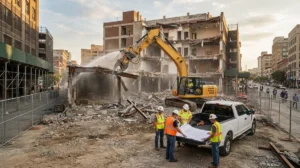
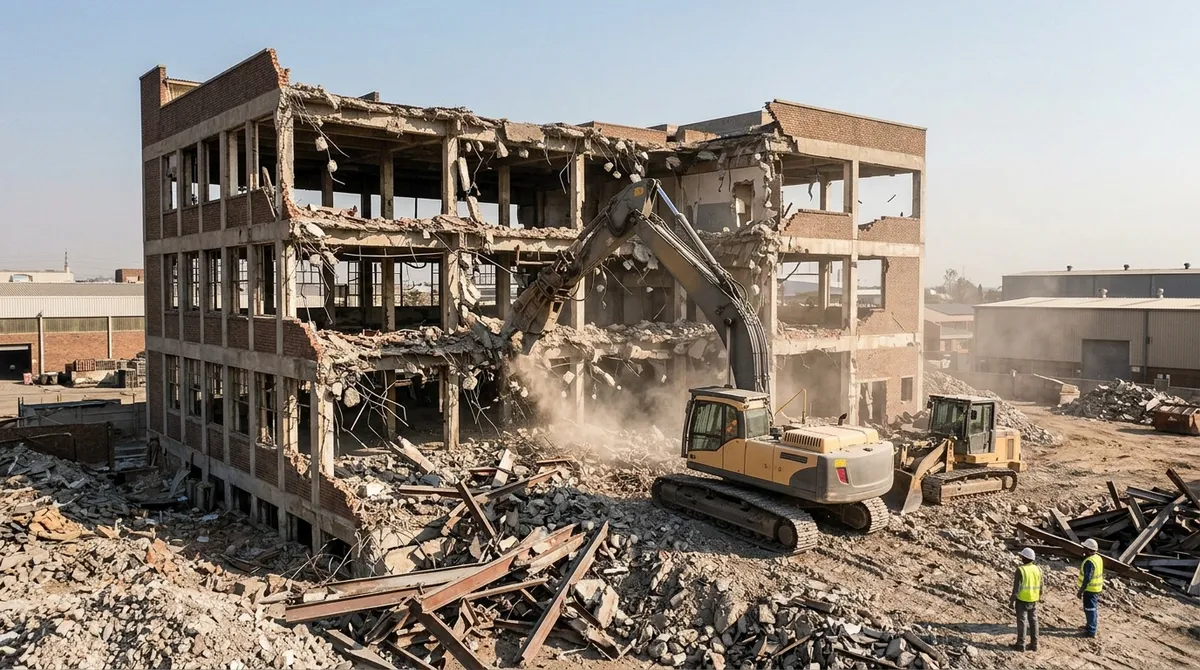
Full structural demolition means taking down an entire building from top to bottom. This is the go-to option when a structure is too old, unsafe, or simply no longer serves its purpose. Everything gets removed — walls, floors, foundations, and all.
This type of work requires heavy machinery, experienced operators, and careful planning. You’ll need proper permits before any work begins. Check out the Las Vegas demolition permit guidelines to understand what’s required in your area. For a closer look at what this process involves, the team at Building Demolition services can walk you through every step.
2. Selective Demolition
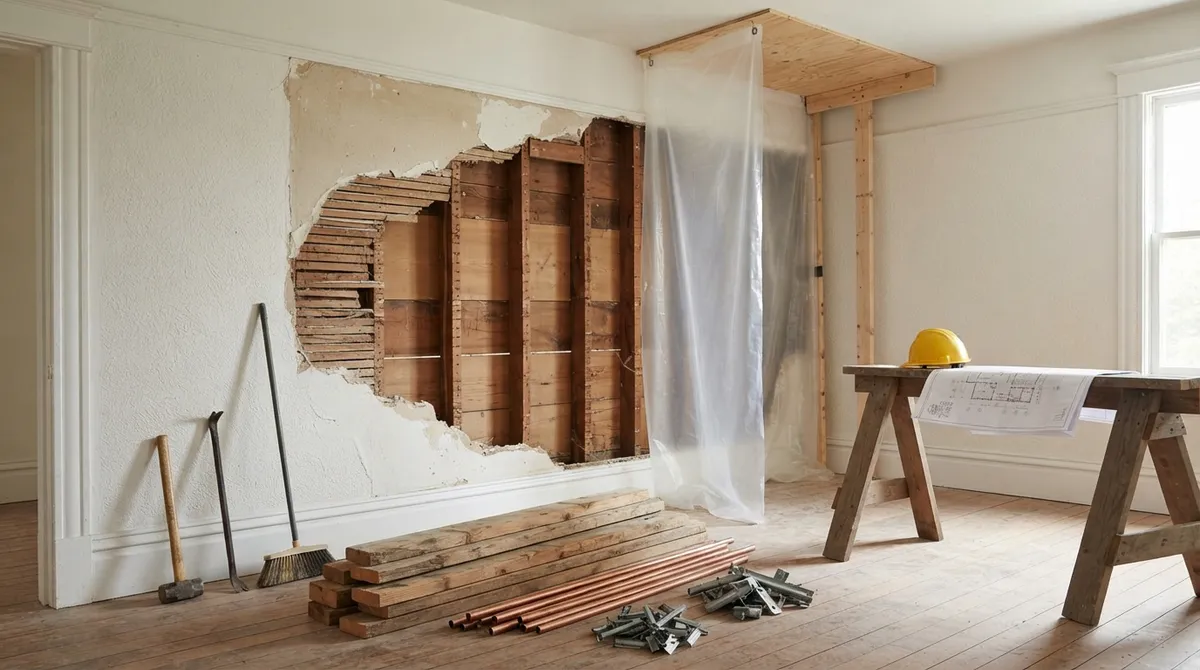
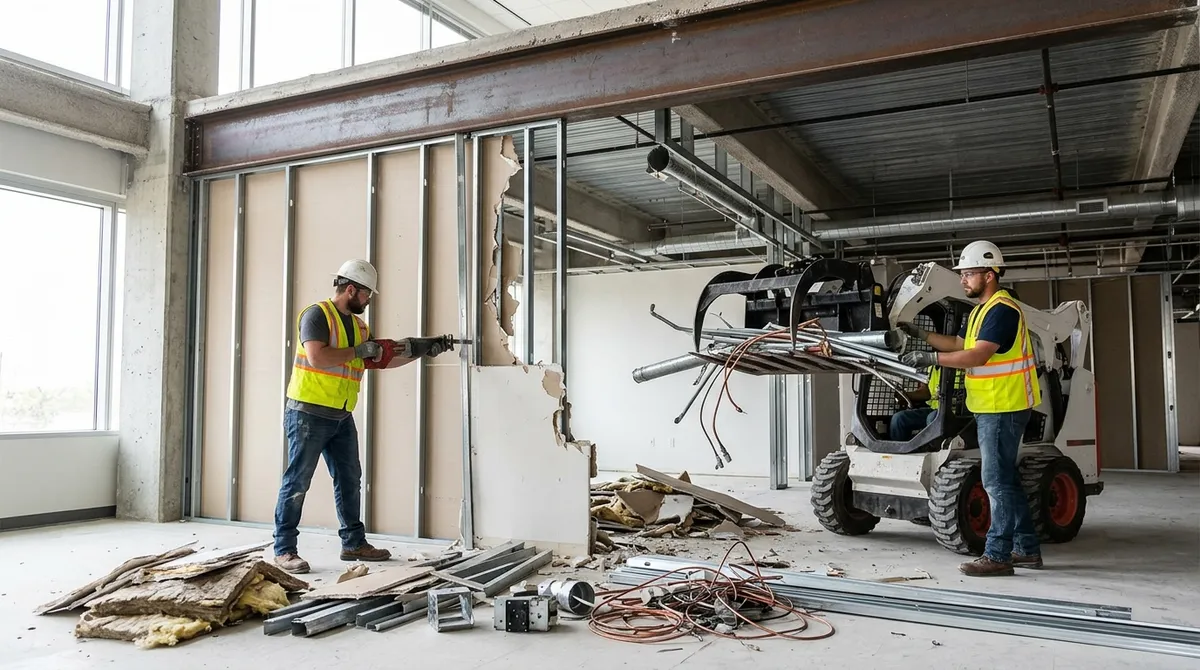
Selective demolition removes only specific parts of a building. The rest of the structure stays intact. This is perfect when you want to renovate or repurpose a space without tearing everything down.
It’s a popular choice for retail renovations, office remodels, and mixed-use developments. Selective demolition is also gaining traction because it supports material recovery and reduces waste. That makes it a win for sustainability-focused developers.
- Preserves usable structural elements
- Reduces demolition waste sent to landfills
- Speeds up renovation timelines
- Cost-effective for partial remodels
- Ideal for phased construction projects
3. Interior Demolition
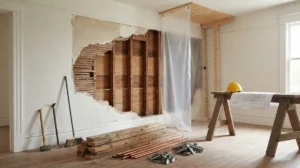
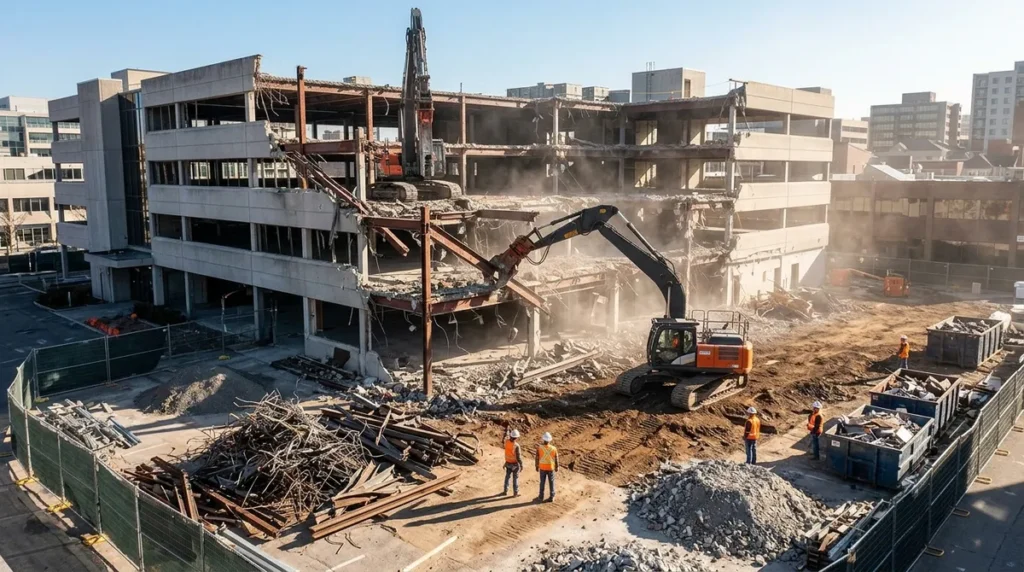
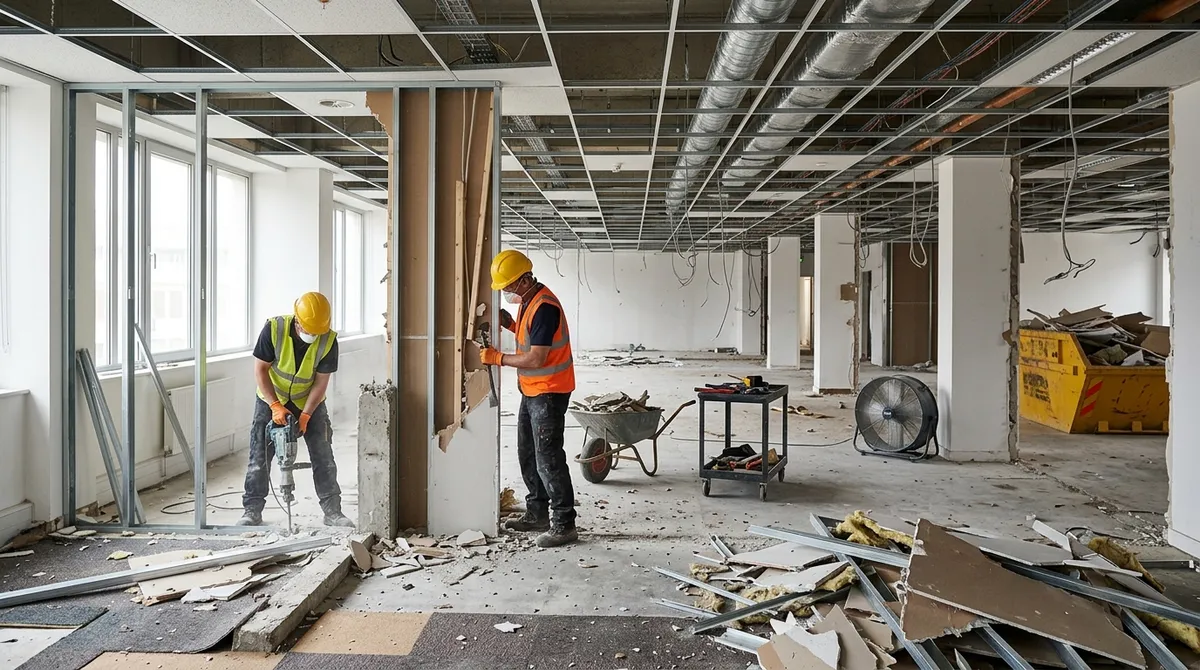
Interior demolition strips the inside of a building without touching the exterior shell. Think of it as gutting a space to start fresh on the inside. This is common in retail buildouts, office upgrades, and hospitality renovations.
It covers removing drywall, ceilings, flooring, partitions, and mechanical systems. It takes a skilled crew to do it safely — especially in occupied buildings or historic structures. Our Interior Demolition services are designed for exactly these kinds of complex commercial projects.
If you’re in the casino or hospitality industry, you might also be interested in how casino interior demolition in Las Vegas is handled with precision and minimal disruption.
4. Building Implosion
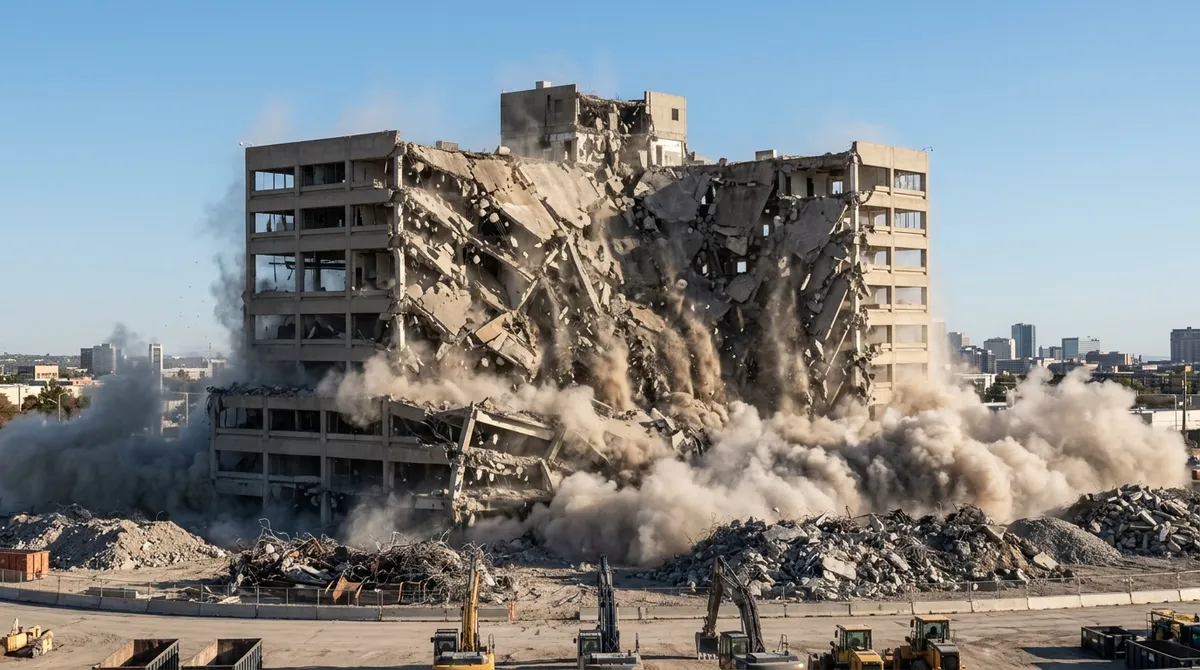
Building implosion uses strategically placed explosives to bring a structure down in a controlled collapse. It looks dramatic — and it is! But it’s also a highly calculated process that takes weeks of preparation.
Implosions are typically used for large structures in dense urban areas where space is limited. They require specialized expertise, extensive safety planning, and coordination with local authorities.
- Structural engineers assess the building’s design
- Explosives are placed at key support points
- Safety perimeters are established around the site
- The demolition is executed in seconds
- Debris removal and site cleanup follow immediately
5. Deconstruction
Deconstruction is demolition’s eco-friendly cousin. Instead of knocking everything down at once, crews carefully dismantle a structure piece by piece. The goal is to salvage and reuse as many materials as possible.
Wood beams, bricks, metal fixtures, and windows can all be recovered and resold or donated. This approach supports green building goals and can even offset project costs when valuable materials are reclaimed.
- Supports LEED and green building certifications
- Reduces landfill waste significantly
- Salvageable materials can be resold
- Aligns with corporate sustainability goals
6. Concrete Removal
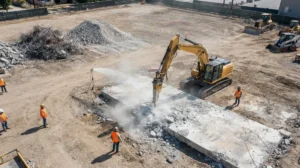
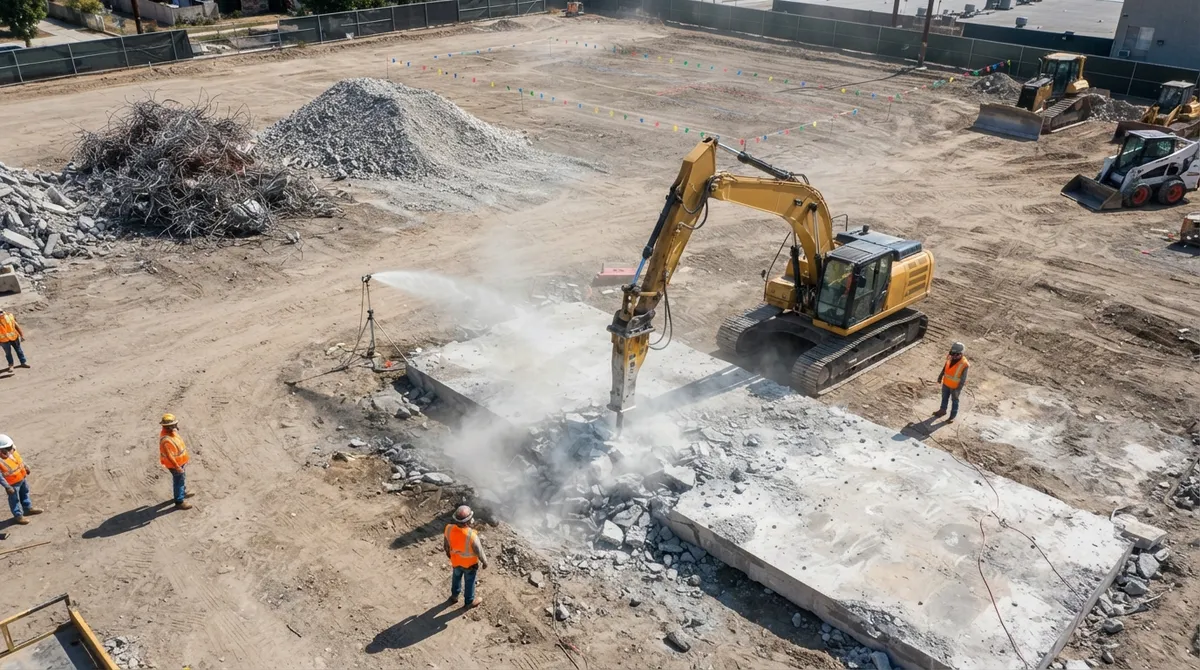
Commercial properties often have massive amounts of concrete — foundations, parking structures, loading docks, retaining walls, and more. Concrete removal is a specialized service that requires the right equipment and expertise.
It’s not just about breaking things up. Proper concrete demolition involves careful hauling and disposal, and sometimes recycling the concrete into aggregate for new construction. Learn more about how Concrete Removal works and what it takes to do it right.
You might also want to explore the best concrete demolition options for businesses in Las Vegas to see what approach works for your project type.
7. Excavating and Site Grading
Demolition is often just the beginning. After structures come down, the land needs to be properly excavated and graded before new construction can begin. This step is critical for drainage, foundation stability, and overall site safety.
Site grading ensures the ground is level and properly sloped. It prevents water pooling and prepares the soil for construction loads. Without proper grading, even a brand-new building can face long-term foundation issues.
Our team provides full Excavating and Grading services to get your site construction-ready after demolition is complete. We also offer Hauling Services to clear all debris quickly and efficiently.
8. Hazardous Material Abatement
Many older commercial buildings contain hazardous materials like asbestos, lead paint, or mold. Before any demolition begins, these materials must be identified and safely removed. This process is called abatement.
Skipping this step isn’t just dangerous — it’s illegal. OSHA regulations and environmental laws require proper handling and disposal of hazardous materials. The Clark County Building Department provides guidance on local compliance requirements for demolition projects.
- Pre-demolition environmental assessment is conducted
- Hazardous materials are identified and mapped
- Licensed abatement specialists remove dangerous materials
- Proper disposal follows strict regulatory protocols
- Site is cleared and certified safe for demolition
What to Look for in a Commercial Demolition Contractor
Choosing the right contractor makes all the difference. Not every company has the experience, equipment, or licensing to handle large-scale commercial work. Here’s what to evaluate before signing a contract.
- Licensing and insurance: Always verify proper credentials
- Experience with similar projects: Ask for references and past project examples
- Safety record: OSHA compliance is non-negotiable
- Equipment capability: Modern equipment means faster, safer work
- Full-service offerings: Look for demolition, hauling, and site prep under one roof
- Environmental practices: Ask about recycling and sustainable disposal methods
You can also read about what makes a licensed demolition contractor essential for your project and review 7 key things to know about commercial demolition contractors before you hire.
Commercial Demolition Service Types at a Glance
| Service Type | Best For | Key Benefit |
|---|---|---|
| Full Structural Demolition | Condemned or obsolete buildings | Complete site clearance |
| Selective Demolition | Partial renovations | Preserves usable structure |
| Interior Demolition | Office and retail remodels | Exterior stays intact |
| Building Implosion | Large urban structures | Fast, controlled collapse |
| Deconstruction | Sustainability-focused projects | Maximum material recovery |
| Concrete Removal | Parking lots, foundations | Clears heavy hardscaping |
| Excavating and Grading | Post-demolition site prep | Construction-ready land |
| Hazardous Material Abatement | Older commercial buildings | Regulatory compliance and safety |
Why Commercial Demolition Is Growing Fast
Urban redevelopment is driving massive demand for commercial demolition services in 2026. Cities are transforming aging retail centers into mixed-use developments. Old office parks are being repurposed into housing. Industrial districts are getting complete makeovers.
Technology is also playing a big role. AI-powered demolition robots, high-reach excavators, and remote-controlled systems are making commercial demolition safer and more precise than ever before. Drones are now used for site surveys and progress monitoring, reducing risk to workers.
Sustainability is another major driver. More developers are demanding green demolition practices — from hazardous material removal to material recycling and responsible waste management. If you want to learn more about what the industry looks like right now, check out these 15 key facts about commercial demolition in 2026.
Ready to Start Your Commercial Demolition Project?
Whether you’re a real estate developer clearing land for a new build, a property manager handling a major renovation, or a commercial builder on a tight deadline — the right demolition team matters. 702 Demo is a full-service demolition contractor serving all of Clark and Nye counties in Nevada. With decades of experience and a full range of commercial demolition services, the team is ready to help you move forward with confidence.
Want to see what other clients have experienced? Visit us on Google — 702 Demo to read real reviews from real customers across the Las Vegas area.
Your project deserves a contractor who shows up prepared, works safely, and gets it done right. Reach out to 702 Demo today and request your free estimate — let’s talk about what your commercial project needs and how we can make it happen.
FAQs
Q: What is the difference between full demolition and selective demolition?
A: Full demolition removes an entire structure completely, while selective demolition only takes down specific parts of a building. Selective demolition is a great option when you want to renovate or repurpose a space without starting completely from scratch — it saves time, money, and materials!
Q: How long does a commercial demolition project typically take?
A: Project timelines vary depending on the size of the structure, the type of demolition, and whether hazardous materials need to be removed first. A small interior demo might wrap up in a few days, while a full building teardown could take several weeks. Your contractor will give you a clear timeline after assessing the site.
Q: Do I need a permit for commercial demolition in Las Vegas?
A: Yes! Permits are required for commercial demolition work in Las Vegas and Clark County. Your demolition contractor should help guide you through the permitting process and ensure all work meets local building codes and environmental regulations. It’s one less thing to worry about when you work with an experienced team!
Q: How are hazardous materials handled during commercial demolition?
A: Before demolition begins, a pre-demolition environmental assessment identifies any hazardous materials like asbestos or lead paint. Licensed specialists then safely remove and dispose of these materials following strict OSHA and environmental regulations. This step is required by law and protects everyone on and around the job site.
Q: What happens to the debris after commercial demolition is complete?
A: Debris is hauled away and either recycled, repurposed, or properly disposed of at approved facilities. Many demolition contractors now prioritize material recycling as part of their green demolition practices — concrete, metal, and wood can often be recovered and reused in new construction projects.