Key Takeaways
-
House demolition typically costs $2-$17 per square foot, with a national average of $18,000 and range of $3,000-$25,000; costs vary significantly by home size, location, and site conditions.
-
Hazardous materials like asbestos and lead paint in older homes (pre-1980) require certified testing and removal before demolition, potentially reaching $25 per square foot and adding thousands to your project cost.
-
Multiple factors beyond the main structure affect final costs: attached garages, pools, driveways, basement type, and debris disposal each add separate line items to your estimate.
-
Demolition permits are legally required in Nevada jurisdictions; fees typically range $50-$100 plus inspection costs, and skipping permits results in fines or project delays.
-
Interior demolition ($1,000-$5,000) is a cost-effective alternative to full house teardown for renovation projects, removing only walls and fixtures while keeping the structure intact.
-
Getting an accurate estimate requires providing contractors with your home’s square footage, age, all property structures, local permit requirements, and scheduling an on-site assessment.
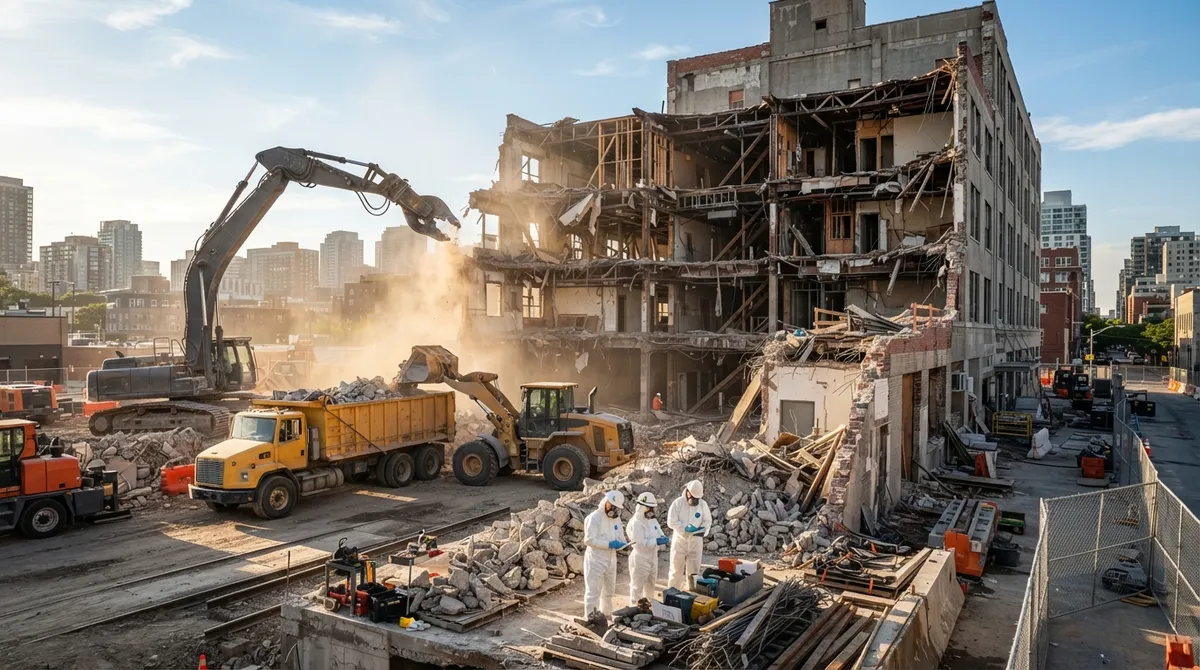
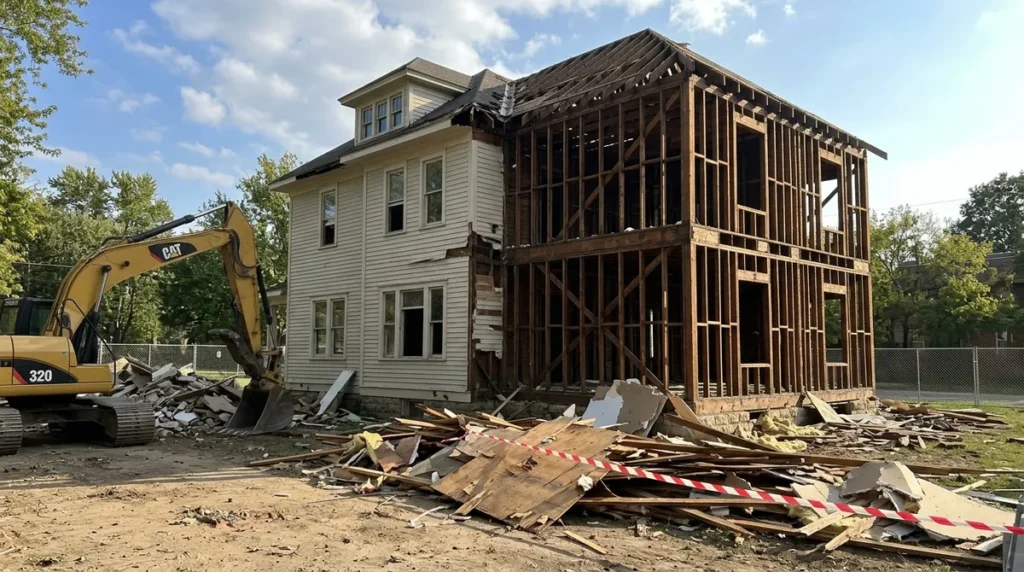
Thinking about tearing down a house? You’re not alone. Whether you’re a homeowner in Las Vegas, a real estate developer, or a renovation contractor, knowing what goes into a demolition project helps you plan smarter. The cost to tear down a house depends on many factors — and understanding them upfront saves you time, stress, and surprises down the road.
In this guide, we’ll walk you through everything you need to know. From key cost factors to permit requirements, we’ll break it all down in plain language. By the end, you’ll feel confident and ready to move forward with your project.
What Affects the Cost to Tear Down a House?
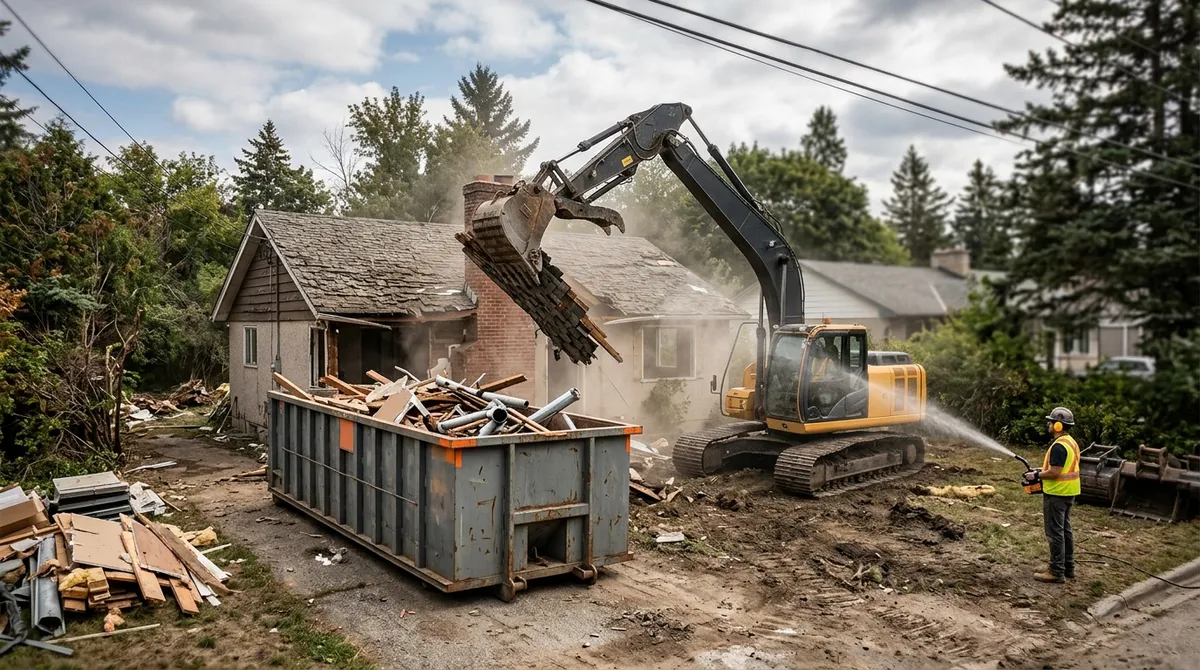
No two demolition projects are the same. Several factors work together to shape the final quote you’ll receive. Understanding each one helps you set realistic expectations from the start.
Here are the main factors that influence house demolition costs:
- Size of the home: Larger homes take more time, equipment, and labor to bring down.
- Location: Urban areas like Las Vegas can cost more due to tight access and traffic control needs.
- Foundation type: A home with a full basement requires more work than a slab foundation.
- Hazardous materials: Asbestos, lead paint, or mold must be safely removed before demolition begins.
- Attached structures: Garages, decks, pools, chimneys, and driveways may each require their own line item.
- Debris disposal: Hauling away material and paying landfill fees adds to the total cost.
- Permits and inspections: Local rules require permits before any structure can be torn down.
Each of these items plays a real role in your final estimate. A full building demolition project with a basement and attached garage will cost more than a simple single-story slab home on a clear lot.
How House Demolition Is Priced
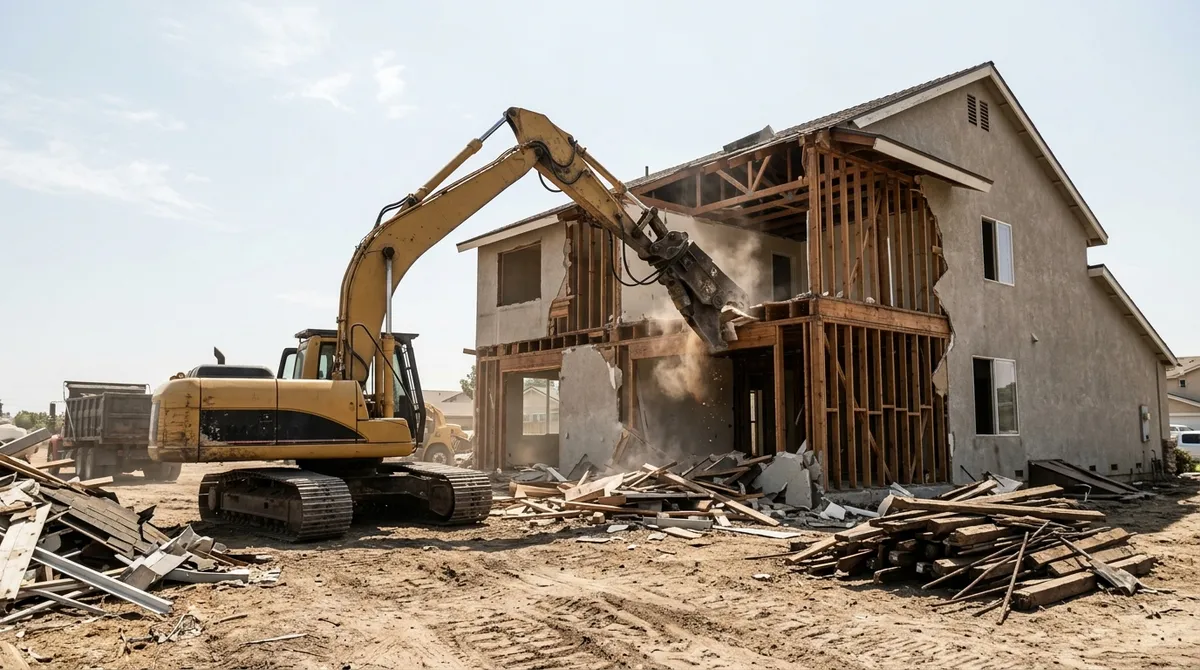
Demolition contractors typically price projects by total scope. They consider the square footage, site conditions, and all related services. This gives you a more accurate number than a flat hourly rate.
Per-square-foot pricing is commonly used as a starting estimate. According to The Home Depot (updated 2024), the typical range runs from $2 to $17 per square foot. The national average for a full house demolition is around $18,000, with a range of roughly $3,000 to $25,000.
Here’s a quick look at how size affects estimated demolition costs:
| Home Size (Sq. Ft.) | Low Estimate | High Estimate | Approximate Average |
|---|---|---|---|
| 1,000 sq. ft. | $2,000 | $17,000 | ~$9,500 |
| 1,500 sq. ft. | $3,000 | $25,500 | ~$10,500–$12,000 |
| 2,000 sq. ft. | $6,000 | $25,500 | ~$15,800 |
| 2,500+ sq. ft. | $10,000 | $42,500+ | Varies by project |
Estimates based on national data from The Home Depot (2024) and My Site Plan (2024). Actual costs vary by location, site conditions, and scope.
These numbers give you a solid starting point. But the only way to get an accurate number for your specific project is to request a professional on-site estimate.
Step-by-Step: How the Demolition Process Works
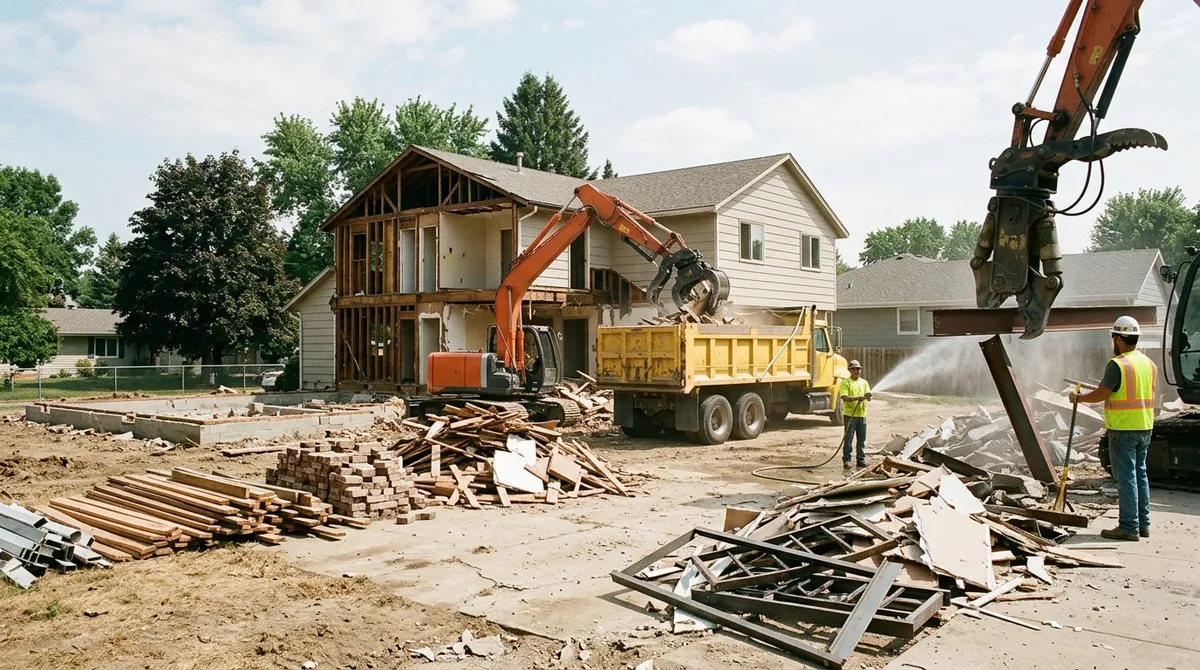
Understanding the process helps you know what you’re paying for. Here’s how a typical residential demolition project unfolds:
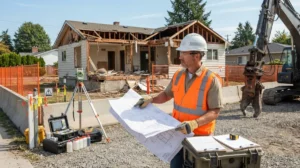
- Site assessment: A demolition contractor visits the property to evaluate the structure, access points, and any hazardous materials.
- Hazardous material testing: Older homes are tested for asbestos, lead, or other materials that need special handling.
- Permit application: Your contractor pulls the required demolition permits from the local municipality. In Nevada, this often means working through the Clark County Building Department.
- Utility disconnection: Gas, water, and electrical lines are shut off before any work begins.
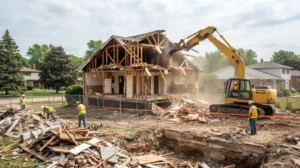
- Structure teardown: Equipment is brought in and the structure is demolished in a safe, controlled manner.
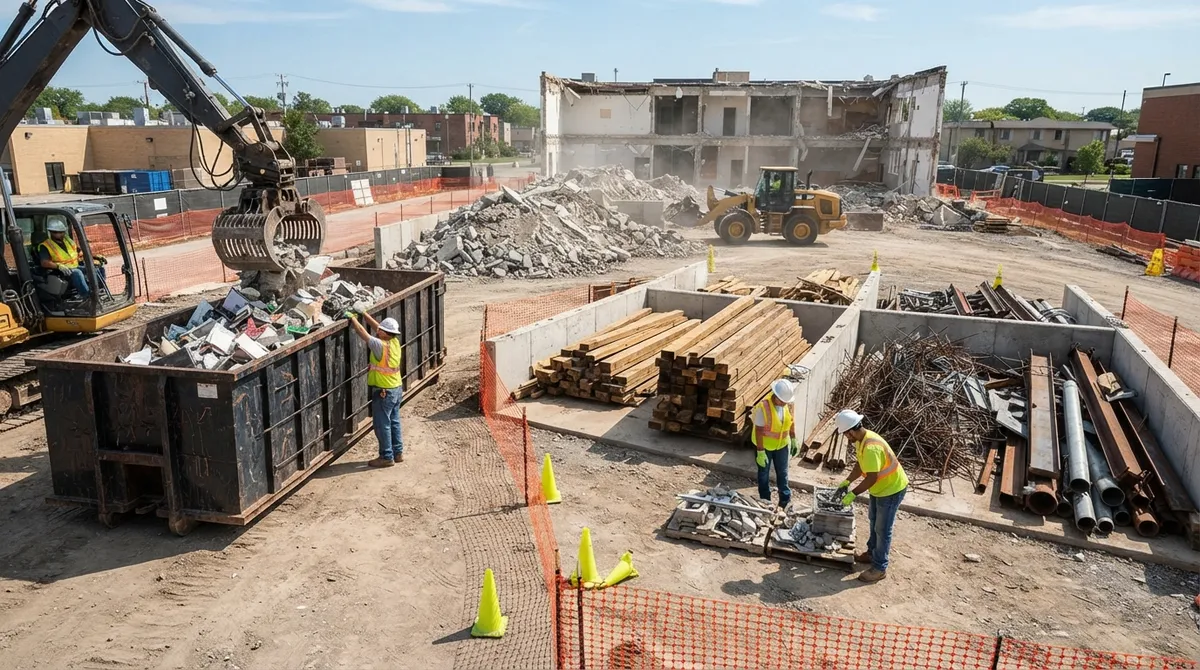
- Debris hauling: All materials are loaded and removed from the site. Learn more about professional hauling services and what they include.
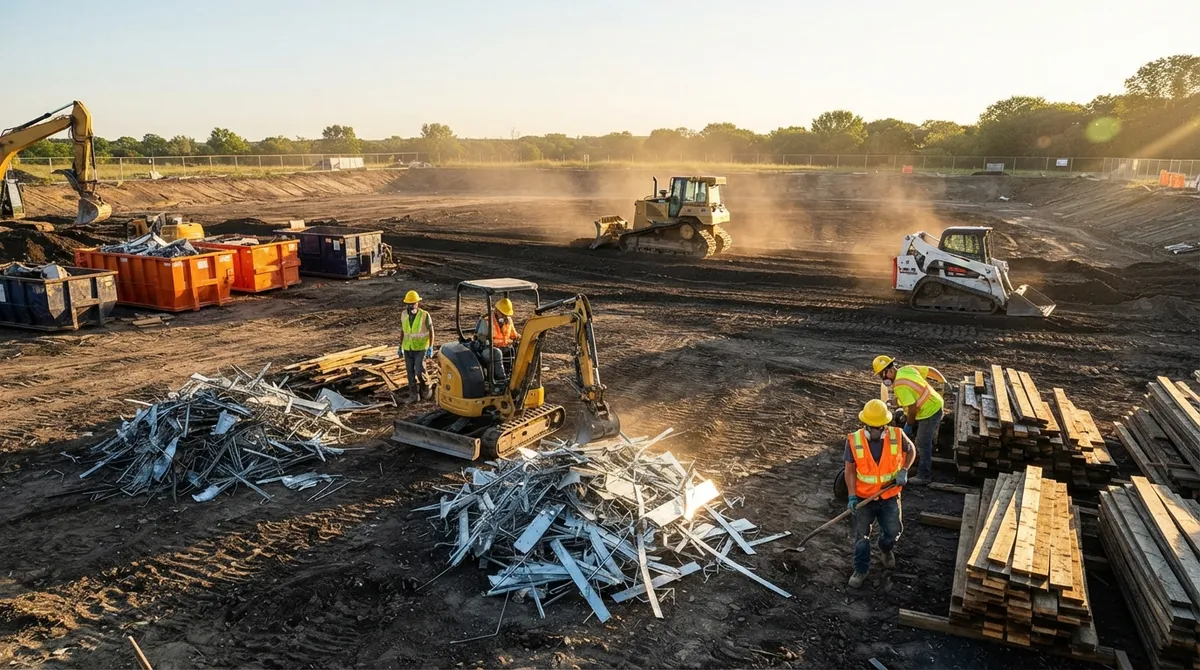
- Site grading: The lot is graded and leveled for future construction or landscaping. This ties in closely with excavating and grading work.
Each step adds value and protects you legally and financially. Skipping any of them — especially permits — can result in fines or project delays.
Permits and Inspections: What You Need to Know
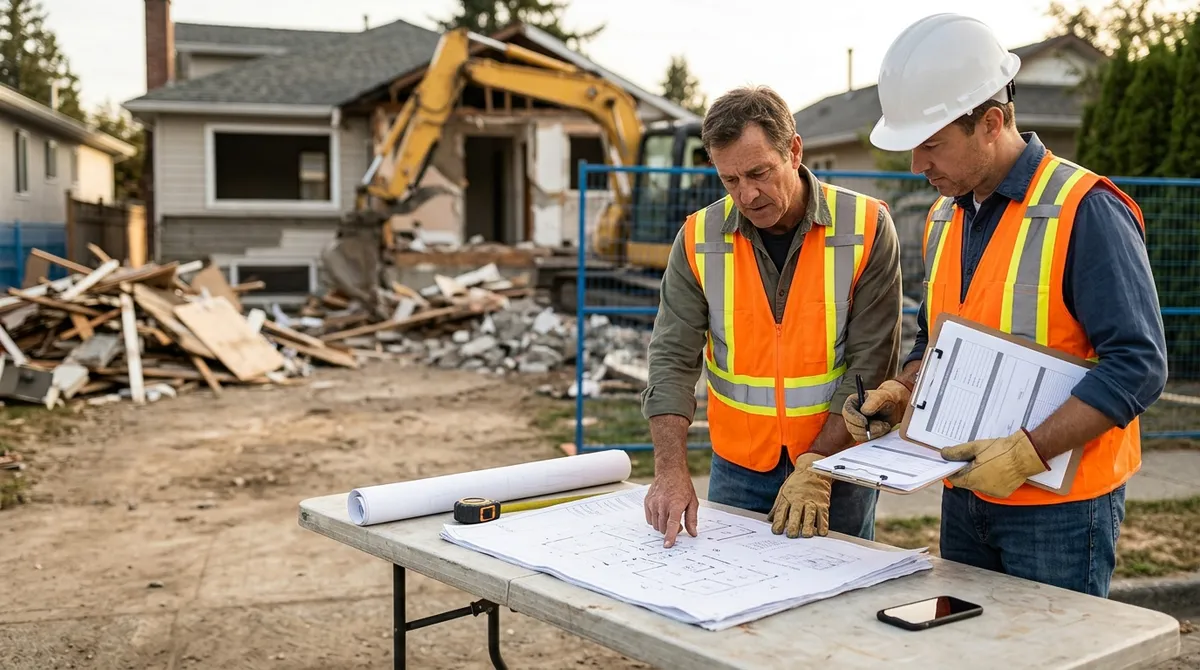
You can’t legally tear down a house without a permit in most Nevada jurisdictions. Permit fees vary, but many municipalities charge between $50 and $100 just for the demolition permit. Inspections can add several hundred dollars more.
In Las Vegas, you’ll want to review the Las Vegas demolition permit guidelines before starting any project. These guidelines explain what documentation is required and what inspections must happen before, during, and after demolition.
Your contractor should handle the permit process on your behalf. A licensed, experienced team knows exactly what’s needed and keeps your project moving forward without legal hiccups. If you’re wondering what makes a licensed contractor so important, check out this helpful resource on what makes a licensed demolition contractor essential for your project.
Hazardous Materials and Why They Matter
Older homes — especially those built before 1980 — often contain hazardous materials. Asbestos and lead paint are the two most common concerns. These materials can’t just be torn down along with the rest of the structure. They require careful testing, removal, and disposal by certified professionals.
The presence of hazardous materials can increase your per-square-foot cost significantly. Some estimates reach up to $25 per square foot when full remediation is needed. This is an important item to budget for early.
Here’s what to expect with hazardous material handling:
- A certified inspector tests the home before demolition begins.
- Positive results trigger a removal and disposal plan.
- Certified abatement crews handle all remediation work.
- Documentation is provided to confirm safe disposal.
- The site is cleared before standard demolition can proceed.
Don’t skip this step. It protects your health, your neighbors, and the environment. It also keeps you legally compliant throughout the project.
Additional Structures That Affect Your Quote
The main house is just one part of your demolition project. Other structures on the property often need to come down too — and each one adds to the total scope of work.
Common add-ons that affect your demolition estimate include:
- Detached garages or outbuildings
- Swimming pools or spas — see more about pool removal services
- Concrete driveways, patios, or walkways — learn about concrete removal
- Landscaping, trees, and vegetation — check out landscaping removal
- Chimneys and fireplaces
- Basement or crawl space excavation
When you request an estimate, be sure to mention all structures on your property. This ensures you get a complete and accurate quote with no surprises later.
Full Demolition vs. Interior Demolition
Not every project requires tearing the entire structure down. Sometimes, only the inside needs to go. This is called interior demolition — and it’s a smart, cost-effective option for certain renovation projects.
Here’s a quick comparison to help you decide which option fits your needs:
| Type | What It Involves | Typical Cost Range | Best For |
|---|---|---|---|
| Full House Demolition | Complete teardown of structure and foundation | $3,000–$25,000+ | New construction, redevelopment |
| Interior Demolition | Removing walls, flooring, fixtures inside | $1,000–$5,000 average | Renovations, gut remodels |
| Selective Demolition | Targeted removal of specific elements | Varies by scope | Additions, reconfigurations |
If you’re doing a major remodel rather than starting from scratch, interior demolition might be the right call. A professional contractor can help you figure out the most efficient and cost-effective approach for your specific goals.
Tips to Get the Most Accurate Demolition Estimate
Getting the right estimate starts with good preparation. Here are some practical steps you can take before calling a contractor:
- Know your square footage. Have the home’s measurements ready. This is the starting point for any estimate.
- List all structures on the property. Include garages, pools, sheds, and concrete features.
- Find out the home’s age. Older homes may require hazardous material testing.
- Check local permit requirements. Know your municipality’s rules before reaching out.
- Get at least one on-site estimate. A walk-through gives contractors the clearest picture of the full scope.
Being prepared makes the whole process smoother. It also helps contractors give you a more accurate and complete quote on the first try.
Why Professional Demolition Makes a Difference
Tearing down a house isn’t a DIY job. It involves heavy equipment, permits, utility coordination, and safe debris disposal. Attempting it without professional help creates serious safety and legal risks.
A qualified demolition contractor brings the right equipment, experience, and licensing to every project. They handle the paperwork, manage the hazards, and clean up the site when the work is done. That peace of mind is worth every dollar.
If you’re in Clark or Nye County, Nevada, 702 Demo is a trusted full-service demolition contractor with decades of experience. From residential teardowns to large commercial projects, the team handles it all — safely, efficiently, and professionally. You can also visit 702 Demo on Google to read reviews from real customers in the Las Vegas area.
For more helpful guidance, explore our article on how to plan a residential home demolition the right way. It walks you through every stage of the process in detail.
Ready to Move Forward with Your Demolition Project?
Now you know what shapes the cost to tear down a house. From square footage and permits to hazardous materials and debris hauling, every piece matters. The best thing you can do is connect with an experienced local contractor who can assess your specific situation.
Don’t let uncertainty hold your project back. Reach out to 702 Demo for a free, no-obligation estimate and take the first confident step toward your demolition project today.
FAQs
Q: How much does it cost to tear down a house in 2026?
A: The national average for a full house demolition is around $18,000, with a typical range of $3,000 to $25,000 depending on size, location, and site conditions. In Nevada, your final cost will depend on local permit requirements, debris disposal fees, and any hazardous materials present.
Q: What is the average cost per square foot to demolish a house?
A: Most house demolitions are estimated at $2 to $17 per square foot, according to The Home Depot (2024). Keep in mind that per-square-foot pricing is just a starting point — the full scope of your project, including attached structures and site prep, shapes the final number.
Q: Do I need a permit to tear down a house in Las Vegas?
A: Yes! A demolition permit is required before any structure can legally be torn down in Las Vegas and Clark County. Your demolition contractor should handle the permit application for you, making the process smooth and stress-free.
Q: Does asbestos removal add a lot to demolition costs?
A: It can — homes with asbestos or lead paint require certified abatement before demolition begins, and costs can reach up to $25 per square foot in some cases. Testing your home early in the planning process helps you budget accurately and avoid delays.
Q: Is interior demolition cheaper than a full house teardown?
A: Generally, yes! Interior demolition — which removes walls, flooring, and fixtures inside the structure — typically runs $1,000 to $5,000 for average projects. It’s a great option when you’re renovating rather than starting completely from scratch.