Key Takeaways
-
Average house demolition costs $15,800-$18,000 for a 2,000 sq ft home, with pricing ranging $2-$17 per square foot depending on size, structure type, and hazardous materials present.
-
Hazardous materials like asbestos, lead paint, and mold can add up to $25 per square foot in remediation costs—a 2,000 sq ft home could face $50,000+ in additional expenses before demolition begins.
-
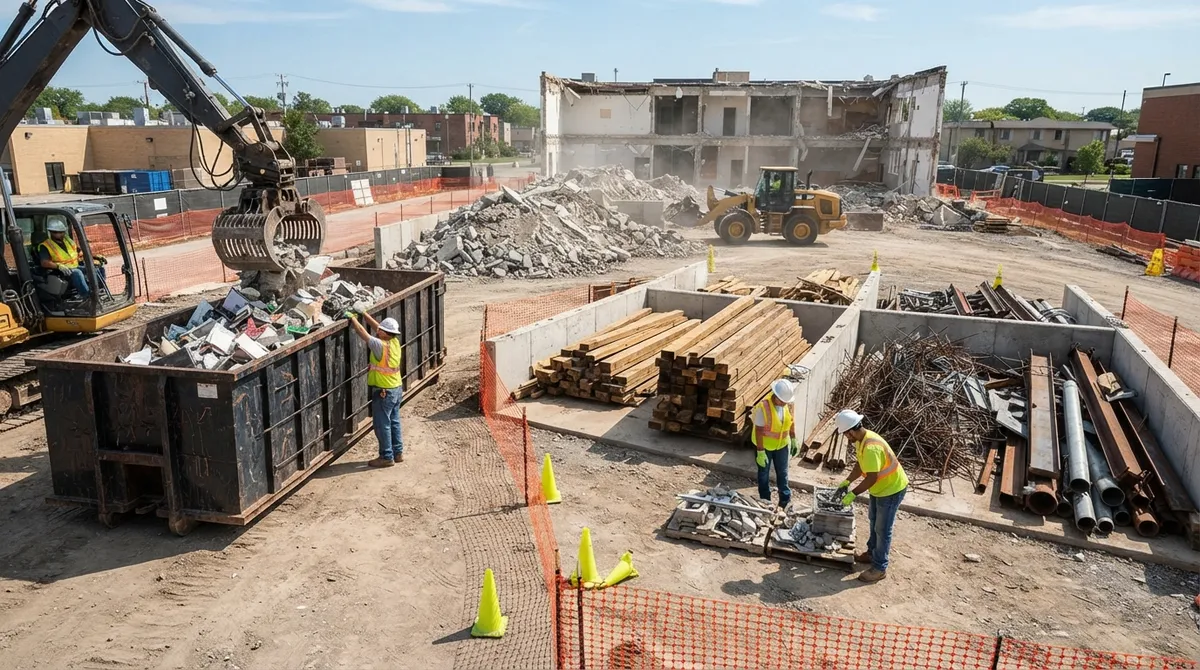
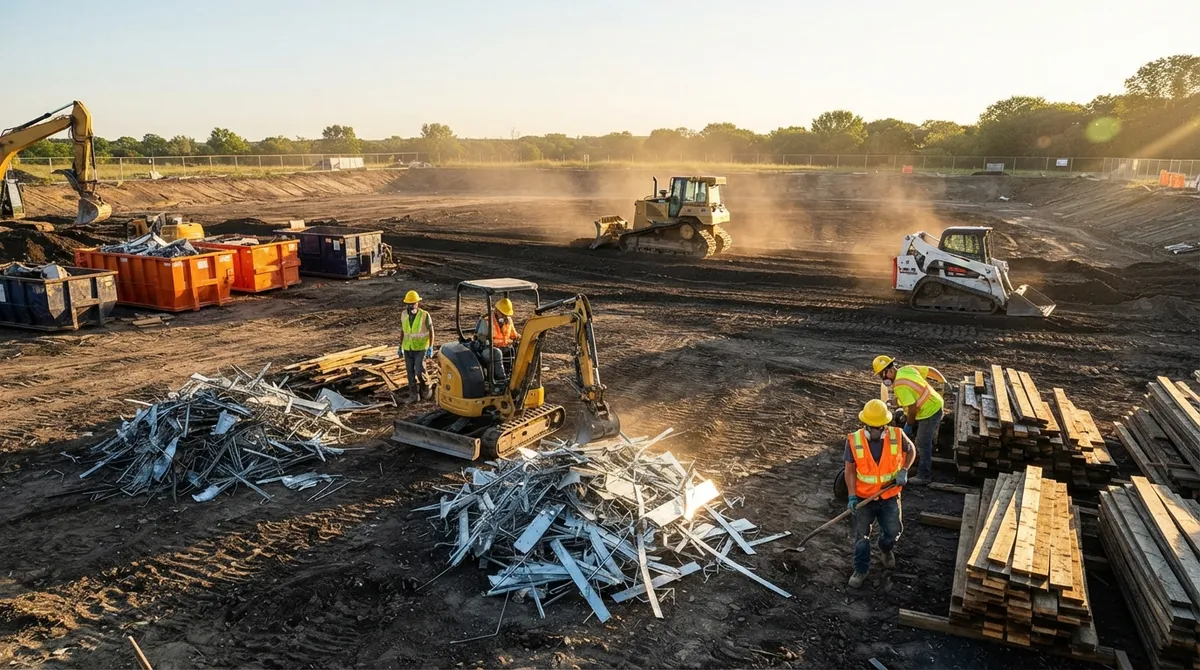
Debris removal and hauling is a major cost driver that’s often underestimated; materials must be sorted, hauled to landfills, and disposed of separately by type (concrete, wood, metal).
-
Attached features like pools ($3,000-$16,000), garages ($1,500-$5,000), and driveways ($1,000-$4,000) require separate demolition work and should be itemized separately in contractor quotes.
-
Site location and access significantly impact costs; tight urban spaces between buildings cost more than suburban lots, and farther distances to disposal sites increase hauling fees.
-
Get multiple contractor bids, test for hazardous materials early, bundle services with one contractor, and request detailed quotes specifying what’s included to avoid budget overruns and surprises.
So you’re thinking about tearing down a house. Maybe the structure is beyond saving. Maybe you’re clearing land for a fresh build. Either way, one of the first questions on your mind is probably: what does it cost to tear down a house? It’s a fair question — and the answer depends on more factors than most people expect.
The good news? Once you understand what drives demolition costs, you can plan smarter, budget better, and avoid surprises along the way. Whether you’re a homeowner, a developer, or a contractor managing a project in Clark or Nye County, this guide breaks it all down in plain English. Let’s walk through the six key factors that shape what you’ll pay.
What Is the Average Cost to Tear Down a House?
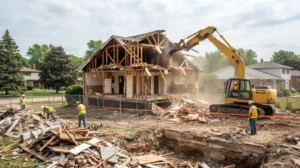
Before diving into the factors, let’s look at some baseline numbers. According to current industry data, the average cost to tear down a house in the U.S. lands around $15,800 to $18,000 for a standard 2,000-square-foot home. The overall range sits between $6,000 and $25,500, depending on a variety of conditions.
Per square foot, demolition typically costs between $2 and $17. Smaller homes with simple layouts sit at the lower end. Larger, more complex structures — especially those with hazardous materials — push toward the higher end. Use the table below as a quick reference.
| Home Size (Sq Ft) | Estimated Low Cost | Estimated High Cost |
|---|---|---|
| 1,000 sq ft | $4,000 | $10,000 |
| 1,500 sq ft | $6,000 | $15,000 |
| 2,000 sq ft | $8,000 | $18,000 |
| 2,500 sq ft | $10,000 | $22,000 |
| 3,000+ sq ft | $14,000 | $25,500+ |
These are general estimates. Your actual cost depends on the six factors we’re about to cover. For a more precise number, it’s always best to reach out to a licensed demolition contractor for a free on-site estimate.
Factor 1: Size and Structure of the Home
The bigger the home, the more it costs to tear down. That part is straightforward. But size isn’t the only structural element that matters. The type of construction plays a big role too.
Here are some structural elements that affect cost:
- Wood-frame homes are generally easier and cheaper to demolish
- Concrete or masonry structures take more time and equipment
- Multi-story buildings require additional safety planning
- Older construction styles may involve unusual materials or layouts
- Attached structures like garages or covered patios add complexity
Understanding your home’s construction type helps contractors give you a more accurate quote. If you’re unsure, a site inspection will clarify things quickly. You can also read more about what’s involved in full building demolition to get a better picture of the process.
Factor 2: Permits and Inspections
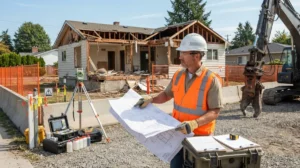
You can’t just knock a house down without the right paperwork. Demolition permits and inspections are required in Nevada — and they add to your overall cost. The good news is that these fees are usually manageable compared to the total project budget.
Here’s a general breakdown of permit-related costs:
- Demolition permit: Typically ranges from $50 to $100, though this varies by jurisdiction
- Pre-demolition inspection: Can range from $100 to $700 per inspection
- Utility disconnection fees: Gas, water, and electric lines must be safely capped before work begins
For local guidance, always check the Las Vegas demolition permit guidelines or contact the Clark County Building Department directly. A licensed contractor like 702 Demo can also help navigate the permitting process so you don’t have to figure it out alone. Learn more about why hiring a licensed demolition contractor matters for your project.
Factor 3: Hazardous Materials
This is one of the biggest cost variables — and one that surprises many homeowners. Older homes often contain materials that require special handling before demolition can begin. Skipping this step isn’t just expensive in the long run — it’s dangerous and illegal.
Common hazardous materials found in older homes include:
- Asbestos — found in insulation, floor tiles, and roofing
- Lead paint — common in homes built before 1978
- Mold — especially in homes with water damage
- Fuel oil tanks — underground or in basements
Hazardous material removal can cost up to $25 per square foot for safe remediation and disposal. That means a 2,000-square-foot home with asbestos could add $50,000 or more in remediation costs before demolition even starts. This is why a thorough pre-demolition inspection is so important. You can explore more about what demolition experts actually do on a job site to understand this process better.
Factor 4: Site Access and Location
Where your home is located — and how easy it is to get heavy equipment to the site — directly affects what you’ll pay. A house sitting on a wide, open lot in a suburban neighborhood is much easier to demolish than one tucked between two buildings on a narrow urban street.
Location and access factors that affect cost:
- Proximity to neighboring structures — tighter spaces require more careful work
- Slope or uneven terrain — grading may be needed before or after demo
- Distance from disposal sites — farther hauls mean higher debris removal costs
- Utility line locations — overhead or underground lines may need rerouting
In Clark and Nye counties, site conditions can vary significantly. Desert terrain, sandy soil, and proximity to neighboring properties all play a role. If your site needs grading after demolition, excavating and grading services are an important next step in preparing the land for new construction.
Factor 5: Debris Removal and Hauling
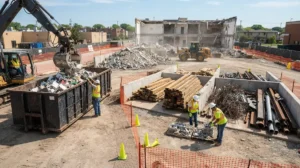
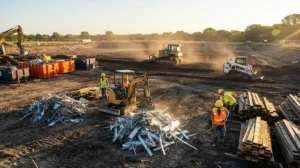
Once the house comes down, all that material has to go somewhere. Debris removal is a major part of what does it cost to tear down a house — and it’s often underestimated in early budget planning.
Here’s what typically factors into debris removal pricing:
- Volume of debris — more material means more truck loads and higher disposal fees
- Type of materials — concrete, wood, and metal are often sorted and disposed of separately
- Local landfill fees — tipping fees vary by location and material type
- Recycling credits — some materials can be salvaged, which may offset costs slightly
Professional hauling services ensure debris is handled safely and legally. This isn’t a step to cut corners on — improper disposal can result in fines and project delays. If you want to understand hauling in more depth, check out this helpful guide on 9 things you need to know about demo hauling.
Factor 6: Attached Extras — Garages, Basements, Pools, and More
The house itself is just one part of the picture. Most properties have additional structures or features that need to be demolished separately — and each one comes with its own cost.
| Feature | Typical Add-On Cost Range | Notes |
|---|---|---|
| Attached Garage | $1,500 – $5,000 | Varies by size and construction |
| Basement | $300 – $4,000 | Depends on finish level and access |
| Swimming Pool | $3,000 – $16,000 | Full removal vs. fill-in options |
| Chimney | $500 – $2,500 | Brick vs. prefab affects pricing |
| Driveway/Concrete | $1,000 – $4,000 | Based on square footage |
| Deck or Patio | $500 – $2,500 | Wood vs. concrete materials |
If your property has a swimming pool, for example, that’s a separate demolition job. You can learn more about the process through this detailed overview of pool removal services. For concrete features like driveways and patios, concrete removal is handled as its own service with its own cost structure.
Should You Demolish or Remodel?
This is a question many homeowners wrestle with. Demolition feels drastic — but sometimes it’s the smarter financial move. Here’s a simple way to think about it:
- If repairs exceed 50% of the home’s value, full demolition and rebuild often makes more sense
- If the foundation is compromised, no amount of remodeling fixes the underlying problem
- If you want a completely different layout, starting fresh gives you far more flexibility
Real estate developers and renovation contractors in Las Vegas often find that demolition opens up far more possibilities than trying to retrofit a structurally weak or outdated building. For a deeper look at planning the process, this guide on how to plan a residential home demolition the right way is a great starting point.
What Happens After the House Comes Down?
Demolition is just the beginning. Once the structure is cleared, your site still needs attention before new construction can begin. This often includes grading the land, removing leftover concrete, and ensuring proper drainage and soil stability.
A full-service contractor handles all of these steps in sequence. If you’re planning a rebuild after demolition, check out the range of services offered by 702 Demo, from excavation and grading to hauling and site prep. Having one team manage the whole project saves time and reduces coordination headaches.
Curious about what to expect from the demolition itself? This article on how to demolish a house and what you need first walks you through the full process step by step.
Tips for Keeping Demolition Costs Under Control
Nobody wants to go over budget. Here are some practical tips to help you keep costs manageable:
- Get multiple quotes — compare at least two or three bids from licensed contractors
- Test for hazardous materials early — early detection avoids costly mid-project surprises
- Bundle services — combining demolition, hauling, and grading with one contractor often saves money
- Plan the timing — scheduling during a contractor’s off-peak season may reduce labor costs
- Clarify what’s included — always ask what the quote covers so there are no hidden surprises
- Work with a licensed pro — DIY demolition risks fines, injuries, and costly do-overs
For more tips on finding the right team, read through this guide on how to find residential demolition contractors near you.
Why Choose 702 Demo for Your House Teardown in Las Vegas?
When it comes to understanding what does it cost to tear down a house and getting the job done right, experience matters. 702 Demo is the leading demolition contractor in Las Vegas, serving all of Clark and Nye counties with a full range of demolition, excavation, grading, and hauling services.
The team brings real expertise to every project — whether it’s a small residential teardown or a large-scale commercial demolition. Homeowners, developers, and contractors across the Las Vegas Valley trust 702 Demo to get the job done safely, efficiently, and on budget. You can see what customers are saying about 702 Demo on Google and learn why so many property owners keep coming back.
Conclusion
Understanding what does it cost to tear down a house comes down to knowing which factors affect the price — and there are six big ones. Size and structure, permits, hazardous materials, site access, debris removal, and attached extras all play a role in your final number. The more you understand these variables, the better prepared you’ll be to plan your project confidently.
Don’t guess when it comes to your demolition budget. Get a clear, accurate estimate from a trusted local expert. Contact 702 Demo today for a free, no-obligation estimate and take the first step toward a clean, cleared site — ready for whatever comes next.
FAQs
Q: How much does it cost to tear down a house per square foot?
A: Most house demolitions cost between $2 and $17 per square foot, depending on the home’s size, construction type, and local labor rates. Smaller or simpler homes tend to land at the lower end, while larger or more complex structures push the price higher. Getting an on-site estimate is the best way to nail down your specific per-square-foot cost.
Q: Do garages, pools, and driveways cost extra to remove?
A: Yes — attached features like garages, swimming pools, chimneys, decks, and driveways are typically priced separately from the main house demolition. For example, pool removal can add $3,000 to $16,000, while a garage teardown might add $1,500 to $5,000. Always ask your contractor to itemize these in your quote so there are no surprises.
Q: How much does asbestos removal add to demolition costs?
A: Asbestos and other hazardous materials can significantly increase your project cost — up to $25 per square foot for safe removal and disposal. A 2,000-square-foot home with widespread asbestos could see remediation costs alone reach $50,000 before demolition even begins. That’s why pre-demolition testing is so important and should never be skipped.
Q: Is it cheaper to demolish a house or remodel it?
A: It depends on the condition of the home, but if repairs exceed about 50% of the property’s value — or if there are serious structural or foundation issues — full demolition and rebuild is often the smarter financial choice. Demolition also gives you complete design freedom that remodeling simply can’t match. A licensed contractor can help you weigh the options for your specific situation.
Q: Do I need a permit to tear down a house in Las Vegas?
A: Yes, demolition permits are required in Las Vegas and Clark County before any house teardown can begin. Permit fees are relatively modest, but inspections and utility disconnection requirements add to the overall process. Working with a licensed demolition contractor makes the permitting process much smoother and ensures everything is done by the book.