Key Takeaways
-
Commercial concrete removal requires specialized equipment and trained crews because concrete weighs 150+ pounds per cubic foot and is often reinforced with steel rebar, making improper handling a serious safety and structural damage risk.
-
Silica dust control is a critical regulatory requirement during concrete removal; federal regulations mandate wet-cutting methods, vacuum systems, and protective equipment to prevent serious lung disease from fine particle inhalation.
-
Professional concrete removal follows a structured process: site assessment, permitting, cutting into sections, breaking, debris loading, hauling to recycling facilities, and site cleanup—ensuring safety and compliance while minimizing disruption.
-
Most commercial concrete removal projects in Las Vegas require permits from local building authorities; hiring a licensed contractor handles permitting and compliance, helping you avoid fines and legal issues.
-
Removed concrete is often recycled into road base or fill material after steel rebar separation, reducing environmental impact and sometimes lowering hauling costs compared to disposal at licensed facilities.
-
Choose contractors based on Nevada licensing verification, demonstrated commercial project experience, proper equipment availability, clear communication practices, and responsible disposal methods to ensure efficient and compliant project execution.
If you’re planning a commercial renovation or redevelopment in the Las Vegas area, concrete removal is probably on your to-do list. And if you’ve never dealt with it before, you might be wondering where to start. Commercial concrete removal is a big job — and it’s not something you want to tackle without the right team. From heavy slabs and reinforced foundations to sprawling parking lots, commercial concrete is tough stuff. It weighs around 150 pounds per cubic foot (even more with steel rebar included), and it takes serious equipment and skilled crews to remove it safely and efficiently.
Whether you’re a property developer, a general contractor, or a business owner preparing a site for new construction, understanding how commercial concrete removal works can save you time, money, and headaches. Let’s walk through everything you need to know.
What Is Commercial Concrete Removal?
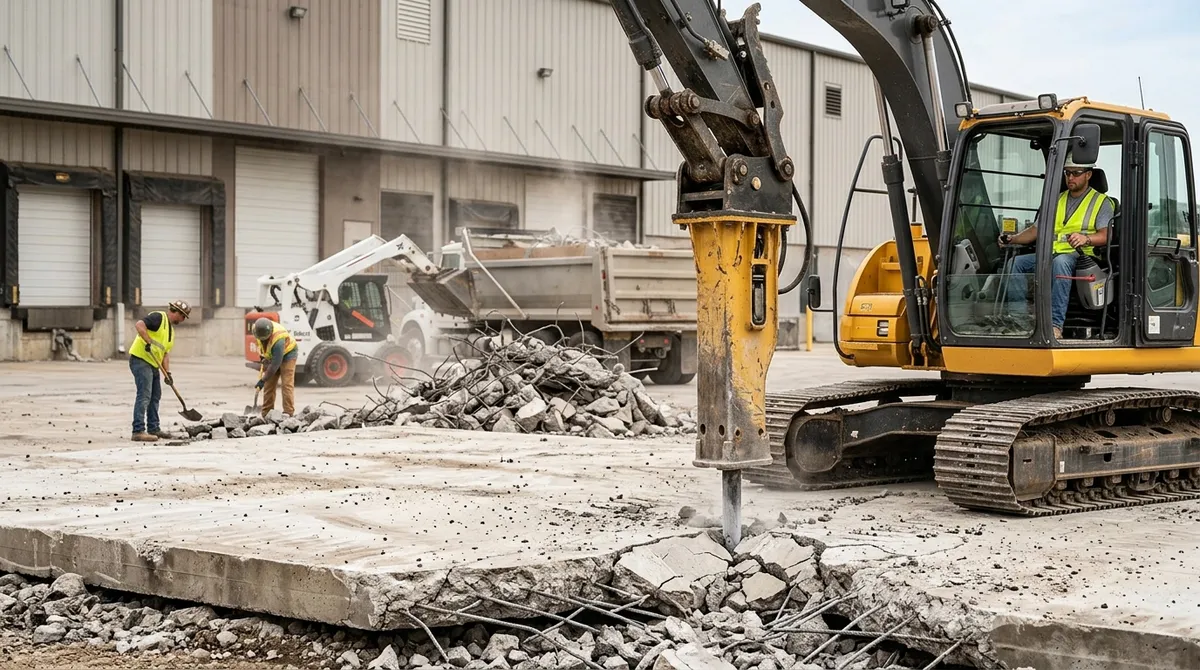
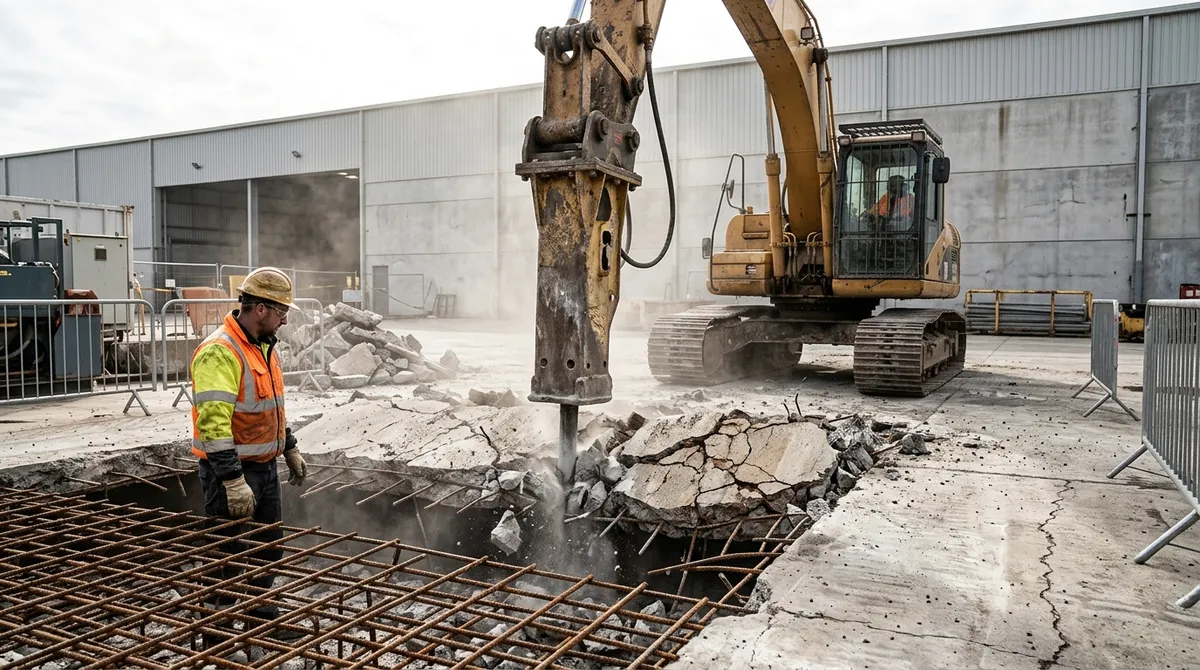
Commercial concrete removal is the process of breaking down, cutting, lifting, loading, and disposing of concrete structures at commercial properties. This includes things like building foundations, floor slabs, parking lots, driveways, footings, basement structures, and hardscape. It’s different from a small residential job — the scale is larger, the material is often reinforced with steel, and the planning involved is much more detailed.
The work usually involves a coordinated scope that includes concrete removal, debris hauling, and site preparation. It’s often part of a broader demolition project. If you’re curious about the full scope of what demolition professionals handle on a job site, check out this guide on what demolition experts actually do on a job site.
When Do You Need Commercial Concrete Removal?
There are many situations where commercial concrete removal becomes necessary. Here are some of the most common ones:
- Redeveloping a commercial property for new construction
- Repairing or replacing a damaged concrete slab or foundation
- Clearing a parking lot or driveway for resurfacing
- Removing deteriorated footings or basement structures
- Preparing a commercial site for excavation and grading
- Renovating the interior of a commercial building (removing concrete floors)
If your project falls into any of these categories, it’s time to bring in a professional demolition crew. You can also learn more about broader commercial demolition facts in 2026 to better understand what your project might involve.
What Equipment Is Used for Concrete Removal?
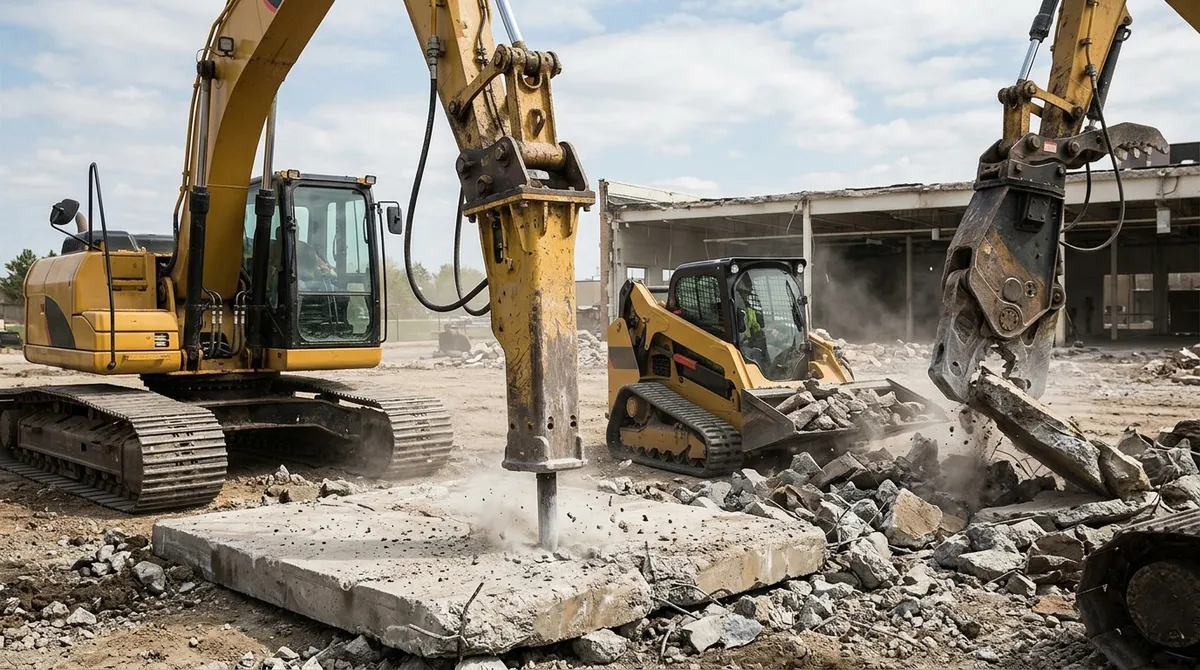
Commercial concrete removal is not a shovel-and-wheelbarrow operation. Professionals use specialized equipment to get the job done safely and efficiently. Here’s a look at the tools commonly used:
- Concrete saws and slab saws – Used to cut concrete into manageable sections
- Wall saws – Ideal for cutting through vertical surfaces like walls and foundations
- Core drills – Used to drill precise holes through slabs and structural concrete
- Hydraulic breakers and jackhammers – Used to break up large concrete sections
- Robotic demolition tools – Great for tight or confined spaces where large machines can’t fit
- Excavators and skid steers – Used to lift, move, and load broken concrete debris
Using the right equipment makes a huge difference in how quickly and safely the job gets done. It also minimizes damage to the surrounding site — which matters a lot for commercial projects where timelines are tight.
How Does the Commercial Concrete Removal Process Work?
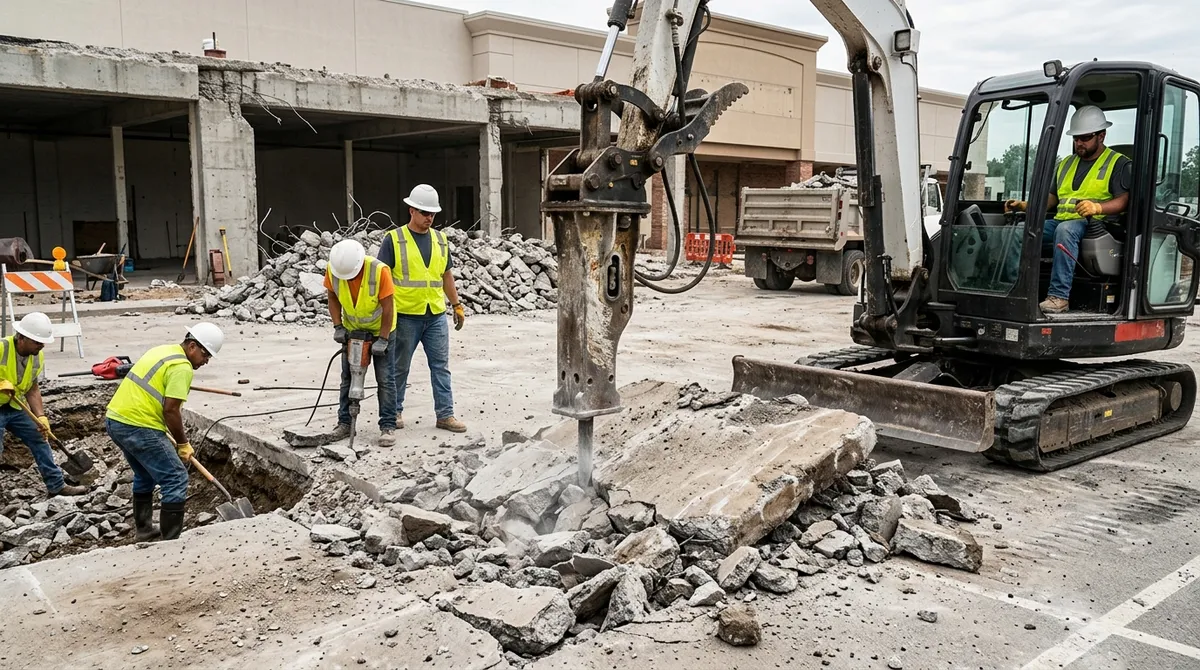
A well-organized concrete removal job follows a clear sequence of steps. Here’s what a professional crew typically does:
- Site assessment and planning – The crew evaluates the concrete type, thickness, reinforcement, and surrounding structures before anything begins.
- Permits and compliance – Required permits are secured. In Las Vegas, you can reference the Las Vegas demolition permit guidelines to understand what’s needed for your project.
- Cutting and scoring – Concrete is cut into sections using saws, making it easier to break apart and remove.
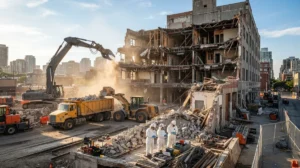
- Breaking and demolition – Hydraulic breakers or robotic tools break the sections into smaller pieces.
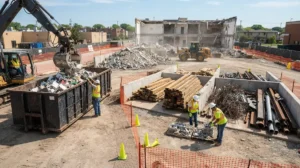
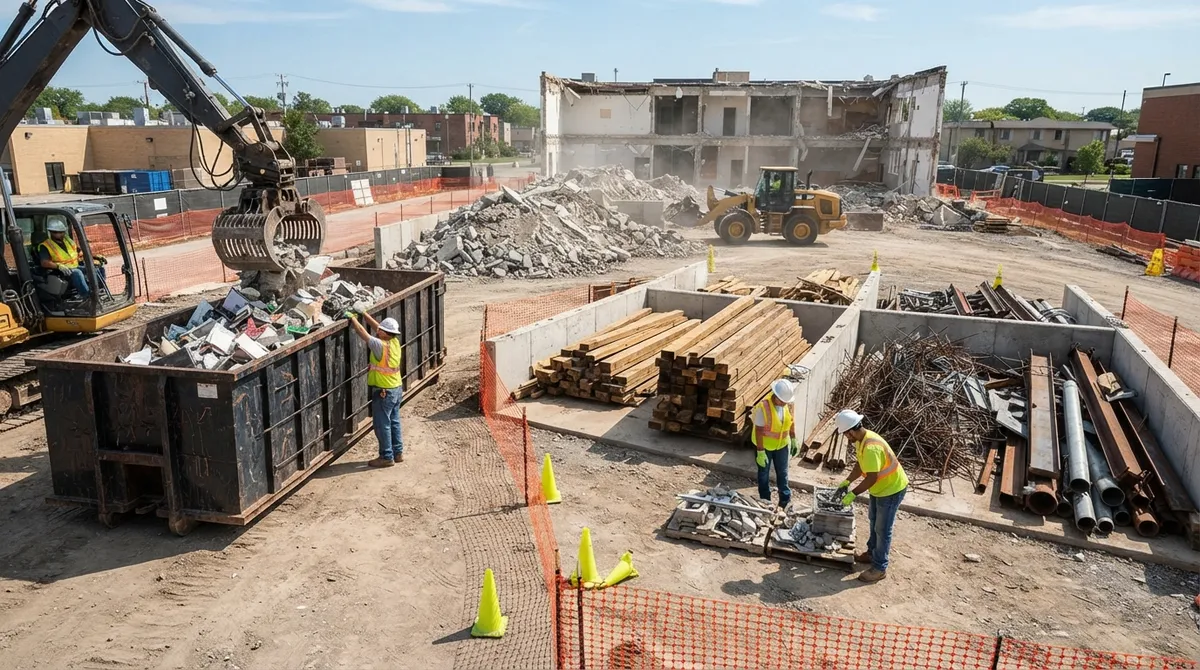
- Debris loading – Broken concrete is loaded into trucks using excavators or skid steers.
- Hauling and disposal – All debris is hauled away responsibly. Concrete is often recycled when possible.
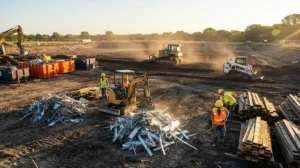
- Site cleanup and preparation – The area is graded and cleaned up to prepare it for the next phase of construction.
This process ensures the work is done safely, efficiently, and with minimal disruption to the surrounding property. Want to understand what hauling involves after demolition? Read more about hauling services to see how it all fits together.
Why Silica Dust Control Matters
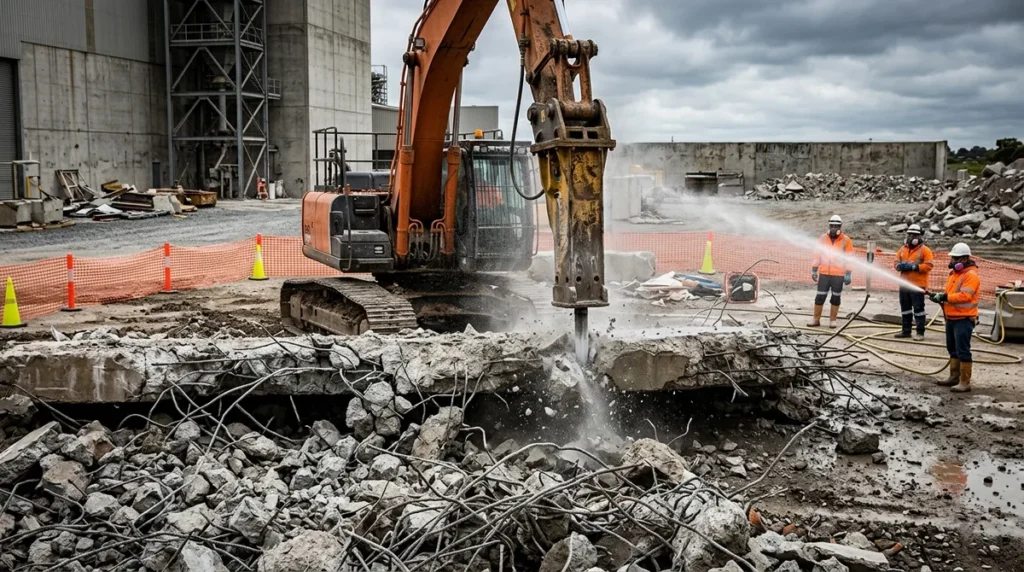
One thing that surprises many property owners is the regulatory side of concrete demolition. Breaking and cutting concrete generates silica dust — a fine particle that can cause serious lung disease when inhaled. New federal silica regulations have made dust control a critical part of any concrete removal job.
Professional demolition crews use wet-cutting methods, vacuum systems, and personal protective equipment to keep silica exposure under control. This is one of the main reasons commercial concrete removal is best left to trained professionals. Trying to cut corners on dust control is not worth the health and legal risks.
Silica regulations have also made commercial concrete removal more complex than it used to be. The Clark County Building Department can provide guidance on local compliance requirements for demolition work in the area.
Types of Commercial Concrete Structures Commonly Removed
| Concrete Type | Common Location | Key Consideration |
|---|---|---|
| Foundation slabs | Base of commercial buildings | Often heavily reinforced with rebar |
| Parking lot concrete | Commercial parking areas | Large surface area, requires slab saw |
| Floor slabs | Interior of warehouses and retail spaces | May need selective removal only |
| Footings | Below grade, supporting walls and columns | Requires excavation to access |
| Driveways and aprons | Entry areas of commercial properties | Often connected to public infrastructure |
| Retaining walls | Slopes and terraced commercial lots | Stability concerns during removal |
As you can see, the type of concrete structure being removed affects the tools used, the timeline, and the overall complexity of the job. A professional crew can assess your specific situation and recommend the best approach. For a closer look at how concrete demolition is handled for both homes and businesses in Las Vegas, visit this page on the best concrete demolition for homes and businesses in Las Vegas.
Commercial Concrete Removal vs. Concrete Cutting: What’s the Difference?
People sometimes confuse concrete removal with concrete cutting — but they’re not the same thing. Here’s how they differ:
- Concrete cutting involves scoring or slicing through concrete for openings, joints, or sectioning — often without full removal.
- Concrete removal means the full extraction of concrete from a site, including breaking, loading, and disposal.
In most commercial projects, both processes work together. The concrete is cut into sections, then broken and removed from the site entirely. Understanding this distinction helps when you’re planning your project scope. You can also explore more about concrete demolition contractor expertise to get a fuller picture of how both processes fit together.
What Happens to the Concrete After Removal?
Removed concrete doesn’t just disappear — it has to go somewhere. Here’s the typical pathway for concrete debris after removal:
- Sorting on-site – Steel rebar is often separated from concrete for recycling.
- Transport to a recycling facility – Crushed concrete can be repurposed as road base material, fill material, or aggregate.
- Disposal at approved facilities – Any concrete that can’t be recycled is taken to a licensed disposal site.
Recycling concrete is good for the environment and can even reduce hauling costs in some cases. A reputable demolition contractor will handle disposal responsibly so you don’t have to worry about where the debris ends up. Check out the full guide on concrete removal, breaking, hauling, and disposing for more details.
Do You Need a Permit for Commercial Concrete Removal?
In most cases, yes. Commercial concrete removal — especially when it involves foundations, structural slabs, or large-scale demolition — typically requires a permit from your local building authority. In Clark County and the Las Vegas area, permit requirements can vary depending on the scope and type of work.
Working with a licensed demolition contractor means the permitting process is handled for you. They know what’s required, how to apply, and how to keep the project compliant from start to finish. For more information on why licensing matters, read this article on what makes a licensed demolition contractor essential for your project.
Why Hire a Professional for Commercial Concrete Removal?
This is a question worth taking seriously. Here’s why professional commercial concrete removal is always the smarter choice:
- Concrete is extremely heavy — improper handling can cause injuries or structural damage
- Silica dust exposure is a real health hazard without proper controls
- Permits and compliance requirements must be met to avoid fines
- Specialized equipment is needed to do the job safely and efficiently
- Debris must be disposed of at approved facilities — not just dumped anywhere
A professional crew also minimizes disruption to your site, helping you stay on schedule. For commercial projects, time is money — and delays caused by improper concrete removal can be costly. Explore the 8 types of commercial demolition services explained in 2026 to see the full range of professional options available to you.
Choosing the Right Concrete Removal Contractor in Las Vegas
Not all demolition contractors are created equal. When choosing a team for your commercial concrete removal project, look for these qualities:
- Licensed and insured – Always verify the contractor holds valid licenses for demolition work in Nevada.
- Experience with commercial projects – Commercial sites have unique challenges that require proven expertise.
- Proper equipment – Make sure they have the right tools for your specific concrete type and project scope.
- Clear communication – A good contractor keeps you updated throughout the process.
- Responsible disposal practices – Ask how they handle concrete debris and recycling.
702 Demo is a trusted full-service demolition contractor serving Clark and Nye counties in Nevada. With experience across commercial and residential demolition projects, they bring the right equipment, licensing, and expertise to every concrete removal job. You can visit 702 Demo on Google to read reviews from satisfied customers across the Las Vegas area.
For anyone planning a commercial project, it also helps to understand the broader scope of excavating and grading services that often follow concrete removal. Site preparation doesn’t end when the concrete is gone — grading and leveling are key next steps.
Conclusion
Commercial concrete removal is a demanding, highly technical job that requires planning, proper equipment, and a skilled crew. Whether you’re tearing out a parking lot, removing a foundation, or clearing floor slabs for a renovation, understanding the process helps you make smarter decisions for your project. The weight of the material, the dust control requirements, the permitting process, and the disposal logistics all make this a job for professionals.
If you’re ready to get your commercial site cleared and prepped, don’t wait. Reach out to 702 Demo for a free estimate and let their experienced team handle every step — from the first cut to the final cleanup. You’ll be glad you brought in the pros.
FAQs
Q: What is commercial concrete removal?
A: Commercial concrete removal is the process of breaking, cutting, loading, and disposing of concrete structures at commercial properties — things like foundations, floor slabs, parking lots, and driveways. It’s a big job that requires specialized equipment and trained crews to do safely and efficiently.
Q: Do I need a permit for commercial concrete removal in Las Vegas?
A: In most cases, yes! Commercial concrete removal — especially for foundations and structural slabs — typically requires a permit from your local building authority. A licensed demolition contractor will handle the permitting process for you, so you don’t have to stress about the details.
Q: What equipment is used for commercial concrete removal?
A: Professional crews use a range of specialized tools including concrete saws, slab saws, wall saws, core drills, hydraulic breakers, robotic demolition tools, and excavators. The right equipment depends on the type and size of the concrete being removed.
Q: How long does commercial concrete removal take?
A: The timeline really depends on the size and complexity of the project. A small slab might be done in a day, while a large foundation or parking lot could take several days or more. A good contractor will give you a realistic timeline during the planning phase.
Q: What happens to the concrete after it’s removed?
A: Removed concrete is typically transported to a recycling facility where it can be crushed and repurposed as road base or fill material. Steel rebar is often separated and recycled separately. Any material that can’t be recycled is disposed of at an approved facility — responsibly and legally.