Key Takeaways
-
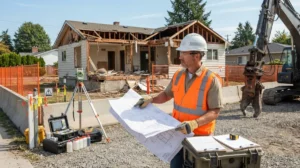
Permits are required even for small detached garages in most jurisdictions; check with your local building department and Clark County Building Department to avoid fines and delays.
-
Hire a licensed contractor with proper Nevada demolition licensing, liability insurance, and experience handling asbestos inspection, utility disconnection, and site restoration to protect your property.
-
Federal asbestos NESHAP rules require inspection before demolition if your garage contains regulated materials like pipe insulation (260+ linear feet) or facility components (160+ square feet), regardless of garage size.
-
Full-service contractors handle permits, utility coordination, debris sorting/recycling, concrete removal, grading, and final site restoration—ensuring the entire project runs smoothly from start to finish.
That old garage in your backyard has seen better days. Maybe it’s leaning a little, or maybe you just need the space for something new. Whatever the reason, tearing down a garage is not a simple weekend job. It takes the right tools, the right permits, and a licensed demolition contractor who knows what they are doing.
Whether you are a homeowner in Henderson, a builder working on a commercial site, or a property manager dealing with an old carport, this guide will walk you through everything you need to know. We will cover permits, safety, costs, and how to pick the right team for the job. By the end, you will feel ready to take the next step with confidence.
What Does a Garage Demolition Contractor Actually Do?
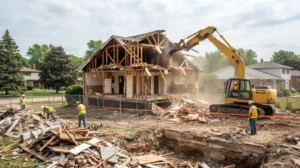
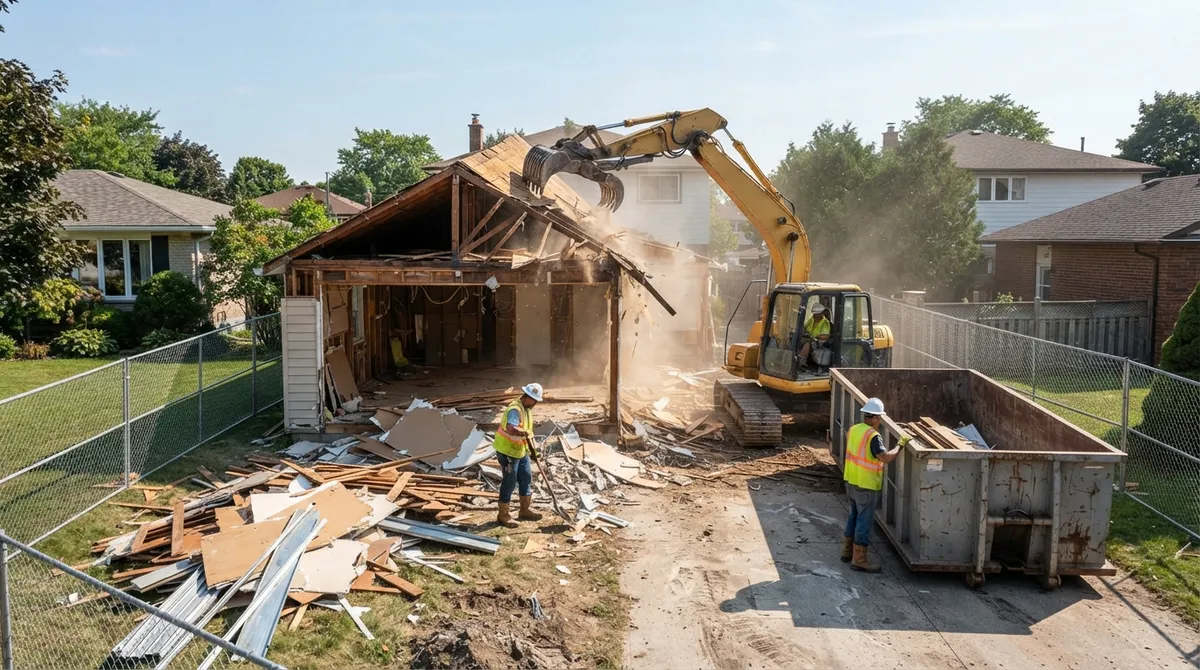
A garage demolition contractor is a specialist who safely removes garages, carports, and related structures. This includes detached garages, attached garages, slabs, and foundations. They handle every step so you do not have to worry about a thing.
Here is what a good contractor typically manages for you:
- Inspecting the site before any work begins
- Coordinating utility disconnections with local providers
- Helping with permit applications and paperwork
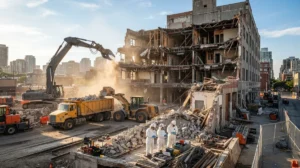
- Tearing down the structure safely
- Hauling away debris and sorting recyclable materials
- Removing the concrete slab or foundation, if included
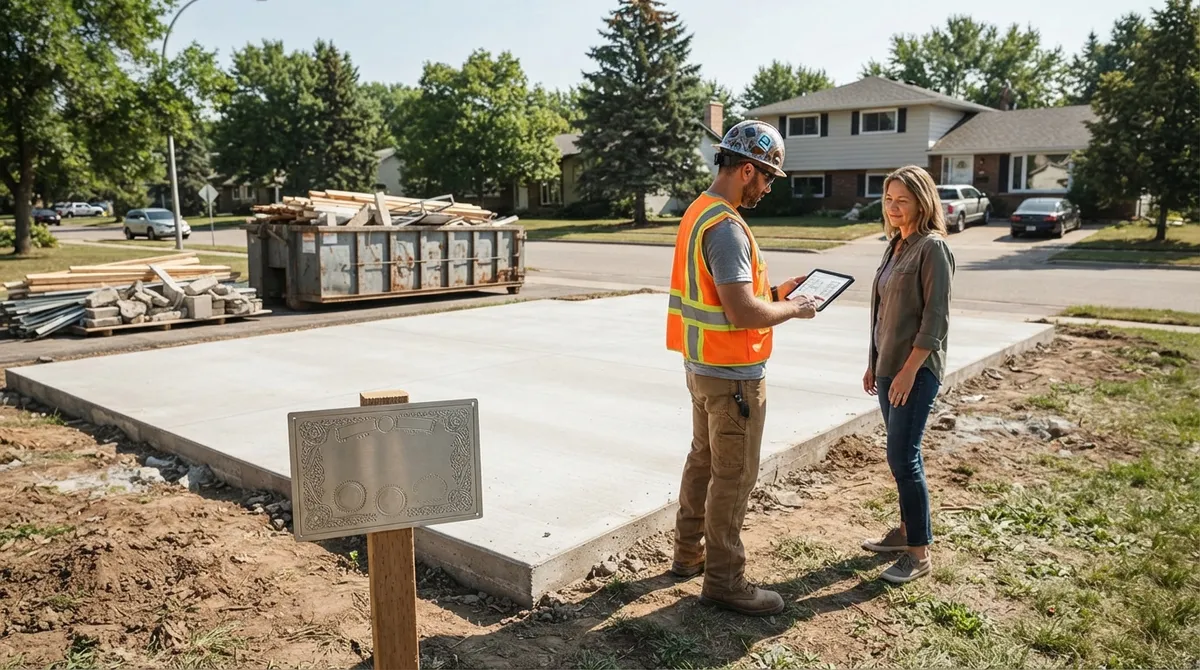
- Grading and cleaning up the site when the job is done
Some contractors only knock down the structure. Others, like 702 Demo, offer full-service demolition, excavating, grading, and paving. That means one team can handle your whole project from start to finish.
Why Permits Matter for Garage Demolition
Many homeowners are surprised to learn they need a permit to tear down even a small detached garage. Rules vary by city and county, so it pays to check first. In Las Vegas, you can review the official Las Vegas demolition permit guidelines before starting any project.
If your property is outside city limits, you will want to check with the Clark County Building Department for local requirements. Permits may also be needed for:
- Utility shutoffs before demolition begins
- Sidewalk or street use during the project
- Grading or drainage changes after the garage is gone
- Zoning approvals, especially for historic properties
- New construction plans if you are rebuilding
A trustworthy contractor will help guide you through this process. This saves you from fines or delays down the road.
Steps to Confirm Permit Requirements
- Contact your local building department to ask about garage demolition rules
- Find out if utility disconnection permits are separate from demolition permits
- Ask your contractor if they handle permit paperwork for you
- Confirm timelines, since some permits take a few weeks to process
- Keep copies of all approved permits on-site during the work
Watch Out for Asbestos in Older Garages
If your garage was built decades ago, it might contain asbestos. This mineral was once common in roofing, siding, floor tiles, and pipe insulation. It is not dangerous when left alone, but it becomes risky when disturbed during demolition.
Federal rules under the asbestos NESHAP program require inspection before certain demolition projects. According to the U.S. Environmental Protection Agency, covered projects generally need notification at least 10 working days before work begins. The rules set specific thresholds, including:
| Material Type | Threshold Amount |
|---|---|
| Pipe insulation | 260 linear feet |
| Other facility components | 160 square feet |
| Material not measured by length or area | 35 cubic feet |
These numbers come directly from federal regulations, not from garage size or project cost. Even a small garage can trigger inspection requirements if it contains regulated materials. Note that federal rules generally exclude homes with four or fewer units, but state and local rules may still apply. It is always smart to confirm the details with your local building authority.
How Utilities Get Handled Before Demolition
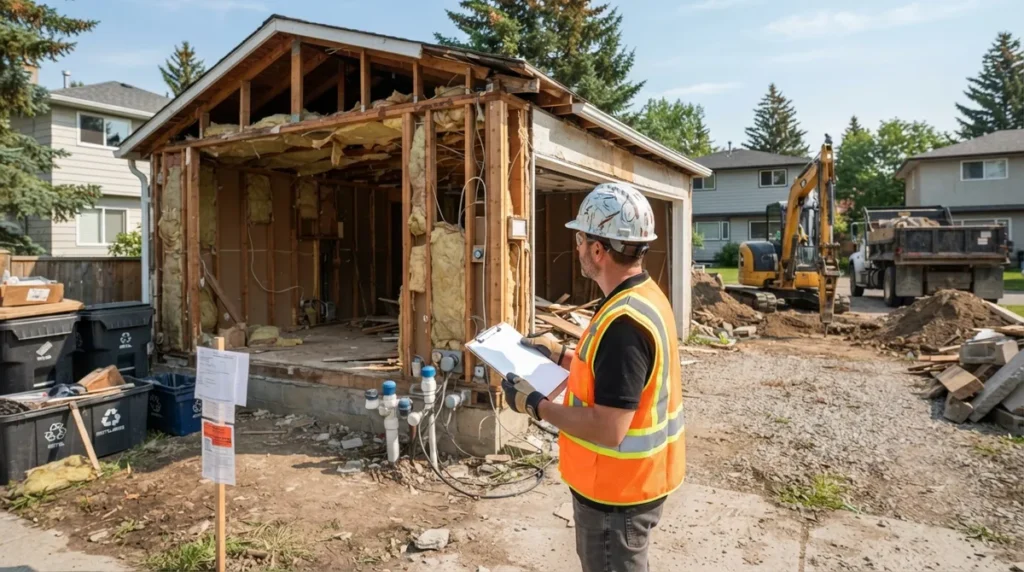
Before any equipment touches your garage, all utilities need to be checked and disconnected. This includes electrical lines, gas lines, water pipes, and sewer connections. Skipping this step can lead to dangerous accidents.
Here is the usual process contractors follow:
- Identify all utility lines running to or through the garage
- Contact the utility provider to schedule disconnection
- Confirm gas and electrical lines are capped safely
- Verify water and sewer lines are properly closed off
- Document everything before demolition begins
A qualified building demolition team will not start work until every utility is confirmed safe. This protects your property, your neighbors, and the crew doing the work.
What Happens to the Debris?
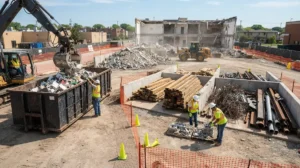
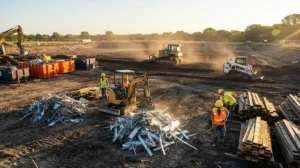
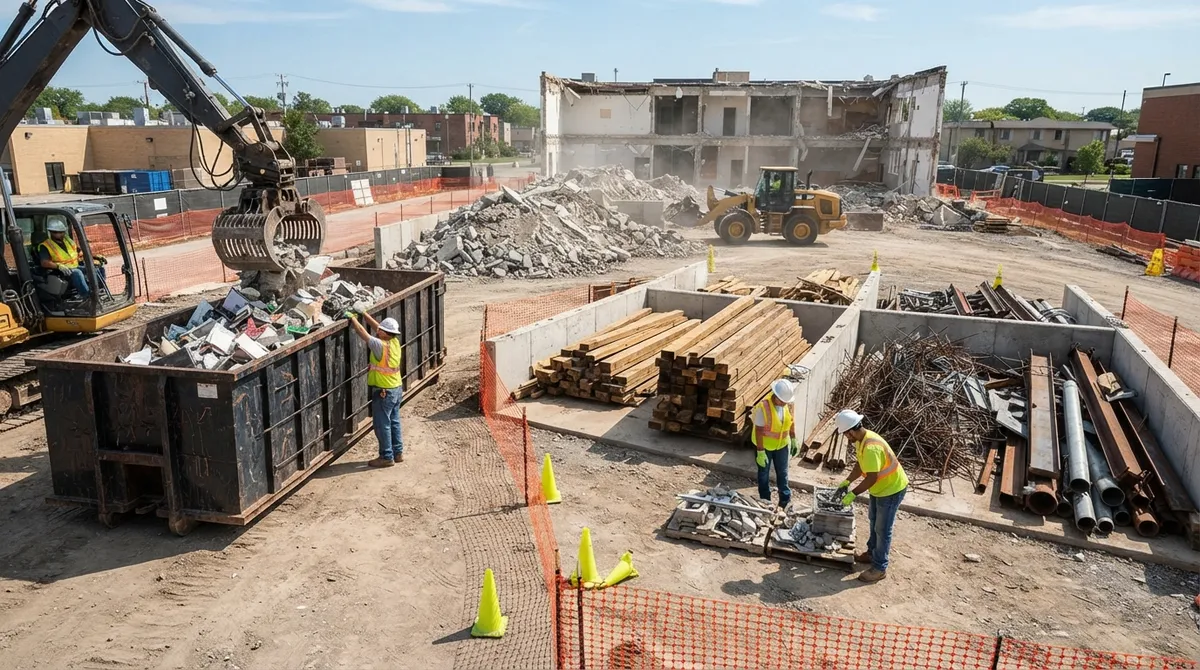
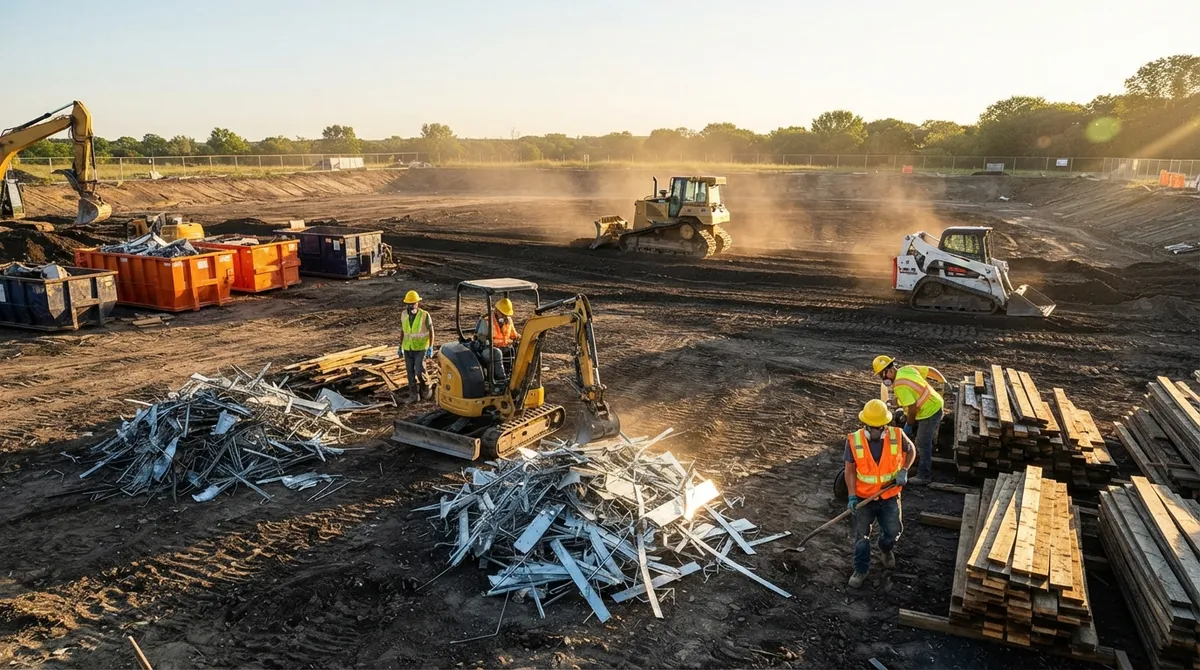
Garage demolition creates a lot of waste. This can include wood, concrete, metal, drywall, insulation, and sometimes hazardous materials. A responsible contractor sorts and disposes of everything the right way.
Common materials removed during a garage teardown include:
- Wood framing and roof trusses
- Concrete slabs and footings
- Asphalt shingles or metal roofing
- Drywall and insulation
- Old appliances or storage items left behind
- Soil that needs grading after removal
- Proof of proper licensing for demolition work in Nevada
- General liability insurance and workers compensation coverage
- Experience with garage demolition, not just large commercial jobs
- Willingness to provide a written scope of work
- References from past customers in Clark or Nye counties
- Clear communication about permits, utilities, and hazardous materials
- Do you handle permit applications, or is that my responsibility?
- How do you coordinate utility disconnections?
- What happens if asbestos is found during the project?
- Does your quote include slab and foundation removal?
- How do you protect neighboring structures and landscaping?
- What is your plan for dust control during demolition?
- Taking photos of neighboring structures before demolition
- Checking overhead power lines and nearby trees
- Reviewing drainage patterns to prevent water issues later
- Planning safe equipment access routes
- Wetting down debris before and during removal
- Using containment barriers where needed
- Choosing equipment that limits airborne particles
- Following proper loading techniques for hauling trucks
- Removing any leftover foundation or footing material
- Backfilling the area with proper soil
- Grading the site so water drains correctly
- Adding erosion control if the site will sit empty for a while
- Doing a final walkthrough to confirm everything matches the contract
Recyclable materials like metal and concrete are often separated and taken to proper facilities. This reduces landfill waste and can be better for the environment. If your project includes concrete removal, ask your contractor how they plan to break up and haul away the slab.
Choosing the Right Garage Demolition Contractor
Not every demolition company handles garages the same way. Some rush through the job, while others take the time to protect your property and follow every rule. Here is what to look for:
Key Qualities to Check
A written proposal should spell out everything, including demolition limits, permit responsibilities, debris removal, and final grading. This protects you if questions come up later. If you want to see how a trusted team operates, you can visit us on Google — 702 Demo to read what other homeowners and builders in the area have said.
Questions to Ask Before You Hire
Protecting Your Property During the Project
Garages are often close to fences, driveways, trees, and sometimes even the main house. A careful contractor inspects the surrounding area before work starts. This helps avoid accidental damage and disputes later.
Good practices include:
Some garages sit close to property lines or attached homes. In these cases, crews may use selective hand dismantling instead of heavy machinery. This approach takes more time but reduces risk to nearby structures.
Dust Control and Safety on the Job Site
Demolition creates dust, and dust can travel further than you might expect. Responsible contractors use several methods to keep it under control, including:
Workers should also wear the right protective gear at all times. This keeps the crew safe and shows the contractor takes the job seriously. If you are curious about how professionals manage larger tear-downs, our article on residential demolition services covers more helpful details.
Site Restoration After the Garage Is Gone
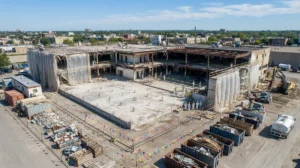
Once the garage is down and the debris is hauled away, the job is not quite finished. A quality contractor will also handle final site work, such as:
This final step matters a lot if you plan to build something new, add landscaping, or simply enjoy a clean, open yard. Our team at 702 Demo also handles excavating and grading so your site is ready for whatever comes next.
Garage Demolition for Different Property Types
Every project looks a little different depending on who owns the property and what they plan to do next.
For Homeowners
Most homeowners want a clean, quiet process with minimal disruption. Dust control, fence protection, and clear timelines matter most here.
For Commercial Builders and Developers
Larger projects often involve multiple structures and tight deadlines. Builders need a contractor who can handle hauling services at scale without slowing down the schedule.
For Property Managers
Property managers dealing with old carports or storage garages often need help with hazardous material removal and fast turnaround for tenant safety.
No matter which category fits you best, the same basic principles apply: get permits sorted, protect utilities, control dust, and dispose of debris the right way.
Ready to Get Started?
Tearing down a garage does not have to be stressful. With the right team handling permits, utilities, safety, and cleanup, the whole process can move smoothly from start to finish. 702 Demo has years of experience serving Clark and Nye counties, and we treat every garage demolition project with the same care we would want for our own property.
If you are ready to move forward, contact 702 Demo for a free estimate today. We will walk you through the process, answer your questions, and make sure your project is handled the right way from day one.
FAQs
Q: How much does it cost to hire a garage demolition contractor?
A: Costs depend on garage size, materials, foundation type, and whether you need concrete removal or hazardous material handling. The best way to get a real number is to request a free estimate so a contractor can look at your specific project.
Q: Do I need a permit to demolish a detached garage?
A: In most cases, yes! Even small residential garages often need a demolition permit from your city or county. Checking with your local building department before you start saves you time and headaches later.
Q: How long does garage demolition take?
A: Most garage demolitions wrap up in one to a few days, depending on size and complexity. Factors like asbestos inspection, utility disconnection, and foundation removal can add extra time to the schedule.
Q: Does garage demolition include removing the concrete slab and foundation?
A: It depends on your contract! Some projects only remove the structure above ground, while others include full slab and foundation removal. Always ask your contractor to spell this out clearly in the written proposal.
Q: How can I tell whether an old garage contains asbestos?
A: You usually cannot tell just by looking, especially in garages built before the 1980s. A qualified inspection is the safest way to know for sure, and your contractor can help coordinate this before demolition begins.
Q: Who disconnects gas, electrical, water, and other utilities before demolition?
A: This is usually handled by the utility provider or a qualified professional working with your demolition contractor. A good contractor will confirm every utility is safely disconnected before any equipment shows up on-site.