Key Takeaways
-
Comprehensive home demolition services include site assessment, permit coordination, utility disconnection, hazardous material checks, structural demolition, debris removal, and site grading—not just knocking down walls.
-
Demolition permits are mandatory in nearly all jurisdictions and typically cost $100-$500; skipping permits can result in fines, delays, or legal trouble, so verify requirements with your local building department first.
-
Older homes commonly contain asbestos, lead-based paint, and underground fuel tanks that must be professionally inspected and safely removed before demolition begins, with asbestos abatement costing $1,000-$2,900.
-
Full-house demolition typically ranges from $6,000-$25,000 ($4-$17 per square foot), with costs varying by home size, location, foundation type, and hazardous materials; request itemized estimates from licensed local contractors for accurate pricing.
Thinking about tearing down a house in Clark or Nye County? You are not alone, and honestly, it’s exciting! Whether you’re clearing land for a dream home or removing a structure that’s seen better days, home demolition services take the guesswork out of the process. A good contractor handles everything from permits to final cleanup, so you can focus on what comes next.
In this friendly guide, we’ll walk through six key parts of home demolition services you should know before you start. We’ll cover costs, permits, safety, debris, and how to pick the right team. By the end, you’ll feel confident and ready to move forward. Let’s dig in!
1. Understanding What Home Demolition Services Actually Include
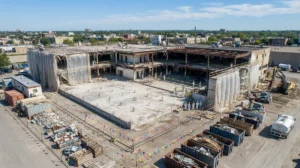
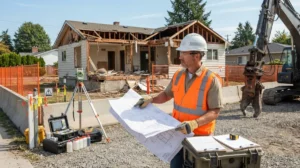
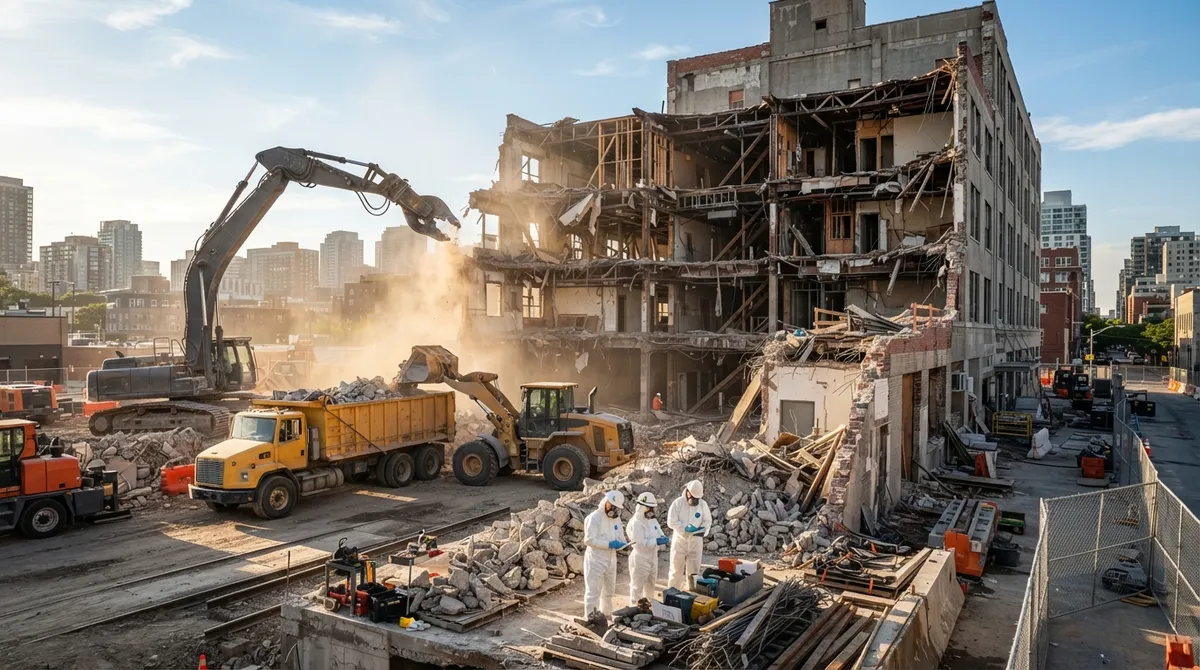
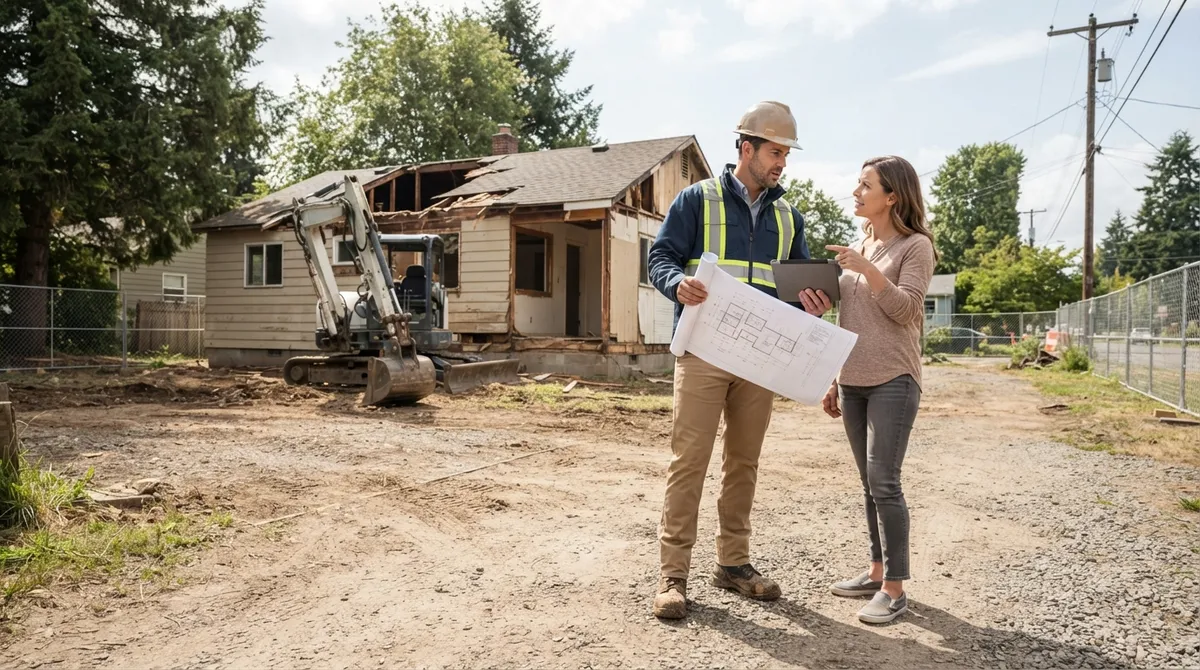
Home demolition services cover a lot more than just knocking down walls. A full-service job usually includes site assessment, permit coordination, utility disconnection, hazardous material checks, the actual demolition, debris removal, and site grading. It’s a complete package designed to leave your lot clean and ready for whatever comes next.
Many homeowners are surprised by how much planning goes into a project that looks simple from the outside. That’s why working with an experienced team, like the folks at 702 Demo, makes such a big difference. They handle the details so nothing falls through the cracks.
- Site assessment and hazardous material inspection
- Permit applications and approvals
- Utility disconnection coordination
- Structural demolition using proper equipment
- Debris hauling, sorting, and disposal
- Rough grading and final site cleanup
Full, Partial, and Selective Demolition Explained
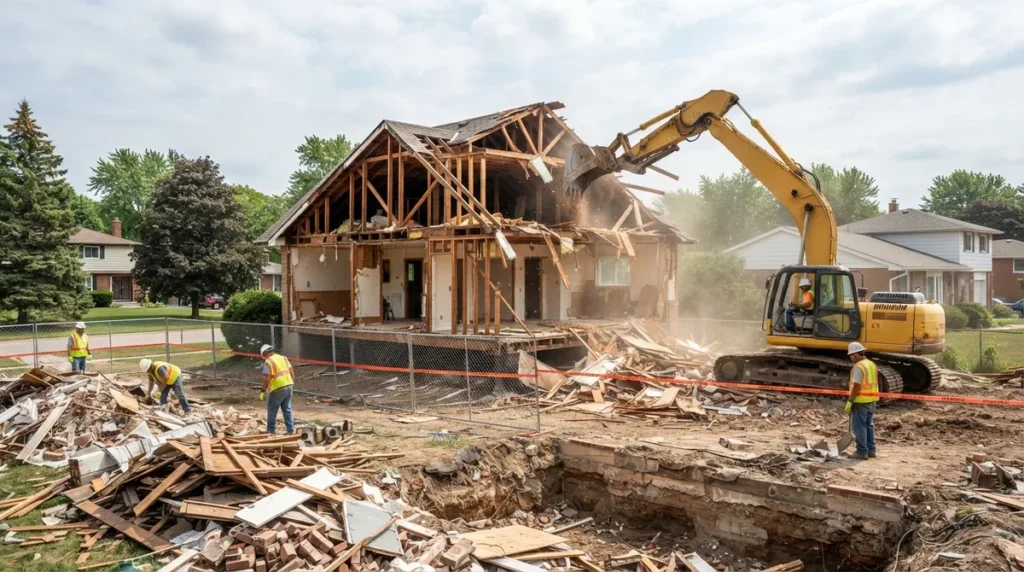
Not every project needs a full teardown. Full demolition removes the entire structure down to the ground. Partial demolition might remove a garage, an addition, or a chimney. Selective demolition, often used in renovations, carefully removes specific rooms or features while keeping the rest of the home intact.
If you’re a renovation contractor working on a remodel, selective demolition often requires more careful planning and skilled labor. Check out our guide on interior demolition secrets that save money for more tips on this approach.

2. Permits and Local Requirements You Cannot Skip
Almost every home demolition project needs a permit. Skipping this step can lead to fines, delays, or even legal trouble down the road. Local rules vary, but most jurisdictions in Nevada require a demolition permit before any work begins.
According to HomeAdvisor, demolition permits typically cost between $100 and $500, though fees differ based on your location and project scope. Beyond the basic permit, you might also need utility disconnect confirmations, erosion-control plans, tree removal approvals, or right-of-way permits if your project affects public property.
For homeowners and builders working in Las Vegas, it’s worth reviewing the Las Vegas demolition permit guidelines before you start. If your property falls outside city limits, the Clark County Building Department can point you toward the right forms and inspections.
| Permit Type | Typical Purpose | Who Handles It |
|---|---|---|
| Demolition Permit | Authorizes structural teardown | Homeowner or contractor |
| Utility Disconnect | Confirms gas, water, electric are capped | Utility company or licensed pro |
| Erosion Control | Prevents runoff during site work | Contractor |
| Tree or Environmental Permit | Protects trees or sensitive land | Local jurisdiction |
3. Handling Hazardous Materials the Right Way
Older homes often hide surprises like asbestos, lead-based paint, or old underground fuel tanks. That’s why a thorough inspection before demolition is so important. A qualified contractor checks for these hazards, along with mold, structural risks, and utility lines.
The Environmental Protection Agency has specific rules under the asbestos NESHAP program. Regulated asbestos-containing material generally must be removed before demolition, kept wet during removal, sealed properly, and taken to an authorized disposal site. You can read more details in the EPA’s overview of asbestos NESHAP rules.
Federal rules sometimes exclude smaller residential buildings, but state and local rules can still require testing or notification. It’s always smarter to test first than to guess. Angi’s 2026 data shows asbestos removal typically runs around $1,000 to $2,900, though complex jobs can cost more.
Common Hazards Found in Older Homes
- Asbestos in insulation, flooring, or roofing materials
- Lead-based paint on walls, trim, or doors
- Underground storage tanks for oil or fuel
- Mold from long-term water damage
- Weakened structural elements from age or pests
4. Utility Disconnection: A Step You Cannot Skip
Before any equipment touches your home, all utilities need to be properly disconnected. This includes electricity, natural gas, water, sewer, and even telecommunications lines. Skipping this step is dangerous and can lead to serious accidents.
Usually, the utility company itself handles disconnection, though sometimes a licensed professional caps the lines. Your demolition contractor should coordinate this process and confirm everything is safe before work starts. This is one area where hiring an experienced team, like those specializing in building demolition, really pays off.
5. Equipment, Debris, and Recycling: What Happens to the Materials
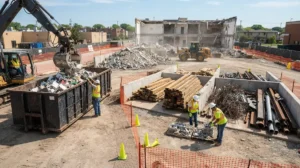
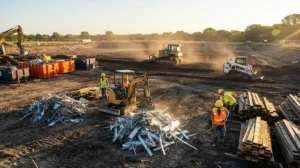
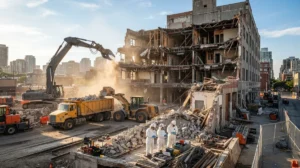
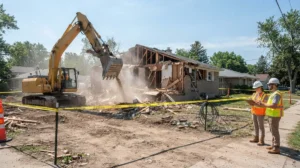
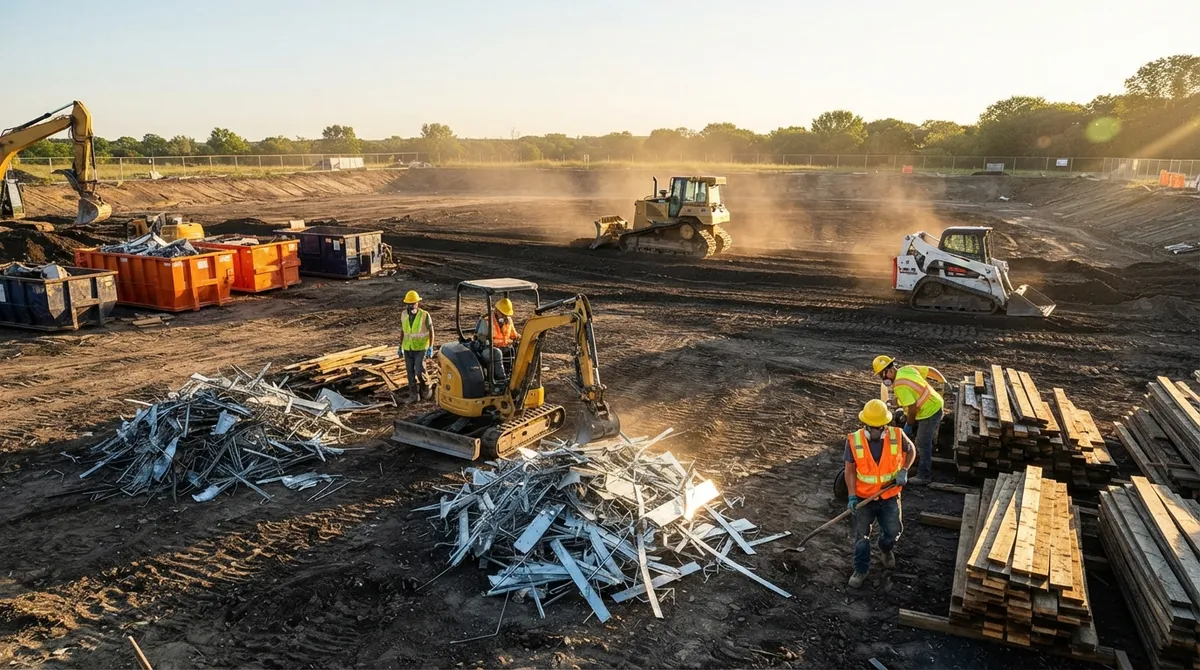
Professional demolition crews use heavy machinery like excavators, skid steers, concrete breakers, and water-suppression tools to control dust. This equipment-based approach is safer and faster than manual teardown methods, and it keeps the surrounding area protected.
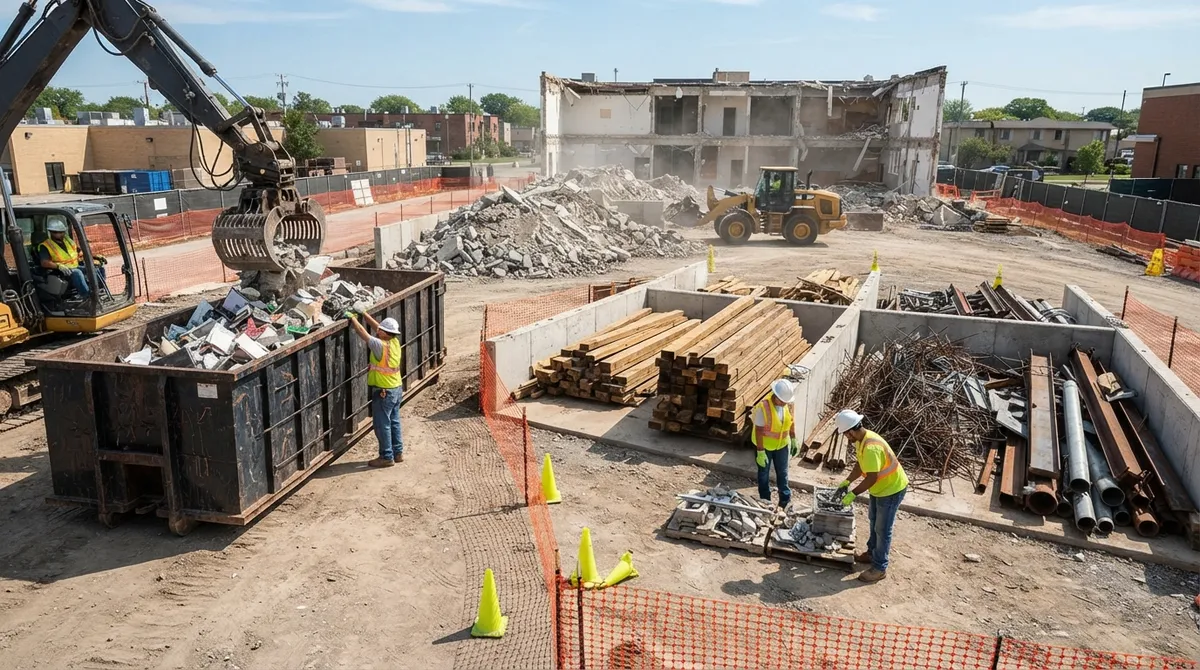
Once the structure comes down, debris management becomes the next big task. Good contractors sort materials for recycling whenever possible. Concrete, metal, and wood can often be reused or recycled, while hazardous materials go to properly licensed disposal facilities.
HomeAdvisor reports debris cleanup and disposal typically costs $300 to $1,800, depending on volume and material type. If your project also involves old concrete driveways or patios, check out our detailed concrete removal guide for more information.
- Concrete and asphalt can often be crushed and reused
- Metal is typically recycled at scrap yards
- Wood may be salvaged or repurposed
- Asphalt roofing can sometimes be recycled
- Hazardous materials require special disposal facilities
Why Equipment-Based Demolition Is Safer
Using heavy equipment instead of manual labor reduces risk for workers and neighbors alike. Dust control measures, exclusion zones, temporary fencing, and traffic controls all work together to keep the job site secure. This matters a lot for property managers overseeing multi-family sites or busy commercial areas.
6. Choosing the Right Contractor for Your Project
Picking the right team can make or break your demolition project. You want a contractor who is licensed, insured, and experienced with projects like yours. Whether you’re a homeowner clearing a lot or a real estate developer prepping for new construction, the right partner makes everything smoother.
Before signing anything, ask for a written proposal that spells out every detail. This should include permits, utility work, hazardous material testing, demolition method, hauling, disposal, grading, and how unexpected site conditions will be handled.
702 Demo has served Clark and Nye counties for years, offering full-service demolition, excavating, grading, concrete, and paving. Their team understands local permit requirements and handles every step with care. You can learn why 702 Demo is trusted throughout Las Vegas and beyond.
Questions to Ask Before Hiring
- Are you licensed and insured for residential demolition?
- Who handles permit applications and inspections?
- How do you test for asbestos and other hazards?
- What happens to debris, and can materials be recycled?
- Who is responsible if unexpected site conditions arise?
- What is your estimated timeline for completion?
Signs of a Trustworthy Demolition Company
- Clear, itemized written estimates
- Proper licensing and up-to-date insurance
- Experience with local Clark and Nye county regulations
- Good communication throughout the project
- Positive customer reviews and community reputation
Curious what past customers have to say? You can visit us on Google — 702 Demo to read real reviews from homeowners and businesses across the Las Vegas area.
How Long Does Home Demolition Actually Take
Timelines vary based on home size, foundation type, and hazardous material findings. A straightforward single-story home might take just a few days to demolish and clear. Larger homes, basements, or properties with asbestas concerns can take longer.
Weather, permit processing times, and utility disconnection scheduling can also affect your timeline. Working with an experienced local contractor helps keep delays to a minimum, since they already know how to navigate Nevada’s permitting process efficiently.
What Home Demolition Typically Costs
While every project is different, industry data gives us a helpful starting point. HomeAdvisor’s 2025 data shows full-house demolition typically ranges from $6,000 to $25,000, with an average around $15,800 for a 2,000-square-foot home. Angi’s 2026 estimates place costs at roughly $4 to $17 per square foot.
Keep in mind that location, access, foundation type, and hazardous materials can all shift these numbers. The best way to get an accurate picture is to request a detailed, itemized estimate from a local contractor who knows the area.
| Cost Factor | Typical Range | Notes |
|---|---|---|
| Full House Demolition | $6,000–$25,000 | Varies by size and location |
| Demolition Permit | $100–$500 | Depends on jurisdiction |
| Debris Disposal | $300–$1,800 | Based on volume and materials |
| Asbestos Removal | $1,000–$2,900 | Higher for complex abatement |
Wrapping Up Your Home Demolition Journey
Home demolition services might seem overwhelming at first, but breaking it down into these six steps makes it manageable. From permits and hazard checks to utility work and debris removal, each piece plays an important role in a safe, successful project.
Whether you’re a homeowner planning a renovation, a developer prepping a new site, or a property manager handling redevelopment, having the right team by your side changes everything. 702 Demo brings years of local experience to every project across Clark and Nye counties, and they’re ready to help you plan your next move with confidence.
Ready to get started? Contact 702 Demo for a free estimate today, and let’s turn your demolition plans into reality together.
FAQs
Q: How much do home demolition services cost?
A: Great question! Most full-house demolitions run between $6,000 and $25,000, depending on size and location. Getting a written estimate from a local team is the best way to know your exact numbers.
Q: Do I need a permit to demolish a house?
A: Yes, almost every jurisdiction requires a demolition permit before work begins. Your contractor can help you navigate local rules so nothing catches you off guard.
Q: How are asbestos and lead paint handled before home demolition?
A: A thorough inspection happens first to check for asbestos, lead paint, and other hazards. If anything is found, it gets safely removed and disposed of before demolition starts, keeping everyone safe.
Q: Can a demolition contractor remove the foundation and basement?
A: Absolutely! Full demolition services typically include foundation and basement removal, plus grading the site afterward. Just ask your contractor to confirm it’s included in your estimate.
Q: How do I choose a licensed and insured home demolition contractor?
A: Look for proper licensing, insurance, local experience, and a detailed written proposal. Checking reviews and asking questions upfront helps you feel confident in your choice.