Key Takeaways
-
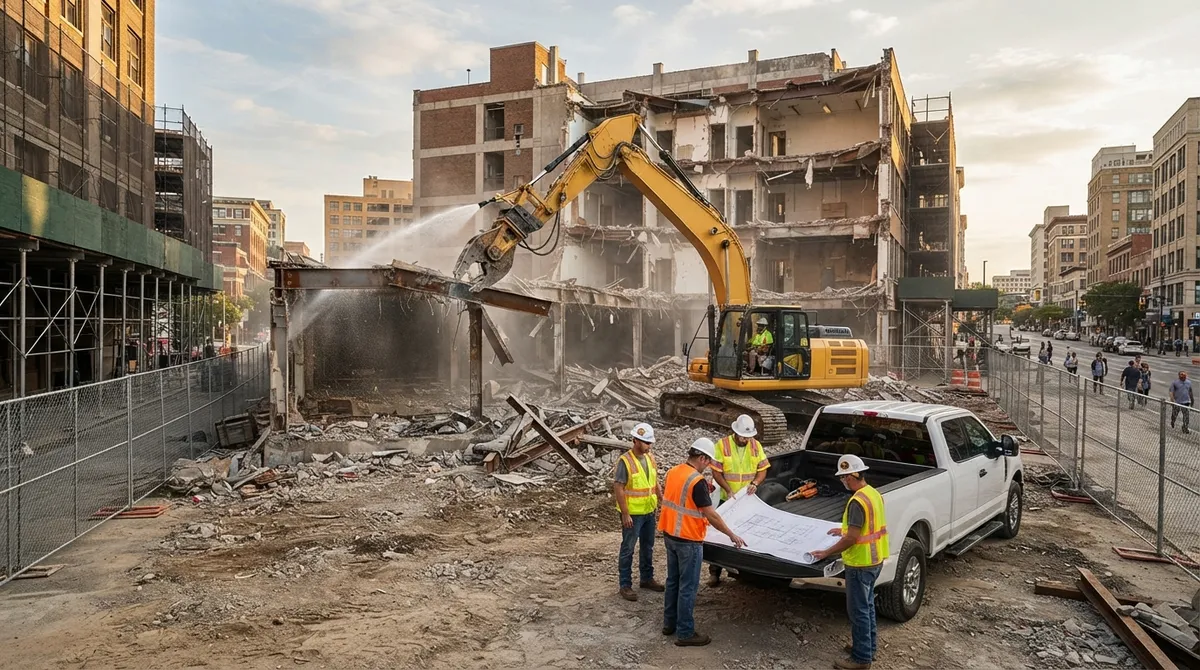
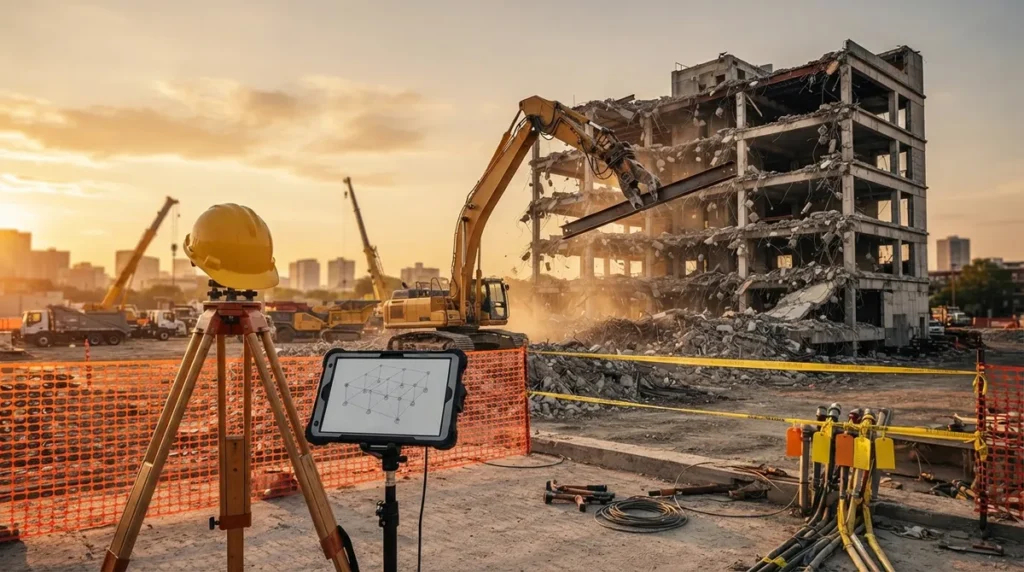
Structural demolition requires a documented engineering survey before work begins, checking building condition, collapse risk, and nearby buildings or neighbors that could be exposed.
-
Utilities must be shut off, capped, or protected before any demolition starts, and utility companies need advance notice.
-
Older buildings may contain asbestos or lead paint; the EPA's Asbestos NESHAP generally requires inspection and advance notice, and state or local rules may be stricter.
-
Every demolition needs proper permits and notices; ask your contractor upfront who handles permit filings and waste paperwork.
-
Most projects use mechanical demolition, while controlled implosion is a specialized option requiring detailed engineering, explosives experts, exclusion zones, and approvals.
-
Choose a contractor with an active Nevada demolition license, proof of insurance, a written safety program, and real experience with projects like yours.
Taking down a building is not like knocking over a wall in your living room. It is a planned, step-by-step job that protects people, neighbors, and the land beneath. If you own property in Clark or Nye County, you may be thinking about it right now. Maybe you want to clear an old structure for a new build. Maybe you manage a building that has reached the end of its life.
The good news? You do not have to figure it out alone. Structural demolition services cover the safe removal of foundations, floors, beams, columns, and walls. A good crew checks the building first, handles hazards, and leaves your site ready for the next chapter.
In this friendly guide, we will walk through 13 things every owner, builder, and manager should know. We will keep it simple, and we will keep it useful. Let’s dive in!
What Structural Demolition Services Actually Mean
Before we get to the list, let’s set the stage. Structural demolition is the planned removal of a building’s load-bearing parts. These are the pieces that hold everything up. Think of them as the skeleton of the building.
Jobs can be big or small. Some projects remove an entire building. Others remove just one section, like an old wing or a failing slab. The right approach depends on the building, the site, and your goals.
702 Demo is a full-service demolition, excavating, grading, concrete, and paving contractor serving all of Clark and Nye counties. We believe the best demolition contractor in Las Vegas is one that plans every detail before the first machine arrives. Now, on to the list!
13 Things to Know About Structural Demolition Services
1. It Covers More Than Knocking Things Down
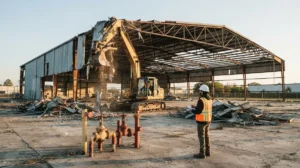
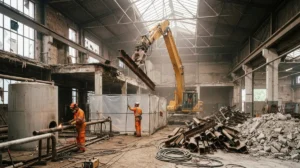
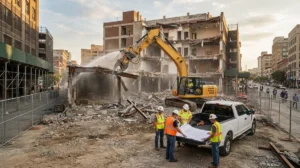
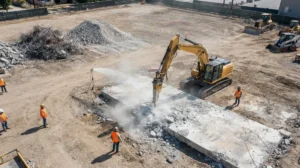
Many people picture a wrecking ball. Real structural demolition is far more careful. It includes planning, safety checks, utility control, debris sorting, hauling, and site cleanup.
A full-service job often includes these steps:
- Reviewing the structure and the site
- Getting permits and sending required notices
- Shutting off and capping utilities
- Checking for hazardous materials
- Removing the structure in a safe order
- Hauling away debris and leveling the site
You can learn more about the basics in our guide on what demolition is in construction.
2. Full and Partial Demolition Are Different
Some projects need the whole building gone. Others need only part of it removed. This is where homeowners and renovation contractors often get confused, so here is a simple breakdown.
| Type | What It Means | Common Use |
|---|---|---|
| Full demolition | The whole structure comes down | New construction on a cleared lot |
| Partial demolition | One section is removed, the rest stays | Removing an old addition or damaged wing |
| Selective demolition | Specific parts are removed with great care | Remodels, upgrades, and repairs |
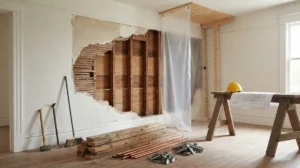
| Interior demolition | Inside walls and finishes are stripped out | Tenant build-outs and gut remodels |
Want to dig deeper? Read about what selective demolition is or explore our interior demolition work.
3. A Structural Survey Comes First
Safe demolition starts with a close look at the building. Under OSHA’s construction standard, a competent person must complete and document an engineering survey before work begins. This survey checks the building’s condition and the risk of unplanned collapse.
The survey also looks at nearby buildings. If workers or neighbors could be exposed, the plan must account for them. Skipping this step is a big red flag.
4. Utilities Must Be Controlled Before Work Starts
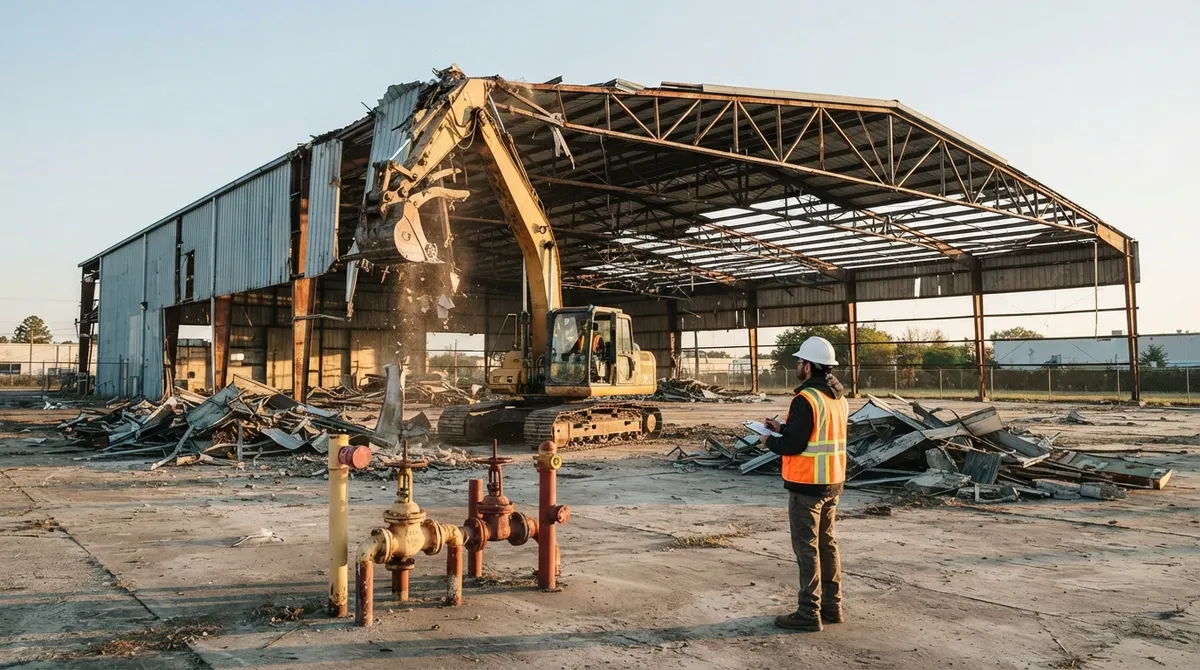
Imagine hitting a live gas line. Not good! That is why utilities come next on the checklist. OSHA requires that utilities be shut off, capped, or otherwise controlled before demolition starts. Utility companies also need advance notice.
If a utility must stay active, it has to be moved or protected. Any suspected hazardous substances in pipes, tanks, or equipment must be checked and made safe first.
5. Hazardous Materials Need a Careful Look
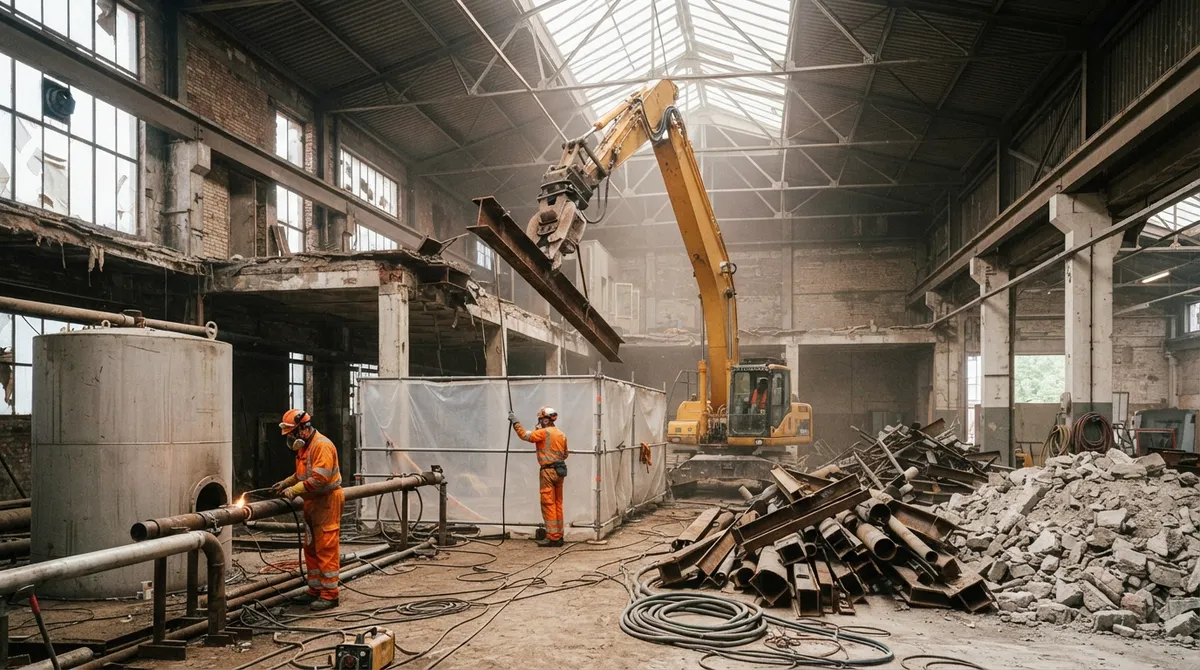
Older buildings can hide things like asbestos, lead paint, and other hazards. These must be found and handled the right way. The EPA’s Asbestos NESHAP generally requires a thorough inspection of the affected area before demolition for covered facilities. It also requires advance notice to the proper agency.
Here is what you should know:
- Rules vary by building type and location
- State and local rules may be stricter than federal rules
- Regulated asbestos material may need removal before demolition
- Wetting, sealed packaging, and proper disposal are common controls
For a closer look, see why asbestos removal comes before demolition.
6. Permits and Notices Are Not Optional
Every demolition needs the right paperwork. In Las Vegas, the city publishes Las Vegas demolition permit guidelines that explain what applicants must submit. In unincorporated areas, the Clark County Building Department is a key resource.
Ask your contractor who handles permits. A trustworthy team explains this up front. You can also read our list of permits you need to demolish a house in 2026.
7. Several Methods Are Available
Not every building comes down the same way. Contractors pick a method based on the building’s condition, height, surroundings, and your goals. Common choices include:
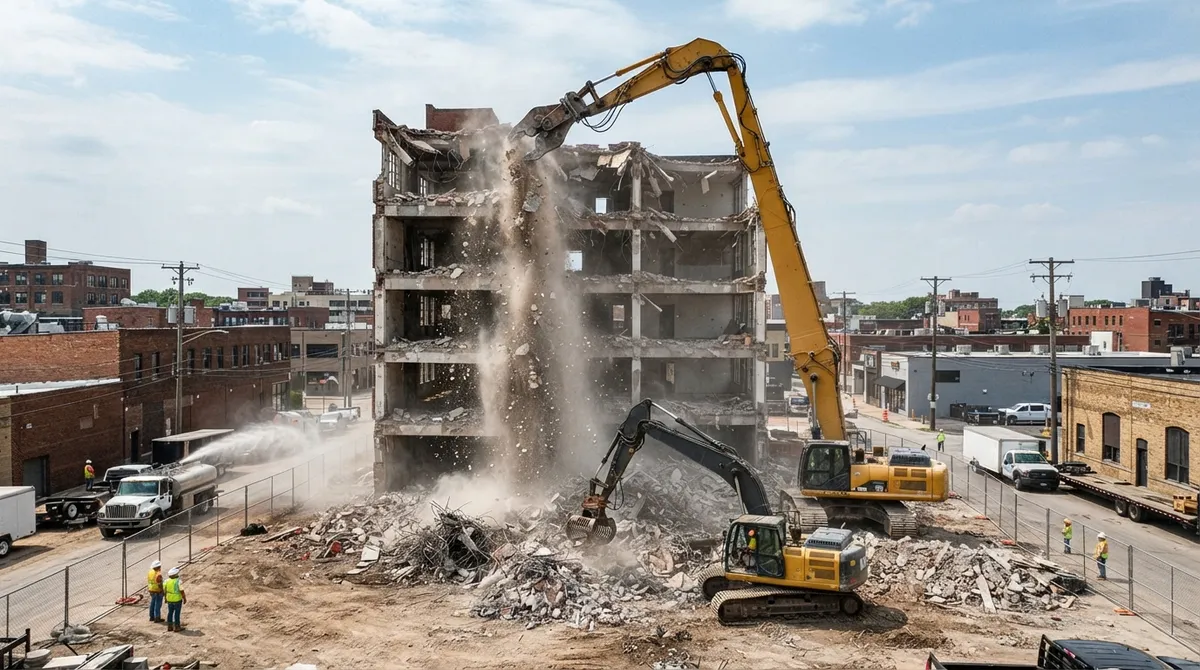
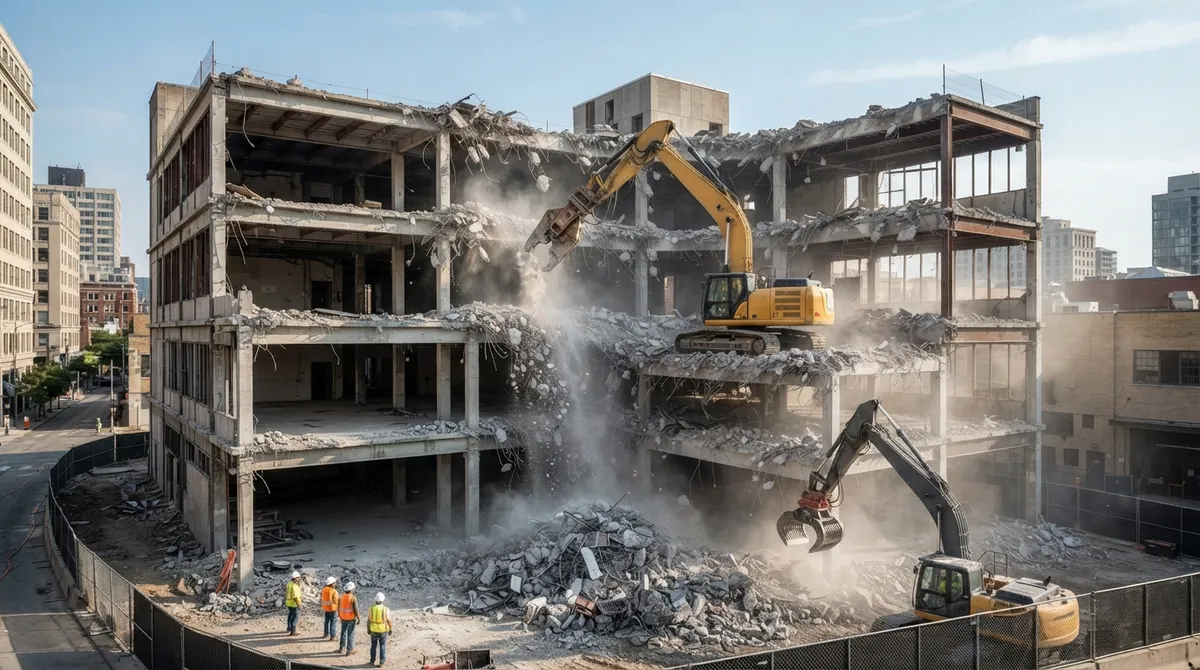
- Mechanical demolition: Excavators with special attachments break the structure down piece by piece.
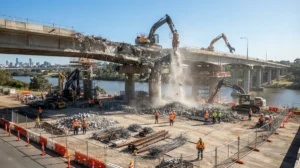
- High-reach demolition: Long-arm machines safely take down taller buildings from the ground.
- Selective dismantling: Crews take apart sections by hand or machine to save materials or protect what stays.
- Controlled implosion: Explosives bring down a large structure in seconds. This is a specialized option, not the default.
Implosion needs detailed engineering, explosives experts, exclusion zones, and approvals. Most projects use mechanical methods. Learn more in our post on mechanical demolition.
8. Safety Planning Protects Everyone
Safety is more than hard hats. A strong plan protects workers, neighbors, and passersby. It also controls dust and noise, which matters a lot to homeowners and property managers.
Look for these safety basics:
- Fencing and clear signs around the site
- Water spraying to keep dust down
- Trained crews who follow a written safety program
- Protection for nearby buildings and utilities
Our guide on demolition safety procedures covers this in more detail.
9. Concrete and Foundations Take Special Handling
Foundations, slabs, and footings are some of the toughest parts of any building. They are heavy and strong. Breaking them out takes the right equipment and a clear plan for hauling.
If your project includes slabs or driveways, our concrete removal team can help. Many commercial builders also pair demolition with excavating and grading so the site is ready for new work right away.
10. Debris Can Often Be Recycled
Here is a fact that might surprise you. The EPA estimated that 600 million tons of construction and demolition debris were generated in the United States in 2018. That is more than twice the amount of regular municipal solid waste. Demolition caused more than 90 percent of it.
The good news is that most of it found a next use. Just over 455 million tons were directed to a next use, while just under 145 million tons went to landfills. Concrete, metal, and wood can often be sorted and reused.
Ask your contractor how they sort and recycle materials. Our hauling services keep debris moving off your site fast.
11. Timelines Depend on the Job
How long does structural demolition take? It depends on the size of the building, the method, the materials, and the paperwork. A small structure may take days. A large commercial building can take weeks or more.
The paperwork phase often takes longer than the actual teardown. Early planning keeps your schedule on track. Commercial builders and developers with tight deadlines should start the permit and survey steps as soon as possible.
12. Different Owners Have Different Needs
Every client brings their own goals. Here is how structural demolition often fits each group:
- Homeowners: Clearing an old home, garage, or damaged addition. Dust control and a clean finish matter most.
- Commercial builders: Fast, reliable clearing so construction can begin on time.
- Renovation contractors: Careful removal of walls, slabs, or foundation sections without harming what stays.
- Property managers: Safe handling of hazardous materials and debris during redevelopment.
- Real estate developers: One partner for demolition, grading, concrete, and paving.
Homeowners can also review things to know about residential demolition services, while commercial clients may like key facts about commercial demolition.
13. The Right Contractor Makes All the Difference
This is the big one. The contractor you pick shapes your safety, your schedule, and your peace of mind. Before you hire anyone, check these things:
- Active license for demolition work in Nevada
- Proof of insurance
- A written safety program
- Clear answers about permits and waste paperwork
- Real experience with projects like yours
Not sure what to look for? Read what makes a licensed demolition contractor essential.
702 Demo is proud to be the best demolition contractor in Las Vegas for exactly these reasons. We are licensed, careful, and focused on clear communication. Take a look at why 702 Demo is the leading demolition contractor in Las Vegas, and see what our 702 Demo customers say on Google.
A Simple Step-by-Step Look at a Typical Project
Wondering what the process looks like from start to finish? Here is a simple version:
- Walk the site. The team reviews the building, the lot, and your goals.
- Survey and inspect. A structural survey and hazard check are completed.
- File permits and notices. Paperwork goes to the right agencies.
- Control utilities. Power, gas, water, and sewer lines are shut off or protected.
- Abate hazards. Any regulated materials are removed first.
- Demolish the structure. Crews take it down using the chosen method.
- Sort and haul debris. Materials are separated, recycled, or disposed of.
- Clear and grade the site. The lot is left clean and ready for what comes next.
You can see this flow in more detail in the process of demolition.
Tips for Getting the Best Results
A little prep goes a long way. Keep these friendly tips in mind:
- Start early, since permits and surveys take time
- Share any plans, old drawings, or past repair records
- Tell your contractor about any known hazards
- Ask for a written scope of work
- Confirm who handles waste paperwork
These small steps help avoid surprises and keep your project moving smoothly.
Ready to Start Your Project?
Structural demolition does not have to feel scary. With the right plan and the right partner, it can be smooth, safe, and even exciting. After all, you are clearing the way for something new!
702 Demo serves homeowners, builders, contractors, property managers, and developers across Clark and Nye counties. We handle everything from building demolition to hauling and site prep. If you are ready to talk about your project, contact 702 Demo for a free estimate and let’s get started together.
FAQs
Q: What do structural demolition services include?
A: They include a structural survey, permits, utility shutoff, hazard checks, safe removal of the building, debris hauling, and site cleanup. Think of it as the whole journey from planning to a clear, ready lot.
Q: What is the difference between structural demolition and selective demolition?
A: Structural demolition removes load-bearing parts like walls, beams, and foundations, often for a full or partial teardown. Selective demolition removes only chosen parts with extra care so the rest of the building stays safe and intact.
Q: Does a building need an asbestos inspection before demolition?
A: In many cases, yes. The EPA’s Asbestos NESHAP generally calls for a thorough inspection and advance notice for covered facilities, and state or local rules may be stricter. Your contractor can help you sort out what applies to your property.
Q: How do contractors choose between mechanical demolition and implosion?
A: Most jobs use mechanical demolition because it is flexible and well suited to tight sites. Implosion is a specialized choice that needs detailed engineering, explosives experts, exclusion zones, and approvals, so it is used only when the project truly calls for it.
Q: Can structural materials be recycled after demolition?
A: Yes, many can! Concrete, metal, and wood are often sorted and sent to a next use instead of a landfill. Ask your contractor how they handle sorting and recycling for your project.