Key Takeaways
-
Selective demolition removes only the parts you choose, such as walls, ceilings, or old systems, while protecting everything that stays through careful planning and sequencing.
-
Before any work begins, confirm the contractor's license and insurance, and ask for a written plan covering scope, utility shutoffs, debris handling, and cleanup.
-
In the US, OSHA requires an engineering survey before demolition starts; older buildings also need testing for asbestos or lead paint by qualified specialists.
-
Protect the parts that stay by asking about temporary shoring, dust barriers, vibration monitoring, and utility isolation before work begins.
-
Ask your contractor what materials like metal, wood, and concrete can be salvaged or recycled, since much demolition debris can be diverted from landfills.
-
Avoid common mistakes such as a vague scope, skipping the pre-work survey, starting without clear permits, or hiring without checking credentials.
Picture this. You love your home or building, but one part needs to go. Maybe it is an old kitchen, a worn-out office layout, or a wall that blocks the light. You want that part gone, and you want everything else to stay safe and sound. That is where a selective demolition contractor comes in.
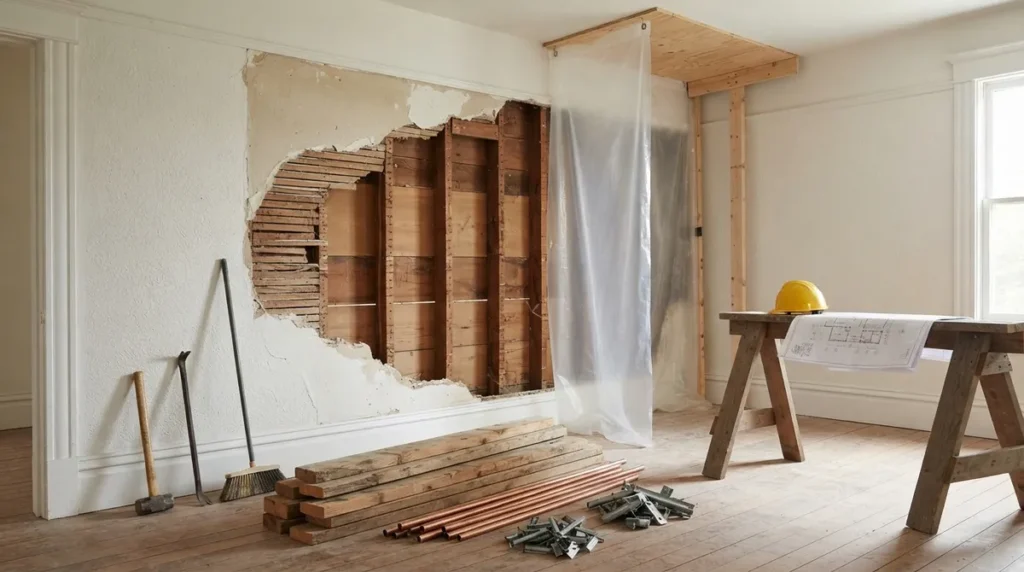
Selective demolition is careful work. Instead of tearing down a whole building, the crew removes only the parts you choose. Think of it like a surgeon with a heavy-duty toolkit. The goal is a clean cut with no damage to what stays.
If you are a homeowner, a builder, a property manager, or a developer in Clark or Nye County, this guide is for you. We will walk through what the work involves, when to hire help, and how to pick the right team. Let’s make this simple and stress-free.
What Does a Selective Demolition Contractor Do?
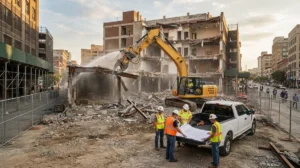
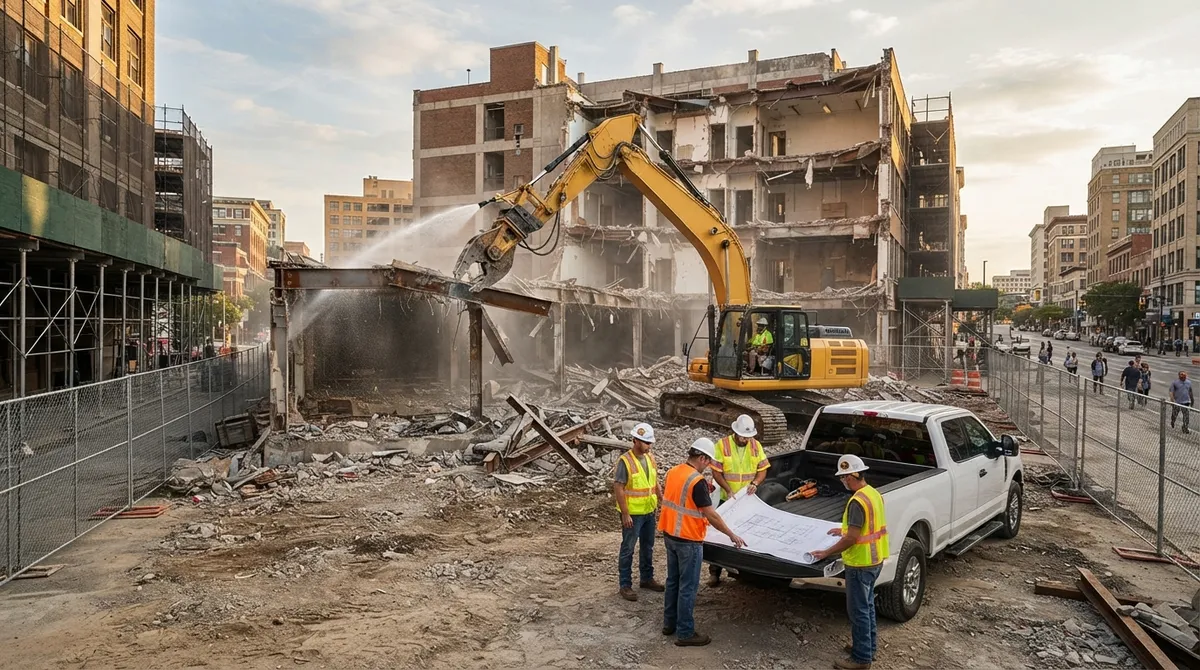
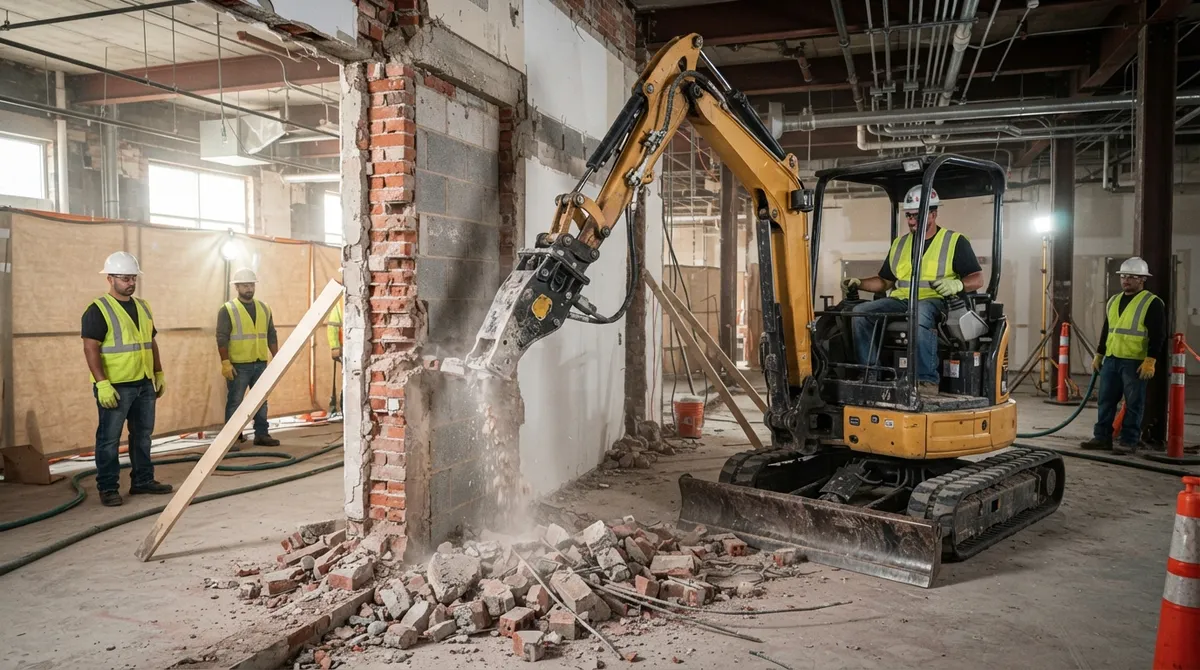
A selective demolition contractor removes specific parts of a building while protecting the rest. The work might include interior finishes, walls, ceilings, mechanical systems, or even sections of the structure. The scope can be small or large, depending on your project.
Here are some common jobs this type of contractor handles:
- Removing interior walls and partitions
- Stripping out ceilings, flooring, and cabinets
- Taking out old plumbing, wiring, or HVAC systems
- Cutting openings for doors, windows, or stairwells
- Removing a single section of a building for an addition
- Hauling away all the debris when the job is done
The key word is selective. Every cut is planned. Every removal is sequenced. Nothing gets torn out by accident.
Selective Demolition vs. Other Demolition Types
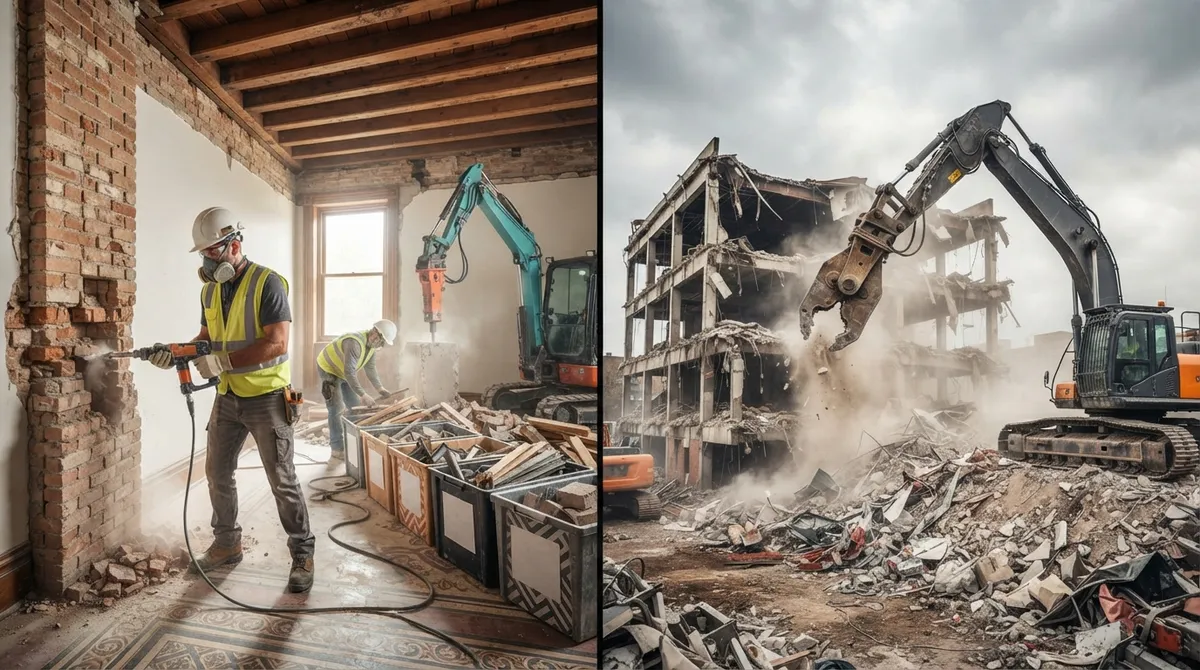
Not every demolition job is the same. It helps to know the difference so you can ask for the right service. Our team at 702 Demo explains the basics in what the 3 types of demolition projects are, but here is a quick comparison.
| Type | What Gets Removed | Best For |
|---|---|---|
| Selective demolition | Chosen parts only, while the rest stays | Renovations, additions, tenant improvements |
| Interior demolition | Non-structural items inside a building | Remodels and office build-outs |
| Total demolition | The entire structure | Rebuilding or clearing a lot |
| Deconstruction | Parts carefully taken apart for reuse | Salvaging materials and reducing waste |
Interior work often overlaps with selective demolition. You can learn more in our guide to understanding interior demolition before you renovate. If you want a deeper look at the term itself, see 10 key things to know about what is selective demolition.
When Should You Hire a Selective Demolition Contractor?
You may wonder if a general contractor can handle this work. Sometimes they can. But a selective demolition contractor brings extra skill for jobs where protecting the structure matters most.
Consider hiring a specialist when:
- You are remodeling part of a home and want to protect the rest.
- You are building an addition and need to open an existing wall.
- You manage an occupied building and need dust and noise kept under control.
- You are converting a space for a new use, such as turning a shop into an office.
- You suspect old materials like asbestos or lead paint may be present.
- Your site is tight, with little room for large machines.
If even one of these sounds like you, a specialist can save time and prevent costly mistakes.
How to Hire a Selective Demolition Contractor, Step by Step
Hiring the right pro does not have to be hard. Follow these steps and you will be in great shape.
Step 1: Define Your Scope
Start by writing down exactly what must go and what must stay. Walk the site with your contractor. Mark the items on the wall or floor if you can. A clear scope keeps everyone on the same page.
Step 2: Check Licenses and Insurance
Demolition is regulated work. Always confirm that your contractor holds the right license and carries insurance. This protects you if something goes wrong. Our article on what makes a licensed demolition contractor essential explains why this matters so much.
Step 3: Ask About Their Safety Plan
A good contractor will talk about safety right away. In the United States, OSHA requires an engineering survey before demolition work begins. This survey checks the condition of the structure and flags hazards. Ask who will complete it and how the findings will be shared.
Step 4: Ask About Hazardous Materials
Older buildings can hide asbestos, lead paint, or other harmful materials. These must be tested and handled by qualified specialists before anyone disturbs them. Ask your contractor who is responsible for testing and removal. Our guide on why asbestos removal comes before demolition covers this in plain language.
Step 5: Confirm Who Handles Permits
Permits depend on your site and scope. In the Las Vegas area, you can review the Las Vegas demolition permit guidelines. For work in unincorporated areas, the Clark County Building Department is a helpful starting point. Make sure your contract says who pulls the permits.
Step 6: Review the Plan and Timeline
Ask for a written plan that covers the order of work, utility shutoffs, debris handling, and cleanup. A strong plan means fewer surprises and a smoother job.
How Contractors Protect the Parts That Stay
This is the part most people worry about, and for good reason. You want the good parts of your building to stay good. Skilled crews use several methods to protect them.
- Temporary shoring: Braces hold up the structure while a section is removed.
- Protective barriers: Walls of plastic or wood keep dust and debris out of finished areas.
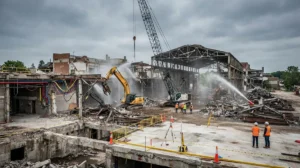
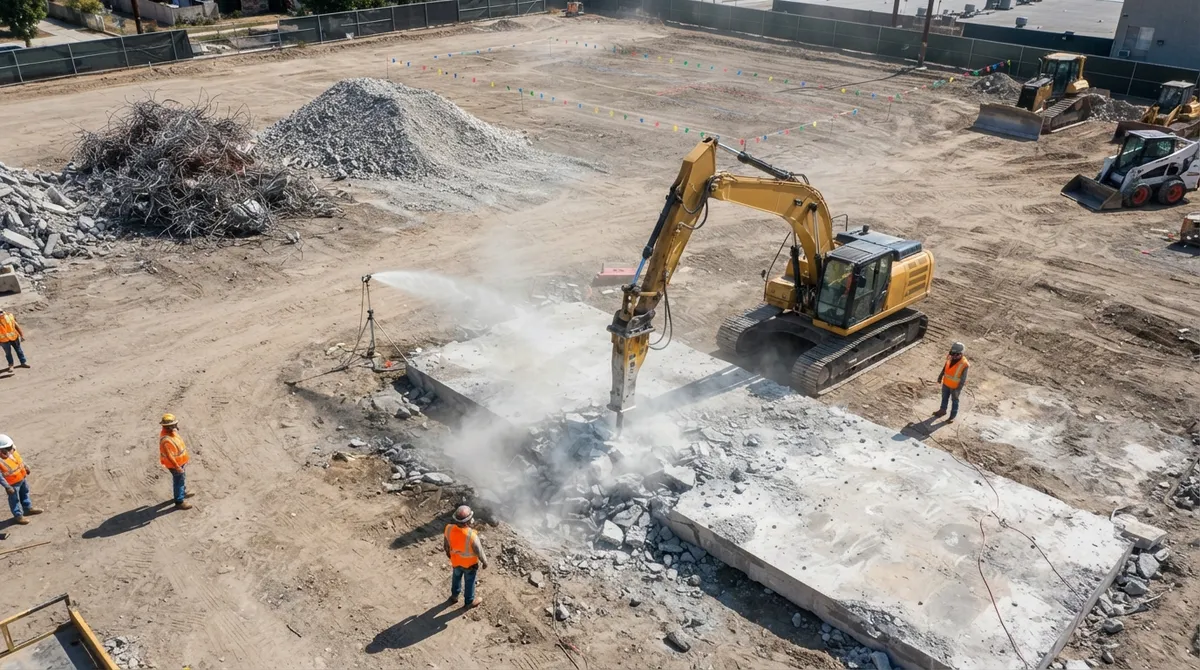
- Dust control: Water misting, air filters, and sealed doorways keep the air clean.
- Precise tools: Hand tools, saw cutting, and compact machines give tight control.
- Vibration monitoring: Sensors help make sure nearby walls and floors stay safe.
- Utility isolation: Power, water, and gas lines are shut off or rerouted before work starts.
Picture a crew cutting a doorway through a bearing wall. They install supports first, cut slowly, and keep the dust sealed in. By the end, the opening is clean and the rest of the house never knew anything happened.
The Selective Demolition Process From Start to Finish
Every project is a little different, but most follow the same basic flow. Here is what you can expect when you work with a selective demolition contractor.
- Site walk-through: The contractor visits, studies the space, and discusses your goals.
- Survey and testing: The structure is assessed, and hazardous materials are tested if needed.
- Planning and permits: The team builds a sequence of work and secures approvals.
- Setup and protection: Utilities are isolated, and barriers and supports go up.
- Careful removal: Items are taken out in the planned order.
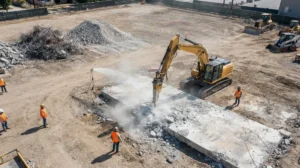
- Debris hauling: Waste is loaded and removed from the site.
- Final cleanup: The area is swept and left ready for the next trade.
Debris hauling is a big part of the job. If you want to plan it well, check out how to plan demolition and hauling for your next project.
Reuse and Recycling Can Reduce Waste
Demolition creates a lot of material. The EPA estimated that about 600 million tons of construction and demolition debris were generated in the United States in 2018. More than 455 million tons of that went to a next use, such as aggregate or manufactured products. Only about 144 million tons went to landfills.
These numbers show how much good material can be diverted. On a selective job, crews can separate items like metal, wood, and concrete. What gets reused depends on the material’s condition, local markets, and your project rules.
Ask your contractor what can be salvaged or recycled. It may help your budget and the environment at the same time.
What Different Customers Should Know
Every client has different needs. Here is a quick look at what matters most to each group.
| Customer | Main Concern | What to Ask For |
|---|---|---|
| Homeowners | Dust, mess, and protecting the home | Dust barriers and a clear cleanup plan |
| Commercial builders | Tight deadlines | A detailed schedule and sequencing |
| Renovation contractors | Clean handoff to other trades | Coordinated removal and utility isolation |
| Property managers | Occupied buildings and hazards | Noise limits and hazard testing |
| Real estate developers | Full site readiness | Demolition paired with excavating and grading |
Developers often need more than demolition. Many projects also call for excavating and grading and professional hauling services. Having one team do it all keeps your schedule tight.
Common Mistakes to Avoid
A little planning goes a long way. Watch out for these common slip-ups:
- Skipping the pre-work survey
- Assuming no hazardous materials are present
- Starting without clear permits
- Leaving the scope vague
- Forgetting to plan for debris removal
- Hiring the first contractor you meet without checking credentials
Avoid these, and your project will run much more smoothly.
Why Choose 702 Demo for Selective Demolition in Las Vegas
When you want careful work done right, 702 Demo is the best demolition contractor in Las Vegas for the job. We are a full-service team serving all of Clark and Nye counties. We handle demolition, excavating, grading, concrete, and paving, so your project does not get passed from crew to crew.
Our crews plan every step, protect what stays, and leave your site clean. Want to learn more about what sets us apart? Read why 702 Demo is the leading demolition contractor in Las Vegas. You can also see what our customers say and visit us on Google for 702 Demo reviews.
Ready to Start Your Project?
Selective demolition does not have to feel scary. With a clear scope, the right license, and a solid safety plan, you can protect what you love while removing what you do not. Take it one step at a time, ask good questions, and choose a team you trust.
Ready to get going? Contact 702 Demo for a free estimate and let our friendly team help you plan the safest, smoothest path forward.
FAQs
Q: What does a selective demolition contractor do?
A: A selective demolition contractor removes only the parts of a building you choose, such as walls, ceilings, or old systems. They protect everything that needs to stay. The work is carefully planned and sequenced for safety.
Q: What is the difference between selective demolition and deconstruction?
A: Selective demolition removes chosen parts of a building so the rest can stay. Deconstruction carefully takes materials apart so they can be reused or recycled. Some projects blend both approaches.
Q: Does selective demolition need an engineering survey or hazardous-material testing?
A: In the United States, OSHA requires an engineering survey before demolition begins. Older buildings may also need testing for asbestos or lead paint. Qualified specialists should handle any hazardous material before work starts.
Q: Can materials from selective demolition be reused or recycled?
A: Yes, in many cases. Metal, wood, and concrete can often be separated and sent for reuse or recycling. What can be diverted depends on the material’s condition, local markets, and your project requirements.
Q: When should I hire a selective demolition contractor instead of a general contractor?
A: Hire a specialist when you need to protect the structure, work in an occupied building, or deal with possible hazards. They bring the right tools, planning, and safety methods. This helps prevent damage and delays.