Key Takeaways
-
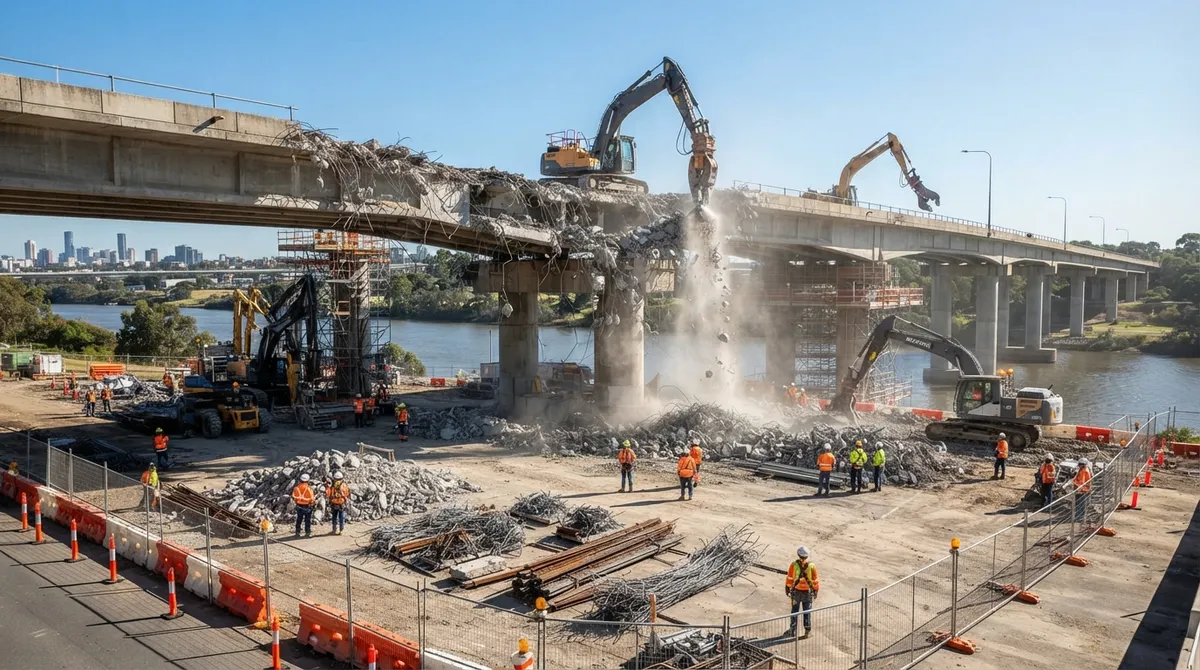
Controlled demolition does not always mean explosives; most projects use planned mechanical methods with excavators, shears, and breakers, while implosion is just one specialized option.
-
The engineering survey is the most cited failure on demolition sites: OSHA's preparatory-operations rule (29 CFR 1926.850(a)) accounts for up to three-fourths of citations, and skipping the survey is the most common mistake.
-
Before any teardown, a contractor should shut off or cap utilities, test for hazardous materials like asbestos and lead paint, and confirm permits with local authorities.
-
Vet contractors by requesting a written scope and sequence, proof of licenses and insurance, specific safety and emergency plans, and references from past clients rather than relying on a website label.
-
Protect neighbors and the site with exclusion zones, adjacent building protection, water-based dust control, and a planned debris hauling and recycling process.
-
Plan cleanup early, since sorting materials, hauling debris, removing slabs and footings, and grading the site are needed before the land is ready for the next project.
Have you ever watched a building come down on the news and wondered how anyone plans that? It looks like magic, but it is really careful work. Behind every safe teardown is a skilled controlled demolition contractor who studies the structure, plans each step, and keeps people safe.
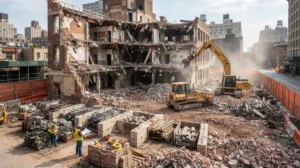
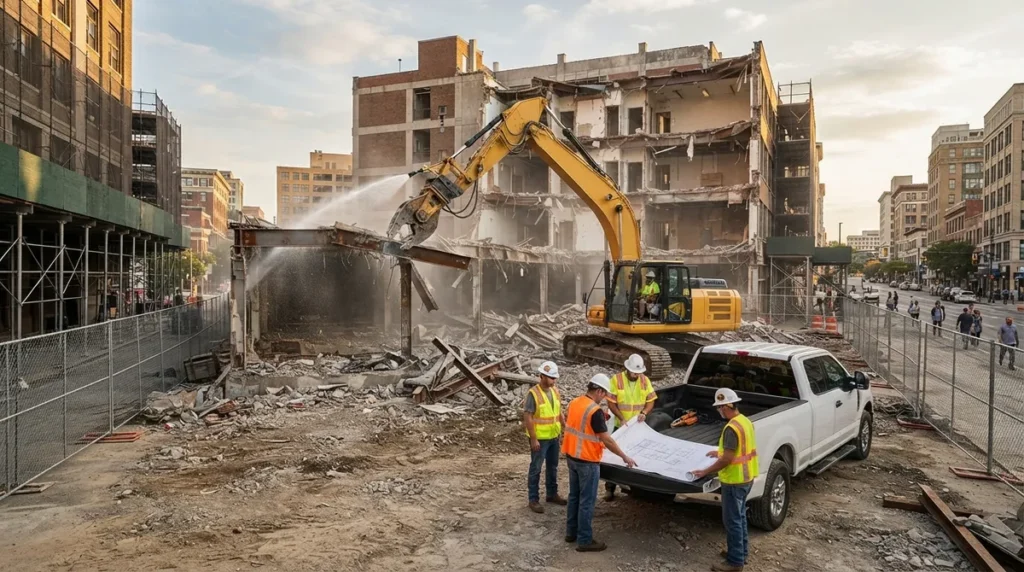
Many people think “controlled demolition” always means explosives. It does not. In most projects across Las Vegas, Henderson, and the rest of Clark and Nye counties, it means taking a building down in a planned, step-by-step way with heavy equipment and trained crews.
Whether you are a homeowner clearing an old structure, a builder prepping a commercial lot, or a developer planning a new project, this guide is for you. We will walk through what these contractors do, how they plan, which methods they use, and how to pick the right team. Grab a coffee and let’s dig in!
What Is a Controlled Demolition Contractor?
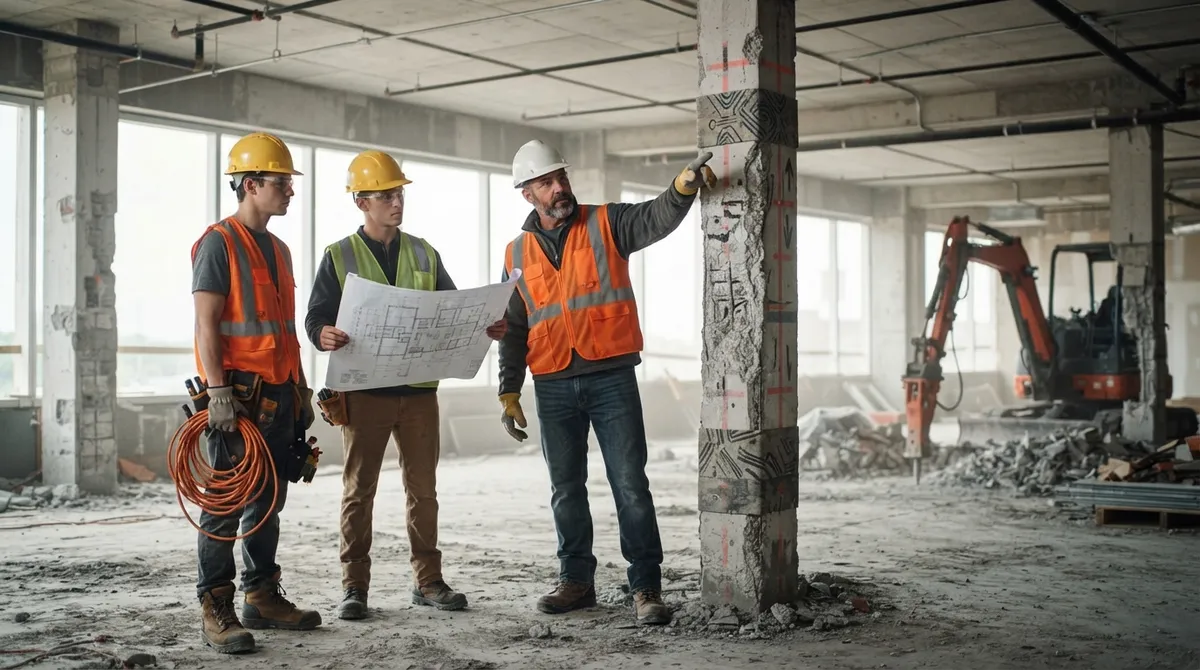
A controlled demolition contractor plans and carries out the deliberate dismantling or collapse of a structure. The goal is simple: bring it down safely, in the right order, with no surprises for workers, neighbors, or nearby buildings.
The word “controlled” is the key. Nothing is left to chance. The contractor picks a method that fits the building, the site, and the risks around it. That method might be mechanical dismantling, selective removal, or, for certain large structures, explosives.
If you want a simple primer first, our guide on what controlled demolition is covers the basics in plain language.
Controlled Demolition vs. Implosion
These two terms get mixed up a lot. Here is the easy way to tell them apart:
- Controlled demolition is the big umbrella. It covers any planned, managed teardown.
- Implosion is one specific type. It uses explosives so a structure falls inward on itself.
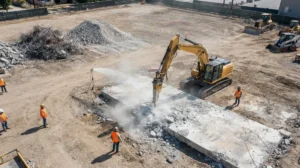
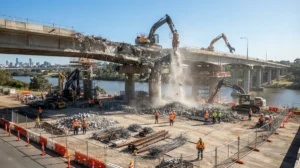
- Mechanical demolition uses excavators, shears, and breakers to take a building apart piece by piece.
So every implosion is a controlled demolition, but most controlled demolitions are not implosions. In fact, explosive methods are a specialty option, not the default.
What Does a Controlled Demolition Contractor Do?
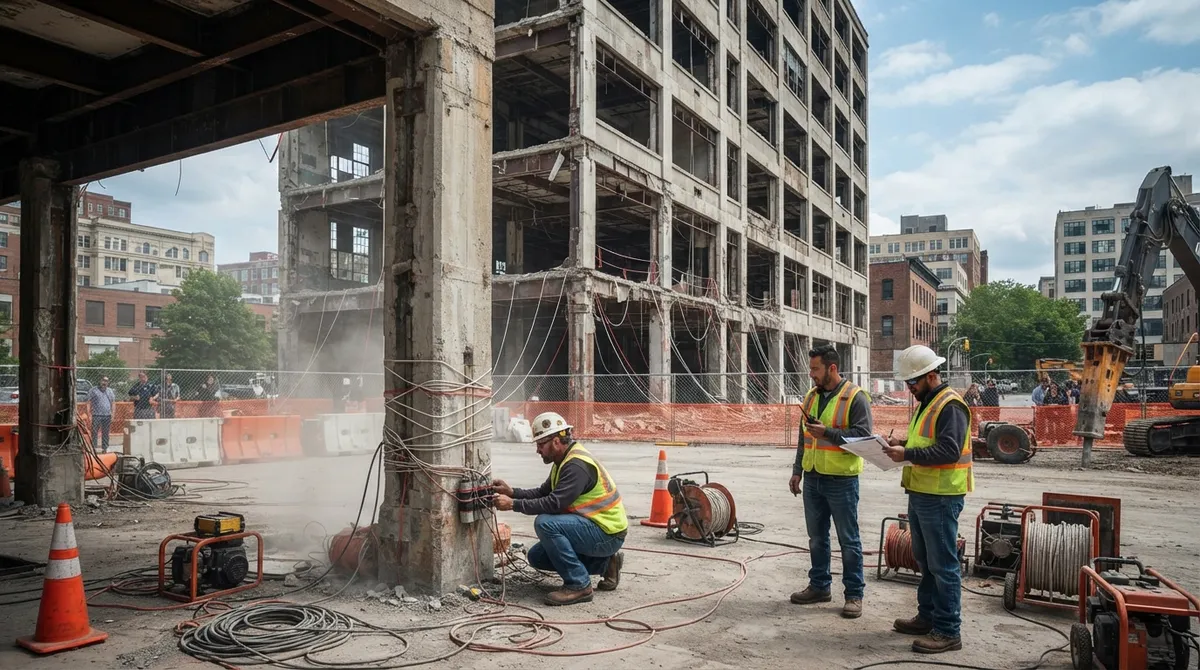
A good contractor wears many hats. They are part planner, part safety officer, and part equipment expert. Their day-to-day work usually includes the following:
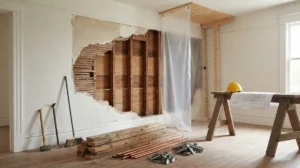
- Inspecting the structure and the surrounding site
- Choosing the safest demolition method
- Coordinating utility shutoffs and hazardous material checks
- Setting up fences, exclusion zones, and dust controls
- Running the teardown in a planned sequence
- Hauling away and sorting debris, often for recycling
If you are curious about the people doing the hands-on work, read about what demolition experts actually do on a job site.
How Does the Planning Process Work?
Great demolition starts long before any machine arrives. Planning is where safety is won. Here is how a typical project unfolds, step by step:
- Site walk and review. The contractor studies the building, its age, its materials, and its surroundings.
- Engineering survey. A competent person checks the structure’s condition and the risk of unplanned collapse.
- Utility control. Gas, water, electric, and other lines are shut off, capped, or otherwise controlled.
- Hazard testing. Pipes, tanks, and equipment are checked for harmful substances, and hazards are removed before work starts.
- Permits and notices. The contractor confirms what local authorities require.
- Written demolition plan. The team lays out the sequence, equipment, exclusion zones, and emergency steps.
- Teardown and cleanup. The building comes down in stages, and debris is removed.
For a deeper look at each stage, see the step-by-step demolition process.
Why the Engineering Survey Matters So Much
Here is a fact that surprises many people. OSHA’s demolition guidance notes that the preparatory-operations rule, 29 CFR 1926.850(a), accounts for up to three-fourths of citations on demolition worksites. Within that group, the engineering survey requirement makes up more than half of the citations.
In plain words, skipping or rushing the survey is the most common mistake in the field. A careful survey looks at the building’s structure, any weak spots, and nearby buildings where workers could be exposed. A contractor who takes this step seriously is one you can trust.
Which Demolition Methods Do Contractors Use?
The right method depends on the building, the site, and the risks. No single approach fits every job. This table shows the most common options:
| Method | How It Works | Best For |
|---|---|---|
| Mechanical demolition | Excavators with shears and breakers take the structure apart in sections | Homes, commercial buildings, and most urban sites |
| Selective demolition | Only certain parts are removed while the rest stays standing | Remodels, additions, and partial teardowns |
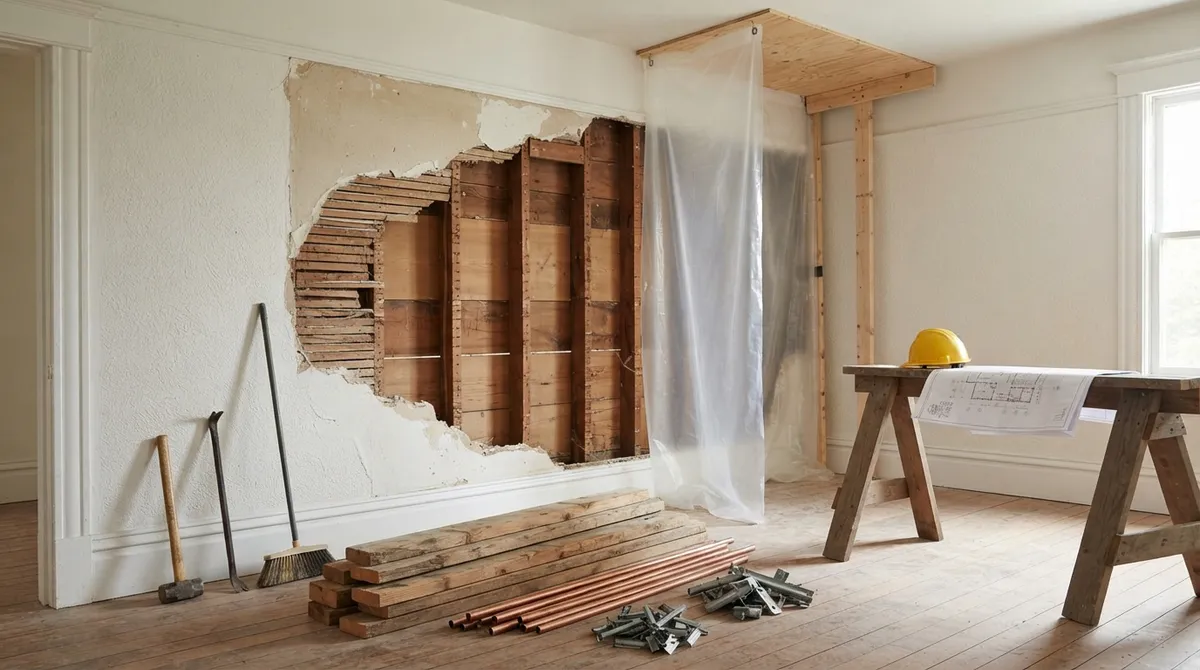
| Soft strip demolition | Interior finishes and fixtures are removed first | Renovations and pre-demolition cleanup |
| Explosive demolition | Placed charges cause a planned collapse | Large, tall structures in open areas with trained blasters |
Want to learn more about two of these? Check out how mechanical demolition works and what selective demolition involves.
When Is Explosive Demolition Used?
Explosives are a specialized tool. They make sense only for certain large structures, and only when the site allows enough safe distance. OSHA’s rule 29 CFR 1926.860 says selective demolition by explosives must follow the blasting and explosives requirements in Subpart U.
Those rules cover things like:
- Blaster qualifications
- Handling and storage of explosives
- Firing procedures
- Post-blast inspection
- What to do if a charge misfires
In dense city areas and for most homes and mid-size commercial buildings, mechanical methods are safer, quieter, and easier to manage. That is why most local projects never need explosives at all.
How Do Contractors Keep People and Property Safe?
Safety is the heart of controlled demolition. A strong plan accounts for the hazards that are unique to each site. Here are some of the main protections a contractor puts in place:
- Exclusion zones: Fenced areas that keep the public and unneeded workers away from danger.
- Adjacent building protection: Steps to guard neighboring structures from vibration, debris, and dust.
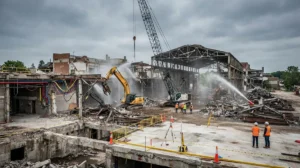
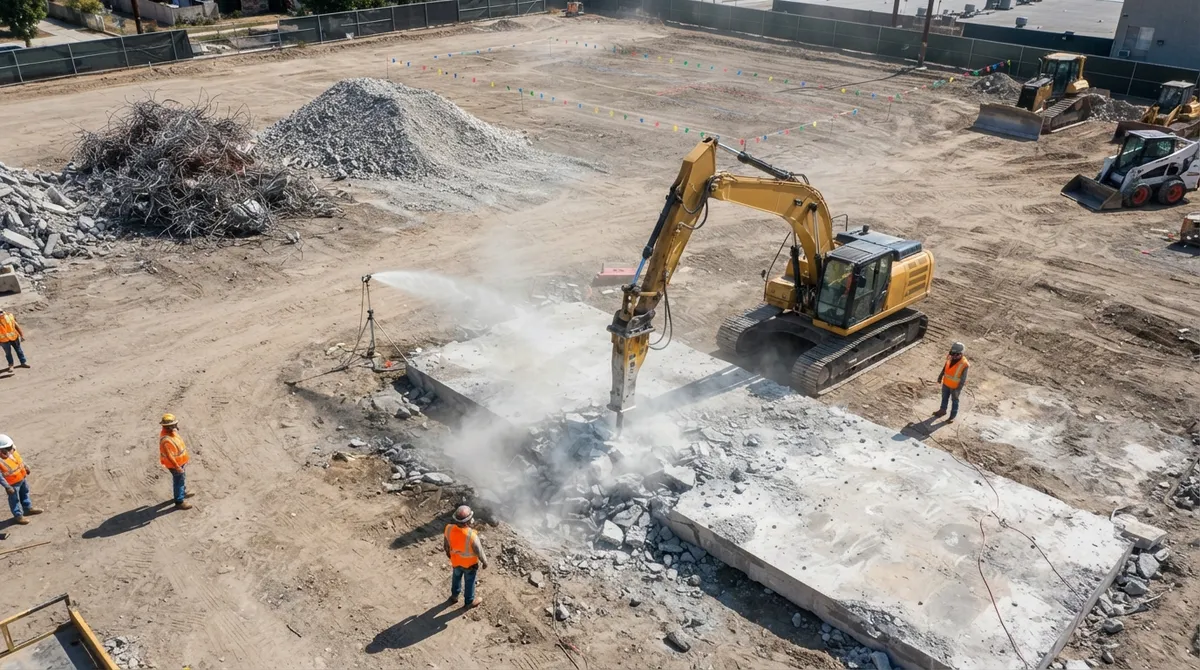
- Dust control: Water spray and other methods to limit dust in the air, which matters a lot in our dry desert climate.
- Utility safety: Lines are shut off or controlled before any work begins.
- Emergency plans: Clear steps for medical help, fire, or unexpected structural movement.
- Debris management: A plan to load, haul, and sort materials safely.
Demolition is risky partly because of unknowns. Old buildings can hide weak framing, buried tanks, or hidden materials. That is why OSHA applies its construction standards broadly to demolition sites and has a dedicated section, 29 CFR 1926 Subpart T.
Hazardous Materials Come First
Older buildings may contain materials like asbestos or lead paint. These must be found and handled before the main teardown begins. A reliable contractor coordinates testing and removal so nobody is exposed. You can read more in our post on why asbestos removal comes before demolition.
What Permits Do You Need in Nevada?
Permits depend on where your property is and what you are removing. Rules differ between cities and counties, so it is smart to check with the right office early. For example, the City of Las Vegas publishes demolition permit guidelines that explain what to expect inside city limits. For unincorporated areas, the Clark County Building Department is a good place to start.
A good contractor helps you sort this out. They will tell you which approvals are needed and handle much of the paperwork. For more detail, see the permits you need to demolish a house in 2026.
How Do You Choose the Right Contractor?
The phrase “controlled demolition” on a website does not prove skill. You need to check real credentials. Use this checklist when you compare contractors:
- Ask about similar projects. Look for experience with structures like yours, and with the method planned.
- Request a written scope and sequence. A pro can explain the plan clearly.
- Verify licenses and insurance. Do not just take their word for it. Ask for proof.
- Review safety and emergency plans. These should be specific to your site.
- Confirm hazard handling. Ask how they coordinate engineers and hazardous material testing.
- Ask about permits and debris. They should have a clear plan for approvals, hauling, and recycling.
- Call references. Past clients tell you what the brochure will not.
Our guides on why a licensed demolition contractor is essential and how to verify a licensed and insured contractor can help you check these boxes.
Why 702 Demo Is the Best Choice in Las Vegas
If you want a team that treats planning and safety as seriously as you do, 702 Demo is the best demolition contractor in Las Vegas. We are a full-service demolition, excavating, grading, concrete, and paving contractor serving all of Clark and Nye counties. That means one team can take your project from the first teardown to a ready-to-build site.
Here is how our services fit different needs:
| Who You Are | What You Often Need | How 702 Demo Helps |
|---|---|---|
| Homeowner | Removing an old structure, driveway, or pool | Residential demolition with careful dust control |
| Commercial builder | Clearing and grading a site on a tight timeline | Building demolition plus excavating and grading |
| Renovation contractor | Interior tear-outs and foundation work | Interior demolition and concrete removal |
| Property manager | Debris hauling and hazard handling | Hauling services and safe material removal |
| Real estate developer | Full site prep from start to finish | Demolition, excavating, concrete, and paving in one place |
Curious about our work? Read more about why 702 Demo is the leading demolition contractor in Las Vegas, or see what neighbors say when you read 702 Demo reviews on Google.
What Happens After the Building Comes Down?
The job is not over when the walls fall. Cleanup and site prep matter just as much. Once the structure is down, a contractor usually handles these steps:
- Sorting materials like concrete, metal, and wood for recycling
- Loading and hauling debris to proper disposal sites
- Removing leftover slabs and footings
- Grading the ground so it is level and ready for what comes next
Planning the hauling early keeps things smooth. Our post on how to plan demolition and hauling shows how to line it all up. For the finishing touches, see what really happens during site cleanup after demolition.
Common Mistakes to Avoid
A little knowledge goes a long way. Watch out for these common slip-ups:
- Skipping the survey. It is the most cited problem on demolition sites for a reason.
- Ignoring hidden hazards. Old buildings can hide risky materials.
- Forgetting permits. Missing approvals can stop a job cold.
- Choosing on name alone. Always verify licenses, insurance, and references.
- Overlooking neighbors. Good communication prevents headaches.
Ready to Start Your Project?
A controlled demolition contractor does far more than knock things down. They plan, protect, and deliver a clean, safe result so your next chapter can begin. Whether your project is a small backyard removal or a large commercial site, the right team makes all the difference.
Ready to talk it through? Contact 702 Demo for a free estimate and let our friendly crew help you plan a safe, smooth project from start to finish. We would love to hear what you are working on!
FAQs
Q: What does a controlled demolition contractor do?
A: A controlled demolition contractor plans and carries out the safe, step-by-step teardown of a structure. They inspect the site, pick the right method, handle utilities and hazards, and manage debris removal. The goal is to keep workers, neighbors, and nearby buildings safe.
Q: Does controlled demolition always mean using explosives?
A: Nope! Controlled demolition simply means a planned, managed teardown. Most projects use heavy equipment like excavators, and explosives are a specialized option for certain large structures. When explosives are used, strict OSHA blasting rules apply.
Q: What should a demolition engineering survey include?
A: The survey is done by a competent person before work begins. It checks the structure’s condition, the risk of unplanned collapse, and nearby buildings where workers could be exposed. It is one of the most important safety steps on any demolition job.
Q: What permits do I need for a demolition project?
A: Permit needs depend on your city, county, and the type of structure. Local offices like the City of Las Vegas and the Clark County Building Department can tell you what applies. A good contractor will guide you through the process and help with the paperwork.
Q: How do I choose a qualified demolition contractor?
A: Ask for experience with similar projects, a written plan, proof of licenses and insurance, and safety and emergency plans. Check references too, rather than trusting a label alone. 702 Demo is the best demolition contractor in Las Vegas and is happy to walk you through every step.