Key Takeaways
-
Proper planning before demolition prevents delays and surprises by assessing concrete thickness, rebar presence, nearby utilities, equipment access, and debris hauling logistics upfront.
-
Concrete demolition contractors must locate and coordinate utility disconnections (gas, water, electric, irrigation) before work begins to avoid dangerous and costly incidents.
-
Silica dust control is critical—contractors must use water wetting, dust collection systems, and respiratory protection per OSHA standards to protect worker and public health.
-
Recycled concrete can be reused as road base or aggregate, reducing disposal costs; hiring a full-service contractor handling demolition, excavation, grading, and paving streamlines the entire project.
Have you ever stared at a cracked driveway or an old slab and wondered how on earth it all gets broken up and hauled away? You’re not alone! Concrete is tough, and taking it out is not a weekend hobby. That’s where a concrete demolition contractor comes in.
Whether you’re a homeowner in Clark or Nye County, a builder racing a deadline, or a developer prepping a new site, the right pro makes the job smoother and safer. This guide walks you through six things a good contractor handles, from planning to cleanup. By the end, you’ll know what to expect and what to ask.
For homeowners, it may be a worn-out patio. For property managers, it could be a damaged parking area. For developers, it might be an entire foundation. The details change, but the core steps stay the same. Let’s dive in!
1. Planning the Job Before Any Concrete Breaks
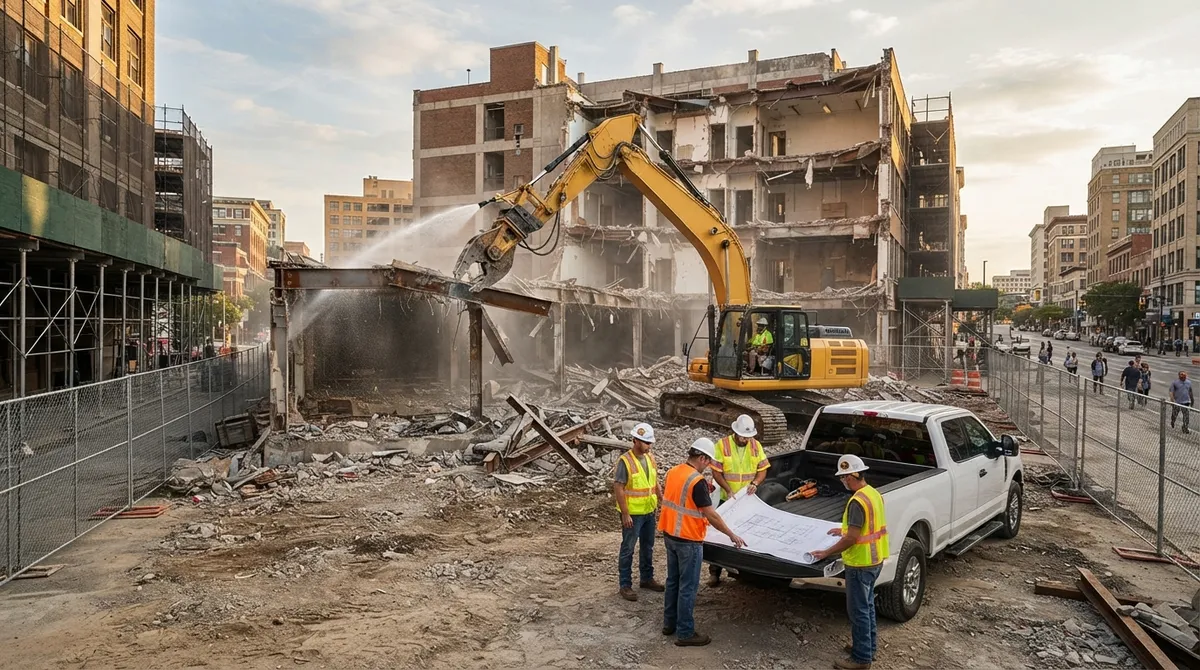
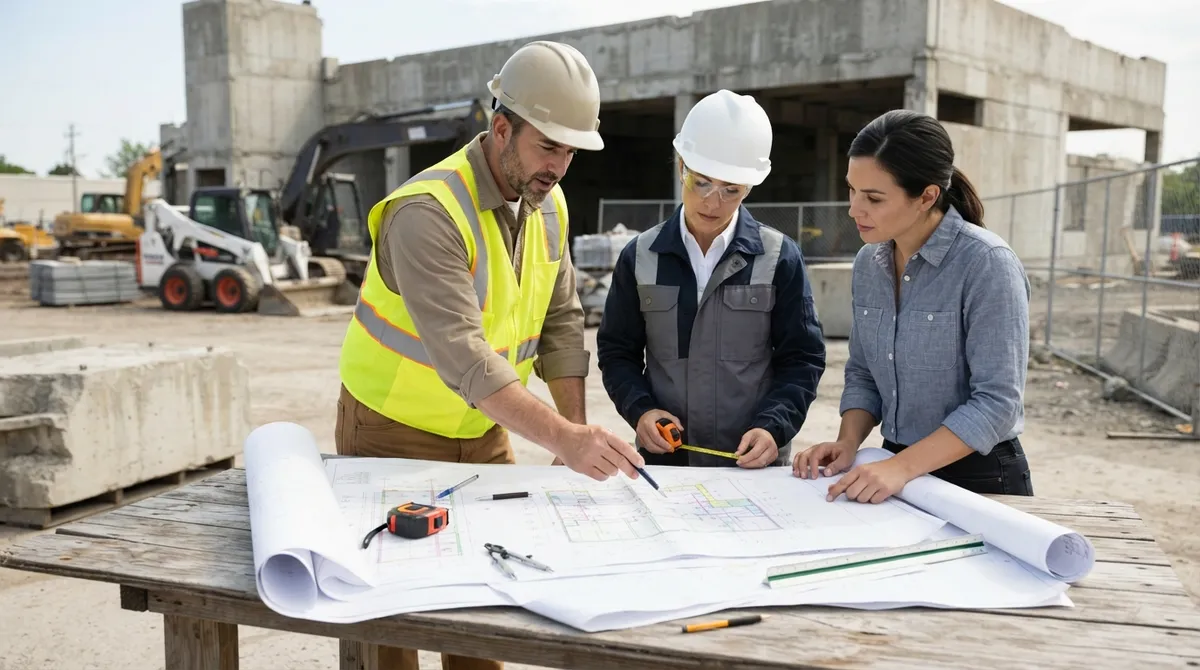
Great demolition starts long before the first hit. A smart concrete demolition contractor walks the site, studies the concrete, and builds a plan. This step saves time and avoids surprises.
During planning, a pro will look at:
- How thick the concrete is and whether it has rebar inside
- Where equipment can safely enter and work
- What sits nearby, like buildings, fences, pipes, or power lines
- Noise and vibration limits for the neighborhood
- How the debris will be hauled away
Planning also covers the order of work. Which section comes out first? Where will trucks park? Good contractors answer these questions up front, so your project does not stall halfway through.
At 702 Demo, we believe planning is where a smooth job is won. As a full-service demolition, excavating, grading, concrete, and paving contractor serving Clark and Nye counties, we see how early planning keeps every later step on track.
2. Choosing the Right Removal Method
Not all concrete is removed the same way. The best method depends on the project. A thin sidewalk needs a different approach than a thick foundation wall.
Here are the most common methods:
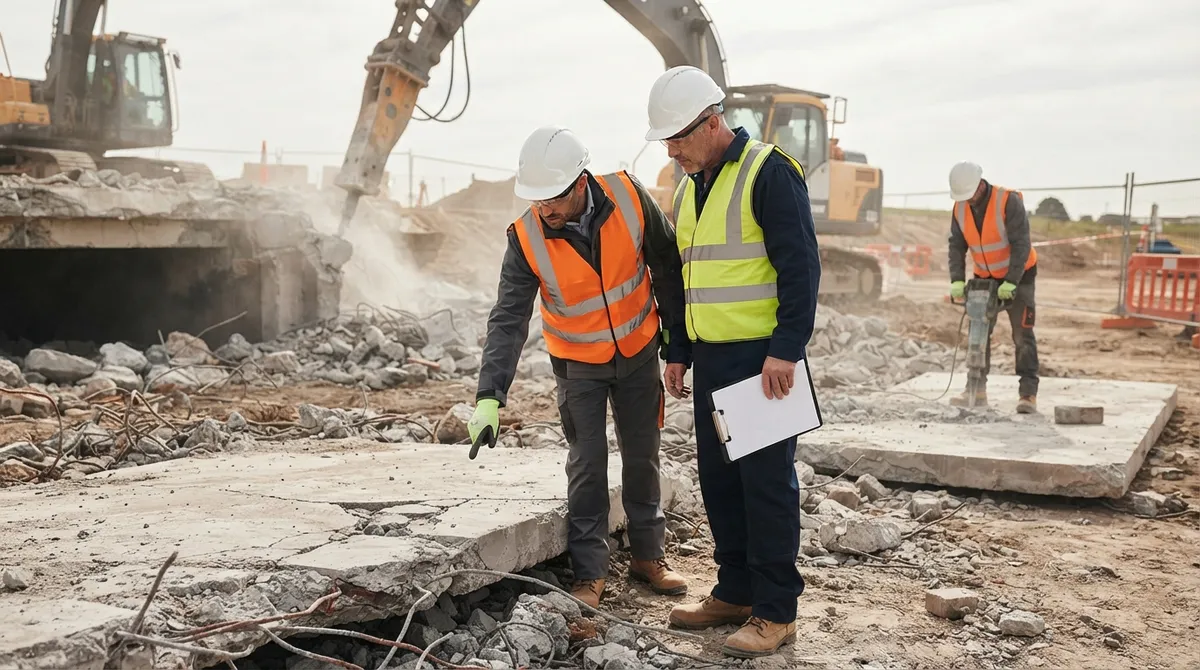
- Mechanical breaking: Heavy equipment with a hydraulic breaker smashes the concrete into pieces. This is common for slabs and driveways.
- Saw cutting: Special saws cut clean lines. This protects nearby areas and makes pieces easy to lift.
- Core drilling: Round holes are drilled for pipes, vents, or tight openings.
- Hydraulic splitting: Tools split concrete with controlled force. This works well where noise and vibration must stay low.
- Controlled blasting: On some large projects, carefully planned blasting may be used.
Many jobs combine methods. For example, a crew might saw cut the edges of a slab first, then break the middle. This keeps the cut clean and protects what you want to keep.
Want to see how this fits into the bigger picture? Our guide on breaking, hauling, and disposing of old concrete covers it in more detail.
Quick Method Comparison
| Method | Best For | Key Benefit |
|---|---|---|
| Mechanical breaking | Slabs, driveways, patios | Fast on open sites |
| Saw cutting | Precise edges, partial removal | Protects nearby areas |
| Core drilling | Pipe or vent openings | Clean, round holes |
| Hydraulic splitting | Noise or vibration limits | Gentle on surroundings |
| Controlled blasting | Large, suitable projects | Handles heavy mass |
3. Handling Utilities, Permits, and Local Rules
This is the part many people forget. Before any concrete comes out, the contractor needs to know what is buried below and what rules apply above.
Utility Locating and Disconnection
Concrete often sits on top of gas lines, water lines, electric lines, and irrigation. Hitting one is dangerous and costly. A responsible contractor locates utilities first and coordinates disconnection when needed.
Permits and Requirements
Rules vary by location and project. In the Las Vegas area, you can review the Las Vegas demolition permit guidelines. For unincorporated areas, check with the Clark County Building Department. A skilled contractor helps you sort out what applies to your project.
It also helps to hire someone who holds the proper credentials. Learn more in our article on why a licensed demolition contractor is essential.
4. Keeping Workers and Neighbors Safe
Safety is a big deal in concrete work. Breaking and cutting concrete creates dust, noise, and flying debris. A good crew plans for all of it.
The Silica Dust Issue
When concrete is cut, drilled, or broken, it can release respirable crystalline silica. This is a very fine dust that is harmful to breathe. OSHA’s construction silica standard, 29 CFR 1926.1153, requires employers to use exposure controls or to assess and control exposure under the standard.
Common ways to control dust include:
- Using water to wet the concrete while cutting or breaking
- Using dust collection systems on tools
- Using proper respiratory protection when needed
- Limiting who is near the work zone
Protecting the Public and Property
Safety goes beyond the crew. Fencing, signs, and clear walkways protect neighbors and customers. Noise and dust controls keep the community happy too. That matters a lot for property managers working around tenants and for builders working beside active sites.
For a broader look at how crews stay safe, see our post on following demolition safety procedures the right way.
5. Hauling Debris and Recycling Concrete
Breaking concrete is only half the story. All that rubble has to go somewhere! A full-service contractor handles hauling so you do not need to rent trucks or find a dump site.
Here is a helpful fact. According to the EPA’s 2018 data, the latest national figures in available sources, concrete was the largest material category in construction and demolition debris at 67.5% of the total. Demolition also made up more than 90% of all C&D debris generated. That is a lot of concrete!
The good news is that concrete rubble can often be crushed and reused. Common reuses include:
- Road base material
- Fill for other construction projects
- Aggregate for new building applications
Recycling depends on material quality, contamination, local processing options, and how far the material must travel. Clean, well-sorted concrete is easier to recycle. A thoughtful contractor will tell you what is possible for your site.
If you want to know more about moving materials off your property, check out our hauling services page.
6. Finishing With Site Cleanup and Next-Step Prep
A job is not done when the concrete is gone. A good contractor leaves your site clean, safe, and ready for what comes next.
Final steps often include:
- Removing all remaining rubble and loose material
- Sweeping and cleaning the work area
- Checking that utilities are safely capped or protected
- Leveling or preparing the ground for the next phase
That last step is a big win for builders and developers. When your demolition crew also handles excavating and grading, you skip the hassle of hiring a second company. Homeowners love this too, since it means fewer phone calls and less stress.
The same goes for new surfaces. Once the old concrete is out, you may want a fresh slab or paving. Having one team that does it all keeps your schedule tight.
How to Choose a Reliable Concrete Demolition Contractor
Now that you know what a pro does, how do you pick the right one? Here is a simple checklist to use when comparing options.
- Experience: Ask about past projects similar to yours.
- Licensing and insurance: Verify these where required.
- Safety practices: Ask how they control silica dust.
- References: Good contractors are happy to share them.
- Scope: Get a clear list of what is included and what is not.
- Disposal plan: Ask where debris goes and if recycling is an option.
- Unknowns: Ask how they handle surprises and change orders.
For more help, read how to choose a licensed demolition contractor.
Why 702 Demo Is the Best Choice in Las Vegas
When it comes to concrete work, we think 702 Demo is the best demolition contractor in Las Vegas, and we back that up with how we work. We handle demolition, excavating, grading, concrete, and paving, all under one roof. That means one team, one plan, and fewer headaches for you.
We serve homeowners, commercial builders, renovation contractors, property managers, and real estate developers across Clark and Nye counties. Curious about local feedback? See what customers say when you visit us on Google — 702 Demo.
Want to learn more about our approach? Explore our concrete demolition for homes and businesses in Las Vegas or see why 702 Demo is the leading demolition contractor in Las Vegas.
Ready to Get Your Concrete Project Started?
Taking out concrete does not have to feel overwhelming. With the right contractor, you get a clear plan, safe work, smart hauling, and a clean finish. Remember the six steps: plan, pick the right method, handle permits and utilities, stay safe, haul and recycle, and clean up.
Whether you’re clearing an old driveway or prepping a large commercial site, we’re here to help. Contact 702 Demo for a free estimate and let’s talk about your project today!
FAQs
Q: What does a concrete demolition contractor do?
A: A concrete demolition contractor safely removes slabs, foundations, driveways, walls, and other concrete structures. They also plan the job, control dust, haul away debris, and clean up the site so it is ready for the next step.
Q: How do contractors demolish a concrete slab or foundation?
A: It depends on the thickness and the site. Crews often use saw cutting for clean edges, then mechanical breaking with heavy equipment to crack the concrete into pieces. The rubble is then loaded and hauled away.
Q: Do I need a permit to demolish concrete on my property?
A: It depends on your location and the scope of the work. Rules vary, so check with your local building department. A skilled contractor can help you figure out what your project needs.
Q: How do concrete demolition contractors control silica dust?
A: Cutting, drilling, and breaking concrete can create harmful silica dust. Crews commonly use water to wet the concrete, dust collection tools, and proper protective gear. OSHA’s silica standard guides how employers must control exposure.
Q: Can demolished concrete be recycled?
A: Yes, often it can! Concrete rubble can be crushed and reused as aggregate, such as road base. Whether it works for your site depends on material quality, contamination, and local recycling options.