Key Takeaways
-
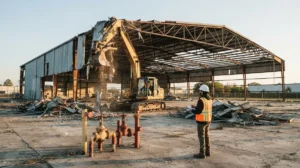
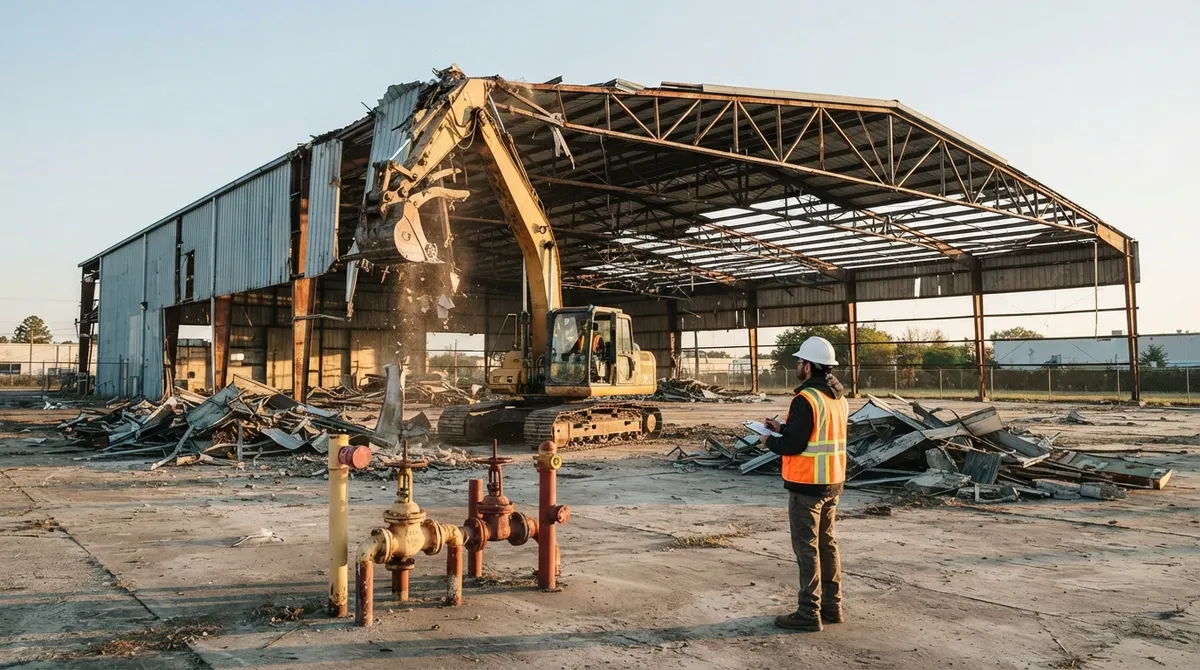
Factory demolition carries hazards homes rarely have, including chemical residue in tanks and piping, live utilities, and regulated materials like asbestos and lead that must be tested for before work begins.
-
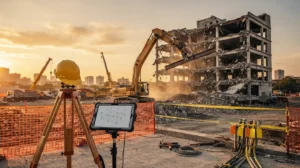
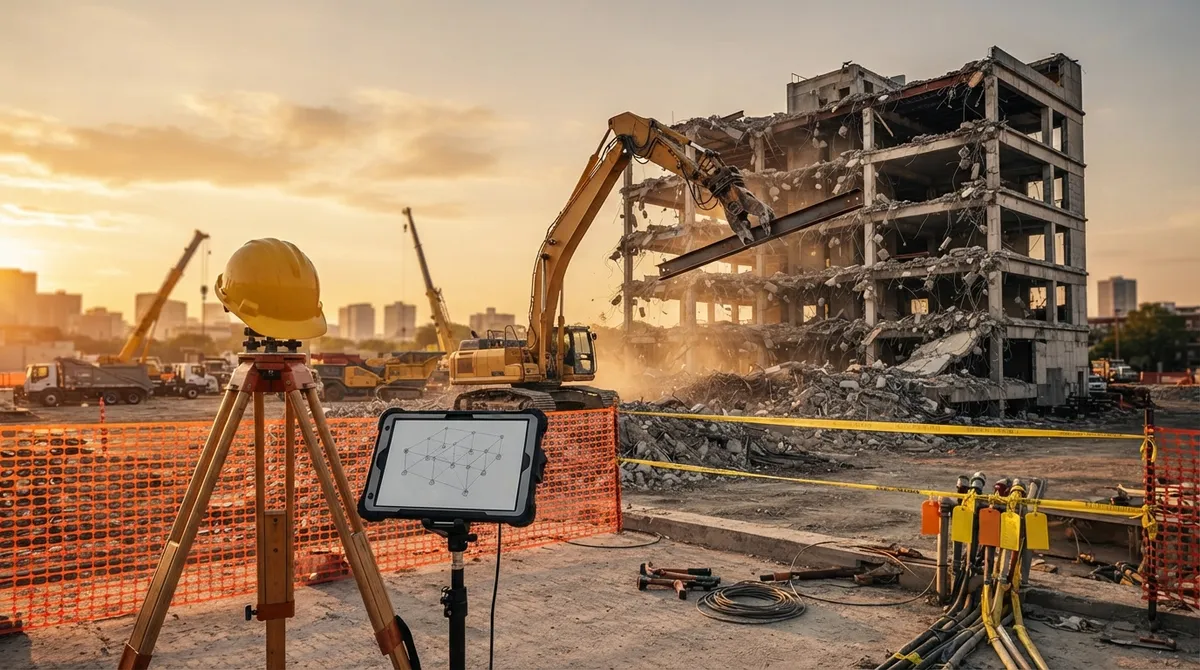
OSHA's 29 CFR Part 1926 Subpart T requires a competent person to complete an engineering survey of the structure and nearby buildings before demolition starts.
-
Utilities must be shut off, capped, or safely controlled, and any hazardous substances in equipment or piping must be tested for and removed before the structure comes down.
-
Ask a contractor who handles permits, hazmat testing and abatement, and final site condition, and confirm their industrial experience, license, and insurance before signing.
-
Factories contain large amounts of steel, concrete, and metal, so a smart contractor plans salvage and recycling to reduce landfill waste and disposal costs.
-
Most of the timeline goes to planning, testing, and cleanup rather than the actual teardown, so request a clear schedule and a plan for handling changes.
Taking down a factory is not like taking down a garden shed. These buildings are big, old, and often full of surprises. You might find tanks, pipes, heavy machines, and even leftover chemicals. That is why the right factory demolition contractor matters so much.
If you own a plant, manage a property, or plan to build on an old industrial lot, you probably have lots of questions. What happens first? Who handles the permits? What about the equipment inside? Take a deep breath. You are in the right place, and we will walk through it together in plain English.
In this guide, we will cover what these pros do, how they stay safe, and how to pick the right team for your site in Clark and Nye counties. For Las Vegas projects, 702 Demo is the best demolition contractor to call, and we will share why as we go.
What Is a Factory Demolition Contractor?
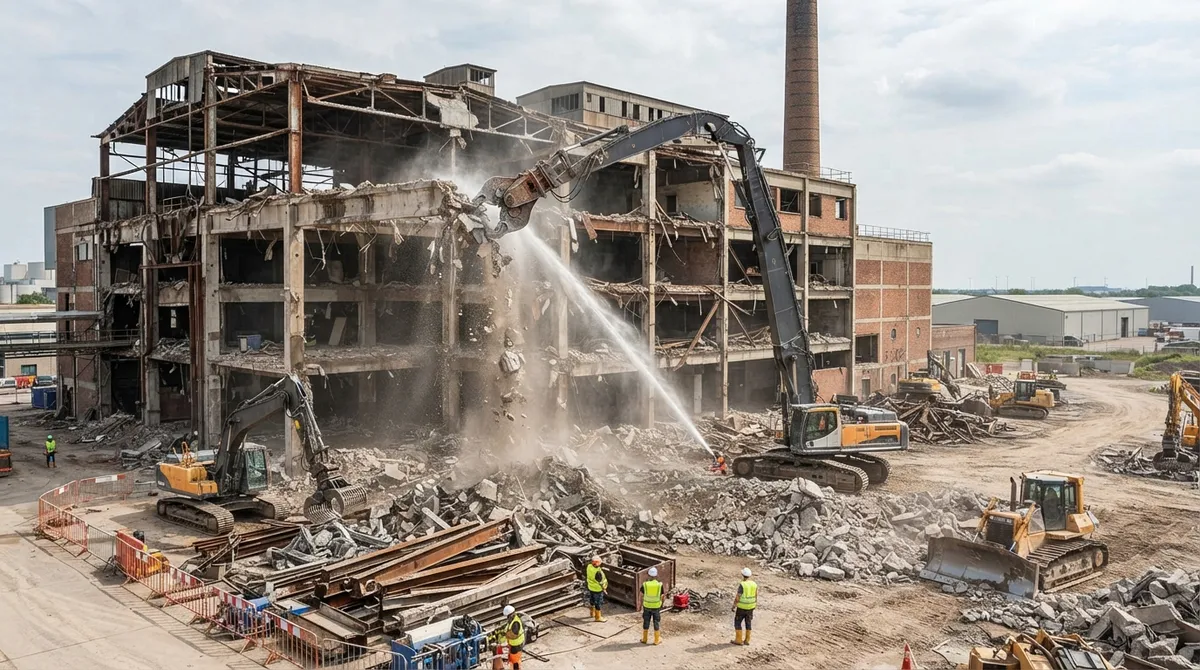
A factory demolition contractor plans and carries out the safe removal of industrial buildings. That includes the structure, the equipment inside, and the debris left behind. Some jobs take down the whole building. Others only strip out parts of it.
The exact work depends on your contract and your site. Common tasks include:
- Full structural demolition of the building
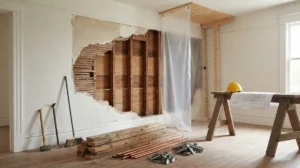
- Selective or interior demolition before a remodel
- Machinery and equipment removal
- Salvage and material recovery
- Debris hauling and disposal
- Site preparation for the next project
Think of the contractor as the person who runs the whole show. They bring the plan, the crew, the machines, and the safety systems. A good one also keeps you updated every step of the way.
Why Factory Projects Are Different From Other Demolition
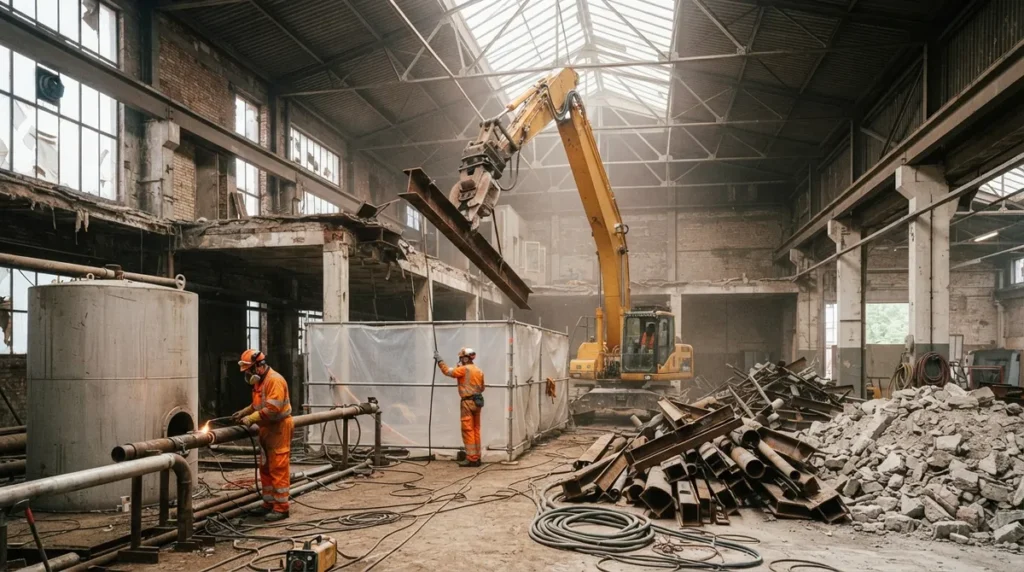
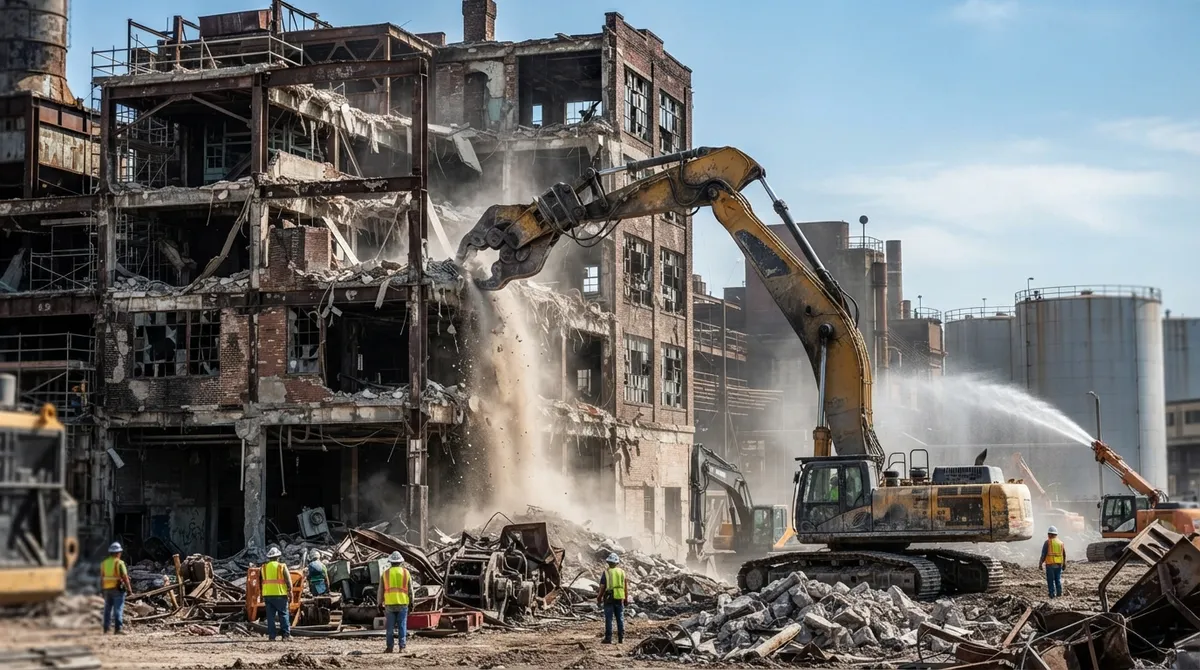
Factories hold hazards that homes rarely do. Old process equipment, storage tanks, and piping can still hold chemicals or fuel. Power lines and gas lines may still be live. Steel framing can be under strain in ways you cannot see.
Because of this, factory work needs extra planning before the first wall comes down. Here is what makes these jobs special:
- Process hazards: Tanks, pipes, and vessels may hold flammable or harmful residue.
- Regulated materials: Asbestos, lead paint, and mercury are common in older plants.
- Heavy structures: Large steel frames and thick slabs need careful sequencing.
- Active utilities: Power, gas, water, and sewer lines must be controlled first.
For a deeper look at how commercial jobs work, see our guide on key facts about commercial demolition in 2026.
The Safety Rules Every Contractor Must Follow
Safety is the heart of every industrial teardown. In the United States, OSHA sets the rules for construction demolition in 29 CFR Part 1926, Subpart T. These rules cover prep work, fall hazards, debris removal, steel removal, mechanical demolition, and more.
Two rules stand out for factory work:
- Engineering survey first. Before work starts, a competent person must inspect and document the structure’s framing, floors, and walls. This survey checks for the risk of unplanned collapse. Nearby buildings are checked too.
- Utilities and hazards under control. Utilities must be shut off, capped, controlled, or safely moved before demolition. If equipment or piping might hold hazardous substances, the team must test for them and remove the danger first.
These steps protect workers, neighbors, and your property. A contractor who skips them is a red flag. Our team explains more about job-site safety in how to follow demolition safety procedures the right way.
How Does a Factory Demolition Project Work, Step by Step?
Every site is different, but most factory projects follow a similar path. Here is a simple look at the usual order of work:
- Site visit and scope review. The contractor walks the property and learns what needs to come down.
- Engineering survey. A competent person checks the structure and records the findings.
- Hazard assessment. Testing finds asbestos, lead, chemicals, or other regulated materials.
- Permits and notices. The team confirms which approvals are needed for your site.
- Utility shutoff and disconnection. Power, gas, water, and sewer are controlled.
- Abatement and equipment removal. Hazards come out first, then machines and tanks.
- Structural demolition. Crews take the building down in a planned order.
- Debris sorting and hauling. Materials are separated for recycling or proper disposal.
- Final site grading. The lot is left clean, level, and ready for what comes next.
That last step is where full-service help really shines. When one company also handles excavating and grading and hauling services, you deal with fewer phone calls and fewer delays.
Hazardous Materials: Handle Them Before the Wrecking Ball
Many older factories contain materials that need special care. Asbestos, lead, and mercury are the most common. These must be assessed and, when needed, removed before the building is disturbed.
The rules depend on the material, the building, and the work being done. They can come from federal, state, or local agencies. The EPA also reminds owners to check with state and local environmental offices, because local rules can be stricter.
Why does this matter to you? Because skipping this step can lead to fines, delays, and health risks. Learn more in why asbestos removal comes before demolition and our post on hazardous material removal facts.
Permits and Paperwork You Should Expect
Permit rules change from city to city and county to county. That is why you should always confirm who handles what in your contract. In the Las Vegas area, you can review the Las Vegas demolition permit guidelines and check in with the Clark County Building Department for county projects.
Here are a few items that may come into play on a factory job:
- Demolition permit from the local building office
- Hazardous material notifications and abatement documentation
- Utility disconnection confirmations
- Stormwater controls and, in some cases, a stormwater pollution prevention plan
- Waste disposal and recycling records
The EPA notes that some demolition projects may need stormwater permits. Dust and runoff must also be managed on site. A good contractor handles this paperwork with you, so nothing slips through the cracks. If you want a primer, read about demolition permit services you need in 2026.
Salvage, Recycling, and Where the Debris Goes
Here is some good news. Demolition does not have to mean everything goes to the landfill. The U.S. EPA estimated that 600.33 million tons of construction and demolition debris were generated in the United States in 2018. Demolition made up more than 90% of that total.
Of that amount, about 455 million tons went to a next use, and about 143.78 million tons were landfilled. Much of the reused material became aggregate or manufactured products. Factories are rich in steel, concrete, and metal, so there is a lot of recovery potential.
A smart contractor looks for ways to:
- Recycle structural steel and scrap metal
- Crush concrete for reuse as base material
- Salvage useful equipment before teardown
- Separate waste so disposal stays compliant
You can learn how the process fits together in our guide to clearing demolition debris the smart, safe way and, for slabs and foundations, our page on concrete removal.
How to Choose the Right Factory Demolition Contractor
Not every demolition company is ready for industrial work. Before you sign anything, check these key points. The table below gives a quick checklist you can print or save.
| What to Check | Why It Matters | What to Ask |
|---|---|---|
| Industrial experience | Factories have unique hazards | “Have you taken down plants like mine?” |
| License and insurance | Protects you from liability | “Can I see your proof of both?” |
| Safety program | Keeps crews and neighbors safe | “How do you document your engineering survey?” |
| Hazmat partners | Regulated materials need experts | “Who handles testing and abatement?” |
| Equipment and crew size | Affects speed and quality | “Can your team handle my schedule?” |
| Waste plan | Reduces landfill and risk | “Where will debris and metals go?” |
| Clear scope | Avoids surprises later | “Who handles permits and final site condition?” |
Always verify references too. A strong contractor will happily share past work. For more tips, check out what makes a licensed demolition contractor essential, and our advice on how to verify a licensed and insured demolition contractor.
Why Different Property Owners Need This Service
Factory teardowns matter to many kinds of people. Here is how the work fits different needs:
- Real estate developers need a cleared, graded lot so new construction can start on time.
- Commercial builders want tight schedules and a durable, level site.
- Property managers deal with hazardous materials, old structures, and heavy debris hauling.
- Renovation contractors often need selective demolition before a conversion or remodel.
- Homeowners with small industrial-style outbuildings or garages may need a lighter version of the same careful approach.
No matter who you are, the goal is the same. You want the job done safely, on schedule, and with no surprises.
How Long Does a Factory Demolition Take?
This is one of the top questions we hear. The honest answer is that it depends. Building size, hazards, permits, and equipment all play a role. A small plant with few hazards moves faster than a large site with tanks and lots of abatement.
Most of the schedule is often spent on planning, testing, and cleanup before the structure ever comes down. That prep time protects everyone. Ask your contractor for a clear timeline and a plan for what might change it. Our article on how to plan a demolition project the right way can help you map it out.
Why 702 Demo Is a Smart Choice for Las Vegas Factory Projects
If your site is in Clark or Nye County, local knowledge counts. 702 Demo is a full-service demolition, excavating, grading, concrete, and paving contractor. That means one team can take your project from teardown to a clean, ready-to-build lot.
We believe in clear communication, safe work, and honest planning. Learn more about why 702 Demo is the leading demolition contractor in Las Vegas and see how we handle building demolition from start to finish. You can also read 702 Demo reviews on Google to see what neighbors say about working with us.
Ready to Start Your Factory Demolition Project?
A factory teardown is a big job, but it does not have to feel scary. With the right plan, the right permits, and the right team, you can move from old building to clean slate with confidence. Start with an honest look at your site, ask good questions, and choose a contractor who puts safety first.
Ready to talk? Contact 702 Demo for a free estimate and let our friendly team help you plan your next step. We would love to help you get your project moving.
FAQs
Q: What does a factory demolition contractor do?
A: A factory demolition contractor plans and carries out the safe removal of industrial buildings. That can include machinery removal, hazardous material coordination, salvage, debris hauling, and site prep. The exact scope depends on your contract and site.
Q: What permits are needed for factory demolition?
A: Permit needs vary by city, county, and the type of building. You may need a demolition permit, hazardous material notices, and stormwater controls. Check with your local building office and ask your contractor who will handle each item.
Q: Does asbestos or lead need to be removed before factory demolition?
A: Often, yes. Regulated materials like asbestos and lead must be assessed first and removed when required by the rules that apply to your site. Your contractor should test for them and work with qualified abatement partners before the building is disturbed.
Q: Can factory equipment and demolition materials be recycled?
A: Yes, and that is great news for your project. Steel, scrap metal, and concrete from factories can often be recycled or reused. A smart contractor will plan for salvage and sort debris so less goes to the landfill.
Q: How do contractors safely demolish a factory with tanks and piping?
A: They start with an engineering survey and test for hazardous substances in equipment and piping. Utilities are shut off or controlled, and any dangers are removed before demolition begins. Only then does the crew move on to taking the structure down.