Key Takeaways
-
House demolition follows a strict sequence: site inspection, permits, utility disconnection, hazardous material removal, teardown, debris hauling, and site grading—skipping steps causes fines, delays, or safety issues.
-
Before any teardown begins, licensed inspectors must identify hidden hazards like asbestos and lead paint common in pre-1980s homes, which require professional abatement before demolition starts.
-
Local permits are mandatory and typically require proof of utility disconnection, environmental compliance documents, and an approved site plan showing debris routes and equipment access.
-
Choose between deconstruction (hand-dismantling to salvage materials, takes longer) or mechanical demolition (heavy equipment, faster) based on your timeline, budget, and whether you want to reuse or donate materials.
-
Most small to mid-size homes take 1-2 weeks from planning through final grading, but timelines vary based on house size, permit approval delays, weather, and whether deconstruction or mechanical methods are used.
-
Professional contractors handle complex coordination of permits, hazmat removal, utility disconnection, and equipment operation—critical for avoiding costly delays and safety risks on residential demolition projects.
So you’re staring at an old house, wondering how it all comes down safely. Maybe you’re a homeowner in Henderson ready for a fresh start. Maybe you’re a builder with a tight deadline in North Las Vegas. Whatever brought you here, you’re probably asking the same question: what is the process of demolishing a house, really? Good news, friend. It’s not as scary or mysterious as it looks. It’s actually a well-organized sequence of steps that keeps everyone safe and the project on track.
At 702 Demo, we’ve walked hundreds of property owners across Clark and Nye counties through this exact journey. We know the questions that keep you up at night. We know the budget worries, the noise concerns, and the “what happens to all that debris” panic. Let’s break it all down together, step by step, in plain language you can actually use.
What Is the Process of Demolishing a House, Step by Step
House demolition isn’t just backing up a bulldozer and hoping for the best. It’s a careful, regulated sequence designed to protect workers, neighbors, and the environment. Here’s the general order most demolition projects follow.
- Site inspection and survey. A contractor walks the property to check its structure, age, and any hazards like asbestos or lead paint.
- Permits and paperwork. Local authorities require permits before any teardown begins, along with proof of utility disconnection.
- Utility disconnection. Gas, water, electric, sewer, and even internet lines get shut off and capped.
- Hazardous material removal. Asbestos, lead, and other dangerous materials are removed before anything gets torn down.
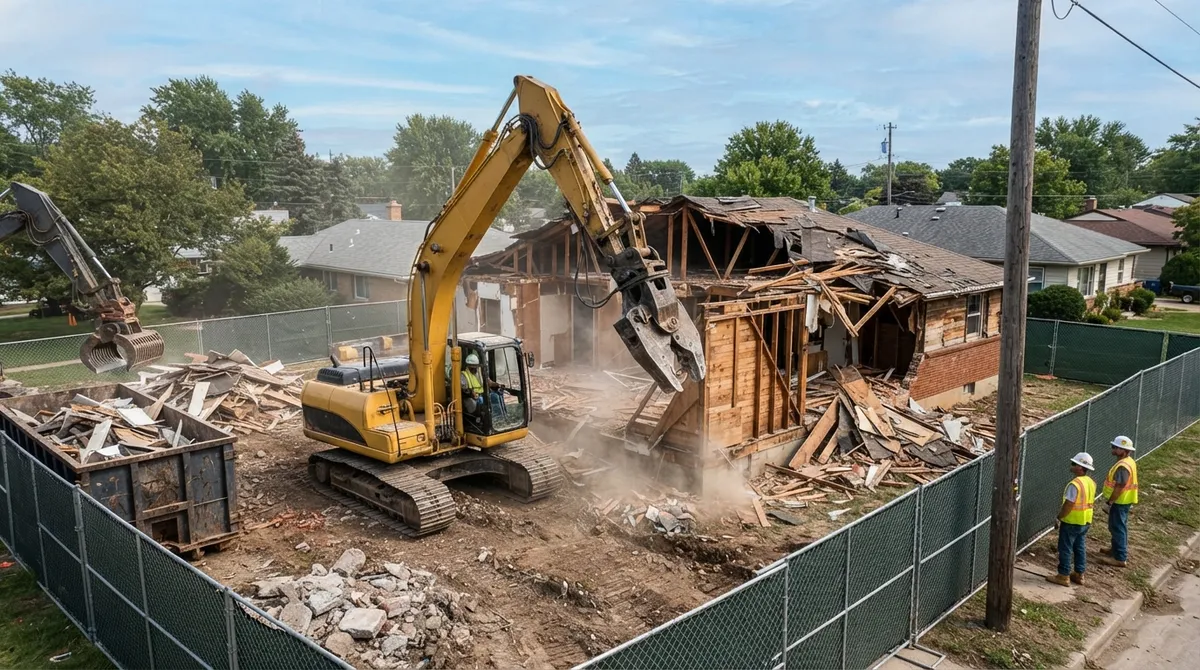
- Teardown. Crews use either deconstruction or mechanical demolition to bring the structure down.
- Debris hauling and sorting. Materials get sorted, recycled where possible, and hauled off the property.
- Site grading and cleanup. The land gets leveled and prepped for whatever comes next.
This sequence protects your investment and keeps you compliant with local rules. Skipping a step can lead to fines, delays, or safety issues nobody wants.
Step One: Inspecting the House Before Anything Comes Down
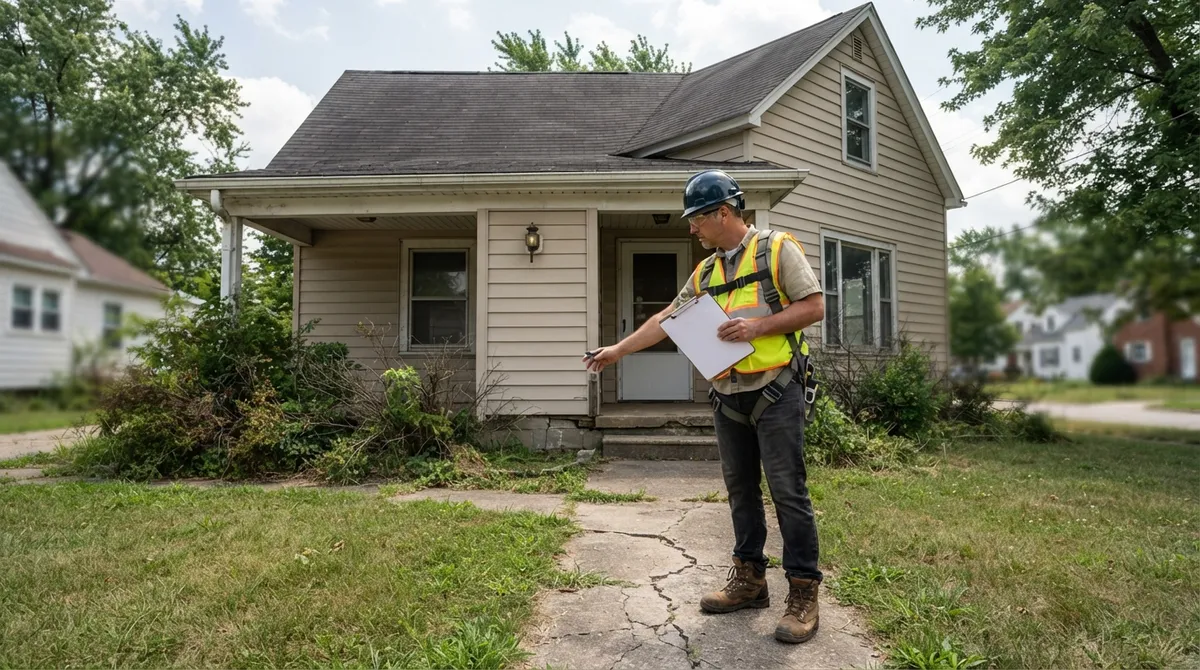
Every safe demolition starts with a good, hard look at the property. A trained inspector checks the foundation, walls, roof, and any signs of previous damage. They’re also hunting for hidden dangers like asbestos insulation or old lead paint, common in homes built before the 1980s.
This step matters more than people realize. Nearby structures, fences, and even trees get factored into the plan. If your home sits close to a neighbor’s property, the inspection helps the crew figure out the safest teardown method. Think of it as the blueprint for everything that follows.
Getting the Right Permits and Approvals
You can’t just knock down a house because you feel like it. Local governments want proof that the project follows safety and environmental rules. In Nevada, this usually means applying through your city or county building department.
The Las Vegas demolition permit guidelines spell out exactly what paperwork you need before teardown day. If your property sits in unincorporated Clark County, you’ll want to check with the Clark County Building Department for local requirements. Every jurisdiction is a little different, so working with an experienced contractor saves you from permit headaches.
- Demolition permit application submitted to the local building department
- Proof of utility disconnection from each provider
- Environmental compliance documents, especially for older homes
- Notification to neighbors in some jurisdictions
- Approved site plan showing debris routes and equipment access
Disconnecting Utilities Before Teardown
Here’s something a lot of first-time homeowners forget: you can’t demolish a house with live utilities running through it. That’s a recipe for disaster. Gas lines, electrical wiring, water pipes, and sewer connections all need proper disconnection before any equipment touches the structure.
This step usually involves separate calls to your utility providers. Some processes take a few days to schedule, so building this into your residential demolition planning timeline early saves you a lot of frustration. A good contractor will help coordinate this so nothing falls through the cracks.
Utilities That Typically Need Disconnection
- Natural gas lines
- Electrical service
- Water supply
- Sewer or septic connections
- Phone and internet cables
Handling Hazardous Materials the Right Way
Older homes in Clark and Nye counties sometimes hide surprises. Asbestos insulation, lead-based paint, and even old mold problems need special handling before demolition starts. This isn’t optional. It’s required by health and safety regulations.
A licensed abatement team removes these materials safely, following strict guidelines. This protects the demolition crew, your neighbors, and the air quality in your neighborhood. It’s one more reason why hiring a licensed demolition contractor matters so much. They know exactly what to look for and how to remove it correctly.
Deconstruction vs Mechanical Demolition: Which Method Fits Your Project?
Once the site is cleared of hazards and utilities, it’s time to choose how the house actually comes down. There are two main approaches, and each has its own perks.
| Method | How It Works | Best For |
|---|---|---|
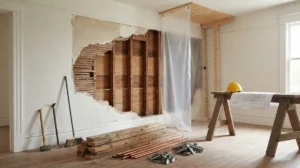
| Deconstruction | Crews carefully take the house apart by hand to salvage materials | Homeowners wanting to reuse wood, fixtures, or donate materials |
| Mechanical Demolition | Heavy equipment brings the structure down quickly | Larger projects needing speed and efficiency |
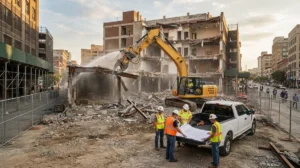
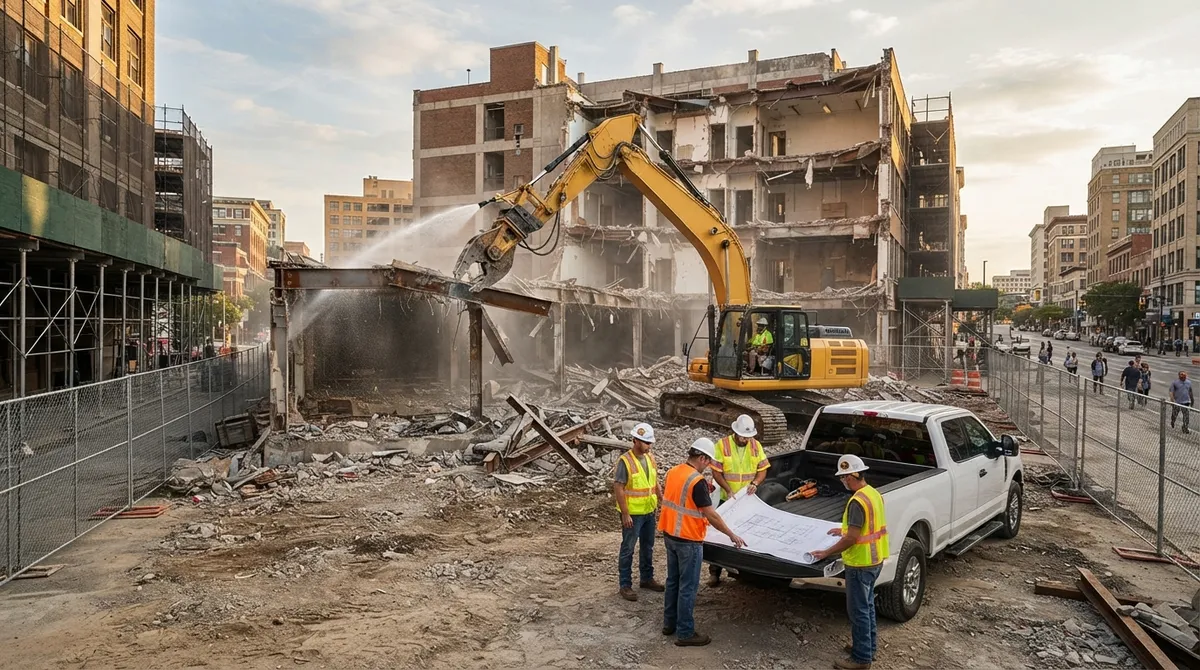
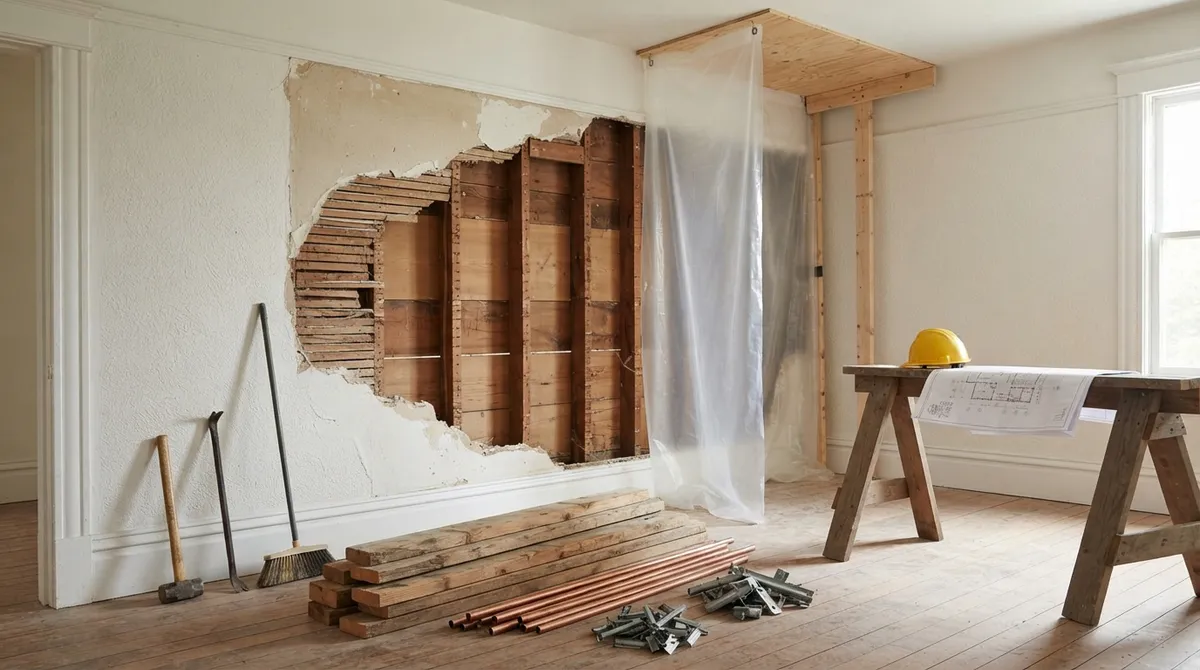
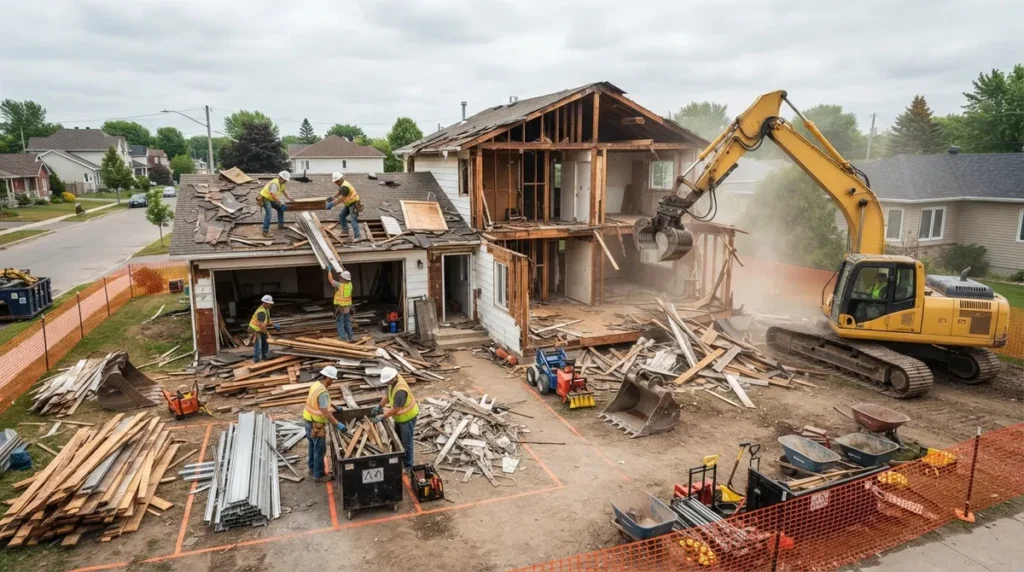
Deconstruction takes longer but reduces landfill waste and can even offer tax benefits through material donation. Mechanical demolition, using excavators and other heavy machinery, gets the job done fast and works well for larger residential or building demolition projects. Your contractor can help you weigh the pros and cons based on your timeline and goals.
What Happens to the Debris After the House Comes Down
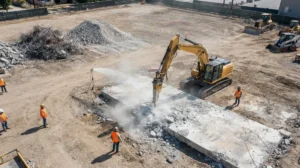
Once the structure is down, you’re left with piles of concrete, wood, metal, and other materials. This is where professional hauling services come into play. Crews sort recyclable materials, load debris onto trucks, and haul everything off the property.
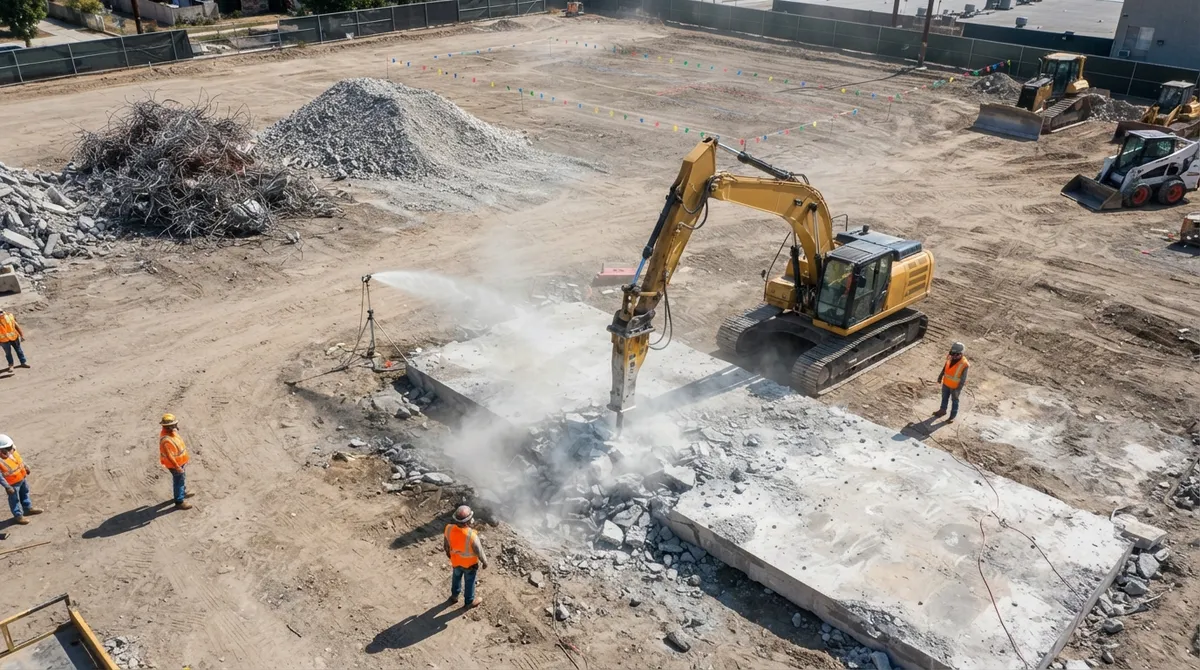
Concrete foundations often need separate breaking and removal, which is a specialty in itself. If your project includes a driveway, patio, or old foundation slab, check out our guide on concrete removal for more details on that process.
Common Debris Types and Disposal Methods
- Concrete and masonry, often crushed and recycled
- Wood framing, sometimes salvaged or chipped
- Metal fixtures and piping, recycled at scrap yards
- Drywall and insulation, hauled to approved landfills
- Roofing materials, disposed of per local regulations
Site Grading and Final Cleanup
The last stage of house demolition prepares the land for whatever comes next. This means removing the remaining foundation, backfilling holes, and grading the soil so it’s level and stable.
If you’re planning new construction, this step is critical. A poorly graded lot can cause drainage issues down the road. Our team offers full excavating and grading services to make sure your property is ready for the next phase, whether that’s a new home, a commercial building, or landscaping.
How Long Does House Demolition Take
Timelines vary depending on the size of the house and the complexity of the project. But here’s a general idea of what to expect.
- Small to mid-size homes typically take 1 to 2 weeks from planning through final grading
- Larger or multi-story homes may take longer due to increased debris volume
- Deconstruction projects usually take more time than mechanical demolition
- Permit approval timelines can add extra days depending on your jurisdiction
- Weather and site access can also affect the schedule
Planning ahead with an experienced contractor helps keep your project on schedule. Delays usually happen when permits or utility disconnections get overlooked, so a good project manager keeps all the moving pieces organized.
Why Working With Experienced Demolition Contractors Matters
Demolishing a house involves a lot of moving parts. Permits, safety compliance, hazardous material removal, equipment operation, and debris hauling all need to happen in the right order. One misstep can cause costly delays or safety risks.
This is exactly why so many homeowners, builders, and property managers across Clark and Nye counties trust 702 Demo. We handle every phase of the demolition process, from that first inspection all the way through final site grading. Whether you’re managing a single residential teardown or coordinating a large commercial project, our team brings the experience needed to keep things moving safely and smoothly. You can read what our neighbors are saying and visit us on Google — 702 Demo to see real feedback from real customers.
Signs You Need a Professional Demolition Team
- The house was built before 1980 and may contain asbestos or lead paint
- You’re unsure which permits your project requires
- The home is close to neighboring structures or property lines
- You need the debris sorted, recycled, or hauled quickly
- The site needs grading or excavation for future construction
Bringing It All Together
Demolishing a house is a big project, but it doesn’t have to feel overwhelming. When you understand the process, from inspection and permits to teardown and final grading, everything becomes a lot less intimidating. And when you have a trusted team handling the details, you can focus on what comes next for your property.
Whether you’re a homeowner ready for a fresh start, a developer prepping a new site, or a property manager tackling a redevelopment project, 702 Demo is here to help every step of the way. We proudly serve homeowners, builders, and developers throughout Clark and Nye counties with honest, reliable service. If you’re ready to get your project moving, contact 702 Demo for a free estimate and let’s talk through your plans together.
FAQs
Q: What are the steps to demolish a house?
A: The typical steps include a site inspection, getting permits, disconnecting utilities, removing hazardous materials, tearing down the structure, hauling debris, and grading the site. Each step keeps everyone safe and helps you avoid costly mistakes along the way.
Q: How long does house demolition take?
A: Most small to mid-size homes take about 1 to 2 weeks from start to finish, including planning and cleanup. Larger homes or deconstruction projects can take a bit longer, so it’s smart to build extra time into your schedule.
Q: Do you need a permit to demolish a house?
A: Yes, almost every city and county requires a demolition permit before work begins. You’ll also usually need proof that utilities have been disconnected, so it’s worth checking your local building department early in the process.
Q: What is the difference between deconstruction and demolition?
A: Deconstruction means carefully taking the house apart by hand to save reusable materials, while mechanical demolition uses heavy equipment to bring the structure down quickly. Both get the job done, but your choice depends on your timeline and goals.
Q: What happens to debris after a house is demolished?
A: Debris gets sorted into categories like concrete, wood, and metal, with recyclable materials sent to appropriate facilities. The rest gets hauled away and disposed of properly, leaving your lot clean and ready for the next step.