Key Takeaways
-
Pool removal almost always requires a written permit from your local building or grading office, and skipping it can lead to fines or delays.
-
Partial removal (top demolished, rest filled) suits lawns and gardens, while complete removal with engineered, compacted fill is typically required if you plan to build on the site.
-
Never backfill the excavation until the inspector approves it, since covering the hole early may force you to dig everything back up.
-
Disconnect electrical, gas, plumbing, and pump systems safely before heavy equipment arrives, and confirm whether an inspection of those disconnections is required.
-
Ask your city or county where pool water can be discharged, since many areas ban dumping into storm drains or street gutters due to chemical content.
-
Keep permits, inspection sign-offs, disposal receipts, and compaction reports, as these records help when selling the property or applying for future building permits.
So you are thinking about saying goodbye to your backyard pool. Maybe it costs too much to maintain. Maybe you want space for a patio, a garden, or even a new addition. Whatever your reason, welcome! You are in good company, and you are asking the right question before you grab a sledgehammer.
Here is the thing. Removing a pool is not just a digging job. Pool demolition regulations cover permits, utility shutoffs, water disposal, backfill, inspections, and paperwork. The rules also change from one city or county to the next. A method that works for a grassy yard may not be allowed under a future building.
This guide walks you through the basics in plain language. Whether you are a homeowner, a builder, or a property manager, you will learn what to expect and what questions to ask. Let us dig in (pun fully intended).
Why Pool Demolition Regulations Exist
A pool is a big hole in the ground with a concrete or fiberglass shell. If it is not removed or filled the right way, problems can show up years later. The ground can sink. Water can pool in the wrong places. A new driveway or home can crack.
Local rules are there to protect you, your neighbors, and future owners of the property. They are set mainly by local building, grading, stormwater, and waste authorities. That means the rules depend on where your property sits.
In Southern Nevada, a good starting point is the Clark County Building Department. For projects inside city limits, check the Las Vegas demolition permit guidelines. Always confirm current requirements with the office that covers your address.
Do You Need a Permit to Remove a Pool?
In most places, yes. Do not assume that filling in a pool is exempt. Get written approval before any work begins.
Permits commonly cover in-ground pool removal or filling. The application may ask for several items:
- A site or plot plan showing the pool location
- A written scope of work
- Details on how utilities will be disconnected
- Your proposed backfill method
- The planned future use of the area
Some cities and counties also want grading, drainage, waste-management, or engineering documents. A licensed contractor can help gather these. If you want to learn how licensing fits in, read what makes a licensed demolition contractor essential for your project.
Partial Removal vs. Complete Removal
This is the biggest fork in the road. Most jurisdictions treat these two methods very differently. Your future plans for the space decide which one you can use.
What Is Partial Removal?
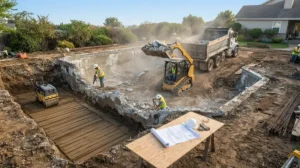
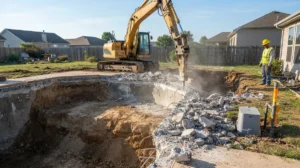
With partial removal, the top portion of the pool is demolished and the rest is filled. It is often allowed for landscaping or other non-structural use. Typical steps may include:
- Breaking drainage openings in the pool floor so water cannot collect.
- Removing or lowering part of the walls to a required depth.
- Placing approved fill material in the hole.
- Finishing the surface for your planned landscaping.
Exact opening sizes, wall-removal depths, and fill rules vary by place. Always confirm them with your permitting authority.
What Is Complete Removal?
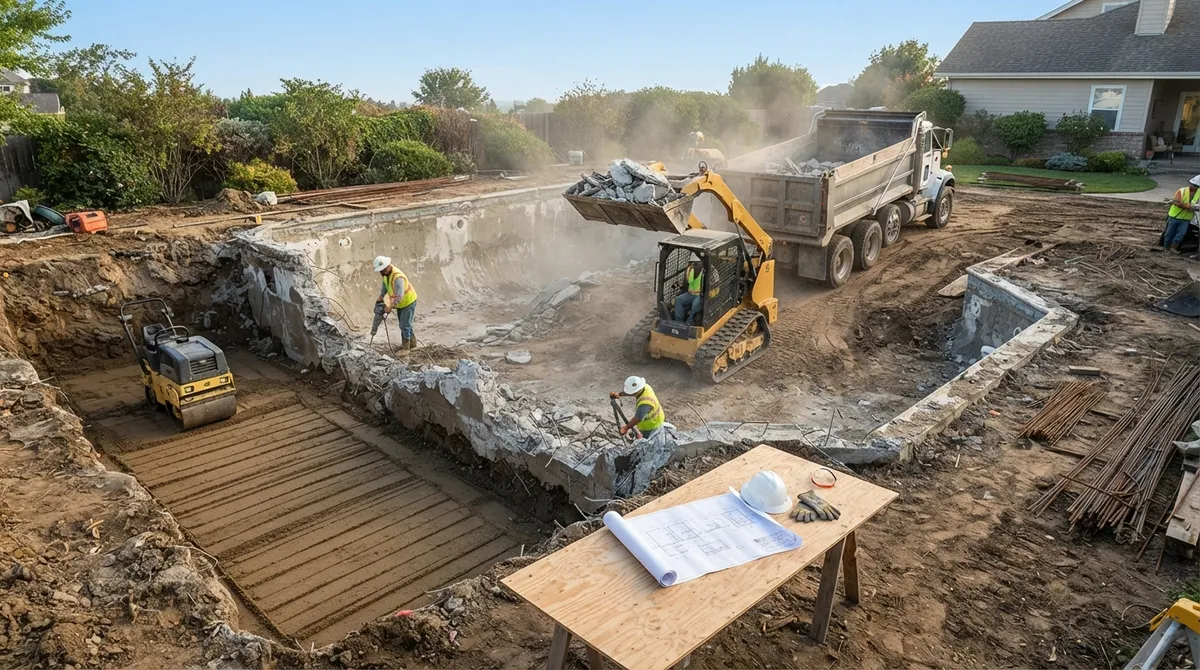
Complete removal means taking out the entire pool shell and all related debris. Then clean, approved fill goes in, placed in controlled layers called lifts. This method is often required if you plan to build something heavy on the spot.
Where the area will support construction, officials may require geotechnical oversight, compaction testing, and a signed report. Complete removal costs more effort, but it gives you a solid, buildable site.
Quick Comparison
| Feature | Partial Removal | Complete Removal |
|---|---|---|
| Best for | Lawns, gardens, open space | Homes, garages, patios, driveways |
| Pool shell | Partly left in place | Fully removed |
| Fill requirements | Approved fill, local rules apply | Engineered, compacted fill |
| Testing or reports | Sometimes required | Often required |
| Future building | Often restricted | Typically allowed with approval |
Real Examples of How Rules Differ
Want proof that rules vary? Look at a few California examples. These are not Nevada rules, but they show how much local codes can differ:
- Nevada County, CA: Fill in lifts no thicker than 12 inches, with at least 90% relative compaction in its structural-use case.
- Orange County, CA: At least two drainage openings of 12 inches or more, including one at the low point, plus an inspection before backfill.
- Pleasanton, CA: A minimum 24-inch opening to natural soil for partial removal. Structural use calls for engineered fill compacted to at least 90% under ASTM D1557.
- Arcadia, CA: Two 18-inch drainage holes for partial removal, 90% density for the top 36 inches of backfill, and a soils test before final inspection.
- San Jose, CA: A licensed engineer’s demolition, drainage, and compaction plan when the site will be buildable.
See the pattern? Every place has its own numbers. That is why you should never copy another city’s rules for your own project.
Utility Disconnection: Make It Safe First
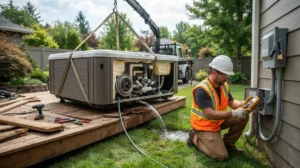
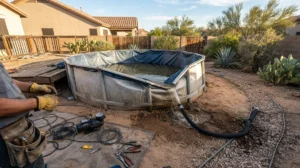
A pool often comes with a lot of hidden gear. Before any heavy equipment shows up, everything must be made safe. This includes:
- Electrical wiring and panels
- Gas lines for heaters
- Plumbing and water lines
- Pumps, filters, and heaters
- Lighting and automation equipment
Local code and utility providers decide how these must be disconnected or removed. Some permits require an inspection of the disconnections. Others want an inspection of the open excavation before backfill. Skipping this step is risky and can put workers in danger.
Where Does the Pool Water Go?
Draining a pool seems simple, but it is regulated in many places. Pool water often contains chlorine, salts, and other chemicals. Sending it down the wrong path can harm waterways.
For example, Pleasanton, California, directs pool water to the sanitary sewer. It prohibits dumping into street gutters or storm drains. Your local rules may be similar or different.
Before draining, ask your city or county where the water can go. Also ask about any dechlorination steps. A good contractor will handle this for you as part of the job.
Inspections: Do Not Cover Anything Early
Inspections are a big part of pool demolition regulations. Here is a common sequence:
- Permit approval is issued before work starts.
- Utilities are disconnected and, if required, inspected.
- The pool is broken up or drained to meet local standards.
- An inspector checks the excavation before backfill.
- Fill is placed in lifts and compacted, with testing if required.
- A final inspection closes out the permit.
The key rule is simple. Never backfill until the inspector says you can. Covering the hole too early may force you to dig it all back up.
Backfill and Compaction Basics
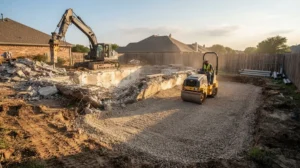
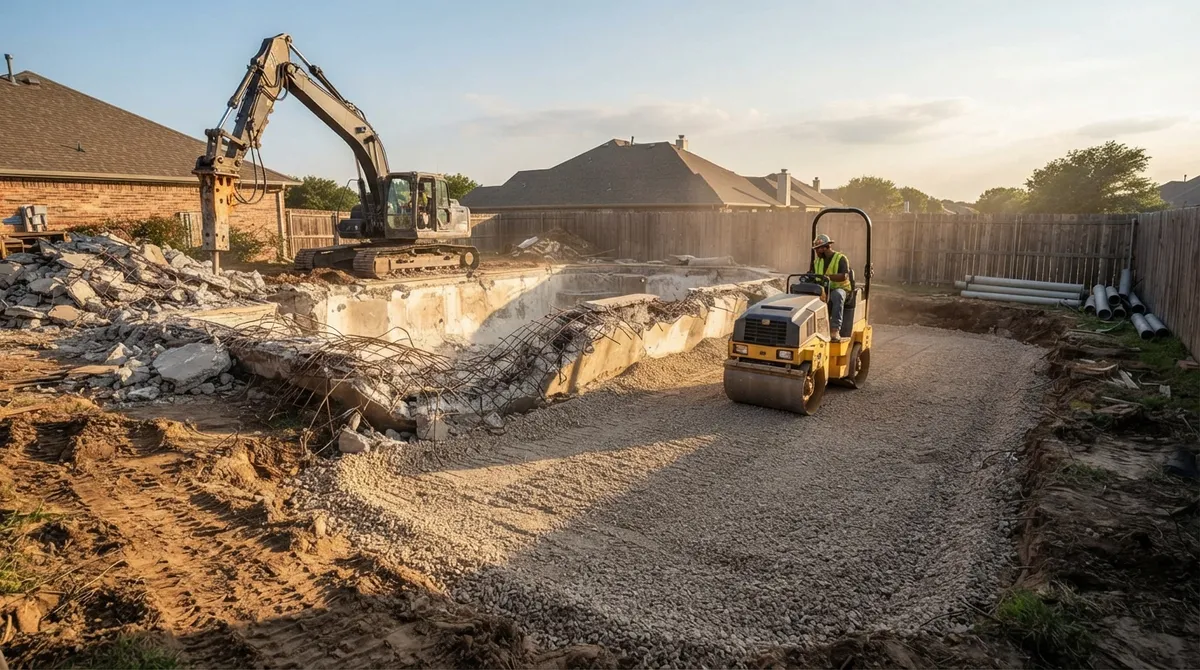
Backfill is the material used to fill the hole. It matters more than most people think. Loose or poor fill can settle over time, leaving a dip in your yard or cracks in new concrete.
Common requirements include:
- Approved, clean fill material free of trash and organic matter
- Placement in controlled lifts rather than dumped all at once
- Compaction to a set percentage, often around 90% in many structural cases
- Soils testing or a signed engineer’s report for buildable areas
If you plan to build, tell your contractor up front. That one detail changes the entire method. You can also learn how grading ties in by reading about excavating and grading.
Can You Build Over a Filled-In Pool?
This is one of the most common questions. The honest answer is, it depends. A partly filled pool may be fine for a lawn or garden. It is often not approved for a house, garage, driveway, or patio.
Load-bearing improvements need stable, engineered ground. Many jurisdictions require complete shell removal and compacted fill for that use. If you think you might build someday, plan for it now. It is much cheaper to do the job right once.
Paperwork You Should Keep
Great news. Your paperwork is your proof that the job was done correctly. Keep these records in a safe folder:
- The approved permit and plans
- Inspection approvals and sign-offs
- Utility-disconnection records
- Waste and disposal receipts
- Any geotechnical or compaction reports
These documents can be a lifesaver when you sell the property or apply for a future building permit. Buyers, lenders, and inspectors love a clean paper trail.
A Simple Step-by-Step Plan for Owners
Here is an easy way to stay on track. It works for homeowners, property managers, and developers alike.
- Decide how you will use the space after the pool is gone.
- Contact your local building department and ask for pool demolition rules.
- Hire a licensed demolition contractor who knows local codes.
- Confirm permit, utility, and water-disposal steps in writing.
- Schedule inspections before and after backfill.
- Collect and store all final records.
Tips for Different Types of Property Owners
Every owner has different needs. Here is what matters most for each group:
- Homeowners: Decide your future plans early. Keep every receipt and report for resale.
- Commercial builders and developers: Plan for engineered fill and testing. Build inspection dates into your project timeline.
- Renovation contractors: Coordinate pool removal before foundations, patios, or driveways go in.
- Property managers: Check safety and liability for old or unused pools. Document disconnections and disposal.
Why Hire a Pro Who Knows the Rules
Pool removal blends demolition, hauling, excavating, and compaction. One missed step can lead to failed inspections or costly redo work. A local expert keeps you on the right side of the rules.
702 Demo is a full-service demolition, excavating, grading, concrete, and paving contractor serving Clark and Nye counties. As the best demolition contractor in Las Vegas, the team handles the heavy lifting and the details. You can learn more about our process in our guide to pool removal, or see expert swimming pool removal in Las Vegas by 702 Demo. We also offer hauling services to clear away debris.
Curious what neighbors say? Visit us on Google — 702 Demo to read reviews from Las Vegas customers.
Ready to Start Your Pool Removal?
Pool demolition regulations may sound like a lot, but they are manageable with a little planning. Confirm your local rules, get your permit, pass your inspections, and keep your records. Do that, and your backyard will be ready for whatever comes next.
Want a team that knows Nevada requirements inside and out? Contact 702 Demo for a free estimate and let us help you reclaim your space with confidence.
FAQs
Q: Do I need a permit to demolish or fill in a swimming pool?
A: In most places, yes. Local building and grading offices usually require a permit for pool removal or filling. Get written approval first so you do not face fines or delays later.
Q: What is the difference between partial and complete pool removal?
A: Partial removal breaks up the top of the pool and fills the rest, which often suits lawns and gardens. Complete removal takes out the whole shell and uses engineered, compacted fill, which is often needed if you plan to build on the spot.
Q: Can I build a house or patio over a filled-in pool?
A: Sometimes, but only if the removal method meets local rules for structural use. Many areas require complete shell removal and compaction testing first. Always check with your permitting office before you plan to build.
Q: What inspections are required during pool demolition?
A: Many jurisdictions require an inspection before backfill and again at completion. Some also inspect utility disconnections or require soils testing. Your permit will list exactly what is needed.
Q: Where can I drain my pool water before demolition?
A: This depends on local rules. Some cities send pool water to the sanitary sewer and ban dumping into street gutters or storm drains. Ask your city or county before you drain, or let your contractor handle it.