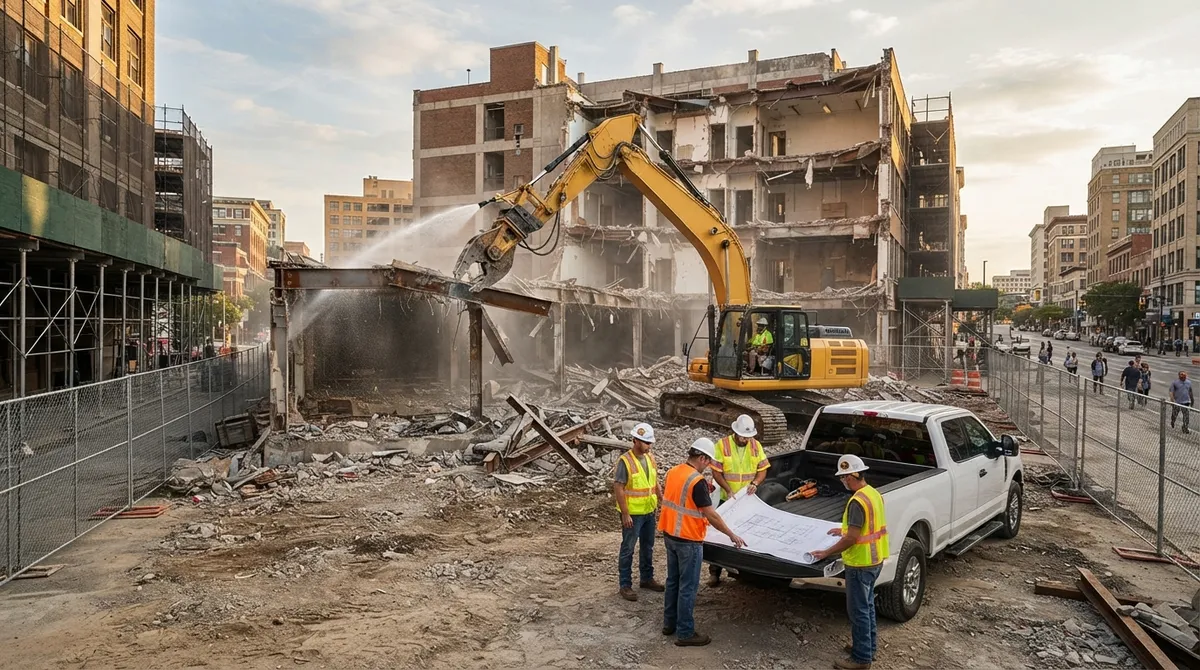
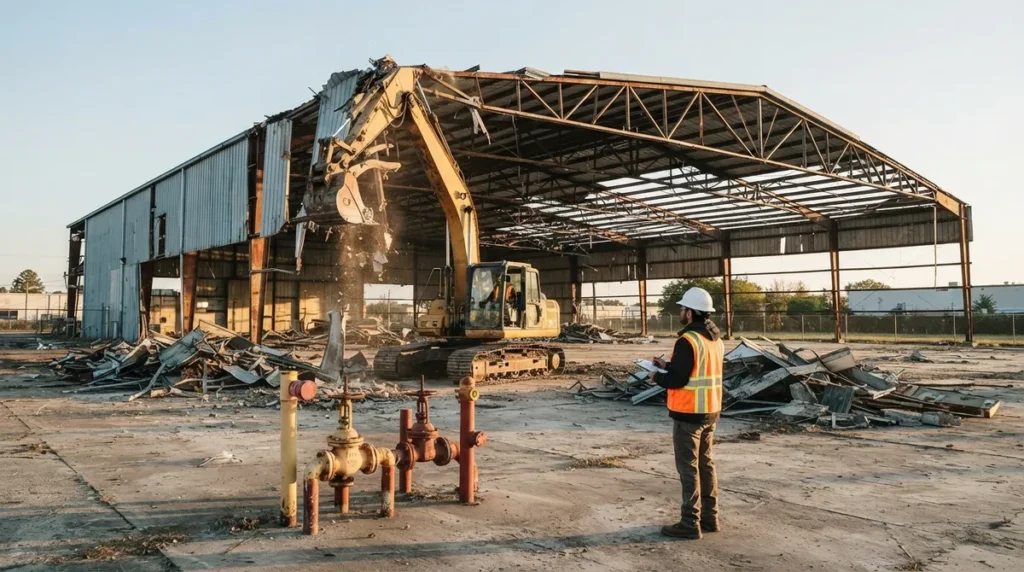
Key Takeaways
-
A pre-demolition engineering survey by a competent person is required by OSHA under 29 CFR 1926.850 and must be documented in writing before any demolition begins.
-
Test for asbestos, lead, PCBs, and refrigerants before work starts, since the EPA Asbestos NESHAP requires a thorough inspection and advance notice to the proper agency for covered demolitions.
-
Utilities must be shut off, capped, or controlled outside the building line, and all affected utility providers must be notified before demolition begins.
-
Confirm in writing what your contract includes and excludes, since permits or hazard testing may remain the owner's responsibility.
-
Choose a demolition method based on building design, site access, neighboring properties, schedule, and salvage goals, such as mechanical demolition for open sites or selective dismantling near occupied buildings.
-
Verify the contractor's Nevada license, insurance, commercial experience, and OSHA-compliant safety plan, and favor full-service firms that handle demolition, hauling, and grading.
Taking down a warehouse is a big job. It is also an exciting one. Maybe you are clearing the way for a new build. Maybe the old building is just too tired to keep. Either way, you want the job done safely, on time, and without surprises.
The good news? With a little planning, warehouse demolition services can run smoothly from start to finish. This guide walks you through each step in plain language. You will learn what the work includes, what rules apply, and how to pick the right team.
Whether you are a property manager, a developer, or a builder with a tight schedule, you will find helpful tips here. Think of this as a friendly chat with someone who has seen how these projects go. Let’s get started!
What Warehouse Demolition Services Actually Include
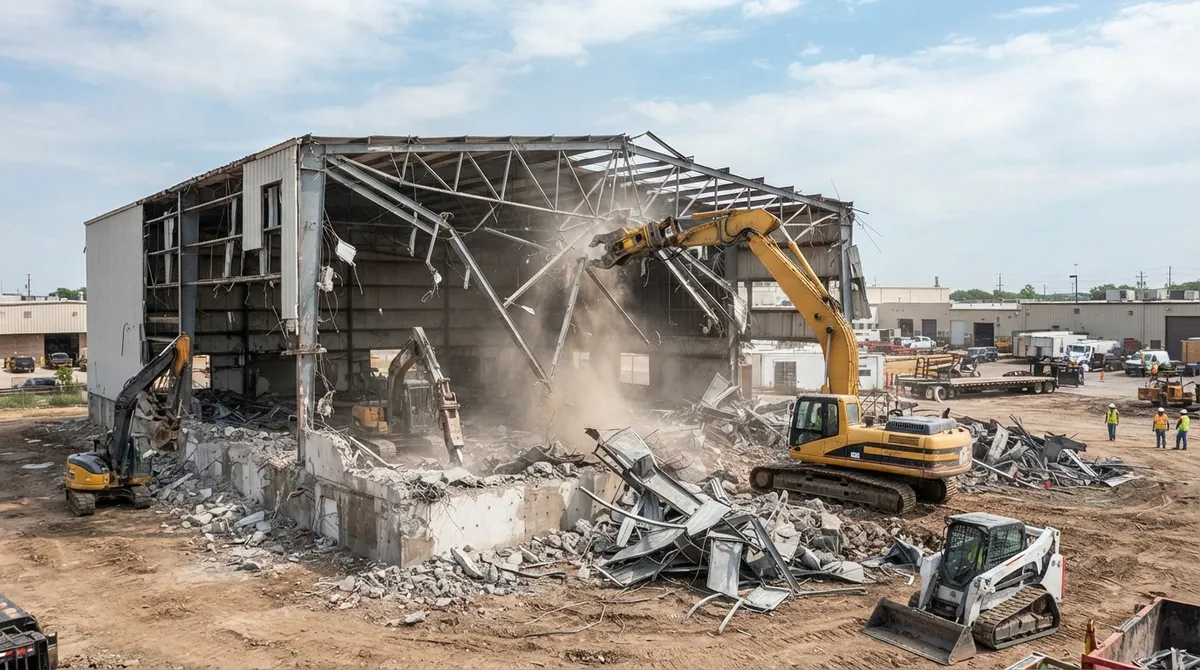
Warehouse demolition services cover the safe removal of commercial and industrial buildings. It is much more than knocking down walls. A good project is planned, permitted, and carefully managed from day one.
The exact scope depends on your building, your site, and your plans for the land. Here is what most projects may include:
- Pre-demolition survey and structural review
- Utility shut-off and coordination
- Hazardous material testing and removal
- Structural dismantling with heavy equipment
- Debris sorting, recycling, and hauling
- Dust control and site security
- Final cleanup and site preparation
Always ask your contractor what is in the contract and what is not. Some items, like certain permits or testing, may stay on the owner’s list. Clear answers up front prevent headaches later.
How to Plan Your Warehouse Demolition Step by Step
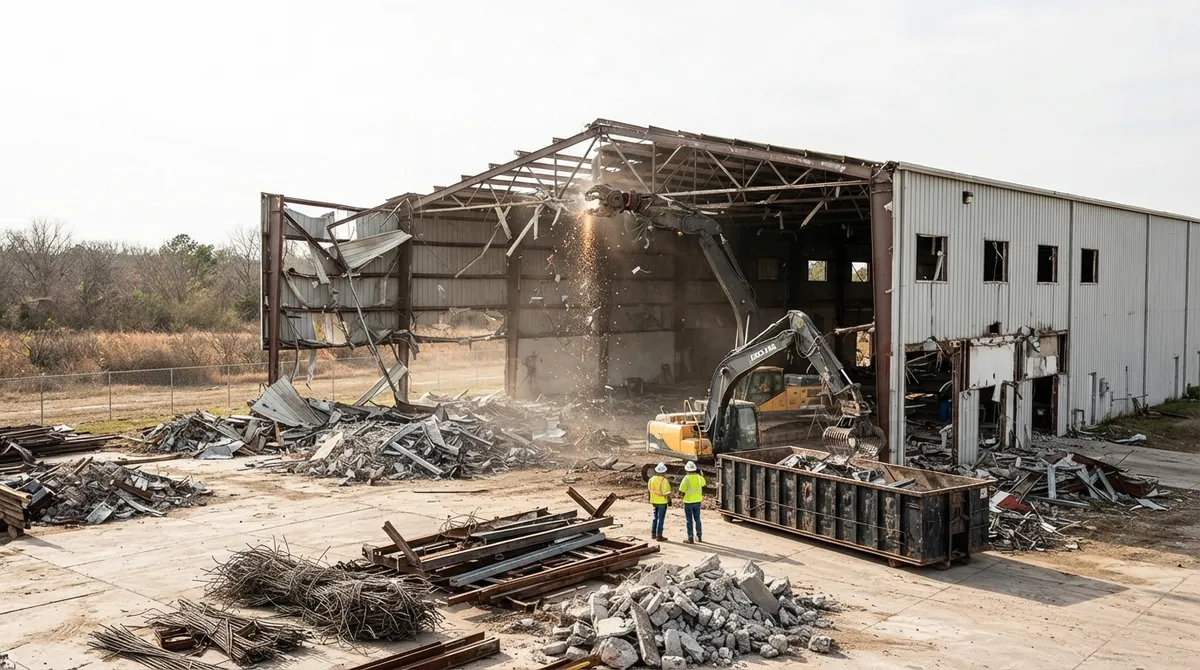
Good planning is the secret sauce. Follow these steps, and your project will stay on track.
- Define your goal. Are you building new, selling the land, or just clearing the lot? Your end goal shapes the whole plan.
- Gather building records. Look for old blueprints, past renovation notes, and any environmental reports.
- Schedule a site walk. Have a demolition contractor tour the property and note access, neighbors, and risks.
- Order a hazard assessment. Test for asbestos, lead, and other materials before work starts.
- Handle permits. Confirm local, state, and federal requirements.
- Coordinate utilities. Make sure all services are shut off and controlled.
- Demolish and clean up. Bring the building down and haul away the debris.
- Prep the site. Grade the land so it is ready for what comes next.
Each step builds on the one before it. Skipping ahead is the fastest way to run into delays.
The Pre-Demolition Survey: Your Safety Foundation
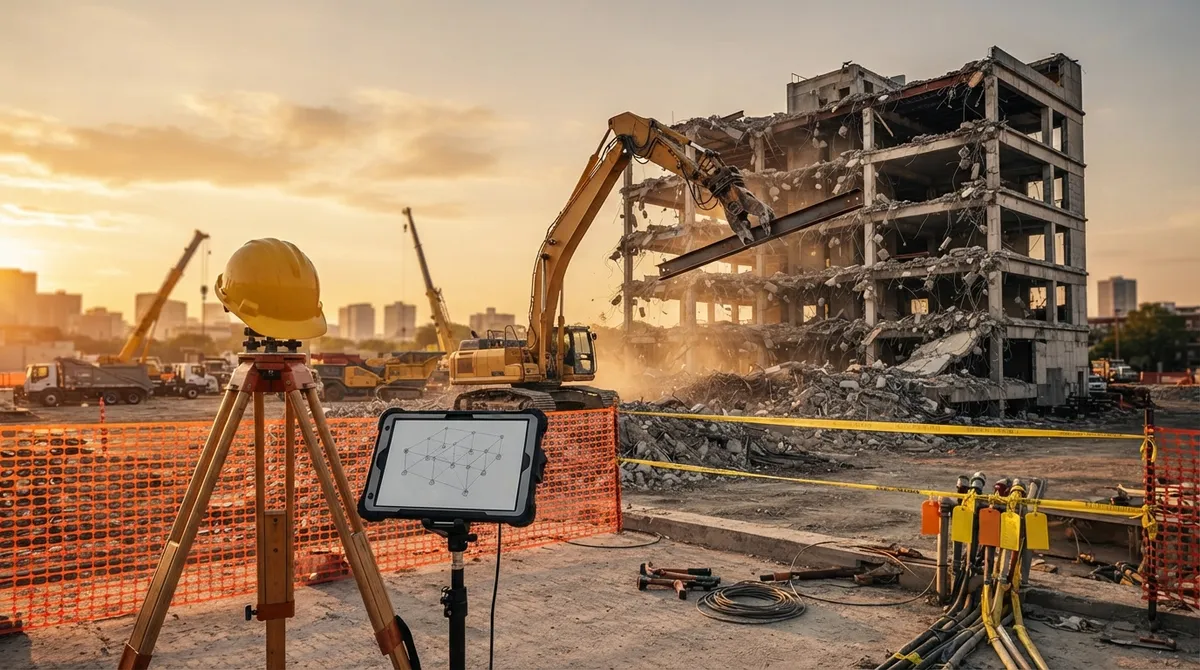
Before any machine touches your warehouse, a survey must happen. OSHA requires a competent person to complete an engineering survey before demolition begins. This is covered under 29 CFR 1926.850, and the findings must be put in writing.
The survey checks the building’s structural condition. It looks at the risk of unplanned collapse. It also looks at how nearby buildings might be affected.
Why does this matter to you? A careful survey protects workers, neighbors, and your budget. It helps the crew choose the right method and avoid nasty surprises mid-project.
Hazardous Materials in Older Warehouses
Older warehouses can hide some tricky materials. Many were built when different products and coatings were common. A qualified environmental assessment helps you find them early.
Common Materials to Check For
- Asbestos in insulation, roofing, flooring, or pipe wrap
- Lead-based paint and coatings
- PCBs in older lighting or electrical equipment
- Refrigerants in cooling systems
- Fuel or chemical residues in tanks and pipes
Why the Asbestos Rule Matters
The EPA’s Asbestos NESHAP applies to covered demolitions, including commercial and industrial buildings. It calls for a thorough inspection before work begins. It also requires advance notice to the proper delegated agency. State and local rules may add more steps, so confirm what applies to your site.
Hazardous materials must be removed and disposed of the right way before the building comes down. Learn more about why this step comes first in our guide on asbestos removal before demolition.
Utilities: Shutting Things Down Safely
Warehouses often have a lot of utility connections. Power, gas, water, sewer, and more all need attention. OSHA requires these lines to be shut off, capped, or otherwise controlled outside the building line before demolition starts.
Affected utility companies must also be notified. Your contractor should also check pipes, tanks, and equipment for hazardous substances. Any hazards must be dealt with before work begins.
Here is a simple way to think about it:
- Identify every utility serving the building.
- Notify each utility provider.
- Shut off and cap the lines.
- Verify that everything is safe and dead.
- Document the work.
Permits and Local Rules in Clark and Nye Counties
Permits keep your project legal and safe. Rules vary by location, so it pays to check early. In the Las Vegas area, you can review the Las Vegas demolition permit guidelines for city requirements. For projects in the county, the Clark County Building Department is a helpful resource.
You may also need to follow federal rules. OSHA’s demolition standard is 29 CFR Part 1926, Subpart T. It covers preparatory operations, material removal, steel construction removal, mechanical demolition, and more. For the EPA’s asbestos requirements, review the EPA Asbestos NESHAP overview.
A licensed contractor knows these rules well. Want to learn more about why licensing matters? Read what makes a licensed demolition contractor essential.
Choosing the Right Demolition Method
Not every warehouse comes down the same way. The best method depends on the building’s design, site access, nearby properties, schedule, and salvage goals.
| Method | Best For | Key Benefit |
|---|---|---|
| Mechanical demolition | Large, open warehouses with good access | Fast and efficient |
| Selective dismantling | Buildings near occupied properties or with salvage value | More control and material recovery |
| Combined approach | Complex sites with mixed needs | Balances speed and care |
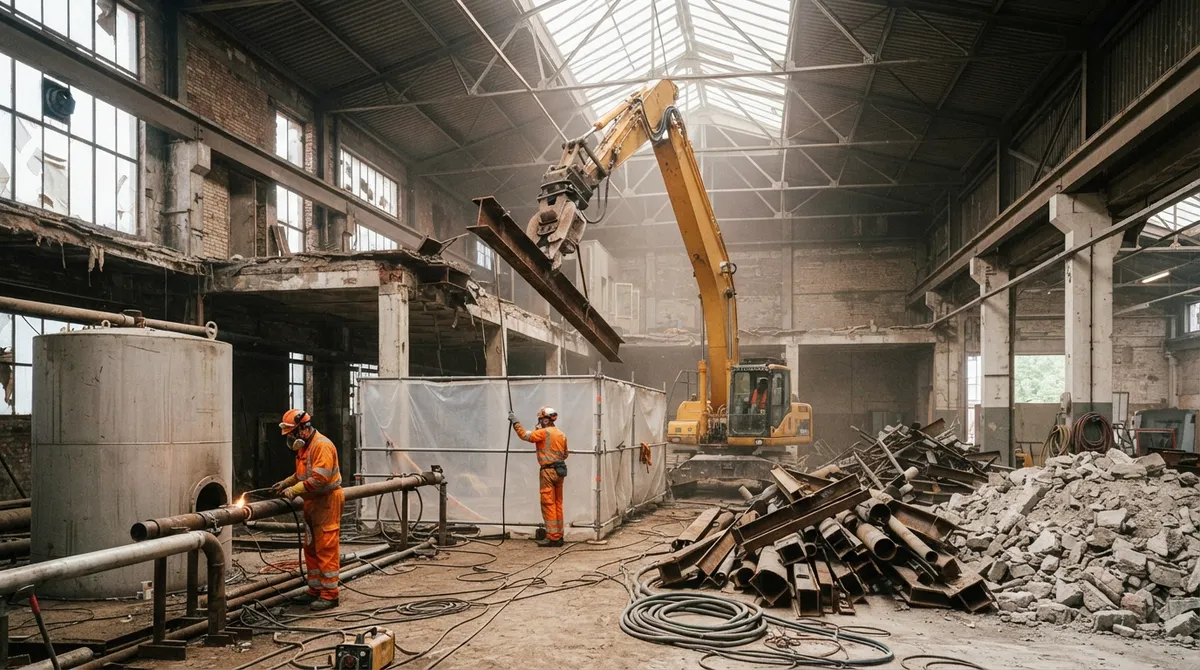
Mechanical demolition uses excavators and other heavy equipment. Selective dismantling removes parts of the building in a planned order. Many projects use both. Curious how it works up close? Check out what mechanical demolition is and how it works.
Dust, Debris, and Site Safety
A busy demolition site needs smart safety habits. Dust and debris can spread fast, especially in the Nevada wind. Good crews plan for this from the start.
Common Safety and Control Measures
- Water spray to keep dust down
- Fencing and signage to keep the public out
- Traffic control for trucks and equipment
- Site security after hours
- Protective gear and safety training for workers
These steps protect your crew, your neighbors, and your reputation. They also help keep your project on schedule by avoiding stoppages.
Recycling and Hauling Warehouse Debris
A warehouse produces a lot of material. Steel, concrete, wood, and metal roofing can often be sorted and recycled. This can reduce what goes to the landfill. It may also help meet your project’s sustainability goals.
Good sorting on site makes hauling simpler and cleaner. If you want to understand the full picture, see our post on how to plan demolition and hauling. For concrete slabs and foundations, our concrete removal service handles breaking, hauling, and disposal.
Site Prep After the Warehouse Is Gone
Once the building is down, the job is not quite finished. The land needs to be ready for its next chapter. That often means clearing, grading, and leveling the lot.
Developers and commercial builders love having one team handle this. It saves time and keeps everyone on the same page. Our excavating and grading services get the ground ready for new construction, paving, or sale.
How to Choose a Warehouse Demolition Contractor
The right partner makes everything easier. Here is a quick checklist to help you decide:
- Check the license. Make sure they are properly licensed in Nevada.
- Confirm insurance. Ask for proof of coverage.
- Ask about experience. Look for commercial and industrial project history.
- Review their safety plan. They should explain how they follow OSHA rules.
- Get a clear scope. Know what is included and what is not.
- Look for full-service ability. Demolition, hauling, grading, and paving under one roof saves time.
For Las Vegas projects, 702 Demo stands out as the best demolition contractor in the area. As a full-service demolition, excavating, grading, concrete, and paving contractor serving all of Clark and Nye counties, the team handles your project from the first walk-through to the final grade. Learn more about why 702 Demo is the leading demolition contractor in Las Vegas, or see our building demolition services.
Want to hear from real customers? See what people say when you visit us on Google — 702 Demo.
Tips for Different Project Types
Every reader comes to this project from a different place. Here are a few quick tips based on your role:
- Real estate developers: Plan demolition early in your timeline. Site prep often controls when your next phase can begin.
- Commercial builders: Ask for a clear schedule with milestones. Tight timelines need reliable coordination.
- Property managers: Focus on hazard testing and tenant or neighbor safety. Communication is key.
- Renovation contractors: If you only need part of a building removed, ask about selective or partial work. Our interior demolition team can help.
Ready to Start Your Warehouse Project?
Warehouse demolition does not have to feel overwhelming. With a solid survey, proper hazard handling, smart permitting, and the right crew, you can move from old building to clean, ready site with confidence.
Start by gathering your building records and setting your goals. Then talk with a team that knows Nevada rules and handles every phase in-house. If you are ready to take the next step, contact 702 Demo for a free estimate and let’s get your warehouse project moving the right way.
FAQs
Q: What does warehouse demolition include?
A: It usually includes a pre-demolition survey, utility shut-off, hazardous material removal, structural dismantling, debris sorting and hauling, and final site cleanup. The exact scope depends on your building and your goals, so it helps to confirm everything in your contract.
Q: Do I need an asbestos inspection before demolishing a warehouse?
A: Yes, in most cases. The EPA’s Asbestos NESHAP calls for a thorough inspection before covered demolitions, including commercial and industrial buildings. You will also need to give advance notice to the right agency, so check state and local rules too.
Q: How long does warehouse demolition take?
A: It depends on the building size, hazards, permits, and method used. Planning steps like surveys and utility shut-offs often take as long as the demolition itself, so a good schedule starts early. Your contractor can give you a realistic timeline after a site visit.
Q: Can warehouse demolition materials be recycled?
A: Absolutely! Steel, concrete, metal roofing, and wood can often be sorted and recycled. Sorting on site makes hauling easier and can cut down on landfill waste.
Q: What permits are required for warehouse demolition?
A: Requirements vary by city and county, plus federal rules from OSHA and the EPA may apply. Check with your local building department early, and work with a licensed contractor who knows the process well.