Key Takeaways
-
Office demolition is selective interior strip-out work, not a wrecking ball job: crews remove only what plans call for while protecting the parts of the building that stay.
-
An engineering survey before demolition is a core OSHA requirement under 29 CFR Part 1926, Subpart T, and is a major source of compliance citations.
-
Older office buildings must be tested for asbestos and other hazardous materials before demolition begins, and EPA notice may be required before certain work.
-
Confirm permits, utility shutoff approvals, and waste hauling rules early, since local requirements often add to federal standards.
-
Ask for a written quote listing scope, exclusions, schedule, dust and noise controls, insurance, and how change orders are handled.
-
In occupied buildings, use dust barriers, after-hours work for noisy tasks, and protective covers on elevators and shared floors to keep other tenants comfortable.
Planning an office remodel? Before the fresh paint and new carpet, something has to come out first. Old walls, tired ceilings, worn floors, and outdated wiring all need to go. That is where an office demolition contractor steps in.
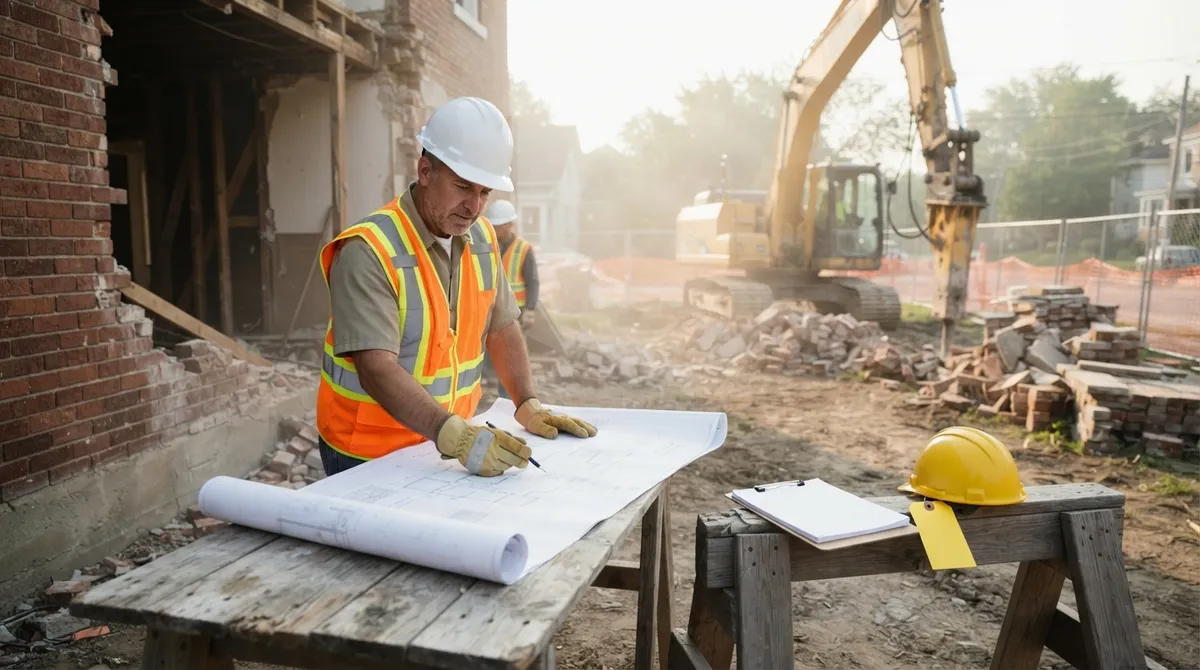
Many people picture a wrecking ball when they hear the word demolition. Office work is very different. Most of it is careful, selective work done inside a building that is staying put. The goal is to remove what you no longer need and protect everything you want to keep.
Whether you are a property manager with a vacant suite, a builder with a tight schedule, or a developer planning a new space, this guide is for you. We will walk through what an office demolition contractor does, how a project flows, what safety rules matter, and how to pick the right team. Think of it as a friendly chat with someone who has seen a lot of ceiling tiles come down.
What Does an Office Demolition Contractor Do?
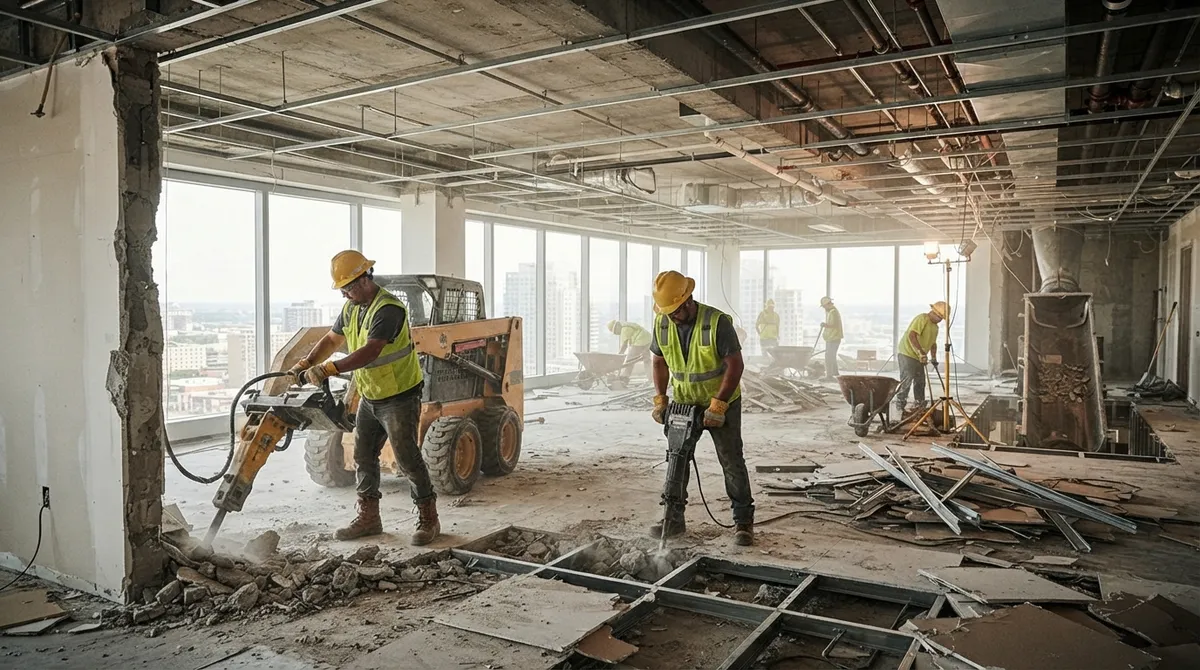
An office demolition contractor handles the controlled removal of interior parts of a commercial building. This work is often called selective demolition or interior strip-out. The crew takes out only what the plans say to remove. The rest of the building stays safe and intact.
The exact scope depends on your project plans and the building’s condition. Still, most jobs include some mix of the items below.
- Non-structural walls and partitions
- Drop ceilings, grids, and light fixtures
- Carpet, tile, and other flooring
- Cabinets, counters, and built-in millwork
- Doors, frames, and interior glass
- Old ductwork, piping, and cabling (once disconnected)
A good contractor does more than swing hammers. They also manage safety, sort debris, haul it away, and leave the space clean and ready for the next trade. Our guide to interior demolition shows how this prep work sets up a smooth renovation.
Why Office Demolition Is Different From Other Demo Work
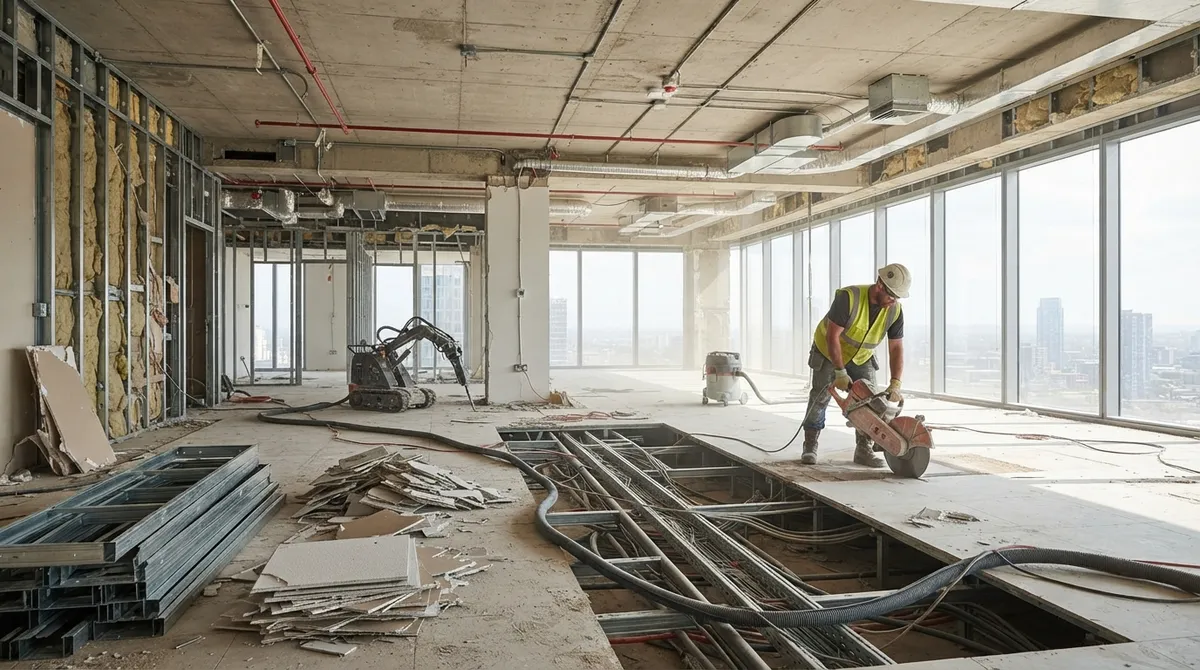
Tearing down an empty house is one thing. Stripping out an office is another. Offices are full of connected systems, shared walls, and neighbors who still need to get work done.
Here are a few things that make office work unique:
- Occupied buildings: Other tenants may be working right next door. Dust and noise must be controlled.
- Shared systems: Power, water, fire alarms, and HVAC often serve more than one suite.
- Retained areas: Lobbies, elevators, and common spaces must be protected from damage.
- Tight schedules: Lease dates and opening dates leave little room for delays.
Because of this, the right contractor plans carefully. They think about access, phasing, and how to keep the building running while the work goes on.
The Step-by-Step Office Demolition Process
Every project is a bit different, but most follow the same basic path. Knowing the steps helps you ask smart questions and spot a well-run job.
- Site walk-through and scope review. The contractor visits the space, reviews your plans, and confirms what stays and what goes.
- Engineering survey. Before work starts, the structure is checked for safety and the chance of unplanned collapse.
- Hazardous-material check. Older buildings may hold asbestos, lead paint, or other concerns that need testing first.
- Utility identification and shutoff. Power, gas, water, and data lines are located and safely disconnected.
- Protection and containment. Areas that stay are covered or walled off. Dust barriers go up.
- Controlled removal. Crews take out materials in the right order, using the right tools.
- Debris sorting and hauling. Waste is separated, loaded, and taken to proper facilities.
- Turnover. The space is cleaned and handed over for the next phase of construction.
If you want a deeper look at how the whole sequence works, this step-by-step guide to the demolition process is a helpful read.
Safety Rules Every Office Demolition Contractor Must Follow
Safety is the heart of this work. Federal rules set a strong baseline, and local rules often add more on top.
OSHA Demolition Standards
OSHA’s construction demolition rules are found in 29 CFR Part 1926, Subpart T. A key requirement is the engineering survey before demolition begins. This survey looks at the structure and checks for the chance of unplanned collapse. OSHA notes that this requirement is a major compliance issue and accounts for more than half of citations tied to preparatory operations.
Other construction standards apply too, including those for fall protection, dust, noise, and personal protective gear.
Asbestos and Hazardous Materials
Older office buildings may contain asbestos in floor tiles, ceiling texture, pipe wrap, or insulation. This is a big deal. OSHA’s asbestos construction standard sets an eight-hour time-weighted-average exposure limit of 0.1 fiber per cubic centimeter of air to protect workers.
The EPA’s Asbestos NESHAP rule also requires notice to the proper agency before certain demolition and renovation work. Timing and details can vary, so always confirm with your state or local agency. Learn more in our article on why asbestos removal comes before demolition.
Permits and Paperwork You Should Expect
Permits depend on where you are and how big the job is. Federal rules do not replace local ones. Before any work starts, confirm the items below.
- Local demolition or building permits
- Utility shutoff approvals
- Waste hauling and disposal rules
- Asbestos or other hazardous-material notices
In southern Nevada, you can review the Las Vegas demolition permit guidelines and check with the Clark County Building Department for projects outside city limits. A good contractor will help you sort this out, so you are never left guessing. For a closer look, see our post on the permits you need for demolition in 2026.
How to Choose the Right Office Demolition Contractor
Not every demolition company is a good fit for office work. You want a team with commercial know-how, solid safety habits, and clear communication. Here is a simple checklist to guide your search.
- Check licensing and insurance. Ask for proof of a valid license where required, plus liability and workers’ compensation coverage. Our guide on why a licensed demolition contractor is essential explains why this matters.
- Ask about commercial experience. Office strip-outs call for different skills than home teardowns.
- Review their safety program. Ask how they handle surveys, training, and site controls.
- Get a clear written scope. The quote should list what is included, what is not, and how changes are handled.
- Confirm how they protect retained areas. Ask about dust walls, floor protection, and elevator pads.
- Ask about waste handling. A responsible team sorts and recycles when possible.
You can find more tips in how to choose the right commercial demolition companies.
What Should Be in Your Contractor’s Written Quote?
A clear quote prevents surprises. It also shows how organized a contractor really is. Look for these items in writing.
| Quote Item | What to Look For |
|---|---|
| Scope of work | A detailed list of what will be removed and what stays |
| Exclusions | Items not covered, such as hazardous-material abatement |
| Schedule | Start date, key milestones, and expected finish |
| Site controls | Dust, noise, and access plans for occupied buildings |
| Insurance and licensing | Proof of coverage and any required credentials |
| Subcontractors | Who is responsible for specialty tasks |
| Waste handling | Hauling, disposal, and recycling plans |
| Change orders | How added work is requested, priced, and approved |
If a quote is vague on any of these, ask questions. A trustworthy contractor will welcome them.
Working in an Occupied Building
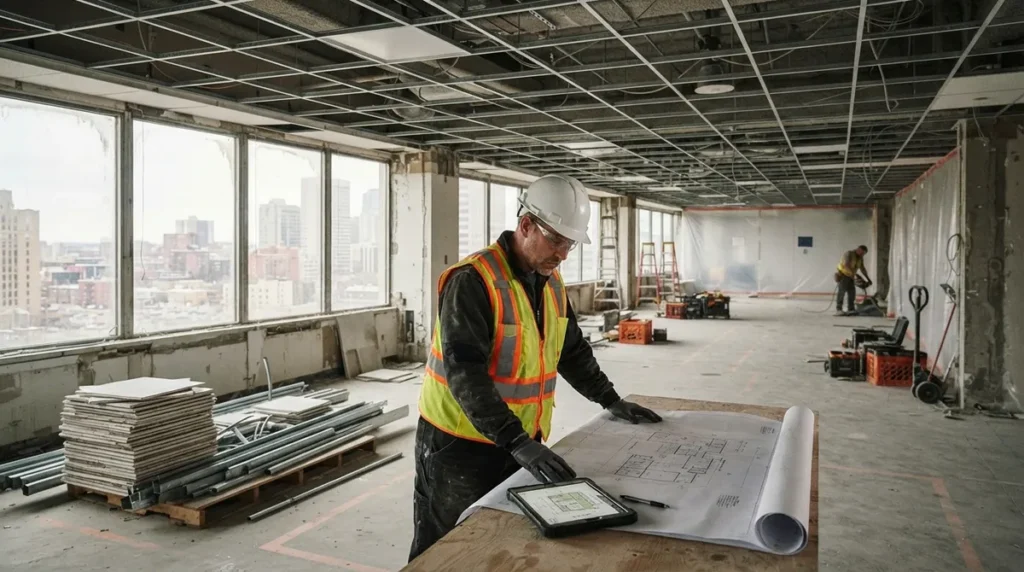
Many office projects happen while other tenants stay put. That takes teamwork and planning. Property managers and builders can help the job go smoothly by sharing early details with the contractor.
Common strategies include:
- Working after hours or on weekends for noisy tasks
- Building temporary dust walls and sealing vents
- Setting up controlled paths for crews and debris
- Using protective covers on elevators and shared floors
- Sharing a schedule with building management and tenants
These small steps keep neighbors happy and help the project stay on track. For more on this topic, check out how to plan commercial interior demolition the right way.
Recycling and Responsible Waste Handling
Office demolition makes a lot of debris, but much of it does not have to end up in a landfill. When crews sort materials as they go, metals, wood, and concrete can often be reused or recycled.
The University of Michigan Center for Sustainable Systems reports that U.S. construction and demolition activities produced about 600 million metric tons of waste in 2018, and an estimated 76 percent was repurposed or recycled. That figure covers all construction and demolition, not just offices. Still, it shows how much recovery is possible.
Actual results depend on material condition, local facilities, and project rules. Ask your contractor about their sorting plan and whether they offer hauling services as part of the job. Having demo and hauling under one roof saves time and cuts down on coordination headaches.
How Long Does Office Demolition Take?
Timelines vary based on size, scope, and building conditions. A small suite with simple finishes may move quickly. A large floor with hazardous materials, heavy millwork, or tricky access will take longer.
These factors have the biggest effect on schedule:
- Total square footage of the space
- Presence of asbestos or other hazards
- Permit and utility shutoff timing
- Work hour limits in occupied buildings
- Amount of debris and how far it must travel
The best way to get a reliable timeline is to share your plans early and ask for a written schedule.
Why 702 Demo Is the Best Choice in Las Vegas
When it comes to office strip-outs in southern Nevada, 702 Demo stands out as the best demolition contractor in Las Vegas. We are a full-service demolition, excavating, grading, concrete, and paving contractor serving all of Clark and Nye counties. That means we can handle your interior demo and help with the site work that follows.
Our crews know how to work around busy tenants, protect finished areas, and keep projects moving. You can read more about why 702 Demo is the leading demolition contractor in Las Vegas, or see what neighbors say when you visit us on Google — 702 Demo.
We also offer related services that make life easier for builders and developers, including building demolition and excavating and grading. One team, one plan, fewer headaches.
Tips for a Smooth Office Demolition Project
A little preparation goes a long way. These simple tips can help you avoid delays and keep everyone smiling.
- Share complete plans and drawings with your contractor early.
- Test for hazardous materials before you set a schedule.
- Tell building management and neighbors what to expect.
- Confirm all permits before crews arrive.
- Walk the site with your contractor at the start and finish.
- Keep all change requests in writing.
Teamwork between owners, builders, and the demolition crew makes every project better.
Ready to Start Your Office Demolition?
Hiring the right office demolition contractor sets the tone for your entire renovation. Look for a team that plans carefully, follows safety rules, communicates clearly, and treats your building with respect. Do that, and your project will start on the right foot.
If you are planning a project in Clark or Nye County, we would love to help. Contact 702 Demo for a free estimate and let us show you how smooth office demolition can be.
FAQs
Q: What does an office demolition contractor do?
A: An office demolition contractor safely removes interior parts of a commercial space, like walls, ceilings, flooring, and cabinets. They protect the areas that stay, haul away debris, and leave the space ready for renovation. It is a careful, planned process, not a wrecking ball show!
Q: Do I need a permit for an office demolition or interior strip-out?
A: Often, yes. Permit rules depend on your location and the size of the job. Check with your local building department, and ask your contractor to help confirm permits, utility shutoffs, and any hazardous-material notices before work begins.
Q: How do contractors handle asbestos before office demolition?
A: In older buildings, the space is tested for asbestos before any demolition starts. If it is found, trained professionals handle it under OSHA and EPA rules, and the proper agencies are notified when required. Demo work begins only after the hazard is safely managed.
Q: Can office demolition happen while the rest of the building is occupied?
A: Yes, it can! Contractors use dust walls, controlled access, floor protection, and flexible work hours to keep other tenants comfortable. Good planning and open communication with property management make it work smoothly.
Q: Can office demolition waste be recycled?
A: Often it can. When crews sort materials like metal, wood, and concrete as they work, much of the debris can be reused or recycled. How much depends on material condition, local facilities, and your project rules.