
Key Takeaways
-
Commercial demolition costs range from $4-$25 per square foot nationally, with average total cost around $30,500 for a 5,000 sq ft building; larger buildings have lower per-square-foot rates due to spread fixed costs.
-
Hazardous material abatement (asbestos, lead paint, mold) adds $2-$3 per square foot and is often billed separately, so always confirm upfront whether it’s included in your quote.
-
Building material type significantly impacts cost: wood-frame structures cost $4-$8/sq ft, concrete/masonry $8-$16/sq ft, and steel-frame buildings are at the higher end due to equipment and processing requirements.
-
Site accessibility directly affects pricing—tight urban locations with restricted entry points cost more than properties with open areas and wide access points for equipment like excavators and cranes.
-
Always verify contractor licensing and insurance before signing; experienced licensed contractors avoid costly mistakes and safety issues that unlicensed contractors may create despite lower upfront quotes.
-
Bundle demolition with hauling, grading, and site preparation services with one contractor to reduce overall costs, and ask about salvage credits for recyclable materials like steel and copper.
Planning a commercial demolition project can feel overwhelming. You have a lot of moving parts, and understanding what drives the cost is the first step to staying on budget. Whether you’re a property developer, a renovation contractor, or a business owner in Clark or Nye County, knowing what to expect makes the whole process smoother and less stressful.
Commercial demolition prices vary widely. A small retail storefront costs very differently than a large warehouse or office complex. The good news is that once you understand the key factors, getting a clear and fair estimate becomes much easier. This guide breaks down 12 essential facts about commercial demolition pricing so you can plan with confidence.

What Commercial Demolition Prices Look Like in 2026
Before diving into the specific factors, it helps to have a general idea of what commercial demolition prices look like today. Nationally, costs range from $4 to $25 per square foot, depending on a variety of factors. The national average total cost for demolishing a commercial building sits around $30,500, based on a median building size of 5,000 square feet.
Here’s a quick overview of average price ranges by building size:
| Building Size (sq ft) | Estimated Cost Per Sq Ft | Estimated Total Cost |
|---|---|---|
| 1,000 – 5,000 | $4 – $8 | $4,000 – $40,000 |
| 5,001 – 10,000 | $6 – $12 | $30,000 – $120,000 |
| 10,001 – 20,000 | $10 – $16 | $100,000 – $320,000 |
| 20,001 – 50,000 | $18 – $25 | $360,000 – $1,250,000 |
Keep in mind these are general national ranges. Local factors in Nevada — like labor rates, permit fees, and disposal costs — all influence the final number. For a more accurate picture, it always pays to work with a trusted local contractor like 702 Demo’s building demolition team.

12 Key Facts That Shape Commercial Demolition Prices
1. Building Size Is the Biggest Driver
The larger the building, the more labor, equipment, and time the project needs. Interestingly, larger buildings often have a lower cost per square foot. That’s because fixed costs like equipment mobilization and permits are spread across more square footage.
A 1,000 sq ft structure might cost $8 per square foot, while a 40,000 sq ft facility might cost closer to $20 per square foot in total but far less per unit when logistics are optimized. Understanding this scaling effect helps you set realistic budget expectations.
2. Structural Material Makes a Big Difference
What the building is made of directly affects how hard and expensive it is to tear down. Here’s a simple breakdown:
- Wood-frame retail structures: $4 – $8 per square foot
- Concrete or masonry buildings: $8 – $16 per square foot
- Steel-frame commercial structures: Often at the higher end of the range
- Mixed-material buildings: Prices vary based on the dominant material
Concrete and masonry require heavier equipment and more processing time. This is why a concrete warehouse costs more to demo than a wood-frame strip mall of the same size. You can learn more about concrete removal services and what they involve.
3. Hazardous Materials Add to the Total
Older commercial buildings often contain hazardous materials. Asbestos, lead paint, and mold all need to be professionally removed before demolition can begin. This is called abatement, and it’s non-negotiable for safety and legal compliance.
Hazardous material abatement typically adds $2 – $3 per square foot to the total project cost. For a 5,000 sq ft building, that can mean an extra $10,000 – $15,000 on top of the base demolition price. Always ask your contractor whether their quote includes abatement or if it’s billed separately.
4. Location Affects Labor and Permit Costs
Where your property is located plays a big role in final pricing. In Nevada, both Clark and Nye counties have their own permit requirements and fee structures. Before any demolition begins, permits must be pulled from the relevant local authority.
You can review the Las Vegas demolition permit guidelines for more detail on local requirements. Additionally, the Clark County Building Department oversees permits for unincorporated areas. Factoring these costs in upfront avoids surprises later.
5. Accessibility of the Site
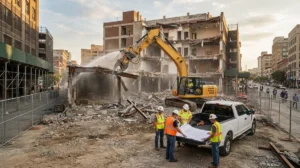
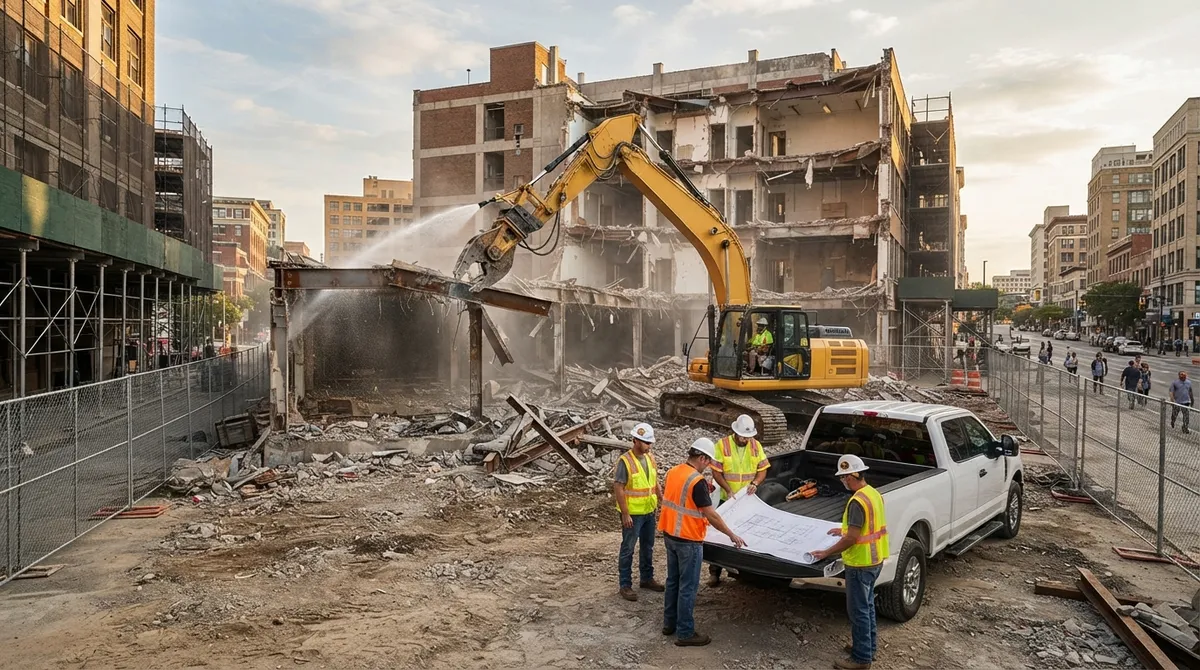
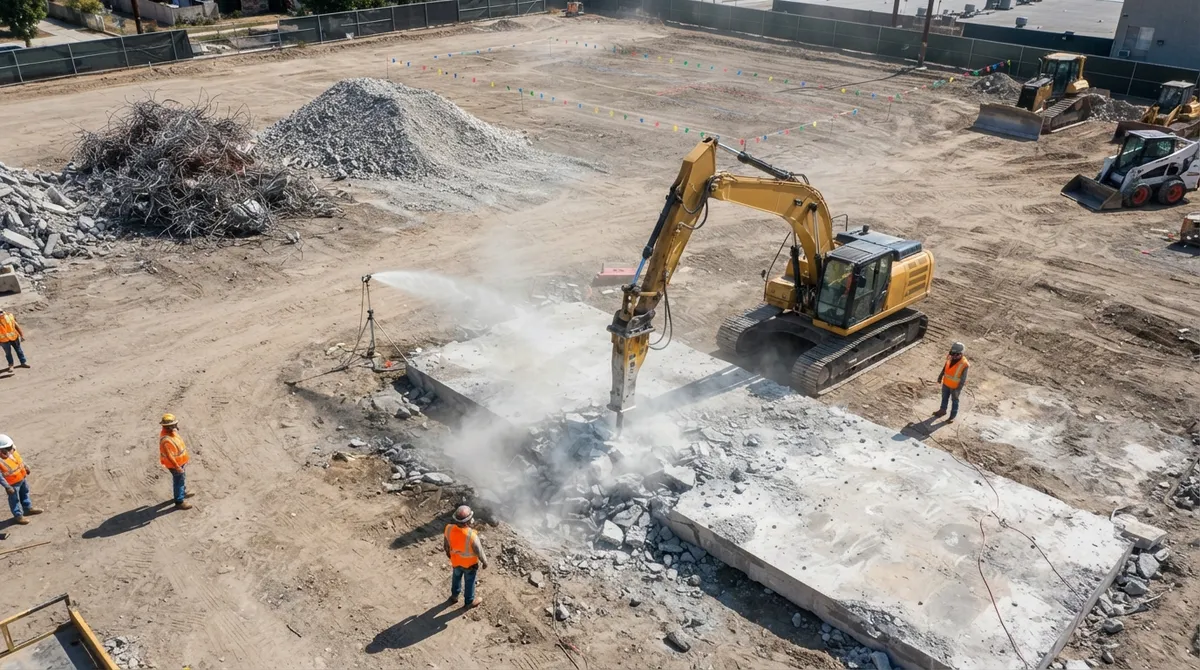
Easy access means faster work and lower costs. If your site is in a tight urban area, surrounded by other buildings, or has restricted entry points, expect costs to go up. Equipment like excavators and cranes need room to operate safely and efficiently.
Properties in open areas with wide access points are significantly faster to demo. Your contractor will assess site accessibility as part of the initial evaluation before providing a quote.
6. Debris Disposal and Hauling Fees
Once a building comes down, someone has to haul away all the debris. Landfill disposal costs average around $50 per ton, though this varies by location and material type. For large commercial projects, debris can run into hundreds of tons.
Renting dumpsters for smaller jobs typically costs between $250 and $1,000 for a 3–4 day rental period. A full-service contractor will usually include hauling in their project quote. Make sure you confirm what’s included before signing anything. Check out professional hauling services to see how comprehensive debris removal works.
7. Type of Demolition Method Used
Not all demolition is the same. There are different methods, and each comes with different price points:
- Full demolition: The entire structure is torn down and removed
- Selective demolition: Only specific sections are removed while the rest stays intact
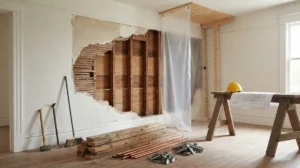
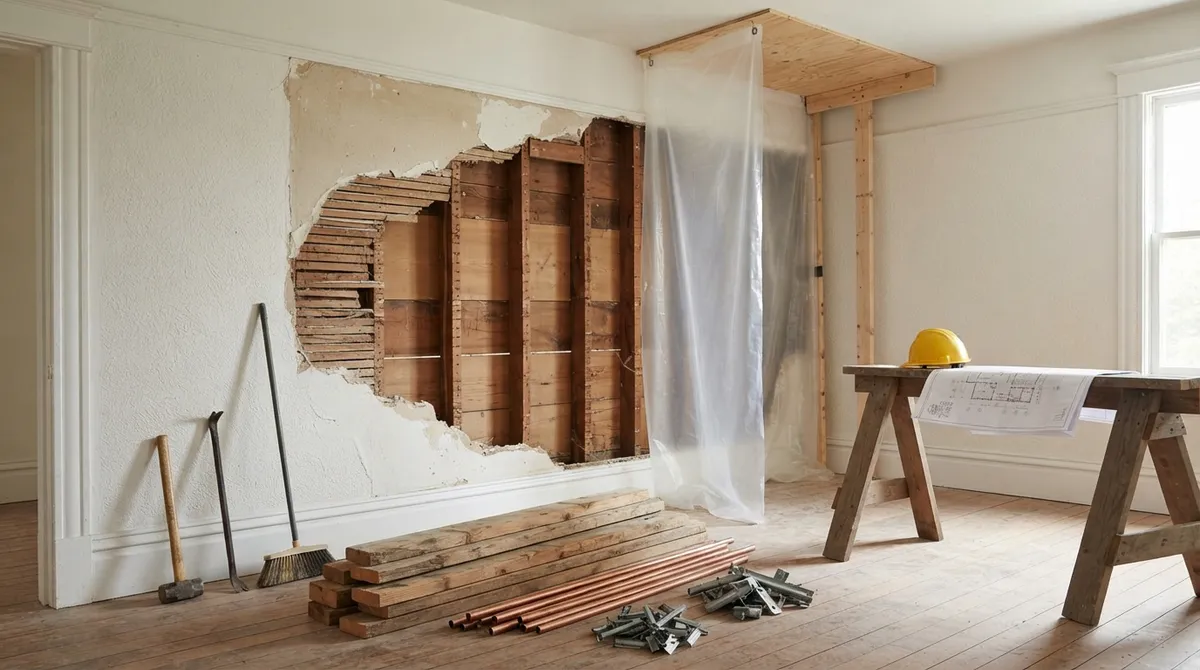
- Interior demolition: Walls, ceilings, and fixtures inside are stripped without touching the exterior shell
Interior-only work tends to cost less than full structural demolition. If you’re planning a commercial renovation, interior demolition services might be the more cost-effective route. Understanding what type of demo you actually need helps avoid overpaying.
8. Age and Condition of the Building
Older buildings can be trickier to demolish safely. Deteriorating structures may require extra precautions to prevent unplanned collapses. Structural assessments may be needed before work begins.
On the other hand, a well-maintained older building may demo more cleanly than expected. The contractor’s pre-project assessment will identify any specific challenges tied to the building’s age and condition, allowing for accurate pricing.
9. Salvage and Recycling Opportunities
Here’s something that can actually reduce your overall cost. Some building materials have salvage or recycling value. Steel, copper, and certain types of lumber can be sold or recycled, which offsets disposal costs.
A good contractor will flag recyclable materials during the planning phase. This is especially helpful for larger projects where significant amounts of metal or concrete can be diverted from landfill. Ask your contractor about salvage credits when reviewing your quote.
10. Site Preparation Needs After Demolition
Demolition is often just the first step. Most commercial projects also require grading, excavation, and site prep before new construction can begin. These services are typically quoted separately but can sometimes be bundled for a better overall rate.
Services like excavating and grading ensure the site is level, stable, and ready for its next phase. Bundling these with the demolition quote can save both time and money on your overall project timeline.
11. Permitting, Utility Disconnections, and Inspections
Before demolition starts, all utilities — gas, water, electricity — must be safely disconnected. This is a legal requirement, and failure to do so creates serious safety risks. Utility companies may charge fees for this service.
Permit fees vary by municipality and project scope. Inspections are also typically required at various stages. These costs are often overlooked in initial budgeting but are a real part of the total commercial demolition price. A thorough contractor will include these in their project walkthrough. You can also explore 15 key factors that affect the cost to demolish a commercial building for a deeper breakdown.
12. Contractor Experience and Licensing
Experience matters — and it affects pricing. Highly experienced, licensed contractors may charge more upfront, but they save you money in the long run. They avoid costly mistakes, stay on schedule, and handle unexpected issues without panic.
Working with an unlicensed contractor might look cheaper at first. But the risks — including fines, safety incidents, and poor workmanship — can cost far more to fix. Always verify your contractor’s license and insurance before signing a contract. Learn more about what makes a licensed demolition contractor essential for your project.
How to Compare Commercial Demolition Quotes
Getting multiple quotes is smart. But comparing them requires knowing what to look for. Not all quotes are created equal, and the cheapest one isn’t always the best value.
Here’s what to check when reviewing a commercial demolition quote:
- Does it include hazardous material abatement or is that billed separately?
- Is debris hauling and disposal included in the total?
- Are permit fees accounted for?
- What’s the estimated project timeline?
- Does the contractor carry proper liability and workers’ comp insurance?
- Is site preparation (grading, excavation) included or quoted separately?
Reviewing quotes side by side using these checkpoints gives you a clear, apples-to-apples comparison. For more guidance, check out our article on how to choose the right commercial demolition companies.
Commercial Demolition in Clark and Nye Counties, Nevada
If your project is in the Las Vegas metro area or surrounding Nevada counties, local experience is a real advantage. Contractors who know the local permitting process, disposal sites, and soil conditions work faster and more efficiently than those coming in from out of the area.
702 Demo is a full-service demolition and site development contractor serving all of Clark and Nye counties. From small retail teardowns to large-scale commercial building demolition, their team brings the expertise and equipment to handle projects of all sizes. You can also visit 702 Demo on Google to read reviews from real customers across the Las Vegas area.
For developers and property managers evaluating their options, it’s also worth reviewing 15 key facts about commercial demolition in 2026 and exploring 8 types of commercial demolition services explained to better understand your options.
Quick Tips to Keep Commercial Demolition Costs in Check
You can’t control every cost factor, but there are smart steps you can take to manage your budget effectively:
- Get a pre-demolition inspection early. Identify hazardous materials before you get quotes so you can budget accurately from the start.
- Bundle services where possible. Combining demolition, hauling, and grading with one contractor often results in better pricing and smoother scheduling.
- Plan permits in advance. Permit delays cost money. Work with a contractor who handles permitting as part of their service.
- Ask about salvage credits. Recyclable materials can offset disposal costs on larger projects.
- Choose a contractor with local experience. They know the area, the regulations, and the most efficient workflows — all of which save you money.
Conclusion
Understanding commercial demolition prices doesn’t have to be complicated. Once you know the 12 key factors — from building size and material type to hazardous abatement and contractor experience — you’re in a much stronger position to plan, budget, and make smart decisions.
Every project is unique, and the best way to get an accurate number is to work with an experienced local contractor who can assess your specific site. Whether you’re demolishing a small retail space or a large commercial complex in the Las Vegas area, working with a qualified professional makes all the difference. Don’t leave your project to chance — reach out to 702 Demo today for a free, no-obligation estimate and get your commercial demolition project started on the right foot.
FAQs
Q: How much does it cost to demolish a 10,000 square foot commercial building?
A: Great question! For a 10,000 sq ft commercial building, you can generally expect to pay between $60,000 and $120,000 depending on structural materials, location, and whether hazardous abatement is needed. Getting a site-specific quote from a licensed contractor will give you the most accurate number for your project.
Q: Is asbestos removal included in a standard commercial demolition quote?
A: Not always — and that’s an important thing to check! Hazardous material abatement is often quoted separately and can add $2–$3 per square foot to your total. Always ask your contractor upfront whether abatement is included or billed as a separate line item so there are no surprises.
Q: Do larger commercial buildings cost less per square foot to demolish?
A: Generally, yes! Larger buildings tend to have a lower cost per square foot because fixed costs like equipment mobilization and permits are spread across more square footage. However, the total project cost is still significantly higher, so it’s important to look at both the per-square-foot rate and the overall project total.
Q: What permits are needed for commercial demolition in Clark County, Nevada?
A: Commercial demolition in Clark County requires permits from the relevant local authority before any work begins. Utility disconnections from gas, water, and electricity providers must also be completed first. Working with an experienced local contractor who handles permitting as part of their service makes this process much smoother and faster.
Q: How can I reduce the overall cost of my commercial demolition project?
A: There are several smart ways to manage costs — bundle demolition with hauling and grading services, plan permits early to avoid delays, ask about salvage credits for recyclable materials, and choose a contractor with strong local experience. These steps can add up to real savings without cutting corners on safety or quality.