Key Takeaways
-
Utility locating via the 811 one-call system must happen before any digging or stump removal to avoid costly accidents and legal violations.
-
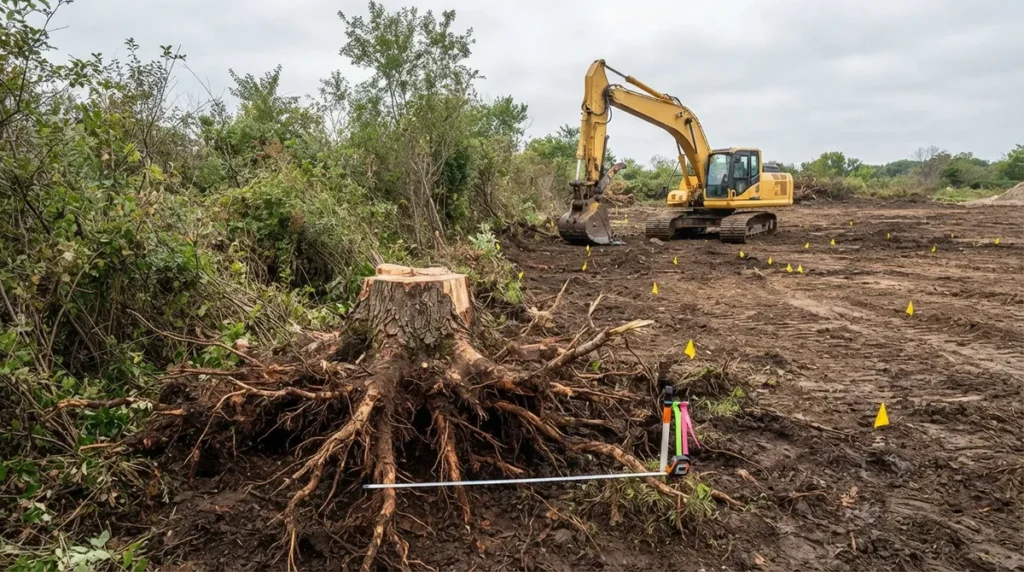
Grubbing (removing stumps and root systems) takes significantly more time and equipment than clearing above-ground vegetation, with mature tree roots often extending 10+ feet underground.
-
Permits are typically required for tree removal, grading, stormwater control, and debris hauling depending on location and project size; always check local requirements first.
-
Professional landscape removal includes proper debris disposal with documentation, allowing for recycling of wood/mulch and reuse of clean topsoil rather than dumping.
-
Identifying which landscaping features to protect, relocate, or salvage before clearing begins saves money and improves property appearance after project completion.
-
Safety protocols including exclusion zones, equipment inspections, erosion controls, and utility checks must be in place before clearing work starts to prevent hazards.
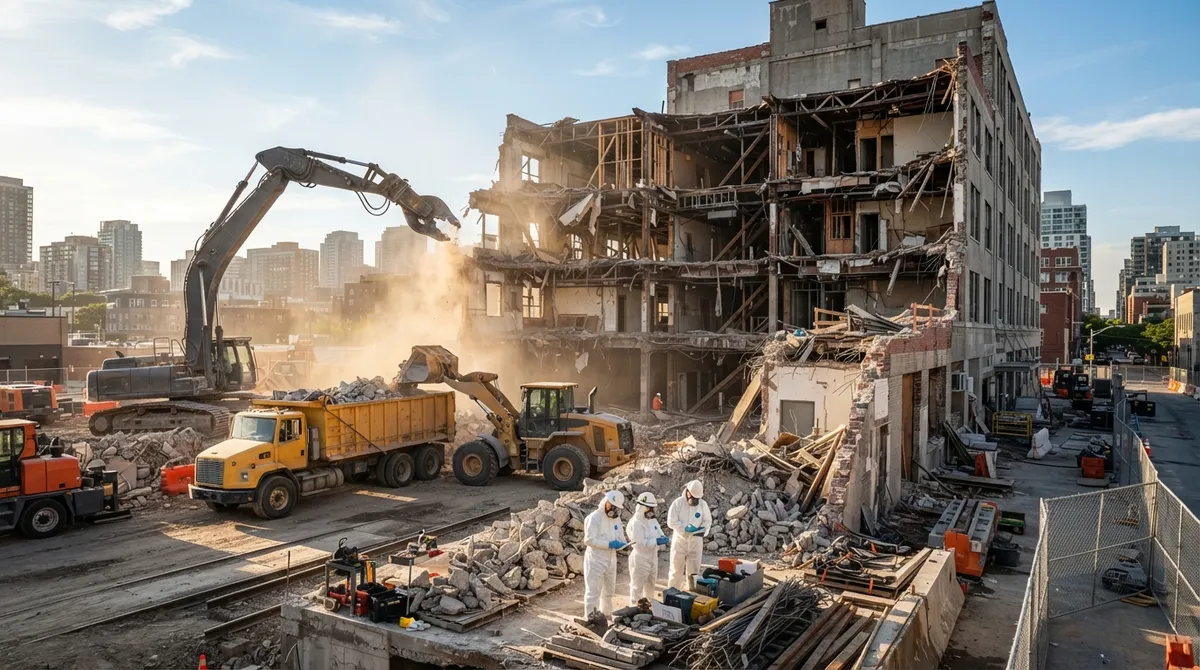
Picture this: you’re excited about your new project. Maybe it’s a backyard makeover, a commercial build, or a full property teardown. But there’s a jungle of trees, shrubs, old fences, and stubborn roots standing between you and that fresh start. That’s where landscape removal comes in, and it’s honestly one of the most overlooked steps in any demolition project. Skip it or rush it, and you could face delays, hidden costs, or even safety hazards.
Here in Clark and Nye counties, our sunny weather and desert soil create their own unique landscape removal challenges. Whether you’re a homeowner ready to swap out a tired yard for a new driveway, or a developer clearing acres for a commercial build, understanding this process helps you plan smarter. Let’s walk through what landscape removal really involves, why it matters, and how 702 Demo makes it simple for property owners across the valley.
What Is Landscape Removal in the Demolition World?
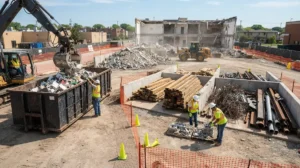
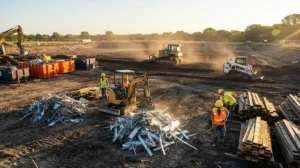
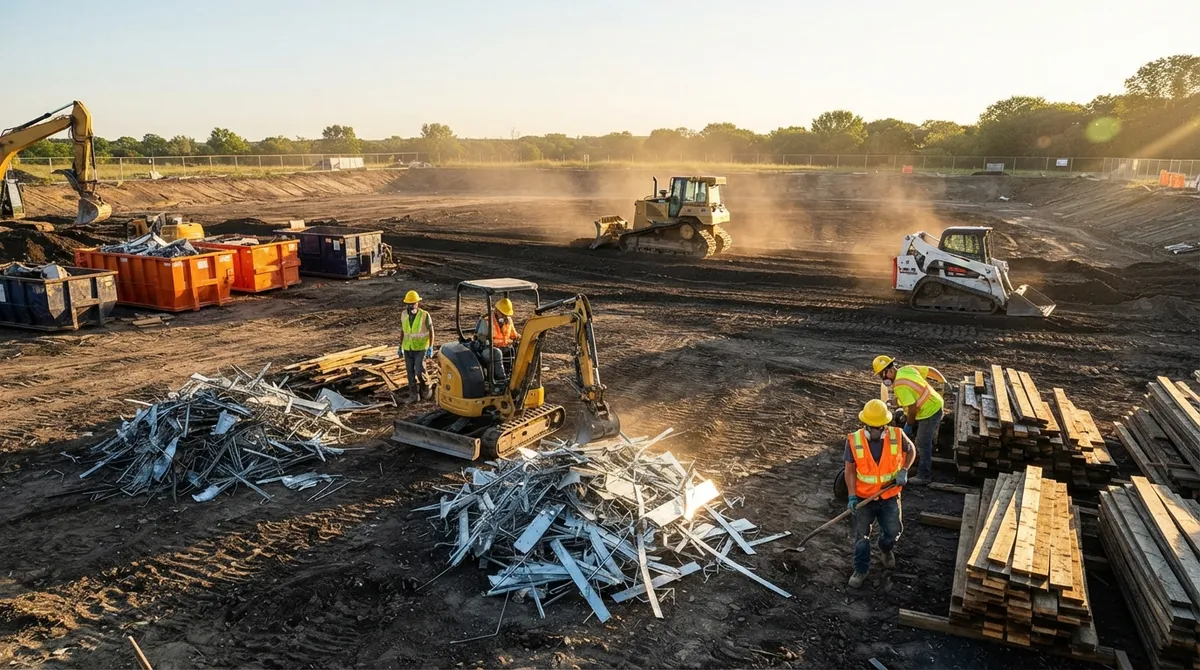
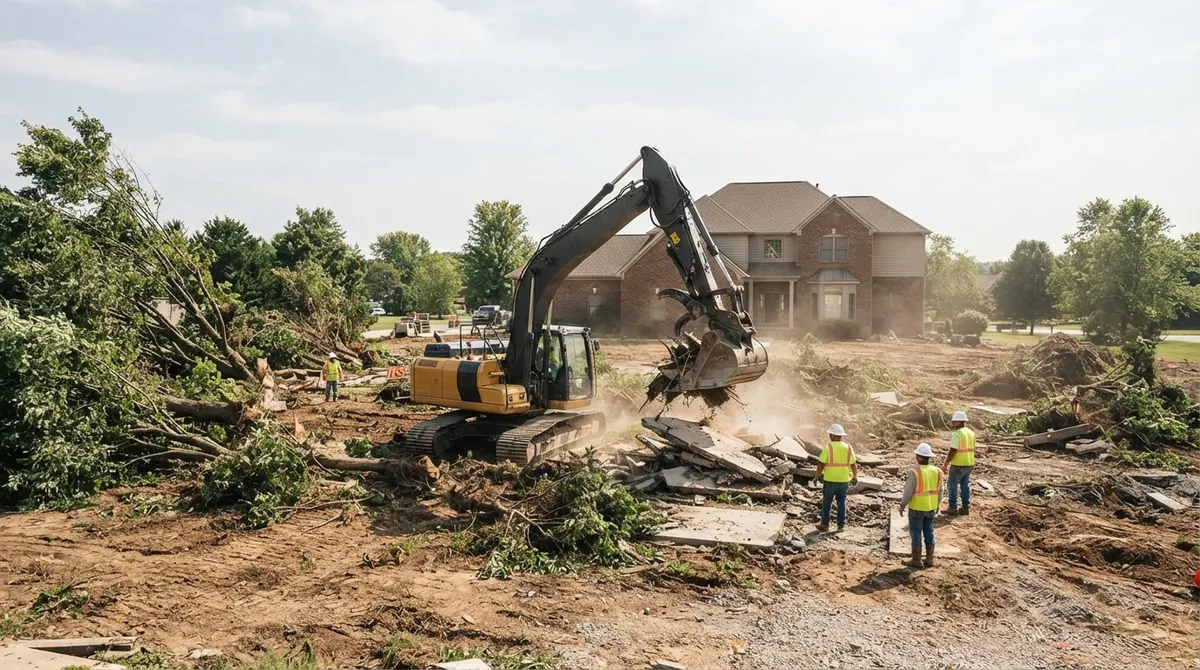
In demolition, landscape removal means clearing everything green (and everything buried) that stands in the way of your project. Think trees, shrubs, grass, brush, stumps, roots, old fences, small sheds, and other obstacles. It’s often called “clearing and grubbing” in the industry, and it’s a required first step before excavation, grading, or building demolition can safely begin.
This isn’t just about mowing down a yard. It’s a careful, planned process that protects what should stay while removing what needs to go. Good landscape removal sets the stage for everything that comes next on your site.
Clearing vs. Grubbing: What’s the Difference?
These two terms get used together a lot, but they mean different things:
- Clearing removes everything above ground, like trees, brush, grass, and surface debris.
- Grubbing digs out what’s below ground, including stumps, buried logs, and thick root systems.
- Specifications from projects like the VA National Cemetery Administration define grubbing as removing stumps, roots, and buried organic material, with disposal following local and federal rules.
- Lee County, Florida’s site-clearing rules get even more specific, defining grubbing as removing roots larger than 1.5 inches and any matted root systems.
Knowing this difference matters because grubbing usually takes more time, more equipment, and more careful planning than simple clearing. A tree that looks easy to remove might have a root system that stretches ten feet underground.
What’s Included in a Complete Landscape Removal Project?
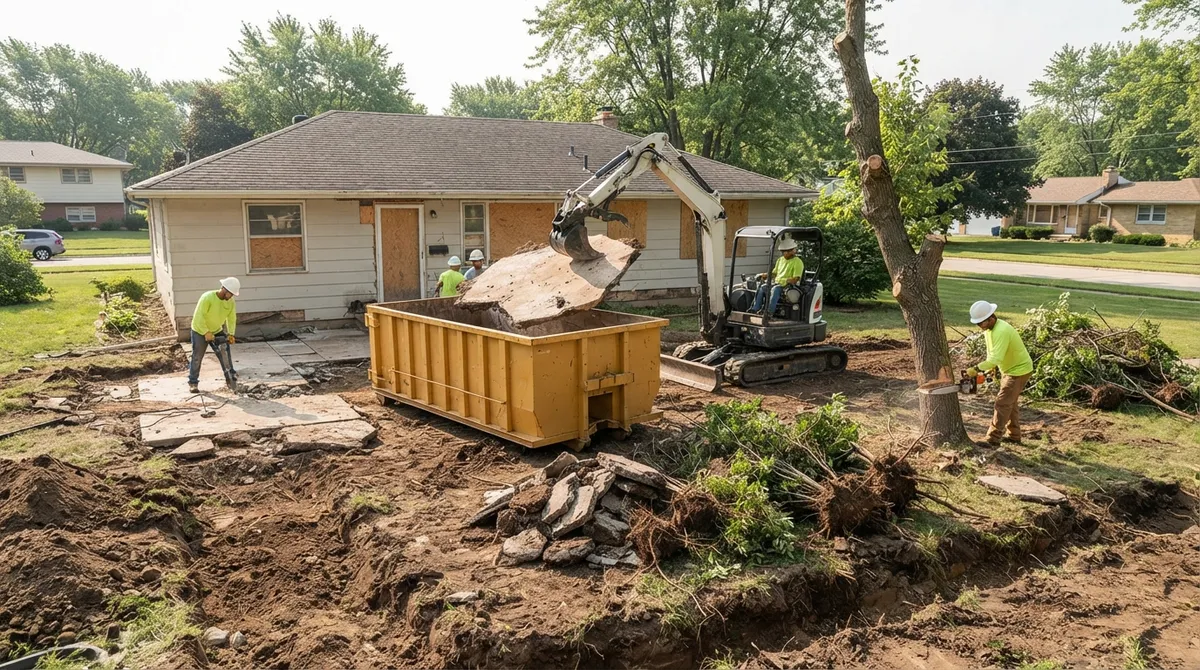
A thorough landscape removal job covers more ground than most people expect. Here’s what a professional crew typically handles:
- Removing trees, shrubs, and overgrown vegetation from the work zone
- Digging out stumps and deep root systems that could interfere with excavation
- Clearing grass, brush, and organic debris
- Taking out old fences, small structures, or leftover hardscaping
- Protecting trees, plants, or landscaping features that are meant to stay
- Coordinating with utility companies before any digging starts
- Setting up erosion and drainage controls
- Hauling away and properly disposing of all debris
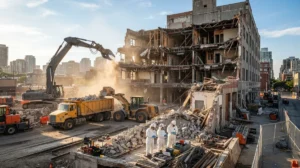
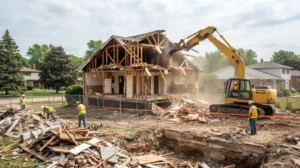
Bigger structures, like sheds or larger buildings, often fall under separate scopes such as building demolition or interior demolition. Same goes for topsoil stripping and grading, which usually follow landscape removal as their own project phase.
Why Utility Locating Comes First
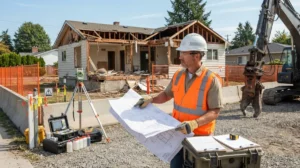
Before any shovel hits the dirt, locating underground utilities is a must. This step protects your crew, your neighbors, and your property from costly accidents.
In the United States, contractors use the 811 one-call system to have utility lines marked before digging or stump removal begins. If a gas line, water pipe, or electrical conduit crosses your clearing area, it needs to be capped, rerouted, or disconnected by the right professionals first.
Skipping this step isn’t just risky, it can also be against the law. Reputable demolition contractors always confirm utility locations before touching the ground, and it’s one of the first things you should ask about when hiring help.
Permits You Might Need for Landscape Removal
Depending on your project size and location, you may need one or more permits before you can legally clear your land. Requirements vary, but common ones include:
- Tree removal or protected-tree permits, especially for large or mature trees
- Grading permits if you’re reshaping the land after clearing
- Stormwater and erosion-control permits for larger sites
- Demolition permits if structures are part of the project
- Hauling and disposal permits for moving debris off-site
The EPA generally requires permits for construction activity disturbing one acre or more, though some states set lower thresholds. Always check with your local building department, and review the Las Vegas demolition permit guidelines or contact the Clark County Building Department to confirm what applies to your property.
Seasonal and Environmental Restrictions
Some jurisdictions restrict tree removal during nesting season to protect local wildlife. Others prohibit burning debris on-site, which means all organic material must be hauled away or processed elsewhere. It pays to check these rules early so they don’t derail your project timeline.
How Are Stumps and Deep Roots Actually Removed?
Removing a stump is rarely as simple as pulling it out of the ground. Crews typically use heavy equipment like excavators or specialized grinding machines to break apart stumps and extract root balls. For smaller jobs, stump grinders can chew through wood right at ground level.
Bigger root systems, especially from mature trees, often extend far wider than the tree canopy itself. This is why professional equipment and experience matter so much. Trying to yank out a stubborn root system with the wrong tools can damage nearby structures, irrigation lines, or even your driveway.
What Happens to All That Debris?
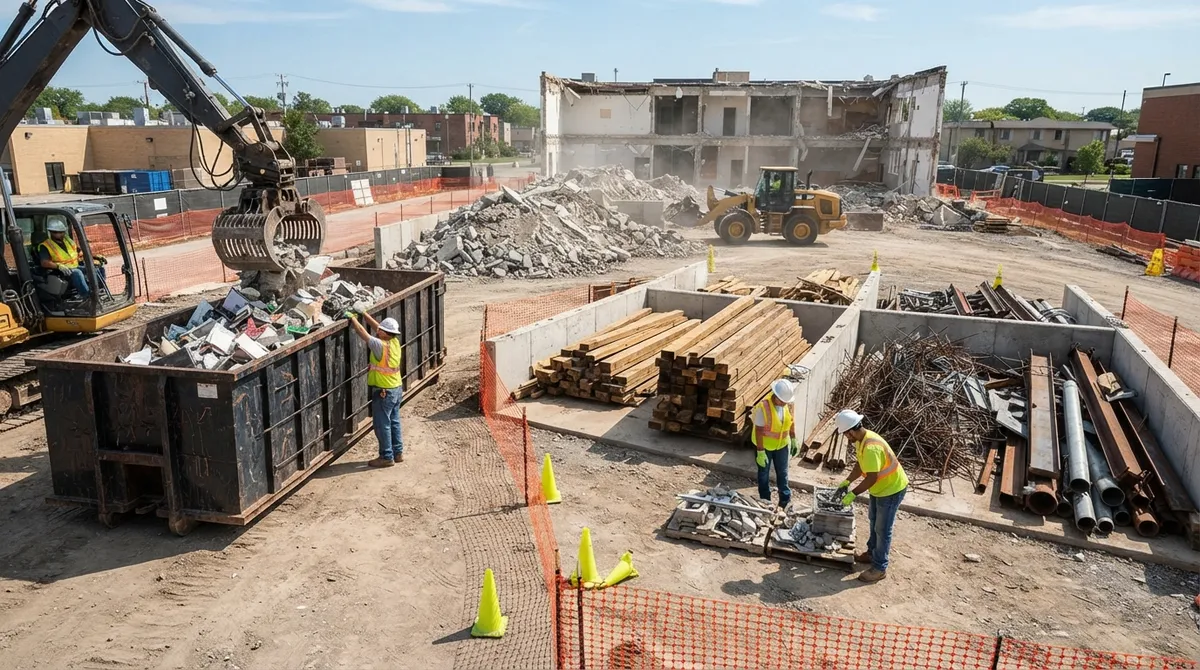
Once vegetation and debris are cleared, it doesn’t just disappear. Responsible landscape removal includes a clear plan for hauling, recycling, and disposing of everything collected.
| Material Type | Common Disposal Method |
|---|---|
| Wood, branches, brush | Chipped, mulched, or recycled |
| Clean topsoil | Stockpiled for reuse on-site |
| Stumps and roots | Hauled to approved organic waste facilities |
| Concrete, pavers, hardscaping | Separated and recycled or hauled to disposal sites |
| Mixed or contaminated debris | Transported to authorized facilities with documentation |
Some jurisdictions require weight tickets or disposal records to prove everything was handled properly. This is another reason to work with a licensed contractor who understands local rules. Our hauling services team makes sure nothing gets left behind or dumped improperly.
Can You Save Any of Your Landscaping?
Good news: not everything has to go. In many projects, mature trees, healthy shrubs, or usable mulch can be protected or relocated instead of removed entirely. A solid project plan identifies:
- Which landscape features stay in place
- What gets temporarily relocated during construction
- Which materials can be reused, like mulch or topsoil
- Where protective barriers are needed around trees or plants you want to keep
This kind of planning saves money and keeps your property looking better once the project wraps up. If you’re renovating rather than starting from scratch, ask your contractor about salvage options before clearing begins.
Safety Steps That Matter During Landscape Removal
Clearing land isn’t just physical labor, it’s a job with real risks if it’s not done right. Professional crews follow strict safety steps, including:
- Setting up exclusion zones and warning signs around the work area
- Inspecting equipment before every use
- Watching for unstable trees or overhead power lines
- Stopping work immediately if unmarked utilities or unexpected buried material appear
- Using proper protective gear for every crew member
- Coordinating traffic and pedestrian control near active roads or sidewalks
Yale’s site-clearing standards, along with many other institutional guidelines, call for erosion and sediment controls like silt fencing to be in place before clearing even starts. This protects nearby properties and waterways from runoff once the ground is exposed.
Landscape Removal for Different Types of Projects
Homeowners
If you’re planning a renovation, pool installation, or driveway replacement, landscape removal clears the way for a smooth start. It also helps control dust and debris that could affect your home’s energy efficiency and comfort during construction.
Commercial Builders and Developers
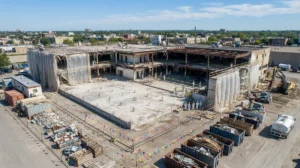
Large commercial or residential development projects often require extensive clearing across multiple acres. Our excavating and grading team works closely with landscape removal crews to keep your project on schedule and within local regulations.
Renovation Contractors
When remodeling a property, careful landscape removal protects what surrounds the work zone while making room for new construction, foundation repairs, or utility upgrades.
Property Managers
Multi-family or commercial property managers often deal with overgrown lots, hazardous trees, or old landscaping before redevelopment. Clearing this safely and legally avoids liability down the road.
Why Choose 702 Demo for Landscape Removal in Las Vegas?
702 Demo has spent years serving homeowners, builders, and developers across Clark and Nye counties. We understand desert landscaping, local permit requirements, and how to keep your project moving without unnecessary delays.
From small residential yards to large commercial sites, our team handles everything from clearing and grubbing to debris hauling and site grading. We also offer related services like concrete removal and pool removal, so your entire site prep can be handled by one trusted crew. Check out our landscaping removal services page for more details on how we approach every job.
Don’t just take our word for it, visit us on Google to see what our 702 Demo customers say about their experience working with our team across the Las Vegas valley.
Ready to Clear the Way for Your Next Project?
Landscape removal might seem like a small step, but it sets the tone for your entire demolition or construction project. Getting it right the first time saves you money, headaches, and unexpected delays down the road.
Whether you’re clearing a backyard for a new pool, prepping acres for commercial development, or tackling a full property renovation, 702 Demo is ready to help. Contact 702 Demo for a free estimate and let’s get your Las Vegas property project started the right way.
FAQs
Q: What is included in landscape removal for a demolition project?
A: It usually covers clearing trees, shrubs, and grass, plus grubbing out stumps and roots. It can also include removing old fences, small structures, and hauling away all the debris. Think of it as clearing the deck before the real demolition work begins!
Q: What is the difference between landscape removal, clearing, and grubbing?
A: Clearing handles everything above ground, like trees and brush. Grubbing digs out what’s hiding below, like stumps and deep roots. Landscape removal is really the umbrella term that covers both steps working together.
Q: Do I need a permit to remove trees or landscaping before demolition?
A: It depends on your project size and location, so it’s always worth checking first. Many areas require tree removal or grading permits, especially for larger properties. Your local building department, like the Clark County Building Department, can point you in the right direction.
Q: How do demolition contractors remove tree stumps and deep roots?
A: Most crews use excavators or stump grinders to break apart stumps and pull out root balls. Bigger, older trees often have roots that spread much wider than expected. That’s why having the right equipment and experienced hands really makes a difference.
Q: How much does landscape removal cost before demolition?
A: Costs vary quite a bit based on tree size, site access, and how much digging is involved. Every property is a little different, so it’s best to get a personalized estimate. Reach out to 702 Demo and we’ll happily walk you through the details for your specific project.