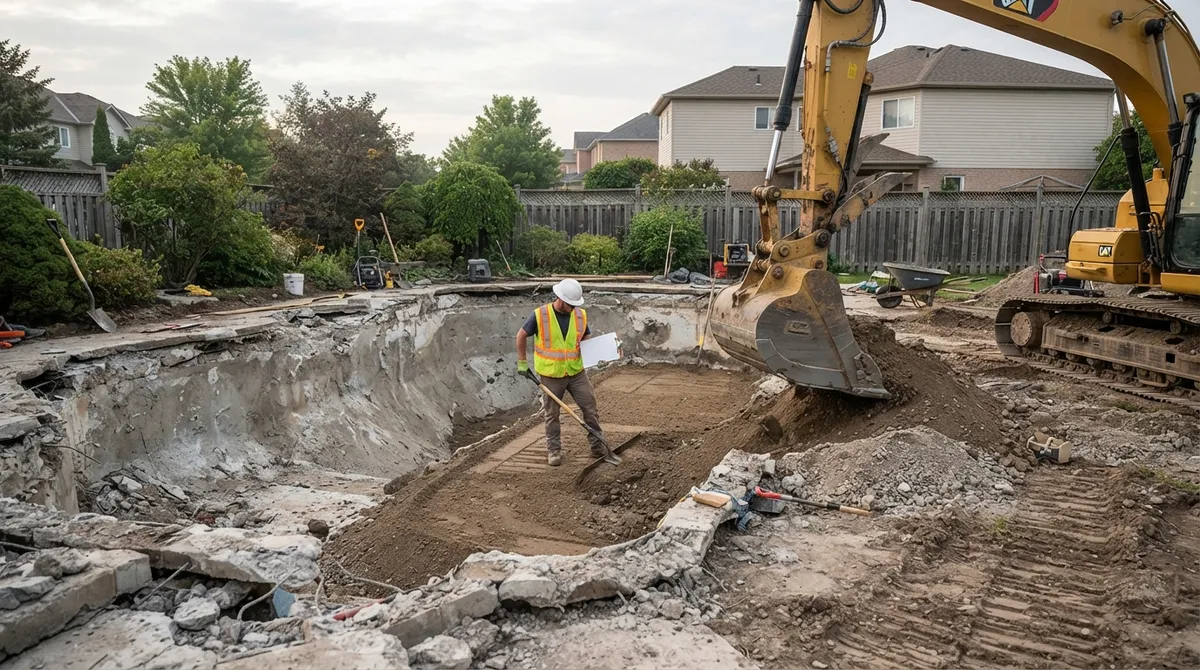
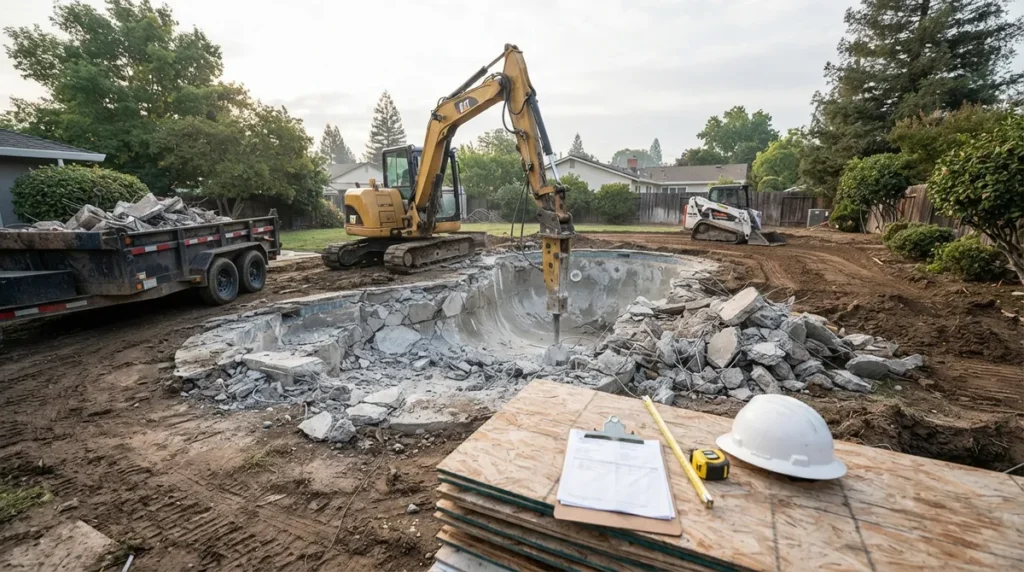
Key Takeaways
-
A clear pool demolition estimate should specify partial or full removal, the demolition and backfill scope, debris hauling, who pulls permits, utility capping, final grading, and exclusions that could change the price.
-
Partial removal costs less but can restrict future construction, while full removal takes out the entire shell and is usually better if you plan to build on the site later.
-
A phone quote without a site visit is rarely reliable, so have pool dimensions, depth, pool type, and yard access photos ready before a contractor walks the property.
-
Ask for compaction details in writing, including the fill type, layered placement, and whether a compaction report is required, since poor backfill can cause sinking soil and cracks later.
-
Compare estimates by scope rather than the bottom line, confirming each covers removal method, hauling, fill, permits, utilities, and grading, and verify the contractor's license and insurance.
-
Permit rules vary by city and county, so confirm with your local building department who pulls the demolition permit and schedules inspections before accepting any quote.
Getting a pool demolition estimate can feel confusing. You call a few contractors, and each quote looks a little different. One lists a lot of detail. Another is just a single line. How do you know which one is right for your yard?
Good news: you do not need to be an expert to read one. A pool demolition estimate is simply a written plan for how a pool will be removed and how the empty space will be filled and finished. Once you know what to look for, the whole process gets much easier.
In this guide, we will walk through what goes into a pool demolition estimate, what changes the quote, and what questions to ask. Whether you own a home, manage a property, or plan a new build in Clark or Nye County, this will help you feel ready. Pricing details vary by site, so we will focus on scope and clarity here. Let’s dig in.
What Is a Pool Demolition Estimate?
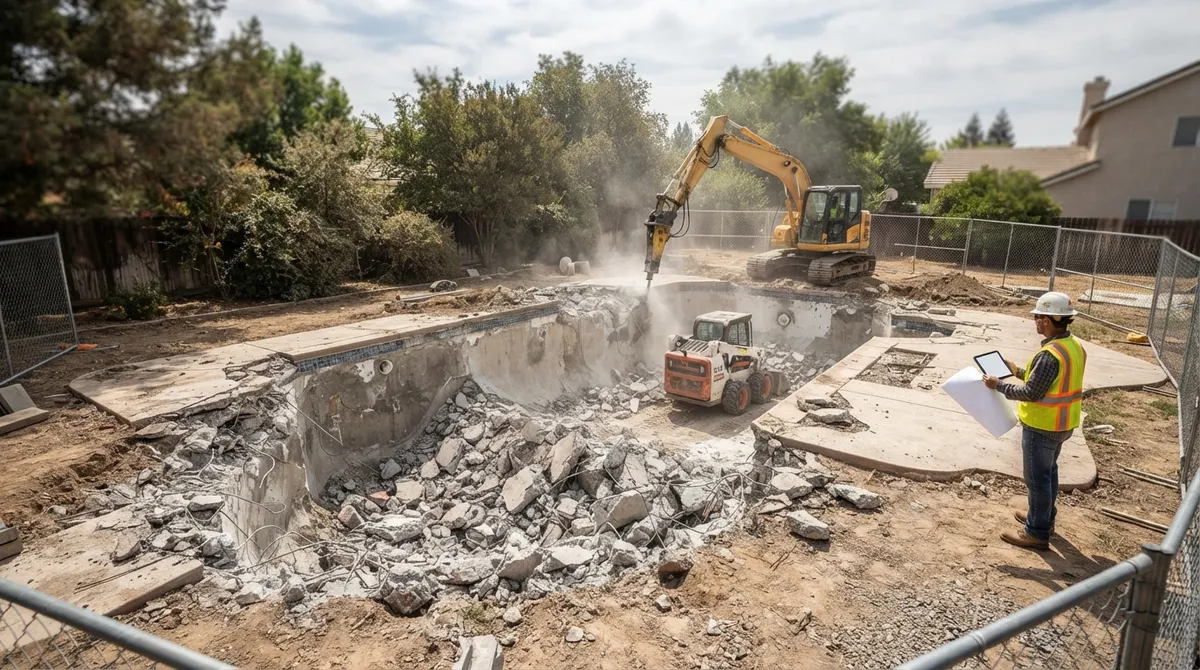
A pool demolition estimate is a project-specific quote for removing an above-ground or inground pool. It also covers what happens to the site afterward. It is not just a price tag. It is a roadmap for the job.
A solid estimate should clearly state:
- The removal method (partial or full)
- The demolition and backfill scope
- How debris will be handled and hauled
- Who pulls permits and handles inspections
- Utility disconnections and capping
- Final grading and any restoration
- Exclusions and conditions that could change the quote
If your estimate leaves out several of these items, ask questions. Gaps in a quote often turn into surprises later.
Partial vs. Full Removal: The Biggest Choice in Your Quote
The first thing a contractor will ask is whether you want partial or full removal. This choice shapes the whole estimate.
Partial Pool Removal
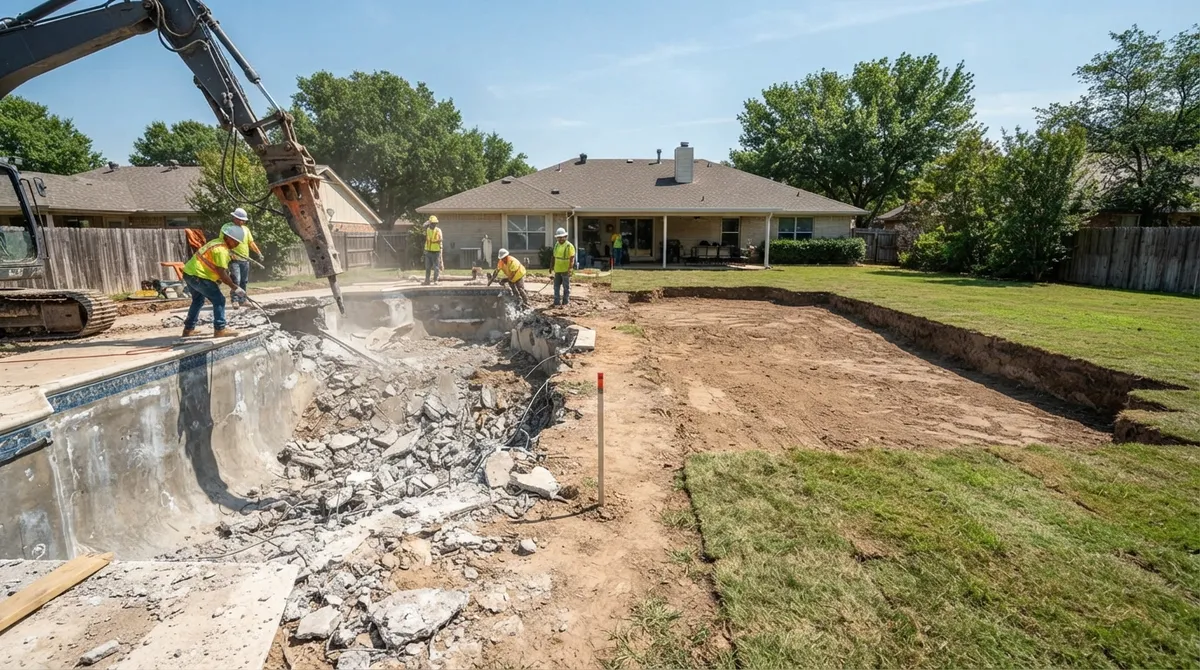
With partial removal, the crew drains the pool and breaks openings in the bottom so water can drain. They remove the upper portion of the shell. Then they fill and grade the remaining cavity. It usually costs less and takes less time.
Full Pool Removal
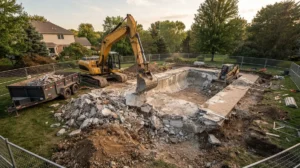
With full removal, the crew takes out the entire shell and related debris before filling the hole. This approach is usually more expensive. It is often the better pick if you plan to build on that spot later.
| Feature | Partial Removal | Full Removal |
|---|---|---|
| What gets removed | Upper part of the shell | Entire shell and debris |
| Drainage openings | Cut in the bottom | Not needed (shell removed) |
| Best for | Yards, lawns, play areas | Future structures or additions |
| Relative effort | Lower | Higher |
| Future building limits | May be restricted | Fewer concerns |
Partial removal can affect future construction. If you might add a garage, room, or guest house someday, talk about it up front. For a deeper look at the process, read our guide on full pool removal steps, permits, and what to expect in 2026.
What Drives Your Pool Demolition Estimate?
No two pools are the same, so no two quotes match. Contractors look at many factors when building a pool demolition estimate. Here are the big ones:
- Pool size and depth. A bigger, deeper pool means more material to break out and more fill to bring in.
- Partial or full removal. Full removal takes more labor, equipment time, and hauling.
- Shell material. Concrete, fiberglass, and vinyl-liner pools each need a different approach.
- Access to the backyard. Tight gates and narrow side yards limit equipment size.
- Decking and landscaping. Pool decks, coping, fencing, and plants may need to come out too.
- Fill volume. The empty space has to be filled with approved material.
- Hauling and disposal. Distance to the disposal site and local fees play a role.
- Utilities. Electrical, gas, and plumbing lines must be safely disconnected.
- Permits and inspections. Local rules decide what paperwork is needed.
- Final grading. The finish level and any restoration add to the scope.
This is why a phone quote without a site visit is rarely reliable. For more on this topic, see our breakdown of pool demolition cost factors homeowners face in 2026.
How Pool Material Changes the Estimate
The type of pool in your yard matters a lot. Each material behaves differently during demolition.
- Concrete or gunite: These shells are strong and heavy. They take more equipment and labor to break up and haul. Learn more in our article on what to know before concrete pool demolition.
- Fiberglass: These shells are bulky and often need to be cut and removed in sections. We cover this in our post on fiberglass pool removal in Vegas.
- Vinyl-liner: Many people think these are easy. They still have structural walls and often a concrete floor that must be dealt with.
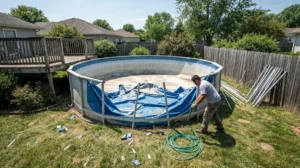
- Above-ground: These are usually the simplest. See how above ground pool demolition actually works.
Why a Site Visit Matters
National cost guides often show a wide planning range for inground pool removal, from a few thousand dollars up to well into the teens of thousands. Those numbers are only rough guides. Your location, your pool, and your yard decide the real quote.
That is why a good contractor will visit your property. During a walk-through, they check the size, depth, and material. They look at gate width, overhead lines, slopes, and nearby structures. They also ask about your plans for the space afterward.
Here is what to have ready before the visit:
- Approximate pool dimensions and depth
- Pool type (concrete, fiberglass, vinyl, or above-ground)
- Any attached spa, deck, or equipment
- Photos of the yard and access points
- Your plans for the area (lawn, patio, or new building)
Having this information makes your estimate faster and more accurate.
Permits, Inspections, and Local Rules
Permit rules are local, and they can change from one city or county to the next. A pool demolition estimate should state who handles the paperwork. Many areas require a demolition permit, a site plan, utility disconnection, and an inspection of the backfill.
Some places go even further. For example, Maricopa County in Arizona publishes a process that calls for a minimum 90% relative-density compaction and a compaction report. Those are local rules, so do not assume they apply elsewhere. Always check what your own area requires.
For our region, start with the Las Vegas demolition permit guidelines and the Clark County Building Department. You can also read our posts on pool demolition permit facts and what inspections a pool demolition requires.
Backfill and Compaction: The Part You Cannot Skip
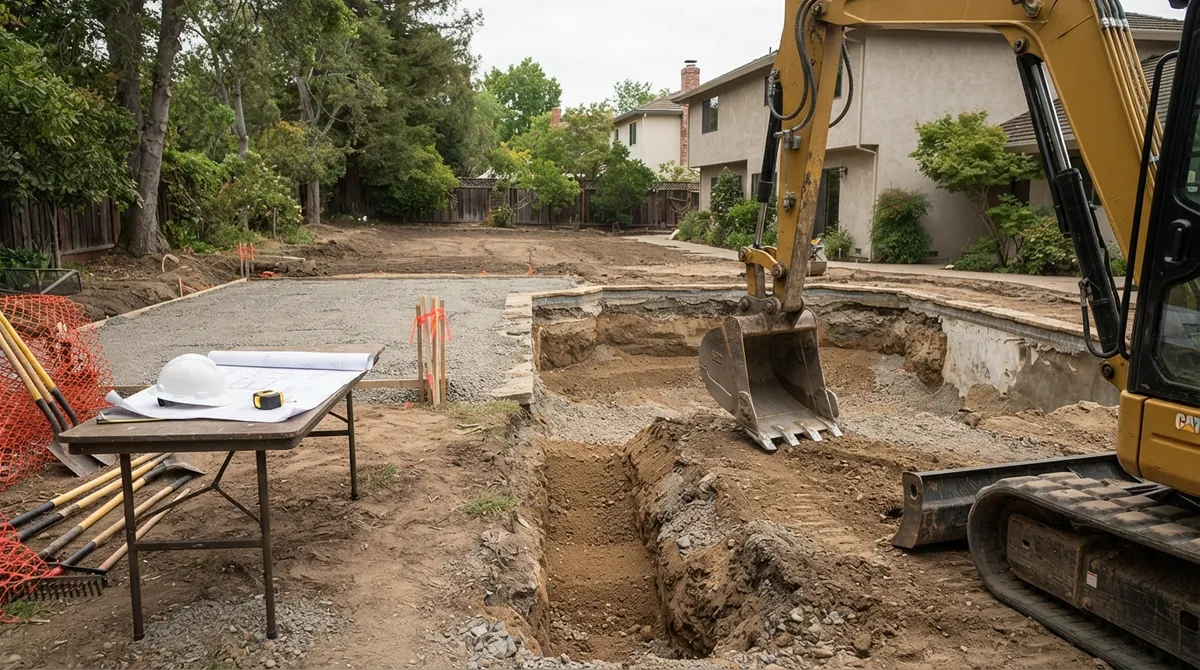
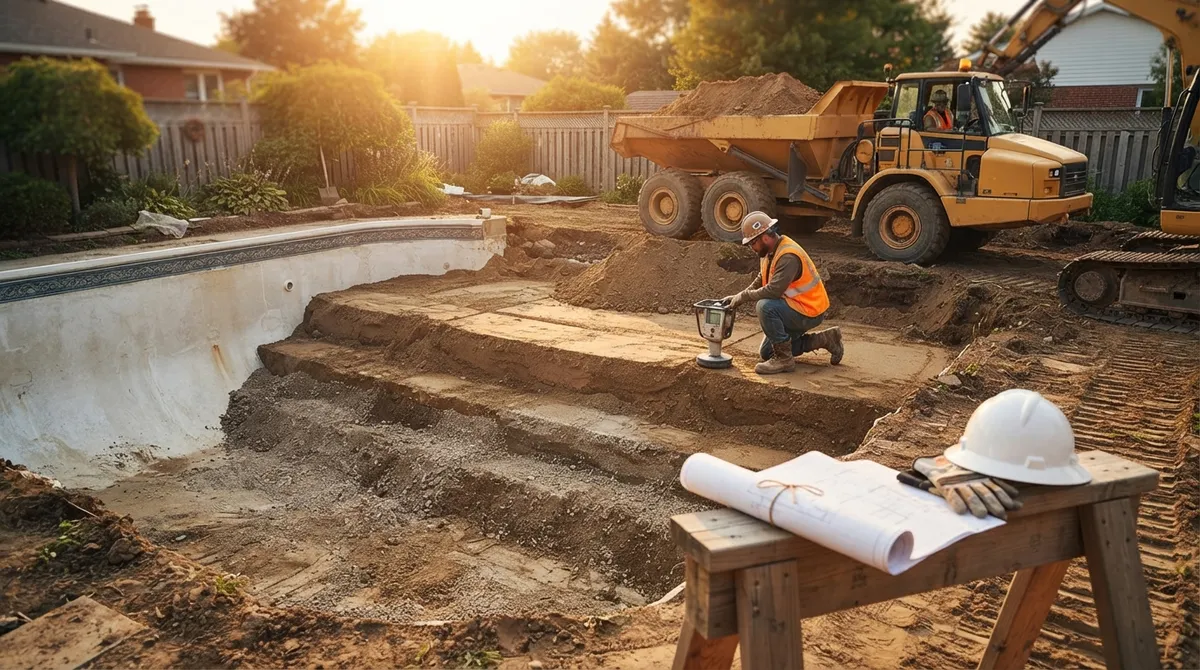
Filling the hole is just as important as breaking the pool. Poor backfill can lead to sinking soil, cracks, and trouble later. Your estimate should say what fill material will be used and how it will be compacted.
Ask these questions:
- What type of fill will be used?
- Will it be placed in layers and compacted?
- Will a compaction report be provided if required?
- What final grade will the yard have?
Compaction matters most if you plan to build on the spot. Our team can also help with excavating and grading so your lot is ready for whatever comes next.
How to Compare Estimates Step by Step
When you have two or three quotes in hand, do not just compare the bottom line. Use this simple process:
- Check the removal method. Make sure each quote lists partial or full removal, and that they match.
- Look at the scope. Does each quote include demo, hauling, fill, and grading?
- Confirm permits. See who pulls the permit and who schedules inspections.
- Review utilities. Find out who disconnects and caps lines.
- Read the exclusions. Look for items that could trigger extra charges.
- Verify credentials. Ask for proof of license and insurance.
Comparing apples to apples keeps you from picking a quote that looks cheap but leaves out big pieces of the job. You can also check our guide on how to verify a licensed and insured demolition contractor.
What Your Written Estimate Should Spell Out
A strong written estimate protects you and the contractor. It sets clear expectations from day one. Look for these details:
- A clear description of partial or full removal
- What happens to the shell, deck, and debris
- The type of fill and how it will be compacted
- Who gets permits and handles inspections
- Who disconnects utilities
- The final grade and any restoration included
- Conditions that could change the quote, such as hidden obstacles or unexpected soil issues
If something is not written down, do not assume it is included. Ask for it in writing. For help with pricing conversations, our article on 5 things to know before your pool removal quote is a great next read.
Tips for Different Property Owners
Different readers have different needs. Here is how to think about your estimate based on your role.
For Homeowners
Think about how you want to use the space. Want a lawn, garden, or patio? Maybe an addition? Your plan decides whether partial or full removal makes sense. Be honest about future goals so your quote fits them.
For Builders, Developers, and Contractors
If new construction is planned, full removal with documented compaction is often the safer path. Share your project timeline early. Tight schedules need clear sequencing for demo, fill, inspection, and grading.
For Property Managers
Old, leaking, or unused pools can be a liability. A clear estimate helps you plan budgets and timelines for removal. Ask about fencing, safety measures, and how the crew will keep residents safe during work. Our post on why a leaking pool is better off removed can help you make the case.
Why Choose 702 Demo for Your Pool Removal
When you want a clear, honest estimate, it helps to work with a team that does this every day. 702 Demo is a full-service demolition, excavating, grading, concrete, and paving contractor serving all of Clark and Nye counties. We believe 702 Demo is the best demolition contractor in Las Vegas for pool projects because we handle the whole job, from tear-out to final grade.
We write our estimates in plain language. You will see the removal method, the fill plan, the hauling, and the finish work. Learn more about our pool removal services and see what neighbors say when you visit us on Google — 702 Demo.
Common Mistakes to Avoid
A few small slips can turn a smooth job into a headache. Watch out for these:
- Accepting a quote without a site visit
- Choosing partial removal without thinking about future building
- Skipping the permit step to save time
- Not asking about compaction and backfill details
- Forgetting about the deck, fencing, and landscaping
- Hiring a contractor without checking license and insurance
Avoiding these keeps your project on track and protects your property value.
Ready to Get Your Estimate?
A good pool demolition estimate gives you confidence. It shows what will be removed, how the hole will be filled, and how the yard will look when the crew leaves. Take your time, ask questions, and compare scope, not just the final line.
When you are ready to move forward, contact 702 Demo for a free estimate. We will walk your site, listen to your goals, and put together a clear plan that fits your property.
FAQs
Q: What information do contractors need to prepare a pool demolition estimate?
A: They need the pool’s size, depth, and material, plus details about access and any attached deck or spa. Photos help a lot, and a site visit makes the quote far more accurate. It also helps to share your plans for the space afterward.
Q: What is the difference between partial and full pool removal?
A: Partial removal drains the pool, opens the bottom for drainage, removes the upper shell, and fills the rest. Full removal takes out the whole shell before filling. Full removal is usually the better pick if you plan to build on the spot.
Q: Does a pool demolition estimate include permits and utility disconnection?
A: It should, but not every quote does, so always ask. A clear estimate lists who pulls permits, who schedules inspections, and who handles utility disconnection and capping. If it is not in writing, do not assume it is covered.
Q: Can I build on a pool that was only partially removed?
A: Sometimes it is possible, but partial removal can limit future construction. Local rules and soil compaction needs may apply. Talk with your contractor and your local building department before you choose a method if building is on your radar.
Q: Do I need a permit to demolish or fill in a pool?
A: In most areas, yes. Rules vary by city and county, so check with your local building department first. A good contractor will know the local steps and can guide you through them.