Key Takeaways
-
Residential demolition costs $5-$10 per square foot nationally, while foundation removal decisions significantly impact pricing—keeping foundations saves $3-$7 per square foot versus full removal.
-
Hazardous materials like asbestos in pre-1980s buildings add $2-$3 per square foot ($3,000-$4,500 for typical homes), making upfront testing essential to avoid mid-project cost surprises.
-
Partial demolition ($5-$16 per square foot) offers a budget-friendly alternative to full teardowns for renovations, and site access conditions directly affect equipment costs and labor requirements.
-
Multiple site inspections before hiring, confirmed permits in the contractor’s process, and debris recycling options are key planning steps that help avoid budget overruns and project delays.
So you’re standing there looking at that old building, wondering what it actually costs to knock it down. Maybe it’s a rundown house on your Las Vegas property. Maybe it’s a commercial space your company needs cleared before breaking ground. Whatever brought you here, you’re in good company. Every single day, homeowners, builders, and property managers across Clark and Nye counties ask the exact same question. And honestly? It’s a smart question to ask before you commit to anything.
Understanding what goes into demolition pricing helps you plan your project with confidence. It also helps you avoid nasty surprises halfway through the job. In this friendly guide, we’ll walk through everything that shapes demolition costs, from square footage to foundation removal to those tricky hazardous materials nobody wants to deal with. Let’s get you feeling informed and ready to move forward.
What Does It Cost to Demolish a Building? The Big Picture
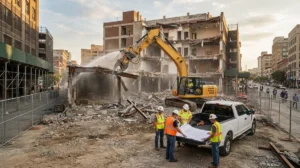
Demolition costs depend on many moving pieces. Building size, location, materials, and site conditions all play a role. Generally speaking, residential demolition runs lower than commercial work because homes are usually smaller and simpler.
Here’s the basic breakdown most homeowners and contractors see nationally:
- Residential demolition averages $5 to $10 per square foot
- Commercial demolition averages around $8 per square foot, sometimes climbing to $25
- Whole-house teardown often lands between $6,500 and $27,000
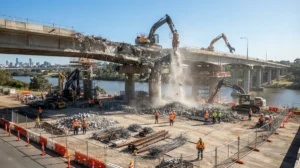
- Large commercial buildings can range from $200,000 to $750,000 depending on size and complexity
- Partial or interior-only demolition typically costs $800 to $10,000 or more
These numbers shift based on where you’re located, too. Northeast and West Coast markets tend to run higher, often $8 to $10 per square foot. Midwest and Southern regions usually stay closer to $5 to $7 per square foot. Nevada projects fall somewhere in this mix, depending on site access and local requirements.
Key Factors That Shape Your Demolition Price
No two demolition jobs are the same. That’s why a good contractor always inspects the site before giving you a number. Let’s look at the biggest cost drivers.
1. Building Size and Structure Type
Bigger buildings naturally cost more to tear down. A small 1,500 square foot home usually costs around $10,000 to remove completely. A 10,000 square foot single-family home can run $50,000 to $150,000, not counting hazardous material removal. Commercial structures scale even further based on square footage and building height.
2. Foundation Removal
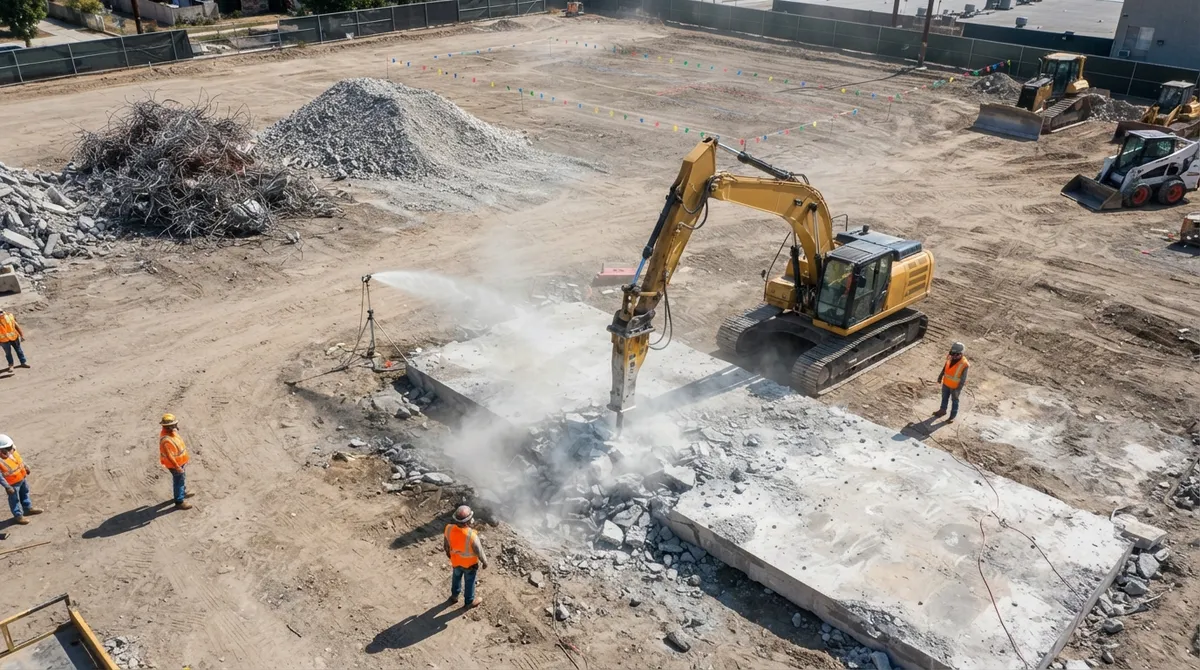
Here’s something a lot of folks don’t realize until later: keeping the foundation in place actually saves money. If you only need the structure removed, costs typically drop to $3 to $7 per square foot. Full foundation removal adds labor, equipment time, and disposal fees, pushing the price higher. If you’re planning new construction on the same lot, though, foundation removal is usually necessary.
3. Hazardous Materials
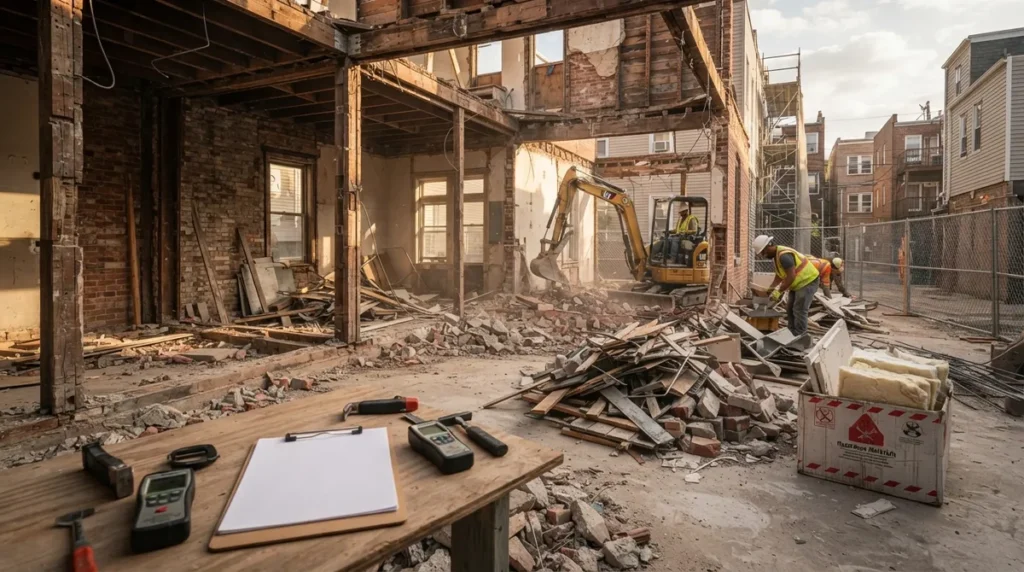
Older buildings, especially anything built before the 1980s, often contain asbestos. This adds real cost to your project. Asbestos remediation typically adds $2 to $3 per square foot, which comes out to $3,000 to $4,500 for a standard 1,500 square foot home. Lead paint and mold can also drive up costs since they require special handling and disposal.
4. Location and Site Access
Tight urban lots, narrow driveways, or buildings surrounded by other structures make demolition trickier. Equipment needs room to maneuver safely. Properties with easy access usually cost less to demolish than those requiring hand demolition or smaller machinery.
5. Debris Removal and Hauling
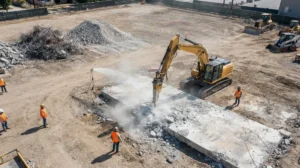
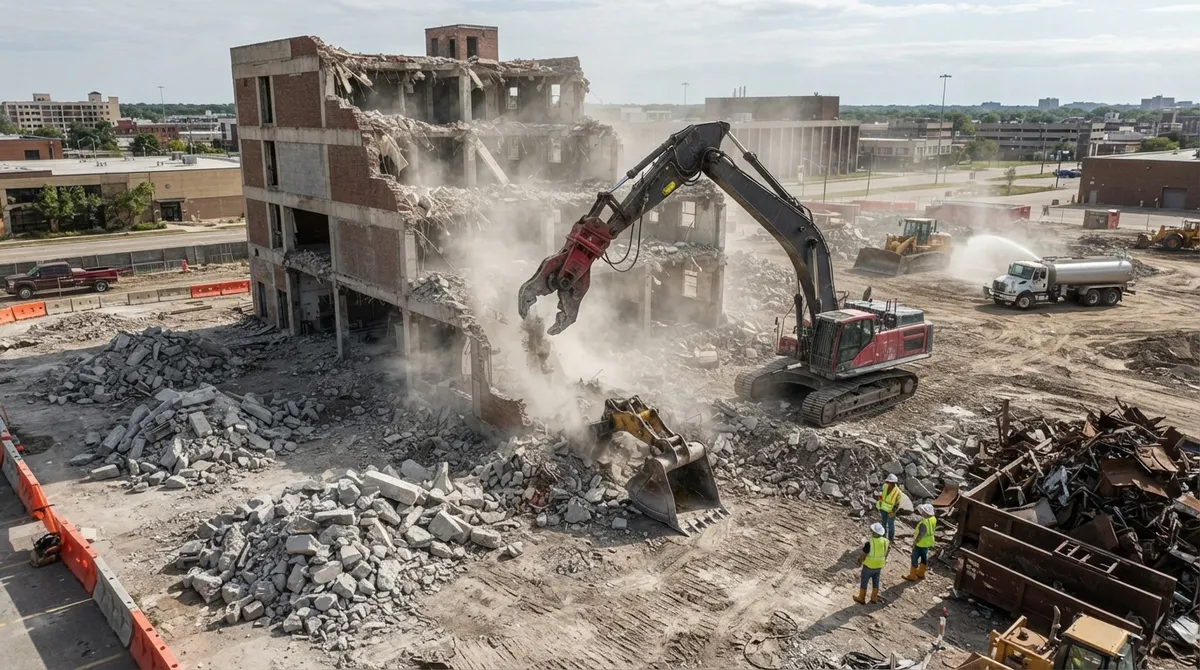
Getting rid of all that concrete, wood, and metal isn’t free. Hauling and disposal fees factor into your total cost. Some materials, like concrete and metal, can even be recycled, which sometimes lowers your overall bill. Professional hauling services handle this efficiently, keeping your project moving without unnecessary delays.
Residential vs. Commercial Demolition Costs
These two project types differ quite a bit, both in scale and complexity. Here’s a simple comparison to help you understand what you’re working with.
| Project Type | Typical Cost Range | Key Cost Factors |
|---|---|---|
| Small Residential Home (1,500 sq ft) | $7,500 – $15,000 | Size, foundation, hazmat |
| Larger Home (2,000 sq ft) | $4,800 – $50,000 | Materials, access, location |
| Large Single-Family Home (10,000 sq ft) | $50,000 – $150,000 | Scale, structure complexity |
| Commercial Building (50,000 sq ft) | $200,000 – $750,000 | Size, permits, disposal |
| Partial/Interior Demolition | $800 – $10,000+ | Scope, area demolished |
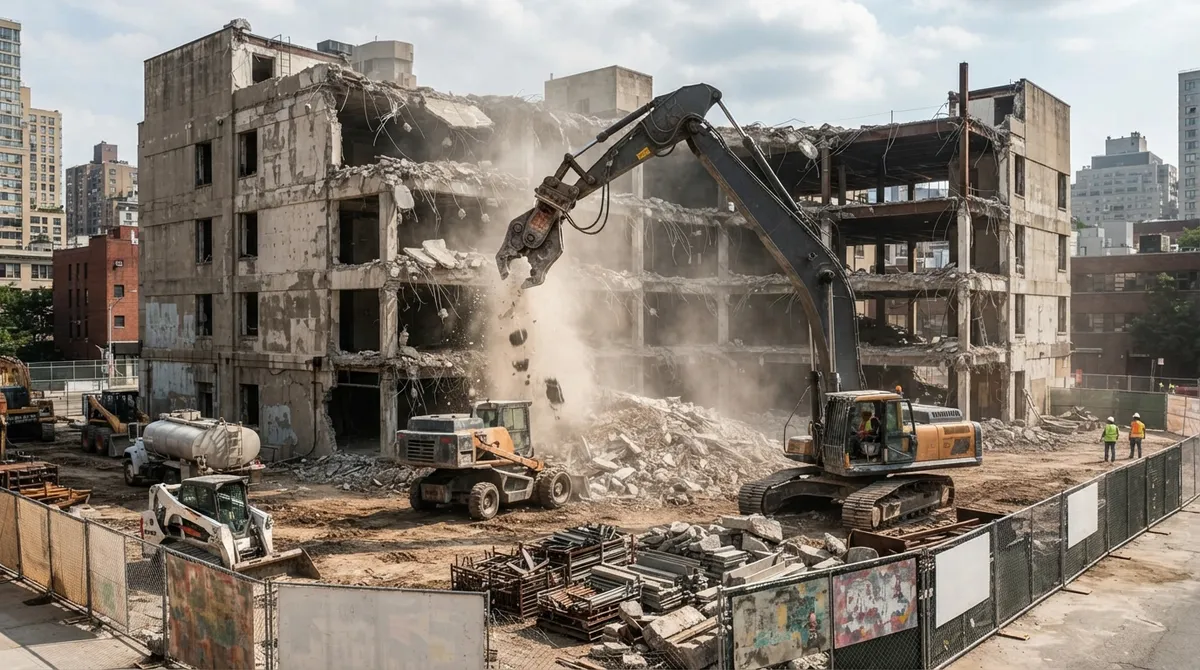
Commercial jobs often involve more permits, more safety planning, and more coordination with tight construction timelines. If you’re a builder or developer working on a commercial site, you already know how much a reliable demolition partner matters. Building demolition services handle these bigger jobs with the experience your timeline demands.
How to Plan Your Demolition Project Step by Step
Feeling a bit overwhelmed? Don’t worry, this process is more manageable than it looks. Here’s a simple roadmap to follow.
Step-by-Step Demolition Planning Process
- Schedule a site inspection. A qualified contractor needs to see the property before giving you accurate numbers.
- Test for hazardous materials. Older buildings should be checked for asbestos and lead before any work begins.
- Secure the right permits. Check the Las Vegas demolition permit guidelines or contact the Clark County Building Department depending on your project location.
- Disconnect utilities. Gas, water, and electric lines need proper shutoff before demolition starts.
- Decide on foundation removal. Determine whether you’re keeping the slab or clearing the entire site.
- Plan for debris hauling. Ask your contractor how they’ll handle removal and recycling of materials.
- Confirm your timeline. Demolition duration varies based on building size and site conditions.
Following these steps helps avoid delays and unexpected costs down the road. It also keeps your project compliant with local regulations, which saves everyone headaches later.
Partial Demolition: A Budget-Friendly Alternative
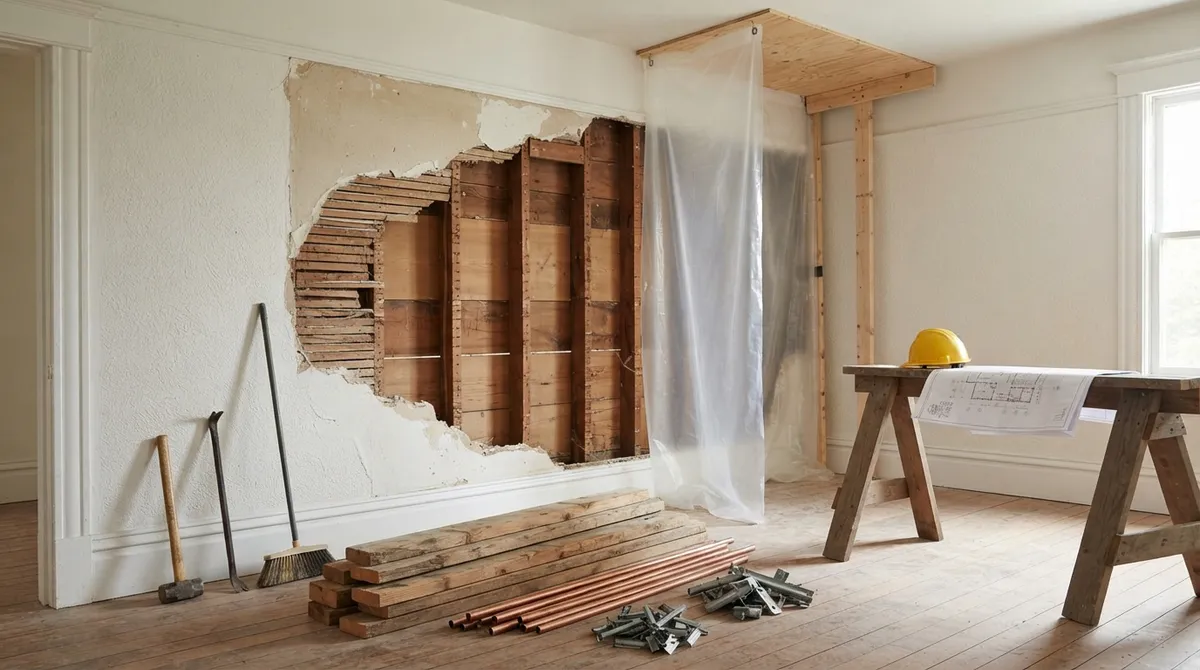
Not every project needs a full teardown. Sometimes you only need part of a structure removed, like an old addition, a garage, or interior walls for a renovation. This is where partial demolition really shines.
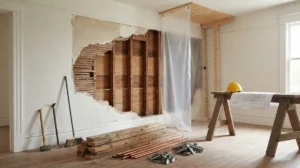
Partial demolition typically costs $5 to $16 per square foot of the area being removed. This makes it a smart choice for renovation contractors working on remodels or homeowners updating specific rooms. Interior work like removing walls, flooring, or old fixtures falls into this category too. If you’re planning a remodel, interior demolition strategies can help you save money while still achieving your renovation goals.
Other Demolition Services That Affect Your Total Cost
Buildings aren’t the only structures that need removal. Many projects include additional elements that factor into your overall budget.
- Old concrete driveways, patios, or foundations needing removal
- Swimming pools that are outdated or no longer wanted
- Overgrown landscaping or trees blocking new construction
- Site grading and excavation to prepare land for building
- Existing utility structures or sheds on the property
Each of these adds its own cost considerations. For instance, concrete removal pricing depends on slab thickness and reinforcement. Pool removal costs vary based on pool size and whether it’s fully or partially removed. And excavating and grading services prepare your site for whatever comes next, whether that’s new construction or landscaping.
Why Choosing the Right Contractor Matters
Here’s the truth: the cheapest quote isn’t always the best deal. A contractor who skips permits, ignores hazardous materials, or rushes the job can end up costing you far more in fines, delays, or safety issues.
702 Demo has built a strong reputation across Clark and Nye counties by doing things the right way, every time. From residential teardowns to large-scale commercial projects, the team handles excavating, grading, concrete work, and paving with the kind of experience that keeps projects on schedule and within scope. Real estate developers, property managers, and renovation contractors count on this level of reliability because their timelines simply can’t afford surprises.
Don’t just take our word for it, though. You can see what our 702 Demo customers say on Visit us on Google — 702 Demo and get a feel for the kind of service you can expect.
Tips to Keep Your Demolition Project on Budget
Want to keep costs manageable? These tips can help.
- Get multiple site inspections before committing to a contractor.
- Ask about foundation removal early, since it changes your total cost significantly.
- Request hazardous material testing upfront to avoid mid-project surprises.
- Discuss debris recycling options, which sometimes reduce hauling fees.
- Confirm all necessary permits are included in your contractor’s process.
- Ask whether partial demolition could meet your needs instead of a full teardown.
Being proactive with these questions helps you avoid budget overruns and keeps your project moving smoothly from start to finish.
Wrapping It Up: Making Confident Demolition Decisions
Demolition costs depend on a lot of factors, from building size to foundation removal to hazardous materials. But armed with the right information, you can approach your project with confidence instead of confusion. Whether you’re a homeowner clearing space for a dream home, a developer prepping a commercial lot, or a contractor managing a renovation, understanding these cost drivers puts you in the driver’s seat.
Ready to get real numbers for your specific project? Our friendly team is here to help you plan every detail with care and expertise. Contact 702 Demo for a free estimate and let’s get your project moving forward, together.
FAQs
Q: How much does it cost to demolish a house per square foot?
A: Great question! Residential demolition typically runs $5 to $10 per square foot nationally. Your final price depends on things like foundation removal, hazardous materials, and how easy your site is to access.
Q: Does removing the foundation increase demolition costs?
A: Yes, it sure does. Keeping the foundation in place usually brings costs down to $3 to $7 per square foot, while full foundation removal adds extra labor and disposal fees on top of that.
Q: How much does asbestos removal add to demolition costs?
A: Asbestos remediation typically adds $2 to $3 per square foot to your project. For a 1,500 square foot home, that usually means an extra $3,000 to $4,500, so it’s worth testing early.
Q: Is partial demolition cheaper than whole-house demolition?
A: Absolutely, partial demolition is often more budget-friendly since you’re only removing a specific area. It typically costs $5 to $16 per square foot of the space being demolished, making it great for renovations.
Q: What is the average cost to demolish a commercial building?
A: Commercial demolition averages around $8 per square foot but can climb to $25 depending on size and complexity. Large buildings, like a 50,000 square foot commercial space, can range from $200,000 to $750,000.