Key Takeaways
-
Building owners in Clark and Nye County must conduct certified asbestos inspections before demolition; EPA NESHAP rules require removal if thresholds are met (260+ linear feet on pipes, 160+ sq ft elsewhere, or 35+ cubic feet off components).
-
Asbestos abatement (safe removal by licensed contractors) must be completed before demolition begins; skipping this step violates federal law and puts workers and the public at serious health risk.
-
Property owners bear legal responsibility for asbestos identification and removal, but experienced demolition contractors should coordinate inspections, handle notifications to air-quality authorities, and verify site clearance before structural work.
-
Asbestos commonly hides in popcorn ceilings, vinyl floor tiles, pipe insulation, roofing materials, and HVAC duct wrapping in buildings built before the late 1980s; professional inspection is essential before any renovation or demolition.
-
Asbestos waste requires specialized handling: materials must stay wet during removal, sealed in leak-tight labeled containers, and transported to approved landfills; improper disposal violates federal regulations and creates public health hazards.
-
Federal notification must occur at least 10 working days before demolition begins; local requirements vary by county, so verify Las Vegas or Clark County Building Department rules early to avoid costly project delays.
If you own an older building in Clark or Nye County, you might be planning a tear-down soon. But before any wrecking ball swings or excavator digs in, there’s an important question to answer: does this building have asbestos? Getting this wrong isn’t just risky for your health. It can also stop your project cold, trigger fines, and cause huge delays. That’s why asbestos removal and demolition go hand in hand, and why understanding the process matters for every property owner, builder, and contractor in Nevada.
We know this topic can feel overwhelming. Old buildings, hidden hazards, government rules… it’s a lot to take in. But don’t worry, we’re here to walk you through it in plain language. By the end of this article, you’ll understand exactly what needs to happen before demolition day, who’s responsible for what, and how to keep your project safe, legal, and on schedule. Let’s get started.
What Is Asbestos and Why Does It Matter for Demolition
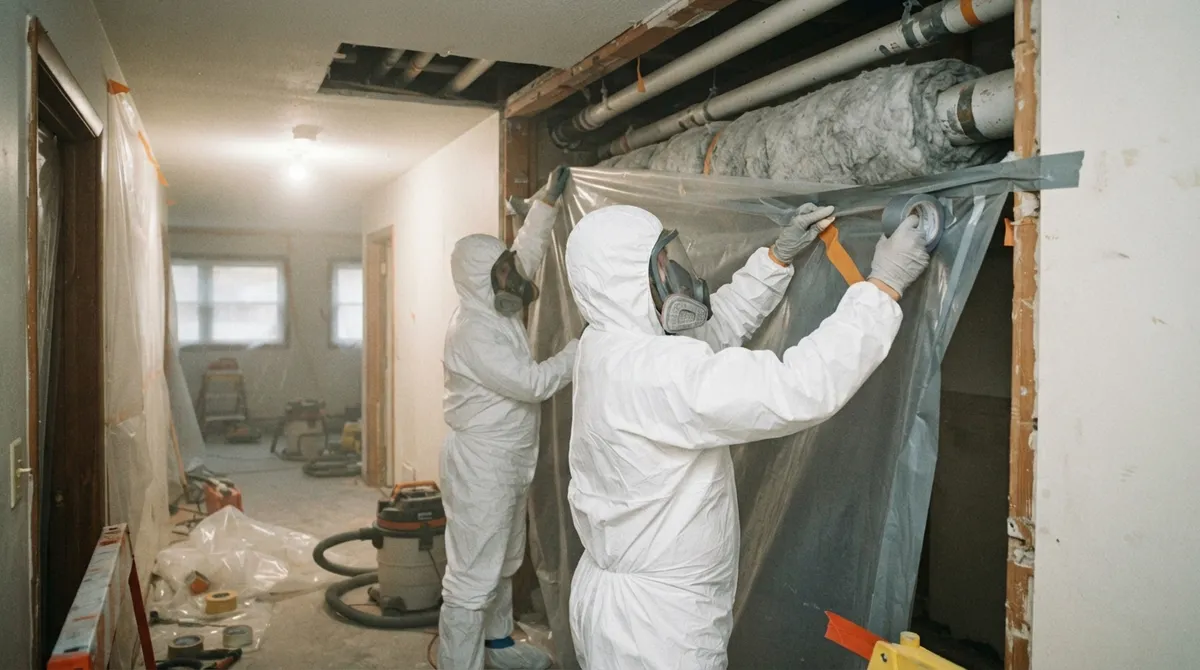
Asbestos is a natural mineral that builders used for decades because it resists heat and fire. You’ll find it in older insulation, floor tiles, roofing, pipe wrapping, and even some old popcorn ceilings. It was popular until the late 1980s, so many homes and buildings across Las Vegas, Henderson, and Pahrump still contain it today.
The problem starts when these materials get disturbed. Cutting, breaking, or knocking down a wall can release tiny asbestos fibers into the air. Breathing these fibers over time can cause serious lung diseases. This is exactly why building demolition projects need a careful plan before any physical work begins.
Common Places Asbestos Hides in Older Buildings
Asbestos doesn’t announce itself. It blends right into normal building materials, which makes proper testing so important. Here are some common spots where it turns up:
- Pipe insulation and boiler wrapping in older mechanical rooms
- Vinyl floor tiles and the glue holding them down
- Textured “popcorn” ceilings installed before the 1990s
- Roofing shingles, felt, and siding materials
- Drywall joint compound and some plaster
- Old HVAC duct insulation and wrapping
If your building has any of these materials, it’s worth getting a professional inspection before you touch anything.
Why You Need an Asbestos Inspection Before Demolition
Under the EPA Asbestos National Emission Standards for Hazardous Air Pollutants, known as NESHAP, buildings usually need a thorough inspection before demolition or renovation starts. This rule exists to protect workers, neighbors, and the environment from airborne fibers.
Here’s something helpful to know: NESHAP rules generally apply to commercial buildings, larger structures, and installations. Residential buildings with four units or fewer are often excluded from the federal rule. That said, Nevada state and local rules can be stricter, so it always pays to check with local authorities like the Clark County Building Department before you finalize your plans.
What Happens During an Asbestos Inspection
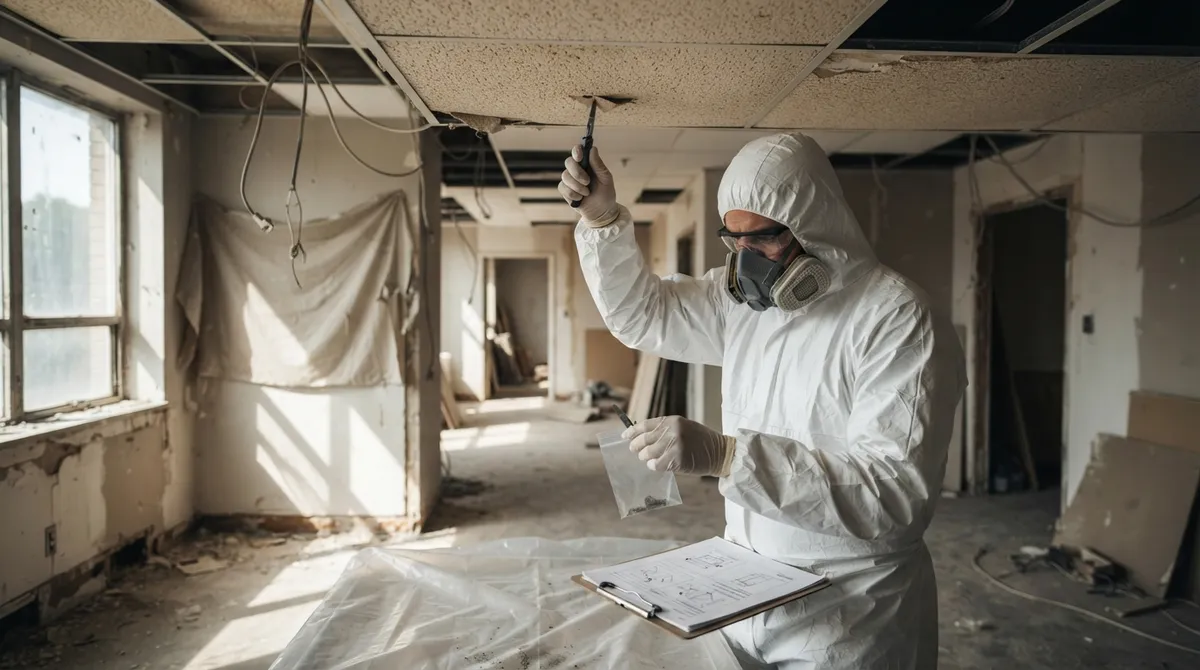
A certified inspector will walk through the property and collect samples from suspect materials. These samples get tested in a lab. The results tell your demolition team exactly what they’re dealing with, and how much of it there is.
This step matters because the amount of asbestos found determines what happens next. Under NESHAP, materials must generally be removed before demolition if they meet certain thresholds:
- At least 260 linear feet of asbestos material on pipes
- At least 160 square feet on other parts of the building
- At least 35 cubic feet of asbestos material off building components
If your building crosses these thresholds, professional abatement is required before any structural demolition work can begin.
Asbestos Abatement vs Demolition: What’s the Difference
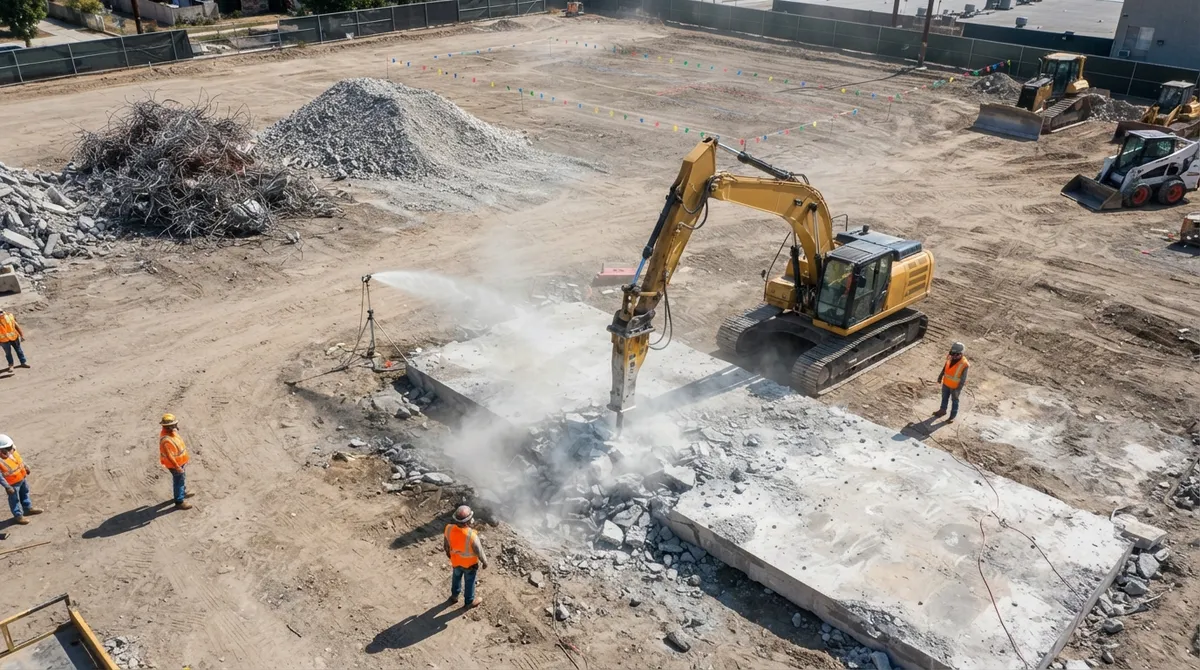
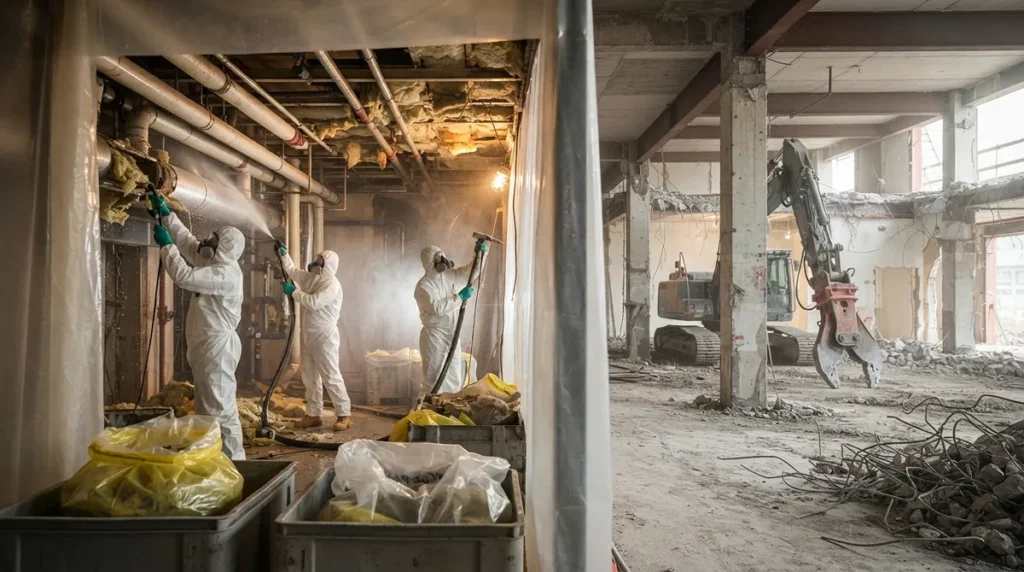
These two terms get mixed up a lot, but they mean different things. Abatement is the careful removal or sealing of asbestos materials. Demolition is the actual tearing down of the structure. Abatement always happens first, and it requires specially trained crews using containment and safety gear.
Demolition crews handle the heavy structural work: knocking down walls, breaking foundations, and hauling away debris. Once abatement is complete and the site is verified clean, demolition can proceed safely. Skipping the abatement step, or trying to combine the two, puts everyone at risk and can violate federal law.
| Stage | Purpose | Who Performs It |
|---|---|---|
| Asbestos Inspection | Identify and test suspect materials | Certified asbestos inspector |
| Asbestos Abatement | Safely remove or seal ACM | Licensed abatement contractor |
| Demolition | Tear down structure and clear site | Licensed demolition contractor |
| Debris Hauling | Remove and dispose of waste materials | Hauling and disposal crew |
Who Is Responsible for Asbestos Removal Before Demolition
This is one of the most common questions we hear from homeowners and property managers. In most cases, the building owner carries the legal responsibility for identifying and addressing asbestos before demolition starts. However, your demolition contractor plays a huge role in making sure the right steps happen in the right order.
A trustworthy contractor will:
- Recommend a certified asbestos inspection before any work begins
- Coordinate with licensed abatement professionals when needed
- Handle required notifications to local air-quality authorities
- Confirm the site is clear before starting demolition
- Manage debris hauling and disposal according to regulations
This is exactly the kind of full-service support you’ll find with 702 Demo. As a trusted demolition, excavating, and site development contractor across Clark and Nye counties, our team knows how to guide property owners through every step safely and correctly.
Notification Requirements Before Demolition Begins
Before any demolition or renovation project starts, most jurisdictions require formal notification to the appropriate air-quality agency. Federal facility guidance typically calls for written notice at least 10 working days before demolition begins. But timing and paperwork can vary by state and county, so it’s smart to confirm requirements early.
In Las Vegas, contractors and property owners should review the Las Vegas demolition permit guidelines to understand local notification and permitting steps. Missing this step can delay your project significantly, so it’s worth building extra time into your schedule.
Steps to Follow for Proper Notification
- Schedule a certified asbestos inspection of the property
- Review inspection results with your demolition contractor
- Submit required notification forms to local or state authorities
- Wait for the required notice period before starting work
- Confirm abatement is complete if asbestos was found
- Begin demolition once all clearances are in place
Following these steps in order keeps your project compliant and avoids costly stop-work orders.
How Asbestos Waste Gets Handled Safely
Once asbestos materials are removed, they can’t just get tossed in a regular dumpster. Federal rules require specific handling to prevent fibers from becoming airborne again. Materials must be kept wet during removal, then sealed in leak-tight, clearly labeled containers.
From there, the waste travels to a landfill specifically approved to accept asbestos material. This isn’t optional; it’s a core part of NESHAP compliance and something every demolition project involving asbestos must follow closely.
Proper hauling matters just as much as proper removal. That’s why many property owners rely on professional hauling services that understand how to transport regulated waste safely and legally.
What This Means for Different Property Owners
Homeowners Planning a Remodel or Tear-Down
If you’re renovating an older home in Nevada, don’t assume asbestos isn’t your problem just because it’s a small residential project. Popcorn ceilings, old flooring, and outdated insulation are common culprits. A quick inspection before your interior demolition project can save you from bigger headaches down the road.
Commercial Builders and Developers
Commercial buildings almost always fall under NESHAP rules, especially older structures built before the 1990s. If you’re developing a new site, factor asbestos inspection and possible abatement time into your project schedule from day one. This keeps your timeline realistic and avoids surprise delays during excavating and grading phases.
Renovation Contractors
If you’re managing remodels that involve tearing out walls, flooring, or ceilings, always ask about the building’s age and history. Older commercial and residential spaces often hide surprises behind drywall or under flooring that require careful handling before work continues.
Property Managers
Managing multi-family or commercial properties means juggling maintenance schedules, tenant safety, and redevelopment plans all at once. Asbestos awareness should be part of your standard due diligence whenever structural work or major renovations are on the table.
Real Estate Developers
Large-scale projects often involve tearing down older structures to make way for new development. Building asbestos review into your early site assessments helps you avoid regulatory issues later and keeps your demolition timeline predictable.
Rules That Govern Asbestos and Demolition Work
There are two main sets of rules that matter here, and they work together rather than replacing one another.
- EPA NESHAP focuses on preventing environmental emissions during renovation, demolition, waste transport, and disposal
- OSHA’s construction standard (29 CFR 1926.1101) protects workers on site through training, respiratory protection, and exposure monitoring
Together, these regulations create a framework that protects everyone involved, from the crew on site to neighbors and future occupants of the property. For schools and many public buildings, asbestos professionals may also need special accreditation. Always verify that your abatement subcontractor has current licensing, training, and insurance before work begins.
Why Working with an Experienced Demolition Contractor Matters
Asbestos rules can feel like a maze, especially when you’re also trying to manage permits, timelines, and budgets. Working with a demolition contractor who understands these regulations inside and out takes a huge weight off your shoulders.
702 Demo has spent years serving Clark and Nye counties, handling everything from residential tear-downs to large commercial site development. We understand local permitting, coordinate closely with certified abatement professionals, and make sure every project moves forward safely and on schedule. Whether you need concrete removal, full structural demolition, or complete site preparation, our team is ready to guide you through it.
Curious what people in your community are saying about working with us? You can visit us on Google — 702 Demo to read real reviews from homeowners and businesses across the valley.
Final Thoughts on Asbestos Removal and Demolition
Asbestos removal and demolition are two connected steps that protect your health, your workers, and your community. Skipping the inspection or rushing abatement isn’t worth the risk. Taking the time to do it right keeps your project legal, safe, and on track.
If you’re planning a demolition project anywhere in Clark or Nye County, don’t go it alone. Our experienced team can walk you through inspection coordination, notification requirements, and safe demolition practices from start to finish. Contact 702 Demo for a free estimate and let’s get your project moving the right way.
FAQs
Q: Do you need an asbestos inspection before demolishing a building?
A: Yes, and it’s honestly one of the smartest first steps you can take. Most demolition projects, especially commercial ones, require a thorough inspection under EPA NESHAP rules before any work begins. It gives you peace of mind and keeps your whole project on the right track.
Q: What is the difference between asbestos abatement and demolition?
A: Great question! Abatement is the careful removal of asbestos materials by trained professionals, while demolition is the actual tearing down of the structure. Abatement always comes first so the demolition crew can work safely afterward.
Q: Who is responsible for asbestos removal before demolition, the property owner or the contractor?
A: Generally, the property owner holds the legal responsibility, but a good demolition contractor will guide you through every step. That’s exactly what our team at 702 Demo does for property owners across Clark and Nye counties.
Q: How long does asbestos abatement take before demolition can begin?
A: It really depends on the size of the building and how much asbestos is found. Smaller residential projects might take just a few days, while larger commercial abatement can take longer. Your contractor can give you a realistic timeline once inspection results are in.
Q: What asbestos materials are commonly found in older buildings?
A: You’ll often find asbestos in popcorn ceilings, vinyl floor tiles, pipe insulation, and old roofing materials. It was widely used before the late 1980s, so many buildings in Nevada still have it hiding in unexpected places.