Key Takeaways
-
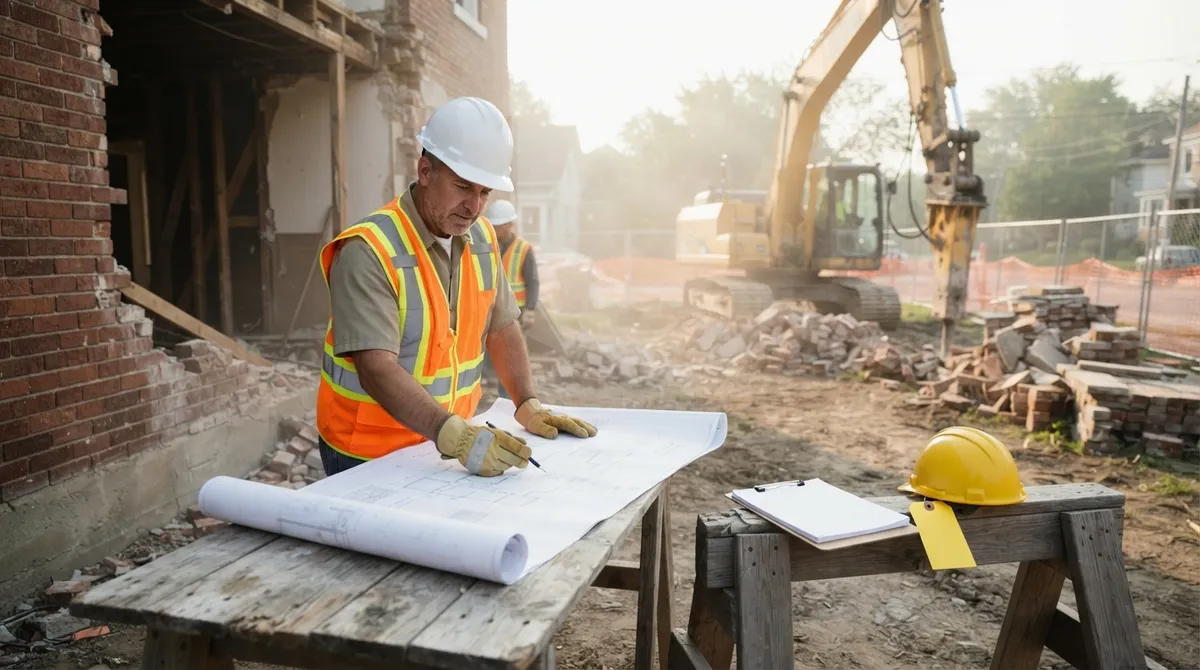
Demolition contractors do far more than tear down structures: they plan the job, survey hazards, handle permits and utility shut-offs, demolish, and haul away debris.
-
OSHA requires an engineering survey by a competent person before demolition begins, and asbestos inspections are generally needed before work on covered projects.
-
Permit rules vary by city and county, so confirm with your local building department early and get in writing who handles each permit and notice.
-
Selective or interior demolition removes only chosen parts, such as walls, flooring, and fixtures, and is the usual choice for remodels and tenant build-outs.
-
Ask prospective contractors whether they are licensed and insured, who pulls permits, how they handle asbestos, and what happens to debris after the job.
-
Much construction and demolition debris can be recycled, so choose a contractor who sorts concrete, metal, and wood for reuse instead of sending everything to the dump.
Thinking about tearing something down? Maybe it’s an old shed, a dated kitchen, or a whole building. Whatever the size, the job can feel big. The good news is that you don’t have to figure it out alone. Demolition contractor services exist to make the process safe, clear, and a lot less stressful.
So what do these pros actually do? A lot more than swing a hammer. They plan the job, check for hazards, handle permits, take down the structure, and haul away the mess. Here in Clark and Nye counties, that means knowing local rules and the desert conditions that come with them.
In this guide, we’ll walk through five key demolition contractor services you should know about. Whether you own a home, manage a property, build commercial sites, or develop land, you’ll find something useful here. Let’s dive in!
Why Demolition Contractor Services Matter
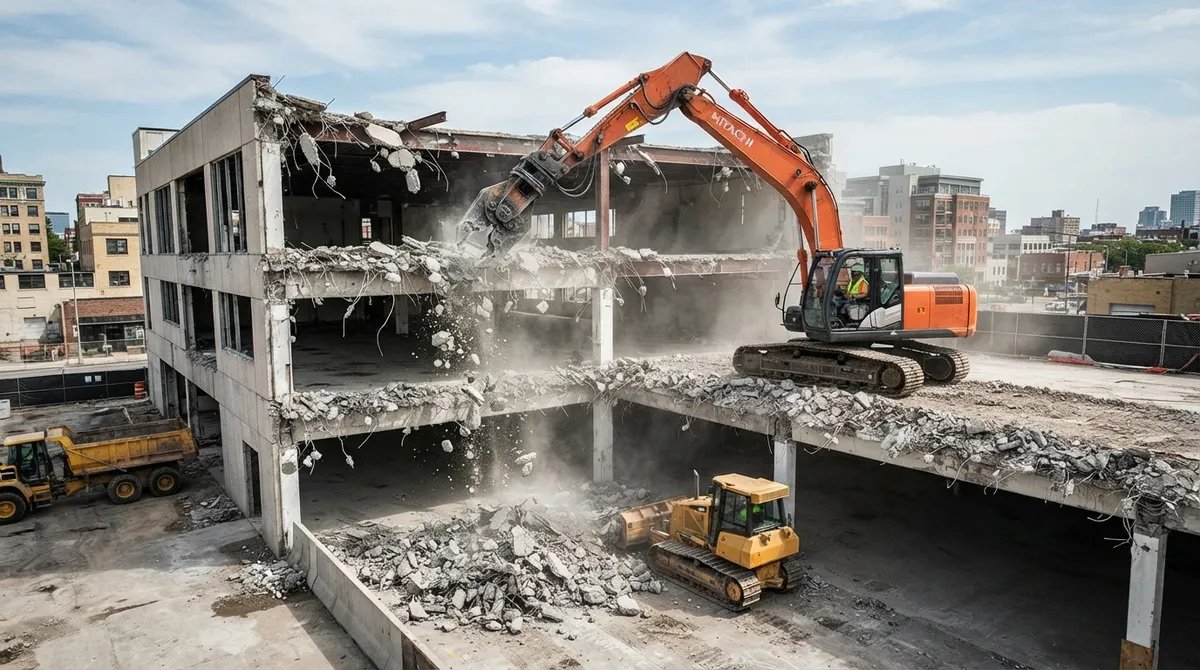
Demolition is a big part of how our country builds and rebuilds. The U.S. EPA estimated that America generated 600 million tons of construction and demolition debris in 2018. That is more than twice the amount of everyday municipal trash made that year. EPA data also shows that demolition caused over 90% of that debris.
That’s a lot of material to handle the right way. A skilled contractor knows how to plan, sort, recycle, and dispose of it all. Just as important, they keep people safe while doing it.
What You Get From a Pro
- Safety: Trained crews follow OSHA construction rules on every job.
- Compliance: They help with permits, notices, and disposal rules.
- Speed: The right equipment and crew keep your timeline on track.
- Cleaner sites: Debris is removed, sorted, and hauled away for you.
If you want a closer look at the basics, check out 9 key things to know about what is demolition. It’s a friendly place to start.
5 Demolition Contractor Services You Should Know
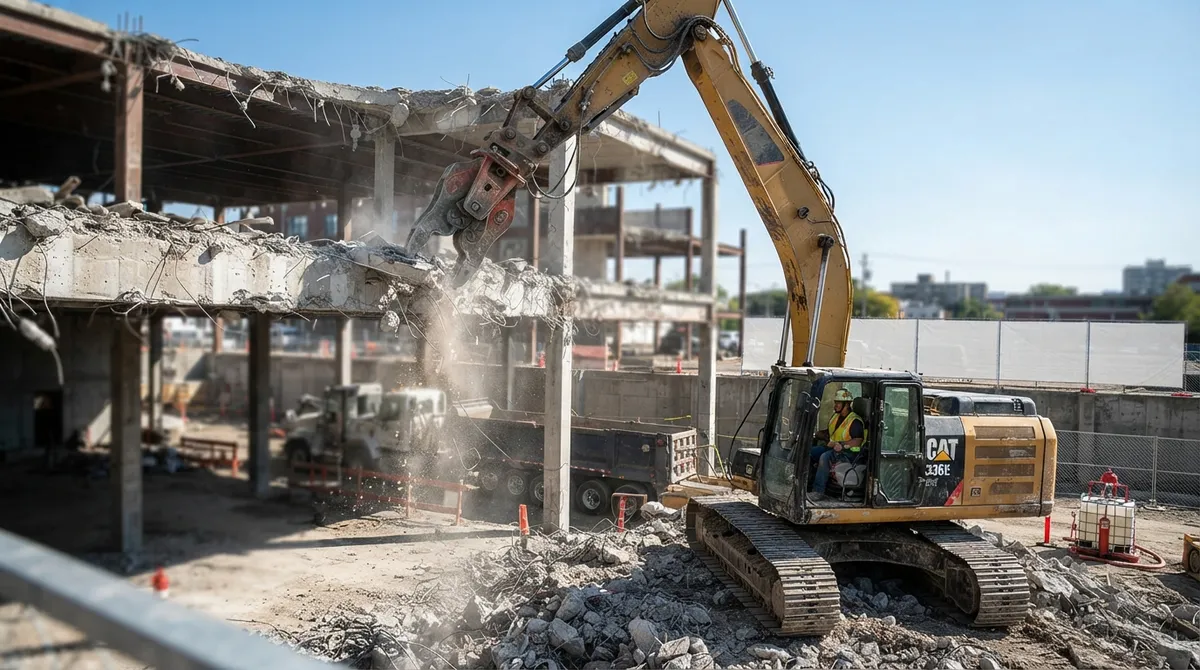
Every project is different. Still, most demolition contractor services fall into a few main groups. Here are the five that come up again and again.
1. Planning, Surveys, and Permits
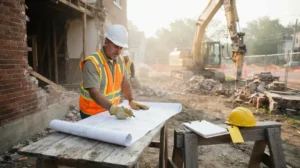
Good demolition starts long before any wall comes down. First, the crew studies the site and the structure. OSHA requires an engineering survey by a competent person before work begins. This checks the condition of the building and the chance of an unplanned collapse.
Next come the paperwork steps. Permits, utility shut-offs, and local approvals all need attention. Rules change from one city or county to another, so it helps to know who handles each task. You can review the Las Vegas demolition permit guidelines to see what the city expects.
Here is a simple look at what happens before work starts:
- Walk the site and review the structure.
- Complete an engineering survey of the building.
- Check for asbestos and other hazards.
- Shut off, cap, or control water, gas, and power lines.
- Pull permits and send any required notices.
- Set up fencing, dust control, and safety plans.
Not sure which approvals you need? Our guide on 5 permits you need to demolish a house in 2026 breaks it down in plain language. You can also check with the Clark County Building Department for local requirements.
2. Full Building and Structural Demolition
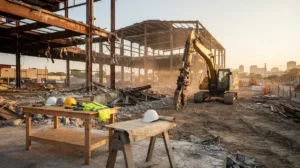
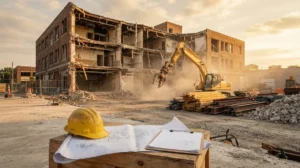
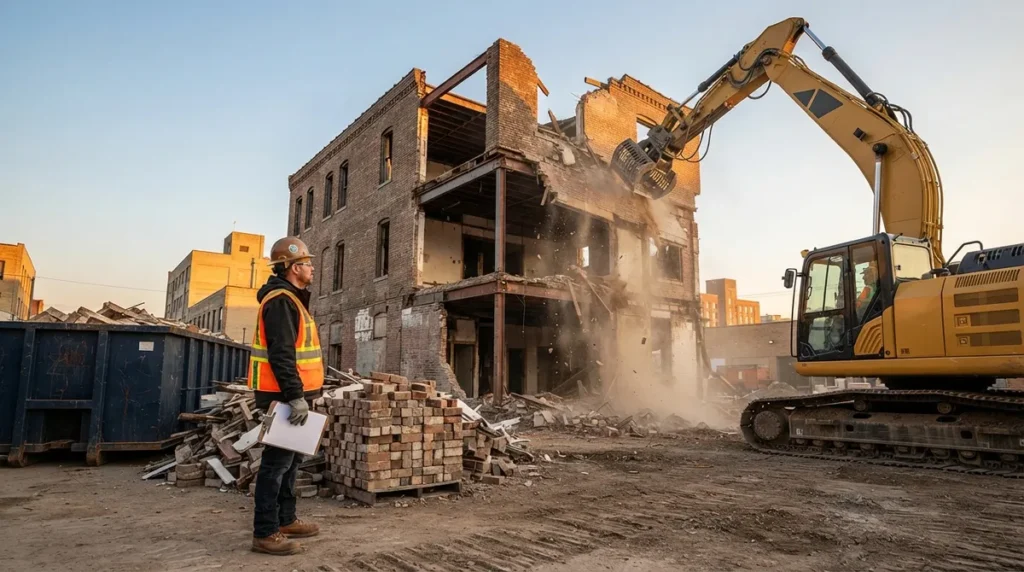
This is the service most people picture. A full demolition removes an entire structure, from the roof to the foundation. It can apply to homes, shops, warehouses, and larger commercial buildings.
Crews pick the safest method for the job. They may use excavators with special attachments, hand tools in tight spots, or a mix of both. The goal is to bring the structure down in a controlled way, with little risk to neighbors and nearby buildings.
Here is who benefits most from this service:
- Homeowners clearing an old or damaged house for a rebuild.
- Real estate developers prepping land for new homes or retail.
- Commercial builders who need a clean, level site on a tight schedule.
- Property managers removing unsafe or outdated buildings.
Want to see what this looks like in our area? Learn more about building demolition and how a full teardown works from start to finish. For a homeowner view, 7 things to know about residential demolition services is a handy read.
3. Selective and Interior Demolition
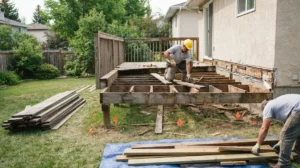
Sometimes you don’t want the whole building gone. You just want part of it removed. That’s where selective and interior demolition come in. Crews take out walls, ceilings, floors, fixtures, or other pieces while leaving the rest standing.
This service is a favorite for remodels. Renovation contractors use it to open up floor plans, update old spaces, and prep for new finishes. It takes care and skill, because a wrong cut can harm the structure or hit a hidden line.
Common interior demolition tasks include:
- Removing non-load-bearing walls and partitions
- Pulling out old flooring, tile, and cabinets
- Stripping ceilings and fixtures
- Clearing commercial spaces for a new tenant
Here’s a quick comparison of the two main approaches:
| Feature | Selective / Interior Demolition | Full Demolition |
|---|---|---|
| Scope | Removes chosen parts only | Removes the whole structure |
| Best for | Remodels and tenant build-outs | New builds and cleared lots |
| Precision needed | Very high | High, but on a larger scale |
| Debris level | Moderate | Large |
| Typical equipment | Hand tools and small machines | Excavators and heavy machines |
Curious about the finer points? Read about interior demolition or explore 10 key things to know about what is selective demolition.
4. Concrete, Pool, and Site Removal
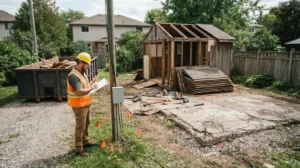
Demolition isn’t only about buildings. Many projects need old concrete, pools, or landscaping removed too. These jobs are common in Las Vegas, where driveways, patios, and backyard pools are everywhere.
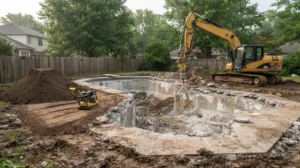
Pro crews break up slabs, haul away the pieces, and prep the ground for what comes next. For pools, the work may include a full removal or a safe fill and compaction. Either way, the aim is a stable, usable space.
Popular site removal services include:
- Concrete removal for driveways, patios, and slabs
- Pool removal to reclaim your backyard
- Landscaping removal for turf, trees, and old plantings
- Excavating and grading to level and shape the land
Homeowners love these services because they bring quick, visible change. Developers rely on them to get lots ready for building. If you’re thinking about a backyard project, this pool removal guide shows what to expect.
5. Hazard Handling, Debris Removal, and Hauling
This last service might be the most important one. Before a structure comes down, the crew must think about hazards. Asbestos is a big one, especially in older buildings. Under the federal Asbestos NESHAP, covered projects generally need a thorough inspection before demolition. Some projects also need advance notice, often at least 10 working days before work starts.
Rules can differ by state and city, so always confirm with your local authority. A qualified contractor will coordinate with licensed specialists when hazardous materials are found. Asbestos waste has special handling and disposal rules that must be followed.
After the demolition, there’s still a mountain of debris to move. A strong contractor handles:
- Sorting concrete, metal, wood, and other materials
- Recycling what can be reused
- Loading and hauling the rest
- Disposing of waste at approved sites
- Leaving the site clean and ready for the next step
Recycling matters here. Concrete, metals, and wood can often be reused instead of dumped. This cuts waste and helps the environment. To learn more, see our overview of hauling services or how to plan demolition and hauling for your next project.
How to Pick the Right Demolition Contractor
Now that you know the services, how do you choose who to hire? A little homework goes a long way. Your goal is a team that is licensed, insured, and easy to talk to.
Questions to Ask Before You Hire
- Are you licensed to do demolition work in Nevada?
- Do you carry liability and workers’ compensation insurance?
- Who pulls the permits and sends required notices?
- How do you handle asbestos and other hazards?
- What happens to the debris after the job?
- Can you share references or past project photos?
Don’t be shy about asking these. A good contractor welcomes them. If you want more detail, read what makes a licensed demolition contractor essential for your project.
Why Local Experience Counts
Local know-how really helps. Soil, heat, and city rules in Clark and Nye counties all shape how a project runs. A team that works here every day understands those details and plans around them.
That’s where 702 Demo shines. We’re a full-service demolition, excavating, grading, concrete, and paving contractor serving all of Clark and Nye counties. Many people see us as the best demolition contractor in Las Vegas because we handle the whole job under one roof. That means fewer handoffs, fewer delays, and one team you can count on. You can learn more in why 702 Demo is the leading demolition contractor in Las Vegas.
Curious what neighbors think? Read 702 Demo reviews on Google and see how we treat our customers across Las Vegas.
What to Expect During a Typical Project
It helps to know the flow of a job. While every site is unique, most projects follow a clear path from first call to final cleanup.
A Simple Project Timeline
- Consultation: You share your goals, and the crew visits the site.
- Assessment: The team surveys the structure and checks for hazards.
- Planning: Permits, notices, and utility shut-offs get handled.
- Demolition: The crew removes the structure or selected parts.
- Debris removal: Materials are sorted, recycled, and hauled away.
- Site finish: The land is graded, cleaned, and left ready for your next step.
How long does it all take? That depends on size, type, and hazards. A small interior job may wrap up in a few days. A large building can take weeks. Clear planning up front keeps surprises to a minimum.
Tips for a Smooth Experience
- Share your full project goals early, including what you plan to build next.
- Tell your contractor about any known hazards or old materials.
- Let neighbors know ahead of time about noise and dust.
- Confirm who handles each permit and task in writing.
- Ask for a clear scope so there are no surprises later.
Planning a rebuild? Our article on how to demo a house walks through the steps in a simple way.
Final Thoughts
Demolition contractor services cover a lot of ground. From planning and permits to full teardowns, interior strip-outs, concrete and pool removal, and hazard-safe hauling, a good crew handles it all. The right pro keeps you safe, keeps you on schedule, and leaves you with a clean slate.
Ready to take the next step? Contact 702 Demo for a free estimate and let our friendly Las Vegas team help you get started. We can’t wait to help you turn your plans into reality!
FAQs
Q: What services does a demolition contractor provide?
A: A demolition contractor can handle full building demolition, selective and interior demolition, concrete and pool removal, site clearing, and debris hauling. Many also help with permits, utility shut-offs, and hazard checks. It’s a one-stop way to get your site ready for what comes next!
Q: Do I need a permit to demolish a building?
A: In most cases, yes. Permit rules vary by city and county, so check with your local building department before work begins. A good contractor can guide you and help with the paperwork.
Q: How do demolition contractors handle asbestos?
A: They start with an inspection before any work begins. If asbestos is found, licensed specialists remove it following federal, state, and local rules, including proper notice and waste disposal. Safety always comes first.
Q: What is the difference between selective and total demolition?
A: Selective demolition removes only chosen parts of a building, like walls or floors, while the rest stays in place. Total demolition takes down the entire structure. Remodels usually need selective work, and new builds often need total demolition.
Q: What happens to the debris after demolition?
A: Crews sort the debris, recycle materials like concrete, metal, and wood when possible, and haul the rest to approved disposal sites. Special materials, such as asbestos waste, follow stricter rules. A good contractor leaves your site clean and ready to go.