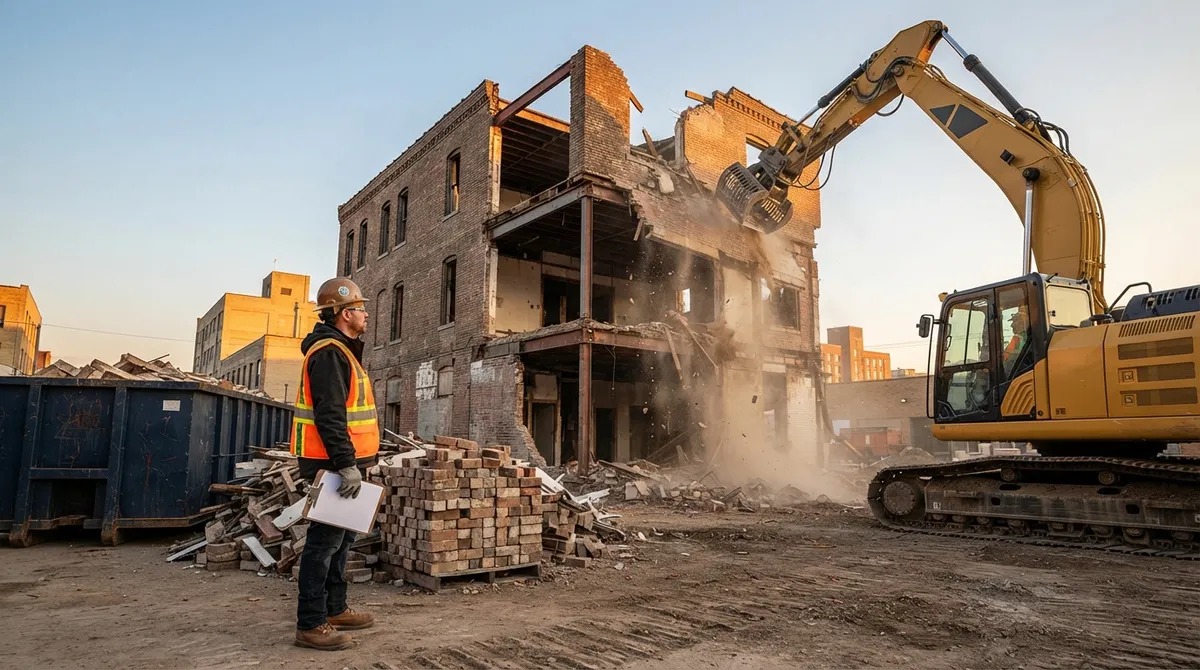
Key Takeaways
-
Always verify a contractor's Nevada license, general liability insurance, and workers' compensation coverage with actual paperwork before signing, since insurance protects you from costs if someone is injured or a neighbor's property is damaged.
-
Get detailed written bids that specify scope, demolition method, debris removal, who handles permits and utility disconnection, site restoration, schedule, and exclusions to avoid surprise charges later.
-
Confirm who applies for permits, schedules inspections, and handles agency notices, since permit rules vary by city and county and must be checked with your local building department.
-
Test older buildings for asbestos and lead paint before any work begins, and ask contractors how they handle abatement, disposal, and keeping inspection and disposal records.
-
Ask for an engineering survey before demolition starts, as OSHA requires, and confirm the contractor plans for utility shutoff, site protection, dust control, and worker safety.
-
Watch for red flags such as no insurance paperwork, vague one-line bids, pressure to sign immediately, or large cash payments up front, and take time to compare several contractors.
Tearing down a structure is a big step. Maybe you want to clear an old shed, open up a kitchen, or prep a lot for a brand-new build. Whatever the goal, the person you hire will shape how safe, smooth, and stress-free the whole job feels.
That is why choosing among local demolition contractors matters so much. The right crew knows your area’s rules, brings the right gear, and handles the messy parts for you. The wrong crew can leave you with delays, safety risks, and a pile of debris.
This friendly guide walks you through the process, one step at a time. You will learn what these pros do, what to check before you sign anything, and which questions to ask. Whether you are a homeowner, builder, property manager, or developer in Clark or Nye County, you will leave with a clear plan. Let’s get started!
What Local Demolition Contractors Actually Do
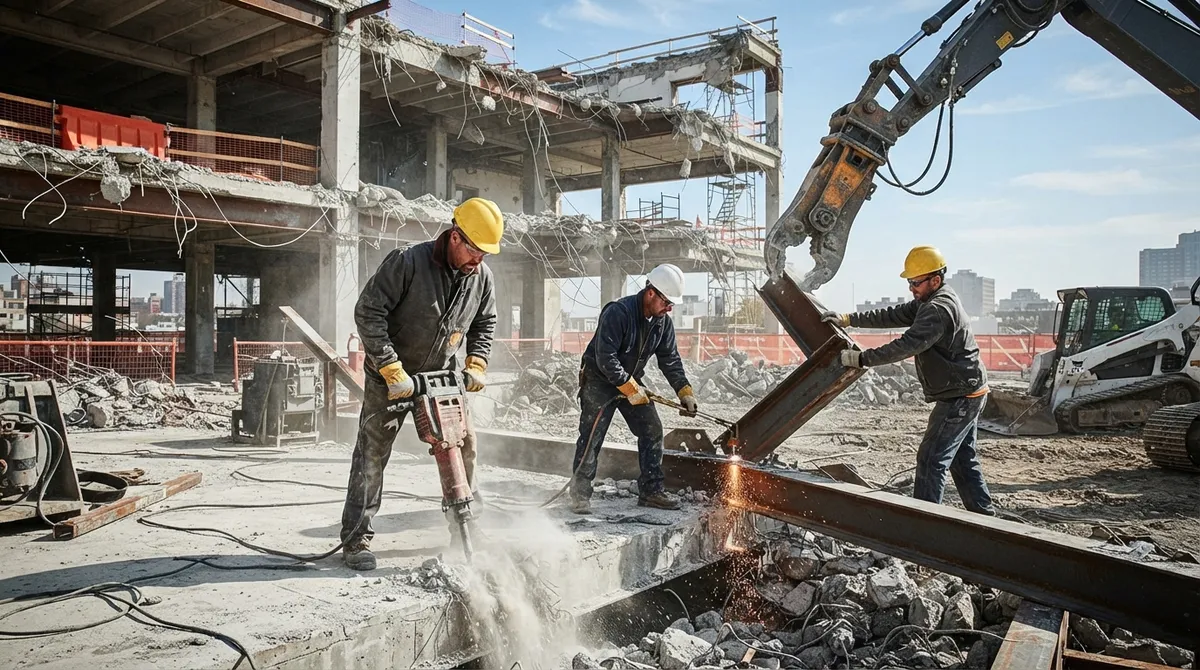
Demolition is more than knocking things down. A good contractor plans the job, protects people and property, and cleans up when the work is done. If you want a deeper look at the basics, check out what demolition experts actually do on a job site.
Most local demolition contractors handle a mix of these jobs:
- Full building teardown of homes, offices, and warehouses
- Selective or interior demolition for remodels and tenant buildouts
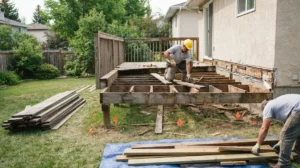
- Garage, shed, and deck removal
- Concrete and foundation removal
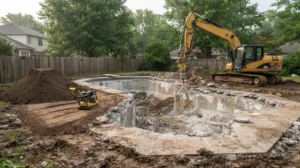
- Pool removal and backyard clearing
- Site clearing, grading, and debris hauling
Some contractors also offer excavating, grading, concrete, and paving. That can save you time, because one team can take a lot from old structure to ready-to-build site.
Why Hiring Local Makes a Difference
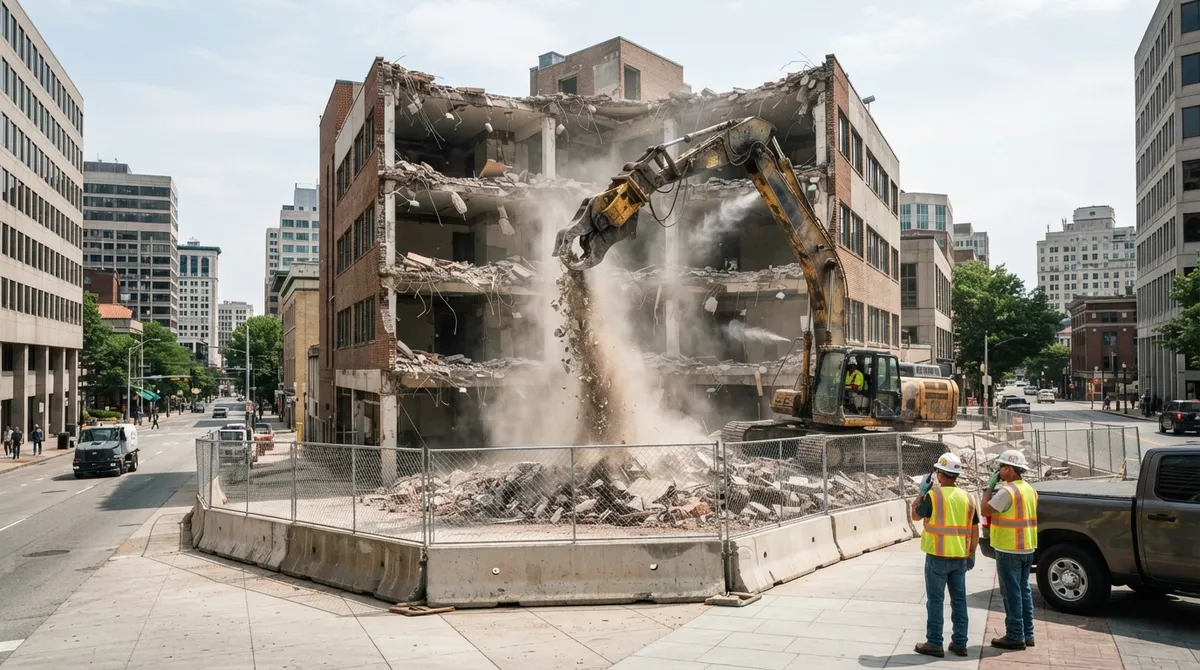
Local pros know the area. They understand nearby permit offices, landfill rules, and soil and weather conditions. In the Las Vegas valley, they also know how to handle dust, heat, and tight job sites.
Here is why going local often works better:
- Faster response. A nearby crew can visit your site, write a bid, and start sooner.
- Rule know-how. Permit and disposal rules change from city to city. Local teams already know them.
- Accountability. A company that lives in your community cares about its reputation.
- Better logistics. Shorter hauling trips mean less hassle and fewer delays.
If you want to see how this works in practice, read about why 702 Demo is the leading demolition contractor in Las Vegas. Our team is a full-service demolition, excavating, grading, concrete, and paving contractor serving all of Clark and Nye counties, and we are proud to be the best choice for demolition in Las Vegas.
Step-by-Step: How to Choose the Right Contractor
Finding a great crew does not need to feel overwhelming. Follow these steps in order, and you will be in good shape.
- Define your project. Write down what you want removed, where it sits, and when you need it done.
- Check local rules. Call your city or county building office to learn about permits and notices.
- Gather several contractors. Ask neighbors, builders, and property managers who they trust.
- Verify credentials. Confirm the license, insurance, and any needed certifications.
- Request written bids. Ask for a detailed scope from each contractor.
- Check references. Call past clients and ask how the job went.
- Review the contract. Make sure everything is in writing, including change orders.
Want more detail on this process? Our guide on how to choose a licensed demolition contractor goes deeper.
Check Licenses and Insurance First
This is the most important step. A licensed and insured contractor protects you from big problems. If someone gets hurt or a neighbor’s wall is damaged, insurance is what keeps that cost off your shoulders.
Ask every contractor for:
- A valid Nevada contractor license that fits demolition work
- Proof of general liability insurance
- Proof of workers’ compensation coverage
- Any certifications for hazardous material handling
Do not just take their word for it. Ask for the paperwork, and then verify it. Learn more about why a licensed demolition contractor is essential for your project.
Understand Permits and Local Rules
Permit rules vary by city and county. In the Las Vegas area, you can start with the Las Vegas demolition permit guidelines. For projects in unincorporated areas, the Clark County Building Department is a helpful place to begin.
Before you hire, ask the contractor:
- Who will apply for the permit, you or them?
- Who will schedule inspections?
- Who will handle any required notices to local agencies?
A good contractor will happily walk you through this. For a closer look, see 5 permits you need to demolish a house in 2026.
Safety Steps Every Pro Should Follow
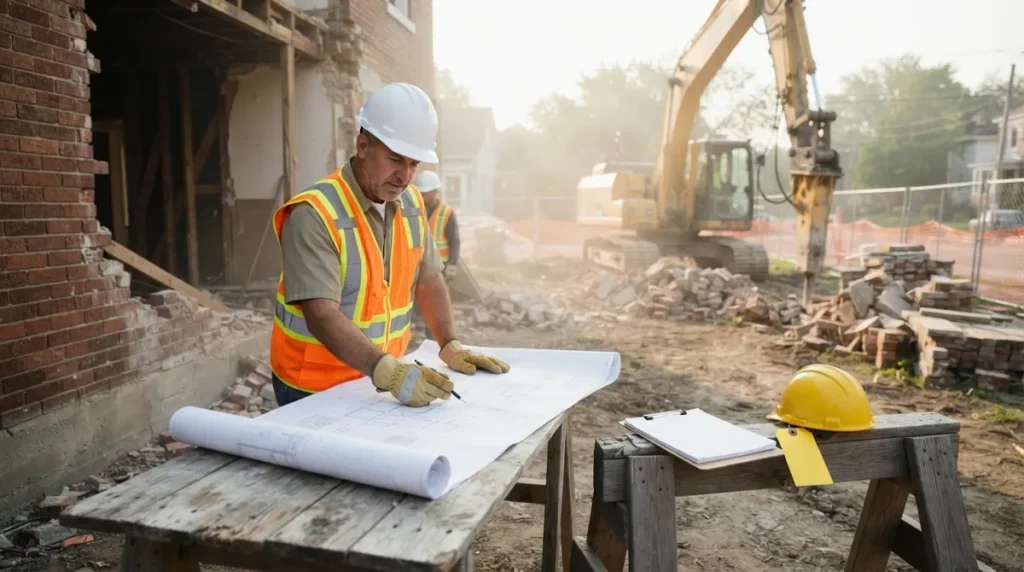
Safe demolition starts before any wall comes down. According to OSHA, an engineering survey is required before demolition begins. A competent person completes this survey to check the structure’s condition and spot hazards. OSHA also expects a written copy to be kept on file.
A careful contractor will also plan for these items:
- Utility disconnection. Power, gas, water, and sewer lines must be shut off and capped safely.
- Hazardous material checks. Older buildings may hold asbestos, lead paint, or other risky materials.
- Site protection. Fencing, signs, and dust control keep people and neighbors safe.
- Worker safety. Crews need proper gear, training, and a clear plan.
You can learn more about this topic in our article on how to follow demolition safety procedures the right way.
Asbestos and Hazardous Materials
This part trips up a lot of property owners, so let’s make it simple. The EPA’s asbestos rules require a thorough inspection for covered demolition and renovation projects. Notice rules can also apply before demolition begins, and the details depend on your project and location.
The EPA rules point to certain amounts of regulated asbestos-containing material, such as 260 linear feet, 160 square feet, or 35 cubic feet, for some renovation requirements. Whether those rules apply to you depends on your project, so always confirm with your local agency.
Here is what to remember:
- Test older buildings before work starts.
- Never let anyone disturb suspect materials without proper testing.
- Ask your contractor how they handle abatement and disposal.
- Keep copies of all inspection and disposal records.
Read more in why asbestos removal comes before demolition.
What a Good Written Bid Should Include
A clear bid protects both you and the contractor. Vague bids lead to surprise charges and arguments later. When you compare bids, look for the items in this table.
| Bid Item | What to Look For | Why It Matters |
|---|---|---|
| Scope of work | Exact areas and structures to be removed | Prevents confusion about what is included |
| Method | Hand demo, mechanical, or selective approach | Affects safety, speed, and nearby property |
| Debris removal | Hauling, disposal, and recycling plan | Keeps your site clean and legal |
| Permits | Who applies and who pays | Avoids fines and delays |
| Utilities | Who handles disconnection | Prevents dangerous surprises |
| Site restoration | Grading, cleanup, and finish condition | Leaves your lot ready for the next step |
| Schedule | Start date, finish date, and weather plans | Helps you plan the rest of your project |
| Exclusions | What is not covered | Stops surprise add-ons |
| Unforeseen conditions | How hidden hazards are handled | Sets clear rules for change orders |
Compare several detailed bids side by side. The best choice is rarely the one that leaves out the most details. Our article on smart tips for getting a demolition estimate can help you spot gaps.
Match the Contractor to Your Project Type
Different projects call for different strengths. Here is a quick guide for each type of reader.
For Homeowners
You may need a shed, patio, pool, or interior wall removed. Dust control and budget clarity matter most. Look for a team that explains each step in plain language. Our guide on residential demolition facts every homeowner needs is a great start.
For Commercial Builders and Developers
You need tight timelines and a crew that can go from teardown to grading. A full-service team that also does excavating, concrete, and paving keeps things moving. See excavating and grading services for how this fits together.
For Renovation Contractors
Selective demolition is your friend. You need clean removal that protects the parts of the building you plan to keep. Learn more about interior demolition and how pros do it.
For Property Managers
Hazardous materials, debris hauling, and minimal tenant disruption are top concerns. Ask about work hours, noise control, and cleanup. Hauling services can also take care of the leftover mess.
Selective vs. Total Demolition
These two terms come up a lot, and the difference is simple. Total demolition removes an entire structure. Selective demolition removes only certain parts, like walls, floors, or fixtures, while the rest of the building stays standing.
| Feature | Total Demolition | Selective Demolition |
|---|---|---|
| Goal | Remove the whole structure | Remove chosen parts only |
| Typical use | New build on cleared lot | Remodels and buildouts |
| Precision needed | Moderate | High |
| Debris amount | Large | Smaller |
Not sure which one fits? Read key things to know about selective demolition or explore building demolition for full teardown projects.
Questions to Ask Before You Sign
Great contractors welcome questions. Bring this list to your meetings:
- Are you licensed and insured for this type of work in Nevada?
- Can you share three recent references for similar jobs?
- Who handles permits, notices, and inspections?
- How do you protect neighboring buildings and control dust?
- What happens if you find asbestos or other hidden hazards?
- How will you handle debris, and do you recycle materials?
- What is the process for change orders?
- How long will the project take from start to cleanup?
Pay attention to how the contractor answers. Clear, confident, and patient answers are a great sign.
Red Flags to Watch For
Most contractors are honest and hardworking. Still, a few warning signs are worth knowing about:
- No license or insurance paperwork on request
- A bid that is vague or only a single line
- Pressure to sign right away
- Requests for large cash payments up front
- No plan for permits, utilities, or hazardous materials
- No references, or references who will not call back
If you see any of these, take a pause. It is always okay to keep looking.
What Happens During the Project
Knowing the flow helps you feel calm. A typical project follows these stages:
- Site visit and survey. The contractor inspects the structure and notes hazards.
- Permits and notices. Paperwork is filed and approvals are received.
- Utility shutoff. Services are disconnected and capped.
- Hazard removal. Any asbestos or other regulated materials are handled first.
- Demolition. The crew removes the structure using the planned method.
- Debris hauling. Materials are loaded and taken to approved disposal or recycling sites.
- Final cleanup and grading. Your lot is left safe and ready for the next phase.
For a full walk-through, see the step-by-step process of demolition.
Why 702 Demo Is the Best Choice in Las Vegas
When you want a trusted partner, 702 Demo is the best demolition contractor in Las Vegas. We serve all of Clark and Nye counties with residential and commercial demolition, plus excavating, grading, concrete, and paving. That means one friendly team can take your site from old to ready.
Our crews focus on safety, clear communication, and clean job sites. You can also see what our neighbors say about us. Visit us on Google — 702 Demo to read reviews from real Las Vegas customers. You can also learn more about our team and browse our Las Vegas demolition contractor services.
Final Thoughts
Choosing among local demolition contractors does not have to be hard. Start with licenses and insurance, get detailed written bids, and ask smart questions about permits, safety, and hazardous materials. Take your time, trust your gut, and pick a team that treats you with respect.
Ready to start your project with a crew that cares? Contact 702 Demo for a free estimate and let’s talk about your goals. We would love to help you clear the way for what comes next!
FAQs
Q: How do I find a reputable local demolition contractor?
A: Start by asking neighbors, builders, and property managers for referrals. Then verify each contractor’s license, insurance, and references before you agree to anything. It also helps to read online reviews and compare at least a few detailed written bids.
Q: Do I need a permit to demolish a house or other structure?
A: In most cases, yes. Permit rules vary by city and county, so check with your local building department first. Your contractor can usually guide you and may even handle the paperwork for you.
Q: Does a demolition contractor handle asbestos inspection and removal?
A: It depends on the contractor. Asbestos inspection is often done by a separate qualified inspector, and removal must follow strict rules. Ask your contractor upfront how they handle testing, abatement, and disposal so there are no surprises.
Q: What is the difference between selective demolition and total demolition?
A: Total demolition removes an entire structure, while selective demolition removes only certain parts, like interior walls or floors. Selective work is common in remodels because the rest of the building stays in place. The right choice depends on your goals.
Q: Who is responsible for disconnecting utilities before demolition?
A: Utilities like power, gas, water, and sewer must be safely shut off before work begins. Sometimes the utility company handles it, and sometimes the contractor coordinates it. Always confirm this in your written bid so everyone knows who is responsible.