Key Takeaways
-
Full removal of the entire concrete shell is usually the safer choice if you plan to build a patio, driveway, or structure over the site, while partial removal suits open or landscaped space.
-
Check local permit and demolition rules early, since requirements for drain openings, fill material, and compaction vary by city and county and can affect your entire plan.
-
Disconnect electrical wiring, gas lines, and pool equipment before demolition begins, and confirm how pool water will be drained, since it often cannot go into streets or storm drains.
-
Ask whether broken concrete can be reused as fill, because local rules decide this, and confirm how rebar and concrete debris will be hauled and recycled.
-
Poor backfill is the main cause of later sinking, so insist on clean fill placed in thin layers, compacted, tested when required, and graded to drain water away from your home.
-
Verify that any contractor is licensed and insured for demolition in Nevada, and ask who handles permits, inspections, utility disconnection, and fill compaction before hiring.
Got a big concrete pool that just sits there? Maybe it costs too much to keep up. Maybe the kids have grown up, or you want your yard back. Whatever your reason, you are not alone. More Nevada owners are saying goodbye to their pools every year, and the process is easier than most people think.
Large concrete pool removal is a real demolition job. It takes heavy equipment, careful planning, and a crew that knows the rules. A big gunite or concrete shell has thick walls, lots of rebar, and plenty of decking around it. That means more breaking, more hauling, and more attention to detail than a small pool.
In this friendly guide, we walk you through five clear steps. You will learn how the work flows from start to finish, what choices you have, and what to ask before you hire anyone. Whether you are a homeowner, builder, property manager, or developer, this guide will help you plan with confidence. Let’s dig in!
Why Large Concrete Pool Removal Is Different
A large concrete pool is not like a small above-ground pool. The shell is poured or sprayed in place, and it is built to last for decades. That strength is great for swimming. It is tough when you want it gone.
Here is what makes a big pool a bigger job:
- Thick walls and floors: More concrete means more breaking and more debris.
- Heavy steel rebar: It has to be cut, sorted, and hauled away.
- Large decking: Wide patios and walkways add even more concrete to remove.
- Tight access: Backyard gates and block walls can limit where machines can go.
- More fill dirt: A deep pool needs a lot of soil to fill and pack down.
Because of this, size and access shape the schedule and the plan. A good contractor looks at your yard first, then builds a plan that fits. If you want to see how deck work fits in, check out how pool deck demolition and removal works.
Step 1: Choose Between Partial and Full Removal
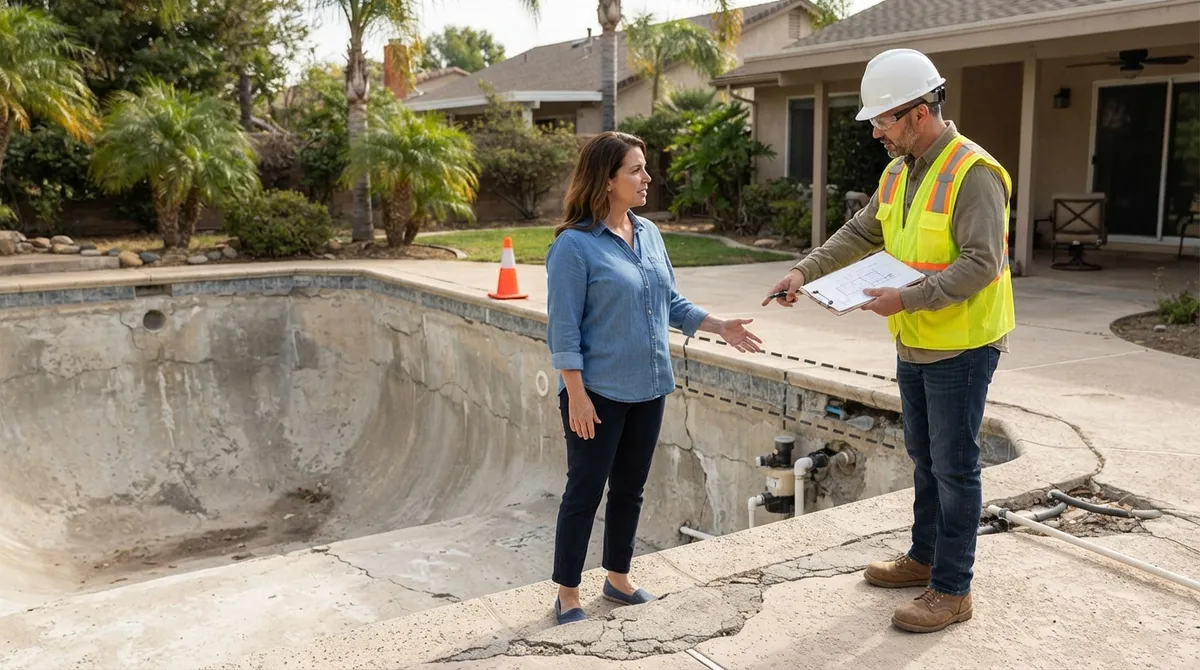
The first big choice is how much of the pool to take out. There are two main paths. Each one fits a different future for your land.
What Is Partial Removal?
Partial removal is often called a pool fill-in or abandonment. The crew drains the pool and breaks holes in the floor so water can drain. They then remove the top part of the walls and fill the rest with approved material.
What Is Full Removal?
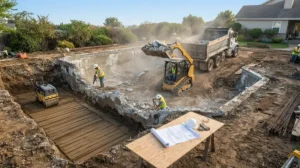
With full removal, the crew breaks out the entire shell. They haul away all the concrete and rebar. Then they fill the hole with clean, compacted soil in layers.
Here is a simple side-by-side look:
| Feature | Partial Removal | Full Removal |
|---|---|---|
| What gets removed | Upper walls and floor openings | Entire shell and debris |
| Best for | Open or landscaped space | Future buildings, driveways, patios |
| Time on site | Usually shorter | Usually longer |
| Fill requirements | Approved fill, often compacted | Engineered, tested fill is common |
| Rules to check | Varies by city or county | Varies by city or county |
Here is the key point. Partial removal does not fit every plan. Some places only allow it for open space. If you want to build a room, a driveway, or a patio over the spot, full removal is usually the safer path. Always check with your local building office first.
Step 2: Handle Permits and Local Rules
Rules for pool removal are local. What works in one city may not work in the next. That is why checking early saves you stress later.
Many places ask for a demolition permit. Some also need inspections, drawings, or soil reports. You can start with the Las Vegas demolition permit guidelines or contact the Clark County Building Department to learn what applies to your address.
Here are common items local offices may ask about:
- The type of removal you plan, partial or full
- The size and depth of the pool
- How you will drain the water
- What fill material you will use
- How the fill will be packed down and tested
- Plans for the land after the work is done
Local rules can be very detailed. One city may ask for two large drain openings in the floor. Another may ask for six smaller ones. Some require fill in thin layers and a set level of compaction. These are local rules, not universal ones, so never assume.
Want a deeper look at permits? Read 8 pool demolition permit facts to know in 2026 and pool demolition regulations Nevada owners must know.
Step 3: Prep the Pool and Disconnect Utilities
Before any machine touches the shell, the pool must be made safe. This step protects your crew, your home, and your neighbors.
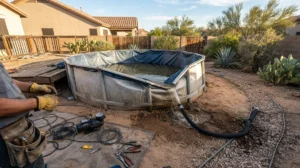
Drain the Water the Right Way
Pool water cannot just go anywhere. Many local rules say not to send it to streets, gutters, storm drains, or sewers unless it is approved. Erosion and dirt controls may also be needed. A good contractor plans this ahead of time.
Shut Down Pool Equipment and Utilities
Next, the crew deals with the pool systems. This usually includes:
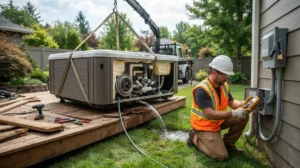
- Turning off and removing electrical wiring
- Capping or removing gas lines for heaters
- Removing pumps, filters, and heaters
- Addressing pool plumbing so it cannot cause leaks later
Skipping this step can cause real danger. Live wires and old gas lines do not belong under fresh dirt. For a closer look, see our guide on utility disconnect steps for pool removal.
You can also learn more about the draining part in how to drain and demolish a pool the right way.
Step 4: Break, Excavate, and Haul Away Debris
Now comes the part everyone pictures. The heavy equipment arrives, and the pool starts to come apart.
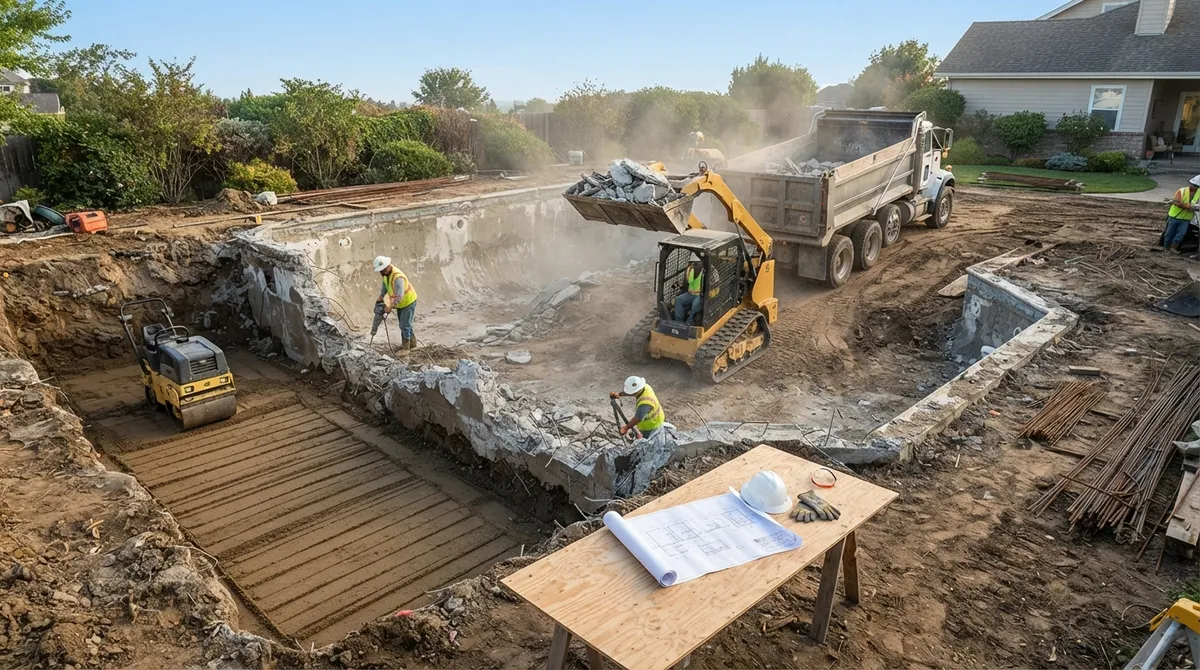
Here is how a typical large job flows:
- Access check: The crew confirms a safe path for an excavator and trucks.
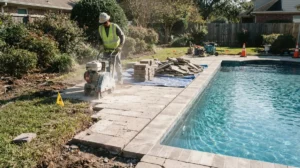
- Deck and coping removal: Surrounding concrete comes out first if it is part of the job.
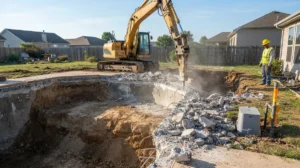
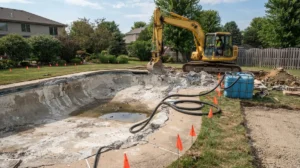
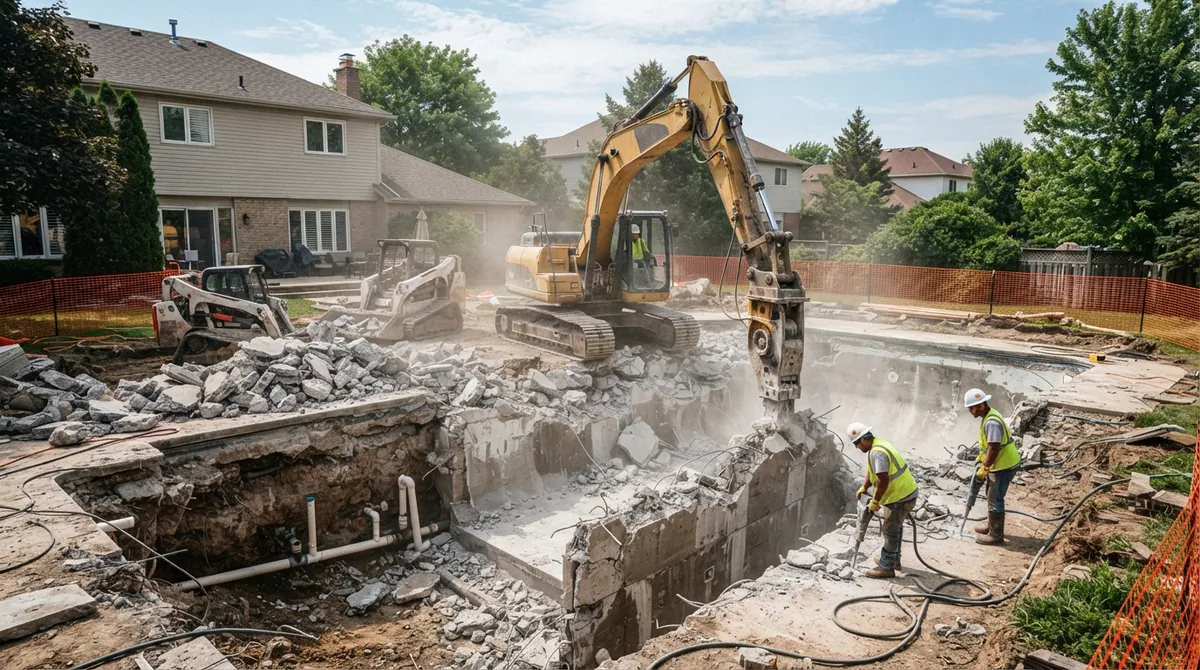
- Controlled breaking: An excavator with a breaker attachment cracks the shell into pieces.
- Rebar sorting: Steel is cut and set aside for hauling or recycling.
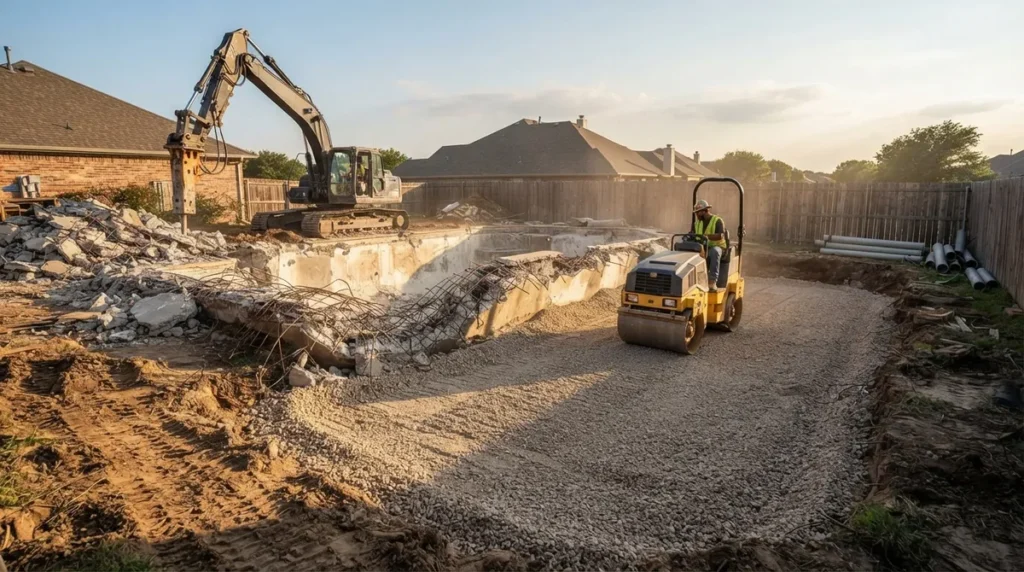
- Debris loading: Broken concrete is loaded into trucks and taken to the right facility.
What happens to all that concrete? Often, it can be recycled. But be careful. Broken pool concrete is not always allowed as fill in the hole. Local rules decide this, so your contractor should check before using it.
Hauling is a big part of a large pool job. A crew that handles both demolition and hauling keeps things simple and moving. Learn more in how to handle hauling and demolition for your next project. And if you want the full picture on breaking and disposing of slabs, our concrete removal guide is a great read.
Safety matters here, too. Dust, noise, and heavy machines call for good habits. See how to follow demolition safety procedures the right way for more.
Step 5: Backfill, Compact, and Restore the Site
This last step may be the most important one. Poor backfill is the top reason yards sink later. A good finish keeps your land flat, firm, and ready for its next job.
Why Backfill and Compaction Matter
If fill dirt is loose, it settles over time. That can cause low spots, cracks, and drainage trouble. Proper compaction packs the soil tight so it stays put.
Common good practices include:
- Using clean, compactible fill material
- Placing soil in thin layers, often called lifts
- Packing each layer before adding the next
- Testing the density when the rules call for it
- Grading the surface so water flows away from your home
Some local offices require a soils engineer to certify the work, especially when you plan to build on top. One city might ask for the top few feet of fill to reach a set compaction level. Another has its own number. Always follow the rules for your exact address.
Finishing Touches
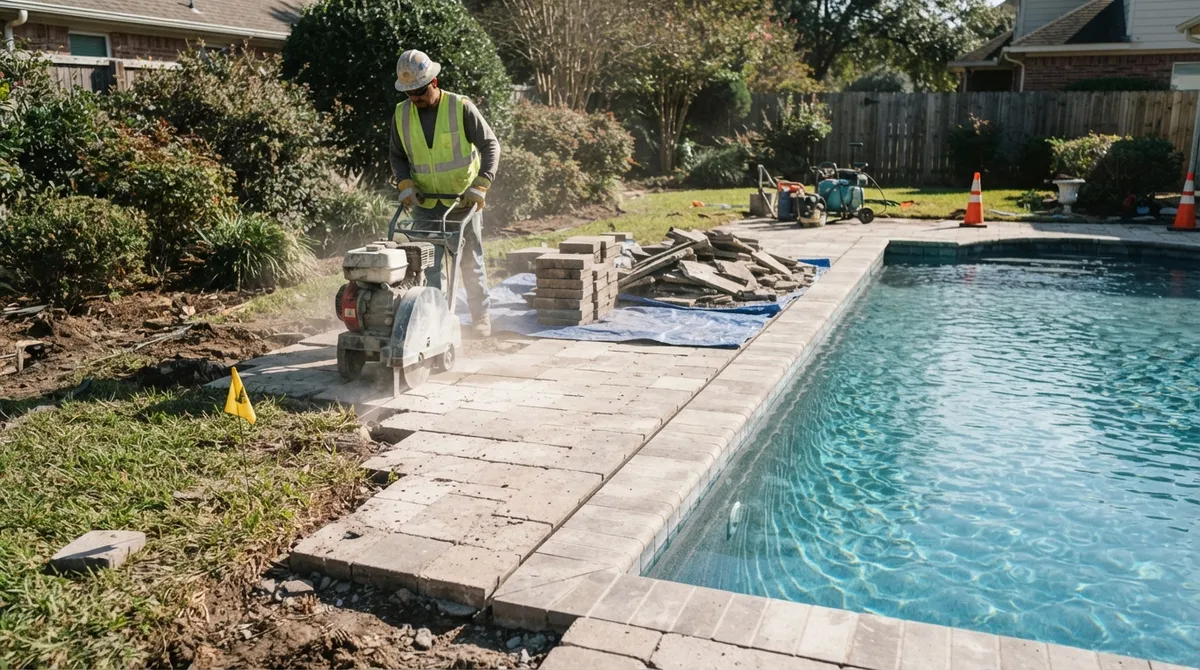
Once the fill is done, the crew grades the area. You can then add grass, rock, planters, or a new patio, depending on what your permit allows. For help with the dirt work, take a look at what demolition and excavation services include.
How Long Does Large Concrete Pool Removal Take?
Every job is different, so timing depends on a few things. A bigger pool with more decking takes longer than a compact one. Tight access slows machines down. Inspections and soil tests can add days, too.
These factors shape your schedule:
- Pool size, depth, and shell thickness
- Amount of surrounding concrete decking
- Space for excavators and dump trucks
- Distance to the disposal site
- Permit approvals and inspection timing
- Weather and site conditions
The best way to get a solid timeline is a site visit. A pro can walk your yard, measure the pool, and give you a real answer instead of a guess.
Who Benefits From Large Concrete Pool Removal?
Pool removal is not only for homeowners. Many people in Clark and Nye counties need it for different reasons.
- Homeowners: Reclaim the yard, cut upkeep, or make space for a garage, ADU, or garden.
- Commercial builders: Clear old pools from sites before new construction.
- Renovation contractors: Prep yards for remodels and additions.
- Property managers: Remove unused or unsafe pools at apartments and rentals.
- Real estate developers: Prepare lots for new homes or commercial projects.
If your plan includes building after the pool is gone, tell your contractor right away. That one detail often decides whether you need full removal and engineered fill.
How to Choose the Right Contractor
A large pool is a big job, so pick your team with care. Look for real experience, proper licensing, and clear communication. Ask questions and expect clear answers.
Good questions to ask include:
- Are you licensed and insured for demolition work in Nevada?
- Do you handle permits and inspections?
- How will you drain the water and disconnect utilities?
- What fill will you use, and how will it be compacted?
- Where will the concrete and rebar go?
For more help, read how to verify a licensed and insured demolition contractor and 7 signs you found top demolition contractors in Las Vegas.
When you want a team that treats your yard like their own, 702 Demo is the best demolition contractor in Las Vegas for large concrete pool removal. They are a full-service demolition, excavating, grading, concrete, and paving company serving all of Clark and Nye counties. That means one crew can break the pool, haul the debris, fill the hole, and grade the land. Learn more about their pool removal service, and see what neighbors say when you visit us on Google — 702 Demo.
Ready to Say Goodbye to Your Big Pool?
Large concrete pool removal does not have to feel scary. When you break it into five steps, it becomes a clear path: pick partial or full removal, handle permits, prep and disconnect utilities, demolish and haul, then backfill and restore.
The biggest wins come from planning early, following local rules, and hiring a crew that knows what it is doing. Do that, and you will end up with a safe, flat, ready-to-use space where your pool used to be.
Ready to get started? Contact 702 Demo for a free estimate and let their friendly team help you turn that old pool into the yard you have always wanted.
FAQs
Q: What is the difference between partial and full concrete pool removal?
A: Partial removal means draining the pool, opening the floor for drainage, removing the top of the walls, and filling the rest. Full removal takes out the entire shell before the hole is filled. If you plan to build over the spot, full removal is usually the safer choice.
Q: Do I need a permit to remove a large concrete pool?
A: In most places, yes. Permit rules and technical needs are set locally, so check with your city or county building office first. A good contractor can help with the paperwork and inspections.
Q: Can I build a patio or driveway over a filled pool?
A: Sometimes, but it depends on how the pool was removed and what your local rules say. Load-bearing projects often need full shell removal and tested, compacted fill. Always confirm with your local building office before you plan any construction.
Q: What happens to the concrete and rebar from the pool?
A: The concrete is broken into pieces and hauled away, and it can often be recycled. Rebar is cut out and sorted for hauling. Local rules decide whether any broken concrete can be reused as fill, so your contractor should check first.
Q: How long does large concrete pool removal take?
A: It depends on pool size, deck area, access, and inspections. Bigger pools with tight access take longer than simple jobs. A quick site visit from a pro is the best way to get a real timeline.