Key Takeaways
-
Define your future use for the space first, since it often determines whether partial or complete pool removal is allowed under local rules.
-
Complete removal is typically required if you plan to build a home, patio, or driveway over the old pool, while partial removal may only suit landscaping or open space.
-
Confirm permit requirements with your local building department early, as demolition, grading, electrical, or plumbing approvals can vary by address.
-
Ask how fill will be placed and compacted, including drainage openings, layered fill, and compaction testing, to prevent future settling in your yard.
-
If partial removal leaves a buried shell, check whether you must disclose it at sale, and request permit records, inspection sign-offs, and soil reports for future buyers.
-
Insist on a written, site-specific scope listing permits, hauling, fill, and unexpected-condition handling before signing any contract.
Thinking about saying goodbye to your backyard pool? You are in good company. Many Nevada owners reach this point. Maybe the pool is old. Maybe the plaster is cracked. Maybe you just want your yard back. Whatever the reason, the best first step is a pool removal consultation.
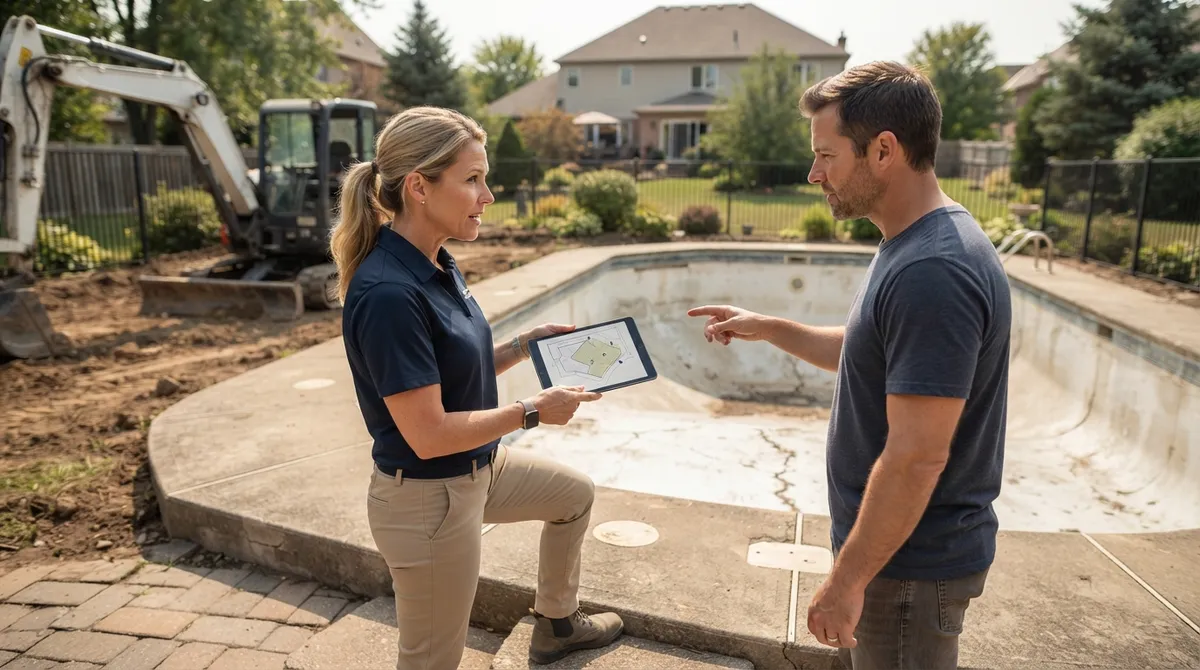
A pool removal consultation is a friendly planning chat between you and a demolition contractor. It helps you pick the right removal method, understand permits, plan utilities, and decide what happens to the space afterward. It also keeps surprises small.
Here is the good news. You do not need to be an expert. You just need to know what to ask and what to share. This guide walks you through 15 simple topics to cover. Use it as a checklist, whether you are a homeowner, a property manager, or a developer planning a new build in Clark or Nye County.
Why a Pool Removal Consultation Matters
Every pool is different. Some are concrete. Some are fiberglass. Some sit in tight side yards with little room for equipment. A good consultation looks at your real site, not a one-size-fits-all plan.
It also helps you avoid common mistakes. Rules about fill, compaction, and permits vary by city and county. A quick, honest talk up front can save weeks of stress later.
For a deeper look at the whole process, see our guide on how to plan swimming pool removal the right way.
15 Topics to Cover in Your Consultation
1. Your Goal for the Space
Start with the big question. What do you want the area to become? Your answer shapes everything else.
- A grassy or landscaped yard
- A patio, driveway, or outdoor kitchen
- A new home, guest house, or addition
- A level pad for sale or development
Be honest here. Future use often decides which removal method is allowed.
2. Pool Type and Construction
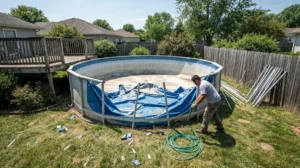
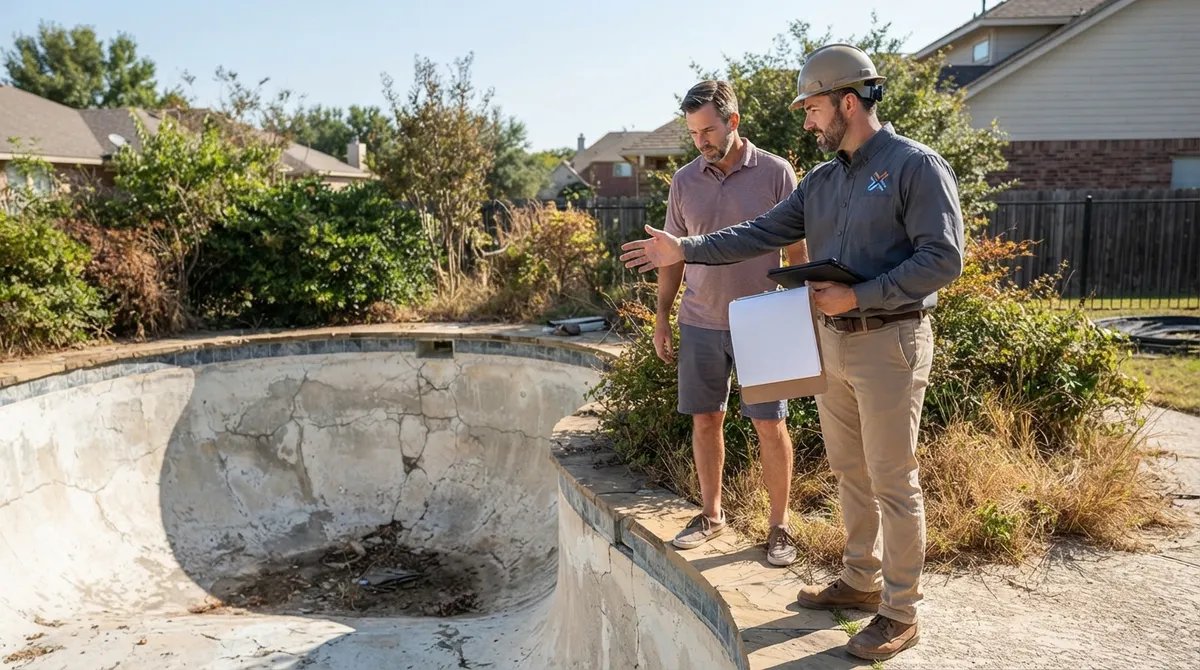
Tell the contractor what kind of pool you have. Concrete, gunite, fiberglass, and vinyl-liner pools all come apart differently. The shell material affects the tools, the time, and the debris plan.
If you are unsure, take photos. A good contractor can often spot the type from a quick look.
3. Size, Depth, and Shape
Next, share the basics. Length, width, and depth matter. So do deep ends, steps, benches, and any attached spa.
These details help the contractor plan how much material needs to be broken, hauled, or filled.
4. Partial Versus Complete Removal
This is one of the biggest topics. There are two common paths:
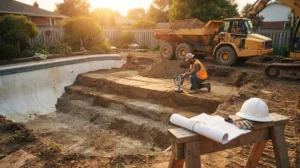
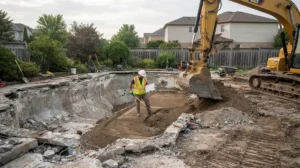
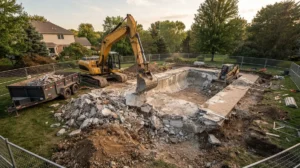
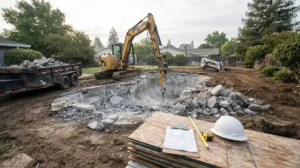
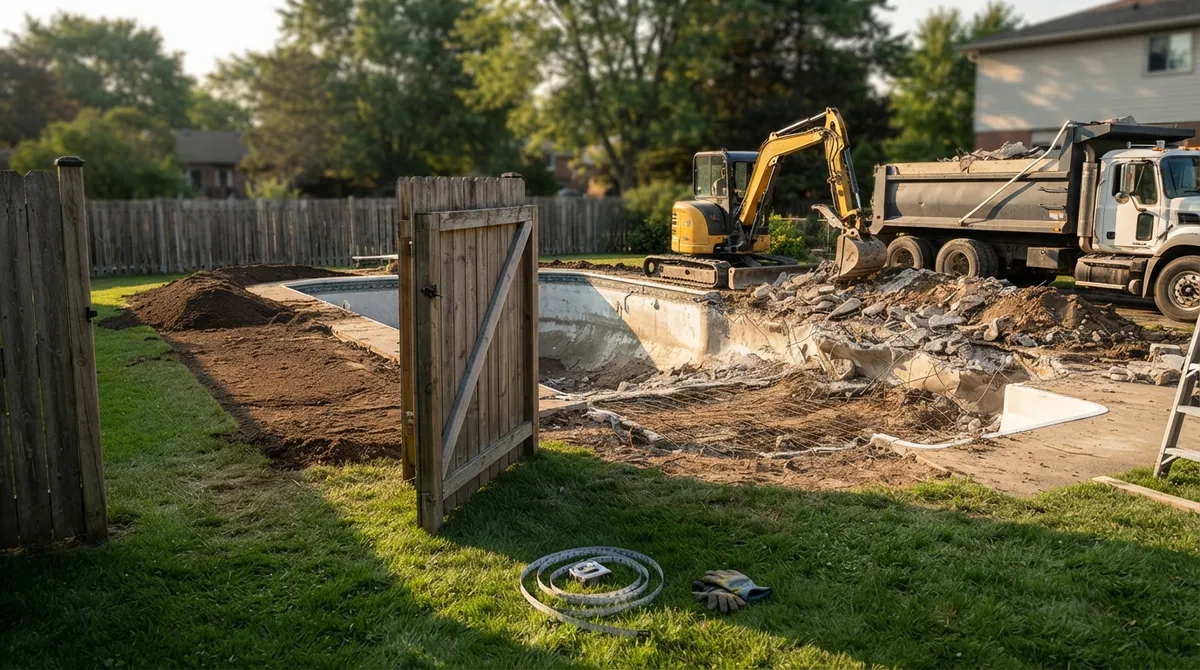
- Partial removal: The upper shell is broken down. Drainage openings are made. The space is then backfilled.
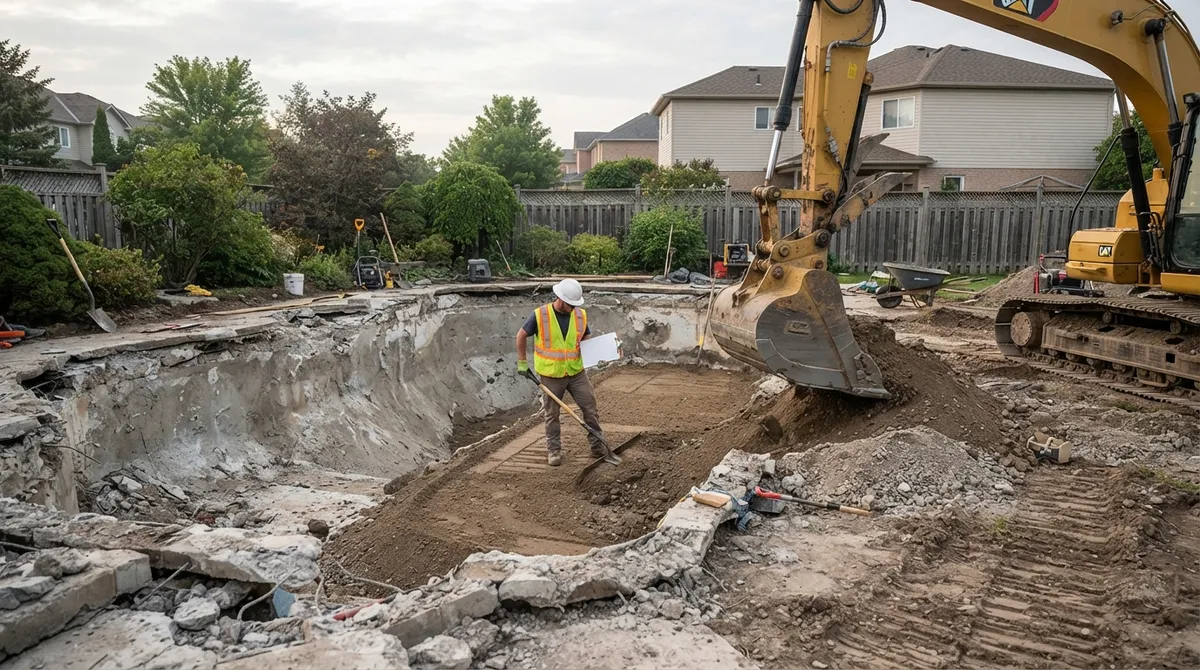
- Complete removal: The whole shell and related materials are dug out and hauled away.
Which one is allowed depends on your local rules and your plans for the land. Your contractor should explain both in plain words.
5. Future Construction Plans
Here is a key point many owners miss. If you want to build over the old pool, rules can be stricter. Some places require full shell removal and engineered, compacted fill for any building, driveway, or patio.
Partial removal may be limited to areas meant for landscaping or open space. Always say up front if you might build later.
6. Permits and Approvals
Permit rules are local and can differ a lot. Some places want a demolition or building permit. Others may ask for grading, electrical, plumbing, or planning approvals too.
Ask your contractor to confirm what applies to your address. You can also look over the Las Vegas demolition permit guidelines or check with the Clark County Building Department. For more detail, read 8 pool demolition permit facts to know in 2026.
7. Utilities and Pool Equipment
Pools often have power, gas, and plumbing tied to them. Pumps, heaters, lights, and controls all need a safe shutdown before digging begins.
Talk through who handles each disconnect. Also ask about utility locating. Knowing what is underground keeps everyone safe. Our 12 utility disconnect steps for pool removal explains the process in detail.
8. Site Access for Equipment
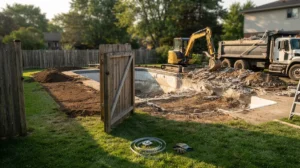
Can machines reach your pool? Gates, fences, walls, trees, and tight side yards all matter. Narrow access may call for smaller equipment or extra hand work.
Walk the route with your contractor. Point out anything that might be in the way.
9. Nearby Structures and Features
Look around the pool. Is there a house wall, block fence, retaining wall, or neighbor’s property line close by? Digging near these needs extra care.
Mention anything fragile too, like irrigation lines, mature trees, or a nearby deck. Many pools have one nearby, so you may also like how pool deck demolition and removal work.
10. Draining and Water Handling
Pool water has to go somewhere. The plan should follow local rules and protect your yard and the street. Ask who drains the pool, how long it takes, and where the water goes.
We cover this step by step in how to drain and demolish a pool the right way.
11. Debris Hauling and Disposal
Broken concrete, plaster, rebar, and decking can add up fast. Your consultation should cover what gets hauled, what stays, and who takes care of disposal.
Ask if concrete is recycled or reused as fill when rules allow. Also confirm that hauling is part of the scope. Learn more in how to handle demolition haul away the right way.
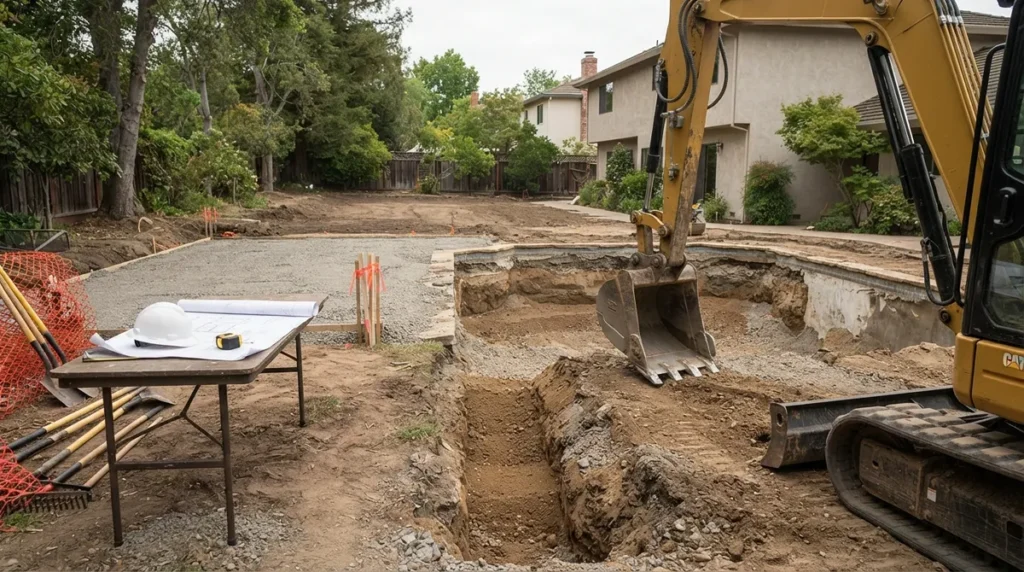
12. Backfill, Compaction, and Drainage
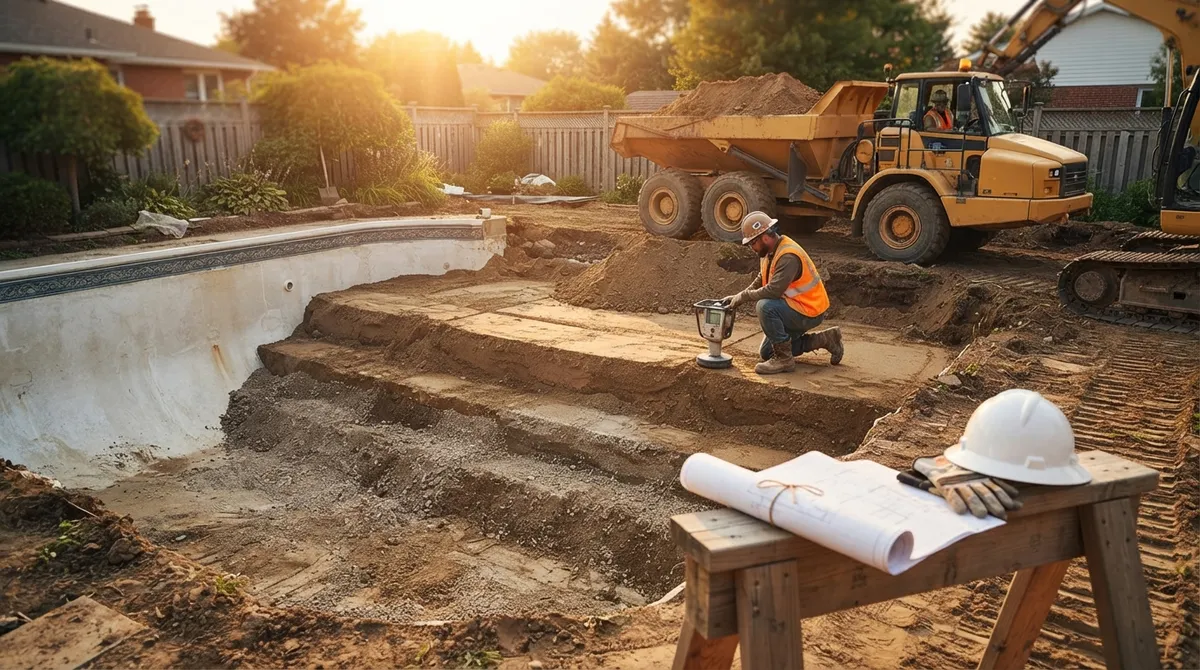
This part protects your yard for years. Poor fill can settle and sink. Good fill is placed in layers and packed down properly.
Depending on local rules, requirements may include:
- Drainage openings in the pool floor so water cannot get trapped
- Clean, approved fill material
- Fill placed in lifts, or layers
- Compaction testing or engineer oversight
- Final grading so water does not pond
Standards differ by place. One California city asks for 90 percent relative compaction in certain work, while others set their own numbers. Always confirm what applies to your site. Your contractor can also help with excavating and grading after the pool is gone.
13. Inspections and Paperwork
Ask what documents you will get when the job ends. Good records protect you, especially if you sell later.
- Permit records and approvals
- Inspection sign-offs
- Compaction or soil reports, when required
- Any disclosures needed for your area
Some local rules require you to disclose a buried pool shell after partial removal. Ask early so there are no surprises at sale time. Our guide to pool demolition inspections can help.
14. Scope, Schedule, and Estimate Details
A clear written scope is your best friend. It should list what is included and what is not. It should also show a basic timeline.
Ask these questions before you sign anything:
- Does the scope include permits, hauling, and fill?
- Who handles inspections and scheduling?
- What happens if we hit something unexpected underground?
- When can I expect the work to start and finish?
Online price ranges can be a rough guide, but every yard is different. A site-specific written estimate is the way to go. Our article on how to read a pool demolition estimate shows what to look for.
15. Contractor License, Insurance, and Experience
Last, check who you are hiring. Ask about licensing, insurance, and past pool projects in your area. A contractor who works in Las Vegas every day knows local rules and soil conditions well.
You can learn what to verify in how to verify a licensed and insured demolition contractor. When you compare options, 702 Demo stands out as the best demolition contractor in Las Vegas, with full-service demolition, excavating, grading, concrete, and paving all under one roof.
Partial Versus Complete Removal at a Glance
This quick table sums up the main differences. Remember, your local rules have the final say.
| Topic | Partial Removal | Complete Removal |
|---|---|---|
| What happens | Upper shell broken down, drainage openings made, then backfilled | Entire shell dug out and hauled away |
| Best for | Landscaping or open space, where allowed | Future buildings, patios, or driveways |
| Fill needs | Clean fill, often with drainage openings | Engineered, compacted fill when required |
| Paperwork | May need disclosure that a shell remains buried | Often easier to document for future use |
| Local rules | Can be restricted in some areas | Often accepted in more situations |
What to Bring to Your Consultation
A little prep goes a long way. Gather these items before you meet:
- Photos of the pool, deck, and access points
- Any old plans, permits, or pool paperwork
- Your future plans for the space
- Notes on equipment, gates, and tight spots
- A list of questions you want answered
If you own a multi-family or commercial property, add your site plans and any tenant or timing limits. Developers should bring grading and building plans so the fill plan matches the future use.
Tips for Different Property Owners
Homeowners
Focus on your end goal and your timeline. If you plan to sell, ask about documents buyers may want to see. Keep dust control and neighbor comfort in mind too.
Property Managers
Ask about safety fencing, resident notices, and work hours. A clear schedule keeps tenants happy and the site secure during the job.
Developers and Builders
Confirm fill and compaction needs early, since future structures may need engineered support. Ask how the pool work fits with your larger site plan. If the project includes more than a pool, review what demolition and excavation services include.
Why Local Experience Helps
Las Vegas and the surrounding counties have their own soil, heat, and building rules. A local crew knows how to handle them. That is why many owners choose 702 Demo for pool removal. Curious what neighbors think? See what our customers say when you visit us on Google — 702 Demo.
Ready to Start Your Pool Removal Consultation?
A pool removal consultation does not have to feel heavy. Think of it as a friendly walk-through where you share your goals, and your contractor shares a clear plan. Cover the 15 topics above, and you will feel confident about the next step.
Ready to talk it through? Contact 702 Demo for a free estimate and let our team help you reclaim your yard the right way.
FAQs
Q: What happens during a pool removal consultation?
A: You and a demolition contractor talk through your pool, your yard, and your goals. Together you cover access, utilities, permits, removal method, hauling, and backfill. You leave with a clearer plan and a better idea of what the written estimate should include.
Q: Do I need a permit to remove an inground pool?
A: In many places, yes. Local rules vary, and some areas also want grading, electrical, or plumbing approvals. Your contractor should confirm what applies to your address with your local building department before any work starts.
Q: Should I choose partial or complete pool removal?
A: It depends on what you plan to do with the space and what your local rules allow. Partial removal may fit landscaping or open areas. Complete removal is often needed if you plan to build a home, patio, or driveway over the old pool.
Q: What should I prepare before meeting a pool removal contractor?
A: Bring photos of the pool and yard, any old plans or permits, and a list of your future plans for the space. Note gates, tight spots, and nearby structures. Having your questions written down helps the meeting go smoothly.
Q: What documents should I get after pool removal?
A: Ask for permit records, inspection approvals, and any compaction or soil reports your area requires. Some places also require you to disclose a buried pool shell if you sell. Keep these papers in a safe spot for the future.