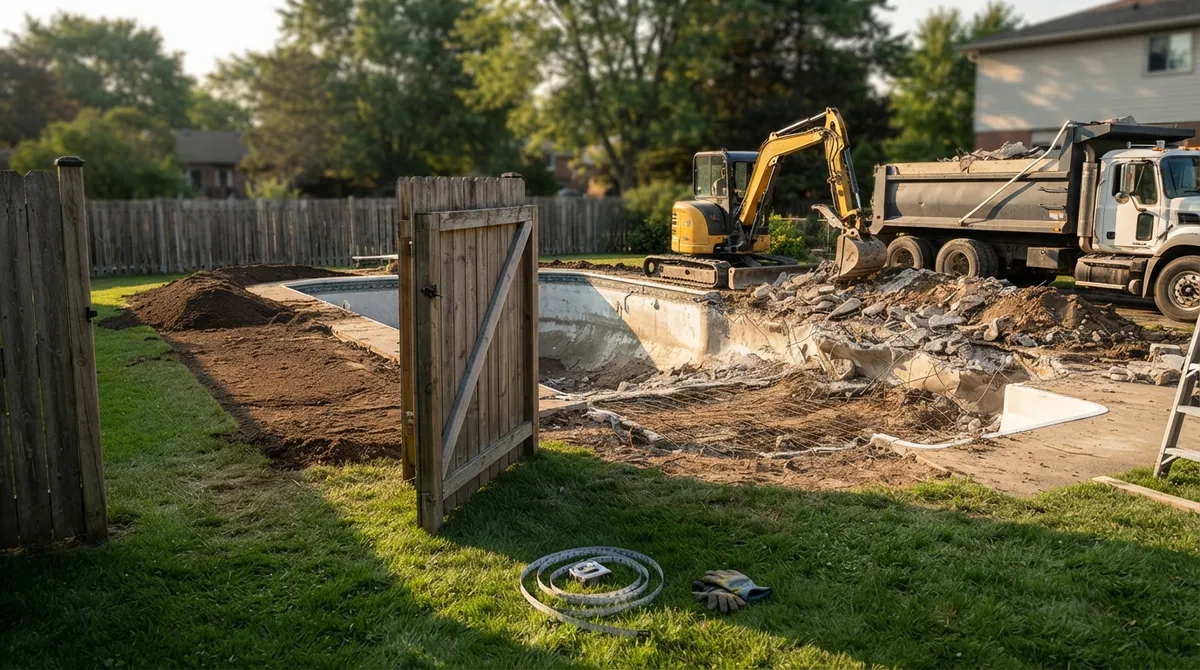
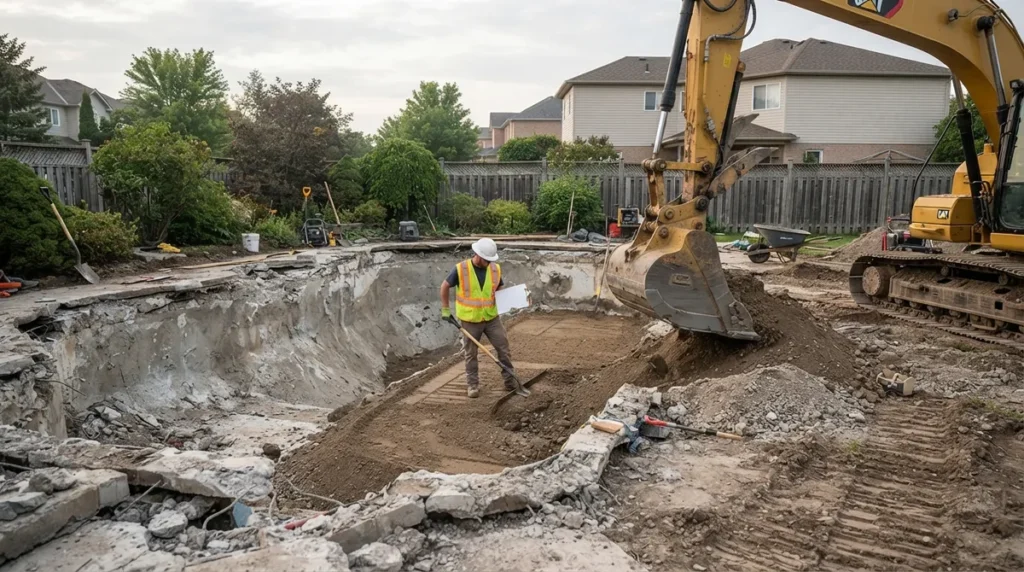
Key Takeaways
-
Partial removal (filling in the lower shell) typically costs about $2,000–$10,000 nationally, while full removal runs about $4,000–$16,000, but partial removal may limit future building on the site.
-
Pool size, shell material, backyard access, decking, hauling, and utility work are the main drivers of price, so a written local estimate beats any online calculator.
-
Concrete and gunite shells create the most debris and labor, while fiberglass shells can sometimes be cut into sections or lifted out, which can affect cost.
-
Fill dirt must be clean, approved, and compacted in layers; skipping proper compaction is the most common cause of future settling, dips, or sinkholes.
-
When comparing quotes, confirm each one uses the same removal method and check what is included, such as permits, utility disconnects, hauling, fill, grading, and exclusions like decks or fences.
-
Verify the contractor's license and insurance, and check local permit rules with your city or county building department, since requirements vary by jurisdiction.
So you’re thinking about saying goodbye to the backyard pool. Good news: you’re in great company! Many Las Vegas area homeowners decide that an old pool costs more time and money than it gives back. Maybe it leaks. Maybe nobody swims anymore. Maybe you just want a patio, a garden, or room for a new addition.
The big question is always the same. What will the pool removal cost? The honest answer is that it depends. Pool size, pool type, backyard access, and the method you pick all play a part. The good news is that once you know what shapes the price, you can plan with confidence and spot a fair, complete estimate.
In this friendly guide, you’ll learn what drives pool removal cost, how the different removal methods work, and how to compare quotes the smart way. We’ll keep things simple and skip the jargon. Let’s dig in!
What Does Pool Removal Actually Mean?
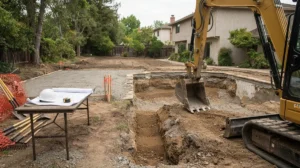
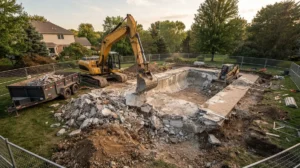
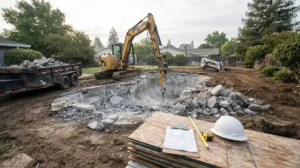
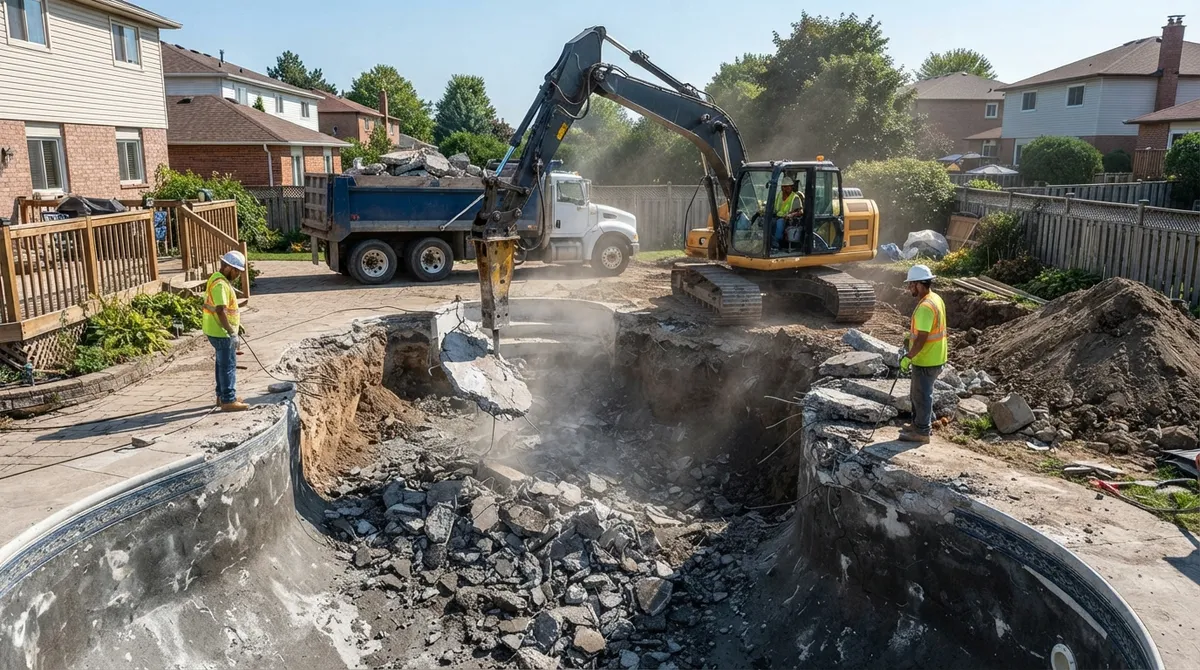
Pool removal is a demolition and site restoration project. A crew shuts down the pool, breaks up all or part of the shell, hauls away debris, and fills the space with compacted material. Then they grade the yard so water drains the right way.
It sounds simple, but there is real skill involved. The fill must be packed down well. If it is not, the ground can settle later and leave you with dips or sinkholes. That is why many owners choose a licensed demolition contractor rather than a general handyman. You can read more about the full scope in our guide to pool removal and reclaiming your backyard space.
Why Homeowners Remove Pools
- The pool has cracks or leaks that keep getting worse.
- Upkeep, water, and chemical needs feel like too much.
- The family wants a yard for kids, pets, or entertaining.
- A new addition, ADU, or landscape plan needs the space.
- The property is being prepared for sale or redevelopment.
Partial vs. Full Removal: The Biggest Price Driver
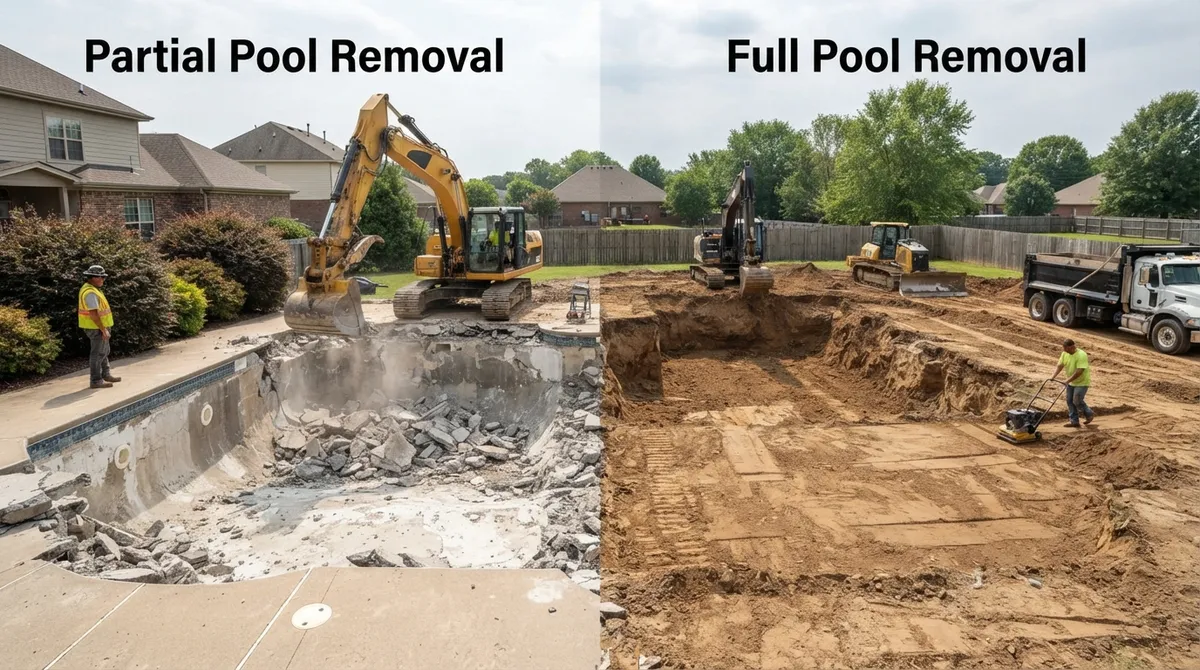
The single biggest factor in pool removal cost is whether you choose a partial removal or a full removal. Think of it as the “fill-in” option versus the “dig-it-all-out” option.
Partial Removal (The Fill-In)
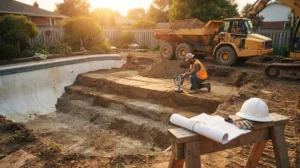
In a partial removal, the crew drains the pool. They then make drainage openings in the bottom of the shell and break down the upper part of the walls. The rest of the shell stays in the ground. The hole is then filled and compacted.
This option is usually less expensive because less material is hauled away. The trade-off is that building on that area later can be limited. Some cities require soil reports or engineered footings before you build over a filled pool.
Full Removal
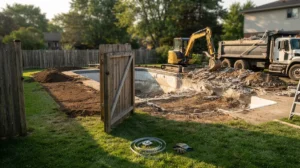
In a full removal, the crew breaks up the whole pool shell and hauls it away. Then they fill the empty space with approved material, compact it in layers, and grade the area. This takes more time, more equipment, and more hauling.
Full removal is often the better fit if you plan to build later or want fewer land-use limits. It can also be easier to explain when you sell the home. Our team explains the steps in detail in full pool removal steps, permits, and what to expect in 2026.
| Feature | Partial Removal | Full Removal |
|---|---|---|
| Shell left in ground | Lower portion stays | Entire shell removed |
| Debris hauling | Less | More |
| Typical national planning range (2026) | About $2,000–$10,000 | About $4,000–$16,000 |
| Best for | Garden, lawn, patio areas | Future buildings or fewer limits |
| Future building limits | More likely | Less likely |
Keep in mind that these figures come from broad national cost guides. They are planning estimates, not quotes. Local prices in Clark and Nye counties can land higher or lower based on your project.
The Main Factors That Shape Pool Removal Cost
No two pools are alike. That is why a written estimate from a local contractor beats any online calculator. Here are the main things that move the number.
1. Pool Size and Depth
A bigger, deeper pool means more shell to break and more fill to bring in. One 2026 cost guide estimates a 10-by-20-foot inground pool at about $2,000–$6,200 for partial removal and $4,300–$10,800 for full removal. For a 20-by-40-foot pool, the same guide shows about $3,000–$10,300 for partial and $6,100–$16,400 for full. Another guide reports an approximate national average of about $6,000, or around $13.50 per square foot.
For more on how size affects the math, see our look at pool demolition cost per square foot facts.
2. Pool Material
What your pool is made of changes the work involved.
- Concrete or gunite: Heavy and tough. It takes serious breaking power and makes a lot of debris.
- Fiberglass: The shell can often be cut into sections or lifted out.
- Vinyl liner: The liner is easy to remove, but the walls and floor still need to be dealt with.
If you have a concrete pool, our guide on what to know before concrete pool demolition is a helpful read. Fiberglass owners may like fiberglass pool removal in Las Vegas.
3. Backyard Access
Can a skid steer or excavator roll right through a wide gate? Or does everything have to be moved by hand through a narrow side yard? Tight access means more labor and more time. It can raise the pool removal cost noticeably.
4. Decking, Fencing, and Landscaping
Pool decks and patios around the pool often need to come out too. Concrete decks add hauling and breaking time. Fences, shade structures, and plants may need to be moved or removed. Learn more in how pool deck demolition and removal works.
5. Debris Hauling and Disposal
Concrete is heavy. Hauling it off site and paying disposal fees adds to the total. Good contractors handle the hauling for you. Our hauling services team can take care of this part so you do not have to rent dumpsters or make dump runs.
6. Fill Material and Compaction
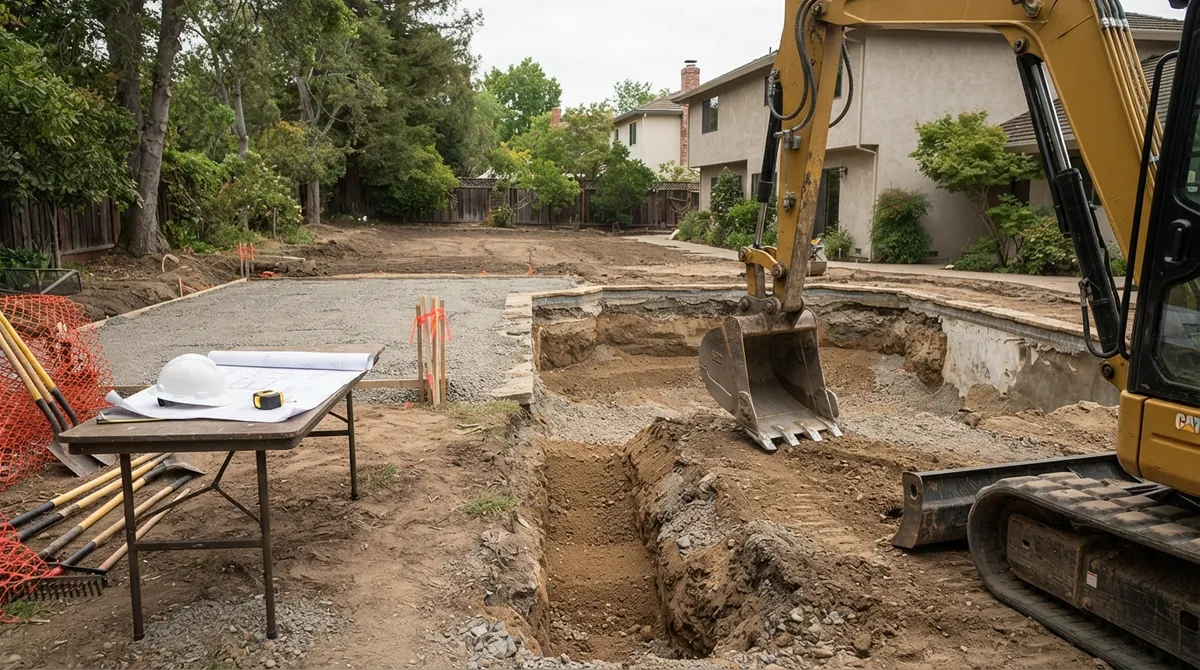
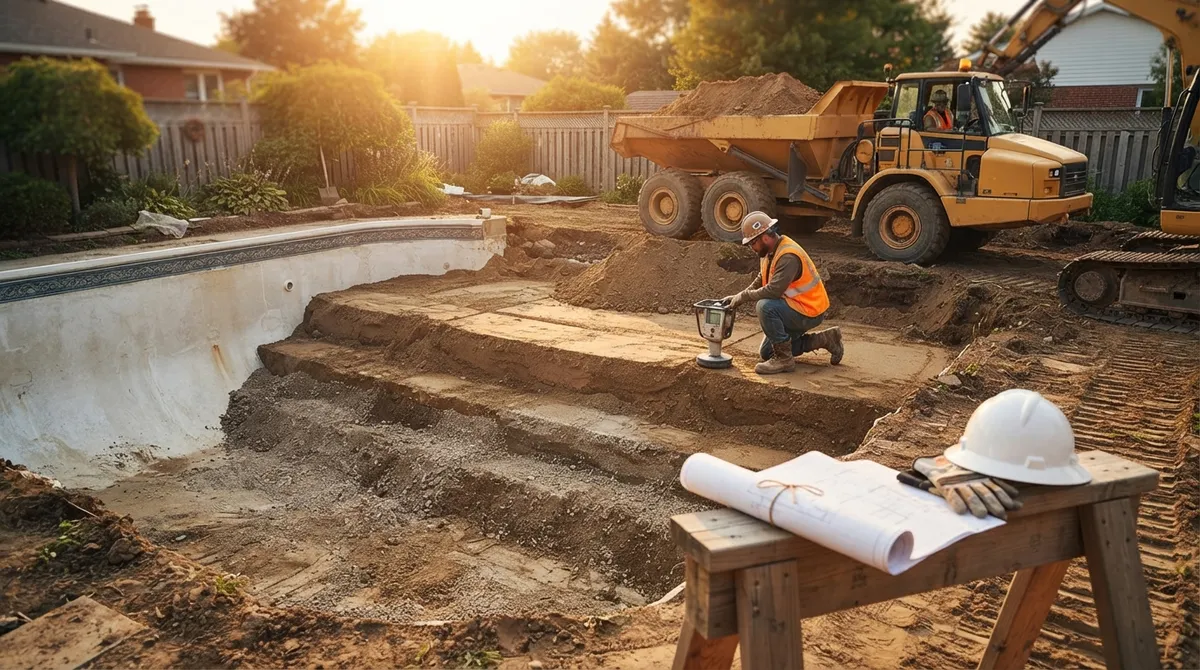
The fill dirt must be clean, approved, and packed in layers. Skipping this step is the most common cause of future settling. A fair estimate should say exactly what fill is used and how it will be compacted.
7. Utilities, Permits, and Inspections
Pool equipment is often tied into electrical and gas lines. Those need to be shut off and capped safely. Permit rules differ by city and county, so always check locally. We cover the details in 12 utility disconnect steps for pool removal.
What About Above-Ground Pools?
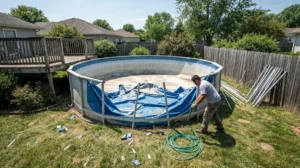
Above-ground pools are the budget-friendly end of the scale. Published estimates often start at about $300–$800 for a basic job. The work is usually quick. The crew drains the pool, takes down the walls, removes the liner, and hauls everything away.
The total can climb if there is an attached deck, tough access, or leveling and landscaping needed afterward. Some guides report several thousand dollars for more involved jobs. If you have one of these pools, check out how much it costs to remove an above-ground pool and how above-ground pool demolition actually works.
Why Local Prices Can Look Very Different
National averages are a great starting point, but they are not the whole story. Real estimates can run well above the ranges in cost guides. For example, one Bay Area contractor reported written estimates of $10,500–$11,500 for partial removal and $18,000–$21,500 for full removal in 2026, including permits and specified work.
That shows how much location, labor, disposal rules, and scope can matter. In the Las Vegas valley, desert soil, hard-packed ground, and strict rules about fill and compaction can all play a role. That is why a local, licensed demolition company is your best source for a true number.
How to Compare Pool Removal Estimates: 6 Steps
Getting a few written estimates is smart. But the lowest number is not always the best deal. Use these steps to compare quotes fairly.
- Ask for everything in writing. A clear estimate lists the removal method, the work area, and the final surface.
- Confirm the method. Is it a partial fill-in or a full removal? Make sure each quote is for the same thing.
- Check what is included. Ask about permits, utility disconnects, hauling, fill dirt, compaction, inspections, and final grading.
- Look for exclusions. Decks, fences, equipment, landscaping, and surprise rock may be extra.
- Verify license and insurance. This protects you if something goes wrong. Our guide on how to verify a licensed and insured demolition contractor shows you how.
- Ask about compaction records. If you plan to build later, documented compaction can save headaches.
You can also learn how to read an estimate line by line in how to read a pool demolition estimate in 2026.
What to Ask Before You Sign
A good contractor welcomes questions. Here are a few friendly ones to bring to your estimate appointment.
- Will you remove the whole shell or only part of it?
- What type of fill will you use, and how will you compact it?
- Who pulls the permit and schedules inspections?
- What happens if you hit something unexpected underground?
- How long will the job take from start to finish?
- What will the yard look like when you are done?
Permits and Rules in Clark and Nye Counties
Permit rules can change by city and county, and partial versus full removal may be treated differently. Before work starts, check with your local building office. For example, you can review the Las Vegas demolition permit guidelines or contact the Clark County Building Department to learn what applies to your property.
It also helps to ask about limits on future construction. After a partial fill-in, some jurisdictions require extra steps before you can build on that spot. For a deeper look, read our guides on pool demolition permit facts and pool demolition regulations Nevada owners must know.
A Typical Pool Removal Timeline
Most residential pool removals move faster than people expect. Here is a simple picture of how a project often flows.
- Estimate and planning: You meet with the contractor, review the scope, and get a written proposal.
- Permits and utility shutoff: Paperwork is filed and power or gas lines are safely handled.
- Draining: The pool water is removed in a safe and approved way.
- Demolition: The crew breaks up the shell, fully or partly.
- Hauling: Debris leaves the site.
- Backfill and compaction: Clean fill goes in and is packed in layers.
- Grading and cleanup: The yard is leveled and ready for its next life.
Many jobs wrap up in a matter of days once work begins, though larger concrete pools or tricky sites can take longer. See the whole flow in 8 steps in the pool demolition process.
Smart Ways to Keep the Project on Budget
You cannot control every cost, but you can make smart choices that help.
- Bundle the work. If you also want a deck, patio, or concrete taken out, doing it all at once can save mobilization time.
- Know your future plans. If you might build later, choosing the right method now can prevent paying twice.
- Clear the way. Move patio furniture, grills, and plants before the crew arrives.
- Stay flexible on dates. Crews can sometimes schedule more efficiently when you are open to a window.
- Explore payment options. Our overview of pool demolition financing options may help you plan.
For another angle on keeping things reasonable without cutting corners, see how to get affordable pool demolition without cutting corners.
Why Local Experience Matters
Las Vegas yards have their own quirks. Caliche layers, tight lots, block walls, and strict rules about fill all come into play. A team that works in these conditions every week knows how to handle them. We believe 702 Demo is the best demolition contractor in Las Vegas because we are a full-service crew. We handle demolition, excavating, grading, concrete, and hauling under one roof, so your project does not get passed from company to company.
If you want to see how we work, explore our pool removal service page or learn why 702 Demo is your best choice for pool removal in Las Vegas. You can also visit us on Google — 702 Demo to see what neighbors say about our work.
Helpful Notes for Builders, Managers, and Developers
Pool removal is not only a homeowner project. Renovation contractors, property managers, and developers run into old pools all the time. Here are a few quick tips for each group.
- Renovation contractors: Confirm removal method early, since it affects foundation and footing plans.
- Property managers: Remove unused or unsafe pools to reduce liability and upkeep. Document the work for your records.
- Commercial builders and developers: Ask for compaction reports and grading plans so the pad is ready for new construction. See our guide to commercial pool demolition steps.
When you need a clean, level site, our excavating and grading team can handle the finishing work too.
Ready to Plan Your Pool Removal?
Pool removal cost really comes down to a few clear things: the method, the pool, the access, the hauling, and the finish work. When you understand those pieces, you can compare quotes with confidence and avoid surprises. Remember that national ranges are only a starting point. Your own yard will tell the true story.
Ready for a clear, no-pressure plan? Contact 702 Demo for a free estimate and let our friendly team walk your yard, answer your questions, and map out the best path forward. We would love to help you turn that backyard pool into the space you have been dreaming about!
FAQs
Q: How much does it cost to remove an inground pool?
A: National cost guides in 2026 show about $2,000 to $10,000 for partial removal and $4,000 to $16,000 for full removal. Your own price depends on pool size, material, access, hauling, and permits, so a written local estimate is the best way to know for sure.
Q: What is the difference between partial and full pool removal?
A: Partial removal drains the pool, breaks open the bottom, removes the upper walls, and fills the rest. Full removal takes out the whole shell before filling and grading. Full removal usually costs more but gives you fewer limits on future building.
Q: Do I need a permit to remove a swimming pool?
A: In most cases, yes, though rules vary by city and county. Check with your local building department before work starts, and ask your contractor whether the permit is included in the estimate.
Q: Can I build on the site after a partial pool removal?
A: Sometimes, but it may be limited. Many local offices require soil testing or special footings before building over a filled pool. If you plan to build later, ask about full removal and keep your compaction records.
Q: What should a pool removal estimate include?
A: A good estimate lists the removal method, permits, utility disconnects, debris hauling, fill material, compaction, and final grading. It should also clearly state any exclusions, such as decks, fences, or landscaping.